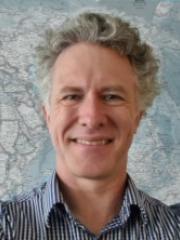
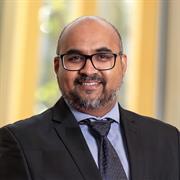
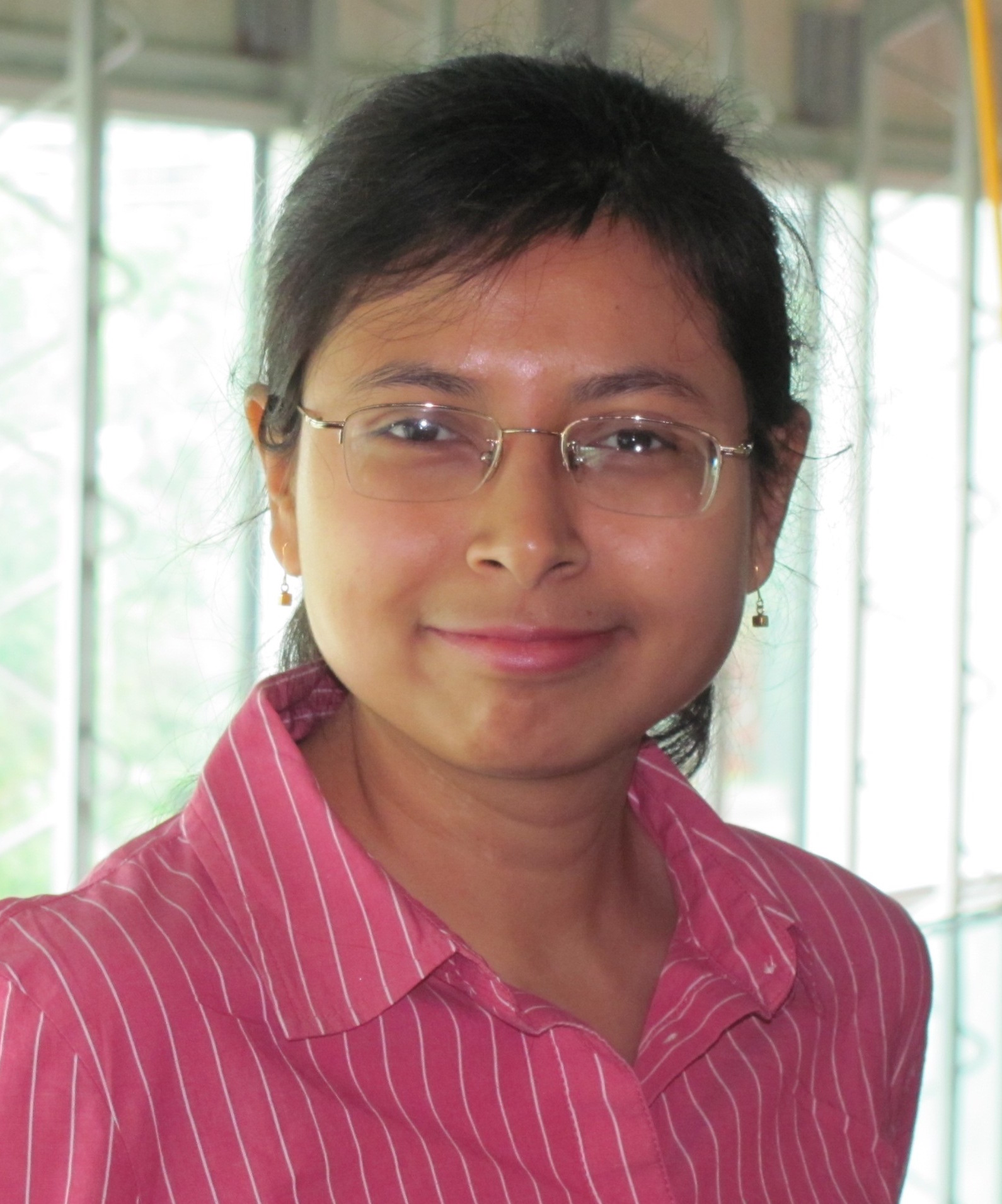
Professor Hongdong Li is a Tenured Professor at the School of Computing, Australian National University (ANU), within the College of Engineering and Computer Science. His research focuses on 3D Computer Vision, Machine Learning, and their applications in dynamic environments. He has held visiting roles at Carnegie Mellon University and has contributed to significant projects like the Australia Bionic Eyes initiative. Education: PhD (Electrical Engineering). Research Interests : 3D Computer Vision fundamentals and applied AI systems Learning-based 3D perception for plant sciences Robot navigation in unfamiliar environments Awards : Marr Prize Honourable Mention CVPR Best Paper Award Advising & Grants : Supervised 40+ PhD students, with funding from ARC, CSIRO, Microsoft, and firms like OPPO/Tencent. Active in projects such as bushfire detection via video analytics and sign language translation systems. Labs/Teams : Co-founder of the Australian Centre for Robotic Vision (ACRV). Collaborates globally on cross-view localization and autonomous systems.
Dr. Scarlett Raine is a Lecturer in the School of Electrical Engineering and Robotics at Queensland University of Technology (QUT), where she serves as a Chief Investigator at the QUT Centre for Robotics and an Associate Investigator at the QUT Centre for Data Science and QUT Centre for Environment and Society. Her work focuses on applying Artificial Intelligence to automate underwater image analysis for marine ecosystem monitoring.
Dr. Xinan Zhang is an Associate Professor in the School of Engineering at The University of Western Australia (UWA), specializing in Electrical, Electronic, and Computer Engineering. He holds a BEng from Fudan University (2008) and a PhD from Nanyang Technological University (2014). Before joining UWA in 2019, he held roles as a Lecturer and Research Fellow in Singapore and Australia. His research focuses on power electronics, electrical machine drives, and renewable energy, with over 60 top-tier publications. He is the Portfolio Lead for Industry Engagement in UWA's School of Engineering and co-leads the Power and Clean Energy (PACE) research group. Education: BEng in Electrical Engineering, Fudan University (2004–2008) PhD in Electrical Engineering, Nanyang Technological University (2010–2014) Research Interests: Dr. Zhang’s work spans power electronics, renewable energy systems, energy storage, and smart grid technologies. He emphasizes practical applications, such as battery management systems for vanadium redox flow batteries and adaptive control strategies for microgrids. His contributions address challenges in energy efficiency, grid stability, and sustainable power solutions. Articles & Trends: Recent publications focus on advanced control algorithms for inverters, battery modeling, and renewable energy integration. His work combines data-driven methods with traditional control theory to enhance system efficiency and reliability. Notable areas include DC microgrid control, vanadium redox flow battery optimization, and model predictive control for power electronics. Awards: Listed in Stanford University’s Top 2% Scientists (2020–2022) Grants & Collaborations: He leads or co-leads projects funded by the Australian government and industry partners, including the GenX Betavoltaic Battery Pilot Manufacturing Process and Mine Electrification . These projects aim to advance clean energy technologies and industrial applications. Labs & Teams: As co-lead of the PACE group, he fosters interdisciplinary collaboration to tackle global energy challenges, aligning with UN Sustainable Development Goals for affordable and clean energy (SDG 7).
Massimo Piccardi is a Professor of Natural Language Processing (NLP), Computer Vision, and Machine Learning at the University of Technology Sydney (UTS) , where he has been since 2002. He currently serves as the Head of the School of Electrical and Data Engineering and leads the Big Data Analytics program at the Global Big Data Technologies Centre. His research focuses on advancing NLP, machine learning applications in healthcare, and cybersecurity in IoT systems. He has authored over 200 journal papers and conference proceedings, secured significant ARC and CRC grants, and holds the IEEE Computer Society Distinguished Contributor Award (2022). Education & Professional Roles: Joined UTS in 2002, progressing from Associate Professor (2002–2007) to Professor (2008–present). Serves as Associate Editor for IEEE Transactions on Big Data and Editor for Artificial Intelligence in Medicine. Active in professional societies including IEEE, ACL, and ALTA (President, 2023–2024). Research Interests: Core areas include NLP (translation, summarization, adversarial attacks), healthcare informatics (clinical NLP, health service analysis), and cybersecurity (IoT security, privacy-preserving systems). Cross-cutting themes include generative models, cross-lingual systems, and ethical AI. Grants & Projects: Principal Investigator on ARC Discovery/Linkage projects and CRC grants. Recent projects include controllable machine translation (Amazon), privacy-preserving digital agriculture, and STEM innovation (ASTRID project with NBN Co). Labs & Collaborations: Leads the UTS Global Big Data Technologies Centre, collaborating on projects like adversarial NLP attacks, medical machine translation, and secure IoT frameworks.
Professor Ernest Foo is a distinguished academic at Griffith University's School of Information and Communication Technology, specializing in cybersecurity with a focus on industrial control systems and cryptographic protocols. With over 15 years of experience in computer networking, he has established himself as a leading expert in SCADA security and smart grid cybersecurity. His research has significant practical applications in critical infrastructure protection, and he has developed hands-on security training programs that have trained professionals from major Australian utilities and government agencies. Professor Foo's educational background includes: Bachelor of Engineering with Honours in Electronic and Computer Engineering from University of Queensland Doctor of Philosophy from Queensland University of Technology Professor Foo's research interests center around secure cryptographic protocols with specific applications in industrial control system security and cyber physical systems. His work spans SCADA security, smart grid protection, wireless sensor network security, and post-quantum cryptography. He has made significant contributions to understanding vulnerabilities in industrial protocols like Modbus and DNP3, and has pioneered the application of process mining and data mining techniques for attack detection in critical infrastructure systems. His research bridges theoretical security concepts with practical implementations in real-world industrial environments. Professor Foo's recent publications demonstrate a clear trajectory toward increasingly sophisticated security frameworks for critical infrastructure. His work shows a progression from foundational SCADA security research to advanced applications of artificial intelligence, machine learning, and formal methods in cybersecurity. A notable trend is the integration of zero trust principles with industrial control systems, alongside growing emphasis on post-quantum cryptographic solutions. His publications span high-impact journals and conferences in cybersecurity, with increasing focus on anomaly detection in cyber-physical systems and the application of graph-based machine learning techniques to network security challenges. Professor Foo's notable scientific achievements include: Best paper award at the 2nd International Cyber Resilience Conference for "Gap analysis of Intrusion Detection in Smart Grids" Professor Foo has secured significant research funding including an ARC Linkage grant with Powerlink Queensland focused on cyber security for electricity sub-stations. He currently leads multiple research projects including Westpac Micro-Credentials in Financial Crime Investigation, Digital Banking Micro-credentials with ANZ, and research on quantum-safe cryptography. As a dedicated educator, he serves as Program Director for multiple cybersecurity programs including the Master of Cyber Security, and has supervised numerous doctoral and masters students. His Cyber Security: Industrial Control System course, conducted annually from 2013-2018, featured innovative hands-on training with real-world participants from major Australian utilities. Professor Foo has been instrumental in establishing the SCADA security research laboratory with multiple vendor system miniatures running industrial PLCs. His work bridges theoretical security concepts with practical implementations, making significant contributions to the security of industrial control systems and critical infrastructure worldwide.
Prof Christina Lim is a Professor at the Department of Electrical and Electronic Engineering, University of Melbourne, Australia. She serves as the Associate Dean of Research for the Faculty of Engineering and Information Technology (FEIT) and manages the Tucker Lab. Previously, she held roles as Research Group Leader of the Electronics and Photonics System group and Deputy Head of Department (Teaching and Operations) Education: PhD and Bachelors from University of Melbourne Research Interests: Radio-over-Fibre, Optical Wireless Communications, Microwave Photonics, Augmented Reality Displays, Reservoir Computing, Optical Crosshaul Networks Recent publications demonstrate expertise in optical waveguide design for AR, underwater optical wireless communications, photonic switching, and network optimization. Her projects focus on next-generation wireless infrastructure, including Photonics Computing Enabled Ultra-Broadband Wireless Communications (2024-2027, $598k ARC grant) and Additive Manufacturing of Optical Elements (2025). She has secured significant funding, including ARC Discovery Projects and Future Fellowships. Scientific Honors IEEE Fellow (2022) Optica Fellow (2018) ARC Future Fellow (2009-2013) ARC Australian Research Fellow (2004-2008) Professional Service Vice-President of Conferences, IEEE Photonics Society Deputy Editor, IEEE/Optica Journal of Lightwave Technology ARC College of Experts (2014-2016)
Professor Stefan Maier holds the position of Head of School in Physics and Astronomy at Monash University. Previously, he served as the Lee Lucas Chair in Experimental Physics at Imperial College London (2007–2018) and built a new chair at Ludwig-Maximilians-Universität München (2019–2022). His research focuses on nanophotonics, plasmonics, and metasurface engineering, with emphasis on optical trapping, nonlinear optics, and novel photonic devices. Education: Bachelor’s degree in Physics, Technical University of Munich M.Sc. and Ph.D. in Applied Physics, California Institute of Technology (Caltech) Research Interests: Development of metamaterials and metasurfaces for light manipulation Applications of nanophotonics in sensing, imaging, and quantum technologies Optical trapping and plasmonic catalysis Nonlinear optical phenomena in nanostructured materials Articles Trends: Recent work emphasizes bound states in the continuum (BICs), 3D nanoprinted optical platforms, and active metasurfaces with tunable properties. Key themes include hybrid nanophotonics, ultra-high-Q resonators, and plasmonic nanomaterials for energy applications. Awards: ISI Highly Cited Researcher (2017–present) Grants/Projects: Chief Investigator in the All-on-chip twisted light modulator project (2022–2025) Leadership in Monash’s nanophotonics research team Labs/Teams: Directs a multidisciplinary lab at Monash focused on integrating 3D nanofabrication with optical physics, including collaborations in metafiber development and plasmonic biosensing.
Dr. Ling Yin is an Associate Professor in the School of Electrical and Mechanical Engineering at the University of Adelaide, Faculty of Sciences, Engineering and Technology. She joined the University of Adelaide in 2018 as an Associate Professor in manufacturing and served as Faculty Research Theme Leader in Advanced Manufacturing from 2019 to 2022. Dr. Yin leads multi-institutional projects on advanced manufacturing funded by Defence SA (2024-2025) and the National Health and Medical Research Council (NHMRC) (2025-2028). Dr. Yin's educational background includes B.Sc., M.Sc., and Ph.D. degrees in mechanical engineering from Huazhong University of Science & Technology in Wuhan, China. Her academic career spans five countries across three continents, including positions at Tianjin University in China, Kumamoto University in Japan, Kansas State University in the USA, the Australian National University and James Cook University in Australia, the National Institute of Standards & Technology (NIST) in the USA, and A*STAR Singapore Institute of Manufacturing Technology (SIMTech) in Singapore. Dr. Yin's research focuses on manufacturing and mechanical characterization of advanced materials with applications in optics, semiconductors, mechanical structures, dental restorations, osteoporosis/osteoarthritis studies, and marine/animal sciences. Her work involves extensive collaborations across multiple disciplines. Her recent publications demonstrate expertise in ultrasonic vibration-assisted machining of dental ceramics, particularly zirconia and lithium silicate glass-ceramics, as well as advanced characterization techniques like micro-CT and in-situ SEM testing for understanding material behavior at micro and nano scales. JSPS Invitation Fellowship from the Japan Society for the Promotion of Science Japanese Government Scholarship from the Ministry of Education, Culture, Sports, Science and Technology, Japan Supervisor for a PhD Thesis cum laude with a Medal of Excellence awarded by James Cook University in 2017 Supervisor for a Best Honours Project in Mechanical Engineering at Ingenuity awarded by the University of Adelaide in 2023 Dr. Yin is actively involved in supervising higher degree research students and has available PhD projects in 2025 focused on ultrasonic-vibration assisted manufacturing techniques for dental applications. She has successfully led international academic delegations through the New Colombo Plan to manufacturing facilities in Singapore and Japan. Dr. Yin is a senior member of the North American Manufacturing Research Institution (NAMRI) and the Society of Manufacturing Engineers (SME), and also a member of several professional organizations including ASME, OSA, American Ceramic Society, ASM International, and SPIE.
Professor Guy Wallis is a Professor and Director of Research at the School of Human Movement and Nutrition Sciences, Faculty of Health, Medicine and Behavioural Sciences at the University of Queensland. He is also an Affiliate of the Centre for Sensorimotor Performance. His work bridges visual neuroscience, computational modeling, and applied human factors research, with significant contributions to understanding visual recognition and visuomotor behavior. Education: Bachelor (Honours) of Engineering in Electrical and Electronic Engineering from Imperial College London PhD in Visual Neuroscience from University of Oxford, UK Prof. Wallis's research program combines computational modeling with behavioral studies, many conducted in computer-controlled virtual environments. His work spans visual neuroscience, object recognition, visuomotor control, and simulator-based training. He has made significant theoretical contributions to understanding how visual recognition is achieved in biological systems and how everyday visuomotor tasks are regulated, challenging existing paradigms and offering new insights. His recent publications reveal a strong focus on virtual reality applications, visual-motor integration challenges, and cross-species cognitive studies. There's a clear trend toward investigating how virtual environments can be optimized for training and assessment, with particular attention to visual perception limitations and how humans adapt to these environments across diverse contexts from surgical training to aviation. Scientific Awards and Recognitions: Elected Fellow of the Queensland Academy of Arts and Sciences (2022) ARC Medical Research Advisory Group (2022-2024) ARC College of Experts (2019-2021) CSIRO CSS Human Research Ethics Committee member (2020-2022) UQ Health and Behavioural Sciences Faculty, HDR Supervision Award (2018) ARC Future Fellowship (2011-2014) ARC QEII Fellowship (2003-2007) UQ Postdoctoral Fellowship (2001-2003) Prof. Wallis has successfully secured funding from major organizations including the Australian Research Council, the Human Frontier Science Program, and the Wellcome Trust. His industry partnerships span diverse sectors such as construction training, mining, healthcare, and aerospace. His research has led to the development of novel training programs for health professionals, impacted the design of man-machine interfaces for mining equipment, and informed the design parameters for pilot training systems. As Director of Research, he oversees the research direction of the School of Human Movement and Nutrition Sciences, fostering interdisciplinary collaborations and supporting early-career researchers through his leadership in the Centre for Sensorimotor Performance.
Professor Amin Abbosh is a faculty member at the School of Electrical Engineering and Computer Science, University of Queensland. His research focuses on Medical Microwave Imaging and Millimeter-wave Engineering, with contributions to advanced imaging systems, antenna design, and communication technologies. He leads projects in electromagnetic medical sensing, including portable brain scanners and wearable diagnostic systems. His work integrates applied electromagnetics with AI-driven algorithms, addressing challenges in stroke detection, liver health monitoring, and deep vein thrombosis diagnosis. With over 16 patents and collaborations across biomedical and engineering domains, his research bridges clinical needs with cutting-edge electromagnetic techniques. Key projects include the development of low-cost healthcare monitoring systems and reconfigurable antennas for satellite communications. Research interests span medical imaging systems, antenna array design, and signal processing for healthcare applications. His team innovates in areas like phased arrays, dielectric property analysis, and non-invasive diagnostics. Recent advancements include synthetic microwave focusing techniques and self-supervised deep learning models for clutter removal in imaging. Publications highlight contributions in IEEE journals and conferences, emphasizing clinical applications and device prototyping. Collaborations with institutions like the University of Queensland’s medical faculty and industry partners ensure practical implementation of his research.
Professor Chunsheng Lu is a faculty member at Curtin University's School of Civil and Mechanical Engineering within the Faculty of Science and Engineering. He currently holds the position of Professor and serves as Editor-in-Chief of Mechanical Engineering Advances . His research focuses on fracture mechanics, multi-scale modeling, energy materials, nonlinear dynamics, and natural disaster risk analysis. Lu is actively involved in HDR (Masters/PhD) supervision, offering projects on advanced materials modeling and simulations. His research interests include mechanics of energy materials, multi-scale modeling, and fracture statistics. He has contributed to over 200 publications, with recent work emphasizing piezoelectric semiconductors, nanomaterials, and energy storage systems. Lu's teaching spans materials engineering, solid mechanics, and numerical methods.
Associate Professor Lasantha Meegahapola is a Deputy Head of Department (Teaching & Learning) at RMIT University's School of Engineering in Melbourne, Australia. He holds an IEEE Senior Membership and serves as an Associate Editor for several prestigious journals, including IEEE Transactions on Power Systems and IET Renewable Power Generation. His research focuses on Power System Stability with Renewable Integration, Microgrid Control, and Smart Grid Technologies, addressing challenges like voltage stability, inverter-based grid dynamics, and renewable energy penetration. He has supervised 16 PhD students to completion and published over 200 articles. Key contributions include identifying stability issues in microgrids and advancing grid-forming inverter control strategies. His work aligns with UN Sustainable Development Goals 7 (Clean Energy), 9 (Infrastructure), and 13 (Climate Action). He is actively involved in IEEE committees, including the PSDP Task Force on Microgrid Stability. Teaching roles include Programme Manager for the Bachelor of Electrical Engineering (HK) and Subject Coordinator for Power System Analysis and Control courses. Collaborations span industry and international research institutions, emphasizing real-world applications of his research in power systems and renewable energy integration.
Craig Jin is an Associate Professor at the University of Sydney, leading the CARlab (Computing and Audio Research Laboratory) and Spatial Audio Research initiatives within the School of Electrical and Computer Engineering. He holds a BS from Stanford University, an MS from Caltech, and a PhD from the University of Sydney. His work focuses on immersive audio technologies, biomedical signal processing, and assistive technologies for sensory augmentation. Research interests include spatial audio reproduction, binaural processing, acoustic sensing for accessibility, and machine learning applications in signal processing. Key contributions span HRTF interpolation, noise reduction algorithms, and acoustic touch systems for the visually impaired. Recent projects include real-time MRI analysis of vocal tract dynamics and sparse recovery techniques for sound field reconstruction. His publications span over 150 peer-reviewed articles in journals like IEEE Transactions on Audio, Speech, and Language Processing, and conferences such as ICASSP. He advises four current PhD/Master’s students on projects like predictive gesture tracking, voice disorder classification, and magnetic resonance imaging techniques.
Sushmita Ruj is an Associate Professor in the School of Computer Science and Engineering at the University of New South Wales (UNSW), Sydney. She serves as the Faculty of Engineering Lead for the UNSW Institute for Cybersecurity (IfCyber) and as the Taste of Research (ToR) Coordinator within the School of Computer Science and Engineering. Her academic journey includes previous positions as a Senior Research Scientist at CSIRO's Data61 (2019-2022), Associate Professor at the Indian Statistical Institute, Kolkata, and Assistant Professor at the Indian Institute of Technology (IIT), Indore. Dr. Ruj's primary research interests focus on applied cryptography, post-quantum cryptography, cybersecurity, blockchains, and data privacy. She designs practical, efficient, and provably secure protocols for real-life applications, with particular emphasis on critical infrastructure including smart grids, cloud computing, ad hoc networks, and data sharing frameworks. As quantum technology advances, her work increasingly focuses on developing quantum-safe algorithms to ensure a more secure Internet infrastructure. Her research spans multiple domains including cryptographic key management, proofs of storage, verifiable computation, vector commitments, and privacy-enhancing technologies for cloud and IoT environments. Her recent publications demonstrate a strong trend toward post-quantum cryptography solutions, with particular emphasis on blockchain applications, DNS security, and privacy-preserving protocols for industrial IoT. The research shows increasing focus on practical implementations of theoretical cryptographic concepts, with applications across multiple sectors including finance, healthcare, and critical infrastructure. Her work bridges the gap between theoretical cryptography and real-world security challenges, with growing emphasis on the transition from classical to quantum-resistant systems. Best Paper Award at ACISP 2024 JNCA Best Survey Award (2023) NSW Innovation Award (iAward) Merit Winner (2022) Women in Science Award from CSIRO (2020) ACM Senior Member (2016) IEEE Senior Member (2015) Samsung GRO award (2014) Dr. Ruj has successfully mentored numerous PhD and Master's students, with many of her former students now holding academic positions at institutions like IIT Indore, TU Wien, and CISPA Helmholtz Center. She has secured significant competitive funding including multiple Australian Research Council (ARC) grants, Samsung GRO Award, NetApp Faculty Fellowship, Cisco Academic Grant, and IBM Research grant. Her current research portfolio includes projects on blockchain-based quantum-safe digital medical passports, embedding trust in digital IDs, and resilience of supply chain unstructured data. As Faculty of Engineering Lead for IfCyber, Dr. Ruj plays a key role in UNSW's cybersecurity research initiatives. She has served on editorial boards for prestigious journals including IEEE Transactions on Information Forensics and Security and has held leadership positions in major conferences such as ACISP 2021 and Indocrypt 2020. She was also a member of the working group on "Blockchain For Cybersecurity" for the National Blockchain Roadmap of Australia and the first Blockchain Working group set up by the Reserve Bank of India.
Dr. Reza Fazeli is a Research Fellow at the Zero-Carbon Energy for the Asia-Pacific Grand Challenge at the Australian National University's School of Engineering. He joined ANU in January 2020, following six years as a Research Analyst and Adjunct Lecturer at the University of Iceland. His research focuses on sustainable energy transitions, decarbonization strategies, and energy policy assessment. Education background: PhD in Sustainable Energy Systems, University of Porto (MIT-Portugal program) MSc in Energy Systems Engineering, Sharif University of Technology BSc in Mechanical Engineering, University of Tehran Dr. Fazeli's research spans energy modeling, system dynamics, and multi-criteria decision analysis. He investigates decarbonization pathways for transportation and energy systems, GIS-based sustainability assessments, and hydrogen economy transitions. His work combines technological and behavioral perspectives to develop sustainable energy solutions. His recent publications focus on hydrogen certification, emission accounting frameworks, and renewable integration challenges. Articles consistently address policy-technical interfaces in energy transitions, with increasing emphasis on international hydrogen trade and certification systems since 2021. Dr. Fazeli leads research on green hydrogen economy assessments and coordinates cross-disciplinary projects at the ANU Energy Change Institute.