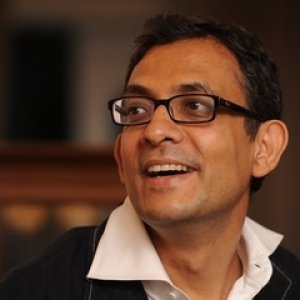
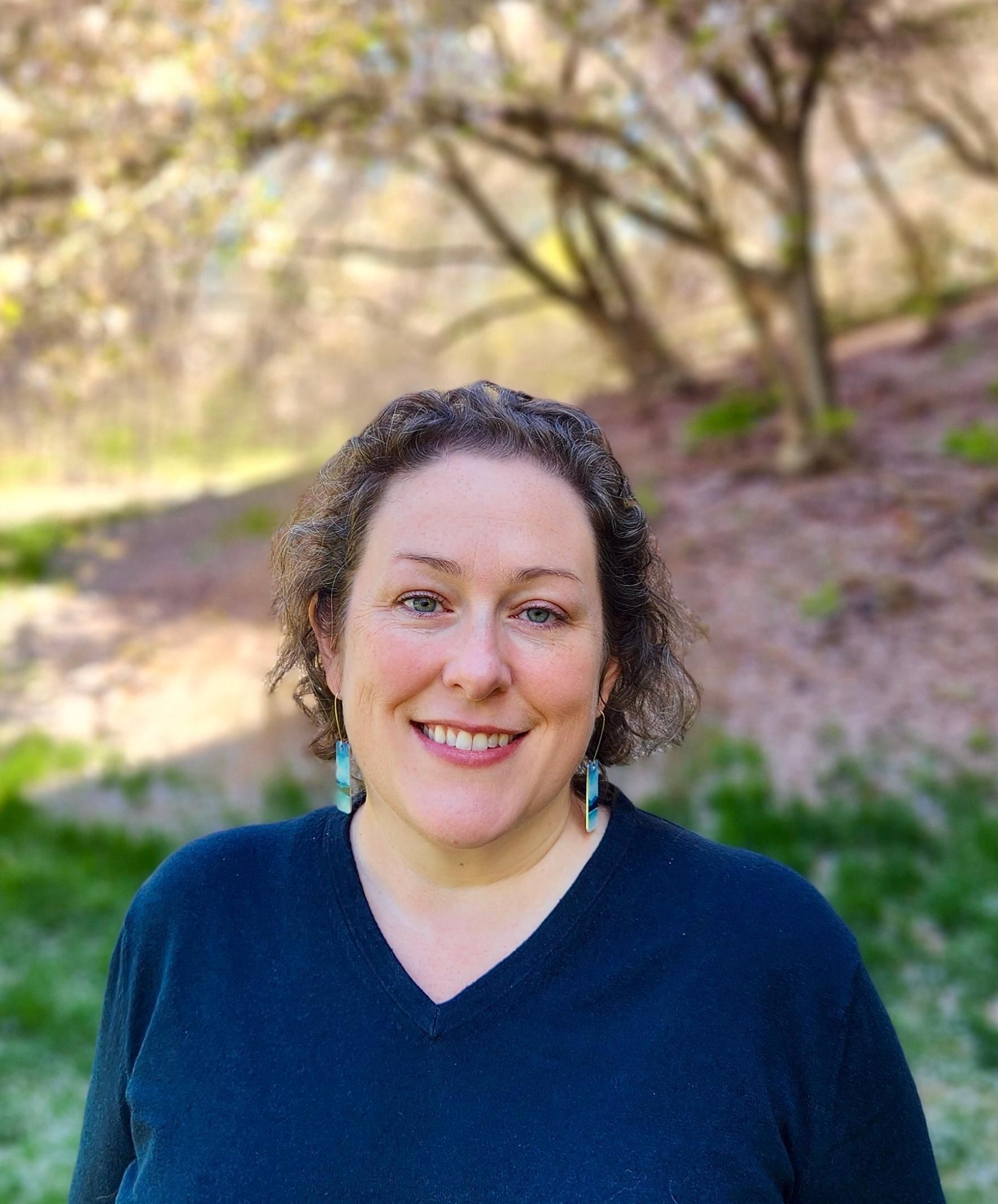
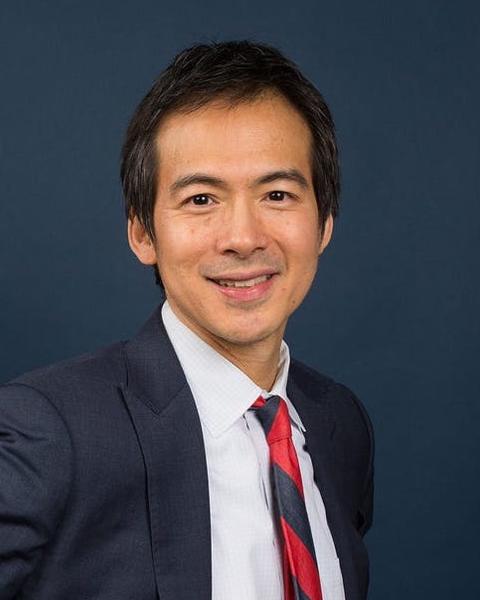
Abhijit Banerjee is the Ford Foundation International Professor of Economics at MIT and Director of the Abdul Latif Jameel Poverty Action Lab (J-PAL). A 2019 Nobel laureate in Economic Sciences, his research focuses on development economics, political economy, and poverty alleviation. He co-authored influential books like Poor Economics and Good Economics for Hard Times , emphasizing evidence-based policies and randomized controlled trials. Banerjee’s work addresses global challenges such as education, health, and social welfare, with notable contributions to microfinance, public health interventions, and anti-poverty programs. He holds leadership roles in global initiatives like the Global Education Evidence Advisory Panel and has advised governments worldwide. His research spans topics from police resource allocation in India to the impact of information during crises like demonetization and the pandemic. Education: Bachelor’s in Statistics, Presidency College, Kolkata M.A. in Economics, Jawaharlal Nehru University PhD in Economics, Harvard University Key Contributions: Co-founder of J-PAL, promoting evidence-based poverty reduction strategies. Pioneer in using randomized controlled trials (RCTs) for policy evaluation. Research on microfinance, education reforms, and health interventions in developing countries. Awards: Nobel Prize in Economics (2019), Infosys Prize in Social Sciences (2009), Member of the National Academy of Sciences (2020). Grants/Advisory Roles: Collaborations with institutions like the World Bank, UN, and governments on poverty, health, and education policies. Labs/Teams: J-PAL global network, Abdul Latif Jameel Poverty Action Lab.
Daniela Iorio is an Associate Professor at the Department of Economics, University of Bologna, and holds a part-time professorship at the European University Institute’s School of Transnational Governance. She specializes in Political Economy, Health Economics, and Public Economics. Her work addresses topics like voting behavior, eating disorders, reproductive health, and parental investments. She earned a Ph.D. in Economics from the University of Pennsylvania and has held positions at institutions including USC, Universitat Autònoma de Barcelona, and the Barcelona Graduate School of Economics. Her research focuses on health policy, behavioral economics, and political institutions. Notable contributions include analyzing the link between eating disorders and addictive behaviors, evaluating IVF success disparities, and developing parenting measurement tools through digital interventions. She has been awarded the 2016 Oliver E. Williamson Prize and the Rita Levi Montalcini grant. Iorio teaches advanced courses on political economy and health economics at the PhD and master’s levels. She directs the Health Economics, Management and Policy master’s program at Bologna and has advised over a dozen graduate students. Her grants include a €758k MIUR project on child development and parental engagement. She serves as an Associate Editor for the European Economic Review and referees for top journals like the American Economic Review .
Todd Sorensen is an Associate Teaching Professor at the University of California, Merced (UC Merced), affiliated with the School of Social Sciences, Humanities & Arts and the Economics and Business Management department. He holds fellowships at IZA (Institute of Labor Economics) and GLO (Global Labor Organization). Prior to UC Merced, he served as an Associate Professor at the University of Nevada, Reno (2014–2023) and an Assistant Professor at UC Riverside (2007–2014). His professional journey includes a visiting role as Visiting Associate Professor at UC Merced before his current appointment in 2022. Education: PhD in Economics, University of Arizona, 2007 Research Interests: Todd's work focuses on labor market structures , exploring topics like monopsony power and wage-setting dynamics; immigration , including its demographic and policy implications; and discrimination , particularly in criminal sentencing and labor markets. His research has been published in journals like ILR Review , Labour Economics , and the Journal of Population Economics , with findings cited in the U.S. Economic Report of the President. Scientific Awards: Fellow at IZA (2022–present) Fellow at GLO (2022–present) Advising & Grants: Todd has advised students across various levels but no specific advisees are listed. His grants and funding sources are not detailed in the provided text. He collaborates with interdisciplinary teams and maintains affiliations across UC campuses through his and his spouse’s academic careers. Labs/Teams: Engaged with research networks at IZA and GLO, focusing on labor market policies and migration studies. Active in collaborative projects analyzing immigration trends, labor market competition, and discrimination metrics.
Mungo Wilson is a Professor of Finance at the Saïd Business School , University of Oxford, and an associate member of the Oxford-Man Institute of Quantitative Finance. He holds a PPE degree from Oxford, an MSc in Economics from LSE, and a PhD in Economics from Harvard. His research focuses on asset pricing, credit risk, mutual funds, and macroeconomic influences on financial markets. He has published extensively in top journals and engages actively with industry through board roles and advisory work. Education : Bachelor's in Philosophy, Politics & Economics (PPE), University of Oxford MSc Economics, London School of Economics PhD in Economics, Harvard University Research Interests : Assesses how macroeconomic conditions and credit risk shape asset prices Analyzes mutual fund behavior and market information transmission mechanisms Explores political dynamics' impact on financial markets His professional engagements include board memberships with funds like EA Asia Absolute Return Master Fund and advisory roles at Broadwell Capital. Teaching focuses on microeconomics for MBA programs, covering game theory, market structures, and price discrimination. Advisory & Grants : Supervises doctoral students at Saïd Business School and serves on programme committees for major finance conferences (e.g., European Finance Association, CEPR Annual Spring Symposium). Awards : While no specific prizes are listed, his impactful research has been widely cited and presented globally.
Mallory Elizabeth SoRelle serves as the Tony & Teddie Brown Associate Professor at Duke University's Sanford School of Public Policy. Her research examines how public policies both stem from and perpetuate socioeconomic and political inequality in the U.S., with a focus on consumer financial protection and civil justice—issues critical to marginalized communities yet often neglected by welfare state scholars. Her academic credentials include: Ph.D. in Government, Cornell University (2016) M.A. in Government, Cornell University (2014) Master of Public Policy, Harvard University (2010) B.A. in Government, Smith College (2006) SoRelle's scholarly work centers on policy feedback effects, investigating how existing policies shape political behavior and future policy design. She analyzes consumer finance regulation, student debt relief, voting access reforms, and preemption politics, highlighting their disparate impacts on vulnerable populations and implications for democratic health. Her recent publications demonstrate a cohesive research agenda applying policy feedback theory across diverse policy domains. Key themes include the political consequences of financial regulation, the dynamics of student debt politics, and the erosion of voting rights, all examined through the lens of inequality and democratic participation. Dr. SoRelle holds the distinguished Tony & Teddie Brown Associate Professorship at Duke University. She is an active educator teaching courses such as The Political Economy of Policymaking and Public Policy, Political Power, and Social Change. Her research is supported by an NSF CAREER grant (2024-2029) investigating the political economy of fringe financial technologies and their impact on economic inequality.
Dr. Mark B. Smith is an Associate Professor in Modern European History at the University of Cambridge’s Department of History. His research focuses on Soviet and European history, particularly the Soviet Union’s social structures, welfare policies, urban development, and cultural dynamics from Stalinism through late socialism. He teaches courses on welfare states, Soviet life, and 20th-century European violence. Key research areas include Soviet urban housing programs, welfare state evolution, and Cold War-era cultural exchanges. His publications analyze topics like Khrushchev’s housing reforms, post-Stalin urban welfare systems, and Soviet pension policies. Smith has co-edited special issues on European urban societies and authored books such as *The Russia Anxiety* (2019) and the forthcoming *Exit Stalin* (2026). He advises doctoral students on Soviet history, welfare states, and Cold War topics. His work bridges legal history, social policy analysis, and cultural studies, emphasizing how everyday life reflected broader ideological and structural changes in Soviet society.
Dr. Herb Lin is the Hank J. Holland Fellow in Cyber Policy and Security at the Hoover Institution and Senior Research Scholar for Cyber Policy and Security at the Center for International Security and Cooperation (CISAC), both at Stanford University. He also serves as Chief Scientist, Emeritus for the Computer Science and Telecommunications Board of the National Academies, where he worked from 1990 to 2014, and as Adjunct Senior Research Scholar and Senior Fellow in Cybersecurity at Columbia University's Saltzman Institute for War and Peace Studies. Dr. Lin received his doctorate in physics from MIT, providing him with a strong technical foundation that informs his policy work at the intersection of technology and national security. His academic background bridges the gap between deep technical understanding and policy application in the cybersecurity domain. Dr. Lin's research focuses on the policy dimensions of cybersecurity and cyberspace, with particular emphasis on offensive cyber operations as instruments of national policy, information warfare, and influence operations affecting national security. His work addresses critical challenges at the intersection of emerging technologies like artificial intelligence, quantum computing, and their implications for nuclear security, election integrity, and democratic processes. He has been instrumental in analyzing how cyber capabilities are transforming traditional security paradigms and how policy frameworks must adapt to these changes. His extensive publication record reveals a consistent focus on the evolving relationship between cyber capabilities and national security strategy. Lin's work demonstrates increasing attention to the implications of artificial intelligence for warfare, the vulnerabilities created by quantum computing for current cryptographic systems, and the growing threat of cyber-enabled information warfare to democratic institutions. His research trajectory shows a progression from traditional cybersecurity issues toward the broader implications of digital technologies for national and international security. Member of Science and Security Board of Bulletin of the Atomic Scientists Served on President Obama's Commission on Enhancing National Cybersecurity (2016) Regular congressional testimony on cybersecurity matters Contributor to Stanford Emerging Technology Review As a mentor and collaborator, Dr. Lin works extensively with policymakers, military officials, and technology experts to translate complex cybersecurity concepts into actionable policy recommendations. His approach emphasizes practical solutions to emerging threats while recognizing the technical limitations and policy constraints that shape real-world security outcomes. Dr. Lin is associated with multiple research initiatives including Stanford's Center for International Security and Cooperation and the Stanford Emerging Technology Review, which aim to connect technological advances with policy considerations for national security decision-makers.
Stephen Billings is an Associate Professor of Finance at the Leeds School of Business, University of Colorado Boulder, where he holds the Global Real Estate Capital Markets Chair position. He serves as the faculty director of the MS in Real Estate program and research director for the CU Real Estate Center. His work spans multiple research centers including the Center for Research on Consumer Financial Decision Making and the Michael A. Klump Center for Real Estate. Billings received his PhD in Economics from the University of Colorado, a MS in urban planning from the University of North Carolina, and a BS in economics from Georgetown University. Prior to joining CU Boulder in 2016, he was faculty at the University of North Carolina Charlotte with appointments in both economics and public policy, where he also served as faculty director for the real estate center. His research focuses on the intersection of housing, schools, neighborhoods and crime, addressing critical policy issues including the impact of public investment in light-rail transit on neighborhoods, school segregation's influence on academic achievement and crime, neighborhood gentrification causes, lead-based paint in low-income housing, and the effects of sea level rise and natural disasters on neighborhood sorting and household finances. Billings employs sophisticated analysis of large micro-datasets with studies based on data and policies in Charlotte, NC and Denver, CO. His work connects urban economics with public policy, demonstrating how neighborhood environments shape individual outcomes across multiple dimensions. Billings' recent publication record demonstrates a consistent focus on neighborhood effects, school choice impacts, crime economics, and housing market dynamics. His work frequently examines the intersection of race, housing, and economic outcomes, with particular attention to policy implications. He has developed innovative methodological approaches to studying residential amenities and neighborhood spillovers, with increasing attention to climate change impacts on housing markets. His research appears in top journals including The Quarterly Journal of Economics, American Economic Review: Insights, and Journal of Urban Economics. As an educator, Billings teaches undergraduate and masters classes in real estate finance and economics, as well as doctoral and masters level courses on cost-benefit analysis and statistical methods. He has extensive consulting experience conducting economic impact studies, including assessments of North Carolina's public higher education system, affordable housing needs in Colorado communities, and the economic effects of marijuana legalization on property markets. His practical policy work complements his academic research, creating a bridge between theoretical insights and real-world applications. Billings leads significant research initiatives through the CU Real Estate Center, where he directs studies examining the impact of business improvement districts and other urban development policies. His work bridges academic research with practical policy applications, making substantial contributions to our understanding of how housing, education, and neighborhood environments shape individual outcomes and community development. His December 2023 memo on the HUD Officer Next Door Program exemplifies his engagement with current housing policy issues.
Nadia E. Brown is a Professor of Government and Director of the Women's and Gender Studies Program at Georgetown University's College of Arts and Sciences. She holds a Ph.D. in Political Science from Rutgers University and specializes in intersectional analyses of Black women’s politics, legislative studies, and identity politics. Her work emphasizes holistic approaches to understanding race, gender, and their intersections in political systems. Dr. Brown leads the #MeTooPoliSci Collective, focusing on eradicating sexual harassment in political science, and co-PIs a million-dollar NSF grant addressing systemic issues in the discipline. She is editor of Politics, Groups and Identities and contributes to The Monkey Cage blog. Her research spans Black women’s legislative representation, digital activism, and feminist methodologies, with award-winning books including Sisters in the Statehouse and Sister Style . Education: Ph.D. in Political Science, Rutgers University Key Affiliations: African American Studies Program, #MeTooPoliSci Collective Research Methods: Case studies, ethnography, interviews Her advocacy extends beyond academia, influencing public discourse on racial justice and gender equity through media engagement and policy-focused scholarship.
Archon Fung is the Winthrop Laflin McCormack Professor of Citizenship and Self-Government at the Harvard Kennedy School. His research focuses on policies and institutional designs that enhance democratic governance, particularly in areas of public participation, deliberation, and transparency. He co-directs the Transparency Policy Project and leads democratic governance programs at the Ash Center for Democratic Governance and Innovation. Fung has authored five books, including Full Disclosure: The Perils and Promise of Transparency and Empowered Participation: Reinventing Urban Democracy , and over fifty articles. He holds degrees from MIT: two S.B. degrees in philosophy and physics, and a Ph.D. in political science. Affiliations: Director of the Ash Center, Faculty Associate of the Ethics Center, Member of the Faculty Committee since 2009. Research Interests: Democratic innovation, participatory governance, transparency in public policy, and institutional design for equitable decision-making. His recent work explores democratic erosion, AI's impact on elections, and inclusive governance frameworks. Fung teaches courses on participation, ethics, and social innovation at the Harvard Kennedy School. He co-founded Participedia, a global platform documenting participatory governance practices. Sponsored projects include initiatives on institutional antiracism, transparent engagement, and sustainable governance reforms. His work emphasizes bridging theory and practice to strengthen democratic institutions globally.
Stephen J. Stedman is a Senior Fellow at the Freeman Spogli Institute for International Studies (FSI) and the Center on Democracy, Development and the Rule of Law (CDDRL) at Stanford University. He serves as Professor of Political Science (by courtesy) and Director of CDDRL's Fisher Family Honors Program in Democracy, Development and Rule of Law. Effective Fall 2025, he will assume the position of faculty director for the Program on International Relations in the School of Humanities and Sciences. Additionally, he is an affiliated faculty member at the Center for International Security and Cooperation (CISAC). Professor Stedman's extensive professional background includes serving as Director for the Global Commission on Elections, Democracy, and Security (2011-12), Research Director of the United Nations High-level Panel on Threats, Challenges and Change (2003-04), and Assistant Secretary-General and Special Advisor to the UN Secretary-General (2005). His work has significantly influenced international policy frameworks, including the creation of UN entities such as the Peacebuilding Support Office and Counter Terrorism Task Force. His research focuses on international relations, democracy studies, and conflict resolution, with particular expertise in elections, security studies, and the rule of law. Professor Stedman has examined critical issues related to electoral integrity in digital environments and health in conflict settings, bridging theoretical frameworks with practical policy applications in global governance. His work demonstrates consistent engagement with contemporary challenges in international democracy and security. Professor Stedman has authored significant publications including the book "Power and Responsibility: Creating International Order in an Era of Transnational Threats" (2009) with Bruce Jones and Carlos Pascual. His recent work includes co-authoring the "Lancet Series on Women's and Children's Health in Conflict Settings" (2021) and the influential "Protecting Electoral Integrity in the Digital Age" report (2020) for the Kofi Annan Commission. As Director of the Fisher Family Honors Program, Professor Stedman oversees a program that provides students with direct engagement opportunities with top-level policy makers, as evidenced by the program's annual Honors College in Washington, D.C., where students gain firsthand exposure to how federal government, policy organizations, and think tanks advance democracy and development worldwide.
Elliott Ash is an Associate Professor of Law, Economics, and Data Science at ETH Zurich's Center for Law & Economics. He holds a Ph.D. in Economics and J.D. from Columbia University, a B.A. in Economics, Government, and Philosophy from the University of Texas at Austin, and an LL.M. in International Criminal Law from the University of Amsterdam. His research focuses on empirical legal studies using econometrics, NLP, and ML, examining topics like judicial behavior, legislative impact, and AI-driven governance. He has been funded by the ERC, Swiss NSF, and others. Research Interests: Elliott explores automation of legal decisions, text-as-data analysis in law, and the intersection of AI with legal systems. He develops tools like BallotBot and LePaRD to enhance legal transparency and public understanding. His work bridges law, economics, and computer science, with publications in top journals like the American Economic Journal and Review of Economics and Statistics . Teaching: Courses include Building a Robot Judge , Natural Language Processing for Law , and Big Data for Public Policy . He co-organizes the Zurich Workshop in AI+Economics and Monash-Warwick-Zurich Text-as-Data Workshops. Awards: European Research Council Starting Grant, Swiss National Science Foundation Grant, and multiple grants from U.S. and Swiss institutions. His work has been featured in NPR , VoxEU , and Georgetown Law Journal . Labs/Teams: Leads the Swiss AI Initiative's Human-AI Alignment team, collaborates with the CEPR on Political Economy research, and serves as an Economic Journal Associate Editor.
Gustavo J. Bobonis is a Professor in the Department of Economics at the University of Toronto, with affiliations at the Munk School of Global Affairs and Public Policy. He holds a Ph.D. from the University of California, Berkeley (2005) and a B.A. from the University of Puerto Rico at Rio Piedras (2000). He co-directs the Forward Society Lab and is actively involved in research on development, labor, political economy, and economic history. Research Interests: His work focuses on development economics, particularly the impact of public policies on poverty, violence, education, and governance. He employs rigorous empirical methods, including field experiments and quasi-experimental designs, to analyze issues such as intimate partner violence, corruption, clientelism, and human capital accumulation. His research is geographically concentrated in Latin America and Puerto Rico. Recent Research Trends: His recent publications and working papers (2022–2025) demonstrate a strong focus on institutional reform, including anti-corruption audits, domestic violence courts, and education management. He also investigates long-term social impacts of welfare programs and climate adaptation strategies. His interdisciplinary approach bridges economics, public policy, and social science. Scientific Awards: U of T Department of Economics Faculty Award for Excellence in Undergraduate Teaching, 2015 John C. Polanyi Prize in Economic Science, 2009 National Academy of Education / Spencer Foundation Postdoctoral Fellow, 2008 Advising and Grants: While specific student names are not listed, he advises graduate students through the Honours Essay and research workshops. He leads collaborative research projects funded through grants and affiliations with J-PAL and BREAD, often involving large interdisciplinary teams. His work includes randomized evaluations and long-term follow-ups, suggesting sustained funding and research support. Labs and Teams: He co-directs the Forward Society Lab, which likely supports policy-relevant research on social development. He frequently collaborates with economists such as Paul Gertler, Marco Gonzalez-Navarro, Simeon Nichter, and Luis R. Cámara Fuertes. His affiliations with J-PAL and BREAD indicate integration into major global research networks focused on development and poverty alleviation.
Dr. Sarah F. Anzia is the Chancellor's Professor of Public Policy and Political Science at the University of California, Berkeley, with a joint affiliation at the Goldman School of Public Policy. She is also a Senior Fellow at the Niskanen Center and a Senior Fellow (adjunct) at the Hoover Institution. Her research bridges American politics, public policy, and subnational governance. Her work focuses on state and local government election timing and voter turnout interest group influence public-sector labor dynamics gender in electoral politics pension policy The 15 most recent publications highlight her expertise in historical labor movements policy feedback theory local taxation public-sector pension economics gender dynamics in electoral outcomes subnational institutional analysis Her studies often employ quantitative datasets spanning multiple decades of local government financial records and electoral patterns. Scientific recognition includes National Research Data Access via Goldman School working papers Senior Fellowships at Niskanen Center and Hoover Institution Endowed Chancellor's Professorship at UC Berkeley Key research contributions examine the interplay between business groups and labor unions in local governance structural determinants of senior citizen policy influence pension fund governance mechanisms historical development of local electoral institutions She received her PhD in political science from Stanford University and holds an MPP from the Harris School at the University of Chicago.
Sarah A. Soule is the Philip H. Knight Professor and Dean of Stanford Graduate School of Business and Morgridge Professor of Organizational Behavior. She has been a faculty member at Stanford since 2008 and previously taught at the University of Arizona and Cornell University. As of June 2025, she serves as the first woman dean of Stanford GSB, marking the school's centennial year. Her educational background includes a PhD and MA in Sociology from Cornell University (1995, 1991) and a BA in Sociology from the University of Vermont (1989). She has held significant leadership roles including Senior Associate Dean for Academic Affairs (2016-2023) and Director of the Center for Advanced Study in the Behavioral Sciences (2023-2025). Soule's research focuses on organizational theory, social movements, and political sociology, examining how social movements impact organizational and policy change. Her work bridges sociology and business, analyzing how protest influences corporate decisions and how organizations respond to social movement pressures. She has made significant contributions to understanding tactical innovation in social movements and the diffusion of protest strategies. Her scholarly output shows a consistent trajectory examining the intersection of social movements with business and policy. Early work focused on protest policing and movement tactics, while more recent research explores corporate activism, DEI initiatives, and the role of design thinking in organizational contexts. Her publications span top sociology and management journals, demonstrating interdisciplinary impact. Hank McKinnell-Pfizer Inc. Faculty Fellow, Stanford GSB, 2014 James and Doris McNamara Faculty Fellow, Stanford GSB, 2011 GSB Trust Faculty Fellow, Stanford GSB, 2010 Member, Sociological Research Association, 2009 Fellow, Michelle R. Clayman Institute for Gender Research, 2009 Magellan Circle Award for Excellence in Graduate Teaching, University of Arizona, 2006 Soule has served on multiple editorial boards including Sociological Science (founding team), Stanford University Press, and Cambridge University Press. She has advised numerous PhD students and has been actively involved in curriculum development, particularly in diversity, equity, and inclusion education. Her leadership extends to nonprofit boards including the Hasso Plattner Institute of Design (Stanford d.school) and the international advisory board to the president of the Stockholm School of Economics. She co-directs the Stanford LEAD Online Business Program and has developed executive education programs focused on coaching skills and diversity leadership.