Joanna Bisch is a Visiting Professor in the Department of Mathematics and Systems Analysis. Her research focuses on numerical analysis, inverse problems, and functional analysis, with applications to parametric eigenvalue problems and electrical impedance tomography. Active in developing computational methods for generalized eigenvalue problems (GEPs) using Ritz approximations Investigating continuity properties of linearized forward maps in inverse problems Her recent work includes two submitted articles (2024-2025) analyzing Hilbert-Schmidt operators and parametric EVPs. Collaborators include M. Hirvensalo and N. Hyvönen.
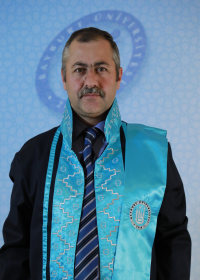
Dr. Ebubekir AKKOYUNLU is a Lecturer at the Department of Mathematics and Science Education, Faculty of Education, Bayburt University. His research spans applied mathematics, mathematical analysis, and nonlinear differential equations, with a focus on chemotaxis models, blow-up phenomena, and variable exponent spaces. Current commissions include: Diameter-Make Commission, Adaptation-Exemption Commission, International Relations Commission, Department Quality Commission, and Library Commission. His recent work analyzes anisotropic parabolic equations, attraction-repulsion chemotaxis systems, and Kirchhoff-type problems, often involving nonstandard growth nonlinearities. Publications emphasize existence theory, boundedness, and blow-up time estimation. He has contributed to mathematics education research, particularly in realistic teaching methods for derivative concepts in secondary education.
Dr. Cristinel Mares is a Reader and Director of Teaching and Learning at Brunel University London, affiliated with the Department of Mechanical and Aerospace Engineering within the College of Engineering, Design and Physical Sciences . He has maintained a consistent research trajectory in structural dynamics, vibration analysis, and damage detection methodologies since the late 1990s. Role: Reader (equivalent to Professor rank), Director of Teaching and Learning Contact: cristinel.mares@brunel.ac.uk | Howell Building, Room 111 Research Interests span structural health monitoring (SHM) through acoustic emission and guided wave propagation , wavelet-based finite element analysis for dynamic systems, squeeze-film levitation mechanisms, and Bayesian estimation for crack monitoring. His work bridges theoretical modeling with industrial applications in aerospace, wind energy, and marine engineering. Scientific Contributions include over 104 publications in journals like Mechanical Systems and Signal Processing , Advances in Mechanical Engineering , and Sensors . Recent articles focus on passive compliance design for robotics , Poisson contraction in levitation systems , and fatigue crack diagnostics using high-frequency parametric analysis . Collaborative efforts include co-authoring with T-H Gan, M. Wang, and T. Stolarski. Lab & Team Involvement includes membership in Brunel's structural dynamics research group, working on multi-scale finite element models , acoustic emission monitoring , and vibration-based damage detection . His team applies these techniques to complex systems ranging from helicopter stub wings to fast-moving train beam-soil interactions .
Prof. Alessandro Calamai is an Associate Professor at the Department of Civil, Building and Architectural Engineering (DICEA) within Marche Polytechnic University , Italy. His research focuses on Mathematical Analysis , particularly in differential equations, nonlinear dynamics, and topological methods in analysis. Research Interests: Calamai's work addresses ordinary and partial differential equations , chaos theory in piecewise-smooth systems , eigenvalue problems , and functional boundary value problems . His contributions include applications of topological and degree theory to nonlinear operators. Scientific Trends: His recent publications explore Melnikov chaos in planar systems φ-Laplacian equations with perturbations infinite-dimensional extensions of classical theorems degenerate systems and parameter-dependent solutions .
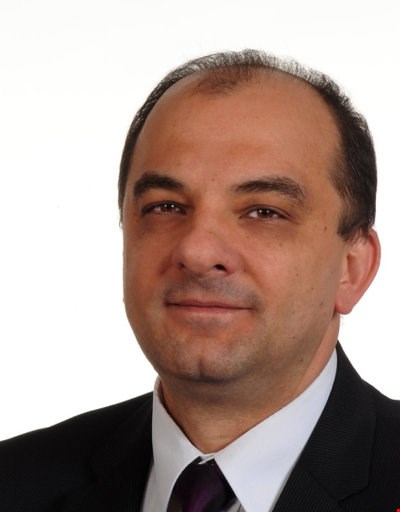
Dr. Raimond Strauß is a Professor at the Institute of Mathematics, University of Rostock, within the Faculty of Mathematics and Natural Sciences. He specializes in mathematics education tailored for engineering disciplines, focusing on numerical analysis and differential equations. His work emphasizes the application of mathematical concepts in engineering training. Chair of Applied Analysis Managing Editor of the magazine ROMAKO Collaboration with the Gottlob Frege Center at the University of Wismar His research interests span numerical integration, approximate quadratures, and integral transforms, aligning with the MSC classifications 65D30, 41A55, and 44A15. He has contributed extensively to the development of mathematics curricula for engineers and chemists. Recent publications highlight his work on qualitative methods for differential equations, educational theses for engineering mathematics, and numerical integration techniques. These papers reflect his commitment to bridging mathematical theory with practical engineering applications. In 2014, he received the Award for Teaching from the Society of Sponsors of the University of Rostock. He has also co-authored a book project Mathematik für Ingenieure on ordinary differential equations and developed lecture notes for industrial engineering and computer science.
Travis Wiltshire is a Researcher at Tilburg University in the Cognitive Science and Artificial Intelligence school, with prior postdoctoral work at the University of Utah (Psychology) and the University of Southern Denmark (Institute of Language and Communication). His work bridges human-robot interaction , dynamical systems theory , and collaborative cognition , focusing on how low-level coordination mechanisms facilitate social and cognitive processes in teams and therapeutic contexts. His research explores multiscale movement coordination dynamics in collaborative problem solving, social signal processing for robotic systems, and neural correlates of cognitive performance using EEG. Key findings demonstrate that in-phase movement coordination predicts team performance, social cues modulate human-robot attribution , and fractal scaling relations in EEG data reveal insights into brain functioning under task demands. Current work emphasizes interdisciplinary frameworks integrating ecological psychology , enactive cognition , and computational modeling to advance artificial systems. Travis's publications span journals like Frontiers in Human Neuroscience , Clinical Psychological Science , and Nonlinear Dynamics, Psychology, and Life Sciences , addressing topics such as phase transitions in team problem solving , attractor dynamics in scheduling, and direct perception theories in social cognition. His methodological expertise includes cross-wavelet coherence , convergent cross-mapping , and vector field diagrams for analyzing complex interactions. Future research directions emphasize soft-assembly principles in neural systems and ethical frameworks for artificial moral agents.
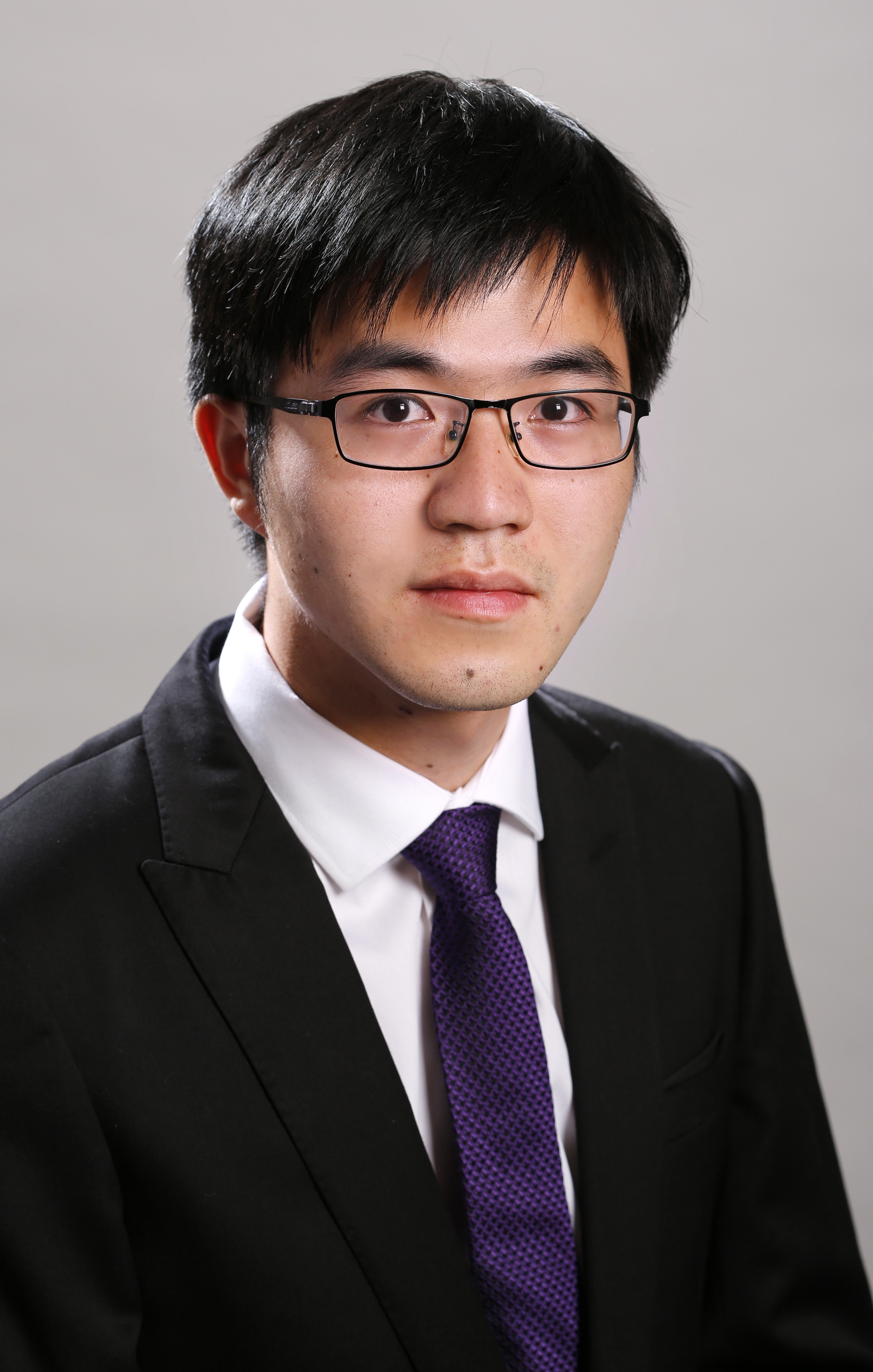
Changxiao Cai is an Assistant Professor at the University of Michigan in the Department of Industrial and Operations Engineering and an affiliate faculty member in Electrical and Computer Engineering. He holds a Ph.D. in Electrical Engineering from Princeton University (2021) and a B.E. in Electronic Engineering from Tsinghua University (2016). Previously, he was a postdoctoral researcher at the University of Pennsylvania under T. Tony Cai and Hongzhe Li. His research focuses on mathematical data science , with recent work emphasizing diffusion models , reinforcement learning , high-dimensional statistics , and nonconvex optimization . His publications span theoretical analysis of diffusion models, convergence guarantees in reinforcement learning, and statistical methods for tensor completion, demonstrating interdisciplinary applications in machine learning, optimization, and information theory. Contact: cxcai@umich.edu
Ryan Schneider is an NSF Postdoctoral Fellow in the Department of Mathematics at the University of California, Berkeley. His research focuses on numerical analysis, randomized numerical linear algebra, and scientific computing, with applications to quantum mechanics and computational physics. Mentor: James Demmel (UC Berkeley) Former Advisor: Ioana Dumitriu (UC San Diego) Collaborator: Barry I. Schneider (NIST) Ryan's work centers on developing efficient numerical methods for solving differential equations, particularly the time-dependent Schrödinger equation. His research combines algorithm design with practical implementations in Fortran, emphasizing inverse-free and communication-efficient approaches. Recent publications highlight advancements in: Jacobi's method optimization for eigenvalue problems Structured divide-and-conquer algorithms Volterra integral equation solvers (ITVOLT) Deflating subspace computations Quantum system simulations Scientific awards include: NSF Postdoctoral Fellowship Measurement Science and Engineering Fellowship at NIST Contact: ryan.schneider@berkeley.edu | ryschnei@ucsd.edu
Akash Singha Roy is a Lecturer in the Department of Mathematics at the University of Georgia (UGA), where he completed his Ph.D. under Paul Pollack in July 2025. His research focuses on elementary, analytic, and combinatorial number theory, particularly the residue-class distribution of arithmetic functions and mean values of multiplicative functions. He will join Charles University, Prague, as a postdoctoral fellow in October 2025. Ph.D. in Mathematics, University of Georgia (2025) BSc. Honors in Mathematics and Computer Science, Chennai Mathematical Institute (2021) His work spans advanced analytic techniques, including the Siegel-Walfisz and Landau-Selberg-Delange methods, with applications to Benford's law, prime factor distributions, and algebraic structures like module theory and arithmetic geometry. He has coauthored publications with Vorrapan Chandee, Xiannan Li, Nathan McNew, and Paul Pollack. His recent publications extend classical analytic number theory methods to broader contexts, such as Dirichlet L-functions and hybrid families of additive/multiplicative functions. Key themes include residue-class equidistribution, statistical properties of arithmetic functions, and connections to Fourier coefficients of modular forms. Scientific Awards: William Armor Wills Memorial Scholarship Award (2024) UGA Graduate School Dean's Award (2023) Exemplary Counselor Award, Ross/Asia Mathematics Program (2019) At UGA, Singha Roy has taught Calculus I and Precalculus, contributed to curriculum design, and mentored students at the Ross Mathematics Program. He has refereed for journals like Monatshefte fur Mathematik and the Rose-Hulman Undergraduate Mathematics Journal.
Hon To Hardy Chan is a Research Fellow at the Department of Mathematics and Computer Science at the University of Basel, Switzerland, where he works in the Research Group Lenzmann. He currently holds an SNF Ambizione Fellowship, which is a prestigious independent research grant from the Swiss National Science Foundation. Dr. Chan earned his Ph.D. in 2018 from the University of British Columbia with a dissertation titled 'New solutions to local and non-local elliptic equations,' supervised by Juncheng Wei and Nassif Ghoussoub. Prior to this, he completed an M.Phil. in 2013 at the Chinese University of Hong Kong under Kai-Seng Chou, with a thesis on 'Convergence of bounded solutions for nonlinear parabolic equations.' His research focuses on nonlinear partial differential equations, particularly semilinear elliptic equations, nonlocal equations, phase transitions, the Yamabe problem, nonlocal minimal surfaces, construction of solutions, singular solutions, and free boundary problems. Dr. Chan has made significant contributions to the field including the flatness of stable free boundaries, classification of stable nonlocal minimal surfaces, theory of nonlocal ODEs, fractional elliptic gluing schemes, and new boundary singular phenomena. Analysis of his recent publications reveals a strong focus on fractional calculus and nonlocal operators, with particular attention to geometric problems, singular solutions, and boundary behavior. His work bridges pure mathematical analysis with applications in geometry and physics, demonstrating sophisticated techniques that combine classical ODE methods with modern nonlocal analysis. Among his notable achievements is the SNF Ambizione Fellowship, which supports his independent research program. His publications in top mathematics journals reflect the significance and impact of his work in the mathematical community. Dr. Chan teaches courses in advanced mathematics, including 'Elliptic PDEs: Theory and Applications' for the Spring semester of 2025. His research is supported by multiple prestigious fellowships including his current SNF Ambizione Fellowship, previous Severo Ochoa Postdoctoral Fellowship at ICMAT Madrid (2021-2022), and ERC Postdoctoral Fellowship at ETH Zurich (2018-2021). He is actively involved in the mathematical research community, collaborating with prominent mathematicians across Europe and contributing to the advancement of nonlocal partial differential equations and their applications.
Dr. Carolin Penke is a researcher at the Jülich Supercomputing Centre (JSC) of Forschungszentrum Jülich GmbH . She leads projects in training large language models (LLMs) on high-performance computing (HPC) systems as part of the OpenGPT-X initiative and the Accelerating Devices Lab . Current focus: HPC-AI integration , memory-efficient LLM training , and accelerator evaluation Prior work: numerical linear algebra and mathematical algorithm development for quantum chemistry Her research spans computational mathematics, artificial intelligence, and high-performance computing. Key contributions include: Developing CARAML for AI workload evaluation Creating JUPITER benchmark suite for exascale systems Optimizing low-rank representations in deep learning Advancing pseudosymmetric matrix algorithms for physics simulations Designing GPU-accelerated numerical methods for eigenvalue problems Her work bridges mathematical rigor with practical AI/HPC applications, emphasizing scalability , energy efficiency , and European sovereignty in AI .
Helena Margarida dos Santos Vasconcelos Gomes is an Assistant Professor at the School of Education of Viseu (Polytechnic Institute of Viseu), with a PhD in Mathematics (Spectral Graph Theory, 2018) and a Master's in Mathematics (Algebra and Systems Theory, 2006) from the University of Aveiro . She is a senior researcher at the Center for Research and Development in Mathematics and Applications (CIDMA) . Her work bridges Spectral Graph Theory and Mathematics Education , focusing on Early Childhood and Primary Education Algorithmic and Computational Thinking Humor in Mathematics Teaching Textbook Evaluation Teacher Training Programs Her research projects include EARLY (Robotics in Early Education), MindMaths (Flipped Learning for Math Anxiety), and Algolittle (Play-Based Algorithmic Skills). She has contributed to national and international studies on pedagogical content knowledge and interdisciplinary curriculum design. She supervises Master’s theses on topics like ICT in Geometry and teaching materials for Preschool Mathematics. Her recent publications analyze caterpillar graphs via H-join operations, Randic spectra, and humor integration in textbooks. Current affiliations : Assistant Professor, School of Education of Viseu (since 2018) Senior Researcher, CIDMA (since 2019) PhD Candidate, Artificial Intelligence and Intelligent Systems Engineering, Porto Higher Institute of Engineering (since 2022)
Christian Bär is a Professor of Mathematics at the University of Potsdam, where he maintains an active research program in differential geometry, spectral geometry, and mathematical physics. He serves as editor-in-chief of zbMATH Open and previously held the presidency of the German Mathematical Society (DMV) from 2011 to 2012. His research is supported through major collaborative projects including the IMPRS for Mathematical and Physical Aspects of Gravitation, Cosmology and Quantum Field Theory, the DFG Priority Programme 'Geometry at Infinity,' and the Berlin Mathematical School. Professor Bär's primary research interests focus on differential geometry with particular emphasis on spectral properties of Dirac operators, Lorentzian geometry, spin geometry, and scalar curvature problems. His work bridges pure mathematics and theoretical physics, exploring the deep connections between geometric structures and physical phenomena. His research has made significant contributions to understanding the relationship between Dirac operators and geometric invariants, particularly in the context of index theory and rigidity theorems. His recent publications demonstrate a consistent focus on boundary value problems for Dirac-type operators, scalar curvature rigidity, and Lorentzian geometry. The work shows increasing sophistication in handling non-compact boundaries and developing local versions of classical index theorems. His research group has made notable advances in connecting differential geometry with mathematical physics, particularly in the context of general relativity and quantum field theory on curved spacetimes. President of German Mathematical Society (2011-2012) Editor-in-chief of zbMATH Open Professor Bär is actively involved in multiple third-party funded research projects that form a significant part of his research program. The IMPRS for Mathematical and Physical Aspects of Gravitation, Cosmology and Quantum Field Theory provides a framework for interdisciplinary research, while the DFG Priority Programme 'Geometry at Infinity' supports fundamental research in geometric analysis. His collaboration with the Berlin Mathematical School indicates strong connections with graduate education and mentoring of young researchers.
Iveta Hnetynkova is an Associate Professor at the Department of Numerical Mathematics, Faculty of Mathematics and Physics, Charles University in Prague. She specializes in numerical linear algebra, inverse problems, and regularization methods, with applications in image processing and scientific computing. Education: Doctor of Natural Sciences (RNDr.) from Charles University (2003) Ph.D. in Scientific Computations from Charles University (2006) Habilitation thesis on error-contaminated linear approximation (2019) Research Interests: Krylov subspace methods Total Least Squares (TLS) formulations Noise revealing in discrete inverse problems Tensor generalizations and structured matrices Applications in image processing and jewelry defect analysis Scientific Awards: Visegrad Group Young Researcher Award (2014) J. Jirsa Prize for textbook excellence (2013) I. Babuska Prize (2nd place) (2007) SVOČ Prize in mathematics (2003)
David Hammond is a Professor of Mathematics at Oregon Institute of Technology's Portland-Metro campus, where he has held a faculty position since 2013. His academic trajectory includes Peace Corps service teaching mathematics in Malawi, doctoral studies at NYU's Courant Institute, and postdoctoral research at École Polytechnique Fédérale de Lausanne and the University of Oregon. His educational background features: B.S. in Mathematics/Chemistry from California Institute of Technology (1999) Ph.D. in Mathematics from New York University (2007) Dr. Hammond's research centers on signal and image processing with specialized expertise in wavelet analysis and graph signal processing . His theoretical work on spectral graph wavelets enables advanced data analysis on complex networks, while practical applications span biomedical imaging, microscopy enhancement, and computational neuroscience. This dual focus bridges abstract mathematical frameworks with tangible engineering solutions. Analysis of his recent publications reveals three dominant research streams: (1) foundational contributions to graph signal processing including the spectral graph wavelet transform, (2) biomedical applications in EEG source estimation and head tissue modeling, and (3) interdisciplinary policy work on sugary drink taxation and electricity market design. His 2018 paper on the spectral graph wavelet transform represents a cornerstone contribution with over 500 citations. No scientific awards were documented in the source material. As a full-time professor, Dr. Hammond maintains active research and teaching responsibilities. While specific advisees aren't listed, his publications indicate mentorship through collaborative research. His work has been supported by institutional affiliations rather than explicitly cited grants. Though no dedicated laboratory is described, his research methodology suggests utilization of computational facilities for signal processing tasks, with collaborations spanning biomedical engineering, astronomy, and public health domains.