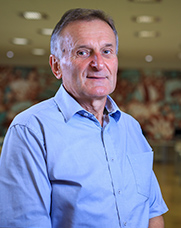
Prof. Josip Matejaš is a Professor in the Department of Mathematics at the Faculty of Economics, University of Zagreb. His expertise lies in mathematical programming, numerical analysis, and optimization, with a focus on multi-objective programming and its applications in economics and business strategy. He has contributed to advancements in iterative methods for solving complex optimization problems and numerical accuracy in algorithms. His research spans interdisciplinary areas, including the application of Benford's Law in auditing, demographic business strategy modeling through numerical interpolation, and sustainable principles in multi-objective decision-making. He has authored numerous articles on topics such as high-accuracy matrix computations, algorithm efficiency comparisons, and special number theory problems. Prof. Matejaš is actively involved in teaching and research, contributing to the Faculty's academic mission through his work in mathematics and its practical applications in economics and business disciplines.
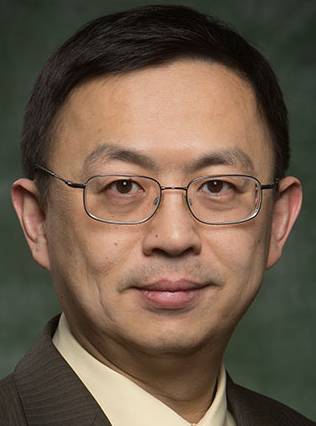
Shahla Nasserasr is an Assistant Professor in the School of Mathematics and Statistics at the Rochester Institute of Technology (RIT), within the College of Science. Her research focuses on combinatorial matrix theory, spectral graph theory, and the inverse eigenvalue problem in graphs, with applications to totally positive matrices and graph theory. She actively contributes to the mathematics community, currently serving as Chair of the Outreach and Membership Committee for the International Linear Algebra Society (ILAS). Teaching responsibilities include courses such as Discrete Mathematics for Computing, Linear Algebra, and Undergraduate Research in Mathematical Sciences. Her work bridges theoretical foundations with practical applications, emphasizing spectral properties of graphs and eigenvalue problems. Over 20+ published articles span topics from graph colorings and matrix completions to quantum-inspired graph diagonalization techniques. Research trends highlight her contributions to understanding graph spectra, eigenvalue multiplicity constraints, and innovative applications like q-analogues of zero forcing. While no awards are explicitly listed, her leadership in ILAS underscores her dedication to advancing linear algebra education and research globally. Her advising and mentoring extend through RIT’s undergraduate research programs, fostering student engagement in mathematical sciences. Collaborative work includes exploring sparsity properties in graphs and the structural implications of spectral arbitrariness. Current research directions aim to deepen insights into graph eigenvalue problems and their computational applications.
Ning Zhou is an Associate Professor in the Electrical and Computer Engineering Department at SUNY Binghamton University, serving as Director of Graduate Admissions. He holds a PhD from the University of Wyoming (2005), with prior academic roles at Beijing Institute of Technology (1995–2000) and Pacific Northwest National Laboratory (2005–2013). His research focuses on power system dynamics, PMU applications, smart grid technologies, and renewable energy integration. He has led NSF-funded projects, including a CAREER Award for dynamic state estimation under high uncertainty. Research interests include power system stability, signal processing for grid monitoring, and real-time voltage security analysis. Notable awards include the 2017 IEEE PES Outstanding Branch Counselor Award and the 2023 NSF CAREER Award. He advises multiple PhD students and collaborates with industry on projects like solar forecasting and grid resilience. Publications span over 100 journal/conference papers, emphasizing dynamic state estimation and renewable integration. Professional roles include Associate Editor for IET Generation, Transmission & Distribution, and leadership in IEEE PES committees.
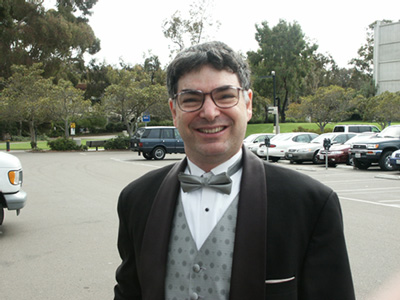
Richard S Laugesen is a Professor in the Department of Mathematics at the University of Illinois at Urbana–Champaign, serving as Associate Chair for Faculty. He specializes in differential equations, mathematical physics, and complex analysis with a focus on extremal problems. His roles include Director of Graduate Studies in Mathematics (2012–2017) and leadership in interdisciplinary programs like the Illinois Sloan University Center of Exemplary Mentoring (co-PI, 2015–2018). Education: PhD in Mathematics from Washington University in St. Louis (1993). Research interests span spectral theory, geometric optimization, and partial differential equations. His work emphasizes eigenvalue optimization, capacity theory, and applications to physics and engineering. Recent studies investigate Riesz capacity, Neumann/Robin eigenvalues, and spectral shape optimization. Notable awards include the Campus Award for Excellence in Graduate Teaching (2017), Distinguished Teaching Award (2016), and multiple teaching honors from 2003. He has secured grants from the Sloan Foundation, NSF, and Simons Foundation, supporting initiatives in STEM education and mathematical sciences. Advising and mentorship form a key part of his career, with contributions to internship networks and graduate training programs. His research group actively explores interdisciplinary problems at the intersection of analysis, geometry, and applied mathematics.
Mauro Bisiacco is an Associate Professor at the Department of Information Engineering, University of Padova, Italy. His research focuses on control systems theory, particularly behavioral approaches to multidimensional systems. He specializes in dead-beat control, state estimation, fault detection, and observer design for two-dimensional state-space models. Research Interests: Professor Bisiacco's work spans: Behavioral theory applications in control systems Dead-beat control and estimation algorithms Fault detection/isolation in multidimensional systems Observer design (Luenberger-type, unknown input) Algebraic decomposition of system behaviors Publication Trends: His 15 most recent articles (2000-2013) predominantly explore theoretical frameworks for two-dimensional systems, with consistent themes in behavioral decompositions, dead-beat methodologies, and fault diagnosis. Later works show increased focus on optimization and controllability in multidimensional spaces. Awards: No scientific awards mentioned in available sources. Students & Collaborations: Frequently collaborates with Maria Elena Valcher. No student advisees listed.
Debashis Paul is a Professor in the Department of Statistics at the University of California, Davis. His research focuses on high-dimensional statistics, random matrix theory, functional data analysis, and their applications in neuroimaging and spatial statistics. He has contributed to methodologies for spectral analysis, covariance modeling, and nonparametric estimation in complex datasets. His work spans theoretical developments in multivariate analysis and practical applications in fields such as medical imaging and genomics. Recent projects include modeling fiber orientation in diffusion MRI, analyzing high-dimensional genomic data, and studying pandemic dynamics through statistical frameworks. Key research themes include: High-dimensional time series analysis Random matrix theory applications Functional data smoothing techniques Non-Gaussian spatial field modeling Covariance structure inference His recent publications highlight advancements in spectral estimation, latent graph inference, and meta-learning frameworks in high-dimensional settings. He has also contributed to methodological improvements in GWAS analysis and nonautonomous dynamical systems modeling.
Oliver Knill is a Professor in the Department of Mathematics at Harvard University. He specializes in differential geometry, discrete mathematics, and algebraic topology, with a focus on geometric analysis, graph theory, and stochastic processes. Knill is affiliated with the Faculty of Arts and Sciences and has been actively involved in teaching advanced mathematics courses such as Math S-21a (Multivariable Calculus) and Probability Theory. His research explores topics like geodesic dynamics on discrete manifolds, curvature invariants, and topological graph theory. Knill's work bridges theoretical mathematics and computational methods, with contributions to spectral graph theory, geometric combinatorics, and the application of algebraic topology to discrete structures. He has published extensively on discrete geometric flows, barycentric subdivisions, and the interplay between graph theory and classical geometry. His recent articles include studies on wave front density, Gauss-Bonnet theorems for discrete forms, and fusion inequalities in cohomology. Knill maintains an active online presence through blogs like Quantum Calculus and engages with academic communities via platforms like Google Scholar, ResearchGate, and LinkedIn. His teaching responsibilities include coordinating upper-level mathematics courses and leading tutorials on advanced topics. Despite no explicit mention of awards, his prolific publication record underscores his contributions to the field.
Giorgio Poggesi is an Adjunct Senior Research Fellow at the University of Western Australia (UWA) and a Senior Lecturer at the University of Adelaide since May 2025. His research focuses on analysis and partial differential equations (PDEs), particularly geometric aspects and applications, including stability, symmetry, and overdetermined problems. He holds a PhD in Mathematics from Università di Firenze (2019), with earlier degrees (MSc and BSc in Mathematics, both cum laude) from the same institution. Poggesi has received prestigious awards, including the ARC DECRA (2022), the J G Russell Award (2023), and the UWA PMC Early-Career Research Award (2024). Education : PhD in Mathematics (2019), Università di Firenze, thesis: *The Soap Bubble Theorem and Serrin's Problem: Quantitative Symmetry*. Master's Degree in Mathematics (2015), Università di Firenze, thesis: *On the Stability for Alexandrov's Soap Bubble Theorem*. Bachelor's Degree in Mathematics (2013), Università di Firenze, thesis: *Littlewood's Fourth Principle*. Research Interests : Poggesi's work centers on geometric analysis, PDEs, and their applications. Key themes include symmetry properties of solutions to PDEs, stability estimates for overdetermined problems (e.g., Serrin-type problems), convex cones, and nonlocal equations. His research bridges theoretical analysis with geometric insights, often involving integral identities and stability quantification. Publications : His recent work explores symmetry and stability in multi-phase systems, fractional PDEs, and geometric rigidity. Key contributions include advancements in the Soap Bubble Theorem, Serrin problem variations, and nonlocal overdetermined problems. Awards : 2024: UWA PMC Early-Career Research Award. 2023: J G Russell Award (Australian Academy of Science). 2022: ARC DECRA for *Partial Differential Equations: Geometric Aspects and Applications*. Grants and Roles : Poggesi led an ARC DECRA project (2023–2026) and served on UWA's PMC Research Committee. His grants and awards reflect his impactful contributions to PDE theory and geometric analysis. Labs/Teams : Active in UWA’s Department of Mathematics and Statistics and collaborates internationally on topics like convex cones and nonlocal equations.
Giulia Ferrandi is a Researcher and Guest Researcher at the Department of Mathematics and Computer Science, Eindhoven University of Technology (TU/e). She completed her PhD under the supervision of Prof. Michiel Hochstenbach (TU/e) and Prof. Rosário Oliveira (IST, Lisbon) as part of the European BIGMATH project. Her research focuses on Statistics, Linear Algebra, and Optimization applied to statistical problems, with contributions to gradient methods, trace ratio problems, and Markov chain analysis. She holds a master’s degree from Università degli Studi di Milano (Italy), specializing in Probability and Statistics. Prior to her academic roles, she briefly taught in high school and worked in industry. Research Interests : Her work bridges numerical linear algebra and optimization, with emphasis on: Development and analysis of gradient methods (e.g., limited memory, harmonic frameworks) Applications of Rayleigh quotients in optimization and eigenvalue problems Robust multigroup classification via trace ratio techniques Statistical analysis of Markov chains for farmland transitions and non-stationary processes Publications : Her recent work demonstrates contributions to: Subspace methods for large-scale trace ratio problems Advancements in unconstrained optimization via limited-memory gradient approaches Integration of Rayleigh quotients into gradient-based algorithms Harmonic frameworks for optimizing stepsizes in numerical methods Collaborations & Grants : Her PhD was funded by the EU’s BIGMATH project. Collaborators include Prof. Michiel Hochstenbach (TU/e) and Prof. Nataša Krejić (University of Novi Sad). No explicit advising roles or grants are listed beyond her doctoral funding. Technical Expertise : Expertise in numerical analysis, statistical modeling, and linear algebra applications.
Ronald J. Evans is a Professor of Mathematics at the University of California, San Diego (UCSD), affiliated with the Department of Mathematics within the Division of Physical Sciences. His academic career includes roles such as Graduate Vice Chair (2011-2013). He holds a Ph.D. in Mathematics from the University of Illinois (1974). His research focuses on Number Theory, Finite Fields, and Character Sums, with significant contributions to Gauss and Jacobi Sums, as detailed in his influential book *GAUSS AND JACOBI SUMS* (1998). His work integrates algebraic, analytic, and combinatorial methods, addressing topics like hypergeometric functions over finite fields, Pfaffians, and Toeplitz matrices. Evans has authored over 120 publications, including studies on Kloosterman sums, hypergeometric identities, and combinatorial matrix theory. His book has been reviewed in leading journals like *Mathematical Reviews* and *Zentralblatt*. Beyond academia, he is a violist with the Fine Arts Quartet, collaborating with musicians like Ralph Evans. He advocates against academic boycotts of Israel, emphasizing the importance of scientific collaboration over political strife. Key contributions include resolving sign ambiguities in Jacobi sums, analyzing character sums in finite fields, and exploring algebraic structures in quadratic forms. His recent work includes studies on nullities of Toeplitz matrices and class field theory applications. Despite no explicitly listed students or grants, his research has impacted algebraic number theory, combinatorics, and linear algebra.
Fan Chung Graham holds the Paul Erdos Chair of Combinatorics in the Department of Mathematics at the University of California, San Diego (UCSD), where she conducts research in discrete mathematics. Her academic foundation includes a Ph.D. in Mathematics from the University of Pennsylvania (1974). Her research spans combinatorial structures with deep specialization in extremal graph theory—which examines optimal graph configurations under constraints—and spectral graph theory, where algebraic methods analyze graph properties through eigenvalues. These fields intersect with theoretical computer science and network analysis, driving innovations in algorithm design and complex systems modeling. Dr. Graham's scholarly impact is recognized through prestigious honors: Fellow of the American Academy of Arts and Sciences Fellow of the American Mathematical Society Allendoerfer Award for expository excellence in Mathematics Magazine As a leading figure in combinatorics, she has mentored generations of researchers and influenced grant-funded projects in discrete mathematics, though specific advisee names and grant details are not documented in the source material. Her work remains integral to UCSD's mathematical research ecosystem through collaborative networks and theoretical advancements.
Tin-Yau Tam is the Chair of the Department of Mathematics and Statistics at the University of Nevada, Reno (UNR), holding the Seneca C. and Mary B. Weeks Endowed Professorship. His primary affiliation is within the College of Science, where he contributes to both teaching and research. Dr. Tam earned his Ph.D. in Mathematics from the University of Hong Kong in 1986, following a B.Sc. in Mathematics from the same institution in 1982. His research focuses on advanced topics in linear algebra and matrix theory, including Lie groups/algebras, multilinear algebra, numerical ranges, operator theory, and their applications. His work bridges pure mathematics with interdisciplinary applications, such as quantum information theory and geometric analysis. Dr. Tam has contributed to over 150 scholarly articles, with recent work exploring geometric means in matrix analysis, spectral inequalities, and Lie group structures in matrix theory. His research trends emphasize the interplay between algebraic structures and geometric interpretations, with applications in data science and quantum computing. Though no specific awards are listed, his extensive publication record and endowed chair position reflect his scholarly impact. He advises students and collaborates on research projects within the department’s vibrant academic community, though specific advisee names are not documented here. His work is often centered in the Davidson Mathematics and Science Center on the UNR campus.
Giovanni Samaey is a Professor of Applied Mathematics and Mathematical Engineering at KU Leuven's Faculty of Engineering Science. He leads research in computational and multiscale methods, focusing on plasma edge modeling for nuclear fusion reactors, Bayesian inversion, and Monte Carlo algorithms. Appointed in 2011, he currently supervises ten PhD students and has held a five-year membership in the Young Academy. His work bridges academic research with societal impact, co-founding Platform Wiskunde Vlaanderen to strengthen mathematics in Flanders. Education: Graduated in Computer Science (specializing in applied mathematics) from KU Leuven (1996), completed a PhD in 2001 under Prof. Dirk Roose, supported by an NFWO fellowship. He transitioned from engineering studies due to a passion for mathematics' societal impact, initially avoiding academia but ultimately embracing teaching and research. Research Interests: Development of numerical methods for multiscale phenomena, including micro-macro acceleration algorithms, multilevel Monte Carlo techniques, and hybrid fluid-kinetic models. His work addresses challenges in plasma physics, fusion energy systems, and inverse problems. Key contributions include the X-Factor book (with Joos Vandewalle) promoting mathematics outreach and advancing computational tools for plasma edge simulations. Awards/Honors: Member of the Young Academy (2016-2021), NFWO Aspirant Fellowship (2001-2002). His efforts in STEM advocacy and mathematics promotion through Platform Wiskunde Vlaanderen highlight his dedication to education and public engagement. Advising & Leadership: Supervises a team of PhD students in applied mathematics and computational science. Active in curriculum development and interdisciplinary collaborations, particularly in fusion energy modeling. His research group contributes to codes like EMC3-EIRENE for plasma edge simulations. Labs/Teams: Leads projects in multiscale numerical methods and plasma simulation within KU Leuven's engineering faculty. Collaborates internationally on fusion reactor modeling and Monte Carlo algorithm design, emphasizing computational efficiency and scalability.
Joel A. Tropp is the Steele Family Professor of Applied & Computational Mathematics at the California Institute of Technology (Caltech), within the Division of Engineering and Applied Science. His academic career includes roles as Assistant Professor (2007–2012), Professor (2012–2017), and Steele Family Professor (2017–present). He holds a Ph.D. in Computational Applied Mathematics from the University of Texas at Austin (2004). Tropp's research focuses on applied mathematics, machine learning, data science, numerical algorithms, and random matrix theory, with notable contributions to matching pursuit algorithms, randomized SVD methods, and matrix concentration inequalities. Education: Ph.D. in Computational & Applied Mathematics, University of Texas at Austin (2004) M.S. in Computational & Applied Mathematics, University of Texas at Austin (2001) B.S. in Mathematics and B.A. in Plan II Liberal Arts, University of Texas at Austin (1999) Research Interests: Tropp’s work bridges applied mathematics, computer science, and engineering, emphasizing rigorous, practical algorithms for linear algebra, numerical analysis, and optimization. He develops user-friendly tools for high-dimensional probability and matrix analysis, with applications in machine learning, signal processing, and data science. His recent focus includes randomized algorithms for large-scale matrix computations, kernel methods, and quantum computing. Articles Trends: His recent publications address scalable randomized algorithms for kernel matrices, eigenvalue problems, and matrix approximation. Themes include computational efficiency, theoretical guarantees, and applications in machine learning, quantum computing, and dynamical systems. Awards: 2025 Richard P. Feynman Prize for Excellence in Teaching 2024 IMS Fellow 2020 IEEE Fellow 2019 SIAM Fellow 2008 PECASE Award Advising & Grants: Tropp has advised numerous Ph.D. students and postdoctoral researchers in areas like randomized algorithms, optimization, and quantum computing. He leads grants from ONR, NSF, and Caltech’s Carver Mead Fund, focusing on large-scale kernel computations and matrix solvers. His mentorship extends to interdisciplinary collaborations in turbulence modeling and signal processing. Labs & Teams: He contributes to Caltech’s Center for Mathematics of Information (CMI) and Computational Mathematics + X (CMX) initiatives, fostering research in data science, optimization, and computational methods.
Stefan Domino is an Adjunct Professor at Stanford's Institute for Computational and Mathematical Engineering (ICME) and a Distinguished Member of Technical Staff at Sandia National Laboratories. His research focuses on low-Mach fluid mechanics, turbulent flow simulation, and high-performance computational methods. He co-teaches ME469: Computational Methods in Fluid Mechanics. Research interests span computational fluid dynamics, multiphysics coupling, and algorithm development for complex transport phenomena, with applications in combustion, biofluidics, and environmental modeling. Recent publications emphasize fire dynamics, pathogen transmission modeling, and advanced LES techniques, reflecting interdisciplinary work at the mechanics-computation interface.