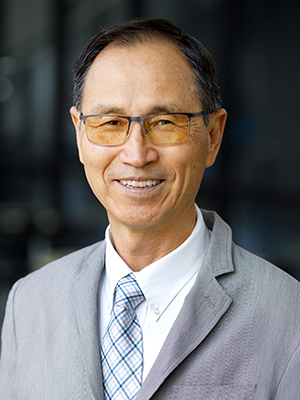
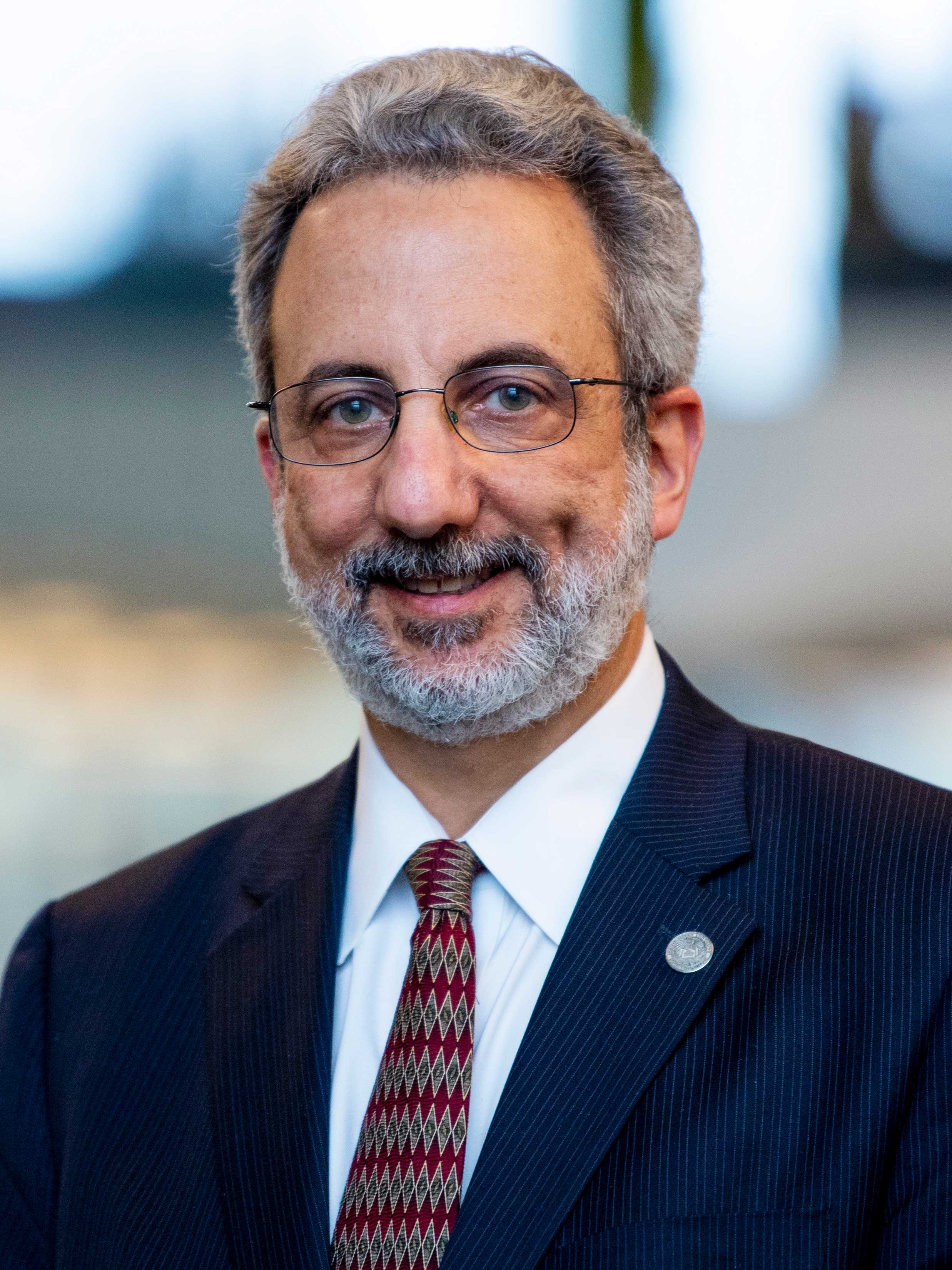
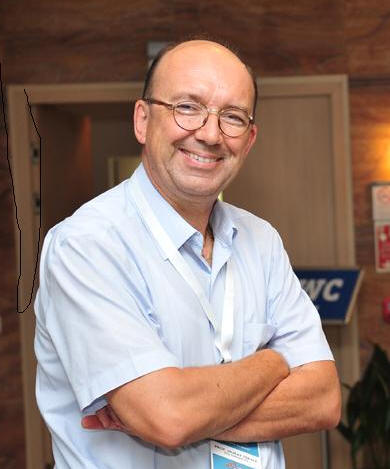
Liuba Shrira is a Professor of Computer Science at Brandeis University, affiliated with the Michtom School of Computer Science and the Benjamin and Mae Volen National Center for Complex Systems. Her research focuses on distributed systems, storage systems, blockchain technology, concurrent programming, and system architectures. She holds a Ph.D., M.S., and B.S. from the Technion – Israel Institute of Technology. Her work emphasizes reliable and highly available systems, including innovations in snapshot management, transactional memory, and adversarial cross-chain commerce. She has been recognized with awards such as the ACM Distinguished Scientist (2009), Lady Davis Fellowship (2010-2011), and a Best Paper Award (2020). Her research has been supported by grants from the National Science Foundation and other institutions. Recent publications highlight advancements in optimistic concurrency control, blockchain interoperability, and modular past-state systems. Shrira has also contributed to middleware design and distributed computing frameworks, with applications in both academic and industry settings.
Tara Javidi holds the Jerzy (George) Lewak Endowed Chair and is a Professor in the Department of Electrical and Computer Engineering and Halicioglu Data Science at the University of California San Diego (UCSD). She leads multiple initiatives, including serving as Founding CTO of KavAI, Co-Director of the Center for Machine Intelligence, Computing and Security, and Co-Principal Investigator (CoPI) of the NSF AI Institute TILOS. Her research focuses on stochastic analysis, design, and control of information systems, emphasizing active learning, decentralized optimization, and wireless networks. Key areas include information acquisition/utilization, stochastic control, and AI-driven communication solutions. Her work bridges theoretical foundations and practical implementations, such as drone systems for information gathering (via detecdrone.ucsd.edu) and optical data center networking. Notable contributions include end-to-end scheduling for all-optical data centers and hybrid wireless-optical architectures. Javidi is an IEEE Fellow and has received significant grants, including leading UCSD’s Schmidt AI in Science Postdoctoral Fellowship program. She actively collaborates with industry and academia, with a focus on next-generation wireless networks and decentralized systems. Education: Ph.D. in Electrical Engineering (implied from title). Affiliations: IEEE Journal of Selected Areas in Information Theory (Editor-in-Chief), CALIT2, CNS, and TILOS. Grants: NSF AI Institute TILOS ($20M over 5 years), Schmidt AI Fellowship program. Her research group emphasizes both theoretical rigor (e.g., sequential hypothesis testing) and practical testing, with applications in service drones, cognitive networks, and federated learning. Recent articles highlight advancements in optical networking, secure communication, and distributed learning protocols. Awards: IEEE Fellow, Jerzy Lewak Chair. Labs/Teams: Center for Machine Intelligence, TILOS Institute, KavAI, and UCSD’s AI in Science initiatives.
Fouad Khelifi is an Associate Professor in the Department of Computer and Information Sciences at Northumbria University. His research focuses on computer vision, machine learning, image/video processing, biometrics, multimedia forensics, and medical image analysis. He obtained his PhD in Computing Science from Queen's University Belfast (2007) and held prior research roles at the University of Bradford (2007–2009) before joining Northumbria in 2010. He supervises PhD students in cybersecurity applications and palm-vein recognition systems. Education: PhD in Computing Science, Queen's University Belfast (2004–2007) Fellow of the Higher Education Academy (FHEA, 2014) Research Interests: Khelifi’s work spans advanced deep learning techniques for medical imaging (e.g., cancer detection, retinal disease analysis), source camera identification in digital forensics, and biometric authentication systems. He develops novel algorithms for feature extraction, fusion networks, and transformer-based models in healthcare and multimedia security. Advising: Supervising Egallekanda Perera (PhD, 2019–2025): Efficient Keypoint-based Palm-vein Recognition Co-supervising Ikechukwu Ikpeama (PhD, 2024–): Cybersecurity for Industrial Control Systems Labs/Teams: Active in Northumbria’s Digital Media and Systems Research groups, contributing to interdisciplinary projects in AI-driven medical imaging and multimedia forensics.
Colleen Bailey is an Assistant Professor in the Department of Electrical Engineering at the University of North Texas. Her research focuses on the intersection of machine learning, signal processing, and energy systems, with applications spanning biomedical imaging, environmental monitoring, and edge computing. Research Interests: Machine learning optimization for edge devices Entropy-based image compression techniques Attention mechanisms in vision transformers Urban air pollution prediction models Land surface temperature super-resolution Publication Trends: Recent works emphasize compact AI architectures (e.g., MHATT network, entropy bottleneck models) for efficient processing in resource-constrained scenarios. Applications include medical imaging (Chest X-ray analysis), environmental monitoring (air quality, Martian dust storms), and energy systems (household prediction, power quality classification). Contact: Email: Colleen.Bailey@unt.edu Office: Discovery Park B252 Phone: 940-891-6874
Dr. Rosanne Rademaker is a Research Professor and Group Leader at the Rademaker Lab, part of the Ernst Strüngmann Institute (ESI) in Frankfurt, Germany, affiliated with Goethe University’s Department of Psychology. Her research focuses on understanding how sensation and cognition interact to shape human perception, particularly in visual working memory, attention, and physiological arousal states. Her lab employs behavioral, computational, and neuroimaging techniques (fMRI, M/EEG) to explore how the brain balances perceptual input with stored memories. In addition to foundational work on memory and attention, the lab investigates context effects on perception, motor-output impacts on visual processing, and computational neural principles. Rosanne emphasizes collaborative, fun science, fostering an inclusive environment through outreach and international collaborations. Key recent work includes studies on categorical representations in the visual hierarchy and neural dynamics during memory recall. Lab Members: Giuliana Giorjiani (PhD), Noa Noelle Krause (MSc), Amit Rawal (PhD), Maria Servetnik (PhD), Nursima Ünver Aydingül (PhD). Grants & Collaborations: Mishal Qubad’s “Junior Clinician Scientist” grant on schizophrenia visual maps, international collaborations with Toronto and the Max Planck School of Cognition. Teaching: Lectures on “Introduction to Cognitive Psychology” at Goethe University. Publications highlight her work in Nature Neuroscience , eLife , and Journal of Cognitive Neuroscience , with over 30 peer-reviewed articles. The lab actively engages in conferences (VSS, ECVP) and hosts annual retreats to promote scientific exchange.
Wenwen Wang is an Associate Professor in the School of Computing at the University of Georgia's Franklin College of Arts & Sciences. His research focuses on computer systems, compiler design, and embedded systems security. He holds a Ph.D. in Computer Science from the University of Chinese Academy of Sciences (2014). Education: Ph.D., Computer Science, University of Chinese Academy of Sciences, 2014 His research emphasizes dynamic binary translation, compiler optimization, and secure embedded systems. Notable contributions include frameworks like JavART (JIT compiler optimization) and BSan (memory error detection). He received the 2021 M. G. Michael Award for Sciences from the Franklin College. Wang has secured two NSF grants totaling $1.2 million, including CSR: Small grants for FALCON (2023–2027) and Modernizing Dynamic Binary Translation Systems (2023–2027). He advises three graduate students: Ruili Fang, Yage Hu, and Boyang Yi. His work addresses challenges in cross-architecture virtualization, GPU-based graph computing, and hardware-triggered security mechanisms. Recent projects include Liberator (GPU graph processing) and InvisiGuard (embedded device integrity).
Jennifer Tang is a Postdoctoral Associate at the Massachusetts Institute of Technology (MIT), holding dual appointments in the Institute for Data, Systems, and Society (IDSS) and the Laboratory for Information and Decision Systems (LIDS). She conducts her research under Professor Ali Jadbabaie, focusing on interdisciplinary problems at the intersection of information theory, network science, and social dynamics. Her position is temporary as she actively seeks a permanent academic role through the 2025 job market. Her academic credentials include: Ph.D. in Electrical Engineering and Computer Science from MIT, advised by Professor Yury Polyanskiy Bachelor of Science in Engineering (B.S.E.) in Electrical Engineering from Princeton University, with independent work supervised by Paul Cuff Dr. Tang's research program centers on theoretical and applied aspects of information theory, including channel capacity, quantization, and data compression. She investigates prediction and estimation in high-dimensional settings, data analytics for complex systems, and mathematical modeling of social dynamics and inference in multi-agent networks. Her work employs tools from statistics, optimization, and network theory to address challenges in communication, decision-making, and societal systems, with particular emphasis on opinion dynamics under social pressure and efficient representation of probability distributions. Analysis of her publication record reveals consistent contributions to information-theoretic limits, social network modeling, and compression techniques. Her works frequently appear in top venues like IEEE Transactions on Information Theory and major conferences (ISIT, CDC, ACC), demonstrating expertise in bridging theoretical foundations with real-world applications in networked systems and societal challenges. Her scientific achievements have been recognized with: Best Student Paper Award at IEEE International Symposium on Information Theory (ISIT) 2022 Best Student Paper Award at IEEE Machine Learning for Signal Processing (MLSP) 2022 Student Competition Winner at the Shannon Centennial Celebration Dr. Tang maintains an active teaching portfolio, having served as instructor for MIT 1.022: Introduction to Network Models (Spring 2025) and teaching assistant for multiple core courses including 6.008 (Introduction to Inference), 6.041/6.431 (Probabilistic Systems Analysis), 6.437 (Inference and Information), and 6.439 (Statistics, Computation and Applications). She also contributed to the MIT Women's Technology Program as a Mathematics Instructor during summer 2017. Her research is embedded within MIT's Laboratory for Information and Decision Systems (LIDS) and Institute for Data, Systems, and Society (IDSS), two premier interdisciplinary laboratories fostering collaboration on data-driven decision-making, societal challenges, and foundational theory in information and systems.
Kasper Green Larsen is a Professor in the Department of Computer Science at Aarhus University. His research focuses on theoretical computer science, machine learning, algorithms, and data structures. He has made significant contributions to boosting algorithms, PAC learning theory, and computational geometry. His work often bridges algorithm design with complexity theory, addressing challenges in optimization, memory efficiency, and lower bounds analysis. Key research areas include: Algorithmic Learning Theory (e.g., boosting, bagging, and PAC learners) Data Structure Design (e.g., invertible Bloom tables, succinct representations) Computational Complexity (e.g., lower bounds for dynamic and oblivious algorithms) Geometric Algorithms (e.g., hierarchical searching, range queries) Recent publications emphasize foundational advancements in learning theory (e.g., optimal weak-to-strong learning) and data efficiency (e.g., memory-reduced Bloom filters). His work frequently appears in top conferences like IJCAI, ICALP, and SODA, reflecting rigorous theoretical contributions with practical implications.
Montserrat Ros is an Associate Professor and Associate Dean (Education) at the School of Electrical, Computer and Telecommunications Engineering within the Faculty of Engineering and Information Sciences at the University of Wollongong, Australia. She has been with the university since 2006, initially joining as a Lecturer in Computer Engineering and progressing to her current senior academic and leadership roles. Her educational background includes: B.E.(Hons1)/B.Sc. double degree majoring in Computer Systems Engineering and Mathematics from the University of Queensland (2000) Ph.D. degree in Computer Engineering from the University of Queensland (2007) Professor Ros's research focuses on the intersection of embedded computing systems and practical engineering applications. Her work spans several key areas including embedded systems design, sensor network data fusion, cyber-physical systems development, and innovative approaches to engineering education. She has particular expertise in sensor-based localization techniques, computer architecture optimization, and code compression methodologies for resource-constrained environments. More recently, her research has expanded into machine learning applications for constrained systems and Internet of Things implementations. Analysis of her recent publication record reveals a strong emphasis on Internet of Things networks, UAV-based systems, and applications of artificial intelligence in both engineering education and manufacturing processes. Her work demonstrates a consistent pattern of bridging theoretical computer engineering concepts with practical real-world applications across diverse domains including healthcare, environmental monitoring, and industrial automation. Her significant contributions to academia have been recognized through numerous prestigious awards: 2019: AAUT Citation for Outstanding Contribution to Student Learning 2018: IEEE TALE 2018 Meritorious Service Award 2018: Featured in UOW Leadership in Education Booklet 2017: UOW Vice Chancellor's Award for Outstanding Contribution to Teaching and Learning 2016: UOW Women of Impact for inspiring young women in STEM 2015: UOW Vice Chancellor's Interdisciplinary Research Excellence Award 2012 & 2007: UOW Vice Chancellor's Awards for Teaching Excellence 2011: UOW Vice Chancellor's Award for Community Engagement Senior Fellow of WATTLE (Wollongong Academy for Tertiary Teaching & Learning Excellence) Professor Ros has secured substantial research funding across multiple projects spanning from 2006 to the present. Her grant portfolio demonstrates a consistent focus on engineering education innovation, sensor network development, and practical applications of embedded systems. Notable projects include "The AI Tutor: Enabling 24x7 student support across engineering" (2024), "AI/IoT-powered Airborne System for Monitoring Water Level and Tidal Floods" (2023), and "Smart Eye: Airborne and AI-Driven Assessment Solution of Sugarcane" (2022). She actively supervises HDR students and has completed multiple successful candidatures. Her leadership extends beyond research and teaching, as evidenced by her role as Associate Dean (Education) for the Faculty of Engineering and Information Sciences. She is also actively involved in community engagement through volunteering with the State Emergency Service (Wollongong SES) and Athletics Wollongong Club.
Dr. En-Hui Yang is University Professor in Electrical and Computer Engineering at the University of Waterloo and founding Director of the Leitch-University of Waterloo Multimedia Communications Lab. A world-renowned expert in information theory, he co-developed the Yang-Kieffer algorithm for lossless compression and invented soft decision quantization technology used in smartphones and web browsers. His research spans multimedia compression, digital communications, and deep learning. Education: Ph.D. Electrical Engineering, University of Southern California (1996) Ph.D. Probability and Statistics, Nankai University (1991) B.Sc. Applied Mathematics, HuaQiao University (1986) His transformative work in data compression has impacted millions globally through technologies accelerating data transmission efficiency. Articles focus on optimization of video/image compression standards (HEVC/H.264), channel coding theorems, and novel compression algorithms. Scientific Awards: IEEE Eric E. Sumner Award (2021) Canada Research Chair - Tier 1 (2010, 2017) Fellow of the Royal Society of Canada (2009)
Hyuck M. Kwon is a Full Professor of Electrical and Computer Engineering at Wichita State University (WSU), part of the College of Engineering. His research focuses on wireless communications, including satellite systems, smart antennas, MIMO, and CDMA. He has held academic appointments since 1985, including visiting roles at institutions like KAIST and George Mason University. Kwon has supervised numerous PhD and MS students and has been recognized with prestigious awards, including the Dwane and Velma Wallace Outstanding Educator Award. His work spans over 100 publications and grants from agencies like the Air Force and NASA. He has developed courses such as '5G Wireless Communications' and 'Information Theory'. Education: Ph.D. in Computer, Information and Control Engineering, University of Michigan (1984) MSEE, Seoul National University (1980) BSEE, Seoul National University (1978) Research Interests: Wireless communications and networks Smart antennas and MIMO systems 5G/6G technologies Signal processing for communications Anti-jamming and secure communications Grants and Awards: Over $2M in research funding from the Air Force, NASA, and industry partners Awarded multiple Air Force Summer Faculty Fellowships (2014–2016) Nominated for NAI Fellow (2017) Lab/Teams: Active in developing advanced communication systems, including satellite digital beamforming and nano-antenna research with metamaterials.
Jerome F. Hajjar is a University Distinguished Professor and CDM Smith Professor in the Department of Civil and Environmental Engineering at Northeastern University, with an affiliation in Marine and Environmental Sciences. He holds a PhD in Structural Engineering from Cornell University (1988) and is a licensed Professional Engineer in Illinois and Minnesota. PhD, Structural Engineering, Cornell University, 1988 MS, Structural Engineering, Cornell University, 1985 BS, Engineering Mechanics, Yale University, 1982 Hajjar’s research focuses on sustainable and resilient steel/concrete composite structures , earthquake engineering , structural stability , and large-scale experimental testing . He pioneered design for deconstruction and physics-guided machine learning for structural analysis. His work addresses climate change risks through offshore wind resilience and hurricane risk assessment. His recent publications emphasize carbon reduction strategies via steel-CLT hybrids, machine learning techniques for seismic modeling, and experimental programs on composite diaphragms. Hajjar’s projects include the STReSS Laboratory , equipped with a reinforced concrete strong floor for full-scale structural testing. 2025 William H. Wisely American Civil Engineer Award 2025 SSRC Distinguished Member Award 2021 AISC Lifetime Achievement Award 2018 Robert D. Klein Lectureship 2007 ASCE Fellow Hajjar mentors PhD students, including R. Bailey Bond (2024), and leads major initiatives like the Academic Center for Reliability and Resilience of Offshore Wind (ARROW) and the Steel Diaphragm Innovation Initiative . His advocacy extends to integrating sustainability, resilience, and equity into national building codes through roles in the Structural Engineering Institute and American Society of Civil Engineers.
Dr. Abusaleh Jabir is a University Reader at the School of Engineering, Computing and Mathematics, Oxford Brookes University. He holds a DPhil in Computing from the University of Oxford and leads the Advanced Reliable Computer Systems (ARCoS) group. His research focuses on reliable hardware design, memristive nanotechnology, edge computing, and secure authentication systems. He has over 80 peer-reviewed publications and multiple patents, including innovations in error-tolerant circuits and memristive architectures. **Education**: DPhil in Computing (University of Oxford). **Research Interests**: Reliable hardware design, electronic design automation, sensing at the edge, physical uncloneable authentication, and emerging memristor technologies. His work addresses challenges in IoT, edge computing, and cybersecurity through innovative electronic systems. **Funding & Projects**: Current projects include the Leverhulme Trust-funded MONITOR gas sensor array initiative. His research has been supported by the UK Ministry of Defence, EPSRC, and Finance South East. **Awards & Patents**: Multiple patents granted, including EU 17706875.6 (memristive logic) and GB 1914221.5 (reconfigurable memristive logic). Recognized with best paper awards. **Advising & Impact**: Supervised PhD students now leading semiconductor and automotive industries (e.g., Infineon Technologies, Continental Teves AG). Collaborates with academic and industrial partners globally. **Labs & Teams**: Leads the ARCoS group within the Artificial Intelligence, Data Analysis and Systems (AIDAS) Institute, fostering interdisciplinary innovation in secure and reliable electronics.
Ramon Ferrer Cancho is an Associate Professor at the Polytechnic University of Catalonia's Department of Computer Science, affiliated with the Barcelona School of Informatics and the LQMC research group (Quantitative, Mathematical, and Computational Linguistics). His work focuses on quantitative linguistics, information theory, and network theory, with applications in language structure, evolution, and animal communication. Education: Doctor in Computer Science, Advanced Studies Diploma in Applied Physics and Simulation. Research Interests: Dependency syntax, linguistic laws (Zipf's law, Menzerath-Altmann law), computational models of language, and cross-disciplinary studies in biology and cognitive science. He leads projects on language optimization, complexity, and data analysis. Recent work includes studies on syntactic dependency distances, ape gesture patterns, and bottlenose dolphin communication parallels. His research bridges computer science, linguistics, and biology, emphasizing universal principles in communication systems. Notable contributions include theoretical frameworks for dependency distance minimization, optimization models of language structure, and empirical analyses of primate vocal sequences.
Ahmet Tekalp is a Professor in the Department of Electrical and Computer Engineering at Koc University's College of Engineering since 2001. He holds dual citizenship in Turkey and the USA, with prior academic roles at the University of Rochester (1986-2005) and research positions at Eastman Kodak (1984-1987) and Rensselaer Polytechnic Institute (1981-1984). He chairs the Electronics and Informatics Group at TUBITAK since 2004 as a part-time position. B.S. (1980) in Electrical Engineering & Mathematics, Bogaziçi University M.S. (1982) and Ph.D. (1984) in Electrical, Computer, and Systems Engineering, Rensselaer Polytechnic Institute His research focuses on digital image and video processing, including video compression, motion-compensated filtering for high-resolution applications, video segmentation, object tracking, content-based video analysis, multi-camera surveillance processing, and digital content protection. He has led numerous European and U.S. grants, including FP7 STREP projects and NSF awards, emphasizing applications in sensor networks, visual databases, and medical imaging. His scholarly work spans diverse areas such as superresolution reconstruction, head gesture animation, 3DTV streaming, and reversible data hiding. He has played pivotal roles in editorial boards, including serving as Editor-in-Chief of Signal Processing: Image Communication, and has contributed to major standards bodies like ISO MPEG and ANSI NCITS. Member, Turkish Academy of Sciences (TUBA) Fellow, IEEE Fulbright Senior Scholarship (1999) TUBITAK Science Award (2004) IEEE Signal Processing Society Distinguished Lecturer (1998) He has led multiple international research collaborations and projects, including European FP6/FP7 networks and NATO programs, with substantial grant funding from NSF, NYSTAR, and industry partners like Eastman Kodak, Xerox, and Siemens.