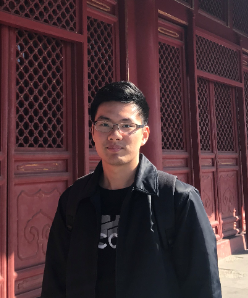
Dr. Aziz Epik is a Junior Professor (W1) with tenure track to W2 at the University of Hamburg Faculty of Law, specializing in Criminal Law, International Criminal Law, and Criminology. He was admitted to the German bar in 2020 and holds a doctorate from Humboldt-Universität zu Berlin (2016). His work bridges academic research and practical legal analysis, particularly in transitional justice and sentencing frameworks. Current: Junior Professor, University of Hamburg (2022–present) Previous: Research Associate, Humboldt-Universität zu Berlin (2013–2020) Education: LLM in International Law, University of Cambridge (2016); Law Degree, Humboldt-Universität zu Berlin (2013) His research focuses on sentencing theories in international criminal law , functional immunity , transitional justice , and post-NS/DDR criminal accountability . Articles explore Nazi-era prosecutions, ICC jurisdiction in Palestine, and comparative sentencing mechanisms. Notable awards include the DAAD LLM scholarship, Bucerius Jura Program scholarship, and the Faculty of Law graduate prize for outstanding Staatsexamen performance.
Yupeng Zhang is an Assistant Professor at the University of Illinois Urbana-Champaign in the Department of Electrical and Computer Engineering, with an affiliate appointment in Computer Science. His research focuses on cybersecurity and applied cryptography , particularly zero-knowledge proofs , secure multiparty computations , and their applications in blockchain and machine learning. Education: Ph.D., Electrical and Computer Engineering, University of Maryland (2018) M.Phil., Information Engineering, Chinese University of Hong Kong (2013) Bachelor of Engineering, Information Engineering, Chinese University of Hong Kong (2011) Research Highlights: Developed scalable zero-knowledge proof systems for blockchain and machine learning Created verifiable computation frameworks for SQL and RAM Advancing privacy-preserving ML and cross-chain blockchain bridges Grants: NSF CAREER award Air Force Research Lab DARPA Google Research Scholar Award Facebook Research Award Latticex Foundation Teaching: CS 461/ECE 422: Computer Security I CS 591 SP: Security and Privacy ECE 407/CS 407: Cryptography ECE 598 YPZ: Advanced Topics in Applied Cryptography Co-taught MOOC on Zero-Knowledge Proofs (Spring 2023) Professional Service: Program Vice Co-Chair, USENIX Security 2024 Program Committee, Crypto 2025, S&P 2025 Reviewer for major journals and conferences
Aws Albarghouthi is affiliated with the University of Wisconsin-Madison, USA. He is an active researcher with significant contributions to program synthesis, formal verification, and machine learning. Key roles: Author, Session Chair, Committee Member in conferences like PLDI, POPL, VMCAI, SPLASH, and ICFP. Research spans quantum computing, differential privacy, and static analysis. Research Trends include: Quantum Circuit Compilation and Optimization Probabilistic Verification of Fairness and Privacy Synthesis of Datalog and MapReduce Programs Neural-Augmented Static Analysis Bias Detection in Data Security Robustness in Machine Learning
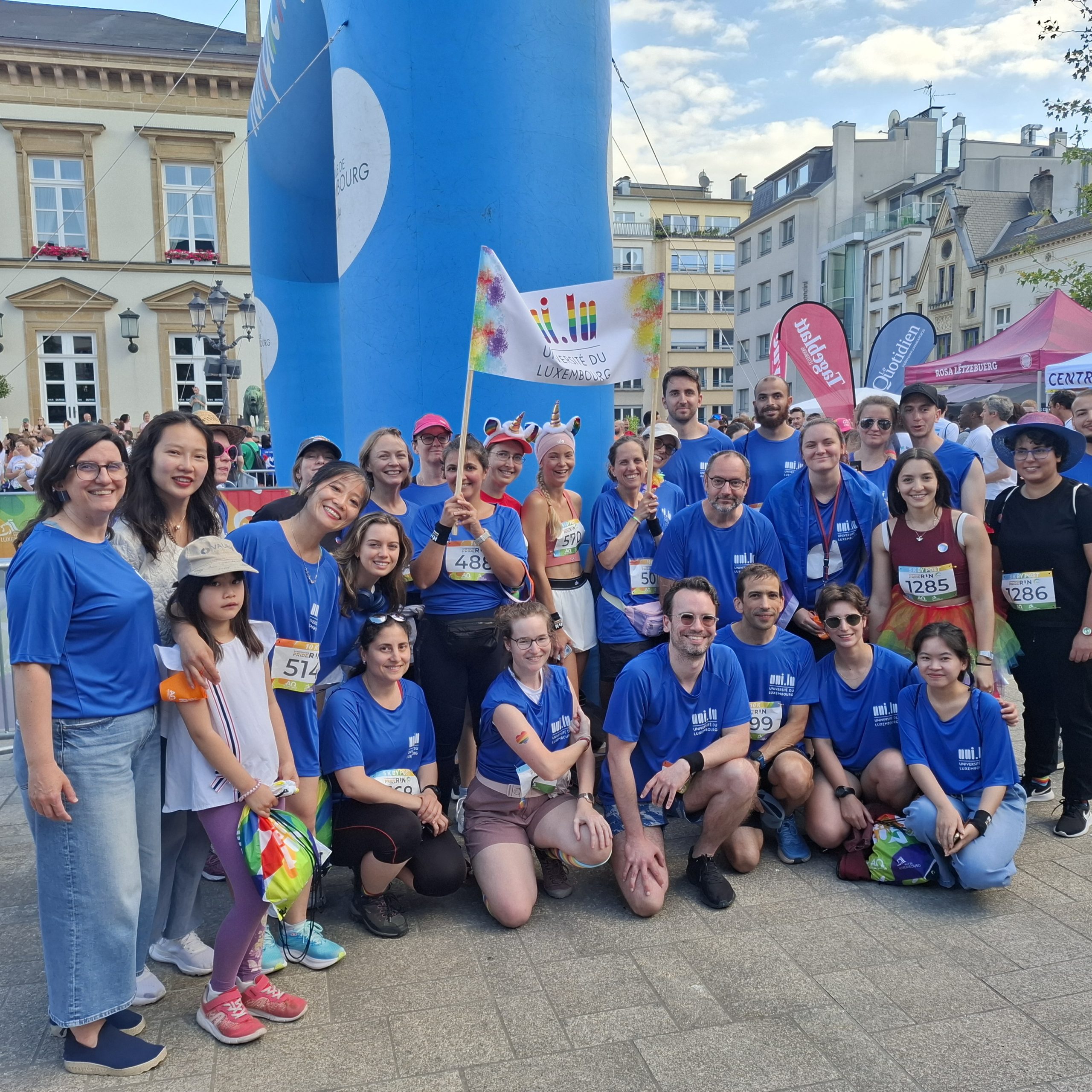
Dr. Yves Le Traon is a Full Professor of Computer Science at the University of Luxembourg, where he serves as Vice-Director of the Interdisciplinary Centre for Security, Reliability and Trust (SnT). He leads the 25-member SerVal research group (SEcurity, Reasoning and VALidation), focusing on software testing, security, and data-intensive systems. Previously, he chaired the CSC Research Unit (2013-2016) and pioneered model-driven engineering at INRIA. PhD and engineering degree in Computer Science from Institut National Polytechnique, Grenoble (1997) Former Associate Professor at University of Rennes (1998-2004) His research spans three main areas: innovative software testing and repair , Android security through static analysis and machine learning , and robust machine learning system design . Collaborations include industry leaders like PayPal, CREOS, and Cebi in fintech, smartgrid, and industry 4.0 domains. Awarded IEEE Fellow (2022) and Facebook Testing & Verification Research Award (2019) , he chairs editorial boards for STVR, SoSym, and IEEE Transactions on Reliability. His team has produced 20+ PhD graduates including Li Li (Monash University), Donia El Kateb (European Investment Bank), and Alexandre Bartel (SnT Research Associate). Commercial impact includes co-founding Datathings for runtime AI decision systems.
Dr. Fatih Nayebi is a Faculty Lecturer in Information Systems at McGill University while also serving as Vice President of Data & AI at the ALDO Group. He bridges academic research with enterprise innovation, focusing on data science, machine learning, and AI systems. Academic Background: Ph.D. in Computer Engineering from École de technologie supérieure M.Sc. in Software Engineering from Boğaziçi University B.Sc. in Computer Engineering from Boğaziçi University Dr. Nayebi's research interests include: Information Systems Data Science Machine Learning Engineering & MLOps Deep Learning Agentic AI Human-Computer Interaction AI in Retail His recent publications focus on AI for retail, mathematical foundations of AI, information integrity in democratic systems, and best practices for technical documentation. Dr. Nayebi also teaches graduate courses at McGill University including: Enterprise Data Science Machine Learning in Production Introduction to AI and Deep Learning Applications and Architectures of Deep Learning Designing and Developing Agentic AI Systems As an active speaker and thought leader, Dr. Nayebi has participated in events such as: World Summit AI Americas RETHINK Retail NRF Nexus 2025 Supply Chain Research Forum JOPT2025 - Annual Conference of Optimization Days He is also the founder of Gradient Divergence, an advisory studio focused on advanced AI solutions for retail and consumer brands.
Heiner Giefers is a Professor for Cloud Computing at the Department of Computer Science and Natural Sciences at Southwestphalia University of Applied Sciences since 2018. Prior to this position, he worked as a Research Staff Member at IBM Research - Zürich (2013-2018), focusing on hardware acceleration in cloud environments, implementation of big data algorithms on FPGAs, and development of hardware platforms for approximate and in-memory computing. Dr. Giefers received his doctorate (Dr. rer. nat.) from Universität Paderborn in 2012 with a dissertation titled "Design and Programming of Reconfigurable Mesh based Many-Cores." His academic journey at Universität Paderborn includes serving as an Academic Council Member (Akademischer Rat a.Z.) from 2008-2013 and as a Scientific Staff Member from 2006-2012, where he taught digital technology and computer architecture. Professor Giefers' research focuses on energy-efficient computing, particularly through hardware acceleration using FPGAs for cloud and AI workloads. His work spans cloud computing infrastructure, hardware-software co-design, approximate computing, in-memory computing, and energy-efficient implementations of machine learning algorithms. He has made significant contributions to the field of reconfigurable hardware for high-performance computing applications. His recent publications show a strong trend toward applying hardware acceleration techniques to artificial intelligence and machine learning workloads, with a particular focus on energy efficiency. His work bridges the gap between theoretical computer science and practical hardware implementation, often resulting in patented technologies that address real-world computing challenges in cloud environments. Best Paper Award for "Stochastic Matrix-Function Estimators: Scalable Big-Data Kernels with High Performance" (2016) Best Paper Award Nomination for "Energy-Efficient Stochastic Matrix Function Estimator for Graph Analytics on FPGA" (2016) Best Paper Award Nomination for "Analyzing the energy-efficiency of dense linear algebra kernels by power-profiling a hybrid CPU/FPGA system" (2014) Best Paper Award Nomination for "A Triple Hybrid Interconnect for Many-Cores: Reconfigurable Mesh, NoC and Barrier" (2010) Professor Giefers actively supervises numerous Bachelor's and Master's students, with over 50 completed theses covering topics from machine learning and cloud computing to IoT systems and hardware acceleration. He leads the "Energy-efficient AI" project (eki), which aims to increase the energy efficiency of AI systems through approximation techniques for FPGA implementation. Additionally, he collaborates with Prof. Dr. Christian Plessl on the "Digital teaching materials with Jupyter Notebooks" project, creating interactive learning materials that integrate teaching content, program code, and results into a single document. His work extends to practical applications through multiple patents related to FPGA implementations, neural networks, and memory systems, demonstrating his commitment to translating research into real-world solutions.
Ramavarapu S Sreenivas is a Professor in the Industrial and Enterprise Systems Engineering department at the University of Illinois at Urbana-Champaign , with research appointments at the Coordinated Science Laboratory (CSL) and the Information Trust Institute (ITI ). He holds a joint affiliation with the Electrical and Computer Engineering department and serves as the Arthur Davis Faculty Scholar since 2016. Ph.D. , Electrical and Computer Engineering, Carnegie Mellon University (1990) M.S.E.E. , Carnegie Mellon University (1987) B.Tech , Electrical Engineering, Indian Institute of Technology Madras (1985) His research focuses on Discrete-Event/Discrete-State (DEDS) systems , applying Coding Theory, Machine Learning, and Information Theory to develop near-optimal supervisory policies for applications in wireless networks, automated manufacturing, and healthcare systems . He leads the Center for Autonomous Construction and Manufacturing at Scale (CACMS) , established in 2023. Recent publications highlight advancements in liveness enforcement in Petri nets , fault-tolerant control , and IoT-based load scheduling . His work bridges theoretical rigor with practical implementations in Distributed Control, Network Coding , and Reinforcement Learning . UIUC Campus Award for Excellence in Graduate and Professional Teaching (2023) Arthur Davis Faculty Scholar (2016) Senior Member, IEEE (2002) James Franklin Sharp Outstanding Teaching Award in Industrial Engineering (2017, 2012) Sreenivas has taught graduate and undergraduate courses in Control Systems, Integer Programming, and Financial Computing since 1992. He co-instructed courses in Health Technology and contributed to the Master of Science in Financial Engineering (MSFE) program, which ranks 4th nationally.
Nancy A. Lynch is the NEC Professor of Software Science and Engineering and Professor of Electrical Engineering and Computer Science at the Massachusetts Institute of Technology, where she heads the Theory of Distributed Systems (TDS) group within CSAIL. Research Interests Distributed computing algorithms and lower bounds Real-time and fault-tolerant systems Formal modelling and verification Wireless network algorithms Biological distributed algorithms Neural computation and spiking networks Across her work, Lynch blends rigorous theoretical analysis with practical relevance, tackling problems ranging from consensus and leader election in unreliable networks to modelling decision-making circuits in the brain. Publications & Trends Since 2020 she has published extensively on distributed algorithms , swarm robotics , neuromorphic architectures , and biologically-inspired computation . Notable recent directions include hierarchical concept learning in spiking neural networks, nanobot locomotion modelling for cancer detection, and superconducting nanowire platforms for energy-efficient neural hardware. Scientific Awards & Honors Best Paper Award, OPODIS 2018 Best Paper Award, IEEE NCA 2014 Highlight Paper, Neuromorphic Computing and Engineering 2022 Teaching & Advising Lynch teaches core graduate and undergraduate subjects at MIT including 6.042J Mathematics for Computer Science , 6.852J/18.437 Distributed Algorithms , and 6.885/6.006 Algorithms . She has supervised dozens of PhD students and post-docs whose names are listed on her Past Students page. Laboratory & Teams She leads the Theory of Distributed Systems (TDS) Group , a vibrant research team within MIT CSAIL . TDS is part of the larger Theory of Computation group and hosts weekly seminars, reading groups, and collaborative projects with partners across MIT and worldwide.
Heyuan Shi is an Associate Professor at the School of Electronic Information, Central South University since 2023. He earned his B.S. (2015) and Ph.D. (2020) from Central South University and Tsinghua University respectively. His research focuses on software quality assurance with emphasis on kernel fuzz testing , open source software security , and AI application security . Presided over 10+ projects including NSFC General Program (No.62472448) and National Key R&D Sub-Project Published 30+ CCF-A/B papers across software security, machine learning, and quantum testing Supervised 15+ graduate students in software quality assurance areas His recent 2024-2025 publications demonstrate expertise in: LLM-enhanced patch classification Quantum neural network verification Hypergraph adversarial attacks RTOS fuzzing techniques Scientific recognition includes: 2024 Beijing Science & Technology Progress Award (First Prize) Hunan Province Xiaohe Sci-Tech Talent (2023) China Association for Science & Technology Young Talent (2025-2027) Active in academic service as PC member for FM2024 and reviewer for IEEE Transactions journals. Leads industry collaborations with Alibaba and Beijing Institute of Aerospace Metrology.
David Dorn is the UBS Foundation Professor of Globalization and Labor Markets at the University of Zurich and Director of the university-wide interdisciplinary research priority program “Equality of Opportunity.” He is also an Affiliated Professor at the UBS International Center of Economics in Society and holds research fellowships at CEPR (London), IZA (Bonn), and CESifo (Munich). Previously, he was a tenured Associate Professor at CEMFI (Madrid) and a visiting professor at Harvard, UC Berkeley, MIT, Boston University, and the University of Chicago. Education Ph.D. in Economics, University of St. Gallen (Dissertation No. 3613, September 2009) Research Interests Professor Dorn’s work sits at the intersection of labor economics, international trade, economic geography, and macroeconomics . His research agenda focuses on understanding how globalization and technological change reshape labor markets, wage structures, and social inequality. He has produced seminal studies on the “China shock” —the labor-market impacts of rising Chinese import competition—and on the polarization of employment toward low-skill services and high-skill professions. His recent work extends to measuring multidimensional skills using LinkedIn data , analyzing superstar firms and the falling labor share , and examining public attitudes toward trade policy and their electoral consequences in the United States and Europe. Publications & Data Impact Dorn’s publications have appeared in top-tier journals such as the American Economic Review , Quarterly Journal of Economics , Journal of the European Economic Association , and Economic Journal . His datasets—covering occupation codes, task content, industry trade exposure, commuting-zone definitions, and political geography—are widely used across the economics profession. Awards & Honors Hermann Heinrich Gossen Prize, 2023 (top economist under 45 in German-speaking countries) Swiss National Science Foundation ERC Starting Grant Ranked among the 100 most-cited economists worldwide over the past decade Grants & Advising As Director of the URPP “Equality of Opportunity,” he leads an interdisciplinary team investigating the determinants and consequences of unequal life chances. He also serves on the editorial boards of the Review of Economic Studies and the Journal of the European Economic Association , shaping the direction of research in labor and international economics. Laboratory & Team His research group is embedded in the Department of Economics at the University of Zurich, housed at Schönberggasse 1, Zurich. Administrative support is provided by Anne Sander (anne.sander@econ.uzh.ch).
Malgorzata Zboinska is an Associate Professor at Chalmers University of Technology within the Department of Architecture and Civil Engineering . She is a licensed architect and member of the Swedish Association of Architects and National Chamber of Architects of Poland . Hybrid architecture-technology-art research Focus on bio-based materials , digital fabrication , and creative robotics Development Leader of Chalmers' Robotic Fabrication Laboratory Editorial board member of TAD | Technology, Architecture + Design journal Research Themes bridge architecture , digital technology , and art , with expertise in: Sustainable and circular architectural practices 3D printing and robotic construction Material bioinnovation and upcycling Interactive and kinetic architectural solutions Her publications demonstrate strong output in digital fabrication , bio-material applications , and environmental architecture , with international exhibitions at Tempe Center for the Arts (USA) , Dutch Design Week (NL) , and Färgfabriken (Sweden) .
Jeffrey Young is a Principal Research Scientist at Georgia Institute of Technology, working with the Partnership for Advanced Computing Environments (PACE) and leading Georgia Tech’s Open Source Program Office. His research focuses on high-performance computing (HPC), computer architecture, and novel accelerators including GPUs, FPGAs, and Arm/RISC-V processors. He leads next-generation computing strategy at PACE and directs the NSF-funded CRNCH Rogues Gallery testbed, which explores post-Moore accelerators like neuromorphic and near-memory systems. His work bridges hardware-software co-design and scientific software engineering. Recent research trends show expertise in quantum programming (Qwerty/ASDF), heterogeneous computing (Cupbop), and memory system optimization across GPUs, FPGAs, and CPUs. He has contributed to exascale workflows (HIPLZ), safe HPC libraries, and UAV co-simulation frameworks. Scientific Awards: NSF-funded CRNCH Rogues Gallery testbed (2020-2024) Education: Ph.D. in Computer Architecture (2013), advised by Dr. Sudhakar Yalamanchili Labs & Initiatives: Director, CRNCH Rogues Gallery testbed Co-Director, Georgia Tech Center for Scientific Software Engineering Director, Georgia Tech Open Source Program Office
Prof. Sander M. Bohte holds a part-time appointment as a Professor of Computational Neuroscience at the Swammerdam Institute for Life Sciences (SILS), University of Amsterdam, and is a researcher at the CWI Machine Learning group. His research focuses on computational models of neural information processing, emphasizing spiking neural networks, predictive coding, and reinforcement learning. He bridges computational neuroscience and machine learning, exploring how biological insights can improve neural network designs and vice versa. Key collaborations include work with Cyriel Pennartz (UvA), Pieter Roelfsema (NIN), and Steven Scholte (B&C). His applied research spans scientific machine learning applications in finance and genomics. He actively supervises MSc thesis students, prioritizing those from UvA, with projects ranging from biologically inspired neural architectures to efficient spiking network simulations. Research highlights include developing biologically plausible learning rules for deep networks, predictive coding models for sensory data, and spiking network models for working memory tasks. His work also addresses challenges in temporal dynamics and scalable neural computation, leveraging both theoretical and applied perspectives.
Martina Vandebroek is Full Professor of Statistics and Operations Research at KU Leuven, Faculty of Economics and Business, where she leads methodological work within the Operations Research and Statistics Research Group (ORSTAT). She also serves as senior academic staff on the Faculty Council and the Campus Councils for Leuven and Kortrijk, and is a member of the LStat General Assembly. Research Interests Discrete choice experiments (design & analysis) Optimal and sequential experimental design Multivariate statistics and modelling of preference heterogeneity Random regret minimisation and attribute non-attendance Applications in health economics, transport, marketing, and food science Her methodological innovations enable more efficient data collection and richer behavioural insights in stated-preference surveys, while her applied projects translate patient and consumer preferences into actionable evidence for policy makers and industry. Recent Publications Overview Between 2022 and 2024 Vandebroek (co-)authored 15 key articles. These contributions advance both the statistical machinery of choice modelling—such as mixed random regret models, design-efficient sample-size rules, and consideration-set heuristics—and substantive applications in oncology patient preferences, inflammatory bowel disease treatments, meat-substitute adoption, and food-quality valuation. The work repeatedly integrates sophisticated econometric techniques with real-world stakeholder data, reflecting an overarching commitment to methodological rigour and societal impact. Scientific Awards & Recognition No specific awards are listed in the provided material; however, her sustained publication record in top journals (Journal of Choice Modelling, Food Quality and Preference, Frontiers in Oncology, Stata Journal) attests to significant scholarly recognition. Advising & Grant Activities Promotor (PI) of FWO project “Discrete choice models including screening rules: modeling and design” (2017-2021) Promotor of KU Leuven project “Efficient Online Choice Experiments” (2017-2020) Co-promotor of IWT/FWO project “Empirical and methodological challenges in choice experiments” (2017-2023) Co-promotor of VLAIO project “Development, Validation, and Valorization of a Patient Preference Platform” (2023-2026) Teaching & Service Vandebroek teaches master-level courses “Applications of Statistics” (Dutch and English iterations) and contributes to the Leuven Statistics Research Centre (LStat) educational programme.
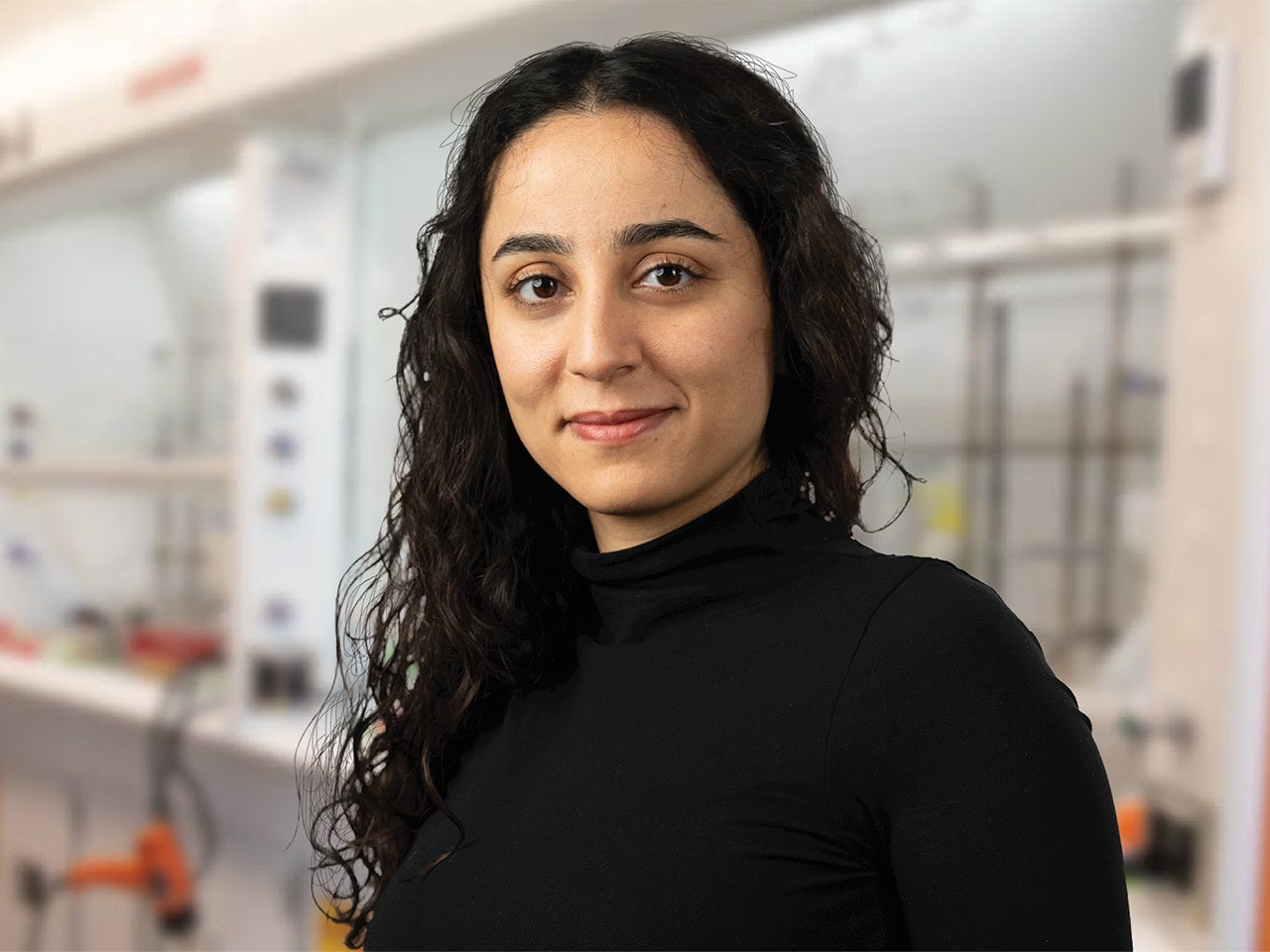
Mitra Javadzadeh is a CSHL Fellow at Cold Spring Harbor Laboratory , where she leads the Javadzadeh Lab . Her research focuses on understanding how distributed neural population dynamics in the neocortex underpin flexible perception, employing a combined experimental and computational approach involving multi-region electrophysiology, optogenetics, and dynamical systems analysis. Education : Ph.D. in Neuroscience from University College London (2021) Research Interests : High-dimensional neural activity during visual perception Role of long-range cortico-cortical and transthalamic pathways in sensory integration Dynamical systems principles in cortical network interactions Excitatory-inhibitory balance and multi-area coordination Publications Trends : Her work spans neuroscience and computational modeling , with a focus on visual cortex , optogenetics , and cross-areal communication . Earlier research (2011) also intersects with computer science in wireless sensor networks. Contact : Email: javadzadeh@cshl.edu