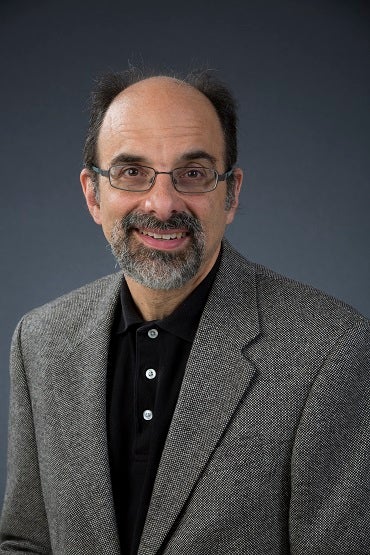
Stephen A. Vavasis is a Professor in the Department of Combinatorics and Optimization at the University of Waterloo, part of the Faculty of Mathematics. He holds a PhD in Computer Science from Stanford University (1989) and has held academic positions at Cornell University (1989–2006) before joining Waterloo. His research focuses on continuous optimization, data science, first-order methods, scientific computing, and computational mechanics. Current teaching includes courses on convex optimization and portfolio optimization methods. He has served as Associate Dean of Computing (2017–2020) and Interim Director of Data Science graduate programs. His work is supported by NSERC grants. Notable awards include the Hertz Fellowship, Churchill Scholarship, and Guggenheim Fellowship. Vavasis's research emphasizes applications of optimization to clustering, machine learning, and fracture mechanics. His publications span convex optimization frameworks, algorithmic analysis of gradient methods, and numerical methods in mechanics. Recent work explores unifying analyses of first-order optimization algorithms and robust optimization techniques for high-dimensional data problems.
Dr. Yujie Tang is an Assistant Professor in the Faculty of Computer Science at Dalhousie University, Canada, where she has been serving since September 2022. Prior to this, she was an Assistant Professor at Algoma University (2019–2022) and a Post-Doctoral Fellow at the University of Waterloo (2017–2019). Her academic journey includes a PhD from the University of Waterloo and earlier degrees from Harbin Institute of Technology and Lanzhou Jiaotong University. PhD – University of Waterloo (2017) M.E. – Harbin Institute of Technology, Shenzhen, China B.E. – Lanzhou Jiaotong University, Lanzhou, China Her research focuses on intelligent networking and computing technologies for future IoT and 5G/6G systems. Key areas include Internet of Vehicles (IoV), AI-empowered edge computing, resource management in heterogeneous networks, software-defined networking, and UAV-assisted communications. She employs machine learning and optimization techniques to design energy-efficient and high-performance network protocols. The most recent publications reflect a strong trend in applying AI and machine learning to solve complex problems in vehicular networks, edge caching, and spectrum management. Her work spans top-tier IEEE journals such as IEEE Transactions on Vehicular Technology , IEEE Internet of Things Journal , and IEEE JSAC , with a clear emphasis on real-world deployable solutions for next-generation wireless systems. Faculty Research Startup Fund, Dalhousie University, 2022 NSERC Discovery Grant, 2021–2026 Algoma University Research Fund, 2021 Faculty Research Startup Fund, Algoma University, 2019 Best Speaker Award, University of Waterloo, 2017 Faculty of Engineering Award (4 times), University of Waterloo, 2013–2017 University of Waterloo Graduate Scholarship, 2013–2015 International Doctoral Student Award, 2012–2016 Graduate Research Studentship (twice), 2011–2012 Provost Doctoral Entrance Award for Women, 2011 Dr. Tang actively supervises graduate and undergraduate students and has secured competitive research grants, including the NSERC Discovery Grant. She serves on the technical program committees of major IEEE conferences such as INFOCOM, GLOBECOM, and ICC, and regularly reviews for top journals like IEEE JSAC , IEEE TWC , and IEEE TVT . She currently leads a research group focusing on B5G/6G networks, IoV, and edge computing, and she is actively recruiting new students and visiting scholars. Her research group operates within the Faculty of Computer Science at Dalhousie University, where she leads projects in intelligent resource management, AI-driven networking, and integration of space-air-ground networks. She is a member of IEEE, IEEE Communications Society, and IEEE Vehicular Technology Society.
Raquel Urtasun is a Full Professor in the Department of Computer Science at the University of Toronto and a co-founder of the Vector Institute for AI. She is also the Founder and CEO of Waabi, an autonomous vehicle company. Previously, she was Chief Scientist and Head of R&D at Uber ATG (2017–2021) and held faculty positions at the Toyota Technological Institute at Chicago (TTIC) and as a visiting professor at ETH Zurich. Her research spans machine learning, computer vision, robotics, and AI with a strong focus on autonomous driving and 3D perception. Education: Bachelor's degree, Universidad Pública de Navarra, 2000 Ph.D., Computer Science, École Polytechnique Fédérale de Lausanne (EPFL), 2006 Postdoctoral studies, MIT and UC Berkeley Raquel Urtasun's research focuses on developing AI systems for self-driving cars, emphasizing efficient perception using minimal sensors. Her work includes 3D scene understanding, stereo vision, optical flow, semantic segmentation, and object detection. She has developed the KITTI benchmark suite, widely used in autonomous driving research. Her lab is an NVIDIA NVAIL lab, reflecting its leadership in AI innovation. Her recent publications show a consistent trend in deep learning for visual perception, particularly in stereo matching, optical flow, 3D object detection, and semantic segmentation. These works integrate deep neural networks with structured models like CRFs and MRFs, pushing the boundaries of accuracy and efficiency in scene understanding for autonomous systems. Scientific Awards: NSERC E.W.R. Steacie Fellowship NVIDIA Pioneers of AI Award Google Faculty Research Awards (multiple) Amazon Faculty Research Award Connaught New Researcher Award Fallona Family Research Award Best Paper Runner Up at CVPR 2013 and 2017 UPNA Alumni Award Chatelaine 2018 Woman of the Year Adweek 2018 Toronto's Top Influencers Urtasun has advised numerous PhD and Master’s students, many of whom now hold faculty or research scientist positions at institutions like UIUC, NYU, UBC, MIT, and companies including Google, Amazon, NVIDIA, and Apple. She has secured significant research grants from NSERC, Google, Amazon, and NVIDIA. Her leadership extends to organizing workshops and serving as Area Chair and Program Chair at top conferences like CVPR, ICML, and NeurIPS. Labs and Teams: She leads a research group at the University of Toronto focused on AI for autonomous systems. Her team has been recognized as an NVIDIA NVAIL lab, and she continues to mentor students and postdocs working on cutting-edge problems in robotics and machine learning, both at UofT and through her company Waabi.
Harish Ravichandar is an Assistant Professor at the School of Interactive Computing , Georgia Institute of Technology, and a core faculty member of the Institute for Robotics and Intelligent Machines (IRIM) . He leads the Structured Techniques for Algorithmic Robotics (STAR) Lab , focusing on structured computational frameworks and learning algorithms with inductive biases to enhance robot efficiency, reliability, and self-sufficiency in human-robot collaboration and complex applications like dexterous manipulation and multi-agent coordination. His research bridges robot learning , human-robot interaction , and multi-agent systems , emphasizing stable, frugal, and safe skill acquisition from human demonstrations. Key themes include intention inference , trajectory optimization , and heterogeneous team coordination , often leveraging Koopman operators , hypernetworks , and graph-based methods . Scientific recognition includes the NSF CAREER Award , IEEE MRS Best Paper Award , and Georgia Tech’s College of Computing Outstanding Post-Doctoral Research Award . His work also received the ASME DSCC Best Student Paper Award and P&W Institute Graduate Fellowship . Harish’s educational background includes a Ph.D. in Electrical and Computer Engineering from the University of Connecticut (2018) , an M.S. from the University of Florida (2014) , and a B.E. in Instrumentation and Control Engineering from Anna University (2012) . He previously held postdoctoral and research scientist roles at Georgia Tech before his current position.
Westley Weimer is a Professor in the Department of Electrical Engineering and Computer Science (EECS) at the University of Michigan, College of Engineering. He teaches advanced courses such as EECS 590 (Advanced Programming Languages) and EECS 481 (Software Engineering), and has previously taught at the University of Virginia. His research integrates software engineering, programming languages, and cognitive science, focusing on automated program repair, program analysis, and the neuroscience of code comprehension. University: University of Michigan School: College of Engineering Department: Department of Electrical Engineering and Computer Science Academic Rank: Professor His research interests include automated program repair (e.g., GenProg), software quality, cognitive modeling of programming, neuroimaging studies of code review, and the application of medical imaging to software engineering. He explores deep questions at the intersection of consciousness, time, and computation, advocating for interdisciplinary approaches to understanding the mind through programming behavior. The most recent publications reflect a trend toward empirical and cognitive studies in software engineering, combining automated repair with human factors, neuroimaging (fMRI, TMS), and real-world software challenges. Themes include bias in code review, programming under cognitive influences, and the neurological basis of code comprehension. His work increasingly bridges computer science with psychology, neuroscience, and social science. Scientific awards include multiple Distinguished Paper Awards at ICSE, FSE, and ESEC/FSE, Best Paper and Runner-up awards, and several 10-Year Most Influential Paper Awards from ASE, GECCO, POPL, and ASPLOS, recognizing the lasting impact of his contributions to automated software repair and program analysis. He has advised numerous PhD and Master’s students, many of whom have gone on to faculty positions or industry research roles. He contributes to academic service through organizing diversity and inclusion initiatives, maintaining graduate career resources, and promoting ethical and inclusive practices in computing. He leads a vibrant research group focused on improving software quality through both technical and human-centered innovations, with ongoing projects in automated repair, cognitive modeling, and secure systems.
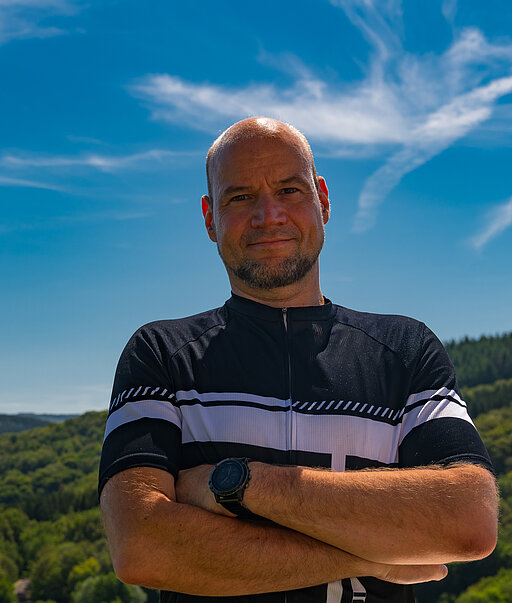
Prof. Dr. Ingo Scholtes is Chair of Machine Learning for Complex Networks at Julius-Maximilians-Universität Würzburg's Center for Artificial Intelligence and Data Science (CAIDAS). His research spans network science, graph machine learning, and computational social science, with applications in software engineering, ecology, biology, and physics. He received a Juniorfellowship from the German Informatics Society (2014) and an SNSF Professorship (CHF 1.5Mio, 2018). Current affiliations: JMU Würzburg (since 2021), University of Zurich (2018-2024), Bergische Universität Wuppertal (2019-2021) Research focus: Higher-order network modeling, temporal graph analysis, AI for collaborative systems, causality-aware machine learning His recent publications demonstrate strong trends in temporal network analysis , graph neural networks for time-series, and higher-order models across software engineering and social science domains. He co-chairs multiple international workshops on complex networks and serves as associate editor for EPJ Data Science and Advances in Complex Systems. Key scientific contributions: Foundational work on higher-order network models published in Nature Physics Methodological innovations in temporal network visualization (HOTVis) and path-based analysis (pathpy) As both educator and organizer, he leads the Computational Social Science Section at GI e.V., mentors across disciplines, and develops tools like git2net for collaboration analysis. His work bridges theoretical foundations with practical applications in network science.
Gabriele Farina is an Assistant Professor at MIT in the Department of Electrical Engineering and Computer Science (EECS) and the Laboratory for Information and Decision Systems (LIDS), with additional affiliations at the Operations Research Center (ORC). Holding the X-Window Consortium Career Development Chair, his research focuses on theoretical and algorithmic foundations for learning and computational decision-making under imperfect information, integrating game theory, machine learning, optimization, and statistics. He previously served as a Research Scientist at Meta's Fundamental AI Research (FAIR) group, where he contributed to Cicero, a human-level AI agent combining strategic reasoning and natural language. Ph.D. in Computer Science from Carnegie Mellon University (advisor: Tuomas Sandholm) Facebook Fellowship (2019-2020) in Economics and Computation Recipient of multiple awards including ACM SIGecom dissertation award, NSF CAREER, and AI2050 Early Career Fellow His research spans four key areas: (1) No-Regret Learning Dynamics in extensive-form games; (2) Correlation and Mediated Equilibria in sequential decision-making; (3) Team Games and Team Max-Min Equilibria; and (4) Human Modeling and Equilibrium Perfection. His work addresses challenges in scalable equilibrium computation, stability of learning algorithms, and robustness to mistakes in multi-agent systems. Recent publications highlight advancements in polynomial-time equilibrium computation, cautious optimism algorithms, and connections between regret minimization and mirror descent. These contributions appear in top venues like COLT, NeurIPS, ICML, and AAAI, with keywords spanning game theory, optimization, and machine learning. NSF CAREER award AI2050 Early Career Fellow Facebook Fellowship ACM SIGecom dissertation award GameSec 2024 best paper award ICLR 2023 outstanding paper honorable mention His research group at MIT collaborates on projects involving strategic reasoning, human-level AI agents, and equilibrium refinements, with applications to games like Diplomacy and poker. Current efforts include developing faster algorithms for correlated equilibria and exploring connections between machine learning and economic theory.
Jason Cong is the Volgenau Chair for Engineering Excellence and Distinguished Chancellor's Professor in the Computer Science Department at UCLA's Samueli School of Engineering. He directs the Center for Domain-Specific Computing (CDSC) and the VLSI Architecture, Synthesis, and Technology (VAST) Laboratory, and serves as Associate Vice Provost for Internationalization and Co-Director of UCLA/PKU Student and Scholar Program. Dr. Cong's research spans electronic design automation, customizable computing for machine learning and big-data applications, quantum computing, and highly scalable algorithms. His work has produced over 500 publications with more than 41,000 citations and an H-index of 106. His recent work focuses on quantum computing compilation, domain-specific acceleration for AI workloads, and high-level synthesis optimization techniques that leverage machine learning. His publication trend shows a strong emphasis on quantum computing and machine learning acceleration in recent years, with numerous papers on quantum layout synthesis, LLM acceleration, and high-performance FPGA implementations. His team has developed frameworks like TAPA for task-parallel dataflow programming and RapidStream for automated parallel implementation of FPGA designs. Member of National Academy of Engineering (2017) IEEE Robert N. Noyce Medal recipient (2022) Phil Kaufman Award recipient (2024) ACM Chuck Thacker Breakthrough Award recipient (2024) 18 Best Paper Awards across major conferences Multiple 10-Year Retrospective Most Influential Paper Awards Dr. Cong has graduated 50 PhD students, many of whom are now faculty at major research universities or hold key positions at leading tech companies. He has led over 100 research projects funded by DARPA, NSF, SRC, and industry sponsors. His entrepreneurial activities include founding three successful companies (Aplus Design Technologies, AutoESL, and Falcon Computing Solutions), all acquired by major EDA players. His VAST Laboratory continues to push boundaries in domain-specific computing, with active research in quantum computing, AI acceleration, and high-performance FPGA implementations.
Minjie Chen is an Associate Professor of Electrical and Computer Engineering and the Andlinger Center for Energy and the Environment at Princeton University, serving as Acting Associate Director for Research at the Andlinger Center. He leads the Princeton Power Electronics Lab (PowerLab), which focuses on developing fundamental and novel power electronics solutions for a wide range of applications from mW-scale energy harvesting to MW systems in renewable energy integration. Dr. Chen received his Ph.D. in Electrical Engineering and Computer Science from MIT in 2015 and his B.S. in Electrical Engineering from Tsinghua University in 2009. Before joining Princeton as an Assistant Professor in February 2017, he was a postdoctoral associate at MIT Research Laboratory of Electronics. His research spans power electronics, magnetics design, and machine learning applications in energy systems. The PowerLab develops advanced power conversion architectures that enable order-of-magnitude higher power density through high-frequency designs, addressing circuit timing, parasitics, magnetics, and thermal management challenges. Their work targets applications ranging from portable devices to data centers and renewable energy systems. The research group has produced a remarkable series of high-impact publications, with seven IEEE Transactions on Power Electronics Prize Papers in seven consecutive years (2016-2023). Their recent work increasingly integrates machine learning techniques with power electronics, exemplified by the MagNet project which redefines how power magnetics are studied and modeled. NSF CAREER Award, 2019 IEEE PELS Richard M. Bass Outstanding Young Power Electronics Engineer Award, 2023 Power of Associations Silver Award from ASAE for MagNet project, 2024 Multiple IEEE Transactions on Power Electronics Prize Papers (2016-2023) Princeton Engineering Commendation List for Outstanding Teaching (2019, 2020) Dr. Chen advises approximately 15 graduate students who have received numerous awards including the IEEE PELS John G. Kassakian Fellowship, Princeton SEAS Honorific Fellowship, and multiple IEEE conference best paper awards. His research is supported by significant grants from NSF, DOE ARPA-E, Princeton Innovation Fund, C3.ai DTI, and industry partners including Intel, Google, and pSemi. The lab's MagNet project has become a major international initiative with a $60,000 prize pool challenge. The PowerLab maintains strong industry connections and has launched several collaborative projects with Intel, Google, and pSemi. Their MagNet project has evolved into an international challenge with participation from over 40 teams worldwide, demonstrating the growing impact of their approach to machine learning for power magnetics modeling.
Joseph A. Campbell is an Assistant Professor in the Department of Computer Science at Purdue University, leading the Collaborative AI for Machines and People (CAMP) Lab. He holds a Ph.D., M.S., and B.S. in Computer Science and Computer Engineering from Arizona State University. Before academia, he worked as a software engineer for five years. Prior to Purdue, he was a Postdoctoral Fellow at Carnegie Mellon University's Robotics Institute. His research focuses on explainable machine learning and robotics, particularly how agents use explanations for self-improvement and decision-making. Key areas include theory of mind in multi-agent systems, lifelong learning, and interpretable transfer learning. His work bridges robotics and AI, with applications in human-robot interaction and prosthetic control. Notable publications include advancements in reinforcement learning with language models, multi-agent collaboration frameworks, and methods for enhancing state estimation in robots. His research has been presented at top conferences like NeurIPS, EMNLP, and CoRL. Dr. Campbell maintains an active GitHub profile (joe-campbell) with repositories such as Interaction Primitives for robotics applications. His lab, CAMP, explores AI systems that collaborate effectively with humans and other machines.
Bruno Felisberto Martins Ribeiro is an Associate Professor of Computer Science at Purdue University, joining the department in Fall 2015. His research focuses on endowing machine learning algorithms with robust invariant representations for relational and temporal data, emphasizing causal and associational tasks. Key research areas include Networking and Operating Systems, Artificial Intelligence, Machine Learning, and Natural Language Processing. He holds a Ph.D. in Computer Science from the University of Massachusetts Amherst (2010). Education: Ph.D., Computer Science, University of Massachusetts Amherst, 2010 Research Interests: Explores invariances in mathematics and machine learning to improve model robustness. Key topics include graph and tensor invariances, causal relationships, adversarial robustness, and applications in recommendation systems, robotics, and drug discovery. His lab’s work has advanced counterfactual task frameworks and causal reasoning in machine learning. Recent Contributions: Recent publications address zero-shot generalization in graph neural networks, causal discovery methods, and defenses against adversarial attacks. His work spans conferences like ICML, NeurIPS, and SIGCOMM. Awards: Best Paper Award at ACM CODASPY 2021 Best Paper Award at SIGMETRICS 2016 Best Paper Award at IEEE NetSciCom 2014 Advising & Students: Supervises current PhD students Beatrice Bevilacqua, Jincheng Zhou, and Yucheng Zhang, along with MSc student Ipsit Mantri. Notable former students include S Chandra Mouli (Meta), Yangze Zhou (Spotify), and Jianfei Gao (Vector Institute). Labs & Teams: Leads research in invariant representations and causal ML, collaborating with institutions like Stanford during his sabbatical. His work bridges theory and practice, impacting areas like network analysis and AI-driven healthcare.
Jiaoyang Li is an Assistant Professor at the Robotics Institute, Carnegie Mellon University , where she leads research in large-scale multi-robot coordination. She earned her Ph.D. in Computer Science from the University of Southern California (2022) under Professor Sven Koenig and holds a B.Eng. in Automation from Tsinghua University (2017) . Ph.D. (2022): University of Southern California B.Eng. (2017): Tsinghua University Research Focus : Jiaoyang Li's work centers on algorithms for multi-robot coordination in dynamic environments. Key areas include: Multi-Agent Path Finding (MAPF) Lifelong Planning for Autonomous Systems Kinodynamic Motion Planning Warehouse and Transportation Automation Human-Robot Collaboration Integration of Planning and Machine Learning Swarm Robotics Publication Trends : Recent work spans 2023-2025 , showing emphasis on: Scalable coordination for 10,000+ robots Bézier curve optimization for dual-arm assembly Diffusion models in multi-robot motion planning Guidance graph optimization for airport/railway traffic Multi-objective search in warehouse automation Temporal plan graphs for switchable passing orders Scientific Honors : ICAPS-24 Best Student Paper Award Three top dissertation awards (ICAPS-23, IFAAAMAS, USC) 2023 League of Robot Runners champion Outstanding student paper award at ICAPS-20 Technology Commercialization Award from USC Student Leadership : Advises 5 Ph.D. students and 1 Master's student at CMU, with alumni now at MIT (Ying Feng) and USC (Yimin Tang). Collaborates with visiting students from National University of Singapore and Tsinghua University. Lab Affiliation : Directs the Artificial Intelligence for Robot Coordination at Scale (ARCS) Lab , focusing on: Warehouse automation with thousands of robots Multi-arm LEGO assembly systems Railway coordination algorithms Cooperative assembly with multiple manipulators
Ugur Cetintemel is the Khosrowshahi University Professor of Computer Science at Brown University, where he has been since completing his PhD at the University of Maryland in 2001. His research focuses on data management systems, database systems, distributed systems, and stream processing, with recent work integrating AI techniques into database systems. He teaches courses such as Database Management Systems and Data Science fundamentals. Notable contributions include the Aurora and Borealis stream processing engines, S-Store for transaction processing, and DBPal for natural language interfaces. His work emphasizes scalable, efficient systems for large-scale data challenges. Education: PhD in Computer Science, University of Maryland, 2001 MS in Computer Science, Bilkent University, 1996 BS in Computer Science, Bilkent University, 1994 Research Interests: Data management, stream processing, distributed systems, predictive analytics, and AI integration with databases. Key projects include optimizing database systems for modern hardware, developing real-time stream processing frameworks, and exploring interactive data exploration techniques. Grants & Advising: Extensive contributions to grants and collaborations, though specific grant details are not listed. Supervises graduate students in areas like database systems and machine learning integration. Part of the Brown Data Management Group. Labs/Teams: Leads research within the Brown Data Management Group, focusing on advancing database systems for big data and real-time analytics.
Marina Blanton is an Associate Professor in the Department of Computer Science and Engineering at the University at Buffalo, and Faculty Director of Women in Science and Engineering within the School of Engineering and Applied Sciences. She holds a PhD in Computer Science from Purdue University (2007), along with multiple advanced degrees in Computer Science and Electrical Engineering from prestigious institutions in the US and Russia. Her research focuses on applied cryptography, information security, and privacy-preserving computation and outsourcing. She has pioneered work on secure multi-party computation protocols, privacy-preserving biometric authentication, and secure data analytics across distributed systems. Her contributions include foundational frameworks like PICCO, a compiler for private distributed computation, and advancements in protocols for genomic data analysis and floating-point secure computation. Blanton has been recognized with numerous awards, including IEEE and ACM Senior Membership (2016/2015), the ACM CCS Test of Time Award (2015), and the AFOSR Young Investigator Award (2013). Her research has been supported by grants such as NSF SaTC awards and AFOSR funding. Her work emphasizes practical implementations of secure computation, with applications in healthcare, biometrics, and distributed data systems. She has advised numerous students and contributed to educational initiatives promoting women in STEM through her leadership roles.
Andrea Montanari is a Professor of Mathematics and Statistics at Stanford University, affiliated with the Department of Mathematics and Statistics. His research focuses on high-dimensional statistics, machine learning theory, optimization algorithms, and statistical physics, with applications to neural networks and complex systems. He has contributed extensively to understanding generalization in overparametrized models, spin glass theory, and algorithmic methods like approximate message passing. His work bridges theoretical computer science and mathematical physics, addressing challenges in data analysis and learning from high-dimensional datasets. Notable themes include analyzing neural network dynamics, optimizing high-dimensional landscapes, and developing efficient algorithms for sparse and low-rank matrix estimation. Montanari’s publications explore topics such as the interplay between statistical and computational limits, the behavior of gradient-based methods, and the theoretical foundations of modern machine learning. His recent research demonstrates a focus on fundamental questions in learning theory, including the study of phase transitions in statistical estimation, the role of overparametrization in generalization, and the mathematical underpinnings of contemporary algorithms. While no specific awards are listed here, his contributions reflect significant impact in interdisciplinary fields.