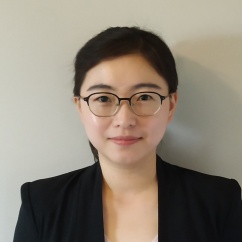
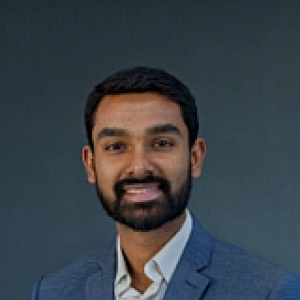
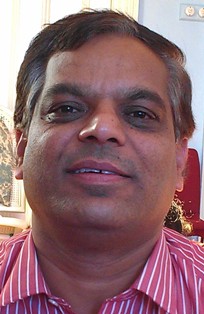
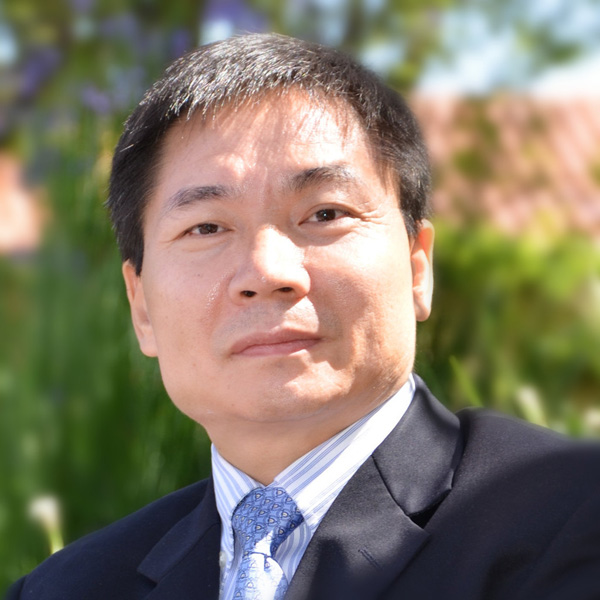
Jenny Y. Yang is a Professor in the Department of Chemistry at the University of California, Irvine. Her research focuses on the development of inorganic electrocatalysts for chemical fuel generation and utilization, emphasizing bio-inspired secondary coordination sphere effects and thermochemical property optimization. Institution: University of California, Irvine Department: Chemistry Research Interests: Oxygen activation mechanisms Hydrogen production and oxidation Carbon dioxide reduction for fuel synthesis Thermochemical property effects on catalysis Secondary coordination sphere engineering Electrochemical carbon capture systems Scientific Trends: Recent work spans from 2023–2025, covering CO2-to-methane conversion, quantum dot hybrid systems for hydrogen evolution, and computational approaches to CO2 capture agent design. Articles highlight interdisciplinary methods combining inorganic chemistry, electrochemistry, and sustainability-focused engineering. Contact: Office: 4080 ISEB | Phone: 949-824-1533 | Email: j.yang@uci.edu
Dr. Yujie Tang is an Assistant Professor in the Faculty of Computer Science at Dalhousie University, Canada, where she has been serving since September 2022. Prior to this, she was an Assistant Professor at Algoma University (2019–2022) and a Post-Doctoral Fellow at the University of Waterloo (2017–2019). Her academic journey includes a PhD from the University of Waterloo and earlier degrees from Harbin Institute of Technology and Lanzhou Jiaotong University. PhD – University of Waterloo (2017) M.E. – Harbin Institute of Technology, Shenzhen, China B.E. – Lanzhou Jiaotong University, Lanzhou, China Her research focuses on intelligent networking and computing technologies for future IoT and 5G/6G systems. Key areas include Internet of Vehicles (IoV), AI-empowered edge computing, resource management in heterogeneous networks, software-defined networking, and UAV-assisted communications. She employs machine learning and optimization techniques to design energy-efficient and high-performance network protocols. The most recent publications reflect a strong trend in applying AI and machine learning to solve complex problems in vehicular networks, edge caching, and spectrum management. Her work spans top-tier IEEE journals such as IEEE Transactions on Vehicular Technology , IEEE Internet of Things Journal , and IEEE JSAC , with a clear emphasis on real-world deployable solutions for next-generation wireless systems. Faculty Research Startup Fund, Dalhousie University, 2022 NSERC Discovery Grant, 2021–2026 Algoma University Research Fund, 2021 Faculty Research Startup Fund, Algoma University, 2019 Best Speaker Award, University of Waterloo, 2017 Faculty of Engineering Award (4 times), University of Waterloo, 2013–2017 University of Waterloo Graduate Scholarship, 2013–2015 International Doctoral Student Award, 2012–2016 Graduate Research Studentship (twice), 2011–2012 Provost Doctoral Entrance Award for Women, 2011 Dr. Tang actively supervises graduate and undergraduate students and has secured competitive research grants, including the NSERC Discovery Grant. She serves on the technical program committees of major IEEE conferences such as INFOCOM, GLOBECOM, and ICC, and regularly reviews for top journals like IEEE JSAC , IEEE TWC , and IEEE TVT . She currently leads a research group focusing on B5G/6G networks, IoV, and edge computing, and she is actively recruiting new students and visiting scholars. Her research group operates within the Faculty of Computer Science at Dalhousie University, where she leads projects in intelligent resource management, AI-driven networking, and integration of space-air-ground networks. She is a member of IEEE, IEEE Communications Society, and IEEE Vehicular Technology Society.
Raquel Urtasun is a Full Professor in the Department of Computer Science at the University of Toronto and a co-founder of the Vector Institute for AI. She is also the Founder and CEO of Waabi, an autonomous vehicle company. Previously, she was Chief Scientist and Head of R&D at Uber ATG (2017–2021) and held faculty positions at the Toyota Technological Institute at Chicago (TTIC) and as a visiting professor at ETH Zurich. Her research spans machine learning, computer vision, robotics, and AI with a strong focus on autonomous driving and 3D perception. Education: Bachelor's degree, Universidad Pública de Navarra, 2000 Ph.D., Computer Science, École Polytechnique Fédérale de Lausanne (EPFL), 2006 Postdoctoral studies, MIT and UC Berkeley Raquel Urtasun's research focuses on developing AI systems for self-driving cars, emphasizing efficient perception using minimal sensors. Her work includes 3D scene understanding, stereo vision, optical flow, semantic segmentation, and object detection. She has developed the KITTI benchmark suite, widely used in autonomous driving research. Her lab is an NVIDIA NVAIL lab, reflecting its leadership in AI innovation. Her recent publications show a consistent trend in deep learning for visual perception, particularly in stereo matching, optical flow, 3D object detection, and semantic segmentation. These works integrate deep neural networks with structured models like CRFs and MRFs, pushing the boundaries of accuracy and efficiency in scene understanding for autonomous systems. Scientific Awards: NSERC E.W.R. Steacie Fellowship NVIDIA Pioneers of AI Award Google Faculty Research Awards (multiple) Amazon Faculty Research Award Connaught New Researcher Award Fallona Family Research Award Best Paper Runner Up at CVPR 2013 and 2017 UPNA Alumni Award Chatelaine 2018 Woman of the Year Adweek 2018 Toronto's Top Influencers Urtasun has advised numerous PhD and Master’s students, many of whom now hold faculty or research scientist positions at institutions like UIUC, NYU, UBC, MIT, and companies including Google, Amazon, NVIDIA, and Apple. She has secured significant research grants from NSERC, Google, Amazon, and NVIDIA. Her leadership extends to organizing workshops and serving as Area Chair and Program Chair at top conferences like CVPR, ICML, and NeurIPS. Labs and Teams: She leads a research group at the University of Toronto focused on AI for autonomous systems. Her team has been recognized as an NVIDIA NVAIL lab, and she continues to mentor students and postdocs working on cutting-edge problems in robotics and machine learning, both at UofT and through her company Waabi.
Harish Ravichandar is an Assistant Professor at the School of Interactive Computing , Georgia Institute of Technology, and a core faculty member of the Institute for Robotics and Intelligent Machines (IRIM) . He leads the Structured Techniques for Algorithmic Robotics (STAR) Lab , focusing on structured computational frameworks and learning algorithms with inductive biases to enhance robot efficiency, reliability, and self-sufficiency in human-robot collaboration and complex applications like dexterous manipulation and multi-agent coordination. His research bridges robot learning , human-robot interaction , and multi-agent systems , emphasizing stable, frugal, and safe skill acquisition from human demonstrations. Key themes include intention inference , trajectory optimization , and heterogeneous team coordination , often leveraging Koopman operators , hypernetworks , and graph-based methods . Scientific recognition includes the NSF CAREER Award , IEEE MRS Best Paper Award , and Georgia Tech’s College of Computing Outstanding Post-Doctoral Research Award . His work also received the ASME DSCC Best Student Paper Award and P&W Institute Graduate Fellowship . Harish’s educational background includes a Ph.D. in Electrical and Computer Engineering from the University of Connecticut (2018) , an M.S. from the University of Florida (2014) , and a B.E. in Instrumentation and Control Engineering from Anna University (2012) . He previously held postdoctoral and research scientist roles at Georgia Tech before his current position.
Dr. Rajkumar Buyya is a Redmond Barry Distinguished Professor at the University of Melbourne and Founder & CEO of Manjrasoft , a spin-off commercializing cloud innovations. He has held visiting roles at Imperial College London , University of Birmingham , and Tsinghua University . Research Interests : His work spans Cloud Computing , Edge Computing , Grid Systems , and Energy-Efficient Computing , focusing on utility-driven resource allocation, simulation tools, and scalable IoT application frameworks. He pioneered the CloudSim toolkit and Aneka Cloud technologies. Scientific Awards : IEEE Fellow (2015), Web of Science Highly Cited Researcher (2016-2021) Khwarizmi International Award (2020), Scopus Researcher of the Year (2017) Frost & Sullivan New Product Innovation Award (2010), IEEE TCSC Medal (2009) Impact : Authored over 850 publications, including the widely adopted textbook Mastering Cloud Computing . Graduated 54 PhD students now in leadership roles at institutions like Newcastle University and companies such as IBM , Google , and Amazon . His research has driven global adoption of cloud/edge technologies in 50+ countries.
Dr. Li Baowen is Chair Professor at Southern University of Science and Technology (SUSTech) with joint appointments in the Department of Physics and Department of Materials Science and Engineering. A pioneer in phononics and thermal metamaterials, he previously held endowed professorships at University of Colorado Boulder and UC Berkeley. His research focuses on controlling heat transfer at nano scales, developing thermal metamaterials like thermal cloaks, and applying complex networks to physical systems. Dr. Li has published over 400 papers including 3 in Reviews of Modern Physics and 30 in Physical Review Letters, with more than 34,800 citations (H-index 98). He is recognized with the Brillouin Medal from the International Phononics Society and is a Fellow of the American Physical Society. He founded research centers including the China-EU Joint Lab for Nanophononics at Tongji University. His current research explores quantum phononics, machine learning applications in thermal materials, phonon lasers, and quantum sensing technologies.
Matthieu Cord is a Professor at Sorbonne University and Scientific Director of valeo.ai, leading research in computer vision, deep learning, and computational cooking. He heads the MLIA team at ISIR Lab, focusing on multimodal models, transformers, and efficient architectures. Research areas include computer vision, large language models with vision, and AI-driven food analytics. Key projects: VISA-DEEP AI chair, Foundation VaViM models, and SmolVLA collaboration with Hugging Face. His recent work examines scalable multimodal models , trajectory prediction , and diffusion-based segmentation , with studies on in-context learning and biased shortcut learning in visual question answering. Articles highlight DeiT variants , fishr for OoD generalization , and STEEX for counterfactual explanations . Scientific awards include IUF Honorary Membership (2009), BMVC 2017 Best Paper, and ICIP 2018 Best Paper. As an advisor, he supervised PhD theses on topics like GAN editing , semantic segmentation , and multimodal retrieval . Current roles involve mentoring the 'Research Band' at MLIA and leading EU-funded initiatives like SCAPE. His work bridges theoretical AI exploration with practical applications in autonomous driving and food technology.
Georg Martius is a Full Professor in the Department of Computer Science at the University of Tübingen's Faculty of Science and a Max Planck Research Group Leader at the MPI for Intelligent Systems. Since April 2023, he has been a core member of the DFG-funded Cluster of Excellence 'Machine Learning: New Perspectives for Science,' which received extended funding through 2032 for its mission to integrate machine learning into fundamental scientific discovery processes. His academic foundation includes a PhD from the University of Göttingen and Bernstein Center for Computational Neuroscience (2005), a Diploma in Computer Science from the University of Leipzig (2003), and a visiting research period at the University of Edinburgh's Division of Informatics. Postdoctoral positions followed at the Max Planck Institutes for Dynamics and Self-Organization (Göttingen, 2009), Mathematics in the Sciences (Leipzig, 2010), and IST Austria (2015). Professor Martius's research pioneers the intersection of reinforcement learning, robotics, and tactile sensing, with emphasis on developing autonomous systems capable of natural locomotion, dexterous manipulation, and physical-world understanding. His work bridges theoretical machine learning with practical hardware applications, particularly in creating differentiable simulators, superresolution tactile sensors, and biologically plausible learning frameworks for robotic control. Analysis of his 2024-2025 publications reveals dominant trends in offline reinforcement learning (especially goal-conditioned and diversity-maximization techniques), object-centric representation learning for video understanding, and tactile sensing innovations. A strong thread connects foundation models to world model construction, while his work on differentiable physics engines enables precise collision handling and contact dynamics for real-world robotic control. His leadership roles include directing the Distributed Intelligence research team at Tübingen and contributing to major collaborative initiatives like the Real Robot Challenge and Myochallenge 2022. The Cluster of Excellence appointment represents recognition of his contributions to transforming scientific methodology through machine learning, particularly in automating hypothesis generation and experimental design. Current projects focus on integrating large-scale machine learning with embodied intelligence, advancing tactile perception systems like the Minsight vision-based sensor, and developing neuroplasticity-inspired approaches for robust out-of-distribution detection. His work directly impacts fields requiring physical interaction intelligence, from autonomous navigation to medical robotics, with emphasis on sample-efficient learning from limited real-world data.
Yangruibo Ding is an incoming Assistant Professor in the Department of Computer Science at the University of California, Los Angeles (UCLA), and currently serves as a Postdoctoral Scientist at AWS Agentic AI. He has held significant research positions at Google DeepMind, Amazon AWS AI Labs, and IBM Research, establishing himself as a leading researcher in software engineering with a focus on large language models for code. His research focuses on developing large language models (LLMs) and agentic systems for software engineering. He specializes in training LLMs with advanced symbolic reasoning capabilities for debugging, testing, program analysis, and verification. His work aims to build efficient, collaborative agentic systems for complex software development and maintenance tasks, with particular emphasis on code generation, vulnerability detection, and execution-aware pre-training techniques. Dr. Ding's publication record reveals a strong trajectory toward enhancing code intelligence through comprehensive semantics reasoning and self-refinement approaches. His research spans multiple dimensions of software engineering including code completion, vulnerability detection, model evaluation, and cross-file context understanding, with applications across various programming languages and development environments. Dr. Ding has received numerous prestigious awards recognizing his contributions to the field: IBM Ph.D. Fellowship Award (2022-2024) ACM SIGSOFT Distinguished Paper Award (2023) IEEE TSE Best Paper Award Runner-up (2022) Ph.D. Service Award, Columbia CS (2025) NSF Student Travel Award for ESEC/FSE'23 (2023) ACM SIGSOFT CAPS Travel Grant (2023) NSF Travel Award for ICSE'22 (2022) As he establishes his research group at UCLA, Dr. Ding is actively seeking students with strong coding skills and experience in large language models, program analysis, verification, or security. He serves on program committees for major conferences including ICSE (2026), ASE (2024, 2025), and ESEC/FSE Artifacts Track (2023), and regularly reviews for top-tier conferences and journals in AI and software engineering. His research is conducted through collaborations with leading industry teams including AWS Agentic AI, Google DeepMind's Learning4Code team, and IBM Research's AI for Code team, creating a robust network of industry-academia partnerships that drive innovation in software engineering research.
Matthew Dunbabin is a Professor at Queensland University of Technology (QUT) and Chief Investigator at the Australian Centre for Robotic Vision (ACRV). His expertise spans environmental robotics, with a focus on vision-based autonomous systems for marine conservation, water quality monitoring, and greenhouse gas management. He holds a PhD from QUT and a BEng (Aerospace) from RMIT. Dunbabin has led projects at CSIRO and QUT, developing robots like COTSBot and RangerBot to combat marine pests and promote reef restoration. His work has earned national and international awards, including the 2019 Australian Water Association Award and 2016 Google Impact Challenge. Education: PhD in Engineering, Queensland University of Technology (Queensland, Australia) BEng (Hons) in Aerospace Engineering, Royal Melbourne Institute of Technology (Melbourne, Australia) Research Interests: Environmental robotics and autonomous systems Vision-based perception and classification Marine habitat restoration and pest control Greenhouse gas monitoring via autonomous vehicles Cooperative robotics and sensor networks Awards & Recognition: 2019 Australian Water Association Award (SAMMI Project) 2019 Good Design Award - Sustainability (RangerBot) 2016 Google Impact Challenge People’s Choice Award (RangerBot AUV) 2010 Australian ICT Industry Association National iAward (iSnet) 2006 Queensland Engineering Excellence Innovation Award (Starbug Project) Grants & Projects: ARC Centre of Excellence for Robotic Vision (ACRV): Leading robotic vision research (2014–present) Revolutionising Protection Against Air Pollution: Air quality monitoring networks (2015–present) Establishing Advanced Networks for Air Quality Sensing: Sensor development for urban environments (2017–present) Labs & Collaborations: ACRV at QUT Institute for Future Environments (QUT) CSIRO Autonomous Systems Laboratory (2001–2013)
Chuang Gan is an Assistant Professor at the University of Massachusetts Amherst, affiliated with the College of Information and Computer Sciences and the Department of Computer Science. His work focuses on advancing artificial intelligence, robotics, computer vision, and embodied agents through interdisciplinary research combining neural networks, physical simulations, and multimodal learning. Research interests include generative models, reinforcement learning, vision-language integration, and scalable autonomous systems. He explores topics like world modeling for robots, adaptive policy learning, and physics-driven AI. His projects often involve creating systems that learn from visual, auditory, and tactile inputs to perform complex tasks such as object manipulation, navigation, and decision-making in dynamic environments. Recent research trends emphasize embodied AI systems capable of long-horizon planning, compositional reasoning, and efficient learning from limited data. His work bridges theory and practice, with applications in robotics, simulation platforms, and multimodal generation. Key contributions include frameworks for 3D scene understanding, adaptive world models, and novel training paradigms for large language models. His research has been applied to robotics platforms like RoboDreamer and UBSoft, focusing on unbounded soft environments. Collaborations involve designing benchmarks for physical scene understanding (e.g., Physion++), and creating tools like DiffTactile for tactile simulation. His work often integrates principles from differential geometry, PDE dynamics, and game theory. Chuang Gan’s research group develops open-source tools and benchmarks, such as the SoftZoo robot co-design platform and the SOK-Bench situated reasoning benchmark. His team emphasizes scalable alignment methods beyond human supervision and explores ethical AI through principles like symmetry-enhanced training.
Mariana Resener is an Assistant Professor in the School of Sustainable Energy Engineering at Simon Fraser University (SFU). She holds a Ph.D. in Electrical Engineering (2016) from the Federal University of Rio Grande do Sul, Brazil, alongside M.Sc. (2011) and B.Sc. (2008) degrees in the same field. Her research focuses on optimizing power systems, particularly in distributed energy resources, energy storage, and volt/var control. She teaches courses like Power Electronics and Power Systems Analysis & Design. Her work emphasizes sustainable development in grid planning and energy infrastructure. As a Senior Member of IEEE and an Associate Editor for the Energy Systems Journal (Springer), she contributes to advancing smart grid technologies and renewable integration. Her research spans metaheuristic optimization, stochastic modeling, and grid resilience strategies for distributed systems. Recent projects include hybrid renewable energy systems for substations, EV charging station optimization, and fault analysis in unbalanced grids. She collaborates with industry on practical solutions for grid modernization and reliability enhancement.
Keval Vora is an Associate Professor at the School of Computing Science, Simon Fraser University. His research focuses on scalable solutions for modern data analytics systems, particularly in graph processing and distributed computing. He leads the Parallel Data and Computing Lab (PDCL), developing systems like Peregrine , GraphBolt , and GraphBolt . Contact: TASC1 9419, keval@sfu.ca. Education: PhD in Computer Science from the University of California, Riverside (2017). Previously worked at Morgan Stanley on low-latency trading software. Teaching: Courses include Distributed Systems (CMPT 431) and Special Topics in Networks and Systems (CMPT 982). Advises graduate and undergraduate students on projects involving distributed systems and graph analytics. Research Interests: Parallel/Distributed Computing, Irregular Big Data Processing, High-Performance Computing. His work emphasizes efficient techniques with provable guarantees for large-scale systems. Software Contributions: Peregrine (pattern-based analytics), GraphBolt (dynamic graph processing), and Lumos (disk-based graph processing). These systems address challenges in scalability, efficiency, and real-time data handling.
Mikko Valkama is a Professor at the Department of Communications Engineering , part of the Faculty of Information Technology and Communication Sciences at Tampere University . His research focuses on advanced wireless communication systems, positioning technologies, and integrated sensing and communication (ISAC). He holds an Orcid ID ( 0000-0003-0361-0800 ) and can be reached at mikko.valkama@tuni.fi . Research interests span 5G/6G networks , RF antenna design , deep learning for signal processing , and millimeter-wave systems . He leads projects on positioning algorithms (e.g., mmWave SLAM, NLOS mitigation), ISAC architectures, and hardware-efficient transmitter linearization. Notable contributions include works on DECT-2020 NR standards, phase-based localization, and RIS-assisted systems. In 2025 alone, his group published over 30 articles on topics such as: Antenna array design for Ka-band and wideband applications Machine learning for power amplifier predistortion Bistatic radio SLAM and mmWave mapping Covert transmission and physical-layer security His work bridges theoretical advancements with practical implementations, often validated through experimental setups (e.g., TUJI1 dataset for indoor localization). No scientific awards were explicitly listed in the provided texts.
Gioele Zardini is the Rudge (1948) and Nancy Allen Assistant Professor at MIT's Department of Civil and Environmental Engineering (CEE), with affiliations to the Laboratory for Information and Decision Systems (LIDS) and the Institute for Data, Systems, and Society (IDSS). He holds a PhD from ETH Zurich and previously worked as a postdoctoral scholar at Stanford University. His research focuses on co-design of complex systems, autonomous systems, and game-theoretic modeling of transportation networks. Education: BSc and MSc in Mechanical Engineering and Robotics from ETH Zurich (2017–2019), PhD in 2023. He has held visiting roles at nuTonomy Singapore, Stanford, and MIT. Research interests include co-design methodologies, autonomous vehicle systems, compositionality in engineering, and strategic interactions in mobility networks. Recent work emphasizes scalable fleet coordination, safety-critical robotics, and user-centric transportation solutions. Notable awards include the 2024 ETH Doctoral Dissertation Award (Silver Medal), Best Paper at ITSC 2021, and federal grants for enhancing urban transit equity. He leads the Zardini Lab, fostering interdisciplinary collaboration in systems engineering and autonomy. Grants and advising: Received federal grants for transit accessibility projects. His work on Autonomy Talks has produced over 180 recorded lectures, promoting knowledge exchange in autonomous systems. Labs/Teams: Principal Investigator at LIDS, affiliate at IDSS, and founder of the Zardini Lab, focusing on systems co-design, mobility innovation, and game-theoretic frameworks.