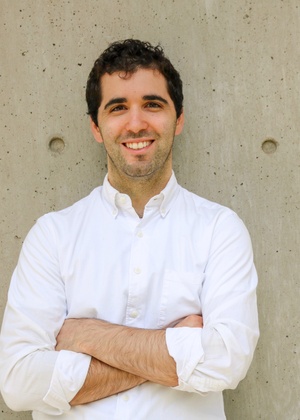
Ben Green is an Assistant Professor in the University of Michigan School of Information and a courtesy Assistant Professor in the Gerald R. Ford School of Public Policy. He holds a PhD in Applied Mathematics from Harvard University with a secondary focus on Science, Technology, and Society. His research examines algorithmic ethics, fairness, and governance, aiming to reduce harms and advance social justice. Notable works include The Smart Enough City (2019) and his forthcoming Algorithmic Realism . He is affiliated with the Berkman Klein Center for Internet & Society at Harvard and the Center for Democracy & Technology. Education: PhD in Applied Mathematics, Harvard University (with secondary field in Science, Technology & Society) BS in Mathematics & Physics, Yale University Research Interests: Algorithmic fairness in public policy Human-algorithm interaction dynamics Regulatory frameworks for AI Equity-centered data science practices Urban technology policy His recent publications explore themes like the limitations of human oversight in algorithmic systems, the sociotechnical challenges of implementing ethical AI, and the intersection of legal reasoning with computational systems. His writing emphasizes actionable solutions to systemic biases in algorithmic governance. Ben’s current projects include advancing algorithmic realism – a framework for grounding data science in socially just practices – and analyzing how counterfactual explanations influence judicial decisions. He serves on multiple interdisciplinary advisory boards and frequently collaborates with policymakers to translate research into actionable strategies.
Dr. Imen NOUIRA is a Full Professor in the Supply Chain Management & Information Systems Academic Area at Rennes School of Business (since 2023). She holds a Ph.D. from Grenoble INP (2013) and has extensive academic experience, progressing from Assistant Professor (2012-2019) to Associate Professor (2019-2023). Her research focuses on supply chain optimization under environmental considerations, carbon emissions modeling, and pandemic logistics. She has published in top journals like European Journal of Operational Research and International Journal of Production Economics. Key research interests include: Environmental Sustainability : Green supply chain design, carbon taxation strategies, and eco-friendly product development Healthcare Supply Chains : Pandemic medical product distribution and crisis management Operations Research : Inventory optimization, lead time coordination, and stochastic modeling Her work has been recognized with awards such as the 2017 2nd Best Student Paper Award at IESM. She actively contributes to international conferences and collaborates with industry partners on projects like olive oil supply chain design and carbon tax policy analysis. Rennes School of Business affiliations include roles in the: Green, Digital & Demand-Driven Supply Chain Management (G3D) research center Agribusiness, Sustainable Development, and CSR initiatives
Irina Rish is a Full Professor at the Université de Montréal and a core academic member of Mila – Quebec Artificial Intelligence Institute, where she leads the Autonomous AI Lab. She holds a Canada Excellence Research Chair (CERC) and a CIFAR AI Chair, reflecting her leadership in foundational AI research. Her work is supported by major initiatives, including the U.S. Department of Energy’s INCITE project on Summit and Frontier supercomputers. PhD in AI, University of California, Irvine MSc in AI, University of California, Irvine MSc in Applied Mathematics, Moscow Gubkin Institute Her research focuses on machine learning, neural scaling laws, emergent behaviors in foundation models, continual learning, robustness, and neuroscience-inspired AI . She explores how AI systems can become more general, flexible, and aligned with human cognition. Her recent work investigates training dynamics in large language models, efficient pruning techniques, and the development of time-series foundation models. The analysis of her recent publications reveals a strong focus on scaling behaviors, continual adaptation, and robustness in AI systems . Her work spans theoretical understanding of training dynamics (e.g., zero-sum learning), practical optimization methods, and applications in climate modeling and mental health. She emphasizes open science, leading open-source projects and co-founding Nolano.ai to build efficient, compressed foundation models. Canada Excellence Research Chair (CERC) CIFAR AI Chair IBM Eminence & Excellence Award (2018) IBM Outstanding Innovation Award (2018) IBM Outstanding Technical Achievement Award (2017) IBM Research Accomplishment Award (2009) Irina Rish advises a large group of PhD and Master’s students across Université de Montréal, McGill, and Concordia. She leads major research grants and collaborates internationally on HPC-based AI research. She is also the co-founder and CSO of Nolano.ai, driving innovation in efficient AI systems. She leads the Autonomous AI Lab, which focuses on building large-scale foundation models, understanding neural scaling laws, and developing bio-inspired learning systems. She actively organizes reading groups on scaling, continual learning, and out-of-distribution generalization, fostering a collaborative research environment.
Prof. Walter Richtering is a Universitätsprofessor at RWTH Aachen University, affiliated with JARA-SOFT and the Institute of Physical Chemistry (IPC). His research focuses on soft matter physics, colloids, and polymer chemistry with emphasis on microgels, nanogels, and their applications in biomaterials and materials science. He leads the 'Physical Chemistry of Solids' group and contributes to the CRC 985 (Functional Microgels and Microgel Systems). Key interests include quantifying softness in colloids, interfacial phenomena, and developing educational tools like AFM-based microgel experiments for undergraduate labs. Position: Professor of Physical Chemistry Affiliations: JARA-SOFT, IPC RWTH Aachen, CRC 985 Research Groups: Physical Chemistry of Solids, Polymers and Colloids His work explores structure-property relationships in soft materials, including phase behavior under non-equilibrium conditions, thermoresponsive systems, and catalytic microgel applications. Recent studies address microgel mechanics, anisotropic architectures, and filtration technologies.
Inigo Flores Ituarte is a Research Professor at Tampere University's Faculty of Engineering and Natural Sciences, affiliated with the Automation Technology and Mechanical Engineering department. He leads the Digital Design and Manufacturing (D2M) research lab, focusing on sustainable manufacturing and twin-transition strategies integrating digital and green technologies. His work emphasizes optimization-driven design, additive manufacturing innovations, and AI-driven expert systems to enhance energy efficiency and reduce environmental impacts. Key research pillars include: Pillar 1: Twin-transition in Engineering Design and Manufacturing Processes, addressing sustainable manufacturing and intelligent systems Pillar 2: Development of open D2M systems and Process-Structure-Property-Performance (PSPP) linkages in advanced materials His research explores multi-disciplinary optimization combining model-based simulations and data-driven techniques. Notable contributions include generative AI integration in CAD systems, cognitive manufacturing systems, and cost-effective process monitoring using CNN-based methods. Inigo's work emphasizes environmental sustainability, with a focus on reducing manufacturing's energy consumption (54% of global use) and CO2 emissions. He advocates for interconnected material systems, smart manufacturing processes, and AI-assisted decision-making to achieve cognitive intelligence in industrial operations. His D2M lab's overarching goal is to maximize product/process performance while improving cost-effectiveness and minimizing environmental footprints. Recent projects include railway bogie demonstrators via multi-material deposition and sensor systems leveraging IoT and ChatGPT integration.
Professor Karl Peter Giese holds the position of Professor of Neurobiology of Mental Health and Co-Head of the Basic & Clinical Neuroscience Department at King's College London's Institute of Psychiatry, Psychology & Neuroscience (IoPPN). His research focuses on memory mechanisms in health and disease, particularly Alzheimer's pathology, synaptic dysfunction, and aging effects. He leads projects funded by Alzheimer's Research UK and other institutions, investigating molecular and cellular bases of memory storage. His work bridges experimental models (e.g., mice) with translational insights for clinical applications. He has over 140 publications, including high-impact studies on CYFIP proteins in dementia and CaMKII in synaptic plasticity. Collaborations include researchers at King's College London and international partners. His lab explores mechanisms linking amyloid-beta, tau, and synaptic proteins to cognitive decline, with recent work applying computational methods to model aging brains. Education: PhD from ETH Zurich (1992), MSc Chemistry from Ruhr-University Bochum (1989). Current grants include Alzheimer's Research UK Network Centres and studies on MNK inhibition for Alzheimer's therapies. Projects span protein synthesis dysregulation, thalamic amyloid pathology, and intellectual disability genetics. His research has been featured in Nature Neuroscience , Brain , and Neuron . He advises on translational neuroscience initiatives and mentors early-career researchers.
Kiwon Um is a tenured Assistant Professor in the Computer Graphics group at Télécom Paris, France, since October 2019. He focuses on physics-based simulations and data-driven approaches using deep learning, with an emphasis on human visual perception in computer graphics and engineering applications. Education: Ph.D. in Computer Science and Engineering from Korea University His research explores effective simulation of natural phenomena through refined data utilization and develops reliable data acquisition methods for machine learning. He also investigates perceptual evaluation of simulations to advance numerical method understanding. Recent work trends include: (1) turbulence modeling with machine learning integration, (2) elastic material simulation stability, (3) fluid dynamics optimization, and (4) differentiable physics frameworks. His publications range from 2008 to 2025, covering topics like SPH solvers, porous shell simulations, and numerical method validation.
Michael T. Monaghan is a Professor at the Faculty of Biology, Chemistry and Pharmacy, Freie Universität Berlin, and leads the Research Group in Molecular Ecology and Genomics at the Leibniz Institute of Freshwater Ecology and Inland Fisheries (IGB). His work bridges evolutionary biology, molecular ecology, and environmental monitoring, focusing on freshwater systems and urban aquatic habitats. Education: B.S. (The Ohio State University, 1995), M.S. (Idaho State University, 1998), Dr. sc. nat. (ETH Zürich, 2002) Key Positions: Senior Scientist/Research Group Leader at IGB (2008–present), Visiting Professor at Duke-NUS Medical School (2016), Guest Professor at Ehime University (2015–2016) Dr. Monaghan's research explores freshwater biodiversity dynamics using molecular tools like metabarcoding and phylogenomics. His team investigates how environmental changes—climate warming, urbanization, pollution—affect microbial and insect communities, with a focus on eDNA applications and ecohydrology. His publications (2022–2025) span topics such as climate-driven plankton shifts, urban habitat adaptation by bees, toxin genetics in algae, and metagenomic monitoring of aquatic systems. Collaborative projects like BiNatUr and ODER~SO emphasize urban resilience and disaster ecology. Teaching includes data science in biology, evolutionary ecology, and environmental genomics at Freie Universität Berlin and the Institute of Computer Science. He mentors doctoral and master’s students in molecular ecology and trains interns in biodiversity genomics. Lab Members: Dr. Dagmar Frisch (Scientific Staff) Dr. Katrin Kiemel (Postdoc) Elisabeth Funke (Research Technician) Doctoral Candidates: Onur Erk Kavlak, Athena Karapli-Petritsopoulou, Daniel Wewer
Dr. Gary Glover is a Professor of Radiology (Radiological Sciences Lab) at Stanford University , with courtesy appointments in Psychology and Electrical Engineering. His work focuses on the physics and mathematics of MRI, particularly rapid scanning methods using spiral k-space trajectories for functional brain imaging and multimodal neuroimaging (fMRI/EEG/fPET/fNIRS) combined with neuromodulation techniques like TMS and transcranial ultrasound. Academic Appointments: Radiology, Psychology, Electrical Engineering Professional Affiliations: Bio-X, Stanford Cancer Institute, Wu Tsai Neurosciences Institute Research Interests include: Development of blood oxygen level-dependent (BOLD) and viscoelastic contrast in MRI Functional MR Elastography for brain activation mapping Optimization of MR-ARFI for transcranial ultrasound guidance Automated spinal cord segmentation (EPISeg) using machine learning Scientific Awards : National Academy of Engineering (2013) Gold Medal, ISMRM (2000) Steinmetz Award, General Electric (1985) Lauterbur Lecture, ISMRM (2018) Recent Publications analyze: Fast fMRI sampling and spurious signal correction Dissociated patterns in default mode network anti-correlations Neural correlates of collaborative behavior in triadic fMRI Salience network contributions to depression pathophysiology
Dr. Ken Ferens is an Assistant Professor in the Department of Electrical and Computer Engineering at the Price Faculty of Engineering, University of Manitoba. He serves as the Computer Engineering Champion in the Centre for Engineering Professional Practice and Engineering Education and directs the Applied Cognitive Intelligence (ACI) Research Group. Dr. Ferens is a senior member of the Institute of Electrical & Electronics Engineers (IEEE), Chair of the EduManCom Chapter of the IEEE, Vice-Chair of the Computer and Computational Intelligence Chapter of the IEEE, and Chair of the Industry, Teaching Assistants, and Student Forums for Engineering Curriculum Review and Improvement. Ph.D. (Computer Engineering), University of Manitoba, 1996 M.Sc. (Computer Engineering), University of Manitoba, 1991 B.Sc. (Electrical Engineering), University of Manitoba, 1989 Dr. Ferens has over 33 years of research experience in computational intelligence, focusing on cognitive machine learning, artificial intelligence, cognitive computational intelligence, chaos theory applications, agent-based models, and various optimization algorithms including simulated annealing, genetic algorithms, artificial neural networks, and particle swarm optimization. His research applies these techniques to develop software and hardware intrusion detection systems for cybersecurity applications. He teaches graduate-level courses on Computer Network Security and Applied Computational Intelligence, providing students with theoretical background and hands-on experience in state-of-the-art security methods. Analysis of Dr. Ferens' recent publications reveals a strong focus on applying cognitive and chaotic computational techniques to cybersecurity challenges, particularly malware detection and network intrusion detection. His work increasingly integrates complexity theory, fractal analysis, and hybrid optimization approaches to enhance security systems' effectiveness. There's a clear progression toward more sophisticated machine learning architectures applied to increasingly complex security scenarios, with growing emphasis on real-world IoT and network security applications. Best Paper Award at IEEE International Conference on Cognitive Informatics and Cognitive Computing (ICCI*CC 2022) Best Paper Award at IEEE International Conference on Cognitive Informatics and Cognitive Computing (ICCI*CC 2015) Best Journal Paper Award for 2013 (Journal of ICT Research and Applications) Best Poster Award at 12th International Conference on e-Health Networking, Application & Services (2010) Best Paper Award at IASTED International Conference on Computer, Electronics, Control, and Communication (1991) Dr. Ferens collaborates with national and international industry partners including the Department of Advanced Information Management, Content Technology Canadian Tire Corporation (CTC), and Magellan Aerospace. His research group has received funding supporting the Cyber-security Research Program, developing practical applications of computational intelligence for security systems. He has supervised numerous graduate students in the Electrical and Computer Engineering department, focusing on research at the intersection of machine learning and cybersecurity. Dr. Ferens leads the Applied Cognitive Intelligence (ACI) Research Group within the Department of Electrical and Computer Engineering, which focuses on applying cognitive, chaotic, and computationally intelligent algorithms to build intrusion detection systems. The group collaborates with industry partners to develop practical security solutions while providing students with hands-on research experience in cutting-edge security technologies. Their work spans both theoretical algorithm development and practical hardware implementation for real-world security applications.
Xiaoning Qian is a Professor in the Department of Electrical and Computer Engineering at Texas A&M University, where he also serves on the Faculty Advisory Committee for the Texas A&M Institute of Data Science (TAMIDS) and the Executive Committee for the Texas A&M TRIPODS Research Institute for Foundations of Interdisciplinary Data Science (FIDS). He holds a joint appointment in the Applied Math group within the Computational Science Initiative at Brookhaven National Laboratory (BNL). Previously, he was an Associate Professor (2018-2022) and Assistant Professor (2013-2018) at Texas A&M, and an Assistant Professor in the Department of Computer Science and Engineering at the University of South Florida (2009-2013). Dr. Qian received his B.S.E. and M.S.E. degrees from Shanghai Jiaotong University, China, and his M.Ph. and Ph.D. degrees in Electrical Engineering from Yale University. Dr. Qian's research focuses on developing mathematical models and computational algorithms in signal processing, machine learning, and Bayesian methods, particularly in learning, uncertainty quantification, and experimental design. His work spans multiple disciplines, with applications in life sciences and materials science. His research group, the Biomedical Imaging, Sensing, and Genomic Signal Processing Group, actively applies probabilistic models and optimization algorithms to solve complex problems in interdisciplinary domains. His research has evolved from foundational work in bioinformatics and biomedical image processing to more recent applications in materials science and broader AI for science initiatives. Dr. Qian has received numerous scientific awards and recognitions including: National Science Foundation (NSF) CAREER Award Segers Family Dean's Excellence Professorship II in the College of Engineering TEES (Texas A&M Engineering Experiment Station) Senior Faculty Fellow Montague-Center for Teaching Excellence Scholar J. T. Oden Faculty Fellow at the University of Texas, Austin Finalist of the 2023 INFORMS QSR Best Paper Faculty Impact Fellow from the Department of Electrical & Computer Engineering As an advisor , Dr. Qian has mentored numerous graduate students through their PhD and MS programs, with many of his alumni securing positions at prestigious institutions and companies including NIH/NCBI, Microsoft, Baidu Research Lab, and Qualcomm. His research has been supported by multiple grants, including an NSF CAREER award and collaborative research funding from the Information Integration and Informatics program. He is actively recruiting postdoc and graduate student research assistants for projects in machine learning and optimization methods with applications in bioinformatics and materials science. Dr. Qian is involved with several research initiatives including the Objective-Based Uncertainty Quantification (ObjectiveUQ) project, which provides a mathematical framework for integrating prior knowledge and data while enabling effective operational and experimental design under uncertainty. He also co-organizes the Bio-Seminar series for the Biomedical Imaging, Sensing & Genomic Signal Processing group at Texas A&M.
Marco Paggi is a Full Professor of Structural Mechanics at the IMT School for Advanced Studies Lucca, Italy, since 2017. He previously held academic roles at Politecnico di Torino (Assistant Professor, 2007-2013) and has been an Alexander von Humboldt Fellow at Leibniz University Hannover. His research focuses on fracture mechanics, contact mechanics, and computational methods applied to renewable energy systems, composite materials, and multi-scale modeling. Key Themes: Fracture propagation, contact interfaces, phase field modeling, photovoltaic durability, and material heterogeneity. Awards: Stanford Top 2% Scientists (2020-2024) Research.com Top Scientists (2022-2024) European Structural Integrity Society Young Scientist Award (2010) Publications: His work spans tribology, computational fracture mechanics, and material degradation, with recent emphasis on phase field modeling for quasi-brittle materials and photovoltaic systems. He has pioneered methods for multi-scale and multi-physics analysis of structural systems. Mentorship: Supervised 17 PhD graduates and 14 postdocs, including award-winning researchers like Pietro Lenarda and Zeng Liu.
Andrew J. Schuler is an Associate Professor in the Department of Civil Engineering at the University of New Mexico, where he has been since 2007. His research focuses on microbial processes in wastewater treatment and bioremediation, with particular emphasis on modeling distributed bacterial states, biofilm dynamics, and integrating molecular methods with environmental engineering. He teaches courses in water/wastewater treatment (CE 335) and biological wastewater treatment (CE 536). Ph.D., Civil and Environmental Engineering, University of California at Berkeley (1998) M.S., Civil and Environmental Engineering, UC Berkeley (1993) B.S., Civil Engineering, University of Colorado at Boulder (1987) Dr. Schuler's research addresses critical challenges in biological wastewater treatment , including: Microbial storage products and density effects on solids separation Agent-based modeling of bacterial state distributions Integrated fixed-film activated sludge (IFAS) systems Photolytic and microbial degradation of Superfund chemicals His recent publications explore biofilm surface chemistry , algae-based wastewater treatment , and computational modeling of microbial communities . Notable funded projects include NSF CAREER grants, NIEHS Superfund subprojects, and North Carolina Biotechnology Center collaborations. National Science Foundation CAREER Award (2004) Paul L. Busch Award (2008) AEESP/CH2M HILL Outstanding Doctoral Dissertation Award (1999) Japan Society for the Promotion of Science Postdoctoral Fellowship (1999) Dr. Schuler leads the Schuler Laboratory , which investigates microbial dynamics in wastewater treatment systems, develops the DisSimulator agent-based modeling tool, and provides practical solutions for activated sludge settling problems through density analysis. Current funding supports advanced research in biofilm optimization and sustainable water reuse technologies.
Andrew Macintosh is a Professor at the Australian National University College of Law, where he serves as Associate Dean (Research). He is a leading environmental law and policy scholar with extensive expertise in climate change mitigation and adaptation, carbon markets, and environmental impact assessment processes. Professor Macintosh's research is distinctly cross-disciplinary, applying legal, economic, and political science methodologies to environmental policy challenges. His work has established him as one of Australia's foremost experts on carbon offsets, land sector carbon abatement, and federal environmental law. His publications in prestigious journals including Nature Climate Change and the Journal of Environmental Law demonstrate the high impact of his scholarly contributions. His recent publications reveal a consistent focus on the integrity of Australia's carbon credit system, particularly examining human-induced regeneration projects, landfill gas methods, and nature-based markets. His research critically assesses regulatory compliance, measurement accuracy, and actual environmental outcomes of carbon offset projects, highlighting systemic issues in policy implementation. Among his notable recognitions is the Schlamadinger Prize for Climate Change Research awarded in 2012. Professor Macintosh maintains significant policy engagement through leadership roles including Chair of the Australian Emissions Reduction Assurance Committee, Director of the Port of Newcastle, and membership on the Australian Government's Emissions Reduction Fund Expert Reference Group and National Greenhouse Gas Inventory User Reference Group. His previous roles include Chair of the Domestic Offsets Integrity Committee and Associate Member of the Australian Climate Change Authority. He serves as an editor of the Environmental and Planning Law Journal . His work bridges academic research and practical policy implementation, with regular advisory roles for governments, corporations, and non-government organizations on environmental law and policy matters. Professor Macintosh's research directly informs climate policy development and implementation at national and international levels.
Barak Ariel is a Professor of Experimental Criminology at the Institute of Criminology, University of Cambridge. He holds a PhD in Criminology from Hebrew University of Jerusalem, an LLM (Hebrew University), LLB (Academic Centre of Law & Business), MA in Criminology (Hebrew University), and BA in Psychology (University of New York). Since 2008, he has been affiliated with the Jerry Lee Centre of Experimental Criminology and teaches on the MSt in Applied Criminology and Police Management. Academic Rank: Professor of Experimental Criminology Key Affiliations: University of Cambridge, Jerry Lee Centre of Experimental Criminology Education: PhD, LLM, MA, LLB, BA Dr. Ariel specializes in experimental criminology, evidence-based policing, and the role of technology in crime prevention. His research focuses on evaluating policing strategies through randomized controlled trials (RCTs), particularly in areas such as body-worn cameras, domestic abuse hotspots, and interventions to reduce violence against women. He has advised police departments and governments across the UK, USA, Latin America, and Europe. His recent publications highlight trends in global crime dynamics, the impact of police interventions on offender behavior, and the use of machine learning for crime forecasting. These works span subfields including hot spots policing, procedural justice, victim-offender overlaps, and network analysis of organized crime. Scientific Awards : Academy of Experimental Criminology Young Experimental Scholar Award European Society of Criminology Young Criminologist Award Fellow of the Division of Experimental Criminology As Chair of the Division of Experimental Criminology (2019–2021), Dr. Ariel has contributed to advancing methodological rigor in criminological research. He has conducted extensive evaluations of police-led interventions, including trials on body-worn cameras, victim communication strategies, and data-driven approaches to domestic homicide prevention. His work bridges academic research with practical policing reforms, emphasizing the importance of empirical evidence in criminal justice policy.