Warren Buckland is a Reader in Film Studies at Oxford Brookes University's School of Arts. He holds a PhD in Film Studies from the University of East Anglia (1993) and previously studied photography at Derby (1987). Research: Film semiotics, cognitive film theory, narrative theory (puzzle films), digital humanities, independent American cinema Professional Roles: Editor of New Review of Film and Television Studies (2003-2016), editorial board member for Signata and book series Thinking Cinema and Hollywood Studio System His article trends analyze: Impossible storyworlds in Hollywood blockbusters Stylometric approaches to independent cinema Semiotic structures in music videos Epistemological foundations of film criticism Cognitive dimensions of cinematic rhetoric Contemporary auteur theory applications Awards: British Academy Post-Doctoral Fellowship (1994) Senior Research Fellow at Freie Universität Berlin (2016) As an educator, he supervises: PhD theses on film style, philosophy, puzzle films MA dissertations on Hollywood, digital humanities BA/MA film theory and research methods
Miguel Nacenta is a Professor in the Department of Computer Science at the University of Victoria (UVic), Canada, and a founding member of the Victoria Interactive eXperiences with Information (VIXI) research group. Previously affiliated with the University of St Andrews (UK), his work bridges Human-Computer Interaction (HCI), Information Visualization, and Cognitive Science. He specializes in designing interactive systems that enhance human cognition, with a focus on Infotypography (using typography to encode data), collaborative problem-solving tools, and perceptual input/output devices. Research Interests: His key areas include cognitive augmentation, visualization techniques for complex tasks, multi-display environments, and tools for constraint problem-solving. Notable projects include the WriteReason tool for essay writing, InfoTypography studies on perceptual typographic parameters, and Solvi for visual constraint modeling. Grants & Collaborations: He collaborates internationally, including with the University of St Andrews on PhD scholarship programs. His work is supported by grants focusing on HCI innovations and accessibility. He actively mentors students (e.g., Adam Binks, Johannes Lang) and supervises postdoctoral researchers. Affiliations: Member of the VIXI group,他曾是St Andrews计算机科学学院的教授, 并参与多个学术服务活动, including conference program committees and journal reviews. Labs & Teams: Leads the VIXI lab at UVic, focusing on interactive technologies for cognitive tasks. Collaborates with industry partners on projects like TypoCartographer for infoTypographic maps and HaptiQ for accessible graph exploration.
Professor Hannah Thompson is a faculty member in the Department of Languages, Literatures and Cultures at Royal Holloway, University of London. Her academic journey includes a PhD from the University of Cambridge and postdoctoral research at Darwin College. She has held roles such as Director of the Humanities and Arts Research Institute and is currently Principal Investigator of the AHRC-funded 'Sensational Museum' project. Her research focuses on French literature, Critical Disability Studies, and accessibility in museums and arts. Education: PhD in French Literature (University of Cambridge), MPhil, and undergraduate degrees from Newnham College, Cambridge. Affiliations include Senior Fellow at the Higher Education Academy and membership in societies like the Society of French Studies. Research interests span French literature, disability studies, gender, and museum accessibility. Key projects include the IDEA fellowship on inclusive audio description and collaborations with institutions like VocalEyes and the Wellcome Collection. Notable awards include the Visiting Researcher (DEA) in 2022. She has advised on numerous PhD and MA students and leads initiatives like the Blind Spot Blog.
John R Anderson is the Richard King Mellon University Professor of Psychology and Computer Science at Carnegie Mellon University (CMU), affiliated with the Department of Psychology within the Dietrich College of Humanities and Social Sciences. His research focuses on understanding higher-level cognition, particularly mathematical problem-solving, through the development of the ACT-R cognitive architecture—a computational framework simulating human cognitive processes. This architecture integrates behavioral, neural, and educational data to model learning and decision-making. Anderson’s work bridges cognitive science, neuroscience, and educational technology. He investigates how brain imaging (e.g., fMRI, EEG) can reveal the temporal dynamics of cognitive processes and improve instructional methods. His research emphasizes analyzing brain activity time courses to uncover underlying mechanisms of problem-solving and skill acquisition. Key Research Themes: Cognitive architectures, neural correlates of learning, computational models of memory, and intelligent tutoring systems. Notable Contributions: Development of the ACT-R architecture, integration of neuroimaging with cognitive modeling, and studies on skill transfer and learning strategies. Anderson’s publications include seminal books like Cognitive Psychology and Its Implications and How Can the Human Mind Occur in the Physical Universe? His work has advanced understanding of associative memory, strategic decision-making, and the application of cognitive models in educational technology. His lab, the ACT-R Research Group, collaborates across disciplines to model complex cognitive tasks and their neural foundations. Current projects analyze real-time brain activity to refine educational interventions and improve human-machine interaction.
Dr Elizabeth Hallam is an Associate Professor in Visual, Material, and Museum Anthropology at the University of Oxford's School of Anthropology & Museum Ethnography. She holds additional roles as a Research Affiliate at the Pitt Rivers Museum, Fellow of St Peter's College, and Director of the Interdisciplinary Studies in Cultural Anthropology (ISCA). Her research focuses on the anthropology of the body, death, material and visual cultures, human anatomy, and three-dimensional models in medical education. She is also the Editor of the Journal of the Royal Anthropological Institute and has curated exhibitions such as 'Designing Bodies: Models of Human Anatomy from 1945 to Now'. Her academic journey includes a BA and PhD from the University of Kent, followed by positions at the University of Sussex and Aberdeen University. She has authored/co-authored influential works like Anatomy Museum: Death and the Body Displayed (2016), which won the Wellcome Medal. Her current projects explore museums of anatomy, 3D modeling in anthropology, and collaborative art practices. Key research themes include death and memorializing processes, the role of material culture in knowledge production, and interdisciplinary studies on creativity and improvisation. She advises four DPhil students and has been involved in ARC-funded projects on cemetery futures and postmortem practices. Awards: Wellcome Medal for Anthropology as Applied to Medical Problems (2016) Grants: Projects funded by the Australian Research Council, Henry Moore Foundation, and Royal College of Surgeons Labs/Teams: Collaborations with University of Melbourne and curatorial networks in Europe/USA
Wojciech Jarosz is an Associate Professor of Computer Science at Dartmouth College, affiliated with the College of Engineering and Computer Science. His research focuses on computer graphics, particularly light transport simulation, rendering algorithms, and digital fabrication. He co-founded the Visual Computing Lab and previously led the rendering group at Disney Research Zürich. Jarosz holds a Ph.D. and M.S. from UC San Diego and a B.S. from the University of Illinois Urbana-Champaign. His educational background includes studies in computer science and engineering, with a strong emphasis on graphics and rendering. Research interests span light transport simulation, Monte Carlo methods, appearance capture, and fabrication. Notable achievements include the Eurographics Young Researcher Award (2013) and the NSF CAREER Award (2019). Jarosz's work integrates theoretical rigor with practical applications, such as real-time rendering techniques and volumetric light transport. His lab develops tools for artistic authoring, including intuitive metaphors for volumetric lighting in animated films. Recent projects explore wave-optics BSDF models, optical heterodyne rendering, and unifying radiative transfer models. Key awards include the SIGGRAPH 2024 Best Paper Award and Neukom Institute prizes. His teaching includes courses on rendering algorithms, computer graphics, and computational photography. Jarosz collaborates with industry (e.g., Disney, NVIDIA) and advocates for diversity in computer graphics research.
Dimitrios Tsaoulidis is a Senior Lecturer in Chemical Engineering at the University of Surrey and an Honorary Lecturer at University College London . He holds a PhD in Chemical/Nuclear Engineering and a Diploma in Chemical Engineering. University roles: Academic Integrity Officer, Senior Personal Tutor, Disability & Neurodiversity Representative Research spans clean energy (nuclear, bio, solar), healthcare (bioprocess scalability), and manufacturing using process intensification and microfluidics . His work combines experimental investigation , CFD simulations , and scale-up optimization for multiphase reactors . Notable research trends include: 15+ publications (2012–2023) on uranium extraction , biodiesel production , and pharmaceutical microfluidics , with grants from UKRI and Innovate UK . Scientific Awards : David Newton’s Award for Sustainability (UCL) Springer Thesis Award Fellow of the Higher Education Academy (FHEA) Associate Member of the Institution of Chemical Engineers (AMIChemE) Research Collaborations : Academic : Prof Panagiota Angeli (UCL), Prof Eric Fraga (UCL), Dr Maryam Parhizkar (UCL) Industrial : UK Atomic Energy Authority, National Nuclear Laboratory, GSK, Greenergy Ltd, Armfield Dr Tsaoulidis supervises PhD students (e.g., Mustapha Hamdan, Anna Tsitouridou) and PDRA staff (e.g., Dr Jamshid Zarkesh) in projects related to solar energy systems , nuclear fuel cycles , and pharmaceutical automation .
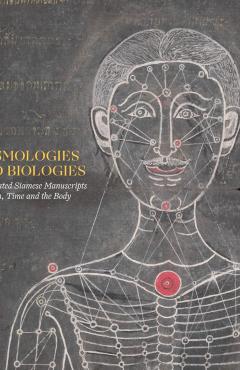
Justin McDaniel is the Edmund J. and Louise W. Kahn Endowed Professor of the Humanities at the University of Pennsylvania's Department of Religious Studies. His research focuses on Lao, Thai, Pali, and Sanskrit literature, Buddhist rituals, manuscript studies, and Southeast Asian history. He has authored multiple award-winning books and published over 100 articles and reviews. Education includes a BA from Boston College (1993), MTS from Harvard Divinity School (1998), MA and PhD in Sanskrit and Indian Studies from Harvard University (2001, 2003). His research explores intersections between Buddhism, material culture, and social history. Recent work includes studies on Siamese manuscripts and Thai Buddhist art. He has held grants from NEH, Mellon, Rockefeller, and others. Awarded teaching excellence at multiple institutions, McDaniel’s innovative courses like Existential Despair and Living Deliberately have been featured in national media. He serves as co-editor for Buddhism Compass and Journal of Lao Studies . Publications include Cosmologies and Biologies (2024), Wayward Distractions (2023), and Architects of Buddhist Leisure (2015), supported by NEH and Kyoto University. Forthcoming projects address Thai manuscripts and Buddhist biographies.
Dr. Joanna Cohen is an Associate Professor in American History at Queen Mary University of London's School of History. She specializes in 19th-century U.S. history, focusing on consumption, citizenship, capitalism, and material culture. Her work explores how commercial practices shaped civic identity and emotional responses to loss during the Civil War era. Education: BA (Cambridge), MA (Northwestern University), PhD (University of Pennsylvania). Research Interests: Consumer culture and citizenship Visual/material culture in 19th-century America Capitalism's intersections with race/gender Emotional history of economic trauma Awards: 2014 Grier Prize for best article Huntington Library Fellowship Newberry Library Fellowship Supervision: Guides doctoral research on 19th-century American capitalism, consumption, and visual culture. Public Engagement: BBC Radio contributor, podcast appearances, and frequent conference speaker at events like the Freethinking Festival.
Jing Zeng is an Assistant Professor of Computational Communication Science at the University of Zurich, Switzerland. She holds a PhD in Media and Communication from Queensland University of Technology (2017), an MSc in Social Science of the Internet from the Oxford Internet Institute (2013), and a BA in International Communications from the University of Nottingham (2012). Her research focuses on digital platforms, computational social science, AI governance, and misinformation dynamics. She has held academic appointments at Utrecht University (2022–2024) and fellowships at institutions including the Max Planck Institute for the History of Science and the Weizenbaum Institute. Zeng is a leader in digital media research, serving on editorial boards for journals such as Big Data & Society and Convergence , and co-editing the Technology, Power & Society book series. Her work bridges critical platform studies with empirical analyses of conspiracy theories, climate communication, and TikTok culture. Zeng’s research has been recognized through awards including the ICA Computational Methods Interest Group Top Paper (2020) and the Utrecht University Teaching Award (2023). She actively engages in public discourse through media commentaries in The Guardian , The Atlantic , and Science|Business , addressing topics like AI ethics, platform governance, and disinformation. Her current projects explore AI imaginaries, visibility moderation on TikTok, and cross-cultural digital activism. Education: PhD (QUT), MSc (Oxford), BA (Nottingham) Affiliations: Association of Internet Researchers (AoIR Executive Board), IPIE Scientific Network
Camille Landais is a Professor of Economics at the London School of Economics and Political Science (LSE), where she leads the Department of Economics. She serves as Director of STICERD (Suntory and Toyota International Centres for Economics and Related Disciplines) and Co-Director of the LSE-Gates Hub for Equal Representation in the Economy (H.E.R.). Additionally, she is a member of the French Council of Economic Advisers (CAE). Her research expertise spans Public Finance, Labour Economics, Applied Microeconomics, and Microeconometrics, with a focus on gender inequality, taxation policies, and child penalties. Landais holds a PhD in Economics from the Paris School of Economics. Her research interests include optimizing public spending efficiency, analyzing the economic impacts of family policies, and addressing wealth inequality through tax reforms. Recent work emphasizes the 'child penalty' phenomenon, migration responses to wealth taxation, and strategies for achieving full employment. She has contributed to high-impact publications such as the Review of Economic Studies and collaborates internationally on projects like the Child Penalty Atlas. Landais teaches advanced courses in public economics and actively engages in policy advising. She directs research centers that prioritize interdisciplinary approaches to economic challenges and inequality reduction. Her work frequently involves large-scale data analysis, including banking data and microsimulation techniques, to evaluate policy outcomes. Education: PhD in Economics, Paris School of Economics Research Centers: Director of STICERD, Co-Director of H.E.R., International Inequalities Institute Associate Teaching: EC325/EC426/EC534 (Public Economics modules) Professional Roles: Member of French Council of Economic Advisers, Editor of LSE Public Policy Review
Dr Stella Bolaki is Reader in American Literature and Medical Humanities at the School of English, University of Kent, and Co-Director of the Centre for Health and Medical Humanities. She has been a faculty member since 2011, after holding positions at the University of Glasgow and the University of Edinburgh, where she also held a postdoctoral fellowship at the Institute for Advanced Studies in the Humanities (IASH). Her educational background includes a BA from Athens and an MSc and PhD from the University of Edinburgh. BA, Athens MSc, University of Edinburgh PhD, University of Edinburgh Stella’s research spans interdisciplinary fields including contemporary American literature, medical humanities, disability studies, and Black feminist theory. Her work critically examines narratives of illness, chronic conditions, self-care, and the intersection of art and health. She has pioneered research on artists’ books as tools for wellbeing, testimony, and community engagement, particularly in contexts of trauma and social injustice. Her recent publications and projects reveal a consistent focus on expanding narrative forms in medical humanities—moving beyond traditional literary modes to include photography, performance, film, and digital storytelling. Themes of inequality, mental health, climate anxiety, and embodiment recur across her work, especially in her ongoing monograph on self-care. Fellow of the Higher Education Academy Wellcome Trust funding recipient British Academy funding recipient Research England grant awardee Kent’s AHRC Impact Acceleration Account funding Stella supervises doctoral research across a wide range of interdisciplinary topics and has co-supervised a CHASE-funded project on health zines. She contributes to teaching in American literature and medical humanities at the Kent and Medway Medical School. Her professional service includes editorial roles for Contemporary Cultural Studies in Illness, Health and Medicine and the Journal of Literary & Cultural Disability Studies , and leadership in the Eastern Arc Medical and Health Humanities Network and the Kent Medical Humanities Network. She leads public-facing research through creative workshops, exhibitions, and events such as ‘Artists’ Books and the Medical Humanities’ and ‘Mending the Psyche: Art as Reparation’, often in collaboration with NHS partners and community organizations.
William B Gartner serves as the Bertarelli Foundation Distinguished Professor of Family Entrepreneurship at Babson College's F.W. Olin Graduate School of Business, where he also directs research at the Bertarelli Institute for Family Entrepreneurship. Having joined Babson's faculty in 2017, Gartner brings over 40 years of experience studying entrepreneurial phenomena, with particular expertise in family entrepreneurship dynamics. He previously held distinguished chairs at the University of Southern California and Clemson University, establishing himself as a leading scholar in the field. Gartner earned his PhD, MBA, and BBA from the University of Washington, forming the foundation for his extensive research career. His academic journey began during entrepreneurship's early days in the late 1970s when he took one of the first entrepreneurship courses as an MBA student at the University of Washington, when only six students initially enrolled in the class. Gartner's research primarily explores how families act entrepreneurially, examining topics including entrepreneurial legacy, intergenerational knowledge transfer, and the transformation of family businesses across generations. His work bridges entrepreneurship theory with practical applications, particularly focusing on how entrepreneurial legacies can drive innovation in family businesses. He is particularly interested in the linguistic innovations entrepreneurs employ and how storytelling shapes entrepreneurial identity and practice. His scholarship has evolved to incorporate humanities perspectives, recognizing that literature, philosophy, and history provide valuable insights into entrepreneurial thinking and behavior. Analysis of Gartner's recent publications reveals a strong emphasis on family entrepreneurship as an ongoing process rather than a static state, with increasing attention to methodological innovation in entrepreneurship research. His work demonstrates growing interest in the role of narrative, visual methods, and qualitative approaches to understand complex entrepreneurial phenomena. The research shows consistent focus on family business succession as transformation rather than simple transfer, with increasing attention to adolescent entrepreneurial development and the influence of parenting styles. 2025 — Top 1% of Scholars in all subjects, Stanford/Elsevier's Top 2% Scientist Rankings 2024 — The FamCap25 – The Top FamilyEnterprise Academics, FAMILY CAPITAL MAGAZINE 2022 — Justin G. Longnecker Fellow, United States Association of Small Business and Entrepreneurship 2016 — Dedication to Entrepreneurship Award, Entrepreneurship Division, Academy of Management 2013 — Foundational Paper Award, Entrepreneurship Division, Academy of Management 2005 — International Award for Entrepreneurship and Small Business Research Gartner actively mentors doctoral students and early-career researchers, frequently collaborating on publications addressing complex family business dynamics. His editorial roles as Special Issue Editor for Entrepreneurship and Regional Development and Academy of Management Perspectives demonstrate his influence in shaping research agendas. He has secured significant research funding supporting studies on entrepreneurial legacy, family business succession, and adolescent entrepreneurial development, though specific grant amounts aren't detailed in the available materials. As Director of Research at the Bertarelli Institute for Family Entrepreneurship, Gartner leads initiatives connecting academic research with practical applications for family businesses. His work emphasizes the transformative potential of entrepreneurship within family contexts, challenging traditional notions of family business succession as mere transfer of ownership. Through workshops and seminars, he helps families explore how entrepreneurial legacies can lead to new innovations while preserving core values across generations.
Robert Corna is a Lecturer in the Department of Media Arts, Sciences and Studies at the Roy H. Park School of Communications, Ithaca University. His work focuses on film production and visual storytelling methodologies. Role: Lecturer Specialty: Film Production Affiliation: Roy H. Park School of Communications, Ithaca University Corna's research interests span cinematic techniques, digital filmmaking, and contemporary cinema analysis. As a media arts educator, he contributes to pedagogical practices in visual storytelling and production workflows.
M. Tamer Özsu is a University Professor of Computer Science at the David R. Cheriton School of Computer Science, University of Waterloo, where he holds a Cheriton Faculty Fellowship. He also serves as a Distinguished Visiting Professor at Tsinghua University and is the Founding Director of Waterloo-Huawei Joint Innovation Laboratory since 2018. His extensive contributions to computing have earned him numerous prestigious awards including the 2024 ACM Presidential Award for long-standing and significant contributions to the computing field. Professor Özsu's research focuses on data engineering aspects of data science, particularly addressing data management issues with two main foci: management of non-traditional data and large-scale distributed data management. He is renowned for his seminal book "Principles of Distributed Database Systems" (co-authored with Patrick Valduriez), now in its fourth edition, and the "Encyclopedia of Database Systems" (co-edited with Ling Liu), in its second edition. His work bridges theoretical foundations with practical system implementations, targeting grand societal challenges through computational approaches. His recent publications reveal a strong trend toward graph analytics, streaming data processing, and the integration of large language models with vector data management. The research shows increasing focus on GPU-accelerated graph processing, RDF query optimization, and multimodal data analysis, reflecting the evolution of data management challenges in the era of big data and AI. His work continues to address fundamental challenges in distributed data systems while adapting to emerging technologies and application domains. Scientific Awards and Fellowships ACM Presidential Award (2024) IEEE TCDE Education Award (2024) IEEE Innovation in Societal Infrastructure Award (2022) CS Can | Info Can Lifetime Achievement Award (2018/2019) ACM SIGMOD Test-of-Time Award (2015) ACM SIGMOD Contributions Award (2006) The Ohio State University College of Engineering Distinguished Alumnus Award (2008) Fellow of the Royal Society of Canada Fellow of the American Association for the Advancement of Science (AAAS) Life Fellow of the Association for Computing Machinery (ACM) Life Fellow of the Institute of Electrical and Electronics Engineers (IEEE) Fellow of the Asia-Pacific Artificial Intelligence Association (AAIA) Elected member of the Science Academy, Türkiye Professor Özsu has been deeply involved in academic leadership and community building. As Founding Editor-in-Chief of ACM Books (2013-2019), he launched a series that by 2019 had published 28 major books with another 30 under contract. His service to ACM, particularly through SIGMOD, has been exemplary and widely recognized. He directs the Waterloo-Huawei Joint Innovation Laboratory, which focuses on cutting-edge research in data management and distributed systems, fostering strong industry-academia collaboration.