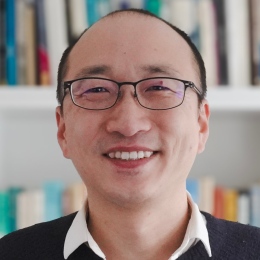
Dr. Cengizhan Karaca is an Assistant Professor at the Vocational School of Social Sciences, Gaziantep University, specializing in Accounting and Taxation. He holds a PhD in Business Administration (2018) and has published extensively in finance, investments, and sustainable economic growth. PhD: Business Administration, Gaziantep University (2013-2018) MSc: Business Administration, Gaziantep University (2011-2013) BSc: Business Administration, Gaziantep University (2003-2007) His research focuses on financial markets , globalization effects , and energy economics , with key contributions to the Environmental Kuznets Curve hypothesis and nonlinear relationships in corporate finance. Recent work explores climate policy uncertainty's impact on carbon markets and renewable energy innovations. Over 13 peer-reviewed publications include studies on trade credit dynamics, financial development, and firm valuation in BIST-listed companies. He has presented at international conferences like EconEFE and served on editorial boards for financial research journals. TÜBİTAK Publication Incentive Award (2024) Gaziantep University High Honor Student (2005) He has supervised a PhD thesis on international capital flows' role in financial development and participated in national projects including energy market analyses and vocational education feasibility reports. His teaching spans corporate accounting, financial statement analysis, and Turkish tax systems across undergraduate and graduate levels.
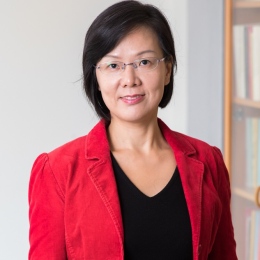
Roisin McCafferty is a Lecturer in Physiotherapy at the School of Health Sciences , focusing on bridging health sciences with community-based interventions. Her work addresses critical intersections between physical activity, socioeconomic challenges, and child health. Active in SDG 3 (Good Health and Well-being) and SDG 10 (Reduced Inequalities) Collaborates with multidisciplinary teams on cost-of-living crisis research Her research examines how socioeconomic pressures limit children's access to sport and physical activity, emphasizing parental support systems and policy reforms. Recent 2025 publications include a BMC Public Health article, policy briefings, and infographics analyzing these barriers. She contributes to media discourse on health inequalities and leads workshops like the Chiropractic Summer School. Roisin supervises postgraduate research, including Roisin Carney’s thesis on physical activity education in type 1 diabetes management.
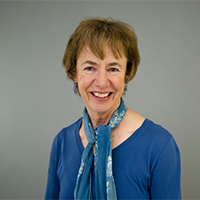
Dr. Preethy D'Souza is a Senior Research Fellow at the Social Research Institute within the UCL Institute of Education, where she has been working since 2016. She also holds appointments as an Adjunct Professor in Research Synthesis at Manipal Academy of Higher Education, India, and as a Visiting Professor at Federal University of Mato Grosso do Sul and FIOCRZ (Centre for Evidence-based Health) in Brazil. Her work focuses on evidence synthesis for policy and practice in public health and planetary health domains. Her educational background includes: PhD (Intervention for training in Evidence-Based Practice), University of Manipal, India, 2015 MPhil (Research & Theory development), University of Manipal, India, 2003 MSc (Maternal & Child Health Nursing), Christian Medical College, Vellore, India, 1996 FHEA - Fellow of Higher Education Academy, UK Dr. D'Souza specializes in qualitative, quantitative and mixed methods systematic reviews with approximately 15 years of experience in public health, maternal and child health, social care, mental health, education, and international development. Her research bridges evidence synthesis with practical applications in policy contexts, particularly focusing on global health equity, evidence-informed decision making, and adapting evidence to local contexts. She has contributed significantly to developing frameworks for incorporating Southern perspectives into evidence synthesis to address inequities in knowledge production. Her recent publications demonstrate a strong focus on evidence synthesis methodologies, mental health impacts of global crises (particularly the COVID-19 pandemic), health equity considerations in systematic reviews, and the application of evidence in policy contexts across different global settings. Her work spans multiple continents including the UK, India, Brazil, Uganda, and Thailand, reflecting her commitment to globally relevant evidence that addresses local needs. Professional recognition includes: Fellow of Higher Education Academy (FHEA) Membership in the African Evidence Network (AEN) Membership in the Planetary Health Alliance Active participation in the Southeast Asia Evidence Policy Partnership (SEAEPP) Dr. D'Souza serves as an Advisory board member for the Centre for Evidence-informed Decision-making at MAHE, India, and is a core member of several international networks focused on evidence-informed policy. She has supervised PhD students at UCL and has extensive experience mentoring systematic review teams across multiple countries. Her grant portfolio includes significant projects funded by National Institute for Health Research (NIHR), National Institute for Health and Care Excellence (NICE), Education Endowment Fund (EEF), World Bank, and other international organizations. She leads research projects addressing critical health policy questions including interventions to reduce diagnostic errors in cancer care, active travel interventions for disadvantaged populations, psychosocial consequences of weight monitoring in children, and remote therapies for substance use treatment. Her UCL-AIIMS collaborative projects focus on mental health impacts of COVID-19 in vulnerable groups and digital health tools for maternal self-care in India.
Kelly Dickson is an Associate Professor at the University College London (UCL) Institute of Education , specializing in Global Health and Wellbeing. She is also an Integrative Psychotherapist and Co-Founder of the Integrative Counselling and Psychotherapy Network, UK , with affiliations including the UK Council for Psychotherapy . Her academic career at UCL spans since 2004, focusing on evidence synthesis for policy and practice. PhD, University College London (2018) MA (Hons), Middlesex University (2015) MSc, University of Surrey (2003) BSc, University of Surrey (1999) Dr Dickson leads systematic reviews and primary research in Global Health, using qualitative, quantitative, and participatory methods. Key areas include: Mental health and psychosocial wellbeing in humanitarian settings Inequalities in mental health Digital interventions for substance misuse Impact of displacement on mental health Policy-relevant evidence synthesis Social media effects on youth mental health Her recent publications focus on mental health interventions in LMICs, pandemic impacts, and methodological innovations in evidence synthesis. She has secured grants from NIHR, UCL Global Health Funds, and CEDIL for projects addressing reproductive health policy, cardiovascular disease prevention, and evidence-informed decision-making. Dr Dickson supervises students in qualitative and quantitative evidence synthesis and delivers modules such as Systematic Review Design and Planning for MSc programs at UCL. She also provides mentorship to practitioners in coaching, therapy, and wellbeing sectors.
Younghwan Byun is a Research Fellow (Assistant Professor) at the Social Policy Unit of the Swedish Institute for Social Research (SOFI), Stockholm University. He joined SOFI as a postdoc researcher in October 2015 and has been working as a research fellow since 2020. His research focuses on comparative social policy and welfare states , labor market institutions , income inequality , and poverty . His overarching research theme examines under what conditions social policies and labor market institutions can more effectively mediate inequality and poverty in response to structural changes like technological change, pandemics, immigration, and demographic aging. His methodological approach primarily relies on statistical analysis but also incorporates qualitative methods. Byun's research portfolio includes four major projects: 1) A comparative study among OECD countries examining how tax and transfer policy affects government capacity to reduce income inequality (funded by FORTE); 2) Comparative research on welfare development in East Asia, where he constructed the East Asian Social Policy Dataset (SPEAD) (funded by Korea Foundation); 3) Research on non-state social welfare during the COVID-19 pandemic (funded by FORMAS); and 4) Research on trade unions and wage inequality in the knowledge economy (funded by Riksbankens Jubileumsfond). His teaching activities include courses on Globalization, Economy, and Politics in Asia for the MA program in Asian Studies, Labor relations and employment policy in Asia for SOFI's Labor Market Studies with Management course, and Master thesis supervision. He has also delivered invited lectures on the Swedish welfare state to government delegations from multiple countries including Malaysia, Vietnam, Uzbekistan, Korea, and Taiwan. Byun earned his BA at Yonsei University, Korea, and completed his MA and PhD in political science (with comparative politics major and public policy minor) at the Graduate Center, City University of New York, USA in 2016. His doctoral thesis, supervised by Janet Gornick, examined cross-national and longitudinal variation in the size of middle-income strata in 22 OECD countries from 1980 to 2010, highlighting the positive effects of trade unions on middle-income strata formation.
Joakim Isaksson is a Senior Lecturer and Associate Professor in the Department of Social Work at Stockholm University. He is affiliated with The Research Group in Psychosocial Work, which focuses on the interaction between individuals in need of care and professional caregivers, including power relations in these relationships. His work address complex psychosocial issues within healthcare and educational settings. Dr. Isaksson's research interests center on psychosocial work, with specific expertise in school attendance problems, child welfare systems, and oncology social work. His work examines the intersection of social work practice with educational policy and healthcare delivery systems, particularly focusing on vulnerable populations including students with attendance issues and cancer patients and their families. He employs primarily qualitative research methods to explore the nuanced experiences of individuals within these systems. His publication record shows a clear trajectory of research examining attendance problems in international contexts, with comparative studies across Germany, Japan, Sweden, and the UK using PISA data. Simultaneously, he has developed significant expertise in the role of social workers within cancer care settings, documenting both patient and professional perspectives on psychosocial support needs. Dr. Isaksson leads and participates in several significant research projects, including 'Municipal child welfare - investigations, services and trajectories beyond,' which follows two thousand children and youth through the child welfare system for six years, and 'School Attendance Problems in an International Comparative Perspective,' which investigates dimensions of school attendance problems among 15 to 17-year-olds across multiple countries. His work with The Research Group in Psychosocial Work demonstrates a commitment to understanding the complex dynamics between caregivers and those receiving care, with particular attention to power structures within these relationships. His research contributes significantly to developing evidence-based approaches to social work practice in both educational and healthcare settings.
Shu-Nu Chang Rundgren is a Professor in the Department of Education at Stockholm University, where she serves as the Scientific Leader and Coordinator for the Educational Research in Citizenship Competences (ERiCC) research group. She also holds positions as Honorary Chair Professor at National Tsing-Hua University in Taiwan and previously served as Professor II of Science Education at Oslo Metropolitan University in Norway (2018-2020) and Professor of Science Education at Karlstad University (2011-2015). Professor Chang Rundgren's research primarily focuses on socioscientific issues (SSI) and informal argumentation skills related to climate change and pandemic-related issues. She developed the SEE-SEP model in 2010, which addresses SSI through multiple disciplinary perspectives including Science/Technology (S), Environment (E), Economy (E), Social Culture (S), Ethics (E), and Policy (P). Her work emphasizes the importance of holistic consideration when addressing complex socioscientific issues. Her research interests span critical and creative thinking through SSI-based inquiry, critical scientific media literacy, public understanding of science, technology and health, digital competence in formal and informal settings, and inclusive education. These interests reflect her commitment to developing citizenship competences for pluralistic democracy through education. Analysis of her recent publications shows a consistent focus on socioscientific issues-based education, sustainable development, teacher professional development, and equity in education. Her work demonstrates a strong international collaboration network, with research spanning multiple countries including Sweden, Norway, Taiwan, and the Netherlands. The publications reveal an interdisciplinary approach connecting science education, sustainability, citizenship, and social justice. Professor Chang Rundgren is actively involved in significant research projects including the EU FP7 PARRISE project (2014-2017) and EU FP7 PROFILES project (2010-2014), which focus on promoting responsible research and innovation in science education and teacher professional development. She leads the Educational Research in Citizenship Competences (ERiCC) research group, which defines competence as the acquisition and mobilization of knowledge, skills, attitudes and values through reflection, anticipation and action to meet complex demands in developing pluralistic democracy. The group's work emphasizes the connection between education and democratic citizenship in contemporary society.
Vibhor Saxena is a Lecturer in Economics at the Business School of the University of St Andrews, UK. His research bridges development economics, applied econometrics, and energy ethics, focusing on global south challenges such as energy inequality, gender disparities, and microfinance dynamics. He actively supervises postgraduate students and collaborates on interdisciplinary projects addressing health systems, pandemic resilience, and sustainable development goals. Research Focus: Development economics, energy poverty, son preference, and financial inclusion Projects: SFC GCRF grant on pandemic diagnostics, EPSRC-funded food security research Collaborations: Cross-country studies in India, Bangladesh, Uganda, Kenya, and the UK Activities: External examiner roles (University of Glasgow, Liverpool), invited talks on energy access and health systems Contact: vs57@st-andrews.ac.uk | ORCID: 0000-0001-9411-5527
Joanna Aleksandra Kopinska serves as an Associate Professor of Economics at Sapienza University of Rome within the Department of Social and Economic Sciences. Her academic career combines rigorous research with extensive teaching responsibilities across multiple economics disciplines, particularly focusing on health and labor economics. Her educational background includes: Ph.D. in Economics/Economic Theory and Institutions (2012, University of Rome Tor Vergata) M.Sc. in Development Economics and International Cooperation (2007, University of Rome Tor Vergata) M.A. in Finance and Banking (2005, University of Economics, Wroclaw, Poland) Professor Kopinska's research interests span health economics (examining healthcare systems, socioeconomic determinants of health, and health in low-income countries), labor economics (focusing on families, women, fertility, immigration, and child labor), public economics, and economic demography. Her work frequently addresses policy-relevant questions regarding inequality, health outcomes, and labor market dynamics across diverse populations. Her recent publications (2021-2025) reveal consistent scholarly output across top journals, with emerging themes including pandemic-related behavioral changes, intergenerational transmission of trauma from historical events, gender dynamics in parental leave and STEM education, and environmental health economics. This body of work demonstrates methodological sophistication using both experimental and quasi-experimental designs with large administrative datasets. Her notable recognitions include: CEIS Fellow at Tor Vergata University (2020-present) VisitINPS Scholars Program Fellow (2019-2022) Professor Kopinska has secured multiple research grants, including principal investigator roles in projects examining "Job loss, firm-level heterogeneity and pregnancy outcomes" and "Fathers' Take-up of Parental Leave: The Role of Local and Firm Factors." Her professional experience extends beyond academia through significant consulting engagements with the World Bank (on poverty assessments in Morocco, Seychelles, and Botswana) and the Food and Agricultural Organisation of the United Nations. She actively participates in the Economics of Health Labor and Human Capital research group and contributes to the LongITools project investigating exposome trajectories in cardiovascular and metabolic diseases, demonstrating her commitment to interdisciplinary collaboration addressing complex societal challenges.
Prof. Dr. Paul G. Schmidt is an active Professor and Head of the Centre for Financial Economics at Frankfurt School of Finance & Management, affiliated with the Banking Academy and Department of Economics. His research focuses on systemic banking crises, financial stability, and labor market dynamics across developed and developing economies, with a career spanning over three decades of academic contribution. His primary research domains encompass systemic banking crises and exchange rate crises, international financial sector stability, labor markets in developing countries, unemployment dynamics, OECD labor market reforms, European monetary integration, and EU enlargement impacts. Schmidt's work consistently bridges macroeconomic theory with practical policy applications, emphasizing crisis prevention and economic resilience in global contexts. Publication analysis reveals an evolution from 1980s-1990s research on socialist economies and international debt crises toward contemporary studies on financial system stability and crisis contagion. His work maintains a distinctive comparative international perspective with strong policy relevance across economic subfields. Awards and Honors: Ernst Richtert Prize of the German Federal Government (1988) As Head of the Centre for Financial Economics, Schmidt leads research initiatives examining financial stability mechanisms, crisis transmission pathways, and regulatory frameworks, contributing significantly to both academic discourse and practical financial sector policy development.
Bydgoszcz University of Science and TechnologyPoland
Tomasz Tyc , Ph.D., is an Assistant Professor at the Department of Public Economic Law and Economic Policy within the Faculty of Administration and Social Sciences at Warsaw University of Technology. His research focuses on transport policy, EU funding mechanisms, sustainable development, and public economic law, with a particular emphasis on Polish and V4 countries' contexts. Research Areas: Transport economics, EU structural funds, public policy, sustainable development, economic law. Publications: 45 documented outputs, including analyses of state aid, infrastructure programs, and transport sector resilience. Academic Contributions : His recent articles explore pandemic-era policy responses in transportation, financial table accuracy in EU programs, and urban-rural regeneration dynamics. Key keywords span Transportation , Economics , and Environmental Science , with sub-fields like State Aid , Operational Programmes , and Urban Ecology . International Engagement : He investigates comparative efficiency in EU transport sectors, Brexit implications, and historical impacts of economic crises on logistics. His work bridges academic research with practical policy evaluation, particularly in V4 countries.
Professor Jenny Parkes serves as Professor of Education, Gender and International Development at University College London's Institute of Education within the Department of Education, Practice and Society. She co-leads the Centre for Education and International Development (CEID) and conducts globally recognized research on violence, gender inequalities, and education systems across Sub-Saharan Africa and the UK. Her academic credentials include a PhD in Education (2005), MSc in Professional Educational Psychology (1989), and BSc in Psychology (1983) from the University of London and Bristol. Postgraduate qualifications comprise a PGCE in Primary Education (2004) and Professional Certificate in Teaching and Learning in Higher Education (2007). Parkes' research program centers on school-related gender-based violence (SRGBV) prevention, examining intersections between climate change, conflict, and child protection. Her work emphasizes innovative partnerships with UN agencies, governments, and NGOs across nine African nations, focusing on how educational institutions can mitigate violence and promote gender equity. Current projects investigate climate-violence linkages and longitudinal impacts of school-based interventions like the Good School Toolkit. Analysis of her 15 most recent publications reveals three dominant trends: 1) Climate change as an emerging driver of violence against children, 2) School systems as critical intervention points for SRGBV prevention, and 3) Compounded vulnerabilities among adolescent girls facing intersecting risks of violence, unintended pregnancy, and mental health challenges. Her methodological innovations include remote research techniques developed during the COVID-19 pandemic. She actively supervises 11 doctoral candidates across diverse topics including policy enactment in Côte d'Ivoire, gender subjectivities in prison education, and forced marriage in UK schools. Her completed PhDs (7 since 2013) have produced influential work on teacher sexual violence in Uganda and educational capabilities of Somali refugee youth. Parkes teaches core modules for the MA Education, Gender and International Development program while securing substantial research funding for multi-country studies. As CEID co-leader, Parkes directs a collaborative research hub focused on education in conflict-affected and resource-constrained settings. The center facilitates knowledge exchange between academics, policymakers, and practitioners to advance Sustainable Development Goals 3, 4, 5, and 16 through evidence-based interventions.
Edmond Girasek, PhD, serves as an Associate Professor at the Institute of Behavioural Sciences, Semmelweis University in Budapest. His academic work centers on the transformative integration of data and artificial intelligence into medical practice and healthcare systems, emphasizing practical implementation while addressing sociological, legal, and ethical dimensions of digital health technologies. His research spans critical domains including: AI and big data applications in clinical medicine Healthcare inequality analysis and system development Social determinants of digital health adoption Policy frameworks for ethical AI deployment Vulnerable population access to digital solutions Particular focus areas involve pediatric mHealth tools, physician adoption patterns, and pandemic-era digital health responses in Hungarian contexts. Analysis of his 2023-2025 publications reveals consistent methodological rigor through systematic reviews, representative national surveys, and qualitative studies examining digital health implementation across diverse populations. Key trends include mobile health evaluation frameworks, generational technology adoption differences among physicians, and accessibility challenges for elderly and homeless populations requiring tailored solutions. As an active member of the Semmelweis University Digital Health Research Group, Dr. Girasek contributes to institutional initiatives advancing digital health policy and practice in Hungary. He teaches Medical Sociology courses in both Hungarian and English language programs. Details regarding student advising activities and research grant funding were not specified in the source documentation.
Kwabena Krah serves as an Instructor of Economics at the Quinlan School of Business, Loyola University Chicago, where he teaches ECON 201: Principles of Economics (Micro I) with emphasis on critical thinking, analytical skills, and real-world application through case studies. Prior to this role, he held postdoctoral positions at Loyola’s Institute for Racial Justice (2022-2025) and the Center for Global Development (2021-2022), and consulted for the World Bank Group (2020-2022) and IFAD in Rome on poverty reduction initiatives. His educational background includes a PhD in Applied Economics from the University of Illinois Urbana-Champaign, an MS in Agricultural Economics from Mississippi State University, and a BS in Agriculture from the University of Cape Coast, Ghana. Dr. Krah’s research centers on microeconomic issues in poverty, inequality, and agrarian transformation in low- and middle-income countries, driven by formative experiences in rural Ghana. His work spans Development Economics, Food Security, Labor Markets in Rural Economies, and Technology Adoption, aiming to advance economic justice through empirical policy analysis. Key themes include land tenure systems, time poverty, climate impacts, and agricultural development. His recent publications (2023-2025) reveal a geographic focus on Ghana, Iraq, and Nepal, addressing land rental markets, conflict-pandemic-food security interactions, and high-value agriculture projects. Methodologically, he employs choice experiments, household surveys, and High Frequency Phone Surveys to examine institutional barriers and policy impacts. As an active member of the Southern Economics Association and Agricultural and Applied Economics Association, Dr. Krah bridges academic research with policy applications through his consultancy work, though no specific scientific awards are documented in available sources.
Patricia Boling is a Professor in the Department of Political Science at Purdue University's College of Liberal Arts. Her academic career spans several decades with significant contributions to political science, particularly in the areas of gender studies, family policy, and comparative politics. Dr. Boling earned her bachelor's degree in politics from the University of California, Santa Cruz, followed by her master's and Ph.D. in political science from the University of California, Berkeley. Her research trajectory has evolved from examining privacy rights in intimate life to comparative analysis of work-family policies across different national contexts. University of California, Santa Cruz - B.A. in Politics University of California, Berkeley - M.A. and Ph.D. in Political Science Professor Boling's research focuses on how issues rooted in private and intimate life become politicized. Her work bridges feminist theory, legal philosophy, and comparative policy analysis, with particular attention to Japan, France, Germany, and the United States. She has pioneered comparative approaches to food and agriculture policy, examining how personal dietary choices intersect with public policy concerns. Her scholarship consistently explores the tension between private autonomy and public responsibility, especially regarding gender, family, and reproductive matters. Analysis of her extensive publication record reveals a clear trajectory from theoretical work on privacy and intimate life toward increasingly comparative and policy-oriented research. Her scholarship demonstrates strong interdisciplinary connections between political theory, gender studies, and policy analysis, with growing emphasis on food systems and agricultural policy in recent years. Her comparative framework has expanded from primarily US-focused analysis to sophisticated cross-national studies of welfare states and family policies. Professor Boling has received significant recognition for her contributions to academia: College of Liberal Arts award for outstanding undergraduate teaching Induction into Purdue's Book of Great Teachers Her academic leadership extends beyond teaching excellence to substantial scholarly contributions that have shaped discourse in feminist political theory and comparative social policy. While specific grant information isn't detailed in the available materials, her extensive publication record spanning multiple countries and policy areas suggests successful research funding. Her work demonstrates sustained engagement with both theoretical questions in political science and practical policy implications across different national contexts. Though specific laboratory or research team information isn't provided in the available materials, Professor Boling's work shows evidence of collaborative research, particularly in her comparative international studies that would require cross-cultural research networks and partnerships.