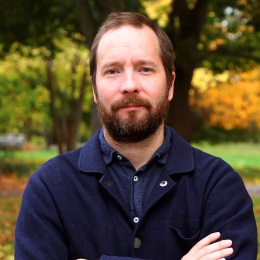
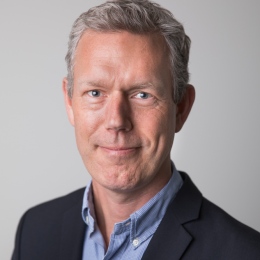
Peter Nilsson is a Professor of Economics at the Institute for International Economic Studies (IIES) , Stockholm University. He also holds a guest professorship at Linnaeus University and serves as a research fellow at IFAU , Uppsala Center for Labor Studies , CESifo , and CEPR . Previously, he was a postdoctoral fellow at Stanford University and obtained his PhD from Uppsala University (2010). Research Focus: His work bridges Labor Economics , Health Economics , and Environmental Economics , analyzing how early-life exposures (alcohol, lead), workplace dynamics, and policy interventions (unemployment insurance, congestion pricing) shape long-term socioeconomic outcomes. Key themes include Environmental Health Impacts on Cognition and Crime Labor Market Responses to Insurance Policies Peer Effects in Workplace Behavior Policy Design for Social Equity Scientific Awards: Nilsson has been recognized through research fellowships at leading institutions and editorial roles, including Associate Editor at The Economic Journal since 2021. His work has been featured in American Economic Review , Journal of Political Economy , and NBER platforms. Key Contributions: He provided testimony for Connecticut’s HB-5045 to reduce childhood lead exposure and contributed to Sweden’s Corona Commission report on pandemic responses. His empirical methods combine natural experiments with administrative datasets to identify causal relationships in health, labor, and environmental economics.
Max Koch is a Professor at Lund University's School of Social Work, specializing in the intersection of social policy, ecological sustainability, and postgrowth theories. His research explores how capitalist restructuring impacts welfare, inequality, and climate action, with a focus on sustainable welfare systems and degrowth. Current projects: 'Economic Elites in the Climate Change Transformation' (PI, 2023-2028), 'Regulating the Polluter Elite' (2024-2027), 'FLYWELL' (2023-2026). Former projects: 'Postgrowth Welfare Systems' (2021-2025), 'Sustainable Welfare for a New Generation' (2020-2023). He teaches political economy, social inequality, and ecological sustainability at Lund University, directing the 'Social Policy in Europe' course. As a Visiting Scholar, he has collaborated with institutions in Spain, the Netherlands, Scotland, and Chile. His work contributes to UN Sustainable Development Goals (SDGs) related to climate action and reduced inequalities. Scientific award: Atlas Prize (2019) for degrowth research. Editorial roles: Environmental Values, advisory boards for ORSI and Collorative Future Making. Recent publications analyze planetary boundaries, postgrowth welfare models, and climate policy synergies. His research emphasizes interdisciplinary approaches combining social practices with policy innovation.
Jonas Tallberg is a Professor of Political Science at Stockholm University and Co-Director of the Stockholm Center on Global Governance . His research focuses on global governance, European Union politics, and legitimacy dynamics in international organizations. Primary Affiliation: Department of Political Science, Stockholm University Research Leadership: Directs DemCoop (European Research Council-funded) and GGAI (Marianne and Marcus Wallenberg Foundation-funded) Editorial Roles: Serves on editorial boards of International Organization , European Political Science Review , Cooperation and Conflict , and Political Research Exchange Key Research Areas: Legitimacy in Global Governance EU Institutional Dynamics Artificial Intelligence Governance International Organization Performance Transnational Actor Participation Comparative Global Governance Frameworks Publications Trends: Focus on legitimacy-building mechanisms in international institutions Analysis of EU decision-making and institutional design Emerging AI governance frameworks Methodological contributions to content analysis Comparative studies of democratic and autocratic regimes Performance indicators in international organizations Scientific Recognition: Wallenberg Scholar (2024) Friedrich Wilhelm Bessel Research Award (2012) Distinguished Mentor Award (2023) Multiple grants from European Research Council, Swedish Research Council, and Wallenberg Foundations Academic Leadership: Former Chair of SNS Democracy Council (2009-2011, 2023) Executive Committee of European Consortium for Political Research (2009-2015) Recipient of research grants from Riksbankens Jubileumsfond, Fulbright Commission, and other major institutions
Professor Ingrid Undeland leads the Marine research group at the Division of Food and Nutrition Science, Department of Life Sciences at Chalmers University of Technology. She is a distinguished researcher with expertise spanning marine food science, lipid chemistry, and blue biorefining, having established herself as a leading figure in sustainable seafood research and marine biotechnology. Her educational background includes food science studies from Linnaeus University and a PhD in bioscience from Chalmers University of Technology and SIK (now RISE). Between 1999-2002, she was a post-doctoral fellow at University of Massachusetts Marine Station, which significantly shaped her research trajectory in marine food science. Professor Undeland's research focuses on pioneering next-generation seafood through innovative value chains from seaweed, small pelagic fish, fish side streams, mussels, and microalgae. Her specialized expertise lies in marine lipids and proteins, particularly their stabilization, isolation from complex sources, and nutritional properties including digestibility. She has extensive experience with antioxidant strategies using plant-derived side streams or extracts and fundamental studies of fish hemoglobins as pro-oxidants. Her work also encompasses innovative technologies for biomass fractionation and nutrient recycling to build blue biorefineries, along with in vitro digestion models and general seafood analytics. Beyond marine research, she explores filamentous fungi as sustainable alternative food protein sources. The trends in her recent publications reveal a strong emphasis on valorizing marine resources through advanced processing techniques. Her work increasingly focuses on sustainable extraction methods for seaweed proteins, particularly Ulva fenestrata, and developing antioxidant strategies using berry side streams to stabilize fish proteins. There's a growing interest in understanding the nutritional properties and digestibility of alternative marine proteins, along with environmental assessments of processing technologies. Her research consistently bridges fundamental science with practical applications for creating sustainable seafood value chains. Swedish representative in Nordic Lipidforum, WEFTA, and EuCheMS Editorial board member of Journal of the Aquatic Food Product Technology Member of the National Committee for Nutrition and Food Science at the Royal Swedish Academy of Sciences Co-founder of the startup company AquaFood H-index of 47 according to Google Scholar Professor Undeland has an extensive record of academic mentorship, having supervised or currently supervising 23 PhD students, 14 postdoctoral researchers, and examining over 25 MSc students. Her research is supported by numerous grants, including the WaSeaBi Project which focuses on valorizing seafood side-streams through holistic value chain design. She collaborates with various industry partners and academic institutions across Europe. Her laboratory includes technicians Dr. Karin Larsson and Dr. Rikard Fristedt, and she leads a dynamic research team working on multiple projects related to marine biorefining and sustainable seafood development. Her research group operates within well-equipped facilities at Chalmers University, with specialized laboratories for marine food analysis, protein extraction, lipid oxidation studies, and in vitro digestion modeling. The team also maintains cultivation systems for seaweed and filamentous fungi, enabling integrated research from raw material production to final product development.
Jessica Jewell is a Professor in Technology and Society at Chalmers University's Department of Space, Earth and Environment. She holds additional roles including Professor at the Centre for Climate and Energy Transformation (University of Bergen), Guest Research Scholar at IIASA, and Senior Fellow at the Breakthrough Institute. Her research focuses on climate action feasibility, energy transitions, and the political economy of decarbonization. She leads projects funded by the European Research Council (ERC), Norwegian Research Council, and EU initiatives like CINTRAN. Key achievements include an ERC Starting Grant and membership in the Swedish Young Academy. Her work spans interdisciplinary approaches to quantify energy transition dynamics, assess coal phase-out strategies, and analyze carbon capture deployment. She serves on editorial boards for journals like Energy Research and Social Science and Oxford Open Energy . Jewell’s recent articles highlight themes like climate justice in energy transitions, feasibility of rapid decarbonization, and global coal reduction pathways. Her research bridges technical, socio-economic, and political dimensions to inform actionable climate policies.
Jennifer Ryan is a Professor of Numerical Analysis and Division Head of Numerical Analysis, Optimization, and Systems Theory at the Department of Mathematics, KTH Royal Institute of Technology. Her research focuses on designing and developing numerical schemes to extract accuracy from simulations, particularly through superconvergence properties and computational efficiency improvements. She applies these techniques to applications such as imaging, fluid visualization, and plasma dynamics. Education: PhD in Applied Mathematics, Brown University; MS in Mathematics, Courant Institute; BA in Applied Mathematics, Rutgers University. Professional Activities: Member of editorial boards for BIT Numerical Mathematics, ESAIM:M2AN, and Communications on Applied Mathematics and Computation; Steering committee member of AWM's Women in Numerical Analysis and Scientific Computing (WINASc). Her publications emphasize discontinuous Galerkin methods, SIAC filtering, and applications in fluid dynamics. She has served on multiple grant review panels and received awards for diversity and inclusion initiatives. Grants: Principal Investigator for projects funded by the Swedish Research Council, NSF, and US Air Force Office of Scientific Research. Awards: Fellow of UK Higher Education Academy, DAAD Fellowship, and Householder Fellowship.
Anna Dreber Almenberg is the Johan Björkman Professor of Economics at the Stockholm School of Economics (SSE), specializing in meta-science and behavioral economics. She holds a chaired professorship and is actively involved in advancing research credibility through initiatives like Lab2 and the Institute for Replication. Her work focuses on replication studies, predicting replication outcomes, and investigating economic preferences influenced by biological factors like testosterone. She serves as an Editor at the Journal of Political Economy Microeconomics, emphasizing credible results over clear outcomes. Dr. Dreber Almenberg’s research spans experimental economics, including large-scale studies such as a testosterone administration trial involving 1,000 participants. She is a Wallenberg Scholar and a member of prestigious academies (KVA and IVA). Her recent work critiques selective reporting of placebo tests in economics and explores design heterogeneity in replications. Her key contributions include high-powered replications of asset market results and collaborations on hormone administration studies (e.g., contraceptive pill effects). She advocates for pre-registration and transparency in research, reflected in her editorial role and involvement with journals like Nature Human Behaviour.
Ola Carlson is a Professor in Sustainable Electric Power Production at Chalmers University of Technology. He specializes in electrical systems for renewable power production and hybrid electric vehicles. Since 2022, he serves as a senior advisor to the Swedish Wind Centre, focusing on island operation with Chalmers wind turbine and battery systems. Research Interests His research spans renewable power systems, wind energy integration, grid stability, and microgrid optimization. Key projects include modeling Nordic transmission systems, analyzing wind turbine bearing currents, and developing maintenance schedules for aging components. Article Trends Recent publications emphasize wind turbine design, microgrid stochastic optimization, and dynamic state estimation for transmission protection. Topics cover machine learning applications in forecasting, fault handling, and battery degradation impacts on energy systems. Projects & Collaborations RESIST - Energy islanding for resilient systems (2026–2027) COSPACT - Nordic-Baltic co-simulation platform (2020–2023) Fossil Free Energy Districts (2016–2019) Collaborations with ABB, Swedish Energy Agency, and European Commission Labs & Teams Works with Power Grids and Components at Chalmers, leading projects like 'Detecting and eliminating bearing currents' (2018–2023) funded by the Swedish Energy Agency. Involved in Chalmers Campus as a testbed for intelligent grids.
Tommy Lundberg is a Senior Lecturer and Docent in Physiology at Karolinska Institutet. He works at the Department of Laboratory Medicine, Division of Clinical Physiology. His email address is tommy.lundberg@ki.se, and his postal address is H5 Laboratoriomedicin, H5 Klinisk Fysiologi Gustafsson, 141 52 Huddinge. Lundberg is affiliated with the university library and has held positions since 2022. Research Interests: Lundberg's research focuses on skeletal muscle mass and function adaptation, particularly in athletic performance, disease contexts, aging, and transgender individuals undergoing hormone therapy. He investigates molecular, metabolic, morphological, and functional responses to resistance and aerobic exercises. His work also explores biological maturity selection biases in youth sports, bio-banding applications in soccer and ice hockey, and the impact of anti-inflammatory drugs on muscle hypertrophy. Article Trends: Lundberg's recent publications (2025–2024) cover topics like sex differences in disc golf, muscle atrophy in space exposome, longitudinal hormone therapy effects in transgender individuals, and bio-banding in youth sports. Earlier works delve into molecular pathways in muscle hypertrophy, concurrent training effects, mitochondrial function, and imaging techniques (CT/MRI) for muscle assessment. Scientific Recognition: Most prominent young researcher in Sport Science, Swedish Central Association for Sport Promotion (SCIF), 2017 Teaching and Editorial Roles: Lundberg teaches human physiology and sports science in nursing, physiotherapy, and biomedical analytics programs. He leads a contract education course in advanced exercise physiology and contributes to a PhD course on scientific writing. He is an Associate Editor for Frontiers in Physiology - Exercise Physiology (2022) and a member of the editorial board for Translational Exercise Biomedicine (2024). Collaborations and Expertise: He collaborates with the Swedish Football Association and Swedish Ice Hockey Association on bio-banding studies. Lundberg served as an invited speaker at the ACSM Annual Meeting (2024) on transgender athletes and as an expert panelist for World Rugby's transgender workshop (2020). His supervision includes Andrea Tryfonos (2021) and thesis evaluations at Mid Sweden University and Linköping University.
Dr. Frank Thomas Grub is Professor of German and Head of the Department of Modern Languages at Uppsala University. Educated at Universität des Saarlandes (Dr. phil. 2003) and promoted to Associate Professor at Gothenburg University (2012) before joining Uppsala as Professor (2018), he has been recognized as Excellent Teacher (2021). As founder of the Landeskunde Nord network since 2012 and editor of the Peter Lang book series since 2013, his career bridges academic research, educational innovation, and international collaboration. His research focuses on contemporary German-language literature , GDR cultural studies , and transcultural didactics . Key projects explore autobiographical writing, post-Wall literary representations, and the intersection of travel literature with cultural memory. Recent publications (2024-2025) examine media narratives of reunification and cultural stereotypes in language pedagogy. Prof. Grub contributes to German as a foreign language curriculum development Intercultural competence frameworks Editorial leadership in Northern European Germanistics His 2023-2025 works analyze graphic novels in education, migration discourse in literature, and media transitions during the Cold War.
Erik Stolterman is a Professor of Informatics at Indiana University Bloomington and holds a concurrent position as Professor of Interaction Design at Umeå University. He serves as Senior Executive Associate Dean at the School of Informatics, Computing and Engineering at Indiana University. With a PhD from Umeå University (1991), his work focuses on design theory, interaction design, and the societal impacts of information technology. Education: PhD in Interaction Design, Umeå University, 1991 Research Interests: Design philosophy and methodologies Role of design in technology-driven societal transformation Critical perspectives on digitalization Design thinking as a cross-disciplinary framework Awards: 2017 Honorary Doctorate, Faculty of Information Technology, University of Gothenburg Stolterman actively contributes to academic communities through editorial roles, such as leading MIT Press's Design Thinking/Design Theory book series. His work bridges theoretical and applied dimensions of design, emphasizing ethical and systemic considerations in technology development.
Jimmy Jaldemark is a Professor at the Department of Education, Mid Sweden University, Sundsvall, Sweden. He serves as Research Leader of HEEL (Higher Education and E-Learning) and Head of Subject for the Discipline of Education. His roles include membership in the Faculty Board of Humanities and representation in the university-wide Education Council. He co-founded GRADE, a national graduate school in digital education, and leads the EARLI Centre for Excellence in AI in Learning and Instruction (AILI). His research focuses on AI, digitalization, lifelong learning, and networked learning. He co-edited *Networked Professional Learning* (2019) and guest-edited special issues in the *British Journal of Educational Technology*. He is an editor for that journal and serves on editorial boards for *Educational Research Review*, *Postdigital Science and Education*, and others. He supervises doctoral students and teaches in Behavioral Science and Education programs. Current projects include HEaD (Higher Education and Digitization) and BLAD (Need-based Learning through Adapted Participation). He collaborates internationally, notably in the AILI network exploring AI's educational impacts. His work spans educational development, organizational learning, and policy frameworks for lifelong learning in the digital era.
Mikael Wiberg is full Professor of Informatics at Umeå University, Sweden, where he leads research groups in Design Informatics and Digital Interaction & Design. He is co Editor-in-Chief of ACM Interactions and has held chaired and guest professorships at Uppsala, Södertörn and Chalmers universities. His work sits at the intersection of human-computer interaction, materiality, architecture and emerging technologies. Education: PhD in Informatics, Umeå University, 2001 Docent (Associate Professor) in Informatics, Umeå University, 2004 Research interests revolve around interactivity, mobility, materiality and architecture . Wiberg coined the notion of “materiality of interaction” to study how digital resources merge with physical materials, spaces and artefacts. Recent strands include more-than-human design, human-building interaction, autonomous systems UX, and social justice in HCI, all interrogating how interactive technologies shape—and are shaped by—human and non-human actors. Across more than two decades he has published in top venues such as ACM TOCHI, Design Issues, Int. Journal of Design, Human-Computer Interaction journal and the magazine ACM Interactions . His 2018 MIT Press monograph The Materiality of Interaction consolidates his theoretical stance and has become a touchstone for architectural and material HCI discourse. Editorial & scientific awards: Co Editor-in-Chief, ACM Interactions (2019-) Member, Royal Skyttean Society (Kungliga Skytteanska Samfundet) Board member, Professors’ Association, Umeå University He currently leads interdisciplinary projects on digital heritage archives, autonomous vehicle experiences for children with intellectual disabilities, and sustainable interaction infrastructures. Although the provided text does not enumerate specific grants or doctoral students, his continuous project leadership and editorial roles evidence sustained funding and supervisory activity. Wiberg directs the Design Informatics research environment and is a core member of Umeå’s Internet of Things group, fostering collaboration between informatics, architecture, design and social sciences. His overarching agenda asks how interactive technologies can support just, sustainable and aesthetically rich futures at architectural and urban scale.
Carl-Mikael Zetterling is a Professor and Head of Department at Kungliga Tekniska Högskolan (KTH) in Stockholm, Sweden, affiliated with the School of Electrical Engineering and Computer Science (ICT) and the Electronics and Embedded Systems department. His research focuses on process technology and device design for high-temperature, high-power silicon carbide (SiC) electronics, expanding into SiC-based analog and integrated circuits. He has authored over 300 publications, including books on SiC process technology and plagiarism prevention. Dr. Zetterling has held leadership roles such as Vice Dean of the School of ICT (2013–2017) and teacher representative on KTH's faculty board. He has collaborated internationally at Stanford University, Kyoto University, and Kyoto Institute of Technology. His work addresses applications in extreme environments, including Venus exploration and fusion reactor monitoring, with a focus on radiation tolerance and thermal resilience. The 15 most recent publications highlight trends in wide bandgap semiconductors, gamma irradiation effects on SiC devices, and high-temperature integrated circuits. His articles span structural health monitoring with machine learning, novel SiC diode designs, and radiation-hardened electronics. Key contributions include advancements in self-aligned contacts, trench MOSFETs, and compact modeling for extreme conditions. While no formal awards are listed, his roles in technical program committees (TMS Electronic Materials Conference, IEEE SISC Conference) and editorial work demonstrate significant academic service. He teaches courses ranging from digital design to high-temperature electronics, overseeing degree projects in embedded systems, communication, and nanotechnology.
Erik Hjalmarsson is a Professor of Banking and Financial Economics at the Department of Economics, University of Gothenburg. He holds the Felix Neubergh Chair and previously served as Director of the Centre for Finance. His research focuses on empirical asset pricing, financial econometrics, and long-run stock returns. Hjalmarsson earned his PhD from Yale University and has held roles at the Federal Reserve Board and Winton Capital Management. Education: PhD (Yale University, 2005), M.Sc. in Econometrics (London School of Economics, 2000), B.Sc. in Mathematical Statistics (University of Gothenburg, 1999). Research interests include stock return predictability, high-frequency trading, and econometric methods. His work has been published in top journals like the Journal of Finance and Journal of Financial Economics . Key grants include funding from the Swedish Research Council and Marianne and Marcus Wallenberg Foundation. Awards include the Carl Anderson Prize (2004) and multiple stipends for doctoral education. He supervises PhD students and advises on central bank policies. His recent studies explore long-horizon returns, inflation expectations, and portfolio strategies. Teaching includes PhD courses in econometrics and financial economics. He serves on editorial boards and as a referee for leading journals.