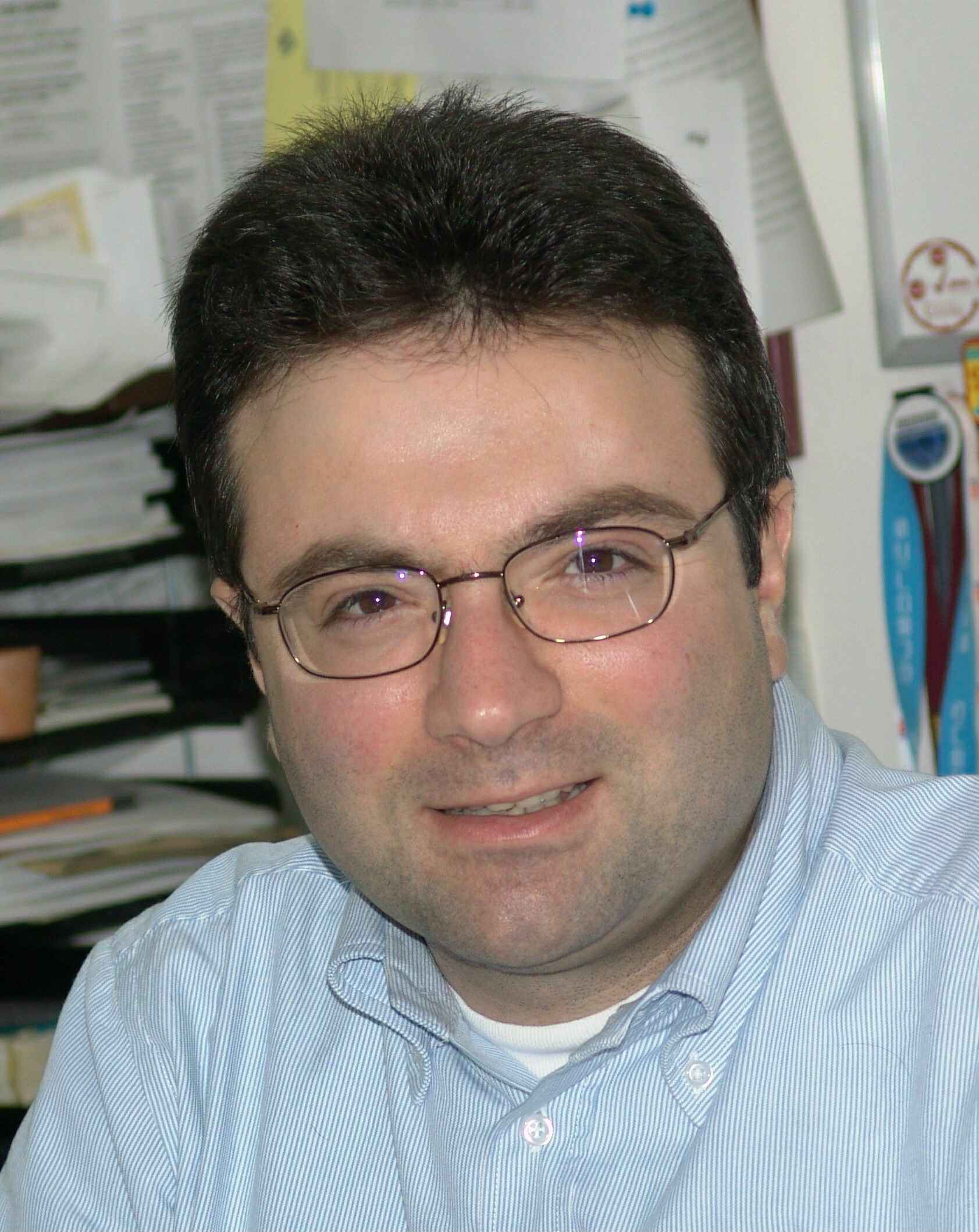
Nikos Komninos is a researcher at City, University of London , specializing in cybersecurity, network security, and privacy-preserving systems. His work spans Internet of Things (IoT) , mobile ad hoc networks , and cloud computing security. Research Areas : Cybersecurity frameworks, machine learning for threat detection, quantum-resistant encryption, and privacy-preserving authentication systems. His recent publications focus on ransomware detection under concept drift, DDoS mitigation in IoT, and attribute-based encryption for fog computing. He has contributed to IEEE Transactions and journals like Computers & Security , with a trend toward real-time adaptive security systems and Bayesian risk assessment .
Mohammad Shojafar (M'17-SM'19) is an Associate Professor at the Institute for Communication Systems within the Faculty of Engineering and Physical Sciences at the University of Surrey , UK. He has secured over £1.9M in research funding as Principal Investigator for projects like ORAN-TWIN (EPSRC), PRISENODE (MSCA-IF), TRACE-V2X (MSCA-SE), and D-XPERT (Innovate UK), among others. Previously held positions include Senior Researcher at University of Toronto and Toronto Metropolitan University, Senior Researcher at Italian universities (Telecom Italia Mobile), and Postdoc at University of Padua Key affiliations: Associate Editor for IEEE Transactions on Network and Service Management, Intelligent Transportation Systems, Green Communications and Networking, and Consumer Electronics Magazine Research Specialism: 5G/6G Security and Privacy Open-RAN Security Green Networking Adversarial Machine Learning Applied Cryptography Publication Trends: Focus on Open RAN security challenges (bearer context migration poisoning, KPI poisoning attacks), IoT/Fog security (GAN-based attacks, distributed intrusion detection), Lightweight Cryptography (multi-signature protocols, authentication schemes), and AI-driven Network Optimization (federated learning, reinforcement learning applications). Recent work addresses security in vehicular networks, smart grids, and video streaming frameworks. Scientific Recognition: Marie Curie Individual Fellowship (MSCA-GF-IF) Intel Innovator ACM Professional Member Sustainability Fellow at Institute for Sustainability IEEE Senior Member Supervision: Currently supervising 6 PhD students and has graduated 5 PhD/MSc students since 2021. Active in 5G/Open RAN security research with over 20 related publications since 2022.
Dr. Eve M. Schooler is a Visiting Professor of Sustainable Computing at the University of Oxford , sponsored by the Royal Academy of Engineering. She is an IEEE Fellow and co-recipient of the IEEE Internet Award (2020), with expertise in Networking , Distributed Systems , and Carbon-aware Networking . Her work bridges industry-academia partnerships, focusing on edge-cloud infrastructure and AI for cybersecurity . BS, MS, PhD in Computer Science (Yale, UCLA, Caltech) Board of Directors, Computing Research Association (US) Advisory Council, University of Delaware College of Engineering Her research spans IoT security , smart grids , reverse CDNs , and data-centric networking . She co-founded the IETF's SUSTAIN research group on sustainability and chairs standards initiatives in fog computing and open footprints. Recent trends in her publications include carbon-aware networking , edge-cloud convergence , and AI-driven cybersecurity , with over 100 papers and 35 patents. IEEE Fellow (2021) IEEE Internet Award (2020) N2Women Stars in Networking (2023) Dr. Schooler champions STEM outreach , serving organizations like Grace Hopper Conference and Sally Ride Science. She leads industry-academia collaborations through projects like EU H2020 SPATIAL and NSF-Intel ICN-WEN.
Professor Ai-Chun Pang is affiliated with the National Taiwan University , serving in both the Department of Computer Science and Information Engineering and the Graduate Institute of Networking and Multimedia . He held leadership roles including Associate Dean (2018-2022) and Director (2013-2016) within the College of Electrical Engineering and Computer Science. His research spans Fog/Edge Computing , Wireless Networking , Mobile Computing , and AIoT Systems , with recent advancements in federated learning security, energy-efficient network design, and 5G/6G optimization. Collaborative work includes applications in vehicular networks, industrial control systems, and non-terrestrial connectivity. Key publication themes: Edge Intelligence and Privacy (2024) Federated Learning for Heterogeneous Devices (2023-2024) 5G Backhaul Optimization (2017-2021) Wireless Energy Transfer (2022) Awarded IEEE Fellow 2021 for contributions to mobile edge networks, he has received multiple IEEE Vehicular Technology Society awards, the CES 2019 Innovation Award , and teaching accolades including National Taiwan University Distinguished Teaching Award (2010) . His lab has produced 16 PhD students now in academia and industry. As Editor-in-Chief of IEEE Wireless Communications Letters and active in conference organization, he shapes global research directions. Current projects focus on GenAI for Networking and Non-Terrestrial Networks , with recent 2024 admissions for new students.
Nicole L. Beebe is a Professor at the Alvarez College of Business, The University of Texas at San Antonio , specializing in cybersecurity, cyber analytics, and digital forensics. With over two decades of experience spanning academia, government, and industry, she has contributed extensively to research on insider threats, IoT security, and threat hunting. Ph.D. in Business Administration (Information Technology), UTSA MS in Criminal Justice, Georgia State University BS in Electrical Engineering, Michigan Technological University Her research explores cybersecurity challenges in emerging technologies, including quantum computing, IoT, and large language models. She has pioneered studies on cyberbullying dynamics, forensic automation, and AI-driven threat detection. Recent publications focus on adversarial image obfuscation , VR for security operations , IoT forensic methodologies , and deepfake detection frameworks , reflecting interdisciplinary work at the intersection of security, AI, and digital evidence. 2022 Best Paper Award, Journal of Network & Computer Applications Senior Member, IEEE and ACM Senior Fellow, Information Systems Security Association As an Associate Editor for Computers & Security , she shapes the field through peer review. Her $14M+ in funding from NSF, DHS, and DoD underscores her impact on advancing cybersecurity research and education.
Shivakant Mishra is a Professor in the Department of Computer Science at the University of Colorado, Boulder, and currently on leave as a Program Director at the NSF's CSR (Computer Systems Research) program. He holds roles as Site Co-Director of the NSF IUCRC Pervasive Personalized Intelligence Center and co-founded the Colorado Research Center for Democracy and Technology. Affiliations: Department of Computer Science, College of Engineering and Applied Sciences Professional Roles: NSF Program Director, Center Leadership Education: Ph.D. in Computer Science (University of Arizona), M.S. (Southern Illinois University), B.Tech. (IIT Bombay). Research focuses on distributed systems, edge computing, socio-technical systems for environmental justice, CyberSafety, and technology's role in democracy. Key projects include the C70 community impact study and smart agriculture systems. His work integrates technology with societal challenges, such as mitigating highway construction impacts and combating cyberbullying. Teaching includes courses on operating systems, distributed systems, and special topics like democracy through technology. Advised Ph.D. students Fei Hu and Jinpeng Miao. Professional activities include organizing conferences (e.g., DSN 2017, CyberSafety workshops) and serving on NSF panels.
Sundas Iftikhar is a Teaching Professor at the School of Electronic Engineering and Computer Science, Queen Mary University of London. She specializes in software engineering education and research focused on artificial intelligence, fog/cloud computing, and task scheduling optimization. Her research spans AI applications in distributed systems , including Energy-efficient computing Quality of Service (QoS) optimization Deep learning for healthcare Cloud-fog hybrid architectures Recent publications analyze AI-based fog/edge computing trends , with emphasis on systematic reviews, taxonomy development, and sustainability. She also explores machine learning for serverless computing and smart home applications through fog infrastructure. Teaching duties include the Software Engineering Project module, where students work in teams to solve real-world problems.
Riccardo Lancellotti is an Associate Professor at the Department of Engineering 'Enzo Ferrari' of the University of Modena and Reggio Emilia. His research focuses on Edge/Fog/Cloud Computing, Cyber Security, and Resource Management in distributed systems. He has extensive contributions in optimizing infrastructure performance, load balancing, and energy efficiency in cloud and fog environments. His work often combines theoretical models with practical simulations, addressing challenges like stale information in edge systems and heterogeneous resource allocation in smart cities. Key research areas include: Fog/Edge computing infrastructure design and optimization Cloud resource provisioning and SLA compliance Security for Industry 4.0 and automotive systems Genetic algorithms for service placement Scalable VM clustering and resource allocation Publications highlight trends in cloud/fog integration, robust game theory for microservices, and distributed load balancing under dynamic conditions. His work emphasizes practical applications, such as pharmaceutical distribution routing and smart city sensor management. No awards are explicitly listed, but his extensive publication record reflects recognition in the field.
Diala Naboulsi is a Professor at the École de technologie supérieure (ÉTS) in the Department of Software Engineering and IT. Her research focuses on mobile networks, wireless systems, and cybersecurity, with a strong emphasis on machine learning applications in network optimization. She holds an M.Eng. from the Lebanese University and M.Sc. and Ph.D. degrees from INSA Lyon. Research Units: Summit Tech Research Chair, LASI Lab, Imagin Lab Expertise: Network virtualization, resource allocation, mobility management, UAV-based computing Her work spans resilience in wireless backhaul networks, energy-efficient frameworks in RAN slicing, and federated learning for privacy-aware traffic forecasting. She has advised numerous doctoral students, including Ahmed Abdelmoaty, Hnin Pann Phyu, and Philippe Lavoie. Key contributions include deep reinforcement learning approaches for network topology optimization and UAV-assisted MEC systems for Industry 5.0. Recent publications highlight advancements in 6G networks, network slicing, and edge computing. Her research aligns with strategic initiatives in sustainable and secure communication systems.
F. Richard Yu is a Professor at the School of Information Technology , Carleton University , Canada, since 2016. He served as Assistant/Associate Professor at the same institution from 2006 to 2015. His academic work spans machine learning, blockchain, autonomous vehicles, and network security. Ph.D., Electrical Engineering, University of British Columbia (2003) M.A.Sc., Computer Engineering, Beijing University of Posts & Telecomm. (1998) B.A.Sc., Electrical Engineering, Dalian University of Technology (1995) His research focuses on machine learning , blockchain , autonomous vehicles , network security , and mobile wireless networks . Trends in his publications include deep reinforcement learning for computation offloading , blockchain applications in edge computing , and network optimization for IoT and 5G systems . Highly Cited Researcher (2019-2023), Clarivate Electronics and Electrical Engineering Leader in Canada (2023), Research.com Fellow of Canadian Academy of Engineering (CAE) (2021), Engineering Institute of Canada (EIC) (2019), IEEE (2017), and IET (2016) Best Paper Awards: IEEE ICC (2022), IEEE GLOBECOM (2020), IEEE VTC (2017), IEEE TAOS (2012), IEEE TrustCom (2009) Research Achievement Award, Carleton University (2021, 2012) Early Researcher Award (2011), Ontario; Leadership Opportunity Fund Award (2009), Canada Foundation for Innovation His work has resulted in 800+ papers , 30 patents , and 48,000+ citations (H-index 107), with grants including the 2009 Canada Foundation for Innovation award.
Dr. Liang (Leon) Dong is an Associate Professor in the Department of Electrical and Computer Engineering at Baylor University, where he conducts research and teaches in the areas of signal processing, wireless communications, and artificial intelligence. He leads the Laboratory of Signal Processing, Communications, and Artificial Intelligence, fostering innovation in next-generation communication systems, IoT, and AI-driven applications. PhD, Electrical & Computer Engineering, The University of Texas at Austin (2002) MS, Electrical & Computer Engineering, The University of Texas at Austin (1998) BS, Applied Physics with Minor in Computer Engineering, Shanghai Jiao Tong University (1996) Dr. Dong's research focuses on advancing digital signal processing and wireless communications, with strong emphasis on artificial intelligence applications. His work spans NextG wireless systems , IoT and smart cities , cyber-physical system security , and AI in healthcare and industrial automation . He applies deep learning to domains such as autonomous driving and drug discovery, and investigates energy-efficient, secure, and reliable communication protocols. The recent publications highlight a strong trend toward integrating AI into traditional signal processing and communications. Topics include mRNA vaccine stability prediction , smart city infrastructures , secure cyber-physical systems , and deep learning for biomedical and industrial applications . His work bridges theoretical innovation with real-world impact in defense, transportation, and public health. Dr. Dong has earned recognition as a Senior Member of IEEE and a Member of the American Physical Society. He has also served as Faculty Advisor for Baylor University's InterVarsity chapter. Senior Member, Institute of Electrical and Electronics Engineers (IEEE) Member, American Physical Society (APS) He has successfully advised numerous graduate and undergraduate students, many of whom now hold academic and industry positions at institutions like Stanford, Intel, NASA, L3Harris, and Cummins. His research is generously supported by Baylor's VP for Research, the National Science Foundation, NASA, the Department of Defense (TARDEC), the Michigan Department of Transportation, and industry leaders including Intel, L3Harris, ExxonMobil, and Denso. He actively mentors students through research assistantships and senior design projects. Dr. Dong leads the Laboratory of Signal Processing, Communications, and Artificial Intelligence, which provides a collaborative environment for advancing research in signal processing, communications, and AI. The lab supports graduate and post-doctoral researchers and offers opportunities for undergraduate involvement in AI programming, circuit design, and embedded systems.
Per-Olov Östberg is an Associate Professor at the Department of Computing Science, Umeå University, and a research leader in the Autonomous Distributed Systems Lab (ADSLab). His work focuses on resource management for distributed cloud environments using AI/ML-based techniques, with a particular emphasis on ethical reasoning integration for responsible AI solutions. Research Themes: Cloud-edge continuum optimization, serverless frameworks, 6G computing challenges, data fabric architectures, and energy-aware systems Projects: COGNIT (cognitive serverless framework), WARA Common Information Bridge (data-driven cloud operations), De facto Center of Excellence in Autonomous Distributed Systems His publications (2011-2024) demonstrate consistent contributions to cloud resource management, including fairshare scheduling, decentralized prioritization, and power-performance tradeoffs. He has collaborated on interdisciplinary projects with institutions across Europe. Scientific Awards: None explicitly stated in provided information.
David Bermbach is a Full Professor at Technische Universität Berlin , leading the Scalable Software Systems group since 2023. His research focuses on distributed systems, serverless computing, and benchmarking, with significant work on edge and fog computing architectures. He is affiliated with the Einstein Center Digital Future and co-chairs interdisciplinary projects like SimRa for bicycle traffic safety. Full Professor, Scalable Software Systems (2023–present) ECDF-Professor, Mobile Cloud Computing (2017–2023) Postdoctoral Researcher (2014–2017) Education : Diploma in Business Engineering (2010) – Karlsruhe Institute of Technology (KIT) PhD in Computer Science (2014, summa cum laude) – KIT Research Interests span distributed systems with emphasis on cloud, edge, and fog computing, serverless architectures, IoT platforms, and benchmarking frameworks. His work addresses consistency-performance trade-offs, resource placement, and interdisciplinary applications in urban mobility and satellite edge computing. Article Trends show a focus on serverless computing (12/15), edge-cloud integration (9/15), and benchmarking methodologies (7/15). Key themes include optimizing function placement, federated learning architectures, and low-earth orbit computing systems. Scientific Awards Best Paper Award – ShutPub (2024) Best Workshop Paper – A Research Perspective on Fog Computing (2017) Best Paper Runner Up – Benchmarking Eventual Consistency (2014) Summa Cum Laude PhD Thesis (2014) Advising & Grants include mentoring students like Tobias Pfandzelter and Trever Schirmer, leading funded projects through the Einstein Center Digital Future, and contributing to 6G network research. His team works on cloud federation, serverless optimization, and real-world IoT applications.
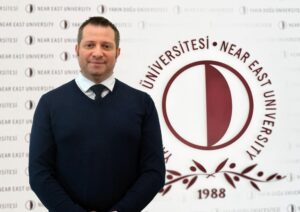
Prof. Dr. Fadi AL-TURJMAN serves as the founding Dean of the Faculty of AI and Informatics at Near East University (NEU), Cyprus. He holds multiple leadership roles including Head of the Software Engineering Department and Director of the AI and Robotics Institute and the International Research Center for AI and IoT. With a PhD in Computer Science from Queen’s University (2011), he specializes in AIoT systems, wireless networks, and blockchain integration. Affiliation: Near East University Leadership: Founding Dean for AI and Informatics, Director of AI & Robotics Institute Research Focus: His work bridges Artificial Intelligence of Things (AIoT) , Blockchain Applications , and Smart Networking . He explores cybersecurity frameworks for smart cities, quantum state optimization techniques, and novel AI-driven solutions for healthcare, agriculture, and energy systems. Key Article Trends: Recent publications emphasize Transformer models for environmental monitoring, blockchain-enabled security protocols , and evolutionary algorithms for resource optimization. His research spans interdisciplinary domains including medical diagnostics, vehicular networks, and sustainable infrastructure. Scientific Awards: Lifetime Golden Award of Dr. Suat Gunsel (2022) Multiple Best Research Awards at International Venues Labs & Teams: Directs the International Research Center for AI and IoT at NEU, leading multidisciplinary teams in developing advanced networking technologies and AI-driven solutions for global value chain applications.
Nectarios Koziris is a Professor at the Department of Computer Science , National Technical University of Athens (NTUA) , and former Dean of the School of Electrical and Computer Engineering . His research focuses on Parallel and Distributed Systems , Computer Architecture , and Cloud Computing . Key Research Themes: Compiler-OS-Architecture Interaction, Datacenter Hyperconvergence, Sparse Matrix Optimization, Quantum Computing, FPGA Virtualization Leadership: Founder of ~okeanos (Europe's largest public Cloud IaaS), Co-founder of GFOSS , Member of IEEE Computer Society Greece, Advisor to Arrikto Inc. His work has led to over 180 publications with 5800+ citations (h-index 33) , including two Best Paper Awards (IPDPS 2001, CCGRID 2013) and Intel Recognition (2015). He has supervised 12 PhD students and participated in 15+ EU projects as coordinator or consortium partner. Scientific Leadership: Program Co-Chair for Europar 2012 , Organizer for IPDPS , ICPP , SC conferences, and active member in Cloud Computing Expert Groups for the European Commission.