
Mª Carmen Carrión Espinosa is a Full Professor at the University of Castilla-La Mancha (UCLM) with a career spanning over 25 years. She teaches Computer Architecture in undergraduate and postgraduate programs and coordinates the bilingual Computer Engineering degree, which holds the Euro-Inf Bachelor quality award. Her research focuses on Fog computing, blockchain integration, and distributed systems management. University of Castilla-La Mancha - Full Professor (Computer Architecture) University of Cantabria - PhD in Physical Sciences Her research explores low-cost Fog infrastructures, container-based virtualization, and secure distributed architectures. Recent work includes federated learning on constrained devices and Kubernetes scheduling innovations. She has supervised 5 PhD and 15 Master's theses and contributed to 25 JCR-indexed publications. Key research trends include: Blockchain for fault-tolerant IoT systems Hybrid cloud-Fog resource orchestration Energy-efficient scheduling algorithms Educational technology innovations Scientific Awards: Extraordinary Degree Prize (1992) Euro-Inf Bachelor Quality Certification Active IEEE membership She leads the High Performance Networks and Architectures research group and has participated in 24 major projects, including CONSOLIDER-INGENIO 2010 as Task Leader. Her work bridges technical innovation with pedagogical excellence in cloud computing education.
Find Academic Supervisors
Find and connect with academic supervisors, professors, and scholars for your research journey.
Showing 496-510 of 513 supervisors
Profile data may be stale. It is sourced from public faculty pages.
Bartolomeo MontrucchioView profile
Professor
Bartolomeo Montrucchio is a Full Professor of Information Processing Systems (ING-INF/05) at the Department of Control and Computer Engineering (DAUIN) of the Polytechnic University of Turin. He is a member of the Interdepartmental Center Photonext - PoliTo Interdepartmental Center on Applied Photonics and serves as deputy director at the Interuniversity Center of Regional Interest for the Training of Secondary School Teachers (CIFIS) since July 2012. Additionally, he has held an adjunct professor position at the University of Illinois at Chicago during July 2008. Professor Montrucchio's research spans several cutting-edge areas with a primary focus on quantum computing, computer vision, and sensor networks. His work encompasses image processing, scientific visualization, parallel and distributed systems, and wireless sensor networks. He actively contributes to European research initiatives including the EQUO (European QUantum ecOsystems) project as Scientific Responsible. His research bridges theoretical computer science with practical applications across multiple industries. His publication record shows a strong trajectory toward quantum technologies, with numerous recent publications focusing on quantum machine learning, quantum algorithms for financial applications, and quantum applications in cybersecurity. His work demonstrates increasing emphasis on practical implementations of quantum computing in real-world scenarios, particularly in industrial settings and telecommunications. Best student paper award at BIOSIGNAL2002, conferred by EURASIP, Italy (2002) Associate Editor of IEEE TRANSACTIONS ON VEHICULAR TECHNOLOGY (2019-present) Professor Montrucchio actively supervises numerous PhD students working on quantum computing applications across various domains including finance, cybersecurity, traffic optimization, and industrial use cases. His teaching portfolio includes courses on Quantum Computing, Parallel and Distributed Computing, and Image Processing and Computer Vision across multiple degree programs including Computer Engineering, Biomedical Engineering, and Quantum Engineering. He leads multiple research projects funded by both competitive calls and commercial contracts, with a significant focus on quantum technologies since 2019. His patent portfolio includes several inventions related to tire manufacturing processes and visual rehabilitation for telemedicine.
Petar KochovskiView profile
Assistant Professor
Petar Kochovski is an Assistant Professor conducting research on blockchain technologies (DLT), decentralized systems, Things-to-Cloud computing continuum, verifiable credentials, and self-sovereign identities. He actively participates in EU-funded Horizon 2020 and Horizon Europe projects advancing these domains. His research interests include: Blockchain Decentralized Systems Edge Computing Verifiable Credentials Self-Sovereign Identity Current projects led or participated in include TrustChain (2023-2025) focusing on human-centered internet infrastructure, ExtremeXP (2023-2025) for user experience analytics, BUILDCHAIN (2023-2025) for blockchain-based building lifecycle management, and ARRS research programme P2-0426 (2022-2027) on digital governance. Past projects encompass DECENTER (2018-2021) for cloud-edge intelligence, ONTOCHAIN (2020-2023) for blockchain knowledge graphs, and EBSI-VECTOR (2023-2025) for verifiable credentials infrastructure. He is a member of the Laboratory for Data Technologies and teaches courses including Introduction to Information Systems, Introduction to Computer Science, Communications Security and Content Protection, and Fog Computing for Smart Services. Kochovski supervises bachelor's, master's, and PhD students in blockchain and decentralized systems research areas, with project work integrated into his supervision framework.

Praveen Kumar DontaView profile
Associate Professor
Praveen Kumar Donta is an Associate Professor (Docent) and Senior Lecturer at the Department of Computer and Systems Sciences, Stockholm University, Sweden. His research focuses on distributed computing continuum systems, learning-driven approaches for IoT and edge computing, and intelligent data protocols. He leads the Distributed Immersive Participation research group which investigates how humans and things can be more connected and exchange information in real and virtual societies. Education: Ph.D. in Computer Science & Engineering from Indian Institute of Technology (Indian School of Mines), Dhanbad (2021) Visiting Ph.D. Fellow at Mobile&Cloud Lab, University of Tartu, Estonia (2019-2020) Master in Technology from JNTUA, Ananthapur (2014) Bachelor in Technology from JNTUA, Ananthapur (2012) Dr. Donta's research centers on distributed computing continuum systems that integrate cloud, edge, and IoT devices to deliver scalable and low-latency computing resources. His work explores learning techniques in IoT, AI/ML for computing systems, cognition and causality in computing systems, and cyber-physical continuum applications. He investigates how human body analogies can inform the design of more resilient and efficient distributed systems, as well as developing frameworks for privacy enforcement, equilibrium in computing continuum systems, and energy-efficient user interactions with smart environments. His research has significant applications in smart city management, satellite services, and intelligent transportation systems. Dr. Donta's publication record demonstrates a strong focus on the intersection of distributed systems, machine learning, and privacy-preserving technologies. His recent work shows an increasing emphasis on human-inspired approaches to distributed computing, with particular attention to making these systems more interpretable, efficient, and adaptable. His research spans theoretical foundations of computing continuum systems to practical implementations in areas like satellite services, smart environments, and anomaly detection. Scientific Awards and Recognition: IEEE Senior Member ACM Professional Member Dr. Donta serves as an editorial board member for several prestigious journals including IEEE Internet of Things Journal, Computing (Springer), Transactions on Emerging Telecommunications Technologies (Wiley), Measurement, and Computer Communications (Elsevier). He actively mentors the next generation of researchers, currently supervising PhD student Alfreds Lapkovskis and co-supervising Shubham Vaishnav. His research is supported by projects such as the Heterogeneous Computing Continuum for a Sustainable Smart City Management (HCSCM), which aims to develop scalable, secure solutions for urban environments by integrating IoT, edge, and cloud computing. As part of the Distributed Immersive Participation research group, Dr. Donta collaborates with researchers across disciplines to explore how technological advances enable humans and things to be more connected. The group focuses on application areas such as culture, transport, intelligent vehicles and e-health, developing solutions that enhance participation in both real and virtual societies.
Marios AvgerisView profile
Assistant Professor
Dr. Marios Avgeris is an Assistant Professor at the Informatics Institute, University of Amsterdam, affiliated with the Multiscale Networked Systems (MNS) group. His research focuses on next-generation network orchestration using machine learning and control theory to develop self-adaptive architectures for 5G/6G networks, edge robotics, and IoT systems. He collaborates with industry partners including Ericsson and holds a PhD from the National Technical University of Athens. Education: PhD in Electrical and Computer Engineering, National Technical University of Athens (2021) Diploma in Electrical and Computer Engineering, National Technical University of Athens (2016) Research Interests: Marios develops intelligent frameworks for network optimization, leveraging reinforcement learning and control theory. His work enables semantic communication, digital twinning, and zero-touch service management in edge-cloud environments. Key innovations include adaptive resource allocation, NFV placement, and energy-aware task offloading for distributed systems. Publications Focus: Recent works emphasize AI-driven network management, with articles on federated learning for edge computing, satellite network optimization, and green communications. His publications consistently integrate theoretical rigor with practical applications in telecommunications infrastructure. Awards: CU-PSAC Postdoctoral Fellow Research Award Affiliations: Leads research in the MNS Lab. Previously worked at NETMODE Lab (NTUA), Carleton University, École de Technologie Supérieure (ÉTS), and Ericsson Canada.
Vlado StankovskiView profile
Professor
Prof. Dr. Vlado Stankovski serves as Full Professor and Vice Dean at the University of Ljubljana's Faculty of Computer and Information Science, leading major EU-funded initiatives including EBSI-VECTOR (€14.5M), TRUSTCHAIN (€12M), and ONTOCHAIN (€6M) focused on blockchain integration, decentralized systems, and next-generation internet protocols. His research spans software engineering, cloud/edge/fog computing, distributed systems, semantics, and artificial intelligence, with particular emphasis on blockchain applications for smart contracts, digital identity (eIDAS2), and knowledge management. Current projects address real-world implementations in smart construction, healthcare traceability, educational credentialing, and public administration digitalization. Analysis of his 2020-2023 publications reveals dominant trends in decentralized architectures, with 70% of works integrating blockchain with semantic web standards (W3C DID) and fog computing. Key application areas include service-level agreement management (25%), smart construction ecosystems (20%), and cross-border AI/data governance (15%), demonstrating strong industry-academia collaboration through Horizon Europe and EU digital identity frameworks. As scientific coordinator of TRUSTCHAIN and ONTOCHAIN managing over €50M in combined funding, he mentors students through thesis topics in blockchain development and decentralized systems. His laboratory work at the Data Technologies Laboratory supports courses in computer science fundamentals, communications security, and fog computing for smart services, with active involvement in EU skills initiatives like ESSA for software competency standardization.
Adnan AkhunzadaView profile
Researcher
Adnan Akhunzada is a prolific researcher with extensive contributions to computer science, particularly in artificial intelligence, cybersecurity, and internet of things. His work spans deep learning architectures, software defined networks, and security frameworks for emerging technologies. Research Interests include: Deep learning for micro-expression and image analysis Quantum control systems with reinforcement learning AI-based phishing and malware detection Federated learning for drone services Cryptographic protocols for UAV communications Publication Trends show expertise in: Hybrid neural network architectures Cybersecurity for industrial IoT Privacy-preserving crowdsourcing Sign language recognition datasets 5G-assisted cognitive communication
Mukesh PrasadView profile
Associate Professor
Dr. Mukesh Prasad is an Associate Professor at the School of Computer Science , University of Technology Sydney (UTS). With expertise in Machine Learning , Artificial Intelligence , and Computer Vision , his research addresses applications in healthcare, biomedical science, and smart infrastructure. He holds a Ph.D. in Computer Science from National Chiao Tung University, Taiwan, and an M.S. in Computer and Systems Sciences from Jawaharlal Nehru University, India. Key research areas: Machine Learning, AI, Brain-Computer Interfaces, IoT, and Evolutionary Computation Industry experience: Principal Engineer at TSMC (2016-2017), Postdoctoral Researcher at National Chiao Tung University Dr. Prasad has secured competitive grants for AI applications in disaster response, conversational agents, and medical diagnostics. His work has been published in high-impact venues like IEEE , ACM Transactions , and Springer Nature , with over 200 peer-reviewed papers. He serves on editorial boards for journals including Frontiers in Neurorobotics and ACM Computing Surveys . Scientific Awards: Vice Chancellor Teaching and Learning Citation Award (2019) Alumni Fellowship for Ph.D. (2014) Golden Bamboo NCTU Fellowship (2010) Professional Members: IEEE (2011), ACM (2019)
Umakishore RamachandranView profile
Professor
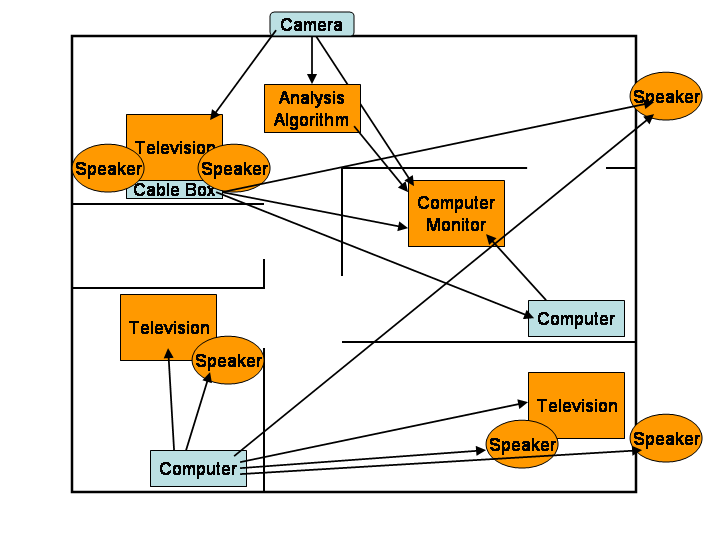
Umakishore Ramachandran is a Professor in the School of Computer Science at Georgia Institute of Technology's College of Computing, where he directs the Embedded Pervasive Lab. He received his Ph.D. from the University of Wisconsin-Madison in 1986 and has led transformative initiatives including the Online MS in Computer Science (OMSCS) program. His research spans distributed systems, edge computing, and real-time sensor networks, with applications in smart surveillance and connected vehicles. His research interests include architectural design of parallel/distributed systems, large-scale situation awareness using camera networks, cloud-edge continuum optimization, and latency-sensitive applications for geo-distributed infrastructures. Recent work focuses on elevating edge computing to parity with cloud resources. His publications show strong emphasis on edge computing innovations (MicroEdge, FogStore), real-time video analytics (EVA, ClairvoyantEdge), and adaptive mobile systems (Foresight). Trends include multi-tier architectures, quality-of-experience optimization, and scalable processing for IoT workloads. Major Awards: IEEE Fellow (2014) NSF Presidential Young Investigator (1990) ACM/IFIP Middleware Best Paper (2022) 3x College of Computing Dean's Awards He has advised 40+ PhD students, with recent graduates at Google, Microsoft, and academia. Current NSF/CPS grants support his work on geo-distributed latency-sensitive applications. He co-leads the STAR Center and Samsung-funded embedded software programs. His Embedded Pervasive Lab develops systems like Stampede (stream processing) and DFuse (sensor fusion), with testbeds in the Aware Home and transportation networks. Teams collaborate with Intel, Microsoft, and Bosch on edge-AI deployments.
Thomas DreibholzView profile
Researcher
Thomas Dreibholz is a Chief Research Engineer at Simula Metropolitan's Center for Resilient Networks and Applications. He specializes in cyber sovereignty, network security, and internet testbeds, with extensive work on distributed systems, cloud computing, and 5G networks. Affiliation: Simula Metropolitan, Oslo, Norway Research Focus: Multi-path transport protocols, network resilience, and privacy-preserving frameworks His research explores the intersection of network security, cloud/fog computing, and next-generation communication protocols. Recent work includes HiPerConTracer for network analysis, privacy-aware fog platforms , and multi-layered federated learning security . He contributes to testbed development, including the NorNet infrastructure for real-world multi-path transport research. Publications reflect expertise in multi-path TCP , 5G network optimization , and cloud/fog security . He has delivered invited talks at institutions like Hainan University and Princeton University, emphasizing open-source testbed deployment and educational outreach.

Felix HeideView profile
Professor
Felix Heide is a Professor of Computer Science at Princeton University , where he leads the Princeton Computational Imaging Lab . He also serves as Head of AI at Torc Robotics , focusing on full autonomy stacks for self-driving trucks. His research sits at the intersection of optics , machine learning , and computer vision , addressing imaging challenges in harsh environments like dense fog, ultra-low/high illumination, and scattering media. Ph.D. in Computer Science from the University of British Columbia Postdoctoral research at Stanford University His work on computational imaging spans physics-based vision, non-line-of-sight imaging , end-to-end camera design , and robust sensor fusion . He has pioneered techniques for inverse neural rendering , nanophotonic optics , and light-speed AI through optical computing. His recent papers in Nature Machine Intelligence , Science Advances , and top conferences ( SIGGRAPH , CVPR , ICCV ) focus on: Adverse weather imaging (fog, snow, rain) Multi-sensor fusion (LiDAR, radar, gated cameras) Light transport through scattering media Optical metasurfaces and diffractive optics End-to-end optimization of imaging pipelines Event-based vision and polarization cues He has received prestigious awards including the SIGGRAPH Significant New Researcher Award , Sloan Research Fellowship , and Packard Fellowship . His lab's open-source code and datasets enable real-world applications in autonomous driving, microscopy, and augmented reality.
Attila KerteszView profile
Associate Professor
- Cloud Computing
- IoT
- Simulation
- +3 more
Attila Kertesz is an Associate Professor in the Department of Software Engineering at the University of Szeged, Hungary. He leads the IoT Cloud research group and coordinates key projects including the FogBlock4Trust sub-grant (TruBlo EU H2020) and the NKFIH-FK (OTKA) 131793 project. He serves on Management Committees for COST Actions CA19135 and CA17136. His research spans Cloud Computing (39%), IoT (38%), and Simulation (33%), with additional expertise in Fog Computing, Data Protection, and Blockchain. Kertesz investigates data management challenges in distributed systems, focusing on Edge-Cloud integration, resource optimization, and security architectures for IoT environments. Recent publications (2024-2025) demonstrate strong emphasis on converging Fog/Edge computing with Blockchain and Federated Learning for IoT applications. His work addresses resource-aware parallel computing optimization and domain-specific languages for Ambient Assisted Living microservices, appearing in IEEE Access and Simulation Modelling Practice and Theory. Professor Kertesz secures significant funding from EU H2020 and Hungarian Scientific Research Fund sources, supporting active research through multiple collaborative projects. While specific student counts aren't published, his project leadership indicates ongoing supervision opportunities. As leader of the IoT Cloud research group, Kertesz fosters innovation in Cloud-to-Things continuum technologies through theoretical and applied research, with strong international project participation and publication output.
J.A. PouwelseView profile
Professor
J.A. Pouwelse is a Professor at the Data-Intensive Systems department within the Electrical Engineering, Mathematics and Computer Science school at Delft University of Technology . With 125 research outputs and 4 supervised works, his work focuses on Blockchain , Decentralized Systems , Federated Learning , and Peer-to-Peer Networks , particularly for Web3 applications. His recent publications analyze topics such as: Decentralized adaptive ranking Serverless federated learning Green smart contracts Search index optimization Zero-trust frameworks Notable recognition includes the LCN Best Paper Award 2021 . Research spans decentralized infrastructure design, privacy preservation, and scalable system implementation.

Isaac Lera CastroView profile
Associate Professor
Dr. Isaac Lera Castro is an Associate Professor at the University of the Balearic Islands, School of Mathematics and Computer Science, Department of Computer Architecture and Technology. He serves as Deputy Director of the Laboratory of Artificial Intelligence Applications (LAIA) and is a member of the ACSIC (Architecture and Behavior of Computer and Telecommunication Systems) R&D Group. His educational background includes a Ph.D. in Computer Science from the University of the Balearic Islands (2012) and a Computer Engineering degree from the same institution (2006). He has been actively involved in academia since 2005. Dr. Lera Castro's research focuses on computer architecture, performance evaluation of computer systems, cloud computing, edge computing, fog computing, and semantic web. His work has particular emphasis on simulation and modeling of distributed systems, with significant contributions to fog computing architectures and performance assessment methodologies. He has developed YAFS (Yet Another Fog Simulator), a tool for simulating IoT scenarios in fog computing environments that has gained recognition in the research community. His publication record includes multiple papers in JCR-SCI indexed journals, with 11 highly relevant publications (7 in Q1 and 4 in Q2) and 6 relevant publications (3 in Q3 and 3 in Q4) as of 2019. His research spans from early work on semantic web applications to recent contributions in fog computing and IoT simulation, showing a consistent trajectory of innovation in distributed systems. 2019: YAFS simulator for IoT scenarios in fog computing (IEEE Access) 2019: Availability-aware service placement in fog computing (IEEE IoT Journal) 2017: Human mobility pattern analysis using complex networks (PLOS ONE) 2006: Performance-related ontologies and semantic web applications (Science of Computer Programming) Dr. Lera Castro has extensive teaching experience across undergraduate, graduate, and master's programs. He has taught core subjects including Computer Architecture, Current Computer Systems, and Evaluation and Exploitation of Computer Systems, as well as specialized courses like Cloud Computing and Technologies for Big Data Analysis. From 2018 to 2021, he served as co-director of the Master's Degree in Big Data Analysis in Economics and Business. He leads the Laboratory of Artificial Intelligence Applications (LAIA), which focuses on applying AI techniques to distributed systems with particular expertise in performance modeling and resource allocation in cloud, fog, and edge computing environments.
Mairo LeierView profile
Research Fellow
Dr. Mairo Leier is a Senior Research Fellow at Tallinn University of Technology's School of Information Technologies, Department of Computer Systems, where he leads the Internet of Things Development Centre. His career spans industry roles at Ericsson Estonia and Elisa Estonia, alongside academic positions since 2010. He holds a PhD in Computer Systems (2016) and MSc (2010) from Tallinn Tech. Research interests center on embedded systems , IoT , and edge AI , with applications in smart infrastructure, autonomous vehicles, and biomedical sensing. Key focus areas include: Machine learning optimization for resource-constrained devices Real-time sensor data processing Hardware-software co-design Industrial IoT solutions His publications emphasize embedded AI efficiency, with recent work exploring model compression, hardware-aware neural networks, and edge deployment for computer vision. Awards and recognitions include: Tallinn Entrepreneurship Award (2017, 2018) 1st Prize in TTÜ Applied Research Competition (2017) Industry collaboration awards with Bosch Sensortec He actively advises students, with 14+ bachelor supervisees in embedded systems/IoT projects. Grants include applied research funding for industrial sensor algorithms and smart wearables. He directs the IoT Development Centre, fostering industry-academia partnerships and embedded systems innovation.