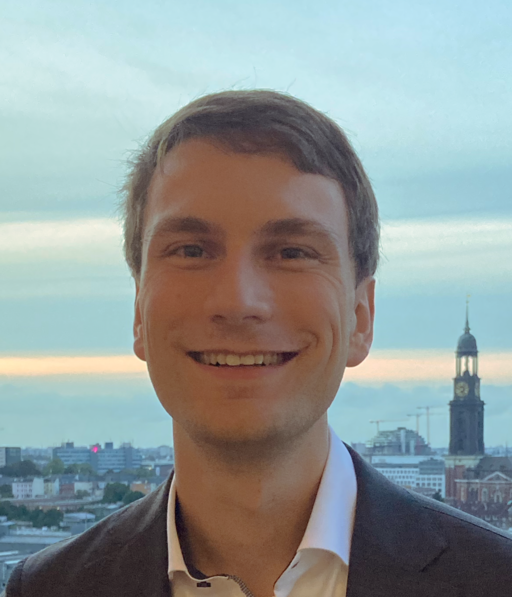
Giuseppe Santoro is a Full Professor at the International School for Advanced Studies (SISSA) , affiliated with the Condensed Matter Theory sector. His research focuses on understanding the dynamics of quantum systems out-of-equilibrium , including thermalization, integrability, and periodically driven systems, as well as nanoscale dissipation in both quantum and classical contexts. Dynamics of closed and open quantum systems Nano-friction and lubrication Quantum annealing and optimal control Topological quantum phenomena His recent publications (2023-2025) highlight expertise in quantum simulation , topological effects , optimal control , and dissipative dynamics , with applications to nanoscale systems and frustrated models. Key themes include quantum annealing , Floquet theory , and many-body localization , reflecting interdisciplinary work at the intersection of quantum physics, materials science, and computational methods.
Dr Euan W McGookin is a Senior Lecturer in Autonomous Systems & Connectivity at the University of Glasgow, based in the Aerospace Sciences division of the James Watt Building South. He coordinates Glasgow-delivered aerospace degree programmes in Singapore and serves on the IFAC Technical Committee on Marine Systems, underlining his sustained engagement with both local and international academic activities. Education: 1st Class Honours Master of Engineering in Avionics, University of Glasgow PhD in Optimisation of Sliding Mode Controllers for Marine Applications, University of Glasgow (1997) Research Interests Dr McGookin’s core expertise lies in the design, simulation, control and physical realisation of autonomous robotic systems. His work spans Autonomous Underwater Vehicles (AUVs) , Unmanned Aerial Vehicles (UAVs) , Planetary & Terrestrial Rovers , and Biomimetic Robotics . He is particularly recognised for applying biologically inspired principles to robotic locomotion, navigation and control. Complementary themes include advanced control methodologies—Sliding Mode Control, H-infinity, Inverse Model Control—optimisation heuristics, guidance & navigation, fault detection & isolation (FDI), and system health monitoring for both terrestrial and space applications. Publication Trends Across 80 publications from 1995 to 2025, his work has evolved from early genetic-algorithm-based controller optimisation for marine vessels to cutting-edge multi-rover mission planning and health monitoring for planetary exploration. Recent outputs (2022–2025) concentrate on micro-rover coordination, friction modelling for planetary soils, reinforcement-learning-driven sensor fusion, and robust health-monitoring architectures, reflecting a strategic pivot toward space robotics while retaining strong roots in control theory and autonomous systems. Scientific Awards & Fellowships Member, IFAC Technical Committee on Marine Systems Grant & Advising Narrative While specific grant values are not disclosed, his continuous funding stream is evidenced by sustained publication output, international conference leadership, and ongoing supervision of postgraduate projects. Dr McGookin advises a steady cohort of PhD and MSc students whose theses align with his research themes—ranging from rover fault diagnosis to biomimetic AUV coordination—thereby fostering the next generation of control and robotics engineers. Laboratory & Team Dr McGookin heads research activities within the James Watt Building South, leveraging interdisciplinary laboratories that integrate simulation suites, rapid-prototyping facilities for AUV and UAV subsystems, and dedicated test rigs for biomimetic propulsion and rover mobility studies. Collaborative networks extend across the University of Glasgow’s Aerospace Engineering group, Singapore Institute of Technology partners, and international consortia such as ESA and IFAC.
Roles & Affiliations: Michael Flohr is a Researcher at the Institute of Theoretical Physics, part of the Faculty of Mathematics and Physics at Leibniz University Hannover. He holds the title of Privatdozent (PD Dr.), indicating advanced academic standing in German academia. His role includes safety officer responsibilities within the institute. Research Interests: Flohr specializes in Logarithmic Conformal Field Theory (LCFT), studying its applications to non-compact models, boundary conditions (e.g., D-branes in WZNW models), and connections to string theory. His work explores topics like four-point functions, Jordan cell representations, and modular properties of characters. He also investigates links between LCFT and physical systems such as the fractional quantum Hall effect and Seiberg-Witten theories. Notable interests include the theoretical underpinnings of dark matter and novel conformal field theory approaches to turbulence. Recent Research Trends: Flohr’s publications emphasize LCFT’s mathematical structure (e.g., operator product expansions, null vectors) and its applications in integrable systems, topological phases, and non-compact geometries. Collaborations with students focus on extending LCFT frameworks to local theories and analyzing boundary state constraints in non-rational models. Advising & Grants: Supervised students include Nils Carqueville, Anne-Lý Do, and Hendrik Adorf, whose work spans LCFT vertex algebras, D-brane factorization, and fermionic character expressions. Grants and funding details are not explicitly mentioned but likely tied to institutional support for theoretical physics research. Labs/Teams: Active within the Institute of Theoretical Physics, contributing to collaborative projects on conformal field theory, string theory, and quantum Hall systems. His research group engages with international workshops (e.g., EUCLID network meetings) and institutions like the Max Planck Institute for Mathematics.
ZGHAL Mourad is a Researcher-Lecturer at CESI LINEACT, holding an HDR (2008) from Sup’Com, Carthage University and a PhD in Electrical Engineering (2000) from University Tunis Manar. He specializes in Optimization, IoT, Sensors, and Smart Healthy Cities , with a strong focus on Photonic Crystal Fibers and Nonlinear Optics . Education: HDR in Engineering (2008), Sup’Com, Carthage University PhD in Electrical Engineering (2000), University Tunis Manar Engineering Degree in Telecommunications (1995), Sup’Com, Carthage University Research Interests: Mourad’s work bridges IoT sensor networks with optical communication systems . He pioneers mid-infrared supercontinuum generation in chalcogenide fibers and explores optical mode multiplexing for high-speed communications. His recent work integrates federated learning for intrusion detection in smart grids and optimizes photovoltaic energy systems for building decarbonization . Publications Trends: His 2023–2025 work emphasizes AI-driven energy management , cybersecurity for IoT , and federated learning frameworks . Earlier contributions (2016–2019) focused on nonlinear optical effects in photonic fibers and high-bit-rate networks . Awards: Elected Vice-Präsident of the International Commission for Optics Fellow Optica (ex OSA) and SPIE Associate scientist at ICTP (UNESCO Category 1 Institute) Advising & Grants: Supervised 9 PhD students (e.g., Z. MONLA’s work on BIM/VR in building maintenance). Active member of the LINEACT Scientific Council and CTI Commission des Titres d’Ingénieurs. Labs & Teams: Leads the Engineering and Numerical Tools research team at CESI LINEACT. Collaborates with IMT Télécom SudParis as an Adjunct Professor.
Riaz Ahmed Shaikh is an Associate Professor in Computing Sciences at the University of East Anglia (UEA), affiliated with the School of Computing Sciences and the Cyber Intelligence and Networks research group. He holds a PhD from Kyung Hee University (2009) and completed a Postdoc at Université du Québec en Outaouais (2009-2012). Previously, he served as an Assistant and Associate Professor at King Abdulaziz University (2012-2022). His expertise spans Privacy, Security, Trust Management, Policy Validation, and IoT/VANET systems, with contributions to UN Sustainable Development Goals in education and technology. Education: Postgraduate Certificate in Higher Education Practice, University of East Anglia (2024) PhD in Computing Sciences, Kyung Hee University (2009) Research Interests: Dr. Shaikh focuses on securing next-generation networks, including IoT, IoMT, and vehicular systems. His work emphasizes trust management frameworks, intrusion detection, and privacy-preserving protocols. Recent projects include AI-driven anomaly detection and fog computing-based DDoS mitigation. He also explores authentication schemes and policy validation in distributed systems. Grants & Collaborations: Lead on Innovate UK-funded projects: SPARC (Connected Vehicles Security, 2025-2025) and AI-driven Medical IoT Trust Management (2024-2025) Collaborations across Europe, Asia, and North America in cybersecurity and networking Labs & Teams: Active member of the Cyber Intelligence and Networks group at UEA, leading efforts in secure IoT and vehicular systems. Engages in conference organization (e.g., Ambient Computing conferences) and peer-review roles for journals like IEEE Transactions on Consumer Electronics.
Professor Chris Phillips is a Professor of Experimental Solid State Physics at Imperial College London's Department of Physics, part of the Faculty of Natural Sciences. He leads the Optoelectronics section and holds affiliations with the Experimental Solid State Physics Group, Quantum Engineering, Science and Technology, and The Light Community. With over 280 publications and 26 PhD graduates, his research focuses on quantum optical effects in nanostructures, including semiconductor 'artificial atoms', quantum metamaterials for superlens applications, and mid-IR medical imaging for cancer diagnosis. He has pioneered Digistain technology, a quantitative method for cancer grading, and is exploring quantum ratchet solar cells for ultra-high efficiency energy conversion. His career spans 40+ years with roles including Dean of the Faculty of Natural Sciences (2009–present), international panel memberships, and BBC collaborations. He has secured over £10M in grants, predominantly from EPSRC. Awards include recognition for innovative undergraduate teaching. His research portfolio combines cutting-edge physics with clinical applications, emphasizing interdisciplinary collaboration. Scientific contributions span quantum metamaterials for sub-diffraction imaging, thresholdless THz lasers, and nanoscale chemical imaging of cellular structures. Public engagement includes science festivals in India/Kazakhstan and media appearances. Current projects include clinical trials of Digistain and quantum ratchet solar cell prototyping.
Safieddin Safavi-Naeini was a Professor in the Department of Electrical and Computer Engineering and Director of the Centre for Intelligent Antenna and Radio Systems (CIARS) at his university. He specialized in advanced antenna systems, microwave engineering, radar technologies, and biomedical sensor design. His work emphasized high-frequency systems, phased array antennas, and mm-wave applications. Research Focus: His research spanned antenna design (e.g., defected ground structures, SIW-integrated arrays), mm-wave radar systems (including FMCW and SAR imaging), non-invasive biomedical sensors (e.g., glucose monitoring via microwave sensors), and satellite communication systems. He contributed to RFIC design, power amplifier technologies, and novel metamaterial-based components. Technological Contributions: Key innovations included tunable phase shifters, low-cost phased arrays for 5G/SATCOM, and compact high-gain antenna arrays. His work in graphene-based nonlinear optics and THz sources expanded into emerging applications like terahertz integrated circuits. Awards & Recognition: While no specific awards are listed, his prolific publication record and leadership in CIARS highlight his impactful contributions to the field. Advising & Labs: As director of CIARS, he oversaw research in intelligent antenna systems and radar imaging. His team developed cutting-edge systems like the 3D-printed scanning lens antenna and mm-wave FMCW target simulators.
Alexander Fritzsche is a PhD student at the Chair of Theoretical Physics I (AG Thomale) within Julius-Maximilians-University Würzburg , focusing on advanced research in topological and quantum materials. His work bridges theoretical physics with experimental circuit-based simulations, emphasizing non-Hermitian systems and Floquet engineering. Research Highlights: His publications span 2020–2025, addressing topics like PT-symmetric topological insulators , strain-induced curvature effects , and nonlinear wave localization . Key contributions include circuit-based realizations of topological phenomena and hyperbolic matter simulations. Technical Affiliation: He is based in the Faculty of Physics , working in the M1 building (room 03.015) with expertise in photonic Chern insulators, Floquet temporal pumping, and synthetic metamaterials. Contact: alexander.fritzsche@physik.uni-wuerzburg.de
Carlo Beenakker is a Professor of Theory of Condensed Matter at Leiden University's Leiden Institute of Physics (LION), specializing in theoretical physics with a focus on quantum systems. He leads the Beenakker Group, investigating Majorana particles, superconductivity, and quantum computing applications. His work bridges fundamental physics and technological innovation, particularly in nanophysics and topological materials. Research Interests: His studies encompass quantum transport phenomena, topological phases of matter, and the behavior of quantum particles in confined geometries. He explores how these principles can advance quantum computing architectures and superconducting qubit technologies. Awards & Grants: Recipient of the 2023 KHMW Graduation Prize for research on superconducting qubits and the 2024 NWO Summit Grant for fundamental quantum limits research. His work has been widely cited and featured in Physical Review Letters and Physical Review B . Advising & Collaboration: Supervised over 28 PhD candidates, including current student Tom O'Brien. His research group collaborates internationally on projects like Majorana vortex modes and Weyl superconductors. Active in science communication, appearing in podcasts and media outlets. Labs/Teams: Directs the Beenakker Group within LION, contributing to the Frontiers of Nanoscience (NanoFront) initiative. Research spans theoretical frameworks for quantum software algorithms and condensed matter systems.
Laurie Porte is a Researcher at the École Polytechnique Fédérale de Lausanne (EPFL) within the School of Basic Sciences (SB) and the SPC-TCV (Tokamak Physics) group. She also holds a Lecturer position in the EDPY-ENS department under EPFL's Vice-Presidency for Academic and Student Affairs. Her research focuses on plasma physics , electron cyclotron resonance heating (ECRH) , and MHD effects in tokamak confinement . Her work includes groundbreaking studies on electron Bernstein wave heating , transport analysis in H-mode plasmas , and fast-ion dynamics using diagnostics like collective Thomson scattering . She has contributed to ITER gyrotron development and TCV tokamak experiments , with publications in journals such as Physical Review Letters and Nuclear Fusion . Her research spans topics like density peaking , current profile tailoring , and quasi-stationary ELM-free H-mode plasmas . Students advised: James Winston Irawati Tumbokon Matteo Fontana Pedro Andres Molina Cabrera Arsène Stéphane Tema Biwole Scientific collaborations: Publications with teams from EPFL , IAEA , and APS conferences.
Stephanie Diem serves as Professor in the Department of Nuclear Engineering & Engineering Physics within the College of Engineering at the University of Wisconsin-Madison. She leads the Pegasus-III Experiment as Principal Investigator, pioneering innovations in solenoid-free fusion startup techniques to advance commercial fusion energy development. Her work bridges experimental plasma physics, international collaboration, and sociotechnical engagement in fusion energy systems. Dr. Diem's educational background includes: BS in Engineering Physics from University of Wisconsin-Madison MA in Plasma Physics from Princeton University PhD in Plasma Physics from Princeton University (National Spherical Tokamak Experiment research) Her research centers on experimental plasma physics for magnetic confinement fusion, with specialized expertise in radio frequency wave applications for plasma heating and current drive. Current investigations focus on electron Bernstein wave (EBW) physics, non-solenoidal startup via local helicity injection, and edge instability control in spherical tokamaks. This work integrates advanced diagnostics, numerical modeling validation, and international collaborations across facilities including Proto-MPEX (ORNL), MST (UW-Madison), NSTX, and MAST (UK). Analysis of her recent publications reveals strong emphasis on spherical tokamak startup physics, EBW heating systems, and sociotechnical dimensions of fusion development. Key trends include machine learning integration for plasma control, impurity transport during startup, and public engagement frameworks for equitable energy transitions. Her work spans fundamental plasma physics to policy-oriented fusion technology assessment. Notable scientific recognition includes: Kavli Fellow (National Academies, 2025) U.S. Science Envoy for Fusion Energy (2024/2025) David J. Rose Excellence in Fusion Engineering Award (Fusion Power Associates, 2023) New Voices of the National Academies cohort (2021, extended to 2024) Thomas H. Stix Graduate Prize (Princeton University) Dr. Diem actively mentors graduate students through NE 790/890/990 research courses while securing major grants for fusion research infrastructure. Her leadership extends to the Global Fusion Forum initiative and development of sociotechnical readiness frameworks for fusion systems. Current efforts include international collaborations under the PPPL-IAEA practical arrangement and U.S. Department of State science diplomacy initiatives. The Pegasus-III laboratory team develops cutting-edge diagnostics including multi-point Thomson scattering, impurity monitoring systems, and EBW emission measurements. The facility serves as a testbed for scalable startup techniques with partnerships spanning Oak Ridge National Laboratory, General Atomics, and international fusion centers.
Jerome Martin is an Assistant Professor at the University of Technology of Troyes (UTT) and a member of the Light, Nanomaterials, and Nanotechnologies (L2n) laboratory, part of CNRS-UMR 7076. His research focuses on aluminum plasmonics, plasmon-assisted photoluminescence in ZnO, and nanospectroscopy/nanofabrication techniques. He has been affiliated with UTT since 2012, with prior postdoctoral work there from 2010–2012. Martin holds a PhD in Physics from Université de Lorraine (2009) and a Master's in Physics (Plasmas, Optoelectronics, Micro-Systems) from the same institution (2005). Research Interests : His work explores aluminum-based plasmonic systems for applications in nanophotonics, including optical antenna design, UV emission enhancement via surface lattice resonances, and nanofabrication methods for precise material structuring. He also investigates the interplay between material morphology (e.g., ZnO thin films) and optoelectronic properties. Key Contributions : Recent articles highlight advancements in scalable broadband optical antennas using Cayley tree geometries, zeptogram-scale chemical sensing via hybrid plasmonic-photonic sensors, and precise characterization of plasmonic resonances in aluminum nanostructures through electron microscopy and spectroscopy. Teaching : He instructs courses in optical technologies, quantum optics, semiconductor materials, and electricity/magnetism at both undergraduate and graduate levels. Labs & Facilities : Active in the L2n lab, which provides advanced resources for nanomaterial synthesis, spectroscopic analysis, and plasmonic device prototyping.
Magnus Johansson is a Professor at Linköping University's Department of Physics, Chemistry and Biology (IFM), specializing in Theoretical Physics (TEOFY). His research focuses on nonlinear dynamics, topological edge states, and discrete nonlinear Schrödinger systems, with applications in quantum physics and condensed matter physics. Key research interests include topological insulators, soliton dynamics, and the interplay between nonlinearity and lattice structures. His work explores systems such as photonic lattices, Bose-Hubbard models, and waveguide arrays, with recent contributions in edge modes in nonlinear SSH lattices and breathers in nonlinear systems. Publications highlight studies on edge breathers, nonlinear gap modes, and instabilities in discrete systems. His research bridges theoretical physics with applications in optics and materials science, contributing to advancements in nonlinear photonics and quantum systems. Magnus holds the email magnus.x.johansson@liu.se and is affiliated with the Theoretical Physics division at IFM, Linköping University.
Azriel Z. Genack is a Distinguished Professor of Physics at Queens College, City University of New York. With a career spanning over five decades since earning his Ph.D. from Columbia University in 1973, Professor Genack has established himself as a leading researcher in wave propagation through random media. His laboratory at Queens College, established with Dr. Narciso Garcia, focuses on fundamental studies of microwave and optical wave transport in disordered systems. Genack received his B.A. from Columbia College in 1964 and his Ph.D. from Columbia University in 1973. His academic journey has been dedicated to understanding wave phenomena in complex media, bridging classical wave physics with quantum mechanical concepts. Professor Genack's research explores the universal principles of wave propagation in random systems, with applications to imaging and communications. His work spans Anderson localization, statistical properties of wave transport in space and time, crossovers between ballistic, diffusive and localized regimes, photonic topological insulators, and chiral fiber optics. His laboratory has made seminal contributions including the demonstration of Anderson localization in photonic systems, studies of transmission eigenchannels, and the development of concepts for robust transport in topological photonic structures. Analysis of Genack's recent publications reveals a continued focus on fundamental wave phenomena in increasingly complex systems. His work has evolved from basic studies of wave localization to more sophisticated investigations of topological effects, non-Hermitian systems, and Lévy disorder. The consistent thread through his research is the application of statistical physics approaches to understand wave transport in disordered media across multiple disciplines. Professor Genack's research has led to practical applications, most notably contributing to the formation of Chiral Phonics, Inc., which develops microfabricated optical fiber-based components for sensing and coupling applications. His laboratory at Queens College continues to be at the forefront of research in wave physics, with publications appearing in top journals including Nature Communications, Physical Review Letters, and Science.
Xuan Zhu is Assistant Professor in Civil & Environmental Engineering at the University of Utah with PhD in Structural Engineering from UC San Diego, MS in Civil Engineering from University of Pittsburgh, and BS in Mechanical Engineering from Beijing University of Aeronautics and Astronautics. His research spans civil engineering, sensors, data science, and materials engineering, focusing on infrastructure monitoring techniques. Recent work includes rail structure analysis using local resonances, computer vision for winter road safety, and machine learning applications for structural health monitoring.