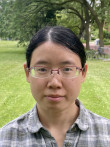
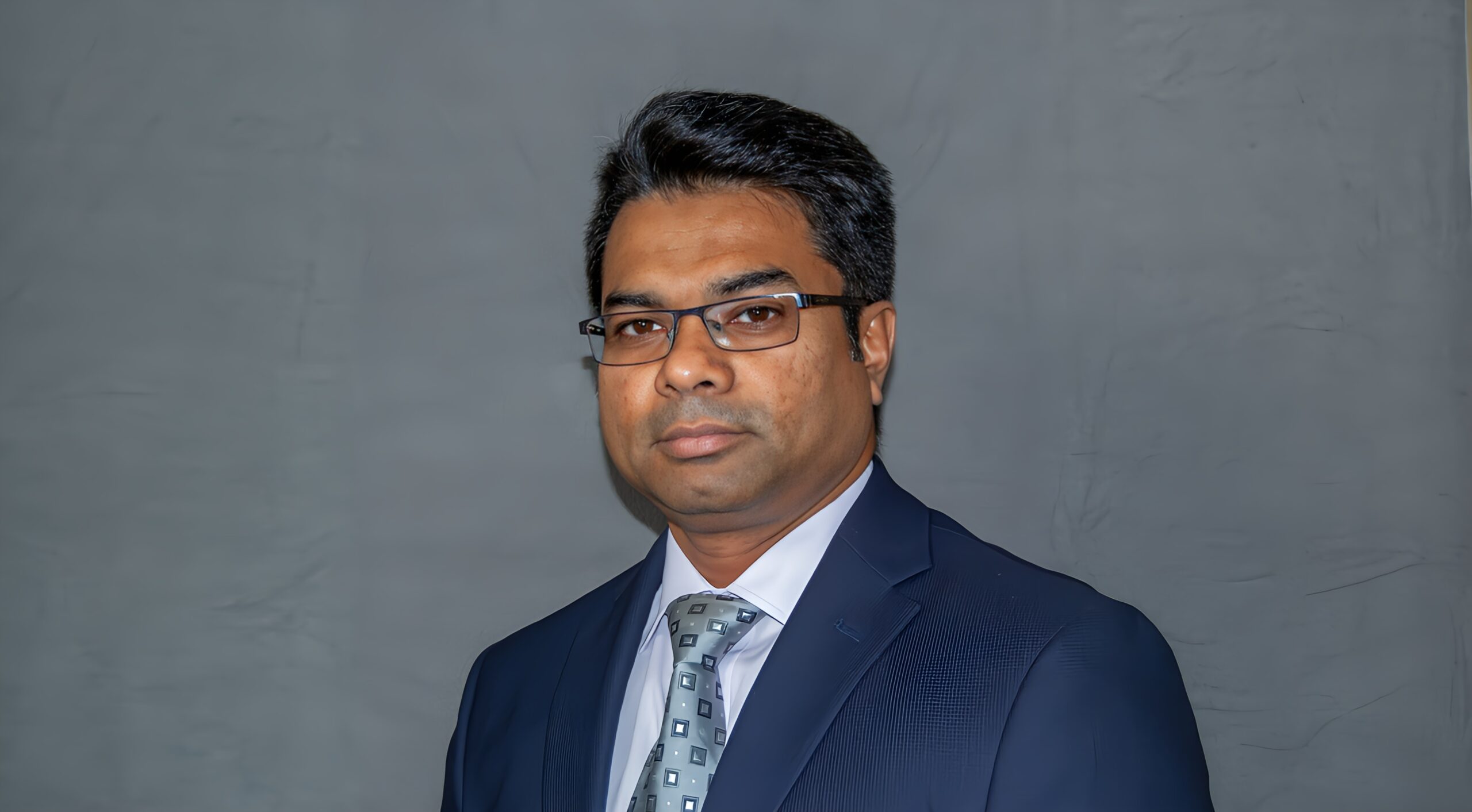
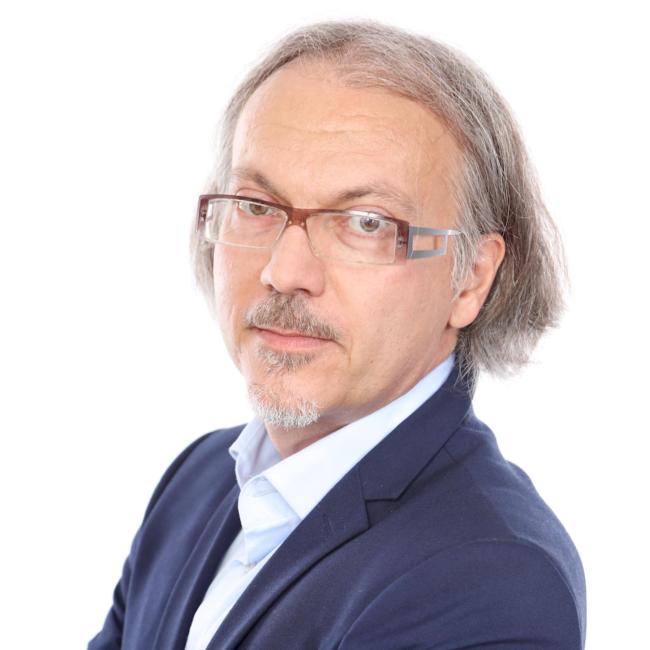
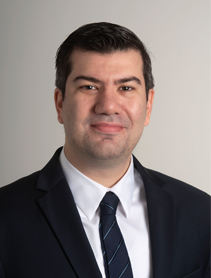
Ahmed Sherif is an Associate Professor specializing in cybersecurity and privacy-preserving systems, likely affiliated with the University of Southern Mississippi. He holds a Ph.D. from Tennessee Technological University (2017) and M.S. from Egypt Japan University of Science & Technology (2014). His research focuses on cryptographic solutions for autonomous vehicles, IoT networks, and smart grid security. Research interests span privacy-preserving systems across transportation and critical infrastructure, with emphasis on authentication protocols and hardware security. Teaches courses including Digital Logic, Network Security, and Advanced Security Techniques. Publications show strong focus on privacy engineering in emerging technologies (2021-2025), particularly in vehicular/drone networks and medical AI. No awards listed. Research includes federated learning for medical diagnosis and hardware-accelerated security frameworks.
Li Wei is a distinguished academic affiliated with Tsinghua University, with a focus on interdisciplinary research spanning artificial intelligence, machine learning, and computer vision. His work often intersects with medical informatics, remote sensing, and signal processing, demonstrating a commitment to advancing technological solutions in healthcare, environmental monitoring, and engineering systems. Research interests include deep learning applications in clinical diagnostics, satellite data analysis for climate modeling, and optimization of energy storage systems. He has contributed to innovative solutions in areas such as UAV-enabled edge computing, privacy-preserving blockchain protocols, and thermal-based surveillance systems. His collaborative projects often involve multidisciplinary teams across institutions. Publications reflect a strong emphasis on practical applications, such as mobile health tools for tumor recognition, transformer-based super-resolution techniques for oceanography, and AI-driven risk classification models for respiratory diseases. While no specific awards or grants are listed, his prolific output across top-tier journals indicates sustained research impact. Professional activities include contributions to conferences like RecSys, MICCAI, and AAAI, and editorial roles are implied through his extensive publication record. Collaborations with industry partners (e.g., in energy systems and medical imaging) suggest engagement with real-world problem-solving.
Liang Xue is an Assistant Professor in the School of Information Technology at York University. She holds a PhD in Electrical and Computer Engineering from the University of Waterloo (2022) and completed a postdoctoral fellowship at the University of Guelph’s School of Computer Science (2022–2024). Her research focuses on applied cryptography, blockchain security, privacy-preserving AI, and cybersecurity in cloud and IoT systems. She has published in top-tier journals like IEEE Transactions on Dependable and Secure Computing, and conferences such as IEEE International Conference on Communications. Her work addresses challenges in data privacy, secure authentication, and regulatory compliance in decentralized systems. Recent projects include privacy-enhancing technologies for access control, blockchain-based data trading frameworks, and federated learning with privacy guarantees. She actively contributes to standards for cybersecurity in smart cities and next-generation wireless networks.
Dr. Vasileios Vasilakis is a Senior Lecturer in Cyber Security at the University of York's Department of Computer Science. He holds a PhD in Electrical & Computer Engineering from the University of Patras, Greece. His research focuses on IoT Security, Mobile Network Security, and SDN Security, with contributions to projects like the EC H2020 SESAME and RIFE initiatives. He has supervised numerous PhD students and contributed to academic service roles such as Guest Editor in IEICE Transactions and Program Committee member for IEEE ICC and GLOBECOM. His work spans secure systems design, network protocols, and cybersecurity defenses, with recent publications addressing SDN-based intrusion detection, IoT attack mitigation, and ransomware analysis. Affiliations: York Interdisciplinary Centre for Cyber Security (YiCS), University of York Education: PhD in Electrical & Computer Engineering (University of Patras, 2011) Research Interests His research emphasizes practical cybersecurity solutions for modern networks, including: IoT Security: Developing authentication and intrusion detection mechanisms for RPL-based networks SDN/NFV Security: Designing defenses against ransomware and distributed attacks Wireless Network Security: Analyzing vulnerabilities in 5G and UAV communication systems Academic Contributions He has organized special sessions at IEEE conferences, co-authored over 120 publications, and reviewed PhD theses at multiple institutions. Current projects include secure edge computing in 5G networks and lightweight authentication schemes for IoT protocols like MQTT.
Raul Sanchez Reillo is a Full Professor at Universidad Carlos III de Madrid (UC3M), affiliated with the Grupo Universitario de Tecnologías de Identificación (GUTI). His research focuses on biometric systems, mobile authentication, and security technologies. Key areas include presentation attack detection, vein recognition, and ECG biometrics. He leads projects involving smartphone-based biometric solutions, 3D printed markers, and standards development for biometric interoperability. Research interests span multiple modalities: fingerprint authentication, dynamic signature verification, gait recognition, and vascular biometrics. He emphasizes usability and accessibility in mobile environments, exploring ergonomics and user interaction challenges. His work integrates machine learning (transformers, RNNs) with hardware solutions like FPGA-based systems. Publications highlight innovations in spoofing detection, medical applications (ECG/vein analysis), and low-cost hardware implementations. He contributes to European standards (BioAPI, Hand Data Interchange Format) and evaluates security practices for R&D compliance with EU data protection regulations. Current initiatives include enhancing biometric systems for critical infrastructure security and improving accessibility for elderly users. Active in interdisciplinary collaborations, he leads the Mobile Pass project evaluating user interaction in biometric systems. His lab (GUTI) develops open testing methodologies for biometric performance under Common Criteria and environmental stressors. Recent work addresses vulnerabilities in mobile fingerprint sensors and the ethical implications of biometric-as-a-service models.
Stefan Wolf is a Full Professor in the Department of Informatics at the Università della Svizzera italiana (USI), Lugano. He has held academic roles since 2005, including Associate Professor at USI (2011–present), SNF Professor for Quantum Information at ETH Zürich (2005–2011), and Assistant Professor positions at the University of Waterloo and Université de Montréal. His research focuses on cryptography, information theory, and quantum information processing, emphasizing provably secure cryptographic systems using weak classical or quantum-physical primitives. Education: Dipl. Math. ETH (Mathematics) PhD in Computer Science from ETH Zurich, supervised by Prof. Ueli Maurer Research Interests: Dr. Wolf’s work bridges theoretical foundations and applied aspects of information security. Key areas include cryptographic protocol design, quantum communication theory, and the integration of quantum mechanics into computational systems. His group, the Cryptography and Quantum Information group , explores cutting-edge topics such as post-quantum cryptography and quantum-resistant algorithms. Labs/Teams: Leads the Cryptography and Quantum Information research group at USI, fostering interdisciplinary projects in secure information processing.
A H M Anwar Sadmani is an Associate Professor in the Department of Civil, Environmental and Construction Engineering at the University of Central Florida, affiliated with the College of Engineering and Computer Science. His research is centered on advanced water and wastewater treatment technologies, particularly membrane-based and green hybrid processes for removing contaminants of emerging concern such as PFAS and algal toxins. His educational background includes a Ph.D. in Civil Engineering from the University of Toronto, a postdoctoral fellowship at the same institution, a Master’s degree from UNESCO-IHE Institute for Water Education in the Netherlands, and a Bachelor’s from Bangladesh University of Engineering and Technology. Sadmani's research interests span membrane technology , PFAS remediation , green sorption media , hybrid treatment systems , and the fate and transport of micropollutants . He has made significant contributions to the development of functionalized membranes and sustainable materials for water purification. His recent publications highlight a strong focus on PFAS removal across varying water matrices, nanomaterial applications, and innovative hybrid processes. The trend in his recent articles (2019–2023) demonstrates a sustained emphasis on engineered solutions for persistent pollutants, especially PFAS, using advanced membranes and green media. His work bridges materials innovation with environmental application, targeting real-world water quality challenges. His scientific recognition includes: UCF Teaching Incentive Program Award (2022) U.S. EPA P3 Award (2018) Student Best Paper Award at AMTA/AWWA Conference (2013) Ontario Graduate Scholarship (2012–2013) University of Toronto Fellowship (2008–2012) Netherlands Fellowship Program (2006–2008) Government Merit Scholarship, Bangladesh (1998–2004) Sadmani has successfully advised numerous graduate students, evident from his co-authored publications with emerging researchers. His research is supported by prestigious grants from federal agencies including USEPA, DoD, and NASA, as well as state and industrial partners. He leads the Advanced Water and Wastewater Treatment Lab , where interdisciplinary teams work on cutting-edge solutions for water security and sustainability.
Andreas J. Kassler is a Full Professor of Computer Science at Karlstad University, Sweden, where he has been since 2005. He co-chairs the Distributed Systems and Communication (DISCO) group and focuses on networking, cloud computing, and wireless networks. His research includes software-defined networking, future internet architectures, and network optimization. He has authored/co-authored over 130 peer-reviewed publications, holds 6 patents, and serves on editorial boards of journals like Journal of Internet Engineering . Education : Ph.D. in Computer Science, Universität Ulm (2002) Docent (Habilitation), Karlstad University (2007) M.Sc. in Mathematics/Computer Science, Universität Augsburg (1995) Research Interests : Software Defined Networking (SDN) Programmable Dataplanes Wireless Mesh Networks Time-Sensitive Networking (TSN) Edge Computing Machine Learning for Network Optimization Recent Directions : His work spans TSN scheduling, hybrid P4 solutions for 5G, and explainable AI in energy communities. He explores network resilience, latency optimization, and multi-objective control in microgrids. Service Contributions : Track co-chair for VTC 2015 General chair for Wired/Wireless Internet Communications (WWIC) 2013 Editor-in-Chief of IARIA Journal on Advances in Internet Technology Labs/Teams : Leads DISCO group at Karlstad University. Collaborates with global teams on projects like mmWave backhaul networks and SDN-enabled industrial control systems.
Hokeun Kim is an Assistant Professor in the School of Computing and Augmented Intelligence (SCAI) at Arizona State University (ASU), part of the Ira A. Fulton Schools of Engineering. He previously held positions at Hanyang University (2021-2023) and worked in industry roles at Google, LinkedIn, and HP Labs. His research focuses on cyber-physical systems, IoT security, and computer architecture, with a particular emphasis on safety and security aspects of time-sensitive systems. Education: Ph.D. in EECS, University of California, Berkeley (2017) M.S. in EECS, Seoul National University (2012) B.S. in Computer Science and Engineering, Seoul National University (2010) Research Interests: Kim’s work spans secure IoT frameworks, real-time embedded systems, and edge computing. He develops tools like the Secure Swarm Toolkit (SST) and Lingua Franca, addressing challenges in distributed system security, interoperability, and performance. Key Contributions: Authored over 30 peer-reviewed publications in top venues like IEEE Transactions, ACM Conferences, and DATE. Received the ACM/IEEE Best Paper Award (IoTDI 2017) and IEEE Micro Top Picks Honorable Mention (2017). Active in organizing conferences (e.g., DATE, FDL) and serves on technical committees for top journals/conferences. Teaching: Courses include Computer Architecture I/II, Real-Time Embedded Systems, and IoT design at both undergraduate and graduate levels.
Frank Piessens is a Full Professor in the Department of Computer Science at KU Leuven's Faculty of Engineering Science, where he leads the Distributed and Secure Software (DistriNet) research group. His research focuses on cutting-edge security challenges at the hardware-software interface. His research interests span: Hardware-software co-design for end-to-end security Confidential computing architectures Microarchitectural side-channel mitigation Secure IoT development Compiler-based security mechanisms Control-flow integrity techniques Recent publications (2024-2025) demonstrate strong focus on: Hardware security cost/performance tradeoffs Processor-level security enhancements (RISC-V, high-end CPUs) IoT device lifecycle security Control-flow leakage prevention Microcontroller IP protection He currently supervises PhD students including M. Bognár and H. Winderix, and leads major research initiatives such as: Hardening confidential computing through vertically integrated system design (2025-2031) Designing secure hardware for software-exploitable attacks (2025-2029) Compiler-based mitigations for microarchitectural side-channels (2023-2027) Security Arms Race at the Hardware-Software Boundary (2020-2025)
Mohamed Sarwat is an Associate Professor at Arizona State University specializing in databases , spatial data management , and recommender systems . His research focuses on GeoSpark —a cluster computing framework for spatial data—and its extensions like GeoSparkViz for visualization and GeoSparkSim for traffic simulation. Key Contributions: LARS* (Location-Aware Recommender System), Horton* (Graph Reachability), Sindbad (GeoSocial Platform), and Riso-Tree (Graph Database Indexing) Research Themes: Integration of spatial/temporal data with machine learning, efficient indexing for big geospatial datasets, and scalable frameworks for mobility data science His work spans collaborations with 23+ co-authors across institutions like University of Minnesota, University of Melbourne, and University of Salzburg. Current projects emphasize GeoTorchAI —a spatiotemporal deep learning system—and mobility data science infrastructure.
Dr. Hakki Erhan Sevil is an Associate Professor in the Department of Intelligent Systems and Robotics at the University of West Florida, within the Hal Marcus College of Science and Engineering. He holds a Ph.D. in Mechanical Engineering from the University of Texas at Arlington and has extensive research experience in robotics, intelligent systems, and autonomous control. His work spans theoretical and applied domains, focusing on resilient and intelligent robotic systems. Ph.D., Mechanical Engineering, University of Texas at Arlington M.S., Mechanical Engineering, Izmir Institute of Technology B.S., Mechanical Engineering, Izmir Institute of Technology Dr. Sevil's research interests lie at the intersection of robotics, artificial intelligence, and control systems. He specializes in autonomous navigation, fault detection and isolation (FDI), multi-agent coordination, computer vision, and bio-inspired computational methods. His work emphasizes real-world implementation in unmanned and self-sustained systems, particularly in challenging environments. His recent publications and projects highlight a strong trend toward intelligent, resilient, and distributed robotic systems. Themes include entropy-based behavior modeling for UAV swarms, assistive robotics for household tasks, post-disaster damage assessment using aerial vision, and advanced guidance for GPS-denied navigation. These reflect a multidisciplinary approach combining machine learning, control theory, and robotics engineering. 2024 Faculty Excellence in Teaching Award, UWF 2024 Faculty Excellence in Undergraduate Research Mentoring Award, UWF DURIP Grant ($478,000) from ONR (with IHMC) USDA Grant ($728,000) with New Mexico State University US Air Force SBIR/STTR Grant ($110,000) with Catalano Aerospace AFWERX Funding for Distributed Behavior Research Dr. Sevil actively mentors Ph.D. and M.S. students and leads the Sevil Research Group, which has secured multiple internal and external grants from NSF, NASA, ARL, ONR, and USDA. He has served as PI and Co-PI on funded projects and advises student teams that have won national awards. His lab, the Intelligent Systems and Robotics Lab, is highlighted in university communications and national challenges. The group collaborates with IHMC, NMSU, and industry partners, fostering innovation in autonomous systems. The Sevil Research Group operates within the Intelligent Systems and Robotics Lab at UWF, conducting cutting-edge research in autonomous navigation, swarm intelligence, and resilient robotics. The lab collaborates with the Institute for Human and Machine Cognition (IHMC), New Mexico State University, and private aerospace firms. It supports student-led projects, participates in national robotics challenges, and maintains active GitHub repositories for open research dissemination.
Sun Joo (Grace) Ahn is a Professor at the Grady College of Journalism and Mass Communication, University of Georgia, where she serves as the founding director of the Center for Advanced Computer-Human Ecosystems (CACHE). Her research focuses on the psychological and behavioral impacts of immersive technologies such as virtual reality, augmented reality, mixed reality, wearables, and AI-driven agents. Her research interests lie at the intersection of media psychology, communication, and human-computer interaction. She investigates how extended and blended realities influence human cognition, emotion, and behavior, with applications in health, environmental communication, and education. Her work emphasizes the multisensory nature of virtual experiences and how they transfer into real-world attitudes and actions. Under her leadership, the Center for Advanced Computer-Human Ecosystems has become a globally recognized hub for cutting-edge research on immersive media. The trends in her research, though specific articles are not listed, consistently explore the psychological mechanisms of user experiences in immersive environments, including presence, embodiment, identity transformation, and behavioral change. Her work often integrates experimental design with real-world applications, leveraging funding from major national institutions. Co-Editor-in-Chief, Media Psychology Dr. Ahn has secured over $12 million in research funding from prestigious agencies including the National Science Foundation, National Institutes of Health, National Oceanic and Atmospheric Administration, and the Environmental Protection Agency. Her leadership in sponsored research has enabled large-scale studies on the societal impact of immersive technologies. She has mentored numerous students and researchers through the CACHE center, though specific advisees are not listed in the provided text. She leads the Center for Advanced Computer-Human Ecosystems (CACHE), a pioneering research lab dedicated to understanding and shaping the future of human experiences in extended and blended realities. The center conducts both laboratory and field studies, focusing on how immersive technologies can be designed to promote positive behavioral and psychological outcomes.
Zicheng Chi is an Assistant Professor in the Department of Electrical Engineering and Computer Science at Cleveland State University. His research focuses on Internet of Things (IoT) and cyber-physical systems, with expertise in wireless networks, embedded systems, and RF sensing. Ph.D. in Computer Engineering, University of Maryland, Baltimore County (2020) M.E. in Microelectronics and Solid Electronics, South China University of Technology (2011) B.S. in Electronic Information Science and Technology, Lanzhou University (2007) Chi's work explores fundamental networking and energy challenges in IoT, including LTE backscatter systems, cross-technology communication protocols, and interference-negligible RF sensing. His research bridges communication efficiency and security in heterogeneous IoT environments. Recent publications demonstrate expertise in high-throughput backscatter (2024), secure asymmetric communication (2024), vehicle-to-vehicle perception (2023), and tactical IoT protocols (2022). His work spans wireless network optimization, security mechanisms, and energy-efficient system design. Best Paper Award Candidate, SenSys 2019 Best Paper Runner-up, SenSys 2018 Chi teaches graduate and undergraduate courses in computer networks, data communication, and system programming. His NSF-funded SWIFT project investigates spectrum coexistence in IoT systems.
Feras M. Awaysheh is an Associate Professor at the Department of Computing Science , Umeå University , Sweden. He leads the Autonomous Distributed Systems Lab (ADSLab) and focuses on research areas including Edge AI , Federated Learning , Distributed Data Privacy , Cloud Computing , and Big Data (BD). Affiliation : Department of Computing Science, Umeå University Research Leadership : ADSLab His research explores: Edge AI for decentralized intelligence Federated Learning architectures Distributed Data Privacy mechanisms Cloud Computing scalability Big Data resource allocation Recent publications focus on: Metaheuristic optimization for cloud systems Secure client selection in federated learning Multi-objective scheduling in IoT environments Elastic resource allocation frameworks He works in the MIT House (room MIT.B.225), Umeå, Sweden (901 87).