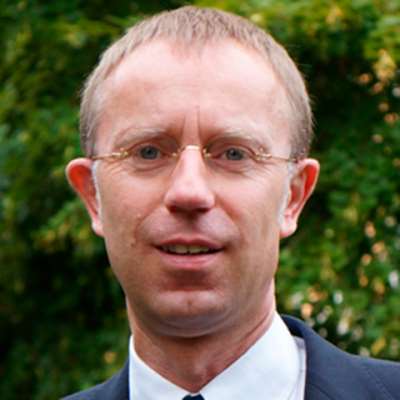
Dr. Sebastian Rimestad is a Research Fellow at the Institute for the Study of Religions , University of Leipzig. His work focuses on Orthodox Christianity, religious history of Eastern and Northern Europe, religious conversion, religion and politics in modern societies, and religious minorities in Europe. Current affiliation: University of Leipzig Education: Habilitation (2019), PhD (2011), MA in Religious Studies (2007) and Politics & IR (2004) Research interests include confessional identity formation in 18th-century Poland-Lithuania, religious conversion as political statement, and Russian Orthodox concepts of secularity. His work analyzes how religious identities have been shaped by external authorities and critiques of religious modernity. His scientific awards include the DFG Heisenberg Fellowship and Liselotte Kirchner Scholarship. He has taught courses on religious conversion and published extensively on Orthodox Christianity in Eastern Europe, Baltic states, and global contexts.
Prof. Dr. Johanna Rahner serves as Professor of Dogmatics, History of Dogma and Ecumenical Theology at the Catholic Theological Faculty of the Eberhard Karls University of Tübingen since 2014. She also holds the position of Director of the Institute for Ecumenical and Interreligious Research at the same institution. Her research interests span a wide range of theological topics including: Biblical Hermeneutics for Systematic Theology (especially Christology), Ecumenical theology and its ecclesiological problem areas, the relationship between religion, culture, educational processes, politics and society, interaction of contemporary culture with worship and theology of the sacraments, theoretical foundations of dialogue between world religions in a globalized world, relationship between reason and faith, theology and philosophy, theology and natural sciences, patchwork religiosity and subjective religious pluralism, and religiosity of children and adolescents with special consideration of youth and cult literature and pop music. Prof. Rahner's publications demonstrate a consistent focus on contemporary challenges facing the Catholic Church, ecumenical dialogue, and the intersection of theology with modern culture. Her work frequently addresses the Second Vatican Council's implications for contemporary theology, the relationship between science and faith, and the practical application of theological concepts in interreligious contexts. She has made significant contributions to understanding eschatology, ecclesiology, and the practical application of theological concepts in interreligious contexts. Wissenschaftlicher Beirat des Kuratoriums zur Vorbereitung des Reformationsjubiläums 2017 Ökumenischer Arbeitskreis evangelischer und katholischer Theologen Editorial-Board der Ökumenischen Rundschau Wissenschaftlicher Beirat der Europäischen Melanchthonakademie, Bretten Societas oecumenica AG der deutschsprachigen katholischen Dogmatiker und Fundamentaltheologen Europäische Gesellschaft für Katholische Theologie. Deutsche Sektion e.V. AGENDA – Forum katholischer Theologinnen e.V. Prof. Rahner has been involved in several significant research projects including Moralische Urteilsfindung im säkularen Diskurs als Herausforderung für die christlichen Konfessionen, Intergenerationelle LehrerInnen-Ausbildung, Theorie und Praxis des interreligiösen Lernens, Kirche und Bildungsregime in Lateinamerika, Reformationsgedenken und Ökumene, and Grundfragen theologischer Anthropologie in Auseinandersetzung mit aktuellen naturwissenschaftlichen Modellen. She leads the Institute for Ecumenical and Interreligious Research, which serves as a hub for scholarly research on contemporary challenges in interfaith relations and ecumenical theology.
Rhenish Friedrich Wilhelm University of BonnGermany
Prof. Dr. Folkart Wittekind is a Professor of Systematic Theology, Dogmatics, and Ethics at the University of Bonn since 2021, with his office at the University of Cologne. He directs the Ecumenical Institute of the Protestant Theological Faculty in Bonn. His academic journey includes a doctorate from Munich (1992), habilitation in Bochum (1999), and a second theological examination (2000). Key roles include acting professorships at Duisburg, Munich, and Bethel, alongside teaching assignments in Cologne. Research focuses on the philosophy of religion post-Enlightenment, Protestant dogmatics, cultural theology, and the intersection of theology with literature and art. He has held a Heisenberg Fellowship and authored extensively, with publications accessible via the provided link. Consultation hours are managed through the secretariat. Ecumenical Institute Roles: Intra-Protestant ecumenism, inter-denominational European ecumenism, and global intercultural theology. Education: 1981–1987: Studies in Protestant Theology and Philosophy (Tübingen, Munich) 1987–1989: Assistant at Tübingen Institute for Hermeneutics 1992–1996: Vicariate in Bochum His work bridges theological theory with cultural analysis, addressing modernity and secularization through literary and artistic lenses.
Prof. Dr. Christoph Markschies is a leading academic and theologian, serving as President of the Akademienunion (Union of German Academies of Sciences and Humanities) and the Berlin-Brandenburgische Akademie der Wissenschaften (BBAW). He holds a professorship at Humboldt-Universität zu Berlin, specializing in early Christian history, Gnosticism, and late antiquity. His work bridges theological scholarship with institutional leadership, emphasizing interdisciplinary research and academic freedom. Education: Advanced training in theology and religious studies, reflected through his extensive publications and academic roles. His research focuses on early Christian texts, church history, and the intersection of religion and culture in antiquity. Research interests include the development of Christian doctrines, Jewish-Christian relations, and the methodologies of theological historiography. Recent projects address the legacy of theologians like Ernst Troeltsch and the dynamics of early ecumenical councils. He advocates for science communication in schools and has been vocal on academic governance, emphasizing ethical use of technology and sustainability in research practices. His leadership roles include steering initiatives like the 'Geisteswissenschaft im Dialog' program, fostering dialogue between scholars and the public.
Prof. Dr. Hilary Anne-Marie Mooney serves as Professor of Catholic Theology and Religious Education at the University of Education Weingarten, Germany, a position she has held since her 2009 appointment. Previously, she was appointed "außerplanmäßige Professorin" at Albert-Ludwigs-Universität Freiburg in 2006 and held visiting professorships at Weingarten (2007-2008). Her academic career spans multiple institutions including Boston College, Eberhard-Karls-Universität Tübingen, and Albert-Ludwigs-Universität Freiburg, where she conducted habilitation research from 1998-2000 and 2001-2005. Education: Bachelor of Arts in Philosophy, Ancient Greek and Latin, University College Dublin Baccalaureate in Divinity in Philosophy and Theology, Milltown Institute of Theology and Philosophy, Dublin Doctorate in Theology, Phil.-theol. Hochschule Sankt Georgen, Frankfurt am Main (1991) Habilitation in Dogmatics, History of Doctrine, and History of Theology, Albert-Ludwigs-Universität Freiburg (2003) Dr. Mooney's research centers on systematic theology and historical theology, with specialized expertise in ancient church history and medieval theology. She is internationally recognized for her groundbreaking work on Johannes Scottus Eriugena's theological framework, particularly regarding theophany and theological anthropology as demonstrated in her monograph Theophany: The Appearing of God According to the Writings of Johannes Scottus Eriugena (2009). Her scholarship consistently bridges patristic sources (especially Gregory of Nyssa) with contemporary theological challenges, exploring themes of imago Dei, eschatology, and mystical theology within early Christian thought. She maintains active dialogue with modern theologians including Hans Urs von Balthasar and Bernard Lonergan, examining intersections between theological aesthetics and anthropological foundations. Analysis of her 15 most recent publications reveals three dominant research trajectories: first, sustained engagement with Eriugena's thought across multiple dimensions including creation theology, wisdom literature, and sin theology; second, comparative studies of patristic writers (particularly Gregory of Nyssa) on eschatological themes and imago Dei concepts; third, contemporary applications of historical theology to issues of pluralism, tolerance, and scriptural interpretation. Her methodological approach consistently integrates historical-critical analysis with hermeneutical reflection, demonstrating how ancient theological frameworks address modern anthropological and ecclesiological questions. Scientific Awards: Lonergan Fellowship at Boston College (1990) DFG Habilitation Fellowship (1998-2000) Dr. Mooney has provided significant academic leadership through her service on the executive board of the German section of the European Society for Catholic Theology (2015-2023) and editorial roles including co-editing the series Ökumenische Religionspädagogik (2009-present). While specific grant details beyond her DFG fellowship are not enumerated, her sustained research output indicates continuous funding support. Her teaching encompasses systematic theology, historical theology, and religious education methodology, though specific student mentorship details are not provided in the source text. She maintains active international scholarly engagement through presentations at major conferences including the International Conference on Patristic Studies in Oxford and the Annual Lonergan Workshop at Boston College. Her collaborative work extends across European theological networks, particularly through her involvement with Pro Oriente publications and the European Society for Catholic Theology. Current research directions appear focused on integrating patristic anthropology with contemporary theological challenges, as evidenced by her 2024 publications addressing memoria, transformation, and biblical-doctrinal roots within modern theological frameworks.
Felix Imer is an Assistant Professor in Church History at Augustana University, Neuendettelsau, specializing in the reception of Luther in liberal theology and confessional studies. He is currently pursuing a PhD scholarship funded by the Hanns Seidel Foundation (since November 2022) with a focus on Martin Rade's Christian worldview and Luther's influence in Free Protestantism during the Empire. Research Interests: Luther research, Trinitarian and Christological disputes of the Early Church, Christianity in Late Antiquity to Early Middle Ages, and ecumenical theology (including Eastern Churches and Roman Catholicism). Publications: His 2020 work on Mariological aspects in Pope Francis's theology highlights interdisciplinary intersections between Protestant and Catholic theological frameworks. Memberships: Evangelical Union of Bavaria Luther Society Association for Reformation History Education: Completed Protestant theology studies at Augustana University of Neuendettelsau, Universidad Bíblica Latinoamericana (San José), and Georg-August University of Göttingen. Passed the ELKB Theological Entrance Examination (2022).
Professor Franz-Josef Bormann is Chair of Moral Theology at the Faculty of Catholic Theology, University of Tübingen, where he has held a professorship since 2008. His academic career spans decades of dedicated work at the intersection of theology, philosophy, and ethics, with particular emphasis on medical ethics, bioethics, and justice theory. Bormann has held significant positions including serving as managing editor of the Journal for Medical Ethics (ZfmE), member of the German Ethics Council (2016-2024), and member of the Central Ethics Commission at the German Medical Association (2010-2022). His research interests focus on fundamental questions of justice theory, current conflict fields in medical and bioethics, and philosophical and theological problems of rational moral justification. Bormann's scholarly work demonstrates a consistent engagement with the intersection of Catholic moral theology and contemporary ethical challenges, particularly in the fields of end-of-life ethics, reproductive technologies, and social justice. Bormann's recent publications reveal a strong focus on contemporary ethical debates including euthanasia, assisted suicide, migration ethics, digital transformation ethics, and the moral implications of the Ukraine war. His work consistently applies Catholic moral theology to contemporary social and medical issues while engaging deeply with philosophical traditions, particularly Thomistic natural law theory and contemporary philosophical ethics. Managing Editor, Journal for Medical Ethics (ZfmE) Member, German Ethics Council (2016-2024) Member, Central Ethics Commission at the German Medical Association (2010-2022) Member, Ethics Council of the Archdiocese of Paderborn Advisor to the German Bishops' Conference (Subcommittee on Bioethics) Bormann has made significant contributions to moral theology through his numerous monographs, edited volumes, and over 100 scholarly articles. His work demonstrates deep engagement with both classical theological sources and contemporary philosophical discourse, particularly regarding John Rawls' theory of justice and its relationship to Catholic social teaching. His scholarship bridges academic theology with practical ethical guidance for healthcare professionals and policymakers.
Elisabeth Gräb-Schmidt is a Senior Professor at the Eberhard Karls University of Tübingen, where she served as Professor of Systematic Theology and Director of the Institute for Ethics from 2010 to September 2024. She holds key roles in national ethics bodies, including the German Ethics Council (since 2018) and the Board of Trustees of the Max Planck Institute for Molecular Genetics (since 2024). Her academic career includes professorships at the University of Giessen (2002–2010) and directorship at the Institute for Philosophy of Religion in Frankfurt (2007–2009). She earned her doctorate (Dr. theol.) in 1992 after theological studies at Göttingen, Heidelberg, Berkeley, and Mainz (1975–1982), with ecclesiastical exams in 1982 and 1984. Her research bridges theology, ethics, and philosophy, focusing on: Foundations of ethics in science, technology, and bioethics Interdisciplinary dialogue between theology and natural sciences Religion theory and interreligious engagement Cultural hermeneutics and existential philosophy Her recent publications (2022–2024) address contemporary ethical challenges, including artificial intelligence in education, assisted suicide, religious pluralism, and feminist theology. Works exhibit strong interdisciplinary engagement with philosophy, political theory, and social ethics. Awards include the Schönthal-Preis (1982), DFG scholarships (1997–2000), and fellowships at the Max Weber Center (2013, 2016/17). She edits major theological journals ( Zeitschrift für Theologie und Kirche ; Zeitschrift für Evangelische Ethik ) and directs research networks like the European Science-Religion Dialogue (SR21) and the International Research Group on Democracy and Ethics.
Jan Reitzner is a Research Associate at the Chair of Church History I (Institute for Late Middle Ages and Reformation) at Eberhard Karls University of Tübingen. He holds a Dr. theol. (2022) from Georg August University of Göttingen and was awarded the 2023 Doctoral Award of the University Association. As an ordained volunteer pastor in the Evangelical Lutheran Church of Hanover (since 2024), he combines academic and pastoral roles. His research focuses on medieval monasticism, liturgical practices, and Reformation-era theology, with particular attention to 12th-century French monasticism and the Gregorian Mass. He has held a DFG-funded research position (2018-2021) and served as a vicar in Bexhövede parish (2021-2023). Education PhD (Dr. theol.) in Protestant Theology, Georg August University Göttingen (2022) Scholarship holder, Konrad Adenauer Foundation (2013-2018) Studies in Protestant Theology at Universities of Wuppertal, Tübingen, Jerusalem, and Göttingen (2013-2018) Church examination, Evangelical Lutheran Church of Hanover (2018) High school diploma, Carolinum High School Osnabrück (2013) Research Interests Dr. Reitzner's work bridges medieval monastic studies and early modern Reformation history. He examines how monastic traditions influenced late medieval liturgical practices ( Die Verba Seniorum monograph, 2022) and explores theological debates in Reformation-era Europe. His recent work on the Gregorian Mass (ZKG 2024) highlights liturgical developments in 12th-century France. He also engages in systematic theology through translations of Bruce McCormack's works on Barthian theology. Publications Trends His publications emphasize interdisciplinary approaches: combining historical analysis (e.g., medieval liturgy studies) with systematic-theological reflections (e.g., translations of McCormack). Recent reviews demonstrate expertise in late medieval piety, Reformation-era doctrine, and early modern European church networks. Awards & Grants Doctoral Award of the University Association (2023) DFG Project: Reception of Apophthegmata Patrum (2018-2021) Labs/Teams Member of the Institute for Late Middle Ages and Reformation at Tübingen. Active in scholarly societies including the Wissenschaftliche Gesellschaft für Theologie (WGTh), Mediävistenverband, and Societas mediaevistica evangelicorum theologicorum.
Dr. Martin Illert serves as an Adjunct Professor (Apl. Prof.) at the Martin Luther University Halle-Wittenberg's Faculty of Theology, specifically within the Seminar for Eastern Church Studies. His academic journey includes a Doctorate (1997) and Habilitation (2015) in Eastern Church Studies, focusing on theological dialogues between the Evangelical Church in Germany (EKD) and Orthodox Patriarchates since 1959. He has held teaching positions since 2014 and became a Privatdozent in 2016. Additionally, he was appointed an Adjunct Professor at the Lviv Theological Academy in 2016. Current roles include Programme Executive for the Faith and Order Commission at the World Council of Churches (Geneva) and teaching at the Ecumenical Institute Bossey since August 2024. Prior roles include leadership at the EKD's Department for Orthodoxy and Ecumenism (2012–2019) and editorial work for the Ecumenical Review (2014–2019). Research interests encompass Eastern Christian theology, ecumenical dialogues, patristics, and church history with a focus on Balkan and Slavic religious contexts. Major works include studies on John Chrysostom, Bogomilism, and bilateral Orthodox-Protestant dialogues. His awards include the Priest’s Cross from the Ethiopian and Serbian Orthodox Churches (2016), the Gold Medal from Yerevan State University (2017), and the Ehrenplakette from Arad University (2023). He has contributed to academic projects like the "Bogomilism in History and the Present" initiative funded by Bulgaria's Ministry of Education. Publications span monographs, edited volumes, and over 100 articles in journals like ThLZ , Eastern Church Studies , and Revista Teologia . Key projects include co-editing the Eastern Church Identities series and serving on editorial boards for theological journals.
Hermann Lichtenberger is Professor of New Testament and Ancient Judaism at the University of Tübingen, where he also directs the Institute for Ancient Judaism and Hellenistic Religious History. Born May 25, 1943, in Neu Werbas, Hungary, he holds a doctorate (1974) and habilitation (1986) in theology. His academic trajectory includes formative roles at Qumran Research Centers in Heidelberg and Marburg, professorial positions at the University of Münster (1988-1993), and leadership at Tübingen since 1993. Education: 1964-1970: Protestant Theology and Semitic Languages at Universities of Erlangen and Heidelberg Research Focus: Lichtenberger specializes in Dead Sea Scrolls (Qumran), Pauline anthropology, and New Testament exegesis within Second Temple Jewish contexts. His work bridges ancient Jewish thought and early Christian theology, with emphasis on apocalyptic literature, demonology, and messianic expectations. Recent publications analyze textual interconnections between Qumran manuscripts and Christian scriptures, anthropological themes in Pauline epistles, and historiographical methods in biblical narratives. Publications Trend (2000-2005): His 15 most recent articles reflect sustained engagement with Dead Sea Scrolls hermeneutics (demonology, messianism), New Testament exegesis (Romans, Matthew, Revelation), and Jewish-Christian theological interfaces. Common themes include angelology, temple symbolism, and the reception of Jewish texts in early Christianity. Institutional Leadership: Director, Institute for Ancient Judaism and Hellenistic Religious History (1993–present) Former Director, Institutum Judaicum Delitzschianum (1988-1993)
Sylvie Avakian is a Lecturer in Systematic Theology at the Faculty of Protestant Theology, University of Tübingen , since April 2019. She was ordained to the pastoral ministry in the Evangelical Church of Württemberg in 2021 and completed her habilitation at Tübingen University (2018-19) with the thesis Being Toward Death: Heidegger and the Orthodox Theology of the East . Her academic journey includes a Doctorate in Theology (2011) from Heidelberg University, a Master in Theology (2007), and a Bachelor in Theology and Christian Education (1998) from the Near East School of Theology (NEST), Beirut. Education: Doctorate (2011), University of Heidelberg Master (2007), Near East School of Theology Bachelor (1998), Near East School of Theology Her research focuses on Systematic Theology, Interreligious Dialogue, Eastern Orthodox Thought, Intercultural Theology, Secular Christianity, and Post-structuralism , with a particular interest in Christian-Muslim Dialogue and the Philosophy of Christian Education . Her recent publications explore themes like Heidegger’s existential philosophy in relation to Orthodox theology, divine hospitality , and theology of the Other in Middle Eastern contexts. She has taught courses ranging from Introduction to Systematic Theology to Eastern Orthodox Theology and Spirituality , reflecting her interdisciplinary approach. Key scientific recognitions include the Teach@Tübingen scholarship (2018-19) under Tübingen’s Excellence Strategy and the Bread for the World scholarship (2011) during her dissertation work. Her sermons and lectures (e.g., The Spirit of God: The Love That Burns Within Us , 2025) demonstrate her engagement with practical theology and spiritual reflection.
Prof. Dr. Peter Bubmann serves as Lecturer at the Seminar for Practical Theology and Religious Education at Friedrich-Alexander-Universität Erlangen-Nürnberg (FAU). His academic work spans practical theology, religious education, church music, and the theological concept of 'art of living.' He maintains an active research profile with multiple publications each year and leads significant academic projects. His research interests focus on the intersection of theology with contemporary culture, particularly examining how music, aesthetics, and everyday practices contribute to religious formation and spiritual development. Bubmann explores the 'art of living' as a theological concept that bridges religious education, ethics, and practical spirituality in modern contexts. His work demonstrates particular attention to church music as a medium for religious experience and community formation. Bubmann has recently edited significant volumes including 'Kunst.Raum.Religion' (2024) and co-edited '(Un-)Endlich Leben. Theologie im Dialog mit Philosophie, Pädagogik und Therapeutik' (2025). His publication pattern shows consistent scholarly output across multiple subfields, with recent emphasis on theological aesthetics, religious pedagogy, and the relationship between music and spirituality. His work often bridges theoretical theology with practical applications for church life. Since fall 2024, Bubmann has served as Academic and Theological Director of the international interreligious music festival 'Musica sacra international' in Marktoberdorf, working with artistic director Bettina Strübel and managing director Prof. Ulrich Wegenast. He is preparing for the next festival in Pentecost 2026 and organizing a symposium on 'Music as a Religious Experience. Resonances of the Sacred' at the Protestant Academy in Tutzing in October 2025. His research demonstrates strong engagement with the Deutsche Forschungsgemeinschaft (DFG), having initiated a research network on theological art of living that produced multiple symposia, including one in March 2025 on 'art of living in other religions and in interreligious dialogue' at the Protestant conference center Wildbad Rothenburg.
Prof. Dr. Thomas Hahn-Bruckart is Professor of Church History at the Faculty of Theology, University of Rostock, a position he has held since 2021. He previously served as a Research Associate at Johannes Gutenberg University Mainz (2011–2019), the Institute of European History in Mainz (2010–2011), and the University of Hamburg (2020–2021). He completed his habilitation (Dr. theol. habil.) at Johannes Gutenberg University Mainz in 2020 and was a Private Lecturer there. His academic journey began with studies in Protestant Theology at the University of Bonn, the Dormition Abbey in Jerusalem (on a DAAD scholarship), and the University of Kiel, where he earned his doctorate (Dr. theol.) in 2011, winning the Faculty Prize for his dissertation. His research focuses on Church and Dogmatic History, with particular emphasis on Pietism , revival movements , free churches , Reformation history , transconfessional and transatlantic religious exchange , and the cultural history of religious emotions . He has made significant contributions to the study of 19th-century transatlantic evangelical networks, the history of tract societies, and the spatial and social dynamics of early Reformation communities. The trends in his publications reveal a consistent engagement with marginalized religious movements, the formation of religious identities, and the interplay between theology and social context. His work spans monographs, critical editions, editorial leadership (e.g., Pietism Handbook ), and numerous scholarly articles in leading journals and collected volumes, covering themes from emotional cultures in Methodism to church-state relations in free church theology. Faculty Prize of the Christian-Albrechts-University of Kiel for Dissertation Prof. Hahn-Bruckart has been actively involved in academic administration, serving as Vice Dean and Dean of Studies at the Faculty of Theology, University of Rostock, from 2021 to 2024. He has led and contributed to multiple editorial projects, including bibliographies on Free Church theology and co-editing the Ebernburg-Hefte . His work reflects a strong commitment to both scholarly research and the dissemination of theological knowledge through teaching, leadership, and public engagement. He is currently on part-time parental leave and plans a research semester in the summer semester of 2025. He is engaged in ongoing editorial and research collaborations, particularly in the fields of Pietism and Reformation history, and continues to publish extensively in German and international academic venues.
Prof. Dr. Julia Knop is Professor of Dogmatics at the Catholic Theological Faculty of the University of Erfurt, where she also serves as Vice President for Academic Affairs. She leads eTeach Erfurt and the European Graduate School Theology in religious, cultural and political Processes of Transformation, and acts as Academic Advisor for the Master's degree in Catholic Theology. Her leadership extends to the University Council as an advisory member. Her research focuses on the Synodal Path of the Catholic Church in Germany and worldwide, women's and gender studies, religious discrimination against women and LGBTIQ people, the (ir-)relevance and (im-)plausibility of the question of God in the present, and ecumenical theology. Her work critically examines power structures, gender inequality, and reform possibilities within the Catholic Church. Knop's extensive publication record reveals a strong trend toward analyzing synodal processes as vehicles for church reform, with particular attention to gender justice, LGBTQ+ inclusion, and restructuring ecclesiastical authority. Her scholarship bridges academic theology with practical church concerns, often addressing contemporary crises in Catholicism through both theoretical frameworks and concrete proposals for change. She actively participates in numerous church reform initiatives and committees, including serving as Chair of the German Ecumenical Study Committee since November 2024, as a member of the Synodal Committee of the Catholic Church in Germany since 2023, and as an elected member of the Central Committee of German Catholics from 2021-2025. Her engagement with practical church issues extends to editorial roles with journals like Apulia Theologica and the Journal of Philosophy and Theology. Prof. Knop leads significant research projects including 'God's Strong Daughters: Religious Discrimination Against Women in the Catholic Church,' 'Blessing what God has created: Discrimination against LGBTIQ+ people in the teaching, liturgy, and life of the Catholic Church,' and 'Confessional Studies and Ecumenism: Catholicism in the 21st Century.' Her work demonstrates a commitment to transforming theological discourse into practical pathways for greater inclusion and justice within religious institutions.