Jojy John is a Post Doctoral Fellow at Clemson University's Department of Biological Sciences within the College of Science. He holds a Ph.D. in Microbial Ecology from SIST, Chennai, India, and has expertise in OMICs technologies and environmental microbiology. Education: Ph.D., Microbial Ecology, SIST, India (2021) M.Sc., Microbiology, MG University, India (2014) B.Sc., Microbiology, MG University, India (2012) Jojy's research focuses on microbial ecology, particularly how microbes interact with ecosystems through OMICs methods. Current work explores functional redundancy in microbiomes using multi-OMICS and mathematical modeling, with applications in marine environments, bioremediation, and extremophile adaptation. His recent publications highlight trends in microbial ecology across diverse areas: deep-sea biodiversity analysis (2025), microplastics in ocean sediments (2025), and halophilic bacterial applications in biotechnology (2020). Studies span environmental stress responses in aquatic organisms (2020, 2017), bioremediation of synthetic dyes (2020), and nitrogen pollution management (2020). Research Group: Collaborates with the Campbell Lab at Clemson University.
Dr. Laura Leff is a Professor and Chair at Kent State University's Environmental Science and Design Research Institute. Her research focuses on microbial ecology in aquatic ecosystems, particularly bacterial responses to environmental stressors like urbanization, pollution, and habitat changes. She has held editorial roles for journals including *Applied and Environmental Microbiology* and *Microbial Ecology*, contributing to academic discourse in her field. Dr. Leff earned her Ph.D. from the University of Georgia. Her research projects include studying bacterial communities in acid mine-impacted streams, agricultural streams, and wetlands, using molecular biology and microscopy to explore microbial community structure and function. She investigates topics such as denitrification dynamics, microplastic colonization, and antibiotic resistance in urban stream biofilms. Dr. Leff has secured funding from NSF, NASA, and the EPA. Her work bridges microbiology and ecology, addressing pressing environmental issues like water quality and bioremediation. Recent studies highlight her focus on emerging contaminants, microbial interactions in biofilms, and the impacts of human activities on freshwater ecosystems. Key Affiliations: American Society for Microbiology, International Society for Microbial Ecology. Grants: NSF, NASA, EPA grants for projects on microbial ecology and bioremediation. Editorial Roles: *Applied and Environmental Microbiology* (2001–2011), *Microbial Ecology* (2001–2017).
Kathryn Docherty is a Professor in the Department of Biological Sciences at Western Michigan University. Her research focuses on microbial ecology and restoration ecology, particularly examining how human activities impact microbial community diversity and functionality. She leads projects on prairie restoration, soil carbon storage, and microbial processes in ecosystems. Her work integrates field sampling, sequencing, and rate measurements to guide land management practices. She advises graduate students through her lab group, accessible via her research website. Research Interests: Her studies emphasize microbial responses to environmental changes, including fire, nitrogen deposition, and climate shifts. She explores strategies to enhance soil health and ecosystem resilience through microbial restoration. Her lab also investigates airborne microbial dynamics and urbanization impacts. Publications: Recent work highlights microbial responses to prairie restoration, fire effects on soil communities, and collaborative frameworks for ecological observatories. Her articles address topics like soil carbon dynamics under climate change and microbial adaptation to environmental stressors. Advising & Grants: Docherty mentors students pursuing PhD/Master’s degrees in microbial ecology. Her lab collaborates on projects like the National Ecological Observatory Network (NEON), focusing on microbial roles in ecosystem processes. Labs/Teams: The Docherty Microbial Ecology Lab (docherty_microecolab) actively researches microbial ecology and restoration strategies, with findings published in journals like Microbiome and Global Change Biology .
Gunter Fischer is the Senior Vice President of Science & Conservation at the Missouri Botanical Garden , a leading institution in botanical research and biodiversity conservation. He holds a Ph.D. in Botany from the University of Vienna and has additional studies in Information Technology and Botany/Chemistry from the University of Salzburg. His research focuses on bridging science and conservation practices, with expertise in forest restoration, plant taxonomy, and molecular ecology. Education: Ph.D. in Botany, University of Vienna (2007): Study on orchid speciation in Madagascar and the Mascarenes. M.Sc. in Botany with focus on Chemistry and Genetics, University of Salzburg (2001). Additional studies in Information Technology at the University of Salzburg (2002–2005). Research Interests: His work spans conservation strategies, forest dynamics, and plant systematics. Key areas include: Botanic garden and nature reserve management. GIS applications in ecological research. Evolutionary botany and molecular ecology of orchids. Wildlife forensics and biodiversity informatics. His articles highlight contributions to global conservation networks, such as the ForestGEO initiative, and address threats to endangered species like Aquilaria sinensis and coastal sharks. His work on CAM evolution in orchids and forest fragmentation underscores interdisciplinary approaches to biodiversity challenges. Advising & Contributions: No students or grants are explicitly listed. His leadership at the Missouri Botanical Garden involves coordinating large-scale conservation projects and global collaborations through platforms like ForestGEO. Labs/Teams: He leads the Center for Conservation & Sustainable Development , fostering projects on forest dynamics, herbarium curation, and wildlife trade monitoring.
Dr. Kendall Kahl is Assistant Professor and Extension Specialist in Sustainable Organic Agriculture within the University of Idaho's College of Agricultural and Life Sciences. Her research program examines soil biological communities and ecosystem functions to advance sustainable farming practices in Pacific Northwest dryland systems. Research investigates earthworm ecology as soil health indicators, fungal community responses to tillage regimes, and integrated weed management strategies for organic production. Extension activities translate findings to agricultural stakeholders through field demonstrations and soil health monitoring protocols.
Dr. Hannah K. Frank is an Assistant Professor at Tulane University’s School of Science & Engineering. Her research focuses on the ecology and evolution of host-pathogen interactions in bats, integrating fieldwork, genomics, and immunology to understand how habitat disturbances impact immune systems. She leads the Frank Lab, which studies bat immunity, particularly B and T cell receptor diversity, using a OneHealth approach. Dr. Frank earned an AB summa cum laude from Harvard College in 2009, followed by a PhD in Biology from Stanford University (2017) and a postdoctoral fellowship in immunology at Stanford School of Medicine. Her research interests include evolutionary ecology, molecular evolution, and disease ecology, with a focus on bats as keystone species. Recent work explores immunoglobulin diversity in Jamaican fruit bats and the implications of dual IGH loci in vesper bats. She has secured grants from NSF, NIH, and Research Corporation for projects on bat immune responses and rabies dynamics. Dr. Frank advises PhD candidates including Mika O’Shea, Andrea Calderon Brito, and Juniper Rosen, while mentoring undergraduates like Phoebe Reuben, who won awards for fieldwork. Her lab collaborates with institutions like Colorado State University and Stanford, advancing understanding of bat immune systems’ roles in ecosystem health and disease spillover prevention.
Brian Hayden is an Associate Professor and SINLAB Director in the Biology Department at the University of New Brunswick. He holds a PhD from University College Dublin (2009) and completed postdoctoral research at Queens University Belfast and University of Helsinki. His research examines trophic mechanisms in aquatic ecosystems using stable isotopes, diet analyses, and quantitative ecology. Research spans global aquatic systems, focusing on climate change impacts on community structure. Current projects include stable isotope studies of American lobster in the Bay of Fundy and Atlantic salmon marine ecology. Work integrates field studies with big-data approaches to analyze biodiversity-ecosystem function relationships globally. Recent publications explore climate-driven changes in subarctic lake communities, mercury bioaccumulation patterns, and niche partitioning in fish and mammal species. Teaching includes Introduction to Ecology and Trophic and Food Web Ecology courses.
Clint Penick is an Assistant Professor of Insect Ecology in the Department of Entomology & Plant Pathology at Auburn University's College of Agriculture. His research focuses on understanding insect ecology and behavior, particularly in urban environments, and translating biological insights into engineering solutions through biomimicry. Key areas include ant diversity patterns, climate change impacts on arthropods, and bio-inspired material design. Penick's work integrates field ecology, laboratory experiments, and computational modeling. He explores how ants adapt to urbanization, investigates antimicrobial defenses in social insects, and studies structural properties of biological materials like cactus wood and marine sponges. His research bridges entomology with engineering, contributing to advancements in robotics, meta-materials, and sustainable design. Notable projects include studying the invasive 'ManhattAnt' (Lasius emarginatus) in NYC, developing motion compensators for insect-like robots (TOLC), and analyzing form-function relationships in natural structures like the Venus flower basket. He collaborates across disciplines, involving engineers, computer scientists, and artists to apply biological principles to human challenges. Penick advises graduate and undergraduate students in his research areas, though specific advisees are not listed here. His work has been supported by various grants and collaborations, though grant details are not explicitly provided in the text. He maintains an active lab focused on ecological and applied entomology projects.
James Tweedley is a Senior Lecturer at Murdoch University, affiliated with the School of Environmental and Conservation Sciences within the College of Environmental and Life Sciences. He is also part of the Centre for Sustainable Aquatic Ecosystems and Harry Butler Institute. His research focuses on aquatic ecosystem health, fisheries management, and restoration strategies, with particular expertise in estuarine ecology and benthic macroinvertebrates. Education: Tweedley holds a BSc (Marine Biology) from the University of Portsmouth (2005), an MRes in Marine Biology from the University of Plymouth (2006), and a PhD in Marine Science from Murdoch University (2011). Research Interests His work spans two core areas: (1) understanding ecological linkages between fish/invertebrate communities and environmental drivers to develop estuarine health indices, and (2) fisheries management including aquaculture-based enhancement, artificial reefs, and socio-economic dimensions of fishing. Recent projects address eutrophication mitigation via mussel habitat restoration, barrier impacts on fish migration, and invasive species effects on ecosystems. Key Contributions Tweedley has pioneered methods for assessing fish communities in hypersaline environments and evaluated artificial reef effectiveness in temperate waters. His work on mass mortality events and tidal exclusion barriers provides critical insights for conservation planning. Awards - Young Tall Poppy and West Australian Young Tall Poppy of the Year (2021) - Recognizing outstanding research and science communication. Grants & Collaboration Funded projects include shellfish reef restoration studies and small-scale fisheries management in Indonesia. Collaborates with institutions like the Australian Institute of Policy and Science and local Indigenous communities for culturally significant estuary monitoring. Labs/Teams Leads the Sustainable Aquatic Ecosystems research group and contributes to the Harry Butler Institute’s coastal resilience initiatives.
Andrew Du is an Assistant Professor in the Department of Anthropology and Geography at Colorado State University, within the College of Liberal Arts. His research focuses on the ecology of ancient hominins and the biases in the fossil record affecting paleoecological interpretations. He employs quantitative methods to analyze fossil assemblages and infer hominin spatiotemporal distributions. Education: Ph.D. and M.Phil. in Hominid Paleobiology, The George Washington University B.S. in Evolutionary Anthropology, Rutgers University Research Interests: Paleoanthropology, human evolution, paleoecology, macroecology, macroevolution, taphonomy, Plio-Pleistocene eastern Africa, and quantitative methods. Current projects include studying time-averaging effects in fossil assemblages, large mammal diversity in the Omo-Turkana Basin, and modeling hominin distributions. Teaching & Labs: Teaches courses on human origins, evolution, and data analysis. Maintains a lab with clear cultural norms and mentorship expectations outlined in accessible documents. Active in developing graduate-level R tutorials for statistical methods.
Agneta Andersson is a Professor at Umeå University's Department of Ecology and Environmental Science, and affiliated as Professor at the Umeå Marine Sciences Centre (UMF). She leads research projects in marine ecology and coordinates the strategic EcoChange program. Her work focuses on microbial ecology, eutrophication impacts, and climate change effects on marine ecosystems. She supervises PhD student Meifang Zhong and collaborates with postdoc Alef dos Santos and lab members Sonia Brugel, Kesava Ramasamy, Karolina Eriksson, and Li Zhao. Research Interests Her research explores microbial community dynamics, predator-prey interactions in aquatic systems, and the ecological consequences of terrestrial organic matter inflow. Key topics include mercury contamination in sediments, phytoplankton responses to environmental changes, and the role of dissolved organic matter (DOM) in coastal ecosystems. She investigates how climate-driven environmental shifts affect food web efficiency and toxin bioaccumulation patterns. Current Projects Scientific Coordinator for the strategic EcoChange program Leading a 2025–2026 project assessing eutrophication threats in the Bothnian Bay Developing DNA-based monitoring tools for marine phytoplankton Grants & Collaborations Her work is supported by grants funding studies on Baltic Sea microbial diversity and coastal DOM dynamics. She contributes to international initiatives like the CoastDOM database and collaborates with institutions globally to address climate change impacts on aquatic ecosystems. Labs & Teams Her research group focuses on microbial ecology and environmental monitoring. The lab emphasizes interdisciplinary approaches combining molecular techniques, field observations, and experimental mesocosm studies to address pressing environmental challenges.
Sebastian Diehl is a Professor at Umeå University's Department of Ecology, Environment and Geoscience. His research focuses on mathematical modeling of aquatic ecosystem dynamics, with particular emphasis on consumer-resource interactions and climate change impacts on northern lake ecosystems. Current affiliations: Umeå University (Department of Ecology, Environment and Geoscience) Previous affiliations: Ludwig-Maximilians-Universität München (Professor of Aquatic Ecology) Academic background: Biology undergrad from University of Göttingen, PhD in Animal Ecology from Umeå University (1994) Research interests center around aquatic ecosystem dynamics in response to environmental change, including: Climate change effects on lake ecosystems (temperature and terrestrial nutrient inputs) Mathematical modeling of consumer-resource interactions Benthic-pelagic coupling in nutrient and energy flows Phytoplankton-zooplankton dynamics under environmental stressors Trophic interactions in stream and lake systems Stoichiometric constraints on ecosystem function His recent publications (2025-2020) demonstrate an integrated approach combining mathematical modeling with experimental validation through field studies and lab experiments, focusing particularly on: Climate-induced regime shifts in lake ecosystems Stoichiometric mismatch in warming systems Functional response modeling Vertical niche partitioning in plankton Resource acquisition trade-offs Browning impacts on primary producers Administrative roles include: Final examiner for PhD education Chair of Umeå Marine Science Centre advisory council Steering group member of Integrated Science Lab (IceLab)
Dr. Eoin O'Gorman is a Senior Lecturer in the School of Life Sciences at the University of Essex. His research investigates the impacts of global change across multiple levels of ecological organisation, from individual metabolism to ecosystem processes, with a particular focus on food web dynamics and body size as a functional trait. BSc, University College Cork (2004) PhD, University College Cork (2009) Current research projects include: Warming effects on trophic interactions Anthropogenic stressors in marine and freshwater systems Body size scaling in ecological networks Food web stability under climate change Recent work demonstrates how warming alters plankton body-size distributions (2025), simplifies freshwater food webs through multiple stressors (2025), and reduces trophic diversity in high-latitude ecosystems (2024). His studies span marine, freshwater, and terrestrial habitats, seeking universal responses to environmental change. Current grants include: 2024 WebDNA: Food web reconstruction through environmental DNA analysis (Leverhulme Trust) 2023 Predicting Impacts of Global Environmental Change on Ecological Networks (NERC) 2022 ORBIT: Offshore Renewables and Benthic Communities (NERC) Supervises PhD candidates studying: Zelin Chen: Offshore structures' impacts on North Sea biodiversity Patrick Eskuche Keith: Southern Ocean food web dynamics Anamika Poyil: Environmental biology of marine communities
Joel E. Cohen is the Abby Rockefeller Mauzé Professor at The Rockefeller University, where he leads the Laboratory of Populations. With over five decades of research experience, Cohen has pioneered innovative mathematical approaches to study biological populations and variability. His work bridges mathematics, biology, and environmental science, fundamentally changing how scientists understand population dynamics and the significance of biological variability. Dr. Cohen's research focuses on developing new mathematical tools to address population problems in demography, epidemiology, and ecology. He has made seminal contributions to the understanding of heavy-tailed distributions that describe extreme events like hurricanes and disease outbreaks, challenging traditional statistical approaches. His laboratory has conducted groundbreaking research on the spatial distribution of human populations in relation to geophysical factors, with unexpected practical applications ranging from soap formulation to semiconductor manufacturing. Cohen has also developed mathematical models for Chagas disease control in rural Argentina and created algorithms to predict international migration patterns. Analysis of Cohen's recent publications reveals a sustained focus on Taylor's law of fluctuation scaling, population dynamics, and ecological statistics. His work consistently demonstrates how abstract mathematical concepts can transform our understanding of biological systems, from cellular processes to global population trends. The research spans theoretical mathematics to practical applications in disease control, conservation biology, and environmental management. Olivia Schieffelin Nordberg Prize for excellence in writing in the population sciences (March 1997) Gheorghe Lazar Prize of Romanian Academy (December 2000) As director of the Laboratory of Populations, Cohen has led research on human population growth, infectious diseases, food webs, and international migration. His methods for assessing the uncertainty of population projections have been applied in court cases for predicting future claimants of asbestos-related diseases. Cohen's laboratory has collaborated with the United Nations Population Division on migration studies and developed mathematical models that account for more than half of the variability in annual migration numbers among 229 countries. Current research directions include understanding how demographic, economic, and cultural changes interact with Earth's physical, chemical, and biological environments. The Laboratory of Populations employs a multidisciplinary approach that combines mathematical modeling, statistical analysis, and field studies to address complex population issues. Their work exemplifies how basic quantitative research on populations frequently yields unexpected practical applications, demonstrating the profound connections between theoretical mathematics and real-world challenges in public health, environmental science, and resource management.
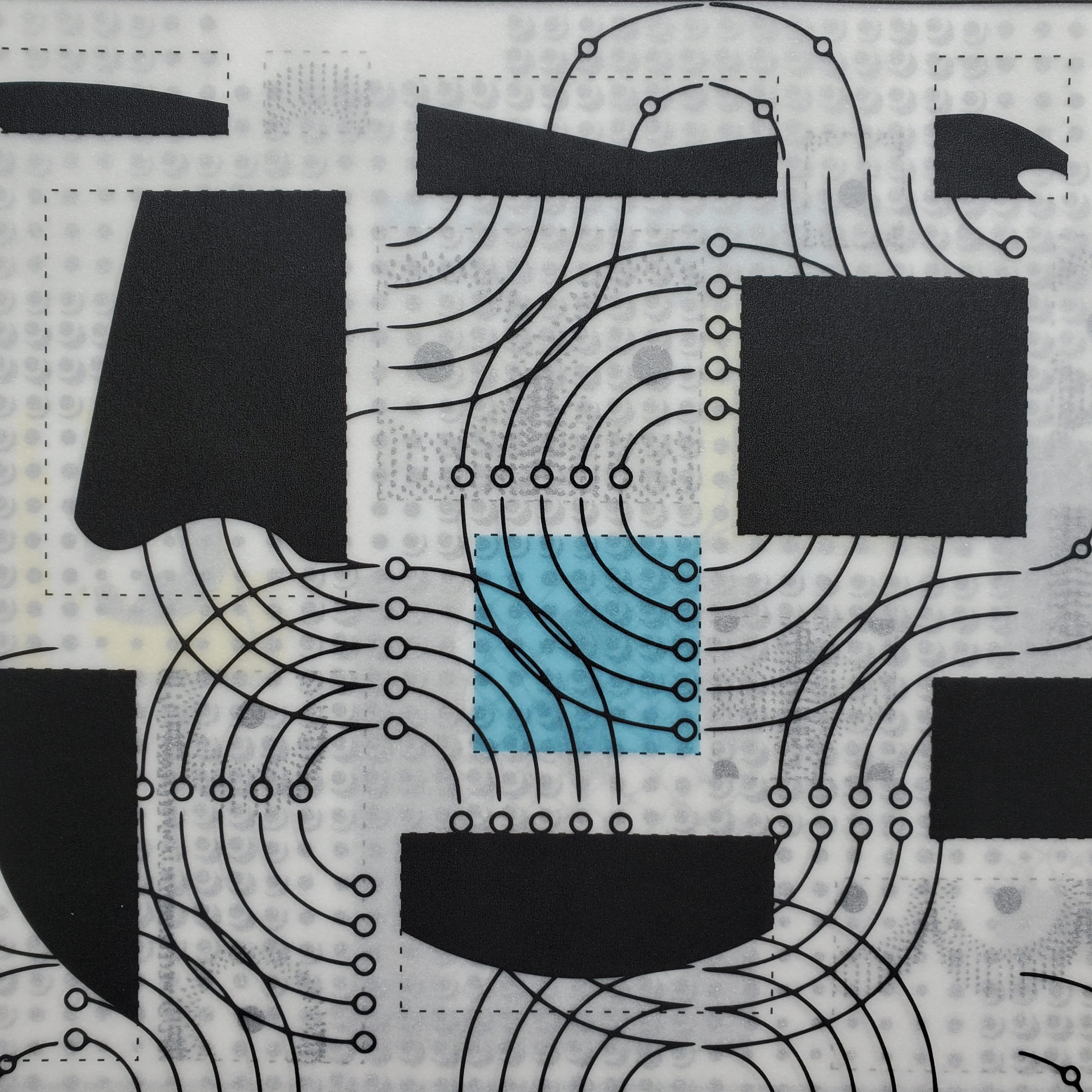
Veronica Graham is a new media artist and printmaker serving as Lecturer in Stanford University's Department of Art & Art History. Based in Oakland and Portland, she founded the design studio Most Ancient in 2010, specializing in experimental comics and exploration games. Her interdisciplinary practice bridges digital media and analog print publishing through poetic world-building that confronts contemporary environmental and social challenges. Her research centers on virtual reality narratives, climate-focused printmaking, and surrealist comics that explore internalized fictions. Key projects include the VR experience Diatribes (2024), examining fears about global warming through a haunted house framework, and the Global Warming Agitprop Posters series (2020-present) using phosphorescent materials to visualize ecological instability. She employs techniques like Wang tile systems for pattern generation and split fountain printing to stretch technical boundaries. 2025 Writer-in-Residence, Writing Space, Chicago 2024 IndieCade Impact Award Nominee for Diatribes 2022 Oculus Launch Pad Grant Recipient 2019 Best American Comics Notable Comics selection 2017 Artist’s Book Residency Grant, Women’s Studio Workshop Graham’s work appears in MoMA, NYPL, and SFMOMA collections. Her VR projects have been presented at Kala Art Institute, Printed Matter (NYC), and Sónar+D. As an educator, she lectures on virtual reality at Stanford and has conducted workshops at institutions including Tufts University and UC Berkeley. Her studio Most Ancient functions as both creative laboratory and publishing platform, supporting collaborative projects like Real Milk (2023) which examines agricultural automation through translucent book design.