Mikael Thollesson is a Senior Lecturer at Uppsala University, affiliated with the Department of Organismal Biology; Systematic Biology and Klubban’s Biological Station. His research focuses on evolutionary biology, phylogenetics, taxonomy, and molecular biology, particularly in marine and freshwater sponges (Porifera), bacterial pathogens, and computational methods in evolutionary analysis. Evolutionary Biology Marine Biology Taxonomy His recent publications highlight trends in sponge biodiversity, phylogeography, bacterial horizontal gene transfer, and mitochondrial gene evolution. Key articles include studies on Swedish demosponge faunas, Silene sect. Arenosae systematics, and computational tools like SPRIT for detecting gene transfers. No explicit awards or grants are mentioned.
Johan Eklöf is a Professor at Stockholm University within the Department of Ecology, Environment and Plant Sciences . His research emphasizes marine ecology , focusing on interactions between marine biodiversity, environmental conditions (including climate), and societal impacts . He teaches courses such as Management of Aquatic Resources in the Tropics , Marine Ecology for the Biogeo Program , and Ecology II . Research Focus: Causal relationships between biodiversity and ecosystem resilience Foundation species as drivers of ecosystem services Optimizing resource management under climate change Projects: Principal Investigator for FORCE (2023-present), a transdisciplinary Baltic Sea recovery project Contributor to NordSalt (climate impacts on Nordic salt marshes) and PlantFish (Baltic Sea vegetation-fish interactions) Scientific Leadership : Supervises 2 current PhD students and co-supervises 6 additional PhD/postdocs Formerly mentored 4 PhD graduates and >40 MSc students Environmental Context: His work spans Baltic Sea and Western Indian Ocean ecosystems, using seagrass beds , mussel beds , and coastal benthic systems as primary models. Recent publications highlight climate change impacts on trophic cascades , habitat connectivity , and policy frameworks for marine conservation .
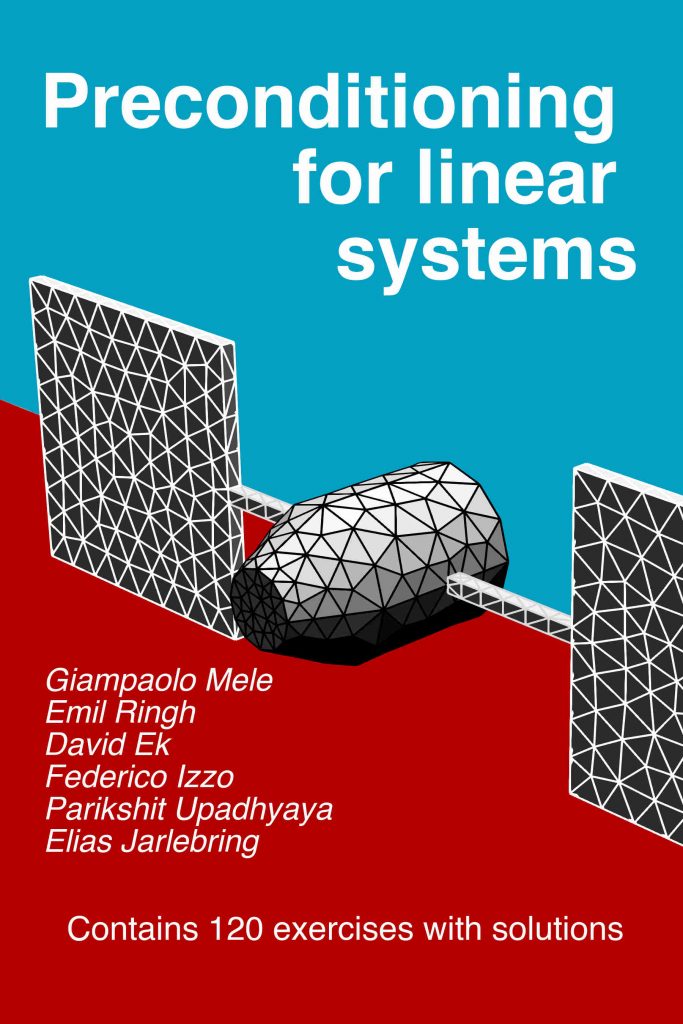
Elias Jarlebring is a Professor in Numerical Linear Algebra at the Department of Mathematics, KTH Royal Institute of Technology, Stockholm. He has held the position of Full Professor since 2021, following his tenure as Associate Professor (2013-2021) and Dahlquist Research Fellow (2011-2013). His research focuses on numerical analysis, numerical linear algebra, matrix computations, and scientific computing. Jarlebring develops linear algebra algorithms to solve problems from various fields including systems and control, acoustics, electromagnetics, data science, quantum mechanics, and quantum chemistry. He is a core developer of NEP-PACK, a scientific computing software package for nonlinear eigenproblems. His recent publications demonstrate significant contributions to computational methods for nonlinear eigenvalue problems, matrix functions, and parameterized linear systems. The research shows a clear trajectory toward increasingly complex applications in quantum computing, data science, and wave propagation problems. Project grant, Swedish research council (2019) Ruth och Nils-Erik Stenbäcks foundation, junior grant (2019) Göran Gustafsson Prize for junior researchers (2014) Project grant for junior researchers, Swedish research council (2014-2018) Professor Jarlebring has supervised numerous PhD students including Vilhelm Peterson Lithell, Gustaf Lorentzon, Siobhán Correnty, Parikshit Upadhyaya, Emil Ringh, Antti Koskela, and Giampaolo Mele. He has received multiple research grants from the Swedish Research Council and serves as editor for BIT Numerical Mathematics, Linear and Multilinear Algebra, NACO Numerical Algebra Control and Optimization, and CALCOLO. He is actively involved in the numerical linear algebra community as a member of ILAS (International Linear Algebra Society), GAMM Activity Group on Numerical Linear Algebra, and the Nordic Numerical Linear Algebra Association. He also contributes to open source projects, particularly in the Julia programming language ecosystem.
Nicholas Kamenos is a Professor at the Department of Ecology, Environment and Geoscience and Director of the Umeå Marine Sciences Centre (UMF) at Umeå University, Sweden. His research bridges global biogeochemical cycles and ecological responses to climate change, focusing on ecosystem engineers like coralline algae, corals, and seagrass. He works in polar to tropical regions, employing SCUBA, mesocosm experiments, and advanced analytical tools. Role: Director, Umeå Marine Sciences Centre Research Focus: Climate change impacts, ocean acidification, blue carbon, Arctic-temperate-tropical ecosystems His recent publications highlight interdisciplinary approaches to understanding marine ecosystem resilience. Research spans proxy development for historical climate reconstruction, carbon burial dynamics, and the role of calcifying organisms in carbon cycling, with applications to conservation and policy. Key grants include projects like AQUASERV (2024–2029) on service provision in marine ecosystems, Light Harvesting in Coralline Algae (2024–2027), and IRISCC (2024–2026) exploring seawater temperature changes. Collaborative work addresses coastal deoxygenation and socio-political aspects of blue carbon economies. He leads the Umeå Marine Sciences Centre, leveraging facilities like the Marine Mesocosm Facility and advanced tools (laser ablation ICPMS, isotope ratio mass spectrometry). His work integrates biological, geological, and chemical techniques to address multidisciplinary questions.
Saurabh Amin is a Professor in the Department of Civil and Environmental Engineering at the Massachusetts Institute of Technology (MIT), where he also serves as the Edmund K. Turner Professor and Undergraduate Officer. He is a Principal Investigator at the Laboratory of Information and Decision Systems and holds affiliations with the Operations Research Center and the Center for Computational Science and Engineering. His educational background includes: B.Tech. 2002, Indian Institute of Technology (IIT) Roorkee M.S. 2004, University of Texas (UT) Austin Ph.D. 2011, University of California (UC) Berkeley Saurabh Amin's research focuses on the design and control of infrastructure systems using game theory and optimization in networks. His work spans three main areas: resilient network control, information systems and incentive design, and optimal resource allocation in large-scale infrastructure systems. By concentrating on critical infrastructure domains including highway transportation, electric power distribution, and urban water networks, his research develops innovative theory and tools to enhance system performance against both stochastic and adversarial disruptions. His approach involves modeling cyber-physical interactions in infrastructures to assess vulnerabilities, developing detection and response tools for failures at various scales, and designing economic incentive schemes that improve aggregate public good while accounting for dependencies and private information among strategic entities. Amin's work bridges mathematical systems theory with practical civil engineering applications, creating a rigorous theoretical foundation for infrastructure resilience that addresses diverse failure mechanisms from natural disasters to deliberate malicious actions. His recent publications demonstrate a strong focus on decarbonization of energy systems, resilient infrastructure planning under climate uncertainty, optimization methods for complex networked systems, and game-theoretic approaches to sustainable infrastructure management. His work increasingly integrates artificial intelligence and machine learning techniques with traditional control theory to address contemporary challenges in infrastructure resilience and sustainability. The research shows a clear trajectory toward addressing climate change impacts on infrastructure systems while maintaining economic efficiency and operational reliability. Professor Amin has received numerous prestigious awards and honors: Common Ground Excellence in Teaching Award, 2025 HSCC Test-of-Time Award, 2024 MIT CEE, Distinguished Service and Leadership Award, 2023 Samuel M. Seegal Prize (SoE) – inspiring students in pursuing and achieving excellence, 2022 Earll M. Murman for Excellence in Undergraduate Advising, 2022 C3.ai Digital Transformation Institute Research Award, 2020 MIT, Ole Madsen Mentoring Award, 2020 MIT, Energy Initiative Research Award, 2020 National Academy of Engineering, China-America Frontiers of Engineering Symposium speaker, 2019 MIT, Robert N. Noyce Career Development Professor, 2015-2018 Google Faculty Research Award, 2015 National Science Foundation CAREER Award, 2015 Siebel Energy Institute Research Award, 2015 MIT, Solomon Buchsbaum AT&T Research Fund Award, 2012 Professor Amin has been actively involved in significant research projects including the C3.ai DTI project on Causal Reasoning for Real-Time Attack Identification in Cyber-Physical Systems and another on Learning in Routing Games for Sustainable Electromobility. He serves as the chief scientist on multi-institutional NSF grants, including the $9 million Foundations of Resilient Cyber-Physical Systems (CPS) project. His teaching portfolio includes courses such as 1.008 Engineering for a Sustainable World, 1.104 Sensing and Intelligent Systems, 1.020 Engineering Sustainability: Analysis and Design, and 1.208 Resilient Networks. As Undergraduate Officer, he plays a key role in shaping the educational experience for civil and environmental engineering students at MIT. Professor Amin leads the Resilient Infrastructure Networks Lab at MIT, where his team develops theoretical foundations and practical tools for infrastructure resilience. The lab focuses on the intersection of control theory, game theory, and optimization applied to cyber-physical infrastructure systems. Current research directions include pandemic-resilient urban mobility and hurricane-resilient smart grid operations, reflecting the lab's commitment to addressing pressing societal challenges through rigorous systems engineering approaches.
Professor Ian Cousins is a leading researcher in the Department of Environmental Science at Stockholm University, specializing in the study of persistent organic pollutants, particularly per- and polyfluoroalkyl substances (PFAS). With over 200 peer-reviewed publications and recognition as a Highly Cited Researcher in 2018 and 2020, his work has significantly influenced environmental policy and scientific understanding of chemical pollution. BSc (Hons) in Chemistry, University of York (1989) Master's in Environmental Management, University of Surrey (1991) PhD in Environmental Science, Lancaster University (1998) Prof. Cousins' research focuses on the sources, transport, fate, and exposure pathways of contaminants in the environment, with particular emphasis on PFAS. His work combines experimental and modeling approaches to investigate how these persistent chemicals move through ecosystems, with recent studies examining sea spray aerosol transport of PFAS and their global distribution. His research has contributed to understanding PFAS as a planetary boundary issue, demonstrating that environmental contamination by these substances has exceeded safe operating limits. Prof. Cousins' extensive publication record shows a clear trend toward addressing the complex challenges of PFAS pollution, including their environmental behavior, risk assessment methodologies, regulatory frameworks, and the application of the essential-use concept for phasing out non-essential PFAS applications. His work spans fundamental environmental chemistry to policy-relevant research that has directly influenced European environmental decision-making. Highly Cited Researcher (2018, 2020) Listed among 30 EU politicians and professionals with greatest impact on European environmental policy (2023) Associate Editor of Environmental Science and Technology (2020-present) Associate Editor of Environmental Au (2021-present) Prof. Cousins actively supervises master's students focusing on organic pollutants and has coordinated major research projects including PERFORCE3, a Europe-wide doctoral training program on PFAS, and ZeroPM, targeting PFAS and persistent, mobile substances. His research has been supported by multiple European Union Horizon 2020 grants, reflecting the significance and impact of his work on global environmental challenges. He leads a research group that works closely with analytical chemists to better understand the behavior of PFAS and other contaminants, contributing to the development of evidence-based approaches for managing chemical pollution and protecting environmental and human health.
Grzegorz Niedzwiedzki is a Researcher at Uppsala University's Department of Organismal Biology, specializing in vertebrate palaeontology and early tetrapod evolution. He holds a PhD from the University of Warsaw (2013) and has conducted expeditions across Poland, Russia, Tunisia, Greenland, and Sweden. His research focuses on Triassic-Jurassic vertebrate ecosystems, coprolite analysis, and early dinosaur evolution. Education: PhD in Biology (2013), University of Warsaw Master's in Biology (2007), University of Warsaw Bachelor's in Biology (2004), University of Warsaw Research Interests: Grzegorz's work analyzes fossilized footprints, coprolites, and skeletal remains to reconstruct ancient ecosystems. He has pioneered studies on Early Triassic predator ecosystems via coprolites and contributed to understanding dinosaur dietary habits through coprolite microbiota analysis. His fieldwork has uncovered critical fossils like the archosaur Smok wawelski and Early Jurassic dinosaur tracks. Key Achievements: Recipient of multiple prestigious awards (National Geographic grants, Prime Minister's Special Award) Over 100 peer-reviewed publications in journals like Nature , Palaeogeography, Palaeoclimatology, Palaeoecology , and Acta Palaeontologica Polonica Co-discoverer of the oldest known mammaliaform fossil in Greenland Grants & Collaborations: Multiple international expeditions funded by Polish and Swedish institutions Collaborations with the American Museum of Natural History and Uppsala University Labs/Teams: Affiliated with Uppsala University's Evolution and Development research group and collaborates globally on fossil expeditions and synchrotron imaging projects.
Mattias Brunström serves as Assistant Professor of Cardiology and Associate Professor of Epidemiology at Umeå University's Faculty of Medicine within the Department of Public Health and Clinical Medicine, Section of Cardiology. He is concurrently a resident physician at Norrlands University Hospital and holds leadership roles as chairman of Sweden's national hypertension working group and scientific secretary of the Swedish Society for Hypertension, Stroke and Vascular Medicine, with active participation in the European and International Societies of Hypertension. His academic foundation includes a 2018 PhD thesis examining blood pressure-lowering treatment effects across different blood pressure levels through systematic reviews and meta-analyses of randomized clinical trials. This doctoral work established his expertise in evidence-based cardiovascular therapeutics and epidemiological methodology. Dr. Brunström's research program centers on cardiovascular disease risk factors, with specialized focus on hypertension pathophysiology and aortic diseases. His group investigates how adolescent blood pressure levels predict future cardiovascular events, examining interactions with obesity, physical fitness, and diabetes to improve risk stratification. They also analyze differential effects of antihypertensive drug classes on cardiovascular outcomes and study risk factors for aortic dissection/rupture to optimize preventive surgical interventions. This work addresses critical gaps in managing the world's leading cause of death, where uncontrolled hypertension contributes to 10 million annual fatalities despite effective treatments. Analysis of his 2024-2025 publications reveals dominant themes in hypertension guideline development, treatment threshold controversies, and cardiovascular risk assessment. His work frequently challenges conventional approaches (e.g., questioning excessive treatment of 'elevated' blood pressure in elderly patients) while advancing evidence for lifestyle interventions and beta-blocker utility. Methodologically, his research leverages large cohort studies (including 1.4 million enlistee data), systematic reviews, and international collaborations through societies like ESH and ISH to translate epidemiological findings into clinical practice. Dr. Brunström leads multiple funded research initiatives including 'Remission of type 2 diabetes through eHealth' (2022-2028) and 'VIPviza' (2013-2027), directing a multidisciplinary team that bridges clinical cardiology, epidemiology, and public health. His advisory role extends to national guideline committees and international hypertension societies where he shapes clinical practice through evidence synthesis and position papers. Based at Norrlands University Hospital's Cardiology Section, his research group operates within Umeå University's strong cardiovascular research ecosystem, maintaining active collaborations with the Swedish National Diabetes Register and international consortia. Their work emphasizes real-world applicability, examining topics like bedtime dosing of antihypertensives and self-report diagnostic tools to overcome barriers in hypertension control where only 25% of affected individuals achieve target blood pressure levels.
Niklas Wahlberg is a Professor in Biological Systematics at Lund University, Sweden. He holds roles including Museum Director of the Biological Museum and Principal Investigator in the BECC biodiversity initiative. His primary affiliation is with the Department of Biology, focusing on evolutionary biology and systematics of Lepidoptera. Education & Career: PhD in Evolutionary Biology from University of Helsinki (2000) Postdoc at Stockholm University (2000–2002) Academy Research Fellowship at University of Turku (2006–2011) Professor in Genetics at Turku (2014) before moving to Lund in 2015 Research Interests: His work centers on the evolutionary history of Lepidoptera, particularly diversification patterns linked to angiosperm evolution and mass extinction events. He employs molecular systematic methods, next-gen sequencing, and museum specimens to study clade origins and biogeography. Key topics include Cretaceous diversification, post-mass extinction radiation, and genomic discordance in butterflies. Awards & Recognition: Web of Science Highly Cited Researcher (2017, 2018) Elected to Kungliga Fysiografiska Sällskapet (2016) Grants & Projects: Swedish Research Council: Testing gene-trait associations in genome modifications (2025–2029) Infrastructure leader for museum collections and holistic specimen projects Labs & Collaborations: Head of the Systematic Biology Group at Lund, managing the Biological Museum’s collections. Active in global entomology networks and co-organizes major conferences like the International Congress of Entomology.
Ryan Sponseller is a Professor at the Department of Ecology and Environmental Science, Umeå University, and serves as Director of Studies. His research focuses on biogeochemical processes in boreal and Arctic ecosystems, particularly stream hydrology, riparian zone dynamics, and climate change impacts. He investigates how human activities, land use changes, and extreme climatic events affect carbon, nitrogen, and dissolved organic matter cycling in freshwater systems. Key research themes include: Carbon dioxide and methane dynamics in streams and lakes Effects of forest management and drought on biogeochemical fluxes Landscape controls on stream network functioning Long-term ecosystem responses to disturbances His work integrates field experiments, long-term monitoring (e.g., Krycklan Catchment Study), and interdisciplinary approaches to address global environmental challenges. Recent studies highlight browning trends, riparian zone heterogeneity, and the role of groundwater-stream interactions in regulating ecosystem processes. Publications emphasize methodological advances in measuring aquatic metabolism and greenhouse gas emissions, while also addressing policy-relevant issues like sustainable forest management and climate mitigation strategies.
Professor Ola Isaksson is a faculty member in Product Development at Chalmers University of Technology, where he leads the Systems Engineering Design research group. With over 40 research projects nationally and internationally, his work bridges academic research and industrial application, particularly in aviation and transport-related manufacturing sectors. His expertise spans digitalization, sustainability, and advanced manufacturing methods in product development. Ola Isaksson received his PhD in Computer Aided Machine Design from Luleå University of Technology in 1999. Prior to his academic career, he had a specialist career at GKN Aerospace Engine Systems (formerly Volvo Aero) in Trollhättan, focusing on design and product development until 2015. Professor Isaksson's research focuses on developing new product development capabilities to address societal and industrial needs through digitalization and advanced manufacturing. His primary interests include platform-based development, Set Based Engineering, multidisciplinary engineering methods, Value-driven development, and knowledge-intensive system support. He has particular expertise in additive manufacturing integration, design space exploration, and sustainability transition in product development. Analysis of Professor Isaksson's recent publications reveals a strong focus on integrating digital technologies with sustainable manufacturing practices. His work demonstrates a progression from traditional design methodologies toward AI-assisted design, digital twins, and advanced data analytics. Key thematic areas include additive manufacturing implementation, design margin management, sustainability integration, and aerospace component optimization, reflecting his commitment to bridging theoretical research with industrial applications. Professor Isaksson is one of the founders of the Swedish Product Development Academy and maintains active membership in the Design Society, ASME, and SIG PM, reflecting his significant contributions to the field of engineering design. With over 100 scientific publications and leadership in more than 40 research projects, Professor Isaksson has established himself as a leading figure in product development research. His work frequently involves close collaboration with industry partners, particularly in the aviation sector, securing substantial research funding for projects addressing digitalization, sustainability, and advanced manufacturing challenges. Professor Isaksson leads the Systems Engineering Design research group at Chalmers University of Technology. His team focuses on developing methodologies for complex product development, with particular emphasis on digital tools, sustainability integration, and manufacturing innovation. The group maintains strong industry connections, especially with aerospace manufacturers, facilitating the translation of research into practical applications.
Fredrik Haas is a Researcher at the Department of Biology, Faculty of Science, Lund University, Sweden. He is affiliated with BECC (Biodiversity and Ecosystem services in a Changing Climate), Biodiversity and Conservation Science, and Biodiversity and Evolution research groups. His work contributes to UN Sustainable Development Goals related to life on land and climate action. His research focuses on bird ecology , population dynamics , and conservation in changing climates . Key topics include waterbird responses to climate warming, hybridization in bird species (e.g., Corvus), and the effectiveness of protected areas. He is deeply involved in national monitoring programs and large-scale collaborative studies across Europe. Recent publications highlight trends in waterbird distribution shifts , impacts of climate change on avian communities , and conservation threats such as lead poisoning in sea ducks . His work combines field data, long-term monitoring, and cross-national collaboration to inform conservation policy. Årets miljöhjälte 2021 (Environment Hero of the Year 2021) Fredrik Haas leads and coordinates multiple research projects, including long-term bird monitoring initiatives funded by the Swedish Environmental Protection Agency and FORMAS. He serves as Principal Investigator on projects related to avian influenza preparedness and marine protected area functionality for waterbirds. His work is embedded in the Swedish Bird Survey infrastructure, contributing to national and international biodiversity reporting. He actively engages in public outreach, including media interviews and scientific presentations, such as discussing GPS tracking of diving ducks and new coastal bird survey programs.
Robert Muscarella is a Senior Lecturer at the Department of Ecology and Genetics, Plant Ecology and Evolution, Uppsala University. His work bridges plant ecology, climate change impacts, and tropical forest dynamics. Research interests include Climate change effects on forest structure Functional trait analysis Species distribution modeling Post-disturbance forest recovery Ecohydrology of tropical systems Remote sensing applications in ecology Recent publications highlight trends in tree mortality , hurricane impacts , drought responses , and functional trait variability across tropical ecosystems. Methodological contributions include open-access species distribution modeling tools.
Anders Björn is a Professor at the Department of Mathematics (MAI) at Linköping University (LIU), affiliated with the Analysis and Mathematics Education (ANDI) division. His research focuses on Nonlinear Potential Theory , particularly p-harmonic functions , quasiminimizers , and Newtonian Sobolev spaces in metric spaces. He co-leads the research group in this area and contributes to Analysis on Metric Spaces . He teaches undergraduate and graduate courses, including Real Analysis and Functional Analysis . Organizational Roles: Organizer of the Mathematical Colloquium, Local Representative for Svenska Matematikersamfundet (Swedish Mathematical Society). Editorial Work: Former Technical Editor for Acta Mathematica (2004–2015) and Arkiv för Matematik (1993–2015), both published by Institut Mittag-Leffler. His research explores foundational questions in mathematical analysis, blending pure mathematics with interdisciplinary applications. He emphasizes understanding properties of solutions to differential equations in general settings, akin to constructing an 'identikit' of mathematical phenomena. His work is published in collaboration with the ANDI group, and he actively engages in promoting mathematics through outreach and academic service.
Clare Bradshaw is a Professor in the Department of Ecology, Environment and Botany at Stockholm University. She is a marine ecologist and ecotoxicologist specializing in human impacts on marine ecosystems, with expertise in radioactive contaminants and bottom trawling effects. Her research focuses on how ecological processes determine the overall effects of disturbance, particularly in the Baltic Sea and Kattegat regions. Dr. Bradshaw's research interests span marine ecology, ecotoxicology, and sediment biogeochemistry, with a strong emphasis on understanding how bottom trawling affects seabed processes, sediment dynamics, and contaminant suspension. She has extensive experience studying marine pollution, particularly radioactive contaminants, and has evolved from earlier work on coral bleaching in the Indian Ocean and bottom trawling effects in the Irish Sea to her current focus on Baltic Sea ecosystems. Her recent publications reveal a strong focus on carbon cycling in marine environments, sediment biogeochemistry, and the cumulative impacts of human activities on seabed integrity. The research shows increasing attention to policy implications, with several publications addressing how scientific findings can inform marine conservation and fisheries management practices, particularly regarding carbon storage capacity in marine environments and the long-term recovery of benthic ecosystems. Member of the Bradshaw Research Group at Stockholm University Course organizer for the Marine Biology summer course Actively seeking Master's students for research on Baltic benthic macrofauna (as of Sept 2023) Dr. Bradshaw collaborates extensively with multiple institutions including SLU Aqua, DHI, Aquabiota, University of Cagliari, Edith Cowan University, IAEA Marine Lab Monaco, and NIVA. Her research has significant implications for marine conservation policy, fisheries management, and understanding the role of marine ecosystems in global carbon cycling.