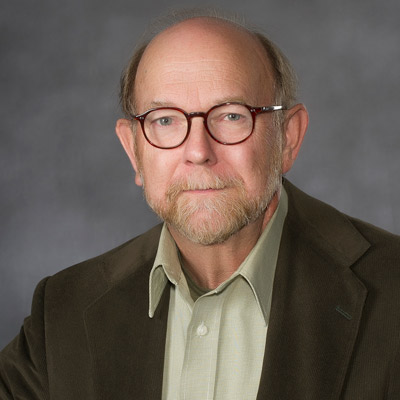
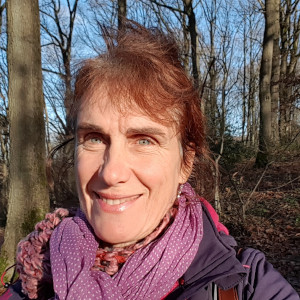
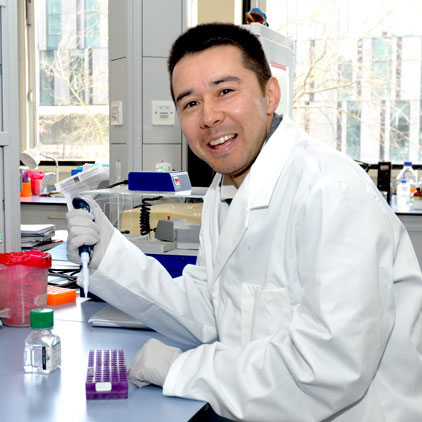
Simon Power is a Visiting Assistant Professor at The Ohio State University. His research focuses on ecological resilience, vegetation dynamics, and remote sensing applications in non-forest ecosystems. He has contributed to studies on fire impacts, biomass modeling, and alternative stable states in diverse biomes. Recent publications highlight his work in: Restoration of sagebrush-steppe ecosystems Peatland vegetation resilience to wildfires Drone photogrammetry for biomass prediction Fire adaptation strategies in phosphorus-poor environments His email is power.778@osu.edu , and he is based at Kottman Hall, Columbus, OH.
Allison Rober is an Associate Professor at the School of Environment & Natural Resources , The Ohio State University, and serves as the Assistant Director for Stone Lab Academic Programming. Her research focuses on the interplay between environmental conditions and microbial communities in freshwater ecosystems, particularly algal communities. Aquatic Microbial Ecology Climate Change Effects on Wetland Ecosystems Toxin-producing Cyanobacteria in Agricultural Watersheds Algal Community Composition and Water Quality The Rober Lab investigates how environmental degradation and climate change processes alter microbial community structure and function, with implications for ecosystem services and food web dynamics. Their work spans wetlands and agriculturally dominated watersheds, emphasizing the consequences of environmental perturbations on water quality and ecological health.
Anne-Marie Morrissey is a Senior Lecturer in Early Childhood Education at Deakin University, Australia, with a Doctor of Philosophy from the University of Melbourne (2007). Her dual background as an academic researcher and former early childhood practitioner informs her evidence-based approach to pedagogy and policy. Doctor of Philosophy, University of Melbourne, 2007 Her research centers on play-based learning as a catalyst for 21st-century skill development, emphasizing how intentional teacher-child interactions during play enhance problem-solving, creativity, and cognitive growth. She investigates the critical role of outdoor environments in fostering wellbeing, sociodramatic play, and physical activity, while also examining teacher agency within educational reforms and gifted education frameworks. Her work consistently bridges theory with practical classroom applications. Analysis of her recent publications (2017-2025) reveals three dominant trajectories: (1) The transformative impact of naturalized outdoor playspaces on child development, particularly post-pandemic redesigns; (2) Teacher empowerment through mentoring, advocacy, and intentional pedagogy in play-based settings; and (3) Critical examinations of environmental risks and policy implications in early childhood contexts. These threads converge on optimizing learning ecosystems through child-centered, nature-integrated approaches. No scientific awards were documented in the source materials. Dr. Morrissey has secured competitive research funding from the International Baccalaureate Organisation, the Foundation of Graduates in Early Childhood Studies, and Fleming's Nursery. Her grants specifically target play-based program efficacy and outdoor playspace innovation. While formal student advisement records aren't disclosed, her work with preservice teachers through enhanced kindergarten placements and mentoring initiatives demonstrates significant educational leadership.
Robert Godwin-Jones is a Professor in the Department of Foreign Language at Virginia Commonwealth University's College of Humanities and Sciences, where he has served since 1979. He holds the position of Foreign Language Liaison and maintains active scholarly contributions through his "German Stories" digital repository and "Communicating Across Cultures" blog, focusing on technology-enhanced language pedagogy and intercultural communication. His educational background includes: B.A. in French and German from Franklin and Marshall College (1971) M.A. in Comparative Literature (German, French, and English) (1973) Ph.D. in Comparative Literature from the University of Illinois Urbana-Champaign (1977) Dr. Godwin-Jones specializes in Computer-Assisted Language Learning (CALL), with research spanning artificial intelligence applications, virtual reality environments, and digital literacies for language learners. His work examines how emerging technologies transform second language acquisition through ecological semiotics, distributed agency models, and multimodal communication frameworks. He investigates pedagogical translanguaging strategies for less commonly taught languages and analyzes authenticity in AI-mediated language interactions, particularly in pragmatics and writing development. Analysis of his 2021-2025 publications reveals three dominant trajectories: (1) generative AI integration in language instruction with emphasis on ethical implementation and threat mitigation; (2) extended reality applications creating immersive language spaces in the metaverse; and (3) ecological approaches connecting smart devices, ambient intelligence, and situated learning contexts. His scholarship consistently bridges theoretical frameworks with practical classroom applications across 19th-century German literature studies and contemporary language education. He maintains active professional engagement through memberships in: Delta Phi Alpha German Honorary Society Phi Kappa Phi Honorary Society Modern Language Association American Association of Teachers of German American Association of Teachers of French Foreign Language Association of Virginia As director of the "German Stories" project since 1994, he has curated verified editions of 19th-century German narratives with English translations under Creative Commons licensing, creating what has become a foundational resource for literary study and language acquisition. His blog extends this work through contemporary analyses of intercultural communication challenges, while his scholarly leadership in organizations like CALICO shapes national discourse on technology in language education. His laboratory functions as the "German Stories" digital ecosystem, which has evolved into a comprehensive platform hosting annotated texts, pedagogical resources, and research archives. This environment supports both formal classroom instruction and informal learning communities, demonstrating his commitment to porous classroom models that integrate physical and digital learning spaces.
Claire Damesin is a Professor at the University of Paris-Saclay, affiliated with the Plant Ecophysiology team at the Laboratoire Écologie, Société et Évolution (IDEEV). Her work bridges plant physiology, ecology, and interdisciplinary studies with art, focusing on tree carbon dynamics and human-nature relationships. Her educational background includes: Admission to Ecole Normale Supérieure (ENS Lyon) in 1988 French national agrégation in Life and Earth sciences in 1991 Master of General Ecology (DEA) from University Paris Sud in 1992 PhD from the Center of Functional and Evolutionary Ecology in Montpellier (1993-1996) Professor Damesin's research centers on tree ecophysiology , particularly in carbon functioning of woody parts (ring growth, reserve dynamics, stem respiration, and stem photosynthesis), stable carbon isotope composition (13C/12C) in leaves and rings, and tree responses to drought and climate variations. She pioneers art-science collaborations exploring intimacy with trees and interdisciplinary approaches to human-nature relationships, integrating ecology, art, anthropology, and philosophy. Her methodology combines field studies on mature forest trees and potted plants. Analysis of her publications reveals a strong focus on carbon cycling in trees using stable isotopes to understand climate responses and tree decline across species like beech, oak, and pine. A notable evolution is her expansion into human-nature relationship studies through art-science projects, reflecting interdisciplinary innovation. She actively contributes to academic leadership as co-manager of the EVEF sector in the Master BEE program and manager of the 'Adaptations to change' teaching unit. Her teaching spans all levels from undergraduate to master's programs, covering botany, plant anatomy, soil-vegetation relationships, and field trainings, with recent innovations in creativity workshops and human-nature relation courses. Professor Damesin leads the Plant Ecophysiology team within IDEEV laboratory, driving research on tree responses to environmental changes and fostering science-art collaborations that redefine ecological engagement.
Julianne Scamardo serves as Assistant Professor in the Department of Watershed Sciences at Utah State University, appointed in August 2024. Her research bridges fluvial geomorphology and ecosystem resilience, focusing on river-floodplain interactions in disturbance-prone environments. Education: PhD in Fluvial Geomorphology (Geosciences), Colorado State University, 2023 MS in Geosciences, Colorado State University, 2019 BS in Environmental Science (Emphasis: Geosciences), The University of Texas, 2017 Research Focus: Dr. Scamardo investigates form-function relationships in fluvial systems to predict resilience against floods, fires, and droughts. Her work centers on temporary storage mechanisms for water, sediment, and organic matter across floodplains, wetlands, and non-perennial streams. She pioneers field-measurement techniques , open-access modeling tools , and low-cost remote sensing applications for real-world implementation beyond academic settings. Publication Trends: Her 2025 publications reveal converging expertise in floodplain classification using topographic data, river-flood dynamics modeling, and policy analysis of rangeland restoration. These works demonstrate methodological integration of high-resolution geospatial analysis with practical restoration frameworks for western U.S. ecosystems. Academic Engagement: Actively recruiting graduate and undergraduate researchers for her laboratory, Dr. Scamardo teaches WATS 3700 (Fundamentals of Watershed Science) while developing community-focused restoration approaches. She emphasizes accessible science translation for land managers and policymakers through low-tech process-based restoration initiatives.
Anita Maria Tabacco is a Full Professor at the Department of Mathematical Sciences (DISMA) of Politecnico di Torino, with a focus on Engineering Education and Harmonic Analysis. She holds multiple administrative roles, including Rector's Delegate for Transparency and Internal Communication, Director of the University Observatory for academic dynamics, and Head of the INDAM local unit. Education: PhD in Mathematics, Washington University in St. Louis (1986) Research: Harmonic and Functional Analysis, Applications to PDEs, Gender Equality in STEM Her recent publications highlight intersections of mathematical analysis, educational technology, and gender diversity initiatives. She has led Erasmus+ projects like HerTechVenture and W-STEM to empower women in tech. Tabacco supervises PhD students including Maria Giulia Ballatore and contributes to textbooks such as Palestra di Analisi Matematica I . She co-leads the TEACH research group at DISMA, integrating pedagogical innovation with advanced mathematics.
Jennifer M Fraterrigo is a Professor in the Department of Natural Resources and Environmental Sciences at the University of Illinois Urbana-Champaign, with additional affiliations as Associate Director of Campus Sustainability at the Institute for Sustainability, Energy, and Environment. Her research focuses on ecosystem ecology, soil biogeochemistry, and the impacts of climate change and invasive species on forest and Arctic tundra systems. Key research areas: Ecosystem processes, carbon cycling, plant-soil interactions, remote sensing applications, shrub expansion in the Arctic, and invasive species management. Current projects integrate field studies with LiDAR and microclimate modeling to assess biodiversity, pollinator responses, and nutrient dynamics across diverse ecosystems. Recent publications highlight her work on temperate forest homogenization due to invasive species, Arctic shrub decomposition under climate change, and soil phosphorus variability in agroecosystems. Her studies often connect fine-scale ecological processes to continental or Arctic-scale patterns , emphasizing the role of functional traits in predicting ecosystem responses to disturbances like fire, drought, and nutrient loading.
Andrew Jones is a Senior Lecturer in Molecular Biology and Genomics at the School of Biological and Medical Sciences, Oxford Brookes University. He specializes in gene diversity and functional properties of cys-loop ligand-gated ion channels in insects, with applications to pesticide resistance and vector control. Education: BSc in Biochemistry from Imperial College London (1996), PhD in Acetylcholinesterase and Receptor Studies from University of Leeds (2000) Research Interests: His work focuses on insect cys-loop ligand-gated ion channels—including nicotinic acetylcholine, GABA, and glutamate-gated chloride channels—using genome analysis, molecular biology, and electrophysiology. Key areas include pesticide resistance mechanisms, receptor mutations, and neuropharmacological properties. Publication Trends: Recent studies examine pyrethroid resistance in Aedes mosquitoes, neonicotinoid interactions with honeybee receptors, and molecular characterization of lepidopteran GABA receptors. His work bridges insect neurobiology with agricultural pest management and public health vector control. Scientific Awards : Oxford Brookes Research Excellence Award (2017) Nigel Groome PhD Studentship (2015-2018) Leverhulme Trust Grant RPG-2012-602 HEIF Funding (2014) Grants and Projects : Leads BBSRC-funded studentships on insecticide resistance and mosquito receptor characterization. Collaborates on sustainable agroforestry projects in Indonesia.
Dr. Zeynep Erson Omay serves as an Assistant Professor in the Department of Neurosurgery and Biomedical Informatics & Data Science at Yale School of Medicine. Her work bridges computational biology with neurosurgical oncology, focusing on precision medicine applications for brain tumors, with particular emphasis on understanding tumor heterogeneity and molecular mechanisms of CNS tumors. Dr. Erson Omay's educational background includes: PhD in Computer Science from Case Western Reserve University (2011) MS in Computer Science from Bilkent University (2005) BS in Computer Science from Bilkent University (2003) Her research focuses on computational analysis of multi-omic datasets to understand tumor heterogeneity, particularly in central nervous system tumors. Dr. Erson Omay specializes in genomic, transcriptomic, and epigenetic profiling of brain tumors, with emphasis on meningiomas, glioblastomas, and rare CNS tumor subtypes. She leads the Erson Lab, which develops bioinformatics approaches to study large datasets and reveal molecular mechanisms in tumor formation, progression, and clinical outlier subgroups. Her work in precision medicine aims to decipher the molecular architecture of individual tumors to guide personalized treatment approaches, with significant contributions to understanding tumor ecosystems and evolutionary patterns in brain cancers. Dr. Erson Omay's scientific contributions span neuro-oncology, computational biology, and precision medicine, with a strong emphasis on translating genomic findings into clinical applications. Her publications demonstrate consistent innovation in applying computational methods to complex neurosurgical problems, with particular focus on tumor heterogeneity, molecular classification, and racial disparities in tumor genomics. Her notable scientific awards include: 10x Genomics 2021 Pilot Award (2022) Mission Bio Tapestri Grant (2022) Case Western Reserve University, Research ShowCASE-Best Poster Award (2007) Dr. Erson Omay actively mentors students and researchers at various levels, including undergraduate students, graduate students, postdocs, and postgraduate associates. She collaborates extensively within Yale's neurosurgery department and across disciplines to advance computational approaches to brain tumor research. Her work is supported by various grants that enable the development of novel bioinformatics platforms for tumor genomic characterization. She leads the Erson Lab, which focuses on three major research areas: Tumor Ecosystem (studying interactions among tumor and immune cells), Tumor Evolution and Heterogeneity (understanding temporal and spatial tumor evolution), and Precision Medicine (applying genomic techniques to personalize brain tumor treatment). The lab employs diverse omics technologies to explore brain tumor biology and develop computational methods for precision medicine applications.
Dr. Guangyu Wang is an Associate Professor in the Department of Forest Resources Management within the Faculty of Forestry at the University of British Columbia. He serves as Associate Dean for Asian Strategies and Director of the Asia Forest Research Centre, demonstrating significant leadership within the institution. His academic profile includes membership in the Graduate and Postdoctoral Studies program where he supervises students in Forestry (MASc, MFor, MSc, PhD). Dr. Wang's research interests span sustainable forest management and integrated watershed management, with particular emphasis on computer modeling applications. His work focuses on watershed-scale forest restoration, sustainable development projects, and Chinese forest management practices. He has developed innovative management plans and sustainable models specifically for Chinese forests. Current research includes climate change adaptation, forest carbon markets, and strategic planning for natural resources. His research portfolio includes leadership of several major initiatives: the Asia Forest Research Centre, National Park Research Center, Adaptation of Asia-Pacific Forests to Climate Change project, Asia-Pacific Forestry Education Coordination Mechanism, and the Asia-Pacific Network for Sustainable Forest Management and Rehabilitation (APFNet) Americas Office. His recent publications reveal a strong focus on carbon sequestration, forest therapy benefits, national park management, and the impacts of environmental factors on forest ecosystems across multiple continents. Asia Forest Research Centre (AFRC) - Promoting regionally specific research to enhance forestry practices in Asia National Park Research Center (NPRC) - Analyzing and evaluating national park management approaches worldwide Adaptation of Asia-Pacific Forests to Climate Change - Developing management strategies for climate-resilient forests Multidisciplinary Institute of Natural Therapy (MINT) - Bridging scientific understanding of forest therapy impacts Dr. Wang's work demonstrates a strong commitment to international collaboration, particularly between Canada and Asia-Pacific countries, addressing critical challenges in sustainable forest management, climate change adaptation, and the human-forest relationship. His research combines technical modeling approaches with practical applications for forest management policy and practice.
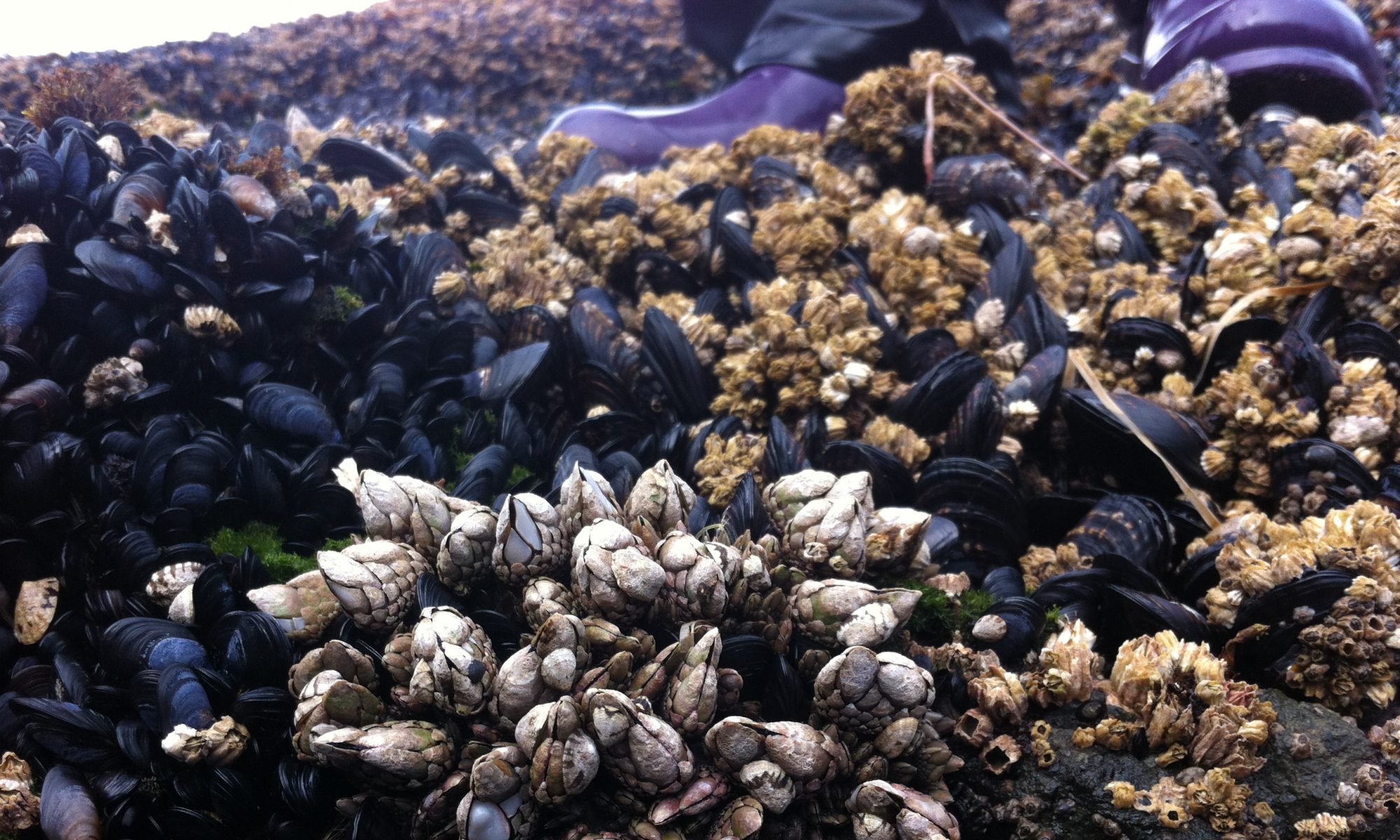
Christopher Harley is a full Professor in the Department of Zoology at the University of British Columbia (UBC) since 2005 and a member of the UBC Institute for the Oceans and Fisheries since 2016. His research focuses on understanding how climatic factors (temperature, ocean acidification, salinity) and biological interactions (predation, competition, facilitation) structure coastal marine communities. Education includes a BSc from Brown University (1994) , a PhD from the University of Washington (2001) , and postdoctoral fellowships at Stanford University (2001-2003) and University of California, Davis (2003-2005) . His lab at UBC investigates five priority areas: changing environmental variability, multiple stressors, life-cycle effects, genetic diversity, and interspecific interactions. Recent publications highlight his work on thermal stress, invasive species, and ocean acidification across marine ecosystems. Over 15 years, his research has spanned topics like Seaweed Responses to Climate Change , Sea Otter Impacts on Mussel Beds , and Ocean Acidification Effects on Calcifiers . Notable awards include the Murray A. Newman Award (2017) , Peter Wall Scholar (2016) , and Killam Faculty Research Fellowship (2011) . Key Research Themes Climate Change Impacts on Rocky Coasts Abiotic-Biotic Interaction Dynamics Intertidal Species Distribution Shifts Marine Biodiversity and Ecosystem Function Scientific Awards Murray A. Newman Award for Excellence in Coastal Ocean Research (2017) Peter Wall Scholar (2016) Killam Faculty Research Fellowship (2011) Distinguished Scholar Award (2012) Current Lab Members Graduate Students: G. Hall, S. Johnston, E. Kabanova, K. Ma, S. Park Collaborative Research on Stressors and Community Resilience
James Leaphart is an Assistant Professor in the Biology Department at the University of North Georgia (UNG). He earned a Ph.D. in Forestry and Natural Resources (Wildlife Ecology) from the University of Georgia in 2022, an M.S. in the same field in 2017, and a B.S. in Biology from the University of South Carolina Aiken in 2014. Ph.D., Forestry and Natural Resources (Wildlife Ecology), University of Georgia, 2022 M.S., Forestry and Natural Resources (Wildlife Ecology), University of Georgia, 2017 B.S., Biology, University of South Carolina Aiken, 2014 Dr. Leaphart specializes in wildlife ecotoxicology and disease biology, focusing on how anthropogenic pollution and disease affect animal health, physiology, reproduction, and behavior. His research spans mercury contamination, radiocesium accumulation, trace element dynamics, and parasitic infections in aquatic and semi-aquatic organisms. He collaborates on projects involving waterfowl, gamebirds, reptiles, amphibians, raccoons, river otters, beavers, pigs, fish, and invertebrates. His publications analyze contaminant bioaccumulation across ecosystems, including studies on mercury in waterfowl, radiocesium in fish, and parasitic impacts on dragonfly naiads. His work often intersects with public health risks, such as contaminant exposure in wild turkeys and game species. Dr. Leaphart teaches courses like BIOL 1108K (Principles of Biology II) and BIOL 2251K (Human Anatomy and Physiology I).
Prof. Dr.-Ing. Holger Blume serves as Vice President for Research and Transfer at Leibniz University Hannover while maintaining his academic position as Professor in the Architectures and Systems Section within the Faculty of Electrical Engineering and Computer Science. He holds multiple leadership positions including Chairperson of the Research Commission and Central Ethics Committee, Executive Board member of eNIFE (Leibniz Research Initiative for Neurosciences), and membership in both the Laboratory of Nano and Quantum Engineering and L3S Research Centre. His research interests span computer architecture, hardware design, signal processing, AI accelerators, hearing aid technology, and biomedical engineering. His work bridges theoretical computer science with practical applications in automotive systems, medical devices, and quantum engineering. Professor Blume's research demonstrates strong interdisciplinary connections between electrical engineering, computer science, and biomedical applications, with particular emphasis on hardware-oriented solutions for real-world problems. Analysis of his recent publications (2023-2025) reveals a strong focus on hardware acceleration for AI and signal processing applications, particularly in automotive radar/LiDAR systems and hearing aid technology. His work shows consistent innovation in RISC-V processor design, specialized hardware for mathematical functions, and biomedical applications of engineering principles. The research demonstrates a clear trajectory toward energy-efficient, specialized computing architectures for specific application domains. As Vice President for Research and Transfer, Professor Blume oversees significant research initiatives at Leibniz University Hannover, which hosts multiple Clusters of Excellence including PhoenixD (Photonics, Optics, and Engineering), QuantumFrontiers, and Hearing4all. The university participates in numerous collaborative research centers and junior research groups funded by DFG, BMBF, and EU programs. Professor Blume is actively involved in multiple research facilities including the Laboratory of Nano and Quantum Engineering and the L3S Research Centre. His work connects with Leibniz University's research focuses on optical technologies, quantum optics and gravitational physics, and biomedical research and technology. His leadership positions indicate strong involvement in shaping the research strategy and ethical framework of the university's scientific endeavors.
Eric Van Wyk is a Professor in the Department of Computer Science and Engineering at the University of Minnesota's College of Science and Engineering. His research focuses on programming languages, particularly extensible languages and language tools. He leads the Minnesota Extensible Language Tools (MELT) group and has made significant contributions to attribute grammars, compiler design, and language specification techniques. Professor Van Wyk's research centers on programming languages, especially extensible languages. His team has developed techniques for specifying languages and extensions that add new syntax and semantics to a "host" language. His work focuses on mechanisms guaranteeing that independently-developed domain-specific extensions can be automatically composed into well-defined languages. He has created two major systems: Silver, an attribute grammar specification language enabling highly-modular language specification, and Copper, an integrated parser and context-aware scanner generator that uses parser information to return more discriminating tokens. His publication record shows a clear progression from foundational work on language composition to increasingly sophisticated techniques for metatheoretic reasoning, scope management, and strategic tree rewriting. The research demonstrates a consistent pattern of developing practical tools (Silver, Copper, ableC) alongside theoretical advances in language specification and composition, bridging the gap between formal methods and practical language implementation. Distinguished Paper award at SLE2020 Professor Van Wyk has advised multiple Ph.D. students including Ted Kaminski (2017), Lijesh Krishnan (2012), August Schwerdfeger (2010), Jimin Gao (2007), and Dawn Michaelson (2024). His research has received substantial support from the National Science Foundation through projects such as "FMitF: Track I: ComScaN" (2021-2026), "XPS: EXPL: Enabling An Ecosystem of Parallel Programming" (2016-2021), and "SI2-SSE: Collaborative: Extensible Languages for Sustainability" (2010-2015). He leads the Minnesota Extensible Language Tools (MELT) group, which has developed influential systems for language specification while advancing theoretical understanding of language composition and extensibility. The group's work has established significant contributions to the field of software language engineering with particular expertise in attribute grammars and language composition techniques.