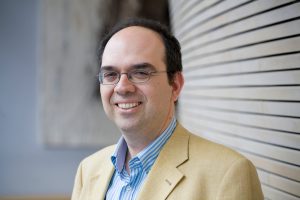
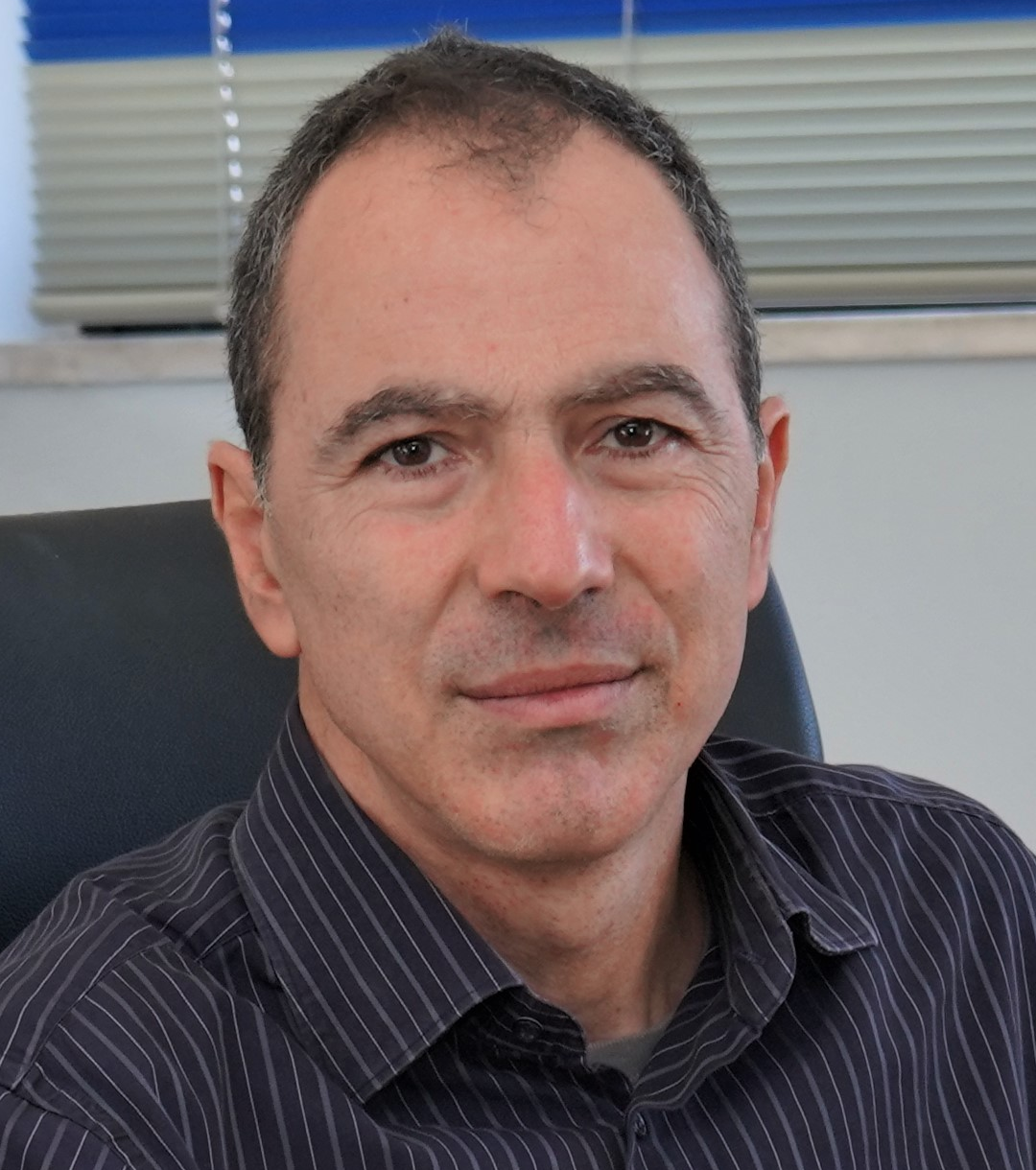
Dimitrios Skalkos serves as a Professor at the Department of Chemistry, University of Ioannina, holding the specific title of Professor of Innovation Management in Food Businesses. His office is located in building X2, room X2-206c on the Ioannina Campus (45110 Ioannina), and he leads the Food Chemistry Laboratory. He earned his Basic Degree in Chemistry from the University of Ioannina (1980-1985) followed by a Doctoral Degree from the University of Toledo, USA (1986-1989) with dissertation research on "Di- and Tetrahydroporphyrins: Syntheses and Antitumor Activities". Skalkos's research spans Food Business Management, Food Innovation, and Innovation Management, with specialized focus on Innovation & Entrepreneurship, Aromatic Plants, Innovative Foods, and Strategic Marketing. His work bridges academic research with industry applications in food systems, emphasizing Greek agricultural products and pandemic-era consumer behavior. His 36 publications (2020-2024) reveal strong trends in post-pandemic food innovation, consumer perception of traditional Greek foods, functional food development (particularly olive oil, cheese, and grape by-products), and sustainable agri-food supply chains. Key thematic clusters include traceability systems, bioactive properties of novel foods, and economic impacts on food choices. He has actively supervised Master's and PhD students through departmental presentations, directed 23 research programs, and organized 15 seminars and conferences. His laboratory website ( https://foods.chem.uoi.gr ) showcases ongoing food chemistry innovations.
Konstantinos Drakos is a Professor at the Department of Accounting and Finance, Athens University of Economics and Business (AUEB). Previously, he served as Assistant Professor at AUEB (2009–2012), Assistant Professor at the University of Patras (2003–2008), and Lecturer at the University of Essex (2001–2002). He holds a PhD in Economics from the University of Essex, preceded by an MSc and undergraduate studies in Economics at the University of Athens. His research focuses on Applied Financial Economics and the Economics of Security, with recent work analyzing hedge fund leverage, geopolitical risk impacts, cryptocurrency markets, and green banking. Teaching responsibilities include Macroeconomic Theory, Finance for Banking, and Risk Management at both undergraduate and postgraduate levels. Drakos' publications span over two decades, addressing topics such as terrorism's economic effects, bank lending behavior, and investment under uncertainty. His recent articles (2022–2025) emphasize cryptocurrency dynamics, geopolitical risk interactions, and financial stability in green banking. Notable themes include market volatility, capital allocation under uncertainty, and policy responses to systemic risks. No scientific awards are listed in the provided materials. His research has explored structural shifts in financial risk, macroeconomic sentiment, and cross-market linkages following major global events like 9/11 and the 2008 crisis. Drakos has advised on policy-related topics related to financial markets and regulatory frameworks, though specific grants or lab affiliations are not detailed here.
Polemis Dionysios serves as an Associate Professor in the Department of Maritime Studies at the University of Piraeus, Greece, within the School of Shipping and Industry. His academic profile demonstrates a strong commitment to maritime education and research in the Greek academic context, contributing to one of the Mediterranean's leading institutions for maritime studies. Professor Polemis specializes in International Economics and Maritime International Trade, with research focusing on the intersection of global trade patterns and maritime transportation systems. His scholarly work examines how geopolitical shifts, economic policy uncertainty, and market dynamics impact shipping operations, particularly in the LNG sector. His research interests span shipping economics, maritime transport economics, port management, and the geopolitical dimensions of international maritime trade routes. His publications reveal a consistent focus on analyzing market patterns, regulatory compliance, and sustainability challenges within the maritime sector. His extensive publication record, spanning from 2001 to anticipated 2025 publications, demonstrates a comprehensive understanding of the maritime sector from operational, economic, and policy perspectives. Recent work shows increasing attention to emerging technologies in shipping and the evolving geopolitical landscape affecting global trade routes, particularly regarding LNG transportation and strategic maritime chokepoints like the Suez Canal. As an academic in the Department of Maritime Studies at the University of Piraeus, Professor Polemis contributes to the educational mission of an institution with a strong tradition in maritime education, situated in Piraeus—one of the Mediterranean's most important port cities. His work bridges theoretical economic concepts with practical applications in the shipping industry, providing valuable insights for both academic and industry stakeholders.
George Skiadopoulos is a Professor of Finance at the University of Piraeus (Department of Banking and Financial Management) and Queen Mary University of London (School of Economics and Finance). He serves as Director of the Institute of Finance and Financial Regulation (IFFR) and holds an Honorary Senior Visiting Fellowship at Bayes Business School, City University of London. His research focuses on asset pricing, commodities, financial derivatives, climate finance, and ESG integration. He has published in prestigious journals like Management Science and Journal of Financial and Quantitative Analysis, and his work influences policy at institutions like the European Securities Markets Authority (ESMA). Education: PhD in Finance from the University of Warwick, M.Sc. in Mathematical Economics from LSE, and a Ptychion in Economics from Athens University of Economics and Business. He has advised financial institutions globally and received grants from the Chicago Mercantile Exchange and others. His notable award is the 2018 German Finance Association best paper prize for work on transaction costs and stock returns. He has also contributed to executive training and policy discussions on climate-related financial risks.
National and Kapodistrian University of AthensGreece
Ioannis Z. Emiris is a Professor in the Department of Informatics & Telecoms at the National & Kapodistrian University of Athens and concurrently serves as President and General Director of the ATHENA Research Center in Greece. He holds a BSc in Computer Science from Princeton University (1989) and a PhD in Computer Science from UC Berkeley (1994). His research spans computational geometry, algebraic algorithms, robotics, structural bioinformatics, and optimization. He is a leading expert in sparse elimination theory, geometric modeling, and algorithmic algebra. Affiliations: ATHENA Research Center, National & Kapodistrian University of Athens, INRIA Sophia Antipolis (France via joint AROMATH team). Education: BSc (Princeton), PhD (UC Berkeley). Research Interests Emiris's work focuses on geometric algorithms, algebraic systems, and their applications. His contributions include advancements in sparse elimination theory, computational geometry for high-dimensional data, and robotics. He has developed algorithms for polynomial system solving, Voronoi diagrams, and geometric predicates for ellipses. Articles Overview His recent work bridges theoretical advances with practical applications, such as deep learning for protein structure prediction (HydraProt) and geometric algorithms for high-dimensional data analysis. He explores intersections between algebraic geometry and computational methods, with applications ranging from robotics to bioinformatics. Scientific Awards Best Paper Award at ISSAC 2003 and 2010 MSCA Network GRAPES (2019-2023) Advising & Grants Emiris has supervised numerous students and researchers, contributing to interdisciplinary projects. He has secured grants for initiatives like the GRAPES network and has led teams in algorithm design and geometric software development. His work on MARS (Maple/Matlab/C Resultant-Based Solver) exemplifies his focus on practical algorithm implementation. Labs & Teams He directs the Lab of Geometric & Algebraic Algorithms and collaborates with the AROMATH team at INRIA. His research group develops open-source tools for computational geometry and algebraic computations.
Dimitris Mitropoulos is an Assistant Professor at the National and Kapodistrian University of Athens (NKUA) in the Department of Business Administration, where he teaches courses on Distributed Ledger Technologies, Data Security and Privacy, Algorithms and Business Analytics, and Introduction to Programming. He also serves as Head of the Reliability Engineering Directorate at the National Infrastructures for Research and Technology (GRNET), Greece's national research and education network organization. Previously, he was a Postdoctoral Researcher in the Computer Science Department at Columbia University. Dr. Mitropoulos received his Ph.D. degree in Secure Software Development Technologies from the Athens University of Economics and Business (AUEB) in 2014. His doctoral research was supported by the Heracleitus II Scholarship, co-financed by the European Union and Greek national funds. He is a member of prestigious professional organizations including ACM, IEEE, and USENIX. Dr. Mitropoulos conducts pioneering research at the intersection of software engineering and cybersecurity, with particular expertise in secure software development, vulnerability analysis, and blockchain security. His work spans multiple dimensions of software security including code injection attacks, infrastructure as code security, smart contract analysis, and dependency management in software ecosystems. His research methodology combines static and dynamic analysis techniques with empirical studies of real-world software systems, particularly focusing on Java, Python, and Solidity ecosystems. His recent work has made significant contributions to understanding security vulnerabilities in modern software development practices and infrastructure management. Dr. Mitropoulos has received numerous prestigious awards for his research contributions, including the Research Excellence Award from NKUA (2025), Distinguished Paper and Artifact Awards at PLDI '22, Best Data Showcase Award at MSR 2018, and multiple postdoctoral research funding scholarships. His work on "Finding typing compiler bugs" was recognized with both Distinguished Paper and Artifact Awards at PLDI '22, highlighting the significance and reproducibility of his research. He has also received recognition for his service to the academic community, including a Certificate of Appreciation from ESEC/FSE '21 for his contributions to conference organization. Dr. Mitropoulos has been actively involved in securing research funding and leading significant research projects. He currently serves as Principal Investigator for the SecOPERA project (2023-Today), funded by the European Commission under Horizon Europe. Previously, he contributed to several major EU and US-funded projects including eSSIF-Lab (2019-2022), FASTEN (2019-2022), PRIViLEDGE (2018-2021), CERTCOOP (2017-2020), PANORAMIX (2016-2019), and TREDISEC (2016-2018). His research has been supported by diverse funding sources including the European Commission's Horizon 2020 program, the National Science Foundation, and the Defense Advanced Research Projects Agency (DARPA). Dr. Mitropoulos plays an active role in the international research community through various leadership positions. He serves on program committees for top-tier conferences including OOPSLA (2026), ICSE (2026), ESEC/FSE (2025), and ISSTA (2025). He has previously served as Workshop Co-Chair for ISSTA 2025 and Student Volunteer Chair for ESEC/FSE 2021. His contributions to mentoring the next generation of researchers include serving as a mentor for the ICSE Student Mentoring Workshop (2022) and supervising Google Summer of Code projects (2017).
Amalia Miliou is a Professor in the Department of Informatics at Aristotle University of Thessaloniki, where she has served since 1993, progressing through the academic ranks from Lecturer to her current position as Professor since 2022. She holds a PhD in Electrical and Computer Engineering from the University of Florida (1991) with specialization in Optoelectronics, following an MSc in the same field (1988) and a Physics degree from Aristotle University (1985). Her research focuses on optical communications systems, with specific expertise in optoelectronic circuits simulation, optical switching, optical RAM development, converged fiber-wireless technology, 5G networks, and secure optical communications using chaos theory. Over her career, she has supervised numerous graduate students across these research areas, with thesis topics spanning optical memory systems, fiber-wireless integration, chaos-based secure communications, and advanced optical network architectures. Her recent publications (2021-2024) demonstrate a strong focus on next-generation optical networking solutions for 5G/6G applications, including fiber-wireless convergence, optical memory systems for high-speed networks, and innovative approaches to optical signal processing. Her work bridges fundamental photonics research with practical telecommunications applications, particularly in addressing the bandwidth and latency challenges of modern mobile networks. Professor Miliou has served as the Coordinator of the LLP-ERASMUS student exchange program at the Department of Informatics since 1997 and has held various administrative positions including membership in the University Senate and General Assembly. She has led and participated in numerous research projects, most recently focusing on technological improvements for 5G systems through optical-wireless network development (2019-2021), next-generation healthcare applications leveraging 6G networks (2023-2027), and photonic integrated circuits for random access memory (2012-2015).
Professor Rodrigo Olivares-Caminal is a leading academic in Banking and Finance Law at Queen Mary University of London's Centre for Commercial Law Studies (CCLS). He holds an LLB from Buenos Aires, an LLM from Warwick, and a PhD from London. His roles include Editor-in-Chief of the Business Law Review and advisory roles at UNCTAD, World Bank/IFC, and international law firms. His expertise focuses on international finance, insolvency law, cross-border litigation, and sovereign debt restructuring. Education: LLB (Buenos Aires) LLM (University of Warwick) PhD (London) Research Interests: Specializes in sovereign debt crises, cross-border insolvency frameworks, and legal aspects of financial crises. His work bridges law, economics, and public policy, addressing systemic risk, creditor equality, and the design of sustainable debt management frameworks. He advocates for improved transparency in sovereign lending and equitable restructuring mechanisms. Professional Contributions: Authored/edited 7 books and over 100 peer-reviewed articles/chapters. Key works include *Debt Restructuring* (OUP), *Expedited Corporate Debt Restructuring in the EU*, and *Legal Aspects of Sovereign Debt Restructuring*. Serves on editorial boards of major law journals and advises international institutions on financial regulation and crisis containment. Grants & Awards: No specific awards mentioned, but recognized internationally for contributions to insolvency law and sovereign debt policy. Has received honors from Saudi Arabia’s Bankruptcy Commission and participation in high-level policy dialogues (e.g., UNCTAD, IMF). Teaching & Mentorship: Leads postgraduate courses on Corporate Finance Law, Sovereign Debt Restructuring, and Bank Resolution. Teaches globally at institutions in Spain, Italy, Greece, France, China, and Argentina. Active in professional training programs across Africa, Asia, Middle East, and Europe. Labs/Teams: Core member of Queen Mary’s Insolvency & Governance Research Group. Collaborates with global networks like the International Insolvency Institute and the European Banking Authority. Leads interdisciplinary projects on sovereign debt frameworks and cross-border financial stability.
Chrisanthi Avgerou is Professor of Information Systems at the London School of Economics and Political Science (LSE), affiliated with the Department of Management Science and Technology in the School of Business. She chairs IFIP Technical Committee 9 on Social Implications of Information Technology and serves as Associate Editor for Information Systems Research Journal and The Information Society Journal. Her educational background includes: Ph.D. in Information Systems, London School of Economics, 1989 M.Sc. in Computer Science, Loughborough University of Technology, 1978 B.Sc.(Hons) in Mathematics, University of Athens, Greece, 1977 Professor Avgerou's research examines ICT's relationship with organizational transformation and socio-economic development, with emphasis on critical perspectives and developing country contexts. Her work bridges technical implementation with social theory, exploring power dynamics in socio-technical change and institutional barriers to ICT adoption. She pioneered studies on computers in developing countries through IFIP WG 9.4 leadership (1996-2003). Analysis of her 1998-2007 publications reveals consistent focus on three interconnected domains: (1) socio-technical change in organizations using institutional theory, (2) ICT's role in development contexts through critical policy analysis, and (3) philosophical foundations of information systems research. Her editorial work in The Oxford Handbook of ICT (2007) synthesizes global perspectives on digital transformation. Her scientific recognition includes: Fellow of the British Computer Society Fellow of the Association for Information Systems She coordinates the BSc Information Systems and Management program for the University of London External Programme and teaches Social Study of IS (IS470) and Information Society, Theory and Policy (IS412/478). Her research is conducted through LSE's Information Systems and Innovation Group, which examines technology's societal impacts through interdisciplinary collaboration. She currently organizes the Human Choice and Computers conference series, advancing discourse on technology ethics.
Dr. Grigorios L. Kyriakopoulos (National Technical University of Athens, School of Electrical and Computer Engineering) is a multidisciplinary academic with 25+ years of teaching experience at NTUA and 10+ years across institutions like the Naval Academy and Athens School of Pedagogical and Technological Education. Holding dual PhDs in Low Carbon Economy and Chemical Engineering, he has 22 academic qualifications spanning Environmental Design, Energy, Theology, and Mental Health Counselling. PhD: Low Carbon Economy (Democritus University of Thrace, 2022) PhD: Chemical Engineering (NTUA, 2005) MSc: Environmental Design of Cities & Buildings (Hellenic Open University, 2018) MSc: Energy (Heriot-Watt University, 2017) MA: Orthodox Theology (Hellenic Open University, 2016) As a Researcher at NTUA, his work bridges Engineering, Energy, and Environmental Economics , with 134 publications, 2160 peer-reviewed papers reviewed, and 6700+ manuscript evaluations. He ranks in the World's Top 2% of Highly Cited Scientists (Stanford University, 2020-2023) and received the Sentinels of Science Award (2016) . His editorial roles include Frontiers in Environmental Science and PLOS ONE , while leading special issues on Microplastics Pollution and Digital Transformation Sustainability . Key research themes include Circular Economy , Renewable Energy Systems , and Behavioral Ecology , with empirical work on Wastewater Reuse and Climate Neutrality implementation. His 17833 citations (Scopus top-250 papers) reflect global impact, particularly in Energy Policy and Environmental Systems . Conference participation spans 500+ reviews at events like NEFES and DTI , with leadership in SMART-ICAE 2018 and NEFES 2022 .
Aris T. Pagourtzis is a Professor of Computer Science at the School of Electrical and Computer Engineering of the National Technical University of Athens (NTUA), where he also serves as the Head of the Computer Science Division. He is additionally a Lead Researcher at the Archimedes Research Center, Athena RC. His academic career includes positions at the University of Ioannina, the University of Liverpool, the ETH Zuerich, the University of Athens, and the Athens University of Economics and Business. Education: Diploma in Electrical Engineering (1989) and Ph.D. in Electrical and Computer Engineering (1999), both from the National Technical University of Athens Professor Pagourtzis's research spans multiple areas of theoretical computer science, with particular emphasis on computational complexity, graph algorithms, distributed algorithms, approximation algorithms, network algorithms, cryptography, and counting complexity. His work often bridges theoretical foundations with practical applications in network design, security protocols, and optimization problems. He has developed novel algorithms for problems ranging from community detection in networks to Byzantine fault-tolerant protocols and privacy-preserving voting systems. His recent publications show a continued focus on fundamental algorithmic problems while expanding into newer areas like temporal graph analysis, blockchain applications, and privacy-preserving technologies. There's a clear trend toward addressing real-world challenges through rigorous theoretical frameworks, particularly in distributed systems, secure computation, and optimization under constraints. Professor Pagourtzis has served on program and organizing committees for numerous theoretical computer science and cryptography conferences, co-chairing CIAC 2017 and FCT 2021. His research has received funding from diverse sources including US, UK, French, EU, and Greek national resources. He is actively involved in teaching both undergraduate and graduate courses at NTUA, including Algorithms and Complexity, Foundations of Computer Science, Computational Cryptography, and Network Algorithms and Complexity. He leads the Computation and Reasoning Laboratory (corelab) at NTUA, which focuses on theoretical computer science research.
Rentizelas Athanasios is an Associate Professor of Sustainable Supply Chains at the National Technical University of Athens (NTUA), School of Mechanical Engineering. He specializes in circular economy, reverse logistics, and digitally enabled supply chains. His research focuses on optimizing multi-tier supply chain sustainability through decision support systems and environmental performance metrics. Education: PhD (2007), National Technical University of Athens MSc in Operations Management (2002), UMIST, Manchester, UK Bachelor + MSc equivalent in Mechanical Engineering (2001), NTUA Research Interests: Dr. Rentizelas explores circular economy pathways in industries like wind energy and agriculture, emphasizing reverse supply networks, eco-intensity metrics, and biomass valorization. He develops frameworks for sustainable ship energy systems and IP management in additive manufacturing supply chains. Awards: 2017 Web of Science 'Highly Cited Paper' (top 1% in Engineering) 2015 Teaching Excellence Award (University of Strathclyde) Thomaidio Foundation Award (2007) for advancing science Professional Activities: He serves on the editorial board of the International Journal of Collaborative Engineering and chairs the EURO Working Group on Sustainable Supply Chains. Current roles include membership in NTUA's School of Mechanical Engineering General Assembly. Key Contributions: His work bridges academia and industry via optimization models for biofuel supply chains, waste management systems, and policy analysis for carbon pricing impacts on maritime energy systems.
National and Kapodistrian University of AthensGreece
Associate Professor Vassiliki Seirinidou specializes in Modern Greek History (15th–early 19th centuries) at the Department of History and Archaeology, National and Kapodistrian University of Athens. She previously taught at the University of Crete and the University of Vienna’s Institute of Byzantine and Modern Greek Studies. Her research focuses on Greek diaspora communities in Central Europe, the Enlightenment, environmental history, and the Greek War of Independence. She has published extensively, including books like Greeks in Vienna (2010) and Reading, Scholarly Production and Communication in the Age of Greek Enlightenment (2013). Her work examines diaspora identities, intellectual networks, and environmental transformations in early modern Greece. Current projects investigate police formation and societal dynamics during the Greek Revolution. She is a member of the European Society for Environmental History and has led national/international research projects. Her writings bridge social, cultural, and environmental historiography, emphasizing interdisciplinary approaches. PhD: University of Vienna Research Interests: Greek diaspora, Ottoman-era socio-economic history, Mediterranean Studies, cultural transfers Key publications span environmental histories, diaspora studies, and institutional analysis, often using archival sources like merchant records and police archives to reconstruct everyday life and state formation in revolutionary Greece.
Seraina Anagnostopoulou is a full Professor and former Department Chair at the Department of Financial and Banking Administration, School of Finance and Statistics, University of Piraeus. She holds a PhD from Bayes Business School (London), M.Sc. in International Securities, and a BA in Economics from AUEB. She has held academic positions at ESCP Business School, Henley Business School, and Athens University of Economics, with visiting appointments at Queen Mary University of London and Universidad Carlos III de Madrid. CFA Charterholder Director, Green Finance and Banking Laboratory (Green FinB Lab) External Relations Committee, European Accounting Association (2024–2027) Research Affiliate, Adam Smith Observatory, University of Glasgow Her research focuses on earnings quality, financial accounting, classification shifting, IFRS adoption, corporate sustainability, and R&D valuation . She has published in top journals like Journal of Corporate Finance , European Accounting Review , and British Accounting Review . Her work examines how accounting practices influence corporate investment efficiency, loan pricing, and market responses. Scientific Awards : CFA Institute Affiliation She has served as Associate Editor for the International Journal of Accounting and on editorial boards of British Accounting Review and Sustainability Accounting Journal . Her Google Scholar publications reveal a focus on accounting flexibility, R&D investment, and crisis-era financial reporting .
Dr. Aris Dimeas is a Researcher at the National Technical University of Athens in the Department of Electric Power and Industrial Applications . He holds a diploma and PhD in Electrical and Computer Engineering from NTUA and has extensive experience in power systems operations, renewable energy integration, and smart grid technologies. Specialized in AI applications for power systems Developed control software for demand side management Consultant for PPC (2007-2012) Research Focus : Smart grids and digital twin implementations Renewable energy market dynamics Microgrid optimization and control algorithms Collaborations : Active participant in EU research projects, collaborating with HEDNO and other energy grid operators on electronic meters and intelligent network deployments. Teaching : Instructs courses on electric energy systems, power system analysis, and energy management.