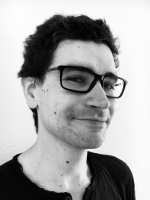
Ralph Hertwig is the Director of the Research Department of Adaptive Rationality and Deputy Managing Director of the Max Planck Institute for Human Development in Berlin. He holds honorary professorships at both the Free University of Berlin (since 2016) and Humboldt University of Berlin (since 2013). His research focuses on models of limited and ecological rationality, experience-based decisions, psychology of risk, development of decision-making processes across the lifespan, and evidence-based interventions to increase decision-making and self-control skills (boosting). Hertwig's work bridges cognitive science, psychology, and practical applications for improving decision-making in complex environments. Hertwig's recent publications reveal a strong focus on behavioral interventions against misinformation, risk perception across the lifespan, cross-species comparisons of decision-making, and the development of boosting techniques as alternatives to traditional nudging approaches. His work increasingly addresses digital challenges, misinformation, and democratic discourse in the attention economy. Selected honors: Gottfried Wilhelm Leibniz Prize (2017) Charlotte and Karl Bühler Prize (2006) Fellow, Association for Psychological Science (2011) Member, German National Academy of Sciences Leopoldina Hertwig actively contributes to multiple academic initiatives including the International Max Planck Research School on the Life Course (LIFE), the Max Planck School of Cognition, and the International Max Planck Research School for Computational Methods in Psychiatry and Aging Research (COMP2PSYCH). His keynote speeches worldwide demonstrate the broad impact of his research on decision-making science.
Jörg Müller is a Professor in the Department of Computer Science at the University of Bayreuth, Germany. His research focuses on Human-Computer Interaction (HCI), Virtual Reality (VR), and Augmented Reality (AR), with a strong emphasis on interaction techniques, public displays, and multimodal interfaces. He has held academic positions at multiple institutions including Aarhus University, HIIG, and RWTH Aachen University. His work spans technical contributions in haptic interfaces, biomechanical modeling, and user behavior analysis in VR environments. Notable projects include OptiTrap for acoustic levitation displays, SIM2VR for biomechanical testing in VR, and the boomRoom system for mid-air sound interaction. Müller collaborates extensively with industry partners like Telekom Laboratories and Siemens. Research interests include: interaction design for immersive environments, embodied interaction, and the social impact of extended reality technologies. His publications demonstrate leadership in CHI, UIST, and IEEE Visualization venues, with over 120 peer-reviewed articles since 2006. Current research priorities include optimizing VR workspace ergonomics, developing tactile feedback systems for mid-air interaction, and exploring public display networks for urban environments. Müller leads the Interactive Systems group at Bayreuth, supervising PhD students in VR engineering and spatial computing.
Prof. Dr.-Ing. Matthias Gaderer is a Professor of Renewable Energy Systems at the TUM Campus Straubing, Technical University of Munich. His research focuses on energy systems for heat, electricity, and fuels, with a particular emphasis on biomass, solar, and geothermal energy applications. He leads projects in combustion technologies, low-emission systems, and decentralized energy systems. Gaderer holds a doctorate from TUM and has extensive industry experience in process engineering. His work includes establishing applied biomass research at the Bavarian Center for Applied Energy Research and leading the research group 'Thermal Use of Biomass in High-Temperature Processes.' He is actively involved in committees such as the Scientific Committee of CEBC and Bavarian Science Forums. His teaching includes courses on energy systems and biomass utilization. Key projects include Reverion GmbH, FlexBioNeuro, and H2 real-world laboratory initiatives. Education: Process Engineering from TU Graz and KTH Stockholm. Research interests span thermochemical gasification, combustion technologies, and energy economics. His publications emphasize biomass gasification, hydrogen production, and sustainable energy systems. He collaborates on EU-funded projects like E2Fuels and leads teams in developing innovative energy solutions.
Malte Friese is a Full Professor of Social Psychology at Saarland University's Department of Psychology within the Faculty of Empirical Humanities and Economics. He holds multiple leadership roles including Speaker of the Research Training Group 'Flexibility and Balance as Characteristics of Adaptive Self-Regulation' (RTG 2988) and Coordinator of the Graduate Program in Psychology. Previously, he held academic positions at the University of Basel and visiting fellowships at the University of Toronto, University of Utrecht, and University of Queensland. Education: Habilitation in Psychology, University of Basel (2012) Ph.D. in Psychology, University of Basel (2008) M.Sc. in Psychology, University of Heidelberg (2003) B.Sc. in Psychology, University of Trier (1999) Friese's research examines psychological flexibility mechanisms in self-regulation, decision-making, and social behavior. His work integrates social psychology with cognitive science to investigate: 1) Cognitive and motivational underpinnings of self-control, 2) Implicit processes in judgment and behavior, 3) Mindfulness-based interventions, and 4) Cross-cultural determinants of moral judgment. His recent projects explore strategy flexibility in goal pursuit, meta-cognitive aspects of self-regulation, and societal influences on ethical decision-making. Analyses of recent publications (2023-2025) reveal strong emphasis on meta-analytic approaches to resolve theoretical debates (e.g., ego-depletion controversy), multinational collaborations examining cultural variations in psychological phenomena, and applied research on behavioral interventions. Methodologically, his work combines experimental paradigms, longitudinal designs, and psychometric scale development. Awards & Honors: Förderpreis Psychologie (2018) Teaching Excellence Awards (2013-2017) Jos Jaspars Early-Career Award (2011) Steven Karger Dissertation Prize (2008) He has supervised over 15 doctoral students and secured competitive grants from the German Research Foundation (DFG), Volkswagen Foundation, and Swiss National Science Foundation. Current projects investigate AI's impact on healthcare relationships and cognitive biases in physical activity adoption. Friese leads the Social Psychology Lab at Saarland University and serves on editorial boards for Motivation Science and Health Psychology Review.
Prof. Dr. Michael Merz holds the Chair of Mathematics and Statistics in Economics at the University of Hamburg's Faculty of Business Administration. He specializes in actuarial science, risk management, and quantitative finance. His research focuses on stochastic claims reserving, solvency frameworks (Basel II/Solvency II), credibility theory, and risk-adjusted performance measurement. Education: Completed his Diplom in Mathematics (1.1 grade) at the University of Tübingen (2001) with a focus on stochastic processes and mathematical statistics. Earned his PhD (summa cum laude) in 2004 at Tübingen with a thesis on credibility models using orthogonal projections. Previously studied in Valencia, Spain (1998-1999). Research Interests: Actuarial valuation, stochastic reserving methods, risk theory, filter/control theory applications in finance, and capital allocation strategies. Key areas include Solvency II compliance, pricing models for insurance risks, and quantitative risk management frameworks. Publications: Authored/co-authored influential works like Financial Modelling, Actuarial Valuation and Solvency in Insurance (Springer, 2013) and Stochastic Claims Reserving Methods in Insurance (Wiley, 2008). Recent articles address claims uncertainty quantification, multivariate reserving models, and cost-of-capital approaches. Awards: SCOR Prize for Actuarial Science (2004), Promotionspreis der Universität Tübingen (2005), and academic distinctions in physics competitions during high school. Professional Roles: Program director for the Wirtschaftsmathematik program, speaker of the Institute for Statistics and Econometrics, and adjunct faculty at the University of Basel's Actuarial Science program. Served as actuary at Basler Versicherung (2004-2006) and held junior professorships at University of Tübingen (2006-2009).
Prof. Michael N. Smolka is a Professor in the Department of Psychiatry and Psychotherapy, focusing on neuro-cognitive mechanisms underlying addictive behaviors. His research employs longitudinal approaches to study addiction development, maintenance, and recovery, integrating computational modeling of behavior with functional MRI to map brain systems. Key areas include executive functions, decision-making, learning, and motivation. He contributes to research consortia such as SFB 940 and TRR 265. Research interests emphasize brain-behavior interactions in mental health, with studies on genetic risk factors, environmental influences, and neuroimaging correlates of psychiatric disorders. His work bridges clinical psychiatry with cutting-edge computational methods, aiming to develop diagnostic tools and personalized interventions. Recent studies explore machine learning applications for predicting substance use disorders and eating disorders, alongside investigations into developmental trajectories of brain morphology and cognitive control mechanisms. Publications highlight interdisciplinary approaches, linking genetic, environmental, and neurobiological factors to addictive behaviors and mental health outcomes. His contributions to frameworks like brain-derived nosology and diathesis-stress models reflect his commitment to advancing translational research in psychiatry.
Prof. Kathrin Greiff is a University Professor at the Chair of Anthropogenic Material Cycles and Institute of Processing, Coking, and Briquetting at RWTH Aachen University's Faculty of Georesources and Materials Engineering. Her work focuses on advancing circular economy principles through innovative recycling technologies, sensor-based material flow analysis, and sustainability assessments. She leads research initiatives like the DACE Academy and the Material Assessment Lab, which explore sensor integration, waste valorization, and decarbonization strategies in industrial processes. Her research interests include optimizing mechanical recycling processes for plastics and construction materials, developing machine learning-driven sorting systems, and evaluating environmental impacts across material lifecycles. Recent projects highlight applications in lightweight packaging waste, steel forging decarbonization, and polystyrene insulation recycling. She collaborates closely with industry to translate research into scalable solutions for sustainable material management. Prof. Greiff’s publications emphasize technical feasibility studies, life cycle assessments, and cross-disciplinary approaches to circular economy challenges. Her work contributes to policy frameworks for sustainable resource use and eco-design principles in manufacturing.
Prof. Dr. Haris Gačanin is a faculty member at RWTH Aachen University, affiliated with the Institute for Distributed Signal Processing under the College of Electrical Engineering. His research focuses on integrating machine learning with wireless communication systems, particularly in industrial IoT, edge computing, and network optimization. Current academic rank: Professor Contact: harisg@dsp.rwth-aachen.de Research Interests: Wireless systems, machine learning, signal processing, and network optimization. Key contributions include: Adaptive resource allocation in IIoT and vehicular networks AI-driven channel estimation and feedback mechanisms Security-oriented emitter identification via metric learning Federated/transfer learning for edge environments Hardware-efficient deep learning models for mmWave and THz communications Methodological Focus: Combines reinforcement learning, attention mechanisms, and robust neural architectures with practical implementations on FPGA and vehicular systems.
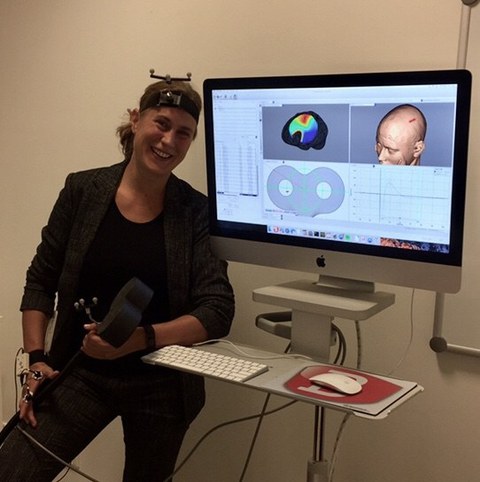
Franziska M. Korb is a Researcher at the Institute of General Psychology, Biopsychology and Methods of Psychology at Technische Universität Dresden. She holds a PhD in Psychology from the University of Leipzig (2008) and has conducted extensive postdoctoral research at institutions including Duke University (USA), the Max Planck Institute for Human Cognitive and Brain Sciences (Leipzig), and the University Clinic Cologne. Her research focuses on cognitive control mechanisms, decision-making processes, and the neural underpinnings of self-control and emotional regulation. She has received awards such as the Charlotte Bühler Award for teaching excellence (2014) and grants for pilot studies and travel. Korb is also an ad-hoc reviewer for multiple prestigious journals and research councils. Her academic journey includes a diploma in Psychology from Leipzig (2004) and research internships at UC San Diego and the Max Planck Institute. She explores topics like brain networks (e.g., salience network), decision conflict, and the role of anticipated emotions in self-regulation. Her work combines neuroimaging (fMRI, EEG), transcranial stimulation (TMS/tDCS), and behavioral experiments to study cognitive and affective processes in health and clinical populations (e.g., anorexia nervosa). Research Highlights: Investigates how brain connectivity predicts self-controlled choices. Examines neural mechanisms of honesty and reward circuits in moral decisions. Studies framing effects in food choices and future consequences in health behaviors. Explores cognitive effort tolerance and dark triad personality traits. Awards and Grants: Charlotte Bühler Teaching Award (2014) DAAD Travel Award (2014) DEFD Best Poster Award (2013) Start-up grant for pilot studies (2014) Professional Contributions: Active in open science initiatives, replication studies, and academic ethics education. Collaborates internationally, including with Duke University and the Max Planck Society.
Dr. Alexander Gebharter is associate professor in the Department of Biomedical Sciences and Public Health at Marche Polytechnic University (UNIVPM) in Ancona, Italy, co-director of the Center for Philosophy, Science, and Policy (CPSP), and an external member of the Munich Center for Mathematical Philosophy (MCMP) at Ludwig Maximilian University of Munich. His work spans philosophy of science, epistemology, metaphysics, and philosophy of mind, with a strong focus on causation, interventionism, and mechanistic modeling. Education: PhD in Philosophy, University of Duesseldorf, Germany (2016) MA in Philosophy, University of Salzburg, Austria Research Interests: Gebharter’s research addresses foundational and methodological questions in philosophy of science, especially the nature of causation, mechanistic explanation, and the formal tools used to represent causal relationships. He employs causal Bayes nets, probabilistic modeling, and interventionist frameworks to investigate higher-level causation, free will, scientific explanation, and the structure of scientific theories. His work often sits at the intersection of metaphysics and epistemology, exploring how causal relations underpin explanation, prediction, and confirmation. Funding & Leadership Roles: Principal Investigator, PRIN PNRR project “Controlling and Utilizing Uncertainty in the Health Sciences (CUUHS)” Principal Investigator, DFG project “Interventions and Mechanistic Hierarchies” (441311834) Member, SNF & DFG project “Beyond Causal Exclusion: New Challenges for Multi-Level Causal Models” Former member, DFG research units Inductive Metaphysics (FOR 2495) and Causation, Laws, Disposition, Explanation (FOR 1063) Member, ANR project “Insights from Bolzano” Editorial & Service: Editor-in-Chief, KRITERION – Journal of Philosophy Category Editor, PhilPapers: Causal Reasoning & Causal Modeling Honorary Treasurer, German Society for Philosophy of Science (GWP) Laboratory & Team: Gebharter heads interdisciplinary teams at UNIVPM and collaborates closely with researchers at the University of Turin, LMU Munich, and other European institutions, integrating philosophy with biomedical and public-health research.
Prof. Dennis Kolberg serves as Professor of Industrial Engineering at Lübeck University of Applied Sciences, holding dual leadership roles as Head of Industrial Engineering Bachelor/Master programs and Head of the Institute for Entrepreneurship and Business Development (IEBD). His career uniquely bridges academic research and industry implementation, with recent executive experience as Chief Product Officer at DIGIMONDO (2020-2023) and co-founding SPARETECH (2019). M.Sc. Industrial Engineering, University of Bremen (2007-2014) Ph.D. in Industrial Engineering, Technical University of Kaiserslautern (2014-2018) focusing on Industry 4.0 and Lean Management Vocational Training as Industrial Clerk, RK Rose+Krieger (2004-2007) His research pioneers the integration of lean production methodologies with digital technologies , specializing in Industry 4.0 implementation and OT/IT convergence for manufacturing environments. Key contributions include developing reference architectures for cyber-physical production systems and optimizing human-machine interfaces through lean automation principles. Current work emphasizes digital transformation in B2B contexts , particularly for software startups in industrial settings. Publications from 2015-2022 reveal a consistent trajectory from foundational CPS architectures toward applied IoT solutions, with recent focus on digital twins for production optimization. His work consistently bridges theoretical frameworks and practical implementation , demonstrating how lean principles enhance digital transformation outcomes in manufacturing. Kolberg actively supervises bachelor's and master's theses at Lübeck University of Applied Sciences, with students registering via email for thesis topics. His industry background informs practical research directions, though specific grant funding isn't detailed in available sources. As IEBD Director, he drives academic-industry partnerships focused on digital entrepreneurship. Leading the Institute for Entrepreneurship and Business Development, Kolberg oversees initiatives connecting academic research with business development in digital manufacturing. Previously at DFKI's SmartFactory KL, he directed research on changeable cyber-physical production systems, establishing methodologies now applied in his current industry collaborations.
Andreas Lemmer serves as a Privatdozent (equivalent to Associate Professor) at the University of Hohenheim, where he holds a scientific staff position at the State Institute for Agricultural Engineering and Bioenergy. He actively teaches core courses including Fundamentals of Agricultural Engineering, Process Technology of Biogas Production and Utilization, and Project Design of Plants for Renewable Resources for the upcoming Winter Semester 2025/26. His research centers on advancing bioenergy systems through biogas optimization and renewable fuel production. Key focus areas include enhancing methane yield from challenging feedstocks like horse manure using mechanical pretreatment, developing machine learning models for anaerobic digestion stability prediction, and creating resource-efficient bio-LNG production chains. His work bridges agricultural engineering, environmental technology, and sustainable resource management with strong practical implementation in full-scale biogas facilities. Lemmer's recent publications demonstrate a clear trajectory toward industrial-scale bioenergy solutions, particularly in integrating agricultural residues into circular economy models and optimizing process economics for grassland biomass utilization. His work consistently addresses real-world implementation challenges in biogas technology and renewable fuel production chains. He leads significant research initiatives including the Hohenheimer Biogasforum 2023 and industrial research projects on bio-LNG/CNG production chains for bus operations using manure and organic residues. Current projects focus on resource-efficient bio-LNG production processes developed in collaboration with the State Institute for Agricultural Engineering and Bioenergy and the Field of Agricultural Engineering in the Tropics and Subtropics.
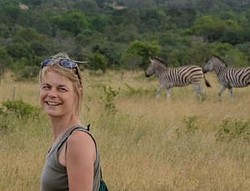
Anna Treydte is an Associate Professor in Nature and Environmental Management with a focus on Sustainable Development at Stockholm University's Department of Physical Geography. She also holds Adjunct Professor positions at the University of Hohenheim (Ecology of Tropical Agricultural Systems) and the Nelson Mandela African Institution of Science and Technology (Department of Life Sciences and Bioengineering). Her work spans multiple continents, addressing biodiversity conservation and human-wildlife coexistence across temperate climates (Germany, Sweden, Italy), desert environments (Mongolia, Saudi Arabia), savanna systems (eastern and southern Africa), mountain regions (Andes), and tropical forests (China, Vietnam, Thailand, Tanzania). Dr. Treydte's research centers on biodiversity and conservation challenges in human-impacted, changing environments. She investigates how climate change and human activities alter structural, species, and functional biodiversity in natural and agro-ecological systems. Her work examines plant-animal interactions, animal population management, human-wildlife coexistence, and livestock impacts on rangelands. She specifically studies shifts in nutrient cycling, carbon stocks, and species diversity in landscapes under varying human land use pressure, including corridors, buffer zones, protected lands, and cultivated areas facing climate-induced weather extremes. She integrates socio-ecological aspects into her research, emphasizing that sustainable human-wildlife coexistence requires local stakeholder involvement in resource use decision-making. Analysis of her recent publications reveals a strong focus on landscape ecology, rangeland management, and human-wildlife conflict across diverse ecosystems. Her work combines field observations, GPS tracking of wildlife and livestock, socio-ecological surveys, and advanced spatial modeling techniques. Key thematic areas include pastoral mobility patterns, invasive species management, pollination networks in rangelands, and the impacts of land use change on wildlife habitat suitability. Her research consistently addresses the intersection of ecological processes and human livelihoods in changing environments. Dr. Treydte actively supervises numerous PhD, MSc, and BSc students across multiple institutions, with current projects investigating human-wildlife coexistence in Sweden and Tanzania, rangeland restoration techniques, and invasive plant species management. She leads several major research projects including 'Human-Wildlife Coexistence: Reaching a sustainable human-wildlife coexistence by understanding patterns, predicting conflict hotspots and improving communication' and 'Rangeland Ecology: Adapting to change – co-management scenarios of local pastoralists and protected area management to maintain cultural and biological diversity in the Dzungarian Gobi, Mongolia.' Her laboratory, 'NG| Landscape Ecology,' focuses on how landscape patterns, climate, and land use influence ecological processes, biodiversity, and ecosystems. The group employs interdisciplinary approaches that bridge natural and social sciences to address contemporary environmental challenges in a changing world.
Evgeny Khorov is a Full Professor and Deputy Chair at Moscow Institute of Physics and Technology (MIPT) and Head of the Wireless Networks Lab at the Institute for Information Transmission Problems of the Russian Academy of Sciences (IITP RAS) and the Telecommunication Systems Lab at Higher School of Economics (HSE). His research focuses on 5G/6G systems , next-generation Wi-Fi , Wireless IoT , and QoS-aware optimization. Ph.D. (2012) and D.Sc. (2022) in Telecommunications from IITP RAS and MIPT Visiting Research Fellow at King's College London (2015) His work includes mathematical modeling of networking protocols, Wi-Fi standardization (IEEE 802.11), and contributions to Wi-Fi 6 (802.11ax) and Wi-Fi 7 (802.11be) . He supervises students and has co-authored over 200 papers. Recent articles highlight advancements in Wi-Fi 7/8 , URLLC , 5G multi-connectivity , and machine learning for traffic classification . Scientific Awards: Best Demo Award, ACM Mobihoc (2022) Best Paper Awards: IEEE ISWCS (2012), Elsevier Computer Communications (2018), IEEE PIMRC (2019) Moscow & Russian Government Prizes for Young Scientists (2013, 2016) Scopus Award Russia (2018) Best Cooperation Project Leader (multiple times) He serves as Editor-in-Chief of Problems of Information Transmission (since 2024) and chairs major IEEE conferences (Globecom 2018 Workshop, BlackSeaCom 2019).
Prof. J. Rod Franklin, PhD is a Full Professor of Logistics and Academic Director of Executive Education at Kühne Logistics University (KLU) in Hamburg, Germany. With an extensive background spanning both academia and industry, Professor Franklin brings deep practical experience to his academic role. He has held significant leadership positions at KLU, including Dean of Programs, and was instrumental in the university's planning stages as he states: "KLU is near and dear to my heart, because I was one of the individuals that helped plan the university." His unique blend of academic rigor and industry expertise makes him a central figure in KLU's mission of providing world-class logistics education and research. Professor Franklin's academic foundation is impressive: Doctorate of Management, Case Western Reserve University, USA (2000) Master of Business Administration, Harvard Graduate School of Business, USA (1979) Master of Science in Mechanical Engineering, Stanford University, USA (1975) Bachelor of Science in Mechanical Engineering, Purdue University, USA (1974) His research focuses on applying modern management techniques to supply chain operations, with pioneering work in sustainable business models, green logistics, corporate social responsibility, and cloud-based supply chain management. Professor Franklin is a leading authority on the Physical Internet concept, which seeks to revolutionize logistics through interconnected systems inspired by the digital internet. His research consistently bridges theoretical frameworks with practical industry applications, addressing critical challenges in modern logistics networks while promoting sustainability and efficiency. Professor Franklin's publication record over the past two decades reveals a clear evolution from traditional logistics service innovation toward cutting-edge research on the Physical Internet, predictive analytics, and big data applications in supply chains. His recent work demonstrates increasing emphasis on urban logistics solutions, sustainability challenges, and the integration of digital technologies with physical logistics networks. His seminal 2020 paper "From the Digital Internet to the Physical Internet" has significantly advanced the conceptual framework for this emerging field, while his 2024 protocol design work continues to push the boundaries of practical implementation. Professor Franklin leads significant research initiatives including "Accelerating the Path Towards Physical Internet - SENSE," "Internet of Food and Farm 2020," and "URBANE - Upscaling innovative green urban logistics solutions." His work has been published in top-tier journals including Journal of Business Logistics, IEEE Transactions on Systems, Man and Cybernetics, and International Commerce Review, demonstrating substantial scholarly recognition. While specific individual awards aren't detailed in available information, his leadership in major funded research projects indicates significant institutional support for his work. As Academic Director of Executive Education at KLU, Professor Franklin oversees programs that effectively bridge academic theory with industry practice. His teaching portfolio includes MBA courses on Critical Thinking, Design Thinking, Managing Multiple Complex Expectations, and Systems Thinking - all emphasizing practical application of theoretical concepts. His extensive industry background, including executive roles at Kühne + Nagel and other major logistics firms, directly informs his approach to academic supervision and executive education. Professor Franklin has successfully secured research funding for multiple projects focused on sustainable logistics innovation, demonstrating his ability to translate theoretical concepts into impactful research initiatives. Professor Franklin leads collaborative research teams focused on the Physical Internet concept and its applications in modern logistics. Through projects like SENSE and URBANE, he works with international researchers, industry partners, and policymakers to develop innovative solutions for sustainable urban logistics. His research integrates expertise from computer science, operations research, and business management to address complex supply chain challenges. The BizSLAM App, developed as part of his work on multi-level SLA management, exemplifies his team's ability to create practical tools with direct industry applications, demonstrating the real-world impact of his research vision.