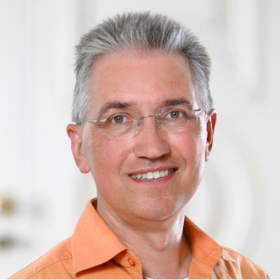
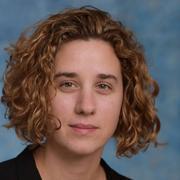
Michael Grüning is an Adjunct Professor at the Faculty of Business Administration and Media, Ilmenau University of Technology, since March 2013. Previously, he served as Professor of Accounting and Management Control at Frankfurt School of Finance and Management (2011–2013). He has held visiting professorships at Tecnológico de Monterrey (Mexico) and Universidad Católica de Córdoba (Argentina) and taught at the University of Potsdam, European Business School (EBS), and Virtual Global University (VGU). His research focuses on Performance Measurement , Corporate Disclosure , and Corporate Governance . Recent publications analyze governance mechanisms, XBRL technology, and cross-border compliance frameworks. His work bridges theoretical models with practical implementations in transition economies and digital reporting standards. He serves on the editorial board of the International Journal of Accounting and reviews for journals such as Journal of Applied Accounting Research and Management Research News . Key affiliations include memberships in the American, British, and European Accounting Associations, as well as the Roland Berger Academic Network.
Stefan Schiffer is a postdoctoral research associate at RWTH Aachen University in the Department of Society, Technology, and Human Factors at the Human Technology Center (HumTec), and also serves as research coordinator at the Mobile Autonomous Systems and Cognitive Robotics Institute (MASCOR) at FH Aachen University of Applied Sciences. He previously held a postdoctoral position at the Knowledge-based Systems Group (KBSG) at RWTH Aachen University. Ph.D. (Dr. rer. nat.) in Computer Science, RWTH Aachen University, 2014 Diploma (Dipl.-Inform., M.Sc. equivalent) in Computer Science, RWTH Aachen University, 2005 Specialization: Artificial Intelligence, minor in Medicine Stefan Schiffer's research focuses on cognitive robotics, domestic service robotics, and human-machine interaction, with a strong emphasis on embodied artificial intelligence and AI in computer games. His work integrates knowledge representation, automated planning, and fuzzy logic to enable robust and adaptive robot behaviors in real-world environments. He has made significant contributions to natural language processing in robotics and gesture recognition for human-robot collaboration. His recent publications (2023) span diverse applications of AI, including anomaly detection in manufacturing, demand forecasting, AI-based skill development, and human-robot collaboration in composite production. These works reflect a trend toward practical, industry-integrated AI systems that support human workers and optimize industrial processes. Best Paper Award Nominee, BIOIMAGING 2018 Best Poster Award, LingUnite 2013 Best Student Paper Award, ICAART 2012 Best Student Paper Award, RoboCup 2008 Symposium World Champion, RoboCup 2007 and 2006 Winner, RoboCup German Open 2008 and 2007 2nd Place, RoboCup 2008 3rd Place, Sun Software Price 2001 Stefan Schiffer has supervised numerous student theses in areas such as knowledge-based activity representation, AI for arcade games, object recognition, plan recognition, and multi-modal tracking. He has been actively involved in academic service, serving on the program committees of major AI conferences including AAAI, IJCAI, ECAI, and ICAART. He has taught a wide range of courses in artificial intelligence, robotics, and knowledge representation, and has coordinated master's programs in Software Systems Engineering and Computational Social Systems. He leads research efforts in the Angry Birds AI Competition as Team Akbaba and has been instrumental in the RoboCup@Home league as both team leader and league chair. He is affiliated with several research initiatives, including MASCOR at FH Aachen, and has contributed to projects involving autonomous mining vehicles, AI in textile and metal industries, and smart factory setups based on RoboCup Logistics League. His work bridges academic research and industrial application, emphasizing human-centered AI and robotics.
Prof. Jürgen Adamy is a Professor at Technische Universität Darmstadt, leading the Control Methods and Robotics lab since 1998. His research focuses on Control and Systems Theory, Mobile Robotics, Autonomous Systems, and Artificial Intelligence. He previously held engineering roles at Siemens AG (1992–1998) and was a Scientific Assistant at Universität Dortmund (1987–1991). His work integrates theoretical advancements with practical applications in robotics, energy systems, and autonomous vehicles. Research interests span nonlinear control, autonomous navigation, and multi-objective optimization. Notable contributions include PRORETA systems for urban driving safety and UAV path-planning algorithms. Recent articles emphasize remote driving performance, energy management, and bioengineering's role in societal progress. His lab develops technologies for smart grids, human-robot cooperation, and advanced control systems. Collaborations include Siemens and interdisciplinary projects like bio-engineering applications. He has advised numerous projects in robotics and control theory, though specific student names are not listed here.
Prof. Peter Middendorf is a Professor and Head of the departments Lightweight Design and Simulation and Manufacturing Technologies at the Institute of Aircraft Design, University of Stuttgart. His research focuses on lightweight design principles, advanced manufacturing technologies, and wind energy systems. He leads projects in aircraft design, sustainable aviation, and wind energy innovation, including the Stuttgart Wind Energy initiative. Key research areas include aerodynamic optimization, floating offshore wind turbines, lidar-based control systems, and wind farm layout design. He has contributed to advancements in mooring system optimization, turbine load reduction, and energy production efficiency. His work integrates computational fluid dynamics (CFD), machine learning for predictive maintenance, and experimental validation through wind tunnel testing. Collaborations span industry and academia, addressing challenges in renewable energy integration and grid stability. Prof. Middendorf oversees the Stuttgart Wind Energy Chair, established in 2004, which pioneers wind turbine system analysis and sustainable energy solutions. His team investigates noise reduction, grid compatibility, and cost-effective wind energy technologies.
Thomas Neifer is a Research Associate and PhD student at the Department of Management Sciences at Hochschule Bonn-Rhein-Sieg (H-BRS). He teaches courses including "Data Analytics and Development using Python" (Business Informatics), "Case Studies Data Analytics" (Master's program), and contributes to certificate programs like "Data Strategist" and practical projects such as "Cloud Lab." Location: Sankt Augustin, Room G 123 Email: thomas.neifer@h-brs.de Phone: +49 2241 / 865-9886 His research focuses on data science applications for mobility systems, human-computer interaction, and algorithmic trust-building. He actively contributes to open-source platforms like MIAAS for mobility data analysis and has published on topics ranging from machine learning techniques to digital sovereignty and sustainable consumer technologies. Recent publications reveal a strong emphasis on shared mobility solutions (peer-to-peer carsharing, electric micromobility), data-driven decision-making (regression analysis, Markov chain methods), and user-centered digital systems (recommender systems, voice interfaces). His work often bridges computational methods with real-world business and sustainability challenges. Best Paper Award at ICE-B 2021 Member of People for the Ethical Treatment of Animals (PeTA) since 2023 Thomas collaborates with researchers across Europe on projects like MIAAS, which develops open-source mobility dashboards. His teaching and research integrate practical project work with theoretical advancements in data science and intelligent automation.
Johannes Schlaich is a Professor of Mobility and Transport at the Berlin University of Technology , with a focus on integrated transport planning, traffic modeling, and digitalization in transport. His research includes strategic demand modeling, shared mobility, and future mobility systems.
Christoph Düsing is a researcher at the Semantic Databases Group within the Faculty of Engineering at Universität Bielefeld . He also contributes to the Center for Cognitive Interaction Technology (CITEC) and provides academic advising for the Master Data Science program at the Faculty of Business Administration and Economics . Research Interests: Federated Learning and distributed AI systems Explainable AI (XAI) for clinical applications Clinical Decision Support Systems for sepsis treatment Graph Neural Networks for social influence modeling Data imbalance and client contribution analysis in collaborative AI Impact of AI on labor market dynamics Recent Publications focus on federated learning applications in healthcare, explainability mechanisms, and graph-based AI solutions. Key themes include sepsis management, antibiotic therapy optimization, and social commerce platform analysis. Labs & Collaborations: Semantic Databases Group, Faculty of Engineering Center for Cognitive Interaction Technology (CITEC) Interdisciplinary projects with healthcare institutions
Professor Moritz Fleischmann serves as Vice President for Sustainability and International Affairs at the University of Mannheim , while holding the Chair of Supply Chain Management in its Business School. With a background in Mathematics, Business, and Economics from Bayreuth, Bordeaux, and Ulm, he earned his PhD in General Management (2000) at Erasmus University Rotterdam, focusing on reverse logistics. Assistant Professor (Quantitative Methods), Erasmus University Rotterdam (until 2004) Associate Professor (Supply Chain Management), Erasmus University Rotterdam (2004–2009) Chair of Supply Chain Management, University of Mannheim (2009–present) Academic Director, ESSEC–Mannheim Modular Executive MBA Program (2011–2019) Interim Acting Dean (2019) and Vice Dean (2019–2020), Mannheim Business School His research spans reverse logistics , sustainable supply chains , inventory control , and dynamic pricing . A pioneer in closed-loop supply chain modeling, he has developed frameworks for recycling credit allocation, attended home delivery optimization, and vendor-managed inventory systems. His work bridges theoretical operations research with practical applications in plastics production, e-commerce, and agrochemical industries. From 2023 to 2024, he led institutional sustainability initiatives and international collaborations. His 15 most recent publications (2025–2020) focus on tackling contemporary challenges like circular economy strategies , crisis logistics , and AI-driven inventory optimization , reflecting his commitment to sustainability and innovation in supply chain operations.
Prof. Dr. Holger Hesse serves as Professor and Head of the Institute of Energy and Drive Technology at Kempten University of Applied Sciences' Faculty of Mechanical Engineering, appointed to the Research Professorship in Smart Energy Systems on September 1, 2022. Previously, he was Deputy Head at the Chair of Electrical Energy Storage Technology at Technical University of Munich (TUM). His educational background includes: PhD in Physics on organic photovoltaics from LMU Munich and University of Wollongong, Australia Research stays at UC Santa Barbara and Cambridge University Hesse's research focuses on energy storage systems with emphasis on: Optimization of battery systems for grid services and EV charging infrastructure Modeling of battery degradation and aging-aware control strategies Carbon footprint analysis of storage applications Economic evaluation in evolving energy markets Machine learning for state estimation and lifetime prediction Analysis of his 2023-2025 publications reveals strong trends toward deep reinforcement learning for energy management, probabilistic aging prediction, and real-time optimization of heterogeneous storage systems. Key developments include thermal-aging integrated control, market-adaptive revenue stacking, and environmental impact quantification through frameworks like Energy System Network. As head of the Institute of Energy and Drive Technology, Hesse leads the Stationary Energy Storage Systems (SES) research group, advising graduate students and collaborating with industry partners on smart energy system development and sustainable mobility solutions.
Vivek Tanjavooru is a Research Fellow at the Institute of Energy and Drive Technology within the Allgäu Research Center at Kempten University of Applied Sciences. He specializes in energy systems, battery optimization, and thermal modeling, with a focus on industrial applications and grid technologies. His research spans battery energy storage systems, including power split control algorithms, degradation-aware dispatch optimization, and state-of-charge balancing with spatial thermal analysis. Recent work emphasizes real-time simulation feedback and heterogeneous battery systems, particularly for second-life applications. Key trends in his publications highlight integration of thermal-electric grid dynamics, additive manufacturing for automotive components, and predictive maintenance strategies. He collaborates on projects involving energy efficiency, sustainable systems, and industrial innovation.
Thomas Miedaner is a Professor at the State Seed Breeding Institute of the University of Hohenheim, Germany. Since 1988, he has led the Rye & Biotic Stress Working Group, focusing on resistance genetics in cereals and maize. Academic Milestones : 2005 appointment as extraordinary professor, 1998 Habilitation in plant breeding Research Focus : Fusarium diseases, rust resistance, genomic selection, hybrid breeding systems, and cereal stress tolerance His career spans over 35 years with significant contributions to plant breeding and resistance genetics . Key research areas include: Molecular mapping of rust resistance genes Genomic selection in rye breeding Human-mediated plant/pathogen migration Fusarium-ergot interactions Hybrid rye breeding optimization Population genetics of cereal diseases Publications show a strong emphasis on genomic approaches for disease resistance and breeding methodology across multiple cereal crops. His work bridges classical breeding with modern genomic tools to address agricultural challenges. Key projects include: FusStalk: Fusarium stalk rot resistance in maize RoggenPop: Winter rye genomic selection for organic farming Hybrid rye breeding frameworks
Prof. Dr.-Ing. Andreas Jupke is a University Professor at the Department of Fluid Process Engineering of the School of Mechanical Engineering , RWTH Aachen University, since September 2014. His research focuses on purification strategies for biotechnological processes and innovative approaches for intensifying extraction processes . He leads a team conducting interdisciplinary research in chemical engineering, biotechnology, and sustainable process design. Education: Studied Chemical Engineering at TU Dortmund (1988–1994) Diploma in Chemical Engineering (1994) Doctorate (Dr.-Ing.) in preparative chromatography at TU Dortmund (2003) His work spans liquid-liquid extraction , reactive extraction , electrochemical separations , and process modeling with applications in biofuels, bioproducts, and sustainable chemical synthesis. Recent publications emphasize solvent design , digital twins for extraction columns , and integration of microbial/enzymatic/organometallic catalysis . Scientific Trends: His research integrates thermodynamic modeling , computational fluid dynamics , and data-driven hybrid approaches to optimize extraction processes, crystallization, and biorefinery systems. Publications frequently address pH-shift separations , microbial product recovery , and process intensification via multiphase reactors . Students & Collaborations: While direct advisees are not explicitly listed, his work involves collaborations with researchers at TU Dortmund, Bayer Technology Services, and interdisciplinary teams in projects like MIX-UP and Carbon2Chem.
Tobias Kasper Skovborg Ritschel serves as Assistant Professor (Tenure Track) in the Department of Applied Mathematics and Computer Science (DTU Compute) at the Technical University of Denmark. His research bridges theoretical advances in control systems with practical implementation across energy systems, bioreactors, epidemiology, and medical applications. Ritschel directs a productive research program focusing on computational methods for complex dynamical systems with rigorous thermodynamic foundations. His educational background demonstrates deep technical training: PhD in Applied Mathematics (2015-2018), Technical University of Denmark MSc in Mathematical Modeling and Computation (2013-2015), Technical University of Denmark BSc in Mathematics and Technology (2010-2013), Technical University of Denmark Ritschel's research expertise spans multiple domains of control theory and mathematical modeling. His core competencies include stochastic adaptive control, model predictive control, and optimal control frameworks applied to nonlinear dynamical systems. He specializes in numerical methods for differential equations (stochastic, partial, delay, and differential-algebraic) with computational implementations in MATLAB, C/C++, and Python. His application areas demonstrate remarkable breadth: from oil reservoir management and nuclear power systems to bioreactor operations, epidemiological modeling, and diabetes management technologies. Analysis of his publication trajectory reveals a strategic evolution from foundational work on thermodynamically rigorous reservoir simulation toward increasingly diverse applications. Early publications (2017-2019) focused on oil and gas applications with rigorous phase equilibrium modeling, while recent work (2020-2024) addresses pressing societal challenges including pandemic response strategies, power grid flexibility for renewable integration, and biomedical control systems. This demonstrates his ability to transfer core methodological expertise across disparate application domains while maintaining mathematical rigor. Dr. Ritschel actively supervises numerous students across all academic levels, with recent BSc projects focusing on molten salt reactors and demand-side flexibility in power systems. His teaching portfolio includes advanced graduate courses in stochastic adaptive control, dynamical systems, and time series analysis. He maintains strong industry connections through EU-funded projects including COCOP (Horizon 2020) and OPTION (Innovation Fund Denmark).
Ayala Arad is a Full Professor at the Coller School of Management, Tel Aviv University. She serves as the Head of the Solomon Lew Center for Consumer Behavior and Director of the Interactive Decision Making Lab. She earned her PhD in Economics from Tel Aviv University in 2011 and completed postdoctoral research at the University of California, Berkeley (2011-2013). Her research investigates bounded rationality in individual and strategic decision-making through experimental methods. Key domains include: Psychology and economics Behavioral game theory Experimental microeconomics Cognitive aspects of choice under uncertainty Design of incentive systems Her publications demonstrate a consistent focus on developing behavioral models of decision-making, with recent work examining team-based reasoning, communication effects, and multidimensional strategic interactions. Research frequently employs controlled experiments to test theoretical predictions. She leads the Interactive Decision Making Lab, specializing in experimental studies of strategic behavior and consumer choice.
Pia Pinger is Professor at the Department of Economics, University of Cologne, and serves as Speaker of the excellence cluster ECONtribute - Markets & Public Policy . She holds affiliations as IZA Research Fellow and CESifo Affiliate, with research spanning human capital, socioeconomic inequalities, and behavioral economics. Her educational background includes a Ph.D. from the University of Mannheim. Pinger's work employs causal inference methods to examine how early-life conditions shape lifelong outcomes. She investigates educational decision-making through microeconometric analyses, explores socioeconomic disparities in childhood development, and integrates psychological frameworks into economic models. Her studies frequently bridge economics with demography and public health, revealing mechanisms behind intergenerational transmission of inequality. Publication trends indicate sustained focus on intergenerational health/economic effects (2016-2024), behavioral foundations of economic preferences (2017-2020), and labor market dynamics (2024). Recent work combines experimental designs with large-scale datasets to isolate causal relationships in wage negotiation and childhood development. Her scientific recognition includes: IZA Research Fellow Pinger leads project A02 within the ECONtribute cluster and mentors junior researchers through collaborative projects. Her secured funding supports investigations into human capital formation and policy interventions. Current work-in-progress examines parental investment patterns and talent attraction mechanisms. She directs research activities within the ECONtribute excellence cluster, coordinating interdisciplinary teams studying market behavior and public policy design. Her project leadership (A02) focuses on socioeconomic determinants of human capital development.