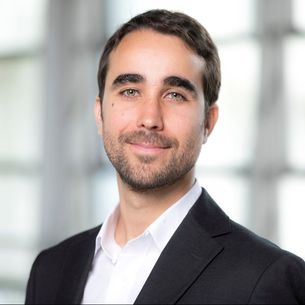
Max Troshkin is an Associate Professor of Economics at the University of Exeter Business School. He holds a Ph.D. in Economics from the University of Minnesota, advised by V.V. Chari and Larry E. Affiliations: University of Exeter Business School, Policy @Exeter Research Network Education: Ph.D. in Economics, University of Minnesota Research Interests: Focuses on macroeconomic and contracting aspects of public policies, including optimal taxation, social insurance, and pension systems. His work bridges micro and macroeconomic frameworks to address policy challenges in fiscal theory, public finance, and economic inequality reduction. Awards: Presidential Merrill Scholar Mentor Award (Cornell University) Edmund S. Muskie Fellowship (U.S. Department of State) Professional Contributions: Organizes research conferences, referees for leading journals (MIT Press, NSF), and contributes to sustainable development goals (SDG 10: Reduced Inequalities; SDG 16: Peace, Justice & Institutions). Engages in policy-related advising and committee memberships. Labs/Teams: Active in Policy @Exeter, a research network addressing public policy challenges through interdisciplinary collaboration.
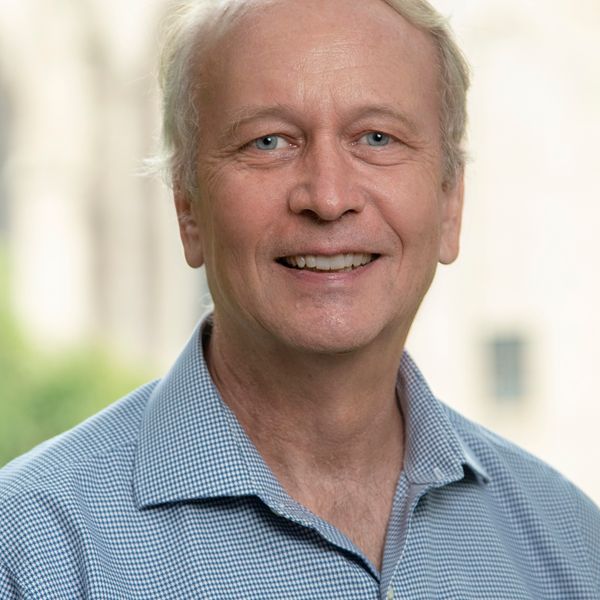
Bryan Dowd is a Professor in the Division of Health Policy & Management at the University of Minnesota. With a PhD in Public Policy Analysis from the University of Pennsylvania (1982), MS in Urban Administration from Georgia State University (1976), and BA in Architecture from Georgia Institute of Technology (1972), his work focuses on health economics , statistical modeling , and healthcare financing . PhD, Public Policy Analysis, University of Pennsylvania, 1982 MS, Urban Administration, Georgia State University, 1976 BA, Architecture, Georgia Institute of Technology, 1972 His research spans health insurance dynamics , payment models , and statistical methodologies in healthcare. Key themes include upcoding practices , instrumental variable applications , and policy implications of risk ratios . Publications often address healthcare access , economic incentives , and data-driven policy evaluation . Recent article trends highlight moral hazard decomposition , odds ratio critiques , and switching cost analysis in Medicare Advantage. These works emphasize causal inference , economic modeling , and policy design challenges . Contact: dowdx001@umn.edu
Ted O'Donoghue is the Zubrow Professor of Economics in the College of Arts and Sciences at Cornell University. He joined Cornell in 1997 and has held administrative roles, including Senior Associate Dean for Social Science (2015-2018) and Co-Chair of the Provost’s Review of the Social Sciences (2016-2018). He co-founded the Behavioral Economics Annual Meeting (BEAM) in 2009 and has served as a team leader for Cornell Institute for Social Sciences projects. Education: Dartmouth College, A.B. in Economics modified with Psychology (1990) University of California, Berkeley, Ph.D. in Economics (1996) His research focuses on behavioral economics, particularly intertemporal and risky choice, with applications to procrastination, self-control, and economic field behaviors. He explores how psychological insights inform economic decisions and has contributed to understanding sin taxes, incentive design, and affective processes in decision-making. Recent Research Trends: His recent articles examine experimental methods for analyzing risk preferences, behavioral interventions in policy, and decision-making in low-income contexts. Publications highlight dual-system models, probability weighting, and the interplay between affective and deliberative processes in economic behavior. Scientific Awards: Advising and Grants: Labs and Teams: O'Donoghue collaborates with interdisciplinary teams at Cornell’s Department of Economics and Institute for Social Sciences. He co-founded the Behavioral Economics Annual Meeting (BEAM), fostering annual discussions among ~100 active researchers in the field.
Andre Veiga is an Assistant Professor of Economics at the Imperial College Business School, affiliated with the Department of Economics and Public Policy at Imperial College London. He holds a PhD in Economics from the Toulouse School of Economics and was a postdoctoral fellow at Oxford University. His research focuses on theoretical and empirical Industrial Organization, particularly in healthcare, insurance, and digital markets. He explores how individuals and firms operate in these markets and the regulatory implications thereof. His work has been published in top journals like the American Economic Journal: Microeconomics, Journal of Marketing Research, and the Review of Economics and Statistics. Veiga’s research interests span Economic Theory, Applied Economics, and Econometrics. Key themes include price discrimination in selection markets, attention spillovers in digital advertising, and healthcare quality disparities. His articles often blend empirical analysis with theoretical models to inform policy. Notably, his work has been shortlisted for prestigious awards such as the SCOR/EGRIE Young Economist Best Paper Award and the Antitrust Writing Awards. He teaches courses on Digital Economics, Business Economics, and Microeconomic Theory at Imperial College, reflecting his expertise in contemporary market dynamics. His collaborations with institutions like the CEPR and media outlets like Forbes highlight his engagement with both academic and public discourse.
Randall P. Ellis is a Professor of Economics at Boston University, specializing in Health Economics, Industrial Organization, and Econometrics. His research focuses on healthcare payment systems, insurance design, predictive modeling, and international health economics. He holds a PhD from MIT and has contributed extensively to understanding managed care systems, risk adjustment frameworks, and healthcare policy evaluation. Education: PhD in Economics from Massachusetts Institute of Technology. Research Interests: Ellis’s work spans health care payment reforms, risk selection mechanisms, and the application of machine learning to health economics. He examines issues such as Medicaid managed care, obesity treatment economics, and the impact of anti-corruption programs on healthcare systems. His research emphasizes improving equity and efficiency in healthcare markets, particularly through innovative payment systems and risk adjustment models. Key Contributions: Ellis has developed frameworks for disease surveillance and risk adjustment (e.g., Diagnostic Items Classification System), evaluated payment system performance, and analyzed factors influencing healthcare utilization and costs. His work bridges theoretical economic models with practical policy applications, informing both academic and policy audiences. Grants & Collaborations: While specific grants are not detailed here, his research frequently involves collaborations with institutions like Harvard and MIT through the Health Economics Seminar. His work often addresses global health challenges, including pandemic financing and healthcare corruption in developing regions. Labs/Teams: Ellis is affiliated with Boston University’s economics department and collaborates with interdisciplinary teams on projects related to health policy and econometric modeling.
Tara M. Sinclair is Professor of Economics and International Affairs and Chair of the Department of Economics at the George Washington University. She is also affiliated with the Elliott School of International Affairs through the Institute for International Economic Policy and the Institute for European, Russian, and Eurasian Studies. Additional affiliations include the GW Institute of Public Policy Research, the Regulatory Studies Center, and GW-CIBER. Sinclair has held influential public sector roles, including Deputy Assistant Secretary for Macroeconomics at the U.S. Department of the Treasury (2022–2024) and founding Chief Economist at Indeed Hiring Lab. PhD in Economics, Washington University in St. Louis (2005) AM in Economics, Washington University in St. Louis (2001) BA in Foreign Languages, Wheaton College (1996) Her research centers on macroeconomic fluctuations, labor market dynamics, forecasting, and the application of big data to economic analysis. She employs econometric and time series methods to model business cycles, evaluate forecast accuracy, and assess policy impacts. Her work connects academic research with real-world decision-making, particularly in labor markets and monetary policy. Sinclair frequently uses online job posting data to generate timely insights into employment trends. Her recent publications focus on post-pandemic labor market transformations, remote work persistence, forecast evaluation, and regulatory economics. She has published in top journals such as Labour Economics , Journal of Applied Econometrics , Oxford Bulletin of Economics and Statistics , and International Journal of Forecasting . Her research leverages real-time data to analyze topics like unemployment insurance claims, job mismatch, and global hiring trends. Scientific recognition includes membership in the Conference on Research in Income and Wealth (CRIW), the Federal Forecasters Consortium Governing Board, and authorship at VoxEU. She has served as a Special Government Employee on the Bureau of Labor Statistics Technical Advisory Committee. She advises and collaborates with numerous researchers and institutions. Her leadership roles include directing the GW Center for Economic Research (former) and leading research initiatives at Indeed Hiring Lab. She teaches graduate and undergraduate courses in macroeconomics and econometrics, and is frequently cited in major media outlets including the New York Times , Wall Street Journal , and Financial Times , and appears on networks such as CNN, NPR, and Bloomberg. Her research team includes collaborators from Federal Reserve Banks, international organizations, and academic institutions. She leads projects funded by GW-CIBER and contributes to policy reports for the U.S. Treasury and Indeed Hiring Lab.
Indranil Bose is a Distinguished Professor and Head of the Area of Excellence in AI, Data Science, and Business at NEOMA Business School, with a Ph.D. in Management from Purdue University. He specializes in business analytics, big data, and digital transformation, leveraging expertise from prior roles at IIM Calcutta, University of Hong Kong, University of Florida, and UT Arlington. Education: Ph.D. in Management (Purdue University, 1997) M.S. (Purdue University) M.S. (University of Iowa) B.Tech (IIT Kharagpur) Research Focus: His work spans predictive analytics, social media impact on business, innovation management, cybersecurity, fintech, and AI ethics. Key themes include consumer behavior in digital ecosystems, AI-driven decision systems, and ethical implications of emerging technologies. Publication Trends: Recent articles emphasize AI ethics, digital misinformation, and predictive modeling in finance/healthcare, reflecting a focus on societal impacts of technology. Methodologies include deep learning, sentiment analysis, and causal inference. Awards & Recognition: Winner, EFMD 2017 Case Competition Ranked 29th globally for Information Systems research productivity (2005–2014) Editorial Leadership: Senior Editor for Decision Support Systems and Pacific Asia Journal of the AIS ; Associate Editor for Information & Management , Journal of the AIS , and Communications of the AIS .
Prof. Farzad Saidi is a Professor in the Department of Economics at the University of Bonn. He is affiliated with the Institute for Macroeconomics and Econometrics, ECONtribute, and the CRC TR 224 EPoS research centers. His work focuses on financial intermediation, monetary policy, corporate finance, and labor markets. He has contributed extensively to understanding bank behavior under negative interest rates, the effects of financial regulation, and the interplay between social preferences and economic outcomes during crises. Research highlights include analyzing strategic communication among banks, the impact of regulatory changes on insurance industries, and the role of social preferences in pandemic responses. His awards include the Jensen Prize for outstanding corporate finance research. Current projects explore credit supply dynamics, data-driven business cycles, and the macroeconomic implications of financial sanctions. Prof. Saidi's work spans theoretical and empirical domains, addressing topics such as banking structure, liquidity management, and the transmission of monetary policy. His affiliations with interdisciplinary centers reflect a commitment to collaborative, policy-relevant research.
Alessandro Gavazza is a Professor of Economics at the Department of Economics, London School of Economics and Political Science (LSE). He holds a PhD in Economics from New York University. His research focuses on Industrial Organization and Applied Microeconomics, with a particular emphasis on mortgage markets, monetary policy, consumer finance, and labor economics. His work explores dynamics in durable goods markets, regulatory interventions, and the effects of monetary policy on financial systems. Recent research includes analyses of refinancing cross-subsidies in mortgage markets, the impact of new product quality on consumer expenditures, and the role of monetary policy in shaping mortgage pricing. He has also examined labor market dynamics, such as recruiting intensity and its relationship with economic shocks. His contributions span theoretical and empirical studies, often employing econometric models to evaluate policy implications. No scientific awards are explicitly mentioned in the provided materials. His teaching includes courses such as EC486: Econometric Methods and EC536: Economics of Industry for Research Students. He is affiliated with the STICERD Economics of Industry Programme.
Prof. Dr. Bernd Klauer serves as Deputy Head of the Department of Economics at the Helmholtz Centre for Environmental Research (UFZ) since 2017 and holds an Honorary Professorship for Sustainability and Water Resources Management at the University of Leipzig since 2015. He leads the Working Group on Social Science Water Research and contributes to interdisciplinary projects spanning Germany, EU, Jordan, and India. Doctorate in Economics (1997), University of Heidelberg Diplom-Mathematiker (1992), University of Heidelberg His research integrates water economics with ecological economics and governance frameworks, focusing on hydro-economic modeling, water resource governance, decision support systems, and multi-criteria evaluation. Key application areas include Food-Water-Energy Nexus, Integrated Water Resource Management, and EU Water Framework Directive implementation. The 15 most recent publications reveal a strong emphasis on coupled human-natural systems modeling, climate change adaptation in agriculture, water scarcity governance, and socioeconomic analysis of informal water markets. His work consistently bridges technical hydrological models with economic decision-making frameworks across diverse geographic contexts. Current projects include FUSE (Food-Water-Energy Nexus) and NexusFootprints, while completed initiatives like the Jordan Water Project demonstrate his commitment to transboundary water challenges. He collaborates extensively with hydrologists, ecologists, and policy experts.
Mette Ejrnæs is a Professor at the Department of Economics , University of Copenhagen, since 2012. She is affiliated with the Center for Economic Behavior and Inequality (CEBI) and the Economic Policy Research Unit (EPRU) . Her academic work spans applied microeconometrics , labor market economics , and family economics , with a focus on child welfare , fertility , and income processes .
Umut Oguzoglu is a Professor of Economics at the University of Manitoba , with a longstanding affiliation as a Research Fellow at IZA . His research spans labour economics , health economics , economics of education , and applied microeconometric methods . PhD, Economics, University of Guelph MA, Economics, University of Guelph BA, Economics, Marmara University His methodological expertise includes panel data analysis , dynamic modeling , and instrumental variable techniques . Recent projects examine: Intergenerational health behavior transmission Physician relocation impacts on healthcare Sibling sex composition and STEM major choices COVID-19's effect on traffic accidents Gambling-community economic linkages Scientific awards include the 2020 Best Paper Prize from The Economic Record. He has supervised 3 PhD students, 13 MA/MSc students, and served on 16 thesis committees. Major grants include: SSHRC Partnership Grant (2020-2027) for poverty solutions CIHR grant (2020-2023) for lupus employment research Manitoba Gambling Research Program grant (2015)
Erzo F.P. Luttmer is the Dartmouth Professor of Economics at Dartmouth College and a Research Associate at the National Bureau of Economic Research (NBER) and Research Fellow at the Institute for the Study of Labor (IZA). He earned his Propedeuse Degree from Delft University of Technology, M.A. from Erasmus University, and Ph.D. from Harvard University. His research focuses on understanding the drivers of redistribution and social insurance demand, emphasizing social effects and cognitive limitations in economic behavior. Key areas include behavioral economics, policy design, and welfare cultures. He has served as editor of the American Economic Review and collaborates with institutions like the Harvard School of Public Health. His articles explore topics such as annuity valuation, Medicaid’s value, and Social Security perception, with methodologies including field experiments and regression discontinuity designs. Notable contributions include analyzing peer-to-peer lending dynamics and the impact of health on consumption utility. Dr. Luttmer’s work bridges theoretical models with empirical evidence, addressing policy implications for taxation, insurance, and social welfare systems. His affiliations and editorial roles reflect his significant contributions to academic discourse in economics.
Dubravko Radic serves as Professor of Service Management at the University of Leipzig's Faculty of Business and Economics since 2009, while simultaneously holding the position of Deputy Head of the Price and Service Management group at the Fraunhofer Center for International Management and Knowledge Economics IMW since 2013. His academic career spans multiple institutions including the University of Wuppertal where he completed his habilitation, and the University of Frankfurt am Main where he earned his doctorate in statistics and econometrics. Doctorate (Dr. rer. pol. summa cum laude): Johann Wolfgang Goethe-Universität Frankfurt a.M. (2004) Habilitation: Bergische Universität Wuppertal (2009) Diplom-Volkswirt: Johann Wolfgang Goethe-Universität Frankfurt a.M. (1999) Research Stay: University of California Davis (2008) Professor Radic's research centers on the intersection of empirical methods and business management, with particular emphasis on service pricing modeling, applied microeconometrics, and social interactions in service contexts. His work bridges theoretical econometric approaches with practical business applications, especially in the healthcare sector where he has led multiple Fraunhofer IMW projects including ASARob, NurMut, and ATMoSPHÄRE. His research methodology combines quantitative modeling with real-world case studies to address strategic and operational decisions in service organizations. His recent publications demonstrate a consistent focus on discrete choice modeling, game theory applications in marketing, and service innovation frameworks. The 2025 paper "Discrete Games in Marketing Research" presented at the Global Marketing Conference in Hong Kong exemplifies his approach of applying advanced econometric techniques to practical marketing problems, particularly in digital service contexts. His work shows an evolving trajectory from foundational service management concepts toward increasingly sophisticated modeling of strategic interactions in service markets. Professor Radic has extensive experience advising major corporations including Metro AG, Lilly Deutschland, IMS Health, Berlin Chemie, and Augustinum gGmbH. His practical projects at Fraunhofer IMW focus on translating academic research into actionable business solutions, particularly in healthcare digitization and service innovation. He has led the TRAIN@MINE project developing training tools for Vietnam's mining sector and contributed to studies on Big Data applications in health insurance. At the University of Leipzig, he leads research activities through the Institute for Service and Relationship Management, supervising multiple research projects that connect academic inquiry with industry applications. His team collaborates with international partners including the University of California Davis, University of Maryland, Northwestern University, and the Technion Israel Institute of Technology, creating a robust research ecosystem focused on service management innovation.
Igor Francetic is a Research Fellow at the Division of Population Health, Health Services Research & Primary Care at the University of Bristol. He holds a PhD in Public Health from the University of Basel (2019) and has expertise in health economics, applied microeconomics, and econometric analysis. His research focuses on healthcare organization, health behaviors, and policy evaluation, with a particular emphasis on emergency care prioritization, primary care workforce dynamics, and health inequalities. He has contributed to policy-oriented projects in Switzerland and Tanzania, including studies on hospital networks, patient safety, and health systems governance. **Education**: PhD in Public Health (University of Basel, 2019) MSc in Economics (University of Lausanne, 2016) BA in Economics (University of Lugano, 2012) BSc in Business Administration (SUPSI, 2011) **Research Interests**: His work explores cancer screening, spillover effects in healthcare, emergency care disparities, and primary care networks. He employs microeconometric and network analysis tools, leveraging platforms like R and Stata. Recent studies include evaluating skill-mix changes in primary care (England), socioeconomic disparities in emergency care access, and the impact of social accountability monitoring in Tanzania. **Awards & Fellowships**: SSPH+ Fellow, Swiss School of Public Health (2024–) SNSF Ambizione Fellow, SUPSI (2024–) **Teaching**: Co-lecturer for the Health Economics unit (ECON 32202) at the University of Bristol. **Professional Memberships**: Health Economists' Study Group UK (HESG) Royal Economic Society (RES) Swiss Society of Health Economics (sggö) Croatian Health Economics Association (CHEA) – Co-founder and board member