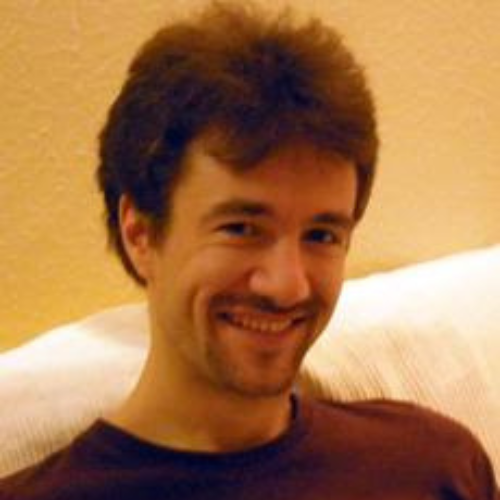
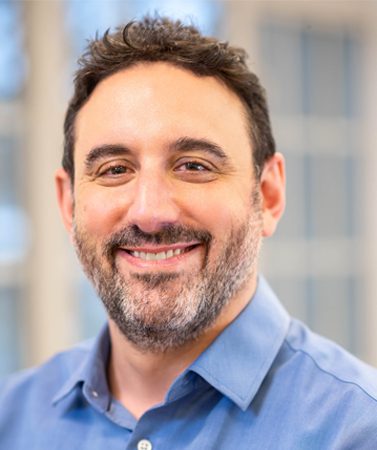
Jason Kerwin is Alberta C. Corkery Professor of Economics at University of Washington, Affiliated Professor at J-PAL, and IZA Research Fellow. He earned his PhD from University of Michigan in 2015. His research examines economic decision-making in developing countries regarding health, education, employment and savings. Fieldwork includes Malawi, Uganda, India, and Egypt using randomized experiments and causal inference methods. He has published in American Economic Review, Journal of Econometrics, and Journal of Development Economics. Current projects study savings constraints, health commitment devices, and education program effectiveness. He received the Philip Leverhulme Prize, AXA Research Award, and is Brimmer Distinguished Scholar.
John Geweke is the Charles R. Nelson Endowed Professor in Economics at the University of Washington, with joint appointments at the University of Technology Sydney and emeritus status at the University of Iowa. His research focuses on econometric theory, Bayesian modeling, and applications in macroeconomics and finance. He has supervised over 30 doctoral students and received prestigious fellowships including the Alfred P. Sloan Research Fellowship. Education: Ph.D. in Economics, University of Minnesota (1975) B.S. in Social Sciences, Michigan State University (1970) His research explores econometric methods for time series analysis, Bayesian inference in complex models, and financial econometrics. Geweke's work integrates theoretical rigor with practical applications in macroeconomic forecasting and decision-making under uncertainty. Geweke's publications demonstrate consistent focus on Bayesian econometrics, time series analysis, and financial modeling, with recent emphasis on model comparison, prediction under uncertainty, and computational methods for high-dimensional problems. Awards and Honors: Fellow of the Econometric Society Fellow of the American Statistical Association Alfred P. Sloan Research Fellow (1982-1984) H. I. Romnes Faculty Fellowship He has mentored numerous PhD students and secured significant research funding from NSF and ARC for projects on Bayesian computation and economic modeling. Geweke leads methodological developments at the intersection of statistics and economics.
Vadim Linetsky is a Professor of Industrial Engineering and Management Sciences at Northwestern University. His research focuses on financial engineering, mathematical finance, and stochastic modeling. He holds a Ph.D. in Theoretical and Mathematical Physics from the P.N. Lebedev Physical Institute of the Russian Academy of Sciences (FIRAN), an M.S. in Electrical Engineering from the Moscow State Institute of Radio Engineering, and a B.S. in Electronics and Automation from the University of Technology. His work emphasizes applications in financial markets, including interest rate modeling, credit risk, derivatives pricing, and algorithmic trading. Notable contributions include advancements in spectral methods for pricing financial instruments and the development of models addressing the zero lower bound in interest rate dynamics. Linetsky has also explored long-term risk frameworks and stochastic spectral theory, bridging econometrics and financial mathematics. His publications span journals such as Finance and Stochastics , Econometrica , and Mathematics and Financial Economics , with a focus on practical computational methods and theoretical rigor. Collaborative research projects include high-performance algorithms for Markov processes and interdisciplinary applications of stochastic modeling. Linetsky’s research has been supported by grants, including work on customer default risk management and computational methods in financial engineering. His contributions have influenced both academic theory and industry practices in quantitative finance.
Gerda Claeskens is a full professor of Statistics at the Faculty of Economics and Business (FEB) at KU Leuven, Belgium. She holds positions in the Operations Research and Statistics Research Group (ORSTAT) and is affiliated with the Leuven Statistics Research Center. Her academic journey includes a Licentiate in Mathematics (Summa Cum Laude) from the University of Antwerp and a Ph.D. in Statistics from Limburgs Universitair Centrum (now Hasselt University). Research Interests: Her work focuses on model selection, post-selection inference, nonparametric methods, and high-dimensional statistics. She has contributed extensively to methodologies like focused information criteria, penalized splines, and quantile regression. Awards and Honors: Notable accolades include Fellow of the American Statistical Association (2019), Goodeve Medal (2017), and Medallion Lecturer (2016). She has also held editorial roles in top journals such as Biometrika and Journal of the American Statistical Association . Teaching and Mentoring: She has advised over 20 PhD students and mentored postdoctoral researchers. Her teaching spans advanced statistical methods, probability theory, and business statistics. She has delivered invited lectures globally, including at the European Meeting of Statisticians and the International Society for NonParametric Statistics. Key Contributions: Her book Model Selection and Model Averaging (2008) is a seminal work in statistical methodology. Her research addresses challenges in high-dimensional data, survival analysis, and model averaging, with applications in finance, insurance, and biostatistics.
Eun Yi Chung is an Associate Professor in the Department of Economics at the University of Illinois at Urbana-Champaign and serves as the DEI and Climate Officer for the department. Her research focuses on econometric methodology, particularly permutation tests and nonparametric statistical methods, with applications to treatment effects analysis and causal inference. She holds affiliations with the College of Liberal Arts & Sciences and contributes to interdisciplinary research in statistical theory and policy evaluation. Her work emphasizes rigorous statistical testing frameworks, including quantile-based approaches and methodologies addressing heterogeneous treatment effects. Recent contributions include advancements in permutation tests at nonparametric rates and robust hypothesis testing techniques. Chung’s articles appear in top-tier journals such as the Journal of the American Statistical Association , Journal of Applied Econometrics , and Journal of Econometrics . No scientific awards are explicitly mentioned in the provided materials. Her research has explored permutation tests in diverse contexts, from causal inference in social experiments to multivariate analysis and U-statistics-based frameworks. While no advising or grant details are listed, her publications highlight a sustained focus on methodological innovation in econometrics and statistics.
Yoonkyung Lee is a Professor of Statistics and Computer Science Engineering at The Ohio State University, affiliated with the Department of Statistics in the College of Arts and Sciences. She holds a PhD from the University of Wisconsin-Madison (2002). Her primary research focuses on statistical learning and multivariate analysis, with specializations in classification, kernel methods, and model stability. She has a courtesy appointment in Computer Science and Engineering since 2016 and served as a faculty co-director of the Translational Data Analytics Institute (2020–2022). Her work has been funded by the National Science Foundation (NSF), and she was elected a Fellow of the American Statistical Association in 2015. Her educational background includes a PhD in Statistics from the University of Wisconsin-Madison. Her research interests emphasize developing methodologies for latent structures in multivariate data, computational frameworks for model stability, and predictive modeling. Notable contributions include advancements in kernel discriminant analysis, Bayesian restricted likelihood methods, and sparse logistic tensor decomposition. Prof. Lee serves on editorial boards for journals such as Chemometrics and Intelligent Laboratory Systems , Econometrics and Statistics , and Journal of Machine Learning Research . Her articles span topics like support vector machines, quantile regression, and nonlinear embeddings, reflecting her expertise in bridging statistics and machine learning. Beyond research, she has advised numerous projects and contributed to interdisciplinary initiatives in translational data analytics.
Joseph Antonelli is an Assistant Professor of Statistics at the University of Florida , where he has been since 2018. He holds a PhD in Biostatistics from Harvard University (2015) and completed postdoctoral training there until 2018. His research focuses on causal inference, high-dimensional modeling, Bayesian methods, spatial statistics, and applications in environmental health and criminology. Education: B.S. in Statistics, University of Florida (2011) M.S. in Biostatistics, Harvard University (2013) Ph.D. in Biostatistics, Harvard University (2015) Research Interests: Professor Antonelli develops statistical methods to address complex causal questions in health and social sciences. His work emphasizes robust approaches to confounding adjustment, spatial and environmental data analysis, and policy evaluation. He applies these methods to study air pollution effects, policing policies, and opioid policy impacts, bridging theoretical advancements with real-world applications. Key Contributions: His articles span causal inference techniques, Bayesian modeling, and spatial analysis, with recent work addressing racial bias in policing and air pollution mixtures. His research has been recognized with awards from the Health Effects Institute, JSM Biometrics, and ISBA. Awards: 2020 Health Effects Institute Young Investigator Award 2020 Journal of Speech, Language, and Hearing Research Editors Award 2014 ENAR Distinguished Student Paper Award Advising and Grants: He advises over 15 graduate students and has led grants totaling $3.5M, including NIH funding for auditory deficits in children and CDC studies on firearm policy effects. He also serves as Associate Editor for Bayesian Analysis .
In-Koo Cho is the Asa Griggs Candler Professor of Economics at Emory University. He holds a PhD from Princeton University (1986) and a BA from Seoul National University (1981). His research focuses on economic theory, game theory, and machine learning applications in strategic contexts. He has been a key organizer of the Asian School in Economic Theory, a prestigious event hosted by the Econometric Society, since 2013. His work bridges theoretical economics with practical implications in market design, learning models, and policy analysis. Cho’s academic contributions include foundational studies on competitive equilibrium, learning dynamics, and model validation. He has led international collaborations through his involvement in summer schools and conferences, fostering global exchange in economic theory. His research also addresses societal challenges, such as energy policy and market stability, reflecting a commitment to interdisciplinary impact. Key areas of his expertise include signaling games, algorithmic pricing, and the integration of machine learning into economic modeling. His career has spanned institutions like the University of Illinois and Hanyang University, though his current affiliation is with Emory University.
Zheng Fang is an Associate Professor in the Department of Economics at Emory University. His research focuses on econometrics, with expertise in statistical inference, nonparametric methods, and hypothesis testing. He holds a Ph.D. in Economics from the University of California, San Diego (2015), an MS in Statistics from the same institution (2013), and a BA and MA in Economics from Tsinghua University (2008–2010). His work emphasizes methodological advancements in econometrics, including quantile regression, shape-restricted inference, and large-scale linear system analysis. Recent contributions address topics like matrix rank testing and convex cone frameworks for hypothesis testing. Fang's research bridges theoretical developments with practical applications, often implemented in statistical software (e.g., Stata). His articles cover diverse subfields, including nonparametric estimation, bootstrapping, and concavity testing, reflecting his commitment to advancing statistical tools for economic analysis. No specific awards or grants are listed, but his CV highlights ongoing contributions to econometric theory and methodology.
Stéphane Bonhomme is the Ann L. and Lawrence B. Buttenwieser Professor of Economics and the College at the University of Chicago's Kenneth C. Griffin Department of Economics. His research focuses on microeconometrics, econometric theory, and labor economics, with emphasis on latent variable modeling and panel data analysis. He holds a PhD from the University of Paris I, Panthéon-Sorbonne (2005). Key contributions include methodologies for handling unobserved heterogeneity in panel data, nonlinear persistence in consumption dynamics, and bias reduction in econometric models. His work has been published in top journals like Econometrica, Journal of Econometrics, and the Journal of Political Economy. Recent research explores grouped patterns of heterogeneity, firm-worker sorting effects, and functional differencing in networks. He is a Fellow of the Econometric Society (2017) and has developed widely used Stata/Python packages for bias correction and discrete heterogeneity estimation.
Lars Peter Hansen is the David Rockefeller Distinguished Service Professor in Economics, Statistics, and the Booth School of Business at the University of Chicago. He holds a Ph.D. from the University of Minnesota (1978) and a B.S. in Mathematics & Political Science from Utah State University (1974). His research focuses on econometrics, asset pricing, and macroeconomic uncertainty, with groundbreaking contributions like the Generalized Method of Moments (GMM). He directs the Macro Finance Research Program (MFR) under the Becker Friedman Institute and co-leads the Macro Financial Modeling Project (MFM). Key roles include past chairmanship of the University of Chicago Department of Economics and presidency of the Econometric Society. Hansen's honors include the 2013 Nobel Prize in Economic Sciences, BBVA Frontiers of Knowledge Award (2010), and Nemmers Prize (2006). His work addresses uncertainty in financial markets, climate policy, and long-run economic risks. He advises on climate finance, central banking, and systemic risk through affiliations like the Hong Kong Institute for Monetary and Financial Research. His research bridges macroeconomics, finance, and statistics, emphasizing robust decision-making under uncertainty.
Ashesh Rambachan serves as Assistant Professor of Economics at the Massachusetts Institute of Technology (MIT), with a visiting appointment at Stanford University's Department of Economics and SIEPR for the 2025-2026 academic year. His primary institutional affiliation remains MIT's Department of Economics. His research program integrates econometric theory with machine learning to advance causal inference methodologies, particularly in quasi-experimental designs and observational data analysis. Key focus areas include algorithmic fairness, structural model robustness, and the application of foundation models to economic problems. This interdisciplinary approach bridges theoretical econometrics with real-world policy evaluation challenges. Analysis of his publication trajectory reveals increasing engagement with AI-driven methodologies since 2020, marked by a shift toward foundation models and large language models in economic contexts. His work consistently addresses credibility gaps in causal estimation while expanding into behavioral economics and algorithmic decision-making frameworks, reflecting evolving priorities in computational social science. Scientific recognition includes: NeurIPS 2024 Spotlight Paper for "Evaluating the World Model Implicit in a Generative Model" No explicit details regarding student advising, grant funding, or laboratory affiliations appear in current public records. His teaching portfolio includes MIT PhD courses on Algorithms and Behavioral Science (14.163) and Statistical Methods in Economics (14.380), alongside undergraduate instruction in Algorithmic and Human Decision-Making (S.6041).
Jesse Perla is an Associate Professor in the Vancouver School of Economics at the University of British Columbia, Faculty of Arts. He maintains an office in the Iona Building 201B and is actively engaged in research and teaching within the economics department. Dr. Perla received his PhD in Economics from New York University in 2013 and completed his undergraduate studies in Applied Mathematics at Columbia University in 1997. His academic journey has positioned him at the intersection of economics, mathematics, and computational methods. His research focuses on macroeconomics and growth from the firm perspective, with particular emphasis on information diffusion, heterogeneous agents, and computational approaches to economic modeling. He has developed significant expertise in applying machine learning techniques and high-dimensional methods to economic problems, with notable work on technology diffusion, financial frictions, and dynamic programming. His research agenda spans theoretical and computational economics, with increasing integration of artificial intelligence methods in recent years. Perla's publications reveal a strong trend toward computational economics, with growing emphasis on deep learning applications to overcome the curse of dimensionality in economic models. His work frequently explores how information diffusion affects firm behavior and economic growth, often employing sophisticated mathematical and computational techniques to model complex economic phenomena. He is a co-author of the influential open textbook Quantitative Economics with Julia and has made significant contributions to computational economics education. His teaching focuses on preparing students for graduate work in economics, with particular emphasis on mathematical preparation and computational skills. He has published extensive course advice for UBC undergraduates interested in pursuing graduate studies. Perla actively contributes to the development of computational tools for economists, particularly through the Julia programming language ecosystem. His work includes developing educational materials on differential equations for epidemiological modeling in economics and maintaining comprehensive data source references for economic researchers.
Alexander Schied is a Professor of Statistics and Actuarial Science at the University of Waterloo, holding the Munich Re Chair in Stochastic Finance and a University Research Chair. His research focuses on quantitative finance, probability theory, and stochastic analysis, with applications to risk measurement, financial modeling, and market microstructure. He co-authored the seminal textbook Stochastic Finance: An Introduction in Discrete Time (5th ed., 2025) and serves as Co-Editor of Finance and Stochastics . Before joining Waterloo, Schied held positions at the University of Mannheim, TU Munich, Cornell University, and TU Berlin. He earned his doctorate in mathematics from the University of Bonn. His work bridges theoretical advancements in stochastic processes with practical applications in finance, including robust optimization, model uncertainty, and high-frequency trading dynamics. His recent research explores rough volatility models , pathwise Itô calculus , and market impact games , with publications in top journals like Annals of Applied Probability and Mathematical Finance . His contributions to risk management and stochastic analysis have positioned him as a leading figure in mathematical finance. Awards & Roles: Munich Re Chair in Stochastic Finance (University of Waterloo) University Research Chair (University of Waterloo) Co-Editor, Finance and Stochastics Editorial Board Member: Applied Mathematics and Optimization , Mathematical Finance , and SIAM Financial Mathematics series Key Themes in Publications (2020–2025): Model-free portfolio theory and continuous-time optimization Rough stochastic volatility and Hurst parameter estimation Market impact dynamics and game-theoretic models Robust risk measures and optimization under uncertainty
Changbao Wu is a Professor and Chair of the Department of Statistics and Actuarial Science at the University of Waterloo, within the Faculty of Mathematics. His research focuses on complex survey design and analysis, with expertise in empirical likelihood methods, resampling techniques, and missing data problems. He has developed R packages to implement these methods and is a Fellow of the American Statistical Association and Elected Member of the International Statistical Institute, receiving the 2012 CRM-SSC Prize in Statistics. Education: PhD in Statistics (1999) from Simon Fraser University under Prof. Randy Sitter. He has been at Waterloo since 1999. Research Interests: Design and analysis of complex surveys Semiparametric/nonparametric methods Empirical likelihood methods Resampling (jackknife/bootstrap) Missing data and measurement error Survey sampling methodology Professional Roles: Associate Editor: Survey Methodology (2006–), Biometrika (2008–), Journal of Nonparametric Statistics (2011–) Member: Statistics Canada’s Advisory Committee on Statistical Methods Recent Publications Trends: Focus on non-probability survey samples, causal inference, and pseudo-empirical likelihood methods. Recent work addresses challenges in combining non-probability and probability samples, doubly robust estimation, and calibration techniques. Awards: Fellow of ASA (since 2020) Elected ISI Member (since 2012) CRM-SSC Prize (2012) Grants and Advising: Extensive grants related to survey methodology and statistical inference. Advises on the International Tobacco Control (ITC) China Survey and collaborates on large-scale studies like the Canadian Longitudinal Study on Aging (CLSA). Labs/Teams: Leads research in survey statistics and statistical methodology at the University of Waterloo, contributing to interdisciplinary projects involving health, economics, and social sciences.