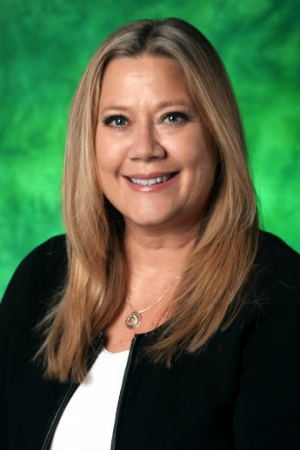
Amie Lund is an Associate Professor of Environmental Toxicology at University of North Texas, serving as Director of the Advanced Environmental Research Institute. Her research investigates environmental pollution impacts on human health, particularly cardiovascular disease, neurovascular disorders, and microbiome alterations. Key research themes include air pollution-mediated disease mechanisms, particulate toxicity, and neurodegenerative pathways. Recent publications demonstrate expertise in particulate matter exposure models, nanotoxicology, and pollutant interactions with metabolic systems. Laboratory techniques encompass transcriptomic analysis, microbial profiling, and behavioral assessment in rodent models. Articles frequently employ multi-stressor approaches examining interactions between pollutants, diet, and UV radiation.
David Plachetzki is an Associate Professor in the Department of Molecular, Cellular, and Biomedical Sciences at the University of New Hampshire. His research focuses on evolutionary genomics, developmental genetics, and the molecular mechanisms underlying organismal complexity in invertebrates. He holds a Ph.D. in Ecology and Marine Biology from UC Santa Barbara, and M.S. and B.S. degrees in Biology from Northern Michigan University. Key research areas include cnidarian sensory systems, hagfish slime evolution, comparative genomics, and phylogenomic methods. Dr. Plachetzki investigates how gene regulatory networks and genomic innovations drive morphological and functional adaptations in marine organisms. His work integrates transcriptome sequencing, comparative genomics, and experimental embryology to address questions about sensory evolution and symbiotic relationships. Teaching responsibilities include courses in genetics (GEN 604, GEN 715), comparative genomics (GEN 721), and molecular evolution (GEN 815). He has supervised senior honors theses in both Biology and Biomedical Sciences programs (BIOL 799H, BMS 799H). Active grant-funded research includes studies on hagfish slime biogenesis and sponge-microbe symbiosis evolution. Publications span topics from cnidarian visual systems to the genomic characterization of larval settlement processes. His research frequently appears in high-impact journals like *Nature Ecology & Evolution*, *Current Biology*, and *Molecular Ecology*.
Louis Tisa is a Professor of Microbiology and Genetics in the Department of Molecular, Cellular, and Biomedical Sciences at the University of New Hampshire. His research focuses on environmental microbiology, exobiology, and microbial genomics, particularly studying symbiotic relationships between microbes and plants such as Casuarina and Alnus. He has expertise in functional genomics, microbial degradation processes, and the molecular mechanisms of microbial adaptation to environmental stresses. Education: Ph.D., Bacteriology, University of Wisconsin M.S., Microbiology, University of Windsor, Ontario B.S., Biology, University of Windsor, Ontario Research Interests: Tisa’s work explores microbial communities in extreme environments, including stone-dwelling microbiomes and salt-tolerant Frankia strains. His studies emphasize symbiotic nitrogen fixation, microbial genetics, and the ecological networks underlying plant-microbe interactions. He uses genomic, transcriptomic, and proteomic approaches to understand stress tolerance and metabolic pathways in actinobacteria. Publications: His research spans microbial ecology, genomics, and symbiosis, with recent studies on metagenome analysis of historical sites, Frankia salt tolerance, and the role of microbial signaling factors in plant-microbe communication. These studies highlight his interdisciplinary approach to microbial biology and environmental science. Teaching: Tisa teaches courses in genetics, molecular microbiology, and undergraduate research methods. He advises students in laboratory and field studies, emphasizing hands-on training in microbial research. Labs/Teams: His work is supported by collaborations with international researchers and institutions, focusing on actinorhizal symbiosis, microbial genomics, and environmental microbiology.
Dr. Darla Goeres is a Research Professor of Regulatory Science and Coordinator of Industrial Development at the Center for Biofilm Engineering, Montana State University. With over 25 years of expertise, she specializes in standardized biofilm methods and industrial biofilm management. Her work focuses on developing quantitative methods for biofilm analysis in industrial systems (e.g., beer distribution lines, oil fields, recreational water) and advancing antimicrobial testing protocols. Her research interests include Standardized biofilm methods development Biofilm reactor design Prevention/treatment of biofilms in built environments Recreational water biofilm studies Beer draught line contamination control Dr. Goeres is a leader in ASTM biofilm standards development, contributing to the first approved biofilm testing methods. Her collaborations bridge academia, industry, and regulatory bodies to foster innovation. Notable achievements include winning an international award for biofilm standards work and supporting NASA’s biofilm management in space systems. Her publications emphasize methodological rigor, interdisciplinary approaches, and practical applications in both terrestrial and space environments. She leads the Standardized Biofilm Methods Laboratory and actively participates in global biofilm research initiatives.
Jie Hao is a researcher at the Information Security Center of Beijing University of Posts and Telecommunications , with a focus on interdisciplinary applications spanning Bioinformatics , Artificial Intelligence , and Medical Informatics . His work bridges computational methods with real-world challenges in healthcare, ecology, and network optimization. Recent publications highlight his contributions to Single-cell RNA sequencing deconvolution (2025) AI-driven intergenerational communication in VR (2025) Digital health applications for COPD management (2025) Deep reinforcement learning for vehicle routing (2025) His methodological innovations include adaptive attention mechanisms for object detection (2025), memory-efficient DNN accelerators (2025), and bilevel optimization algorithms with unbounded smoothness (2024). Collaborations span institutions like University of Melbourne and Chinese Academy of Sciences , reflecting his cross-disciplinary impact.
Xiangyu Deng is a Professor in the Center for Food Safety at the University of Georgia, part of the College of Agricultural and Environmental Sciences (CAES). His research focuses on genomic epidemiology, food microbiology, and bioinformatics, with a particular emphasis on Salmonella and Listeria species. He leads the Deng Lab, developing cutting-edge tools like SeqSero2 for rapid serotype prediction using whole-genome sequencing. His work integrates machine learning and next-generation sequencing to improve food safety surveillance and antimicrobial resistance monitoring. Key research areas include global Salmonella transmission dynamics, mobile colistin resistance genes (mcr), and the impact of centralized poultry breeding on pathogen spread. Deng has secured grants from USDA NIFA and the Center for Produce Safety, and his lab's SeqSero2 tool is FDA-validated. He serves on AOAC International's Board of Directors and has advised multiple students, including Shaoting Li and Yingshu He, who now hold academic and industry roles. Notable achievements include identifying the global spread of Salmonella Enteritidis via poultry trade, and pioneering quasi-metagenomics methods for pathogen detection. His lab's work is featured in Nature Food , Nature Communications , and Applied and Environmental Microbiology . Recent projects explore genomic epidemiology of multidrug-resistant pathogens, machine learning applications in food safety, and microbial community analysis in agricultural systems. The lab collaborates internationally, with studies in Lebanon, China, and Syria addressing emerging antibiotic resistance threats.
Gregory Bonito, Ph.D., is an Associate Professor in the Department of Plant, Soil and Microbial Sciences at Michigan State University (MSU), within the College of Agriculture & Natural Resources. His research focuses on fungal-bacterial plant interactions, particularly truffle ecology, mycology, and microbiome dynamics. He holds a Ph.D. in Biology from Duke University, an M.S. in Conservation Ecology from the University of Georgia, and a B.S. in Ecology from Appalachian State University. His lab investigates the ecology and evolution of plant-associated fungi, using phylogenetics, genomics, and –omics approaches. Key research areas include the functional diversity of root-associated fungi, bacterial symbionts in fungi, and microbiome-driven nutrient cycling. Applications span sustainable agriculture, forestry, and biodiversity conservation. Dr. Bonito’s work bridges fundamental research and applied solutions, including truffle cultivation and bioenergy crop microbiome optimization. He teaches Advanced Mycology (PLB 847) and collaborates on projects like the Bonito Lab at MSU, which explores symbiotic relationships in soils and plant microbiomes. His lab’s recent studies involve new truffle species discovery, fungal endosymbiont genomics, and the impact of genetic modifications on crop microbiomes. Education: Ph.D., Biology, Duke University M.S., Conservation Ecology & Sustainable Development, University of Georgia B.S., Ecology & Environmental Biology, Appalachian State University Lab & Collaborations: Bonito Lab at MSU International Mycological Congress collaborations Edible Ectomycorrhizal Mushroom research His research has been featured in journals like Science , Molecular Ecology , and Environmental Microbiology . Current projects include truffle biodiversity in North America and the role of fungal endosymbionts in stress tolerance.
Sara Pignattelli holds the position of Researcher at the Institute of Biosciences and BioResources (IBBR-CNR), part of the National Research Council of Italy. She is based in Florence, Italy, and has also served as Assistant Professor at the University of Nova Gorica (2020–2022), focusing on ecotoxicology and environmental monitoring. Her research spans plant stress responses, phytoremediation, microplastic pollution effects, and molecular biology techniques. Education includes a PhD in Vegetable Biosystematics and Eco-Physiology (2013) from the University of Florence, a Master’s in Plant Biotechnology (2009) from the University of Modena and Reggio Emilia, and a Bachelor’s in Agricultural Biotechnology (2006). She has extensive experience in micropropagation, cryopreservation, and molecular analysis of plant stress responses. Research interests emphasize environmental toxicology, particularly the impact of microplastics, heavy metals, and climate change on plant physiology. Her work integrates biotechnology methods such as PCR, spectrophotometry, and genomic analysis to study stress tolerance mechanisms. Recent studies highlight the effects of microplastics on plant growth, fungal interactions, and nutrient dynamics. Publications focus on microplastic toxicity, phytoremediation strategies, and plant stress physiology. Notable contributions include investigations into PET microplastics’ effects on Arabidopsis and Lepidium sativum, as well as biomarker identification in marine mussels exposed to microplastics. She collaborates with institutions across Europe, contributing to projects like the Mussel Watch Program and agri-food traceability initiatives. Technical expertise includes cryopreservation protocols, UV-Vis spectroscopy, atomic absorption spectroscopy, and bioinformatics tools (e.g., Primer3, Mega). She has led projects on plant stress biomarkers and environmental monitoring, with a strong emphasis on translating research into practical applications for sustainable agriculture and pollution mitigation.
Eric Webb is a Professor of Biological Sciences at the University of Southern California (USC). He holds a Ph.D. in Bacteriology from the University of Wisconsin-Madison (1999) and a B.S. in Microbiology from The Ohio State University (1994). His postdoctoral training includes work at the Woods Hole Oceanographic Institution (1999–2001). Before joining USC, he held positions at Woods Hole Oceanographic Institution, including Assistant Scientist (2001–2006) and Associate Scientist without Tenure (2006). At USC, he advanced from Assistant Professor (2006–2011) to Associate Professor (2011–present) and ultimately full Professor. His research focuses on marine cyanobacterial physiology, ecology, and genomics, with emphasis on iron (Fe) scavenging strategies, nutrient limitation, and microbial interactions. Key topics include Fe acquisition mechanisms in cyanobacteria like Trichodesmium and Crocosphaera , molecular diagnostics of nutrient stress, and the role of heterotrophic bacteria in Fe cycling. His work integrates biochemical, genetic, and genomic approaches to understand global biogeochemical processes. Webb has led collaborative projects on nitrogen fixation dynamics, climate change impacts, and the biogeography of diazotrophs. His lab’s studies on microbial community interactions and metabolite production have advanced understanding of oceanic nutrient cycles and ecosystem health. He serves on editorial boards for journals like Environmental Microbiology Reports and ISME Journal . His research also addresses emerging environmental issues, such as metal contamination in coastal waters and the role of B vitamins in marine systems. Webb’s interdisciplinary approach bridges microbiology, oceanography, and genomics, making significant contributions to marine biogeochemistry.
Dr. Elisabeth A. Dyrynda is an Assistant Professor at the School of Energy, Geoscience, Infrastructure and Society, Heriot-Watt University, specializing in developmental and comparative immunology with a focus on stress impacts on immune systems in molluscs and crustaceans. Her research explores antimicrobial peptides, immunotoxicology, and cell death processes. Research Focus : Stress-immune interactions, antimicrobial defenses, and biomineralization in marine invertebrates. Affiliation : Heriot-Watt University's Institute for Life and Earth Sciences. Academic Contributions : Co-authored 15 publications (2003–2018) with significant work on Antarctic molluscs, crustacean immunity, and nanomaterial toxicity. Leadership : Peer-review roles for journals like Marine Environmental Research and participation in conferences including the International Society for Developmental and Comparative Immunology (2012).
Dr. Leocadio Blanco Bercial is an Assistant Professor at Arizona State University (ASU), affiliated with the School of Ocean Futures and the School of Life Sciences. He is also a Senior Global Futures Scientist at the Bermuda Institute of Ocean Sciences (BIOS), now integrated into ASU. His research focuses on zooplankton ecology, integrating molecular and morphological tools to study diversity, population connectivity, and evolutionary processes in marine systems. Education: PhD in Biology (University of Oviedo, Spain, 2009), M.S. in Biology (2002), and B.S. in Biology (2000), all from the University of Oviedo. Research Interests: Plankton community diversity, population connectivity in marine organisms, phylogenetic relationships within Copepoda, and integrating diversity measurements into ocean biogeochemical models. His work emphasizes understanding how diversity is maintained in open ocean ecosystems and its implications for climate change. Key Projects: Includes studies on zooplankton mediation in particle formation, the VAMPIRE autonomous profiling vehicle, and the BIOSSCOPE project examining plankton ecology in the Sargasso Sea. Courses taught include Ocean Futures, Ecology, and special topics in marine sciences. Lab Affiliation: Zooplankton Ecology Lab, focusing on molecular and classical ecological approaches to study marine plankton diversity and dynamics. Collaborative efforts include global initiatives on copepod phylogeny and population genomics.
Mats Grahn is a Professor at Södertörn University, affiliated with the Natural Sciences, Technology and Environmental Studies school. His research focuses on evolutionary biology, genetics, and environmental sustainability, particularly studying genetic diversity in marine and terrestrial species. He leads a major project on PFAS pollution in the Baltic Sea, investigating how these 'forever chemicals' affect aquatic organisms and ecosystems. Grahn also teaches courses in evolution, population genetics, and statistics, supervising student research projects. His work spans conservation genetics, population genomics, and ecotoxicology. Key research areas include the maintenance of genetic variation in wild populations, impacts of environmental contaminants like PFAS, and the role of major histocompatibility complex (MHC) genes in immune function. Collaborations include international teams studying coral reefs, Baltic Sea mussels, and fish populations. Current initiatives involve quantifying PFAS concentrations near sewage treatment plants and assessing their ecological effects using novel fluorine mass balance (FMB) techniques. Grahn's projects emphasize interdisciplinary approaches, integrating molecular genetics with environmental monitoring and policy advocacy.
Suzy C. P. Renn is the Roger M. Perlmutter Professor of Biology and Associate Dean of the Faculty at Reed College. She holds dual affiliations with the Biology Department and the Division of Mathematical and Natural Sciences. Her academic career includes roles as NSF Program Director for the Behavioral Systems Cluster and extensive postdoctoral research at Harvard University and the University of Sydney. Education: B.S. in Zoology (University of Washington), Ph.D. in Neuroscience (Washington University School of Medicine), postdoctoral studies in EvoDevo (University of Sydney) and cichlid genomics (Harvard). Research focuses on animal behavior, neuroethology, and evolutionary genomics, particularly in African cichlid fishes. Key interests include behavioral plasticity, maternal care genomics, and the genomic basis of social behavior. Her work integrates comparative genomics with neuroendocrinology, epigenetics, and microbiome studies. Her NSF tenure emphasized cross-disciplinary programs and training initiatives. Current lab projects investigate gut-brain interactions, telomere dynamics, and circadian rhythms. She mentors over 30 students across multiple years, emphasizing collaborative research and student-driven projects. Teaching spans introductory biology, animal behavior, and integrative neuroethology. She designed courses like Bio342 (Animal Behavior: Genetics to Ecology) and Bio431 (Comparative Functional Genomics). Professional activities include editorial roles for Molecular Ecology and co-authoring the Ancestral Modulation Hypothesis. Her research group maintains an active lab webpage with publications and student listings.
Guangxiao Yang is an Associate Research Scientist in Pathology at Yale School of Medicine, specializing in insect molecular biology and vector-borne disease research. His work focuses on tsetse fly physiology, particularly lactation mechanisms and symbiotic microbial interactions. He collaborates with the Sklar Lab and has published extensively on lipid metabolism in Glossina species and the role of mutualistic bacteria in trypanosome transmission. His research spans biochemistry, microbiology, and vector biology, with applications to understanding disease ecology. Education details are not explicitly listed, but his research activities suggest advanced training in molecular biology and parasitology. Key projects include analyzing lipolysis during lactation and characterizing novel milk proteins in tsetse flies, with implications for understanding insect reproduction and pathogen transmission pathways. His publications demonstrate expertise in lipid transport mechanisms (lipophorin function), symbiotic relationships between tsetse flies and Wigglesworthia bacteria, and molecular pathways influencing trypanosome infection. While no awards are listed, his work contributes significantly to vector biology and tropical disease research. Laboratory affiliations include the Sklar Lab at Yale, where he conducts research on insect physiology and microbial symbiosis. Contact information is available at Lauder Hall, New Haven, CT.
Ravishankar Palanivelu is a Professor in Plant Science at the University of Arizona. His research focuses on molecular mechanisms underlying plant reproduction, particularly pollen tube guidance, gametophyte development, and stress responses in reproductive processes. Central to his work are studies on the LORELEI gene family, GPI-anchored proteins, and epigenetic regulation of fertility. Key areas of exploration include: 1) Genetic and biochemical pathways controlling pollen-stigma interactions, 2) Thermotolerance mechanisms in pollen development, 3) Epigenetic regulation of female gametophyte maturation, and 4) High-throughput phenotyping systems for studying reproductive stress responses. His lab employs advanced microscopy, omics approaches, and comparative genomics to dissect these processes. Notable contributions include discovering the role of LORELEI in pollen tube reception, identifying GABA signaling pathways in pollen tube growth, and developing microsystem-based assays for real-time pollen tube tracking. Current work emphasizes translational applications for improving crop fertility under climate stress conditions.





.jpg)