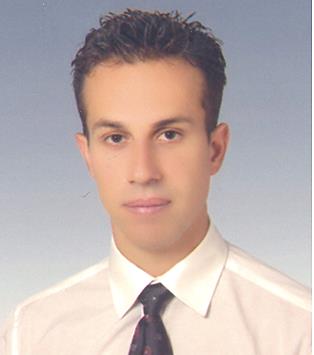
Hatice Camgöz Akdağ is a Professor at Istanbul Technical University's Department of Management Engineering. With 69 research outputs and 32 supervised works, her work bridges fuzzy logic, sustainability, and healthcare analytics. Over 15 years of research activity Collaborations across Turkey, Germany, and EU Active in 10 projects including EU-funded EULean_SusMan Research Focus Fuzzy Decision-Making: Pioneering spherical fuzzy sets and MCDM methodologies for complex systems Sustainability: Advancing circular economy practices in fashion/textile sectors and green supply chains Healthcare Analytics: Developing AI-powered cancer risk assessment models Digital Transformation: Exploring logistics innovations through Industry 4.0 technologies Recent Publications show trends in: Carbon footprint quantification for SMEs Human rights in supply chain legislation Machine learning integration in medical diagnostics Circular economy implementation in fashion Sustainable logistics optimization Scientific Awards Best Oral Presentation Award (2016) Best Paper Award (2006, 2008) The IIER Excellent Paper (2017) Yılın Yenilikçi Sağlık Profesyoneli (2021) Projects include EU leadership initiatives and SRP-funded research on: Supply chain agility optimization Turkish wheat sector sustainability Healthcare equality frameworks AI breast cancer treatment development
Poria Fajri is an Associate Professor at the University of Nevada, Reno . His research focuses on electric and hybrid electric vehicles, renewable energy systems, and advanced power electronics control. Electric and hybrid electric vehicles Plug-in Hybrid Electric Vehicle (PHEV) and Vehicle-to-Grid (V2G) technology Wind and solar power generation technologies Optimal control of power electronic devices utilized in renewable energy generation Automotive/aerospace power electronics and motor drives Energy management in hybrid systems Mechatronics and robotics Recent publications highlight his work on machine learning applications for power consumption modeling and motor fault detection, hybrid ML-digital twin frameworks for cyberattack differentiation, and GaN-based inverter optimization. His research spans grid resilience, autonomous vehicle energy efficiency, and cybersecurity in smart distribution systems. Key article trends include integrating machine learning with energy systems, advancing V2G technologies, and addressing cybersecurity challenges in smart grids. His work on regenerative braking optimization and power electronics for renewable energy systems demonstrates a focus on sustainable transportation and grid stability.
Burak Gürer is a Professor at Gaziantep University's Faculty of Sports Sciences, Department of Sports Management. He has been serving in this position since 2023, having previously held roles as Associate Professor (2017-2023), Doctor Lecturer (2015-2017), and Assistant Professor at Batman University (2013-2015). Education: Doctorate (2006-2012): Abant İzzet Baysal University, Institute of Social Sciences, Sports Management Master's (2002-2005): Gaziantep University, Institute of Health Sciences, Physical Education and Sports (With Thesis) Licence (1997-2001): Gaziantep University School of Physical Education and Sports, Department of Physical Education and Sports, Physical Education and Sports Teaching Program Associate Degree (1993-1996): Gaziantep University, Gaziantep Vocational School, Technical Programs, Construction Program Burak Gürer's research focuses on the psychological and managerial aspects of outdoor and adventure sports, particularly examining thrill-seeking behavior, risk perception, and psychological resilience among athletes. His work explores the intersection of sports tourism, environmental awareness, and leadership in outdoor activities. He has conducted extensive research on how climate change impacts nature sports and how these activities affect participants' mental health and well-being. His studies often investigate the psychological dimensions of rock climbing, mountaineering, and other adventure sports, with particular attention to anxiety levels, confidence, and decision-making processes in high-risk environments. His recent publications reveal a strong emphasis on the psychological impacts of the COVID-19 pandemic on athletes, with multiple studies examining how home training affected mental resilience and well-being. There's also a clear trend toward examining the environmental aspects of outdoor sports, including environmental attitudes of participants and sustainable practices in nature tourism. His research spans both theoretical frameworks and practical applications in sports management, particularly in adventure and outdoor recreation contexts. Scientific Awards: 2010 Sivil Toplum Kuruluşu Başarı (Zirve Dağcılık ve Doğa Sporları Kulübü) Burak Gürer has supervised numerous graduate students, with 16 theses completed under his guidance, including one doctoral dissertation. His research projects include significant work on sport climbing's physical effects, climate change in mountaineering, and disaster preparedness. As an active researcher, he has participated in multiple TÜBİTAK-funded projects focusing on nature activities, disaster readiness, and creative writing in natural settings. His scholarly contributions extend to editorial roles for academic journals and books in the field of mountaineering and nature sports. Prof. Gürer is actively involved in professional organizations including the Gaziantep Camping and Caravan Association (Board Member since 2023), Zeugma Mountaineering and Nature Sports Club (Member since 2022), Turkish Mountaineering Federation High Altitude and Alpine Board (Member since 2022), and the International Rock Climbing Research Association (Member since 2021). These affiliations reflect his deep engagement with both the academic and practical aspects of outdoor and adventure sports.
Öznur Yurt is a Professor at Izmir University of Economics in the Department of Logistics Management. She also holds a concurrent academic position at The Open University (UK), teaching supply chain and operations management. Previously, she served as faculty at the University of Roehampton and the University of Liverpool. She earned two doctoral degrees: one in Marketing and Logistics Management from Izmir University of Economics (2007) and another in Logistics Management from the University of Miskolc, Hungary. Her professional background includes industry experience as a Marketing Specialist at Akbank. Her research focuses on service supply chains , distribution channels management , industrial marketing , purchasing management , and food supply chains . She has conducted postdoctoral research at Cranfield University's Supply Chain Research Centre and Plymouth University's International Maritime and Logistics Centre. Yurt's recent publications emphasize supply chain resilience (particularly during COVID-19), service modularization in e-commerce and education, humanitarian logistics innovation , and sustainability in emerging markets. Her work consistently addresses operational strategies for complex, multi-stakeholder environments.
Manbir Sodhi is a Professor in the Department of Mechanical, Industrial & Systems Engineering at the University of Rhode Island. His research focuses on manufacturing optimization, supply chain modeling, IoT applications in production planning, and sustainability assessment of global products. Ph.D., University of Arizona, 1991 M.S., University of Arizona, 1987 B.S., Jadavpur University His research spans operations research, vehicle routing algorithms, and sustainability frameworks, with applications in additive manufacturing, battery supply chains, and autonomous systems. Key trends in his publications include AI-driven optimization, eco-industrial network design, and cyber-physical security. Recent grants include collaborations with the Office of Naval Research on additive manufacturing qualification, UUV swarm analysis, and mixed reality applications in advanced manufacturing. Sodhi holds a patent for laser-based surface smoothing technology (US Patent 8653409, 2014).
Nikica Radović is a Professor at Singidunum University's Faculty of Tourism and Hotel Management in Belgrade, Serbia. With a comprehensive educational background spanning from basic studies in Tourism and Hospitality at the University of Belgrade to a Doctorate in Tourism Management from Singidunum University, he has established himself as a prominent researcher in tourism and hospitality management. His educational journey includes: Basic studies: Faculty of Economics, University of Belgrade, Tourism and Hospitality (1996-2004) Undergraduate studies: Faculty of Tourism and Hotel Management, Singidunum University, Hotel Management (2004-2006) Master's degree: Singidunum University, Management in Accounting and Auditing (2007-2009) Doctoral studies: Singidunum University, Tourism Management (2009-2016) Radović's research focuses on the intersection of tourism management, sustainability, and digital transformation. His work explores business excellence models in eco-friendly hotels, labor productivity in the hospitality sector, and the integration of technology with human resources to enhance guest experiences. Recent publications examine digital hospitality systems, cultural tourism in the digital age, and sustainable development models for Serbian tourism destinations. His publication trends reveal a consistent focus on practical applications for the Serbian tourism industry, with increasing attention to digital technologies and sustainability metrics in recent years. The research spans from financial analysis of hotel operations to socio-technical aspects of digital transformation in hospitality. Radović actively collaborates with colleagues across multiple institutions, frequently appearing as co-author on research examining various aspects of tourism development in Serbia and the Western Balkans region. His work combines theoretical rigor with practical insights for industry professionals. His advising approach emphasizes practical applications of tourism theory, with research often involving direct engagement with hospitality businesses and tourism destinations. This hands-on methodology provides students with real-world insights into tourism management challenges and opportunities in the Serbian context.
Kadir Kaan GÖNCÜ is a full-time Lecturer at Edirne Vocational School of Social Sciences, Trakya University, where he has been employed since January 2013. He holds a PhD in Business Administration (2022) and dual bachelor's degrees in Physics (2000) and Business Administration (2008) from Trakya University, complemented by a Master's in Business Administration (2010) from the same institution. His research centers on supply chain optimization , sustainability in logistics , and operational decision-making , with methodological expertise in: Multi-criteria techniques (DEMATEL, ANP, SWARA) Performance benchmarking (DEA) Route optimization algorithms Qualitative and quantitative supply chain analysis Recent scholarly work demonstrates strong thematic cohesion in: Healthcare logistics (33% of publications) Sustainable operations (27%) Decision-model applications (20%) Logistics education/technology adoption (13%) Tourism/trade logistics (7%) He teaches undergraduate courses including Basic Principles of Logistics , Logistics Sectoral Computer Package Programs , and Production Management .
Renato Lemos Cosse is an external researcher in the Department of Macromolecular Chemistry and New Polymeric Materials at the University of Groningen's Faculty of Science and Engineering, Netherlands. His work focuses on sustainable polymer composites and advanced manufacturing techniques for eco-friendly materials. His educational background includes a PhD in Macromolecular Chemistry and New Polymeric Materials from the University of Groningen (2025), with thesis research on PLA-wood fiber biocomposites. Dr. Cosse specializes in developing biodegradable composites using polylactic acid (PLA) and natural fibers, with emphasis on mechanical property enhancement through matrix/fiber modification. His research spans injection molding, 3D printing, thermal insulation, and sound absorption applications, contributing significantly to sustainable materials science. He investigates processing-property relationships in syntactic foams and natural fiber composites, with strong focus on industrial applicability. His publication record reveals consistent innovation in biocomposite durability and processing techniques, particularly in thermoplastic-natural fiber systems and novel foam materials. Recent work demonstrates expertise in epoxy-modified cellulose composites and Buriti fiber applications for building materials. Scientific recognition includes: Jury winner, Best Tech Idea 2021 (KIJK Magazine) Popular vote winner, Best Tech Idea 2021 (KIJK Magazine) Dr. Cosse maintains active collaboration within Groningen's Macromolecular Chemistry research group, working closely with Prof. Katja Loos, Dr. Vincent Voet, and Remco Folkersma on cutting-edge polymer composite projects. His work directly supports UN Sustainable Development Goals through sustainable material development.
Berit Olofsson is a Professor of Organic Chemistry at Stockholm University and Deputy Director of SUCCeSS (Stockholm University Center for Circular and Sustainable Chemistry). She earned her MSc in Chemical Engineering from Luleå and Lund Universities, followed by a PhD from KTH Royal Institute of Technology in 2002. Her postdoctoral work at the University of Bristol with Varinder K. Aggarwal focused on total synthesis of (-)-Epibatidine and methodological studies. Research Interests : Sustainable organic synthesis through hypervalent iodine chemistry , mechanochemical methods , and metal-free reagents. Her group's work enables atom-efficient , non-toxic , and moisture-tolerant synthetic routes, with applications in pharmaceuticals, agrochemicals, and biobased materials. Publication Trends : Berit's articles emphasize diaryliodonium salts for arylation/vinylation reactions, transition-metal-free protocols , and mechanochemical cascade reactions . Notable works include Angew. Chem. Int. Ed. 2009 review and Angew. Chem. Int. Ed. 2023 on ring-opening difunctionalization. Scientific Recognition : EuChemS Division of Organic Chemistry Award for Service (2024) Arrhenius Plaque (2021, 2022) Chemistry Europe Fellow (2018) STIAS Fellow (2014-2015) Green Chemistry Award (Pfizer, 2025) Leadership & Outreach : Berit has served as Section Dean for Chemistry (2019-2023), Chair of the International Scientific Committee for ESOC (2023-2025), and organized large-scale initiatives like the Nobel Symposium on Chemistry for Sustainability (2025) and hand sanitizer production during the 2020 pandemic. Her group (current members: Manisha Lamba , Sayad Doobary , Pernilla Öberg , Leonard Kersting , Benjamin Gunschera , Henrik Hupatz ) collaborates internationally and focuses on scalable, eco-friendly methodologies.
Dr. Aidan Quinn serves as Head of the Nanotechnology Group at Tyndall National Institute, University College Cork, and holds a part-time lecturing position in Electrical & Electronic Engineering and Physics departments at UCC. His research focuses on scalable fabrication and integration of nanostructures for applications in sensing and energy storage. His primary research domains include Nanotechnology, Nanoelectronics, and Molecular Self-Assembly, with specific expertise in graphene-based transparent electrodes and resistive memories. His work bridges fundamental chemical synthesis with practical agile processing routes, resulting in over 60 peer-reviewed publications and two patent applications. Dr. Quinn coordinates major EU-funded initiatives including the FP7 NMP project FUNMOL, Environment project ECO-India, and Security project ROSFEN. He leads the PRTLI-5 TYFFANI programme and serves as Principal Investigator in CONNECT (SFI Research Centre for Future Networks), having previously contributed to Science Foundation Ireland's Research Frontiers Programme and FORME Strategic Research Cluster. He maintains active professional engagement through memberships in the Institute of Physics, American Physical Society, American Vacuum Society, and Materials Research Society, while regularly reviewing for journals including Advanced Materials and IEEE Transactions on Nanotechnology .
Rui Yao is a Lecturer at École Polytechnique Fédérale de Lausanne (EPFL), affiliated with the College of Engineering (ENAC) and the Department of Civil Engineering. Additionally, he works as a Scientist in the Laboratory for Human-Oriented Mobility Eco-system (HOMES) within EPFL. His research focuses on large-scale equilibrium modeling in multi-modal transport systems, individual mobility choice modeling, and demand management strategies. Education: B.Sc. in Civil Engineering, Technion – Israel Institute of Technology Direct-track Ph.D. in Transportation Engineering, Technion – Israel Institute of Technology His research spans both theoretical and applied domains, including stochastic traffic equilibrium , multi-passenger ridesharing systems , perturbed utility models , and deep learning for choice analysis . He has contributed to advancements in data-driven route choice modeling , integrated equilibrium models for electrified logistics , and stable matching frameworks for mobility platforms . Rui Yao is affiliated with the Human-Oriented Mobility Eco-system (HOMES) lab at EPFL, which focuses on innovative transportation solutions. His work bridges theoretical modeling with real-world applications in smart mobility and transportation policy.
Takashi Ariga is a Professor at Waseda University's School of Creative Science and Engineering, Department of Architecture. He currently serves as the Dean of the School of Creative Science and Engineering and Director of the Graduate School of Creative Science and Engineering. His academic journey began with a Bachelor's degree in Architecture from Waseda University (1985), followed by a Master's in Construction Engineering (1987), and culminated with a Ph.D. in Environmental Planning and Urban Design from the University of California, Berkeley (1997). With over 15 years of professional experience in private sector environmental development before entering academia, he brings practical insights to his research and teaching. Professor Ariga's research interests span a comprehensive range of urban planning and architectural topics. His primary focus areas include City and Regional Planning, Urban and Community Design, and the Theory and Methodology of Participatory Planning. He has made significant contributions to understanding Urban Morphology, particularly how traditional urban forms evolve while maintaining their essential character. His work on Environmental Design and Management explores sustainable integration of natural systems within urban environments, while his research on Heritage Management and Planning examines innovative approaches to preserving cultural landscapes. His expertise in Design Simulation and Communication bridges traditional planning methods with contemporary digital tools for enhanced community engagement. His recent scholarly output demonstrates a consistent focus on practical applications of urban planning theory. The 15 most recent publications reveal a pattern of research addressing urban resilience, community-based planning processes, and sustainable urban development. His work spans diverse geographical contexts from Tokyo neighborhoods to international case studies, with particular attention to disaster recovery planning, urban agricultural systems, and cultural heritage preservation. A distinctive feature of his research is the integration of historical perspectives with contemporary planning challenges, creating frameworks that honor traditional knowledge while addressing modern urban complexities. Japan Society for the Promotion of Science Research Grant Review Committee Award (2016) Waseda University Ono Art Memorial Prize (1986) International Federation of Housing and Planning (IFHP) International Urban Design Competition Grand Prize (1985) Japan City Planning Association Urban Planning International Student Competition Grand Prize (1985) Professor Ariga has been actively involved in numerous research projects funded by the Japan Society for the Promotion of Science, including studies on urban ecological systems, strategic assessment technology for community-based planning, and collaborative planning between stakeholders. His leadership extends to committee memberships with Tokyo's urban planning and landscape councils, demonstrating his commitment to translating academic research into practical urban governance. His laboratory, Ariga Lab ( arigalab.arch.waseda.ac.jp ), serves as a hub for interdisciplinary research connecting students, faculty, and community stakeholders in innovative urban planning initiatives.
Claudia Ribeiro de Almeida is a Professor at the School of Management, Hospitality and Tourism, University of the Algarve, where she has taught since 1996. She holds a PhD and Postdoctoral degree in Tourism from the University of Aveiro and an MSc in Total Quality Management. As an Integrated Researcher at CinTurs Research Center, she leads studies on tourism sustainability, air transport, and second-home markets. Her research spans: Tourism-Transport Nexus : Airline routes, low-cost carriers, and accessibility. Sustainability : Short-term rental impacts, drive tourism, and cultural heritage. Emerging Technologies : AI applications in tourism operations and data analytics. Recent publications (2022-2025) focus on harmonizing short-term rental policies, AI-driven tourism reviews, and sustainable mobility. She employs methodologies like systematic literature reviews (PRISMA) and case studies across Mediterranean destinations. She actively contributes to EU projects: BEST Med (2019-2022): Sustainable tourism pathways. CREAINNOVATION (2018-2020): Regional innovation grants. ACCESS4ALL (2017-2019): Tourism accessibility frameworks. At CinTurs, her team addresses tourism well-being through interdisciplinary collaborations. She currently coordinates the Master in Tourism program and mentors curriculum development.
Professor Jürgen Wilhelm Böse is a Professor of Logistics at the Faculty of Commerce and Social Work, Ostfalia University of Applied Sciences, Suderburg Campus. He has held this position since 2018 and is responsible for teaching and research in logistics, particularly focusing on port terminal planning and operations. His office is located in Building C, Room 106.2, Suderburg. Professor Böse's academic journey began with studies in Industrial Engineering at the Technical University of Braunschweig (1991-1997), followed by research assistant work at the same institution (1997-2002). He then gained industry experience as Branch Manager at LOGIS.NET (2003-2005) and Senior Consultant at HPC Hamburg Port Consulting (2005-2010), before returning to academia as Senior Engineer at the Institute for Maritime Logistics, Hamburg University of Technology (2010-2018). His research focuses on planning complex logistics systems, particularly seaport container terminals. His work encompasses developing initial system solutions based on business experience and spreadsheet calculations, using discrete event-oriented simulation for validation and optimization, and coupling simulation tools with Artificial Intelligence for automated system optimization. This approach typically yields qualitatively better results at significantly lower costs compared to manual expert use of these tools. His research interests include: Planning of complex logistics systems, especially seaport container terminals Discrete event-oriented simulation for logistics optimization Integration of production and logistics systems in value creation networks Artificial Intelligence applications in logistics and port operations Truck arrival forecasting and resource planning at logistics nodes Sustainable port operations and green terminal planning Professor Böse has made significant contributions to the field through his publications, most notably as editor of the 'Handbook of Terminal Planning' (Springer, 2nd edition 2020). His work spans numerous journal articles, conference papers, and research project reports focused on port logistics, terminal planning, and simulation applications. He has received research funding for projects including: Lkw-Wartezeitprognose für logistische Knoten (Truck Wait Time Forecasting for Logistics Nodes) IMOTRIS (Intermodal Transport Routing Information System) ISETEC II (Location Systems in Port Handling) NETRALOG (Bio-analog algorithms for horizontal transport control) As an educator, Professor Böse teaches regular courses in Project Management, Supply Chain Management, Transport Management, and Warehousing. He also offers specialized courses on logistics simulation and quantitative methods. In addition to his teaching duties, he serves in several administrative roles including as Research Commissioner and Internationalization Commissioner for Faculty H.
Elsa Pereira is a Lecturer and Researcher at the University of Algarve, Portugal, specializing in Sport Sciences and Tourism. She holds affiliations with the Research Centre for Tourism, Sustainability and Well-being and CIEO. Her research integrates sport management, tourism economics, and environmental sustainability, with a focus on strategic event leveraging and eco-friendly practices in tourism. Research Focus: Pereira explores sport tourism dynamics, environmental accountability in events, and sustainable curriculum design. Her work emphasizes practical applications, such as optimizing tourist experiences and policy frameworks for coastal and marine tourism. Publications: Her 15 most recent works (2015–2024) analyze sport tourism pedagogy, sustainability behavior in spectators, and strategic alliances in nautical tourism. Trends include empirical case studies, systematic reviews, and action-research methodologies aimed at enhancing tourism resilience and environmental stewardship. Grants & Projects: She secured funding from national entities like Fundação para a Ciência e a Tecnologia for sustainability research and municipal bodies for economic impact studies. Current projects emphasize sport’s role in local economies and ecological conservation.