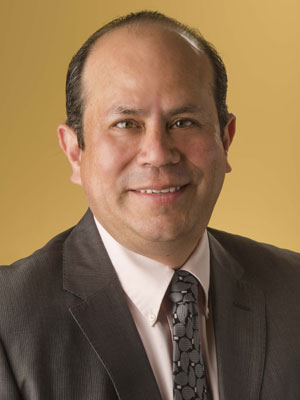
Dr. Arampatzis Georgios is an Associate Professor at the School of Production Engineering and Management (PEM) of the Technical University of Crete (TUC) and a Visiting Professor at the Mediterranean Agronomic Institute of Chania (CIHEAM MAICh). He holds a PhD (2000) and Diploma (1991) in Chemical Engineering from the National Technical University of Athens. His research focuses on: Smart ICT Technologies (Industry 4.0, Digital Twins, IoT) Energy/Environmental Systems Management (Life Cycle Assessment) Water Resources Management (Treatment, Reuse) Decision Support Methodologies He coordinates the Industrial and Digital Innovations Research Group (indigo) and leads multiple EU H2020 projects including AquaSPICE and ROBINSON. Recent publications emphasize sustainability technologies, digital twins in industrial applications, and renewable energy systems, reflecting interdisciplinary approaches spanning engineering, computer science, and environmental management. Key academic roles: Teaching Heat Transfer, Fluid Mechanics (TUC) Lecturing on ICT in Agriculture (CIHEAM MAICh) Authoring 6 academic textbooks on energy/transport phenomena
Michael L. Rivera is an Assistant Professor at the ATLAS Institute and the Department of Computer Science at the University of Colorado Boulder. He leads the Utility Research Lab, a highly interdisciplinary group that invents and investigates digital fabrication technology, tools, and techniques with the goal of advancing science and engineering while positively impacting people, society, and the environment. Dr. Rivera completed his Ph.D. and M.S. in Human-Computer Interaction at the Human-Computer Interaction Institute of Carnegie Mellon University, where he was advised by Scott Hudson as part of the DevLab. Before Carnegie Mellon, he earned a M.S.E in Computer Graphics and Game Technology and a B.S.E in Digital Media Design from the University of Pennsylvania. He also previously worked as a software engineer at Facebook. His research spans the intersection of digital fabrication, human-computer interaction, and material science. Dr. Rivera's work focuses on developing novel fabrication techniques such as desktop biofibers spinning, electrospinning, and sustainable material processing with everyday waste products like coffee grounds. His research has significant implications for sustainable manufacturing, tangible interfaces, and accessible technology design. Analysis of his recent publications reveals a consistent focus on making digital fabrication more accessible, sustainable, and interdisciplinary. His work bridges computer science, material engineering, and design, with particular emphasis on open-source hardware development, computational design tools, and applications for social good. The research demonstrates a progression from fundamental fabrication techniques toward more applied, socially conscious applications. CRA/CCC Computing Innovation Fellowship Google - CMD-IT Dissertation Fellowship Carnegie Mellon University Sansom Endowed Presidential Fellowship Adobe Research Fellowship Honorable Mention Xerox Technical Minority Scholarship Dr. Rivera is currently recruiting PhD students to join the Utility Research Lab. His research has been supported by various fellowships and grants throughout his career, including industry partnerships with Google and Adobe. His work demonstrates strong potential for future funding in sustainable manufacturing and accessible technology. The Utility Research Lab, directed by Dr. Rivera, is a highly interdisciplinary research group focused on inventing and investigating digital fabrication technology. The lab has developed several notable projects including the Desktop Biofibers Spinning Machine (presented at CHI 2024), desktop electrospinning technology (CHI 2019), and systems for 3D printing with spent coffee grounds. The lab maintains an active GitHub presence with numerous open-source repositories related to their research.
Ana Isabel Fernández Abia is an Associate Professor at the Department of Mechanical Engineering, Informatics and Aerospace Engineering at the University of León. She leads research in Manufacturing Process Engineering with affiliation to the TAFI (Advanced Manufacturing Technologies) research group. Her work focuses on additive manufacturing, machining of advanced materials, and sustainable production techniques. Research interests include: Cutting-edge additive manufacturing with defect analysis High-performance machining of stainless steels and hard-to-cut materials Eco-efficient lubrication and machining methods Materials characterization and post-processing optimization Machine learning applications for manufacturing quality control Industrial innovation through hybrid manufacturing technologies Her recent publications demonstrate strong specialization in: Defect detection in aluminum alloy additive manufacturing using YOLO and machine learning Comparative studies of traditional vs. additive manufacturing techniques Mechanical behavior of advanced materials under different processing conditions Environmental impact analysis of metal casting processes Surface engineering for biomedical applications Tooling optimization for sheet metal forming Her research has significant implications for aerospace manufacturing, biomedical devices, and sustainable industrial production.
RAÚL MARCOS ALONSO GARCÍA is an Assistant Professor at the University of Leon , affiliated with the College of Industrial, Informatics and Aerospace Engineering and the Department of Electrical Engineering and Systems and Automatics . He is associated with the research group INMATECO (Materials Engineering and Eco-efficiency) and previously collaborated with IQUIMAB (Chemical Engineering, Environmental and Bioprocesses) . Doctorate: Universidad de León (2021) Thesis: Advancing towards practical application of exoelectrogenic biofilms Advisors: Dr. Antonio Morán Palao, Dr. Adrián Escapa González His research focuses on exoelectrogenic biofilms , combining expertise in Electrical Engineering and Environmental Biotechnology . His work explores bioelectrochemical systems for sustainable energy generation, particularly microbial fuel cells and electroactive microbial communities. Current affiliations include the INMATECO research group, with past contributions to IQUIMAB . He applies engineering principles to eco-efficient bioprocesses, targeting environmental and energy applications.
Qingfan An is a Marie Sklodowska-Curie PhD Fellow at the Department of Community Medicine and Rehabilitation, Umeå University, Sweden. Their work focuses on co-creation methodologies in public health, particularly for chronic disease management and digital health interventions. They hold an MRes in Design from Royal College of Art (UK) and a BEng in Industrial Design from the University of Liverpool (UK). Education: MRes Design, Royal College of Art, UK BEng Industrial Design, University of Liverpool, UK Research spans co-creation frameworks, transition design, and human-centered design for COPD patients. They contribute to the Health CASCADE project and the ECHO-COPD initiative (2021–2024). Publications emphasize systematic reviews, process evaluations, and sustainable mHealth solutions. Key article trends include co-creation in pulmonary care , design for patient education , systems thinking in public health , and digital health tools for chronic disease . Collaborative approaches dominate their work with stakeholders across Europe and China. Scientific Awards: Marie Sklodowska-Curie PhD Fellowship Advisory collaborations involve multidisciplinary teams in design and healthcare. Their lab work focuses on co-creation frameworks for COPD interventions through Health CASCADE and ECHO-COPD projects.
João Marques Carrilho is an Associate Professor at Lusófona University in Lisbon, directing the sound science and technology Bachelor’s and Master’s degrees. He holds a PhD in Science and Technology of the Arts from Catholic University of Portugal, with academic affiliations including a CEEC research contract at Nova University of Lisbon’s Faculty of Social and Human Sciences. PhD in Science and Technology of the Arts (2015) BA in Sonology (Composition, Performance, and Research of Electronic Music) Engineering Physics and Applied Mathematics degrees from Instituto Superior Técnico His research spans technologically expanded performance, biomusicology, quantum biology, and urban soundscapes. He co-led the FCT-funded project TEPe (Technologically Expanded Performance) and integrates sound into ecological, cosmological, and computational frameworks. His work bridges music with complex systems theory, network analysis, and transdisciplinary methodologies. Selected scientific contributions include Sound at the Edge of Consciousness (quantum biology and perception), Unfolding the dynamical structure of Lisbon’s public space (applying space syntax to micromobility data), and Trans-sonority (exploring silence as a bridge between disciplines). His recent publications focus on eco-dramaturgy, paradoxical aesthetics, and digital-physical sound interactions. Innovative Nation Award (2015) Member of Lisbon Sciences Academy’s Young Scientists Seminar (2021) Carrilho collaborates extensively with institutions like the Faculty of Human Kinetics, Complex Systems Society, and International Jew’s Harp Society. He co-founded the ZUL ZELUB duo with Jorge Lima Barreto and has contributed to multimedia performances involving augmented reality, laser art, and robot orchestras.
Divakaran Liginlal (Lal) is a Teaching Professor of Information Systems at Carnegie Mellon University's Heinz College. With a Ph.D. from the University of Arizona and prior teaching experience at institutions including the University of Wisconsin-Madison, he has received multiple accolades including the Mabel Chipman Award for teaching excellence. His research focuses on information security, human-computer interaction, and decision support systems, with notable work on web accessibility, cultural adaptation in e-commerce, and healthcare privacy. Supported by organizations like Microsoft and Qatar Foundation, his interdisciplinary approach bridges technology, policy, and pedagogy. Education: Lal holds a B.S. in Telecommunication Engineering from CET, an M.S. in Computer Science from the Indian Institute of Science, and a Ph.D. in Management Information Systems from the University of Arizona. Research Interests: Lal's work spans information security frameworks, cross-cultural UX design, and digital governance. He explores how technology intersects with societal needs, particularly in aging populations and heritage preservation. Recent studies include AI applications for cultural archives and regulatory effectiveness in digital economies. Awards: In addition to teaching awards, he received the Lawrence J. Larson Grant for curriculum innovation and multiple grants supporting his research. His work has been published in JMIS, Communications of the ACM, and IEEE journals. Teaching & Grants: Supported by Microsoft, HP, and Qatar Foundation, his pedagogical innovations include case-method teaching and interdisciplinary collaborations between writing and information systems programs. He emphasizes problem-scoping in service-learning experiences to develop future IS leaders. Labs/Teams: Collaborates with Wikimedia on content collaboration studies and leads projects at CMU's Qatar campus focusing on digital governance challenges in the Arabian Gulf region.
Professor Yan Yan Shery Huang is a Professor of Bioengineering at the University of Cambridge's Department of Engineering, leading the 'Biointerface' research group. She holds a strategic role in the EPSRC Centre for Doctoral Training in Sensor Technologies and serves as an Associate Editor for multiple journals including ACS Applied Materials & Interfaces and Microsystems & Nanoengineering . Her work bridges engineering, biology, and computer science. Education: MEng in Materials Science from Imperial College London (2007), PhD in Physics from Cambridge (2011). Her research focuses on sustainable biofabrication, 3D printing for healthcare, and AI-driven clinical informatics. Key themes include organ-on-a-chip systems, eco-friendly biomaterials, and wearable health sensors. Her group's innovations address personalized medicine, animal-free drug testing, and circular economy solutions. Recent recognition: Winner of the 2024 BioMedEng Innovation Award. She supervises PhD students and actively mentors early-career researchers. Her lab, Biointerface@CUED, emphasizes interdisciplinary collaboration and translational research, with projects spanning bioelectronics, soft robotics, and tissue engineering.
Mehmet Tahir Sandıkkaya is an Assistant Professor in the Department of Computer Engineering at Istanbul Technical University (ITU), Faculty of Computer and Informatics. He holds a Ph.D. in Computer Sciences from ITU and has been actively contributing to academia since 2002, progressing from Research Assistant to his current faculty position. He also served as a Doctoral Teaching Staff member at Institut National Polytechnique de Grenoble (Drakkar Lab) from 2018 to 2019. His educational background includes: B.Sc. in Electrical Engineering, Istanbul Technical University (1998–2002) M.Sc. in Computer Sciences (Thesis), Istanbul Technical University (2002–2006) Ph.D. in Computer Sciences, Istanbul Technical University (2006–2016) Dr. Sandıkkaya's research is centered on cybersecurity , cloud computing , information security , and cryptography . His work extends into Internet of Things (IoT) security , malicious behavior detection , and privacy-preserving systems . He employs machine learning techniques for intrusion detection, particularly in web sessions and avionic platforms. His research also addresses security challenges in e-commerce, SMEs, and national critical infrastructures. The analysis of his recent publications reveals a strong focus on practical security solutions, including lightweight authentication for IoT, DDoS detection using network features, and secure cloud architectures. His work increasingly integrates AI and cyber-physical systems for environmental monitoring and sustainable resource management. His scientific recognition includes: IEEE Member since 2001 Principal Investigator on multiple TTO and TÜBİTAK-funded research projects h-index of 8 with over 215 citations (Scopus) Dr. Sandıkkaya actively supervises students and leads significant research initiatives. He has served as Program Chair at ITU in 2018 and is the Principal Investigator (PI) on nine research projects, including "National Critical Infrastructure Cyber Attack System (SİNERJİ SALDIRI)" and "AI-Based Sustainable Basin Management via IoT" . His grants span cybersecurity, cloud design, and embedded systems, reflecting a robust research portfolio with real-world applications. He is affiliated with the Drakkar Research Lab at Institut National Polytechnique de Grenoble and leads cybersecurity research teams at ITU focusing on cloud security, IoT authentication, and avionic system protection. His lab integrates machine learning, formal methods, and system-level security engineering.
Michael Crossley is an Assistant Professor and Agricultural Entomologist in the Department of Entomology and Wildlife Ecology at the University of Delaware's College of Agriculture & Natural Resources. He directs the Agricultural Entomology Lab and holds professional affiliations with the Entomological Society of America and the North American Coalition for Insect Agriculture. Education: Ph.D. in Entomology (minor in Geographic Information Systems), University of Wisconsin-Madison, 2019 M.S. in Entomology, University of Wisconsin-Madison, 2014 B.S. in Entomology, University of Wisconsin-Madison, 2011 Research Focus: Dr. Crossley integrates eco-informatics and population genomics to study insect ecology and evolution in agricultural landscapes. His work includes: Insect-based waste upcycling for animal feed Forecasting insect population changes Darkling beetle management in poultry systems Slug biocontrol using nematodes/beetles Computer vision for pest monitoring Teaching: Courses include ENWC 267 (Insects as Food), ENWC 311 (Insects in Agricultural Systems), ENWC 411/611 (Pest Management), ENWC 435/635 (Population Ecology), and ENWC 867 (Communicating Ecology).
David Guerra-Zubiaga is an Associate Professor at the Department of Mechatronics Engineering , Kennesaw State University, with 15 years of academic experience and 22 years of combined industrial/academic background. He holds a Ph.D. in Manufacturing Engineering from Loughborough University (UK) and has taught at institutions across USA, Mexico, and UK. Ph.D., Manufacturing Engineering, Loughborough University (UK), 2004 M.Sc., Manufacturing Engineering, Instituto Tecnológico de Monterrey (Mexico), 1996 M.Sc., Mechanical Engineering, Instituto Tecnológico de Monterrey (Mexico), 1992 B.Sc., Mechanical Engineering, Instituto Tecnológico de Ciudad Madero (Mexico), 1988 His research focuses on Manufacturing System Integration , Factory of the Future, Sustainable Manufacturing, and Product Lifecycle Management (PLM) . He has developed knowledge models for next-generation automation systems and pioneered integration of nanomaterials in manufacturing. Recent publications analyze digital twin implementations , blockchain applications in manufacturing security, and energy efficiency tools for eco-factories. He has led international collaborations with institutions in Switzerland, Italy, Mexico, and Spain. INP Scholarship (2017) Level 1 Investigator, Sistema Nacional de Investigadores (Mexico) He has supervised 3 Ph.D. and 23 Master's students while serving as external examiner for 17 additional theses. As Associate Editor for the International Journal of Computer Integrated Manufacturing , he shapes discourse in advanced manufacturing research.
Prof. Dr. Julia Maria Struß is a Professor of Applied Data Science at the Department of Information Science of Potsdam University of Applied Sciences. She serves as Program Director and Internship Coordinator for the Information and Data Management (B.A.) program and is a member of the Departmental Council. Her work bridges technical rigor with societal impact, focusing on information retrieval, text mining, and ethical data practices. University: Potsdam University of Applied Sciences Department: Information Science Academic Rank: Professor Email: julia.struss@fh-potsdam.de Research Interests center on Information Retrieval (technical and ethical dimensions), Data Science for Social Good (hate speech detection, fake news mitigation), and Computational Linguistics (subjectivity analysis, sentiment modeling). She specializes in deploying these methods for societal challenges like environmental sustainability and pandemic misinformation. Her publications emphasize fact-checking infrastructure , multilingual NLP , and dataset transparency , with recent work analyzing hate speech data licensing and urban data practices for rural stakeholders.
John-Thones Amenyo is an Assistant Professor in the Department of Mathematics & Computer Science at York College, City University of New York (CUNY), where he has served full-time since September 2008. He also held adjunct positions at the same institution from 2000 to 2008. He holds a PhD in Electrical Engineering from Columbia University and a BS in Electrical Engineering & Computer Science from MIT. PhD, Electrical Engineering, Columbia University MPhil, Electrical Engineering, Columbia University MS, Electrical Engineering & Computer Science, Columbia University BS, Electrical Engineering & Computer Science, MIT His research focuses on parallel and distributed computing, cellular automata, cognitive robotics, UAV drone systems for public health (especially malaria vector control), neuro-architectures, and educational technologies using Computer Algebra Systems. He has pioneered projects like MedizDroids and KOM for mosquito control and developed models such as CR/SARAMA for conscious robotics. His work bridges computer science, engineering, public health, and education. The most recent publications highlight trends in digital twins for enterprise automation, UAV-based landscape engineering, and serious games for STEM education. His articles span topics from neuronal CDMA to end-user parallel programming, reflecting a deep integration of biological inspiration with computational systems. York College - CUNY, Bridging the Gap Seminar (2015) CETL Title III STEP Grant (2007–2008) NSF Graduate Research Assistantship at Columbia (1986–1991) MIT UROP Awards (1977–1979, 1978) Bell Labs LUPT Grant (1981–1982) Dr. Amenyo has mentored numerous undergraduate researchers through programs like LSAMP and the York College Summer Research Program, guiding projects in biosensors, AI for healthcare, and drone technologies. He has secured grants from PSC-CUNY and NSF I-Corps, and has contributed to curriculum development, including modernizing CS/ISM programs and coordinating Math 119 on Computer Algebra Systems. He actively serves on college committees, advises student clubs like the Video Game Development Association, and organizes grant workshops. He leads research in intelligent systems for public health, including the MedizDroids project for mosquito control and innovations in wildfire prevention. His lab supports student-driven projects in robotics, IoT, and health informatics, fostering innovation in both academic and societal contexts.
Georgios Arapatzis is an Associate Professor at the School of Production Engineering and Management, Technical University of Crete. Born in Nea-Vyssa, Orestiada (1967), he holds a Diploma in Chemical Engineering from the National Technical University of Athens (NTUA, 1991) and a PhD in Chemical Engineering from NTUA (2000). His research focuses on energy systems (renewables, hybrid power generation, energy policy), environmental management (natural resources, pollution control, eco-efficiency tools), water resources (scarcity mitigation, treatment systems, desalination), and computational decision support systems (DSS). Education: Diploma in Chemical Engineering, NTUA (1991) PhD in Chemical Engineering, NTUA (2000) Research interests emphasize interdisciplinary applications of informatics and decision-making frameworks in sustainability challenges. He has contributed to numerous EU/National projects and authored 5 educational books. His work integrates GIS technologies and e-learning methodologies to address complex engineering problems. Advising and grants details are not explicitly listed, but his involvement in multi-stakeholder projects suggests active mentorship roles. No specific lab affiliations or teams are mentioned in the provided text.
Hatice Camgöz Akdağ is a Professor at Istanbul Technical University's Department of Management Engineering. With 69 research outputs and 32 supervised works, her work bridges fuzzy logic, sustainability, and healthcare analytics. Over 15 years of research activity Collaborations across Turkey, Germany, and EU Active in 10 projects including EU-funded EULean_SusMan Research Focus Fuzzy Decision-Making: Pioneering spherical fuzzy sets and MCDM methodologies for complex systems Sustainability: Advancing circular economy practices in fashion/textile sectors and green supply chains Healthcare Analytics: Developing AI-powered cancer risk assessment models Digital Transformation: Exploring logistics innovations through Industry 4.0 technologies Recent Publications show trends in: Carbon footprint quantification for SMEs Human rights in supply chain legislation Machine learning integration in medical diagnostics Circular economy implementation in fashion Sustainable logistics optimization Scientific Awards Best Oral Presentation Award (2016) Best Paper Award (2006, 2008) The IIER Excellent Paper (2017) Yılın Yenilikçi Sağlık Profesyoneli (2021) Projects include EU leadership initiatives and SRP-funded research on: Supply chain agility optimization Turkish wheat sector sustainability Healthcare equality frameworks AI breast cancer treatment development