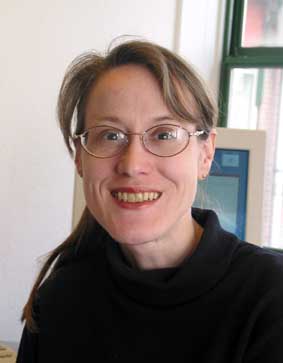
Prof. Dr. Arwen Deuss is a full Professor at the Faculty of Geosciences, Utrecht University , specializing in Seismology . Her research focuses on mapping Earth's deep interior using global seismology, with particular emphasis on mantle discontinuities, core structure, and whole Earth oscillations. She integrates seismological data with mineral physics, geodynamic modeling, and geochemistry to understand planetary evolution. Key research areas: Earth's Deep Interior, Global Seismology, Mantle Discontinuities, Inner Core Anisotropy Teaches courses in Theoretical Seismology, Earth Systems, and Planetary Interior Structure Developed open-source tools like FrosPy for normal mode analysis Her recent work explores 3D mantle attenuation, tilted transverse isotropy in the inner core, and seismic wave coupling. She leads projects connecting seismic tomography with geodynamic processes and maintains active collaborations in international seismological research.
National Research Institute for Mathematics and Computer ScienceNetherlands
Marie-Colette van Lieshout is a Professor of Spatial Stochastics at the Faculty of Electrical Engineering, Mathematics and Computer Science, University of Twente, and a Scientific Staff Member in the Stochastics group at Centrum Wiskunde & Informatica (CWI), Amsterdam. She has been active in research since 1997 and is a leading expert in stochastic geometry, spatial statistics, and image analysis. Her educational and professional background includes positions at the University of Warwick and the Free University Amsterdam. She is currently engaged in advanced research on point processes, random fields, and tessellation models, with applications in seismic hazard, fire risk, and machine learning. Her research interests include: Stochastic Geometry Spatial Statistics Image Analysis Point Process Modeling Seismic Risk Assessment Machine Learning for Spatial Data Her recent publications (2023–2025) focus on spatial intensity estimation, marked point processes, and data-driven risk modeling, showing a strong integration of classical spatial statistics with modern computational and machine learning techniques. Key themes include adaptive kernel smoothing, infill asymptotics, and applications in environmental and public safety domains. She has received significant recognition, including: Elected Fellow, International Statistical Institute (ISI) She has been awarded multiple research grants from NWO and other agencies, including the KLEIN grant for fire risk management and the DeepNL grant for seismicity prediction in Groningen. She has supervised or collaborated with researchers such as C. Lu, Z. Baki, and R. Markwitz. She is also active in academic service, serving on editorial boards (e.g., Methodology and Computing in Applied Probability), advisory boards (InHolland University), and councils of learned societies (Bernoulli Society, KWG). She leads and participates in research clusters such as STAR and contributes to outreach and education through courses and public lectures on earthquake modeling and spatial statistics.
Dr. Oliver Plümper is an active researcher at Utrecht University's Faculty of Geosciences, specifically within the Earth Sciences department and the Structural Geology & Electron Microscopy group. His work spans multiple disciplines at the intersection of geology, chemistry, physics, and materials science, with a particular focus on understanding processes occurring at the nanoscale that influence large-scale geological phenomena. Plümper's research interests center around fluid-rock/mineral interaction, nano(geo)sciences, mineral physics, and rock deformation. He employs a multi-faceted approach that combines natural observations, experimental techniques, micro and nano-analytics, and numerical modeling to address fundamental questions in Earth sciences. His work particularly emphasizes how nanoscale processes in the Earth's interior can influence large-scale geological structures and phenomena, including mountain building, earthquake generation, and the carbon cycle. His current research portfolio includes several major projects: the ERC Starting grant 'nanoEARTH' investigating mineral-water interactions deep within the Earth; the Dutch Research Council Vidi project 'RELEASE' studying carbon cycling in subduction zones; the EU INFRAIA project 'EXCITE NETWORK' as co-Principal Investigator supporting access to advanced imaging facilities; the UIO-UU project 'serpAI' using artificial intelligence to study mantle rock alteration; and the UU-NIOZ project 'I-NANO' examining iron nanoparticles' effects on ocean biogeochemistry. These projects collectively demonstrate his focus on understanding how nanoscale processes influence planetary-scale phenomena. Plümper is a strong advocate for open science and transdisciplinary research, leading a diverse team of scientists from earth sciences, chemical engineering, mathematics, physics, and chemistry. He actively contributes to the Utrecht University Electron Microscopy Center and is involved in multiple initiatives promoting open access to analytical facilities. His collaborative approach is evident in his extensive publication record across high-impact journals including Nature Geoscience, PNAS, and Geology, with research spanning from fundamental mineral physics to applications in geothermal energy, raw material extraction, and carbon storage.
Hans de Bresser is Professor of Teaching and Learning in the Earth Sciences Environment at Utrecht University's Faculty of Geosciences. Appointed as Dean of Regional Education effective September 1, 2022, he leads the university's initiative to strengthen partnerships with regional education providers in Utrecht. Previously, he served as Vice-Dean of Education at the Faculty of Geosciences, Director of Education for the Earth Sciences program, and Director of the Honours College in Geosciences. Professor de Bresser's research focuses on experimental rock deformation, structural geology, and tectonics. His work investigates the mechanical and transport properties of Earth materials under high temperature and pressure conditions, with applications to fault mechanics, reservoir compaction, and energy storage. He employs advanced materials testing techniques and microstructural analysis using light optical and electron microscopy. His research spans fundamental geomechanics to practical applications in resource extraction and geological storage. His recent publications demonstrate a strong focus on the mechanical behavior of rocks relevant to energy transition challenges, including hydrogen storage in salt caverns and understanding deformation processes in gas fields. His work bridges fundamental rock physics with practical engineering applications, contributing to both academic knowledge and industrial solutions. Scientific Awards: Best Poster Award at NAC15, the 15th Netherlands Earth Sciences Conferences 2019, for the poster Student- and Problem-Centered Approaches to Learning in the Field Professor de Bresser has supervised numerous Bachelor's and Master's theses and has been actively involved in educational innovation at Utrecht University. He served as Chair of the Utrecht University Teaching Career Task Force and is a member of the Advisory Board of the Centre for Academic Teaching. His educational leadership extends to directing the Honours College in Geosciences and developing student-centered learning approaches. He leads the Experimental Rock Deformation group (HPT laboratory), also known as the Earth Simulation Lab, where advanced rock mechanics experiments are conducted. The lab focuses on understanding rock behavior under various pressure and temperature conditions, with applications to geological processes and energy-related challenges.
Dr. Irene Manzella is an Associate Professor in the Department of Applied Earth Sciences at the University of Twente. Her research focuses on landslide dynamics, volcanic processes, and granular flow mechanics with applications to natural hazard mitigation. She specializes in experimental geophysics, combining field observations, laboratory simulations, and numerical modeling to understand mass wasting phenomena. Key research areas include debris avalanche propagation mechanisms, sedimentological analysis of volcanic deposits, and the role of particle concentration in gravitational instabilities within volcanic clouds. Manzella's work integrates smart sensor technologies for real-time landslide monitoring and develops innovative methods for disaster impact assessment, such as multi-hazard dashboards and EO-based risk frameworks. Her collaborative projects involve creating flood and earthquake hazard maps for Dominica, developing immersive visualizations for scientific communication, and organizing conferences like the NEEDS conference 2023. Manzella contributes to open-source tools like Python workflows for satellite data processing and has published over 35 peer-reviewed articles in journals like Geomorphology and Frontiers in Earth Science . Recent work emphasizes bidisperse granular flows' scale-dependent behavior, smart sensor applications for tracking debris movement, and improving volcanic hazard predictions through experimental validation of ash cloud dynamics. Her research bridges engineering, geology, and computer science to enhance disaster resilience strategies globally.
Cornelis van Westen is a Full Professor of Multi-Hazard Risk Dynamics at the Department of Earth Systems Analysis, University of Twente (ITC), Netherlands. He holds a dual appointment at the Digital Society Institute. Previously, he served as Director of the United Nations University - ITC Centre for Geoinformation in Disaster Risk Management (2005–2015). His expertise spans disaster risk management, landslide and volcanic hazard assessment, and climate change impact analysis using GIS and remote sensing. Education: MSc in Physical Geography, University of Amsterdam (1988) PhD in Engineering Geology, Delft University of Technology (1993) Research Focus: Developing methods for multi-hazard risk analysis, including abrupt (e.g., earthquakes) and gradual (climate/land-use changes) risks. Notable projects include the SafeLand EU project for landslide risk tools and CHARIM for Caribbean hazard mapping. Publications Trends: Recent work emphasizes landslide modeling in Colombia, post-seismic stability in China, and functional regression for hydro-meteorological hazards. His articles bridge GIS applications, climate adaptation, and decision support systems. Awards: ITC Research Award (1993) Richard Wolters Prize (IAEG, 1996) Advising & Grants: Supervised over 85 MSc and numerous PhD students. Key partnerships include projects in India (GITHRA), Vietnam (Multi-Hazard Risk Assessment), and Tajikistan (UNDP). Active in training programs like the GI4DRM course with UNOSAT and ADPC. Labs/Teams: Leads ITC’s Natural Hazards and Disaster Risk Management research. Collaborates with global institutions like the Chengdu University of Technology (China) and ICIMOD (Nepal).
Dr. Thanushika Gunatilake is an Assistant Professor in the Department of Geology and Geochemistry at the Faculty of Science, Vrije Universiteit Amsterdam (VU). Her research focuses on physics-based modeling of fluid-driven earthquake sequences, with an emphasis on understanding how fluids like CO₂ and H₂O influence seismic activity in subduction zones, volcanic regions, and other geological settings. She also investigates sustainable energy solutions such as geothermal energy and carbon capture and storage (CCS) to optimize subsurface utilization while mitigating risks like induced seismicity. Her work integrates interdisciplinary approaches, including studies on fluid migration, fault reactivation, and permeability changes. Notable contributions include analyzing monsoon-triggered earthquakes in India, aftershock dynamics in the Apennines, and the interplay between geothermal energy exploitation and volcanic activity in Japan. She teaches the course 'Geothermal Energy' and collaborates internationally on projects addressing climate change mitigation through geoscientific innovations. Dr. Gunatilake’s research highlights the critical role of fluid dynamics in both natural seismic processes and human-driven subsurface activities. Her recent studies emphasize decarbonization strategies and the application of earthquake modeling to epidemiological challenges, showcasing her innovative approach to bridging geophysics and societal needs.
Dr. Yuntao Ji serves as a Researcher and MicroCT Manager at Utrecht University's Department of Earth Sciences within the Faculty of Geosciences. An experimental geomechanics specialist and advanced X-ray tomography expert, he leads critical infrastructure for earth sciences research while maintaining active experimental programs in rock deformation and subsurface processes. His research spans energy transition applications, induced seismicity mechanisms, rock deformation thermodynamics, and advanced imaging techniques. Current work prioritizes salt deformation experiments for hydrogen storage in salt caverns and wellbore sealing, alongside pioneering investigations into the scale dependence of fault friction. His methodology integrates 4D imaging, thermodynamic modeling, and meter-scale laboratory experiments to address fundamental questions in subsurface mechanics with direct industrial relevance. Publication analysis reveals strong thematic continuity in experimental validation of rock behavior, with recent (2022) breakthroughs in friction scaling laws and salt healing mechanisms building upon earlier foundational work in porous media characterization (2012-2015) and digital image correlation techniques (2017). This trajectory demonstrates consistent innovation in bridging laboratory-scale observations with field-scale energy transition challenges. As principal X-ray microscopy scientist for the EPOS-NL program and EXCITE Network, Dr. Ji directs national imaging infrastructure and fosters collaborative research across European earth science institutions. His leadership in advanced microscopy operations supports diverse projects ranging from geothermal energy to carbon sequestration research.
Victor Jetten is a Full Professor in Natural Hazards and Disaster Risk Management at ITC (International Institute for Geo-Information Science and Earth Observation), University of Twente. He holds a PhD in Physical Geography from Utrecht University (1994) and has been Head of the Department of Earth Systems Analysis since 2013. His expertise lies in integrated hazard modeling, with a focus on flood, landslide, and erosion processes. He leads the IRDR International Center of Excellence on Spatial Decision Support for Disaster Risk Reduction and developed the open-source openLISEM model for multi-hazard simulations. Education: MSc (1988) and PhD (1994) in Physical Geography from Utrecht University. Postdoc (1994–1998) at INRA, France, studying Loess soil erosion. Assistant Professor (1998–2006) at Utrecht University’s Faculty of Geosciences. Research Interests: Holistic modeling of natural hazards, disaster risk reduction, and climate change impacts. Specializes in integrating spatial data and computational models to improve disaster preparedness, including applications in Dominica, Indonesia, Uganda, and the Caribbean. Key Projects: DESIRE (FP6 project combating desertification), GITHRA (Vietnam hazard risk assessment), and the Caribbean Handbook on Disaster Information Management (CHARIM). Active in capacity-building through training programs in Rwanda, Thailand, and the Caribbean. Advising & Grants: Supervised 24 PhD/MSc students. Involved in NWO-funded projects and international collaborations with UN agencies and NGOs like the Red Cross. Serves on editorial boards (e.g., Catena) and advisory groups for disaster resilience initiatives. Labs/Teams: Leads the 4DEARTH research program and collaborates with UNU-DGIM (United Nations University for Disaster Geo-Information Management). OpenLISEM model is a flagship tool for simulating floods, landslides, and erosion in dynamic environments.
Dr. Chien-Cheng Hung is a Researcher in the Department of Earth Sciences within the Faculty of Geosciences at Utrecht University, specializing in experimental rock deformation and fault mechanics. His primary research focuses on understanding the micromechanics of small magnitude earthquake slip through his project "probing the micromechanics of small magnitude earthquake slip" (also known as "how hot do faults get"), conducted within the DEEPNL research program. Dr. Hung combines friction experiments with numerical discrete element method (DEM) to explore strain localization in fault gouges and the effect of multi-phase fluids on heat generation at grain contacts. His experimental methodology includes direct shear experiments using triaxial vessels at low slip velocities (nm/s to mm/s) and slip-pulse experiments with rotary-shear apparatus at high slip velocities (up to m/s). This work aims to determine temperature rise and weakening during small slip events, particularly for induced seismicities in the Groningen area, contributing to understanding friction breakdown processes that control maximum earthquake slip and magnitude. Dr. Hung's technical expertise includes: Rock Deformation Scanning Electron Microscopy (SEM) Raman Spectroscopy Transmission Electron Microscopy (TEM)
Dr. Su Talavera Soza is a Researcher at the Faculty of Geosciences, University of Utrecht, specializing in the DES - Seismology group. Their work bridges seismology, machine learning, and geophysical inversion to study Earth's crust, mantle, and inner core. They employ seismic normal modes and surface waves with advanced instruments like superconducting gravimeters and ocean bottom seismometers. Key Expertise Areas: Seismology, Global Seismology, Earth's Deep Interior, Machine Learning, Inverse Problems, Tomography Skills: Python, Fortran, MATLAB, Data Analysis, Visualization Current research focuses on physics-informed machine learning for full-waveform inversion and planetary-scale structure analysis. They collaborate internationally across the USA and Europe, contributing to 15+ publications between 2020-2025, including high-impact journals like Nature and Nature Geoscience . Notably, they developed the FrosPy Python toolbox for normal mode seismology. While no formal awards are listed, their work on mantle attenuation models and inner core dynamics has been widely shared (214+ X posts) and discussed in Wikipedia. They hold a 2021 PhD from Utrecht University titled Observing seismic attenuation in the Earth’s mantle and inner core using normal modes , supervised by A. Deuss.
Ashok Dahal is an Assistant Professor in the Department of Applied Earth Sciences, specializing in landslide hazard modeling, InSAR data analysis, and deep learning applications for geoscience. His research integrates artificial intelligence with geological data to address challenges in environmental risk assessment. Key Research Areas: Artificial Intelligence, Geo Sciences, Deep Learning, Landslide Hazard Modeling, Computer Vision, Data Dependencies. Recent work focuses on space-time landslide modeling, physics-informed neural networks, and explainable AI for susceptibility mapping. His publications highlight collaborations across Europe and Turkey, emphasizing geohazard mitigation. Scientific Awards: EscherPrijs (2021) ITC Publication Award (2023)
Dr. Alireza Chogani is a Researcher at the Earth Sciences department within Utrecht University's Geosciences school. His work focuses on unraveling the nanoscale mechanisms driving fluid-rock interactions in the Earth's lithosphere. Key research areas: fluid-driven mineral reactions, nanoscale transport phenomena, metamorphic fabric formation Current project: ERC-funded nanoEARTH (2019-2025) investigating reactive fluid dynamics in mineral nanopores His research combines multi-scale physics with geological observations, integrating: Nanoscale experimental analysis In operando imaging of mineral transformations Molecular-to continuum-scale transport modeling Recent publications highlight his contributions to nanopore geochemistry, metamorphic stress dynamics, and advanced imaging techniques for geological processes. He collaborates with researchers like Dr. Oliver Plümper and Dr. Hamed Amiri within the nanoEARTH project.
Dr. Ronald Pijnenburg is a Project Manager at the Faculty of Geosciences , Utrecht University , specializing in Structural Geology and Reservoir Geomechanics . He is affiliated with the European Plate Observing System - Netherlands (EPOS-NL) , a national research infrastructure involving Utrecht University, TU Delft, and KNMI, aimed at addressing geo-societal challenges such as geo-energy resource exploration , subsurface storage , and natural/induced earthquakes . University: Utrecht University Faculty: Geosciences Department: Earth Sciences Email: r.p.j.pijnenburg@uu.nl His research focuses on the mechanical behavior of sandstones in seismogenic reservoirs, particularly in the Groningen Gas Field , with emphasis on inelastic deformation , induced seismicity , and subsurface energy resource management . He has conducted experimental studies on grain-scale deformation mechanisms , clay film influence , and 4D X-ray tomography of reservoir rocks. His recent publications highlight multi-scale deformation analysis , synchrotron imaging , and compaction creep in sandstones . He contributes to European research infrastructure (EPOS) development and data transparency in solid earth science.
Prof. Harald van Brummelen is a Full Professor and group leader of the Multiscale Engineering Fluid Dynamics Group at Eindhoven University of Technology (TU/e) in the Netherlands. His academic career spans appointments at Delft University of Technology (2001-2009) and a secondary role in the Department of Mathematics and Computer Science at TU/e. Van Brummelen specializes in advanced numerical techniques for multiscale flow problems, with applications in semiconductor lithography and inkjet printing. Academic Background: MSc in Mechanical Engineering (1997), Twente University of Technology PhD (2002), University of Amsterdam (Mathematical Institute) Research Interests: Fluid-Structure Interaction Free-Boundary and Interface Problems Phase-Field Models and Isogeometric Analysis Kinetic Models and Boltzmann Equation Error Estimation and Adaptivity Immersed Methods and Reduced-Order Modeling Scientific Contributions: Developed entropy-stable discretization techniques Led projects on multiscale fluid dynamics Advancements in preconditioning immersed methods Recipient of J.-L. Lions Award and Bill Morton Prize Supervision: Mentored doctoral candidates (Ahmed Aissa Berraies, Can Bozdoğan) Supervised master's theses on topics like flow instability and turbine design Current Projects: FIP 2.0: Complex Fluids on Complex Substrates (2020-2026)