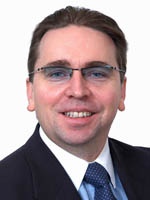
Dag Olav Hessen is a Professor at the University of Oslo , leading the Center for Biogeochemistry in the Anthropocene (CBA) . The center integrates expertise from the Department of Life Sciences, Earth Sciences, and Chemistry to investigate climate-carbon-ecosystem interactions in northern latitudes. Research Focus: Climate change impacts on freshwater and marine ecosystems Key Areas: Ecological stoichiometry, genome size, pelagic food webs, permafrost thaw Methodology: Interdisciplinary approaches combining fieldwork, lab experiments, and modeling His recent publications address critical issues like greenhouse gas dynamics in thawing permafrost , tipping points in lake ecosystems , and global change effects on zooplankton communities . Collaborative work spans Arctic char vulnerability, DOM-contaminant interactions, and climate governance frameworks.
Jane Luu is a Professor II at the Centre for Planetary Habitability (UiO), specializing in comets, asteroids, and interstellar objects . Her research focuses on dynamic processes in small Solar System bodies, including fragmentation, disintegration, and dust behavior. She collaborates with international teams using facilities like the Nordic Optical Telescope (NOT) and WIYN Telescopes. Email: jane.luu@geo.uio.no Address: Sem Sælands vei 13, Svein Rosseland's house, 0371 Oslo Her work includes studies on comet outbursts (e.g., 12P/Pons-Brooks), disintegration mechanisms (C/2019 J2), and interstellar interlopers like 2I/Borisov and ’Oumuamua, where she proposed fractal dust aggregate models. Recent publications examine episodic activity in asteroids (6478 Gault) and discus-shaped comets (C/2014 B1).
Isabelle Lecomte is a Professor in Reservoir and Near-Surface Geophysics at the University of Bergen's Department of Earth Science. Her research focuses on seismic modeling, reservoir characterization, and near-surface geophysics, with applications to paleokarst reservoirs, fault zone analysis, and archaeological geophysics. She has supervised numerous master's theses and contributed to projects funded by the Research Council of Norway. Her work integrates field observations, numerical modeling, and geophysical data interpretation to advance understanding of subsurface structures and processes. Affiliations: Department of Earth Science, University of Bergen Research Groups: Geodynamics and Basin Studies Research Interests: Development of seismic modeling techniques for reservoir characterization and near-surface imaging Application of ground-penetrating radar (GPR) in archaeology and environmental studies Seismic expression of faults, sand injectites, and carbonate systems Paleokarst reservoir dynamics and flow simulation Publications: Over 30 peer-reviewed articles focus on seismic modeling, subsurface imaging, and geohazard assessment. Recent work emphasizes 3D/4D seismic interpretation, fault zone analysis, and outcrop-subsurface analogues. Grants & Awards: Involved in projects funded by the Research Council of Norway, including studies on paleokarst reservoirs and CO2 storage feasibility. Advising: Supervised 14 master's students, with thesis topics ranging from seismic attribute analysis in archaeology to reservoir characterization of paleokarst systems.
Bjarte Hannisdal is an Associate Professor in the Department of Geosciences at the University of Bergen, Norway, and affiliated with the Bjerknes Centre for Climate Research. He plays a key leadership role in iEarth, a national Centre of Excellence in geoscience education, serving as the iEarth Education Chair and Head of Focus Area 1, which aims to develop innovative frameworks for higher education in geosciences. Department of Geosciences, University of Bergen Bjerknes Centre for Climate Research iEarth – Centre of Excellence in Geoscience Education His research lies at the intersection of geobiology, paleontology, and Earth system science, with a strong focus on quantitative methods. He investigates Earth system evolution, causality in dynamical systems, and the co-evolution of life and the planet using advanced statistical and information-theoretic approaches applied to geological and fossil records. His work spans microbial ecology in deep-sea sediments, paleoclimatology through isotope analysis, and the detection of causal interactions in deep time. Hannisdal has made significant contributions through a high-impact publication record, with articles in top journals such as Science , Nature Geoscience , PNAS , and Physical Review E . His recent publications highlight trends in applying machine learning and information theory to geoscience problems, including microbial responses to oxygen, causality detection in incomplete records, and the calibration of geochemical proxies. These works reflect a strong interdisciplinary trend, integrating biology, physics, and computational methods into Earth sciences. He is actively involved in higher education, having developed and taught courses such as GEOV114 (Introduction to Geobiology) and GEOV302 (Data Analysis in Geosciences), and contributes to others like GEOV344 and BIO318. His educational research explores student-centered learning and computational skill development. He has supervised doctoral research, including Dario Blumenschein’s project on educational change. His work is supported by funding from the Research Council of Norway, Trond Mohn Foundation, and EU Horizon 2020. Hannisdal collaborates widely across institutions and disciplines, as evidenced by his co-authorship with researchers from Norway, the US, Germany, and others.
Stephanie Werner is a Professor at the University of Oslo's Department of Geosciences and serves as Co-Centre Leader of the Centre for Planetary Habitability since 2023. She has held various significant positions including Director of the Norwegian Research School for Dynamics and Evolution of Earth and Planets (2016-2024) and Team Leader of Earth and Beyond/Comparative Planetology at the Center for Earth Evolution and Dynamics (2013-2023). Her educational background includes: Dr. rer. nat. (PhD) from Free University of Berlin, Germany (2005) with thesis: "Major Aspects of the Chronostratigraphy and Geologic Evolutionary History of Mars" Diplom in Geophysics from the University of Kiel, Germany (1999) Professor Werner's research focuses on comparative planetology, planetary dynamics, exoplanet systems, and planetary geophysics . Her work spans the formation and evolution of planets and planetary systems, cratering chronology and processes, remote sensing of Earth and planets, and potential field data interpretation. She has made significant contributions to understanding the geological evolution of Mars, lunar cratering chronology, and the dynamics of planetary systems. Her recent publication trends reveal a strong focus on cratering chronology across solar system bodies , with particular attention to the Moon, Mars, and outer solar system satellites. She has led important revisions to lunar cratering chronology models and has investigated impact rates on Jupiter's, Saturn's, and Uranus' moons. Another major theme is the study of exoplanets around K-dwarf stars , examining their composition and formation processes. Her work also includes significant contributions to Mars exploration , particularly through the Planetary Terrestrial Analogues Library project supporting the ExoMars mission. Professor Werner holds several prestigious appointments: Co-Lead, ESA - Ariel Science Team Norwegian representative and Co-I, ESA - PLATO Consortium Member of the European Space Agency's ExoMars Rover Science Operations Working Group Member of the ESA - NASA Mars Sample Return Science Planning Group EGU Division President of Planetary and Solar System Sciences (2017-2021) She has supervised numerous students through the Norwegian Research School for Dynamics and Evolution of Earth and Planets, which she directed from 2016-2024. Her research has been supported by multiple grants from the European Space Agency and Norwegian research councils, enabling participation in major space missions including ExoMars, PLATO, and Ariel. Professor Werner leads the Planetary Terrestrial Analogues Library (PTAL) project, which provides crucial support for Mars missions by creating a comprehensive database of terrestrial analogues for Martian environments. She also contributes to the Mars Missions Analogue Sample Library (MM ASL) and the CRATER CLOCK project focused on calibrating cratering chronometers for planetary evolution studies.
Ingrid Mann is a Professor in Space Physics at the UiT The Arctic University of Norway , Department of Physics and Technology. She leads and participates in multiple externally funded research initiatives including the Cosmic dust injection into the upper Earth atmosphere , MXD 2 rocket project to study the mesosphere , and EISCAT Research infrastructure project . ORCID: 0000-0002-2805-3265 Member of research group Space Physics Member of projects: Intermittent fluctuations in physical systems , Maxidusty-2 , CASCADE , Codia , Boosting Space Business , and Forskningsparken 1 A216 Her research spans space and atmospheric physics , focusing on dusty plasmas , cosmic dust dynamics , and polar atmosphere interactions . She employs spacecraft observations , EISCAT radar , rocket experiments , and machine learning for data analysis. Recent publications highlight cosmic dust detection with Parker Solar Probe and Solar Orbiter , PMSE multilayer properties , and dust impact signal modeling . Her work integrates radar , optical , and spacecraft data to understand polar atmospheric systems. She teaches FYS-2000 Kvantemekanikk , FYS-2019 Sun, Planets, and Space , and supervises G-Chaser student rocket projects . Her research group contributes to EISCAT_3D infrastructure and interplanetary dust modeling . Co-edited books: Nanodust in the Solar System (2012) Small Bodies in Planetary Systems (2008) Modern Meteor Science (2005)
Robert Leslie Gawthorpe is a Professor in the Department of Earth Science at the University of Bergen (UiB). He joined UiB in July 2010 after serving as Professor of Sedimentology and Tectonics at the University of Manchester, where he led the Basin Studies and Petroleum Geoscience Group. His research focuses on integrating geomorphology, sedimentology, stratigraphy, and tectonics to study tectonic landscapes and sedimentary basins, with particular emphasis on rift basins, salt tectonics, and seismic interpretation. He established a 3D seismic and digital outcrop laboratory at UiB, equipped with advanced workstations for interpreting large seismic datasets. Current projects include the Research Council of Norway-funded SynRift Systems project and studies on rift margin dynamics. In 2018, he was appointed VISTA Professor, a prestigious industry-academic collaboration position. Key research themes include syn-rift stratigraphy, fault growth mechanics, carbonate reservoir characterization, and the interplay between tectonics and sedimentation in rifted margins. His work bridges field observations, subsurface data, and numerical modeling to address challenges in petroleum geoscience and basin analysis. Awards: VISTA Professor (2018) Projects: SynRift Systems, DeepRift, ZechTec, and studies on Brazilian and Norwegian margins. Labs: 3D seismic and digital outcrop laboratory at Realfagbygget, UiB.
Carmen Gaina is a Professor at the Centre for Planetary Habitability, University of Oslo , specializing in tectonics, geophysics, and Arctic studies. Her research spans mantle dynamics, oceanic basin evolution, paleoclimate reconstruction, and lithospheric modeling. Recent publications focus on Arctic ocean bathymetry, lithosphere-asthenosphere interactions, and plume-induced subduction processes. She leads projects like DYPOLE (dynamics of polar basins), HOTMUD (hydrothermal systems), and SUBITOP (Arctic tectonics), often using multi-disciplinary approaches including seismic tomography and satellite gravity inversion. Scientific awards : No explicit awards listed in the provided text.
Kristina Dunkel is an Associate Professor at the Department of Geosciences, University of Oslo , specializing in Earth's crustal processes. She teaches courses in Mineralogy (GEO2110) , Petrology and Geochemistry (GEO2150) , and Petrography and Microstructures (GEO4810) . Education: MSc Geosciences, University of Münster (2013) BSc Geosciences, University of Münster (2011) Research Focus: Her work examines microstructural evolution in rocks, deep crustal earthquakes, deformation-reaction coupling, and ultramafic rock alteration. Current projects include ERC BREAK , CO2Basalt , CONTINENT , NATSORB , and REACTivity during confinement , all aiming to understand crustal dynamics and fluid-rock interactions. Publication Trends: Her recent publications emphasize stress estimation in lower crust, pseudotachylyte formation, feldspar and olivine behavior under extreme conditions, and fluid-driven metamorphism during seismic events. Collaborative work spans topics like IODP Expedition 357 studies of Atlantis Massif and Leka Ophiolite Complex deformation patterns. Research Groups: She contributes to Njord - Center for the Study of Earth Physics and CO2 storage initiatives.
Sebastian Westermann is a Professor at the University of Oslo's Department of Physical Geography and Hydrology. His research focuses on permafrost dynamics, remote sensing applications in cryospheric sciences, and climate modeling. He leads the CryoGrid community model development for simulating terrestrial cryosphere processes and has conducted field campaigns in Svalbard, Canada, and Mongolia. He holds a PhD in Physics from the University of Heidelberg (2010) and a Diploma in Physics from the University of Freiburg (2006). Education: PhD (2010) in Physics, University of Heidelberg, Germany Diploma degree (2006) in Physics, University of Freiburg, Germany His research interests include permafrost thermal state analysis, carbon balance in thawing permafrost regions, and remote-sensing products like ESA Permafrost_CCI. He investigates subgrid variability in permafrost models and the scaling strategies for permafrost variables. Recent work addresses climate-mass balance linkages in Arctic glaciers and biophysical processes in Earth system models. Key publications from 2023-2025 focus on pan-Arctic permafrost evolution, carbon degradation in thawing peatlands, and cryosphere-climate interactions. His work is supported by projects like CryoWALL, EMERALD, and SNOWDEPTH, and he collaborates internationally on initiatives such as the ESA Permafrost_CCI product.
Carly Faber serves as an Associate Professor in Structural Geology and Tectonics within the Department of Geosciences at UiT The Arctic University of Norway. Her research integrates field-based structural analysis with metamorphic petrology to investigate mountain building processes, subduction zone dynamics, and geohazards. She is an active member of the Solid Earth Sciences, Mineral Resources and Geohazards research group and contributes to the Justice, Equity, Diversity, and Inclusion (JEDI) project at the university. Dr. Faber's research interests span structural geology, tectonics, subduction zones, metamorphic petrology, and climate-driven geohazards. Her work examines deformation mechanisms in various tectonic settings including the Scandinavian Caledonides, Yukon-Tanana Terrane, and Naukluft Nappe Complex. She investigates how rocks deform during mountain building, subduction, and exhumation processes, with particular attention to the relationships between deformation, metamorphism, and fluid-rock interactions. Her more recent work extends into snow science education and avalanche risk management. Analysis of her publication record reveals consistent focus on structural evolution of orogenic systems, with increasing emphasis on geohazards and educational applications in recent years. Her work demonstrates strong international collaboration across North America, Europe, and Africa, addressing fundamental questions in tectonics while developing practical applications for geohazard mitigation. Dr. Faber actively contributes to geoscience education through innovative teaching approaches that bridge research and instruction. Her work on university snow science courses and building resilience to climate-driven geohazards through the GEOMME partnership demonstrates commitment to translating scientific knowledge into practical educational frameworks. She has explored how teaching questions can be transformed into research questions, enhancing the integration of education and research in geoscience. Based in the Naturfagbygget (Science Building) office 1.249 in Tromsø, Dr. Faber maintains active field research programs in multiple geological settings worldwide while contributing to UiT's mission as Norway's northernmost university with expertise in Arctic conditions and processes.
Jaganmoy Jodder is a Research Fellow at the Centre for Planetary Habitability, University of Oslo, with affiliations to multiple international institutions including the Evolutionary Studies Institute at University of the Witwatersrand (South Africa) and the Department of Geology at University of Johannesburg (South Africa). His research focuses on early Earth processes, biogeochemical cycles, and planetary habitability through multidisciplinary studies of Archaean rock records. B.Sc, Presidency College, University of Calcutta (2010) M.Sc, Department of Earth Sciences, IIT Bombay (2012) PhD, Department of Geology, University of Johannesburg (2020) His work integrates petrology, geochronology, geochemistry, geobiology, and radiogenic-stable isotope analysis to investigate ancient volcano-sedimentary rocks from key cratons like Singhbhum, Kaapvaal, and Pilbara. These studies aim to reconstruct early Earth surface conditions and understand the co-evolution of crustal processes with microbial life. Recent publications highlight his contributions to understanding Archaean seawater chemistry (via Nd isotopes in iron formations), early Earth magnetism (zircon magnetization), and craton evolution (structural and geochemical frameworks). His research spans both terrestrial and planetary contexts, emphasizing habitable conditions.
Roles and Affiliations: Dag Arild Karlsen is a Professor at the University of Oslo's Department of Earth Science, specializing in the Section for Environmental Geosciences. He holds a dual email address (d.a.karlsen@geo.uio.no and dakarlsen@geo.uio.no) and is based at the Geology Building (Sem Sælands vei 1, Oslo). Teaches GEO4211/GEO3211: Petroleum Systems Key research areas: Petroleum system analysis, organic geochemistry, and Arctic hydrocarbon exploration Research Interests: Focuses on petroleum geochemistry of Arctic regions (Svalbard, Barents Sea), fluid inclusion analysis for reservoir history, and biodegradation processes. His work intersects with environmental geoscience, including shale gas discovery in Spitsbergen and postglacial plant colonization studies. Publications Trends: Recent work emphasizes Barents Sea petroleum systems, Arctic source rock evaluation, and biomarker-based oil age determination. Over 100 peer-reviewed articles span topics like reservoir geochemistry, migration pathways, and North Sea hydrocarbon systems. Awards: 1993 Chemical Assoc. of America Best Paper Award for fluid inclusion-based reservoir filling research Advising and Grants: Supervised 25 MSc and 7 PhD students. Conducted ~70 industry-funded projects for Norwegian oil companies, focusing on reservoir geochemistry and field filling dynamics. Labs/Teams: Leads research in the Section for Environmental Geosciences, collaborating on projects like the 'Controlling Factors for Migration at Haltenbanken & Dønna.'
David Keith Wright is a Professor in the Department of Archaeology, Conservation and History at the University of Oslo, Norway. His academic journey includes roles as an Associate Professor at Seoul National University (2016–2019) and Assistant Professor (2010–2016). He specializes in environmental archaeology, focusing on human-landscape interactions, archaeometry, and radiometric dating. His research spans Africa, Asia, Europe, and the Americas, with notable projects in Malawi, Brazil, and South Korea. Wright’s academic interests include archaeological dating techniques, stable isotopes, sedimentology, and GIS applications. He has collaborated on grants totaling over $2 million, including the Nordforsk grant (2021–2024) and the CAS President’s Fellowship (2022–2023). His work often addresses anthropogenic impacts on ecosystems and the co-evolution of humans and environments. He has held roles such as Board Member of OpenHeritage (South Africa) and Science Mentor for Frontiers for Young Minds. His teaching includes courses like Environmental Archaeology and Archaeometry at the University of Oslo. Wright’s research partnerships include the National Museums of Kenya, Malawi Department of Antiquities, and the Gila River Indian Community. His awards include the Wenner-Gren Foundation funding (2017–2018) for Amazon Dark Earth studies and multiple grants from Korean and international bodies. His recent publications (2021–2024) emphasize paleoenvironmental data, anthropogenic landscapes, and interdisciplinary approaches to understanding human-environment interactions.
Uddalak Biswas is a Postdoctoral Fellow at the Njord Center for Studies of the Physics of the Earth, University of Oslo, specializing in the emplacement mechanisms of dikes and sills within volcanic plumbing systems. His educational background includes: PhD in Earth Sciences from the Indian Institute of Engineering Science and Technology (2018-2024) M.Sc. in Applied Geology from Jadavpur University (2015-2017) B.Sc. in Geological Sciences from Jadavpur University (2012-2015) Dr. Biswas investigates how magma viscosity, volumetric flux, and thermal conditions control the geometry of tabular igneous intrusions. His research decodes emplacement mechanisms through geometric pattern analysis to understand subsurface magma navigation and its role in shaping Earth's geological evolution. Current work focuses on inelastic rock properties in volcanic systems via the "BEYOND ELASTICITY" project, bridging igneous processes with crustal deformation dynamics. He operates within the Section for Crustal Processes at the University of Oslo's Physics Building, advancing fundamental knowledge of magmatic pathways through field studies and mechanical modeling.