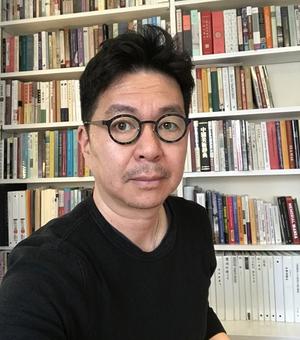
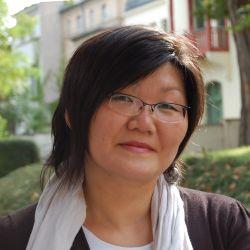
Dr. Michael D Shin is a Research Fellow at the University of Cambridge, specializing in early modern Korean history. His work explores the connections between social structures, cultural practices, and intellectual developments during this period. Education: BA in English and American Literature, Harvard University MA in Asian Studies, University of California, Berkeley Ph.D. in History, University of Chicago Dr. Shin’s research focuses on interdisciplinary approaches to early modern Korea, synthesizing social, cultural, and intellectual history. His current affiliation with the University of Cambridge supports his academic investigations. He has not received any additional scientific awards beyond his fellowship status, and no publications or student advisees are mentioned in the available text.
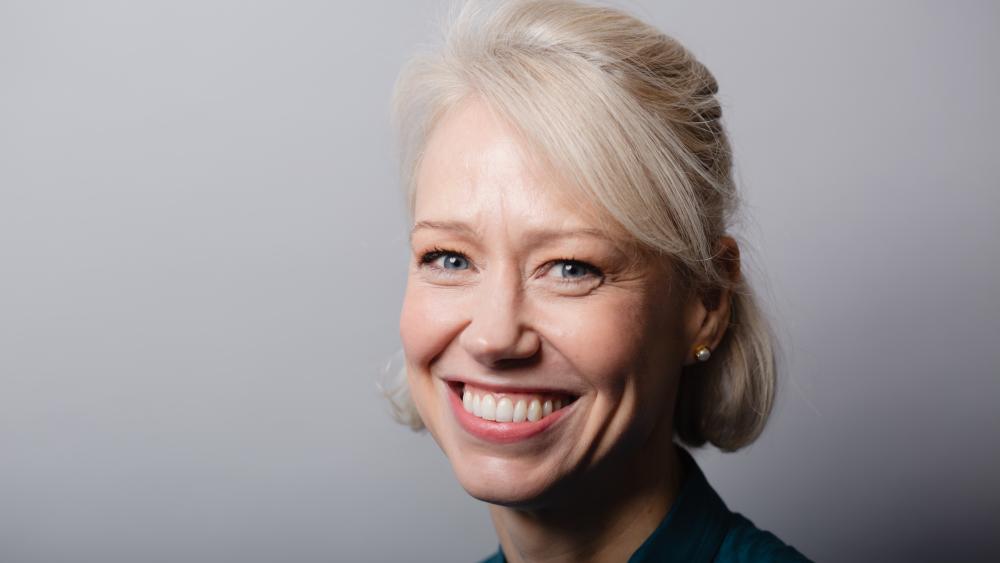
Lucia Dolce serves as the Numata Professor of Japanese Buddhism within the Department of Religions and Philosophies at SOAS University of London, part of the School of History, Religions and Philosophies. Her academic base is room 342 in the Russell Square: College Buildings campus. Her educational background includes: Laurea MA (University of Venice) PhD (Leiden University) Professor Dolce's research centers on two interconnected projects: first, the discourse on the body in medieval Japanese Buddhist rituals and its connections to continental Tantric practices, emphasizing ritual fluidity and performative theory applications; second, contemporary Buddhism-Shinto syncretism with focus on revival of premodern practices in Kyoto shrines. She also examines Tokyo's urban pilgrimage routes like the Seven Gods of Fortune, analyzing institutional negotiations and religious marketing dynamics. Her journal articles (1992-2023) consistently explore ritual knowledge transfer in Japanese Buddhism, with recent works on scriptural repurposing and tantric exegesis highlighting material culture and practice-centered approaches. Earlier publications establish foundational studies on Nichiren Buddhism's esoteric dimensions, astrological cults, and celestial body worship, revealing enduring thematic threads across three decades of scholarship. Scientific awards: No awards listed in provided text Advising and grants: She currently supervises four PhD candidates: Rachel Williams (Japanese Secularity), Haruka Saito (Repentance Rituals), Sooyeun Yang (Korean Astrological Buddhism), and Yeonju Lee (Korean Nationalism). Previous supervisees include twelve PhD graduates such as Emanuela Sala (2022, Sannō Shintō), Ronit Wang (2022, Thai Hell Parks), and multiple 2011 completions. Dolce led the Newton Fellowship-associated project 'The Lucky Gods of Tokyo' (2014-2016), investigating spatial politics in Buddhist-Shinto pilgrimage networks.
Dr Nikki Ji-Yeon Lee is a Senior Lecturer in Asian Media at Nottingham Trent University's Department of Humanities, School of Social Sciences. With prior academic appointments at Yonsei University and Korea National University of Arts in Seoul, her career bridges UK and Korean academic spheres. She co-founded the London Korean Film Festival in 2001 and maintains active industry connections as a former independent documentary filmmaker and film event interpreter. Her educational background includes: BA and MA in Sociology from Yonsei University, Seoul MA in TV Documentary from Goldsmiths College, University of London PhD in Cultural Studies from Goldsmiths College, University of London Lee's research specializes in transnational East Asian cinema with emphases on Korean and Chinese film industries, film festival circuits, and cinematic soundscapes. Her work critically examines globalization's impact on film production, auteur branding, audience reception, and co-production models, particularly investigating how cultural specificity navigates global markets. Current projects explore Korean film sound design, China-Korea media collaborations, and East Asian television drama formats. Analysis of her 2018-2025 publications reveals evolving research trajectories: early work focused on film festival politics and auteur studies (e.g., Park Chan-wook), while recent scholarship increasingly engages with sound studies and occult genres in Korean cinema. Her output consistently bridges industrial analysis with cultural criticism, demonstrating expertise in both Korean cinematic traditions and transnational media flows. Lee has significantly contributed to academic discourse through editorial projects including co-editing The Korean Cinema Book (BFI/Palgrave Macmillan) and Japanese Cinema (Routledge). Her publications in Cinema Journal and Screen establish her as a key voice in East Asian film studies, with Korea Film Council (KOFIC) recognizing her expertise through commissioned research on UK distribution patterns.
Professor J P Park holds the June and Simon Li Professorship in the History of Art at the University of Oxford and is a Fellow of Lincoln College. His research focuses on early modern Chinese and Korean art, with broader interests spanning print culture, cartography, literary criticism, and post-globalism in contemporary East Asian art. He has authored three influential books, including A New Middle Kingdom: Painting and Cultural Politics in Late Chosŏn Korea (1700-1850) (2018) and Art by the Book: Painting Manuals and the Leisure Life in Late Ming China (2012). His current project, Reinventing Art History: Forgery and Counterforgery in Early Modern Chinese Art , critiques traditional narratives of cultural renaissance in late Chosŏn Korea. His work has been published in major journals such as Art Bulletin , Artibus Asiae , and Third Text . Professor Park actively supervises DPhil and Master’s students in art history and related fields. His affiliations include Lincoln College, where he contributes to academic governance and research initiatives.
Dr. Anders Karlsson is a distinguished scholar of Korean history at SOAS University of London, where he has been a faculty member since 2000. He is affiliated with the School of Languages, Cultures and Linguistics and the Centre of Korean Studies. His academic career has established him as a leading Western expert on Choson Korea (1392-1910), with particular expertise in legal history, statecraft, and social institutions of the period. Dr. Karlsson received his PhD in Korean history from Stockholm University in 2000 with a dissertation on the Hong Kyongnae Rebellion, which erupted in the North-western part of the Korean peninsula in 1812. His doctoral research established the foundation for his subsequent scholarship on rural society, famine relief, and local administration in late Choson Korea. Dr. Karlsson's research focuses on the social, institutional and intellectual history of Choson Korea. His work explores Confucian statecraft, famine and disaster relief mechanisms, penal law, rural unrest and rebellion, and writing systems. His scholarship is characterized by meticulous archival research and innovative theoretical approaches that bridge historical, legal, and cultural studies perspectives. He has made significant contributions to understanding how law functioned as an instrument of statecraft in premodern Korea, particularly examining the relationship between legal theory and practice, and how social status influenced legal outcomes. His publication record demonstrates a clear evolution from early work on peasant rebellions to increasingly sophisticated analyses of legal and administrative systems. The most recent fifteen years of his scholarship show a pronounced focus on legal history, with particular attention to how Confucian ideology shaped legal development and implementation. His articles reveal expertise in analyzing primary sources in Korean, Chinese, and Swedish, reflecting his unique position as a European scholar deeply immersed in East Asian historical materials. Dr. Karlsson has supervised numerous doctoral students working on Korean history topics, including: Lee H. - "The effect of the genre-based approach on KFL advanced learners' writing and reading" Jang H.J. - "Exploring the Development of Intercultural Competence of University Students Majoring in Korean" Kilkelly P. - "Mainstream culture and the inculturation of Catholicism in late Chosŏn Korea" Choi Y.-C. - "A History of Protestant theory of liberty in Korea, 1886-1917" Jin S.P. - "Korean neutralisation attempts (1882-1907): retracing the struggle for survival and imperial intrigues" Verdier-Shin M.-L. - "Contextualised mission: the South Korean evangelical response to the humanitarian crisis in North Korea (1995-2012)" Song S.K. - "Intellectuals and the state: the resilience and decline of Neo-Confucianism as state ideology in Joseon Korea" At SOAS, Dr. Karlsson teaches courses on Korean history, contemporary Korean culture and society, and Chinese characters (Hanja) as they are used in Korean. His teaching reflects his deep engagement with both historical and contemporary aspects of Korean studies, providing students with comprehensive perspectives on Korean civilization. He also maintains a significant profile as a literary translator, having translated Korean novels into Swedish for 25 years, including recent works by Han Kang, the 2024 Nobel Prize in Literature laureate.
Dr. Wendy Michallat is a Senior Lecturer at the School of Languages, Arts and Societies, University of Sheffield. Her academic career spans over two decades with leadership roles as Deputy for Learning and Teaching and Liaison for USIC and DLL. She is affiliated with the Centre for Korean Studies and contributes to editorial boards of the Journal of European Comic Art and French Cultural Studies . Education: BA (Hons), MA, PhD Her research focuses on 20th century French cultural history, particularly: French comics (Bande Dessinée) and youth culture Women's experiences in inter-war and wartime France LGBT+ narratives in Francophone society Life-writing testimonies of occupation British working-class women's engagement with French studies Post-war cultural revival in France (Trente Glorieuses) Dr. Michallat's publications reveal consistent themes in comic art analysis, gender studies, and historical documentation. She has mentored multiple collaborative research projects and leads the Madeleine Blaess Project examining wartime diaries. She actively contributes to academic governance as: External Examiner at University of York Former Executive member of Society for French Studies (2004-2012) Former Executive member of Association for the Study of Modern and Contemporary France Contact: Jessop West, 1 Upper Hanover Street, Sheffield S3 7RA | +44 114 222 2879
J.P. Park is the June and Simon Li Professor in the History of Chinese Art at the University of Oxford and a Fellow of Lincoln College. His research spans early modern Chinese and Korean art, with interdisciplinary approaches to print culture, cartography, and art forgery. Research interests include: Analysis of painting manuals as social capital in Late Ming China Challenging nationalist narratives in Korean art historiography through studies of true-view landscapes Historiographical forgeries in early modern China Contemporary critiques of globalization in East Asian art Conceptualizing 'pastmodern' traditions of avant-garde practices across China, Korea, and Japan Major Awards : 2020 – Charles Rufus Morey Book Award for 'A New Middle Kingdom' 2014 – Finalist for Charles Rufus Morey Book Award for 'Art by the Book' He has curated the 'Keeping It Real' exhibition (2012) and co-edited A Companion to Korean Art (2020). Current research explores premodern East Asian artistic innovations that predate Western postmodernist practices.
Dr Jonathan Spangler is a Senior Lecturer in History at Manchester Metropolitan University, specializing in early modern European history with a focus on aristocratic culture, royal courts, and frontier identities. He holds degrees from the College of William & Mary, Oxford University (MSt), and a DPhil from Oxford, focusing on the Lorraine-Guise family’s role at Louis XIV’s court. His research explores elite identities in border regions like Lorraine, royal court dynamics, and the roles of secondary royal family members (e.g., second sons, widows). His teaching emphasizes interdisciplinary approaches to European history, integrating art, literature, and film. He has held visiting roles at the University of Lorraine, University of Lisbon, and the Österreichische Akademie der Wissenschaften. He serves on editorial boards for journals like The Court Historian and contributes to organizations such as the Society for Court Studies and the Centre de Recherche du Château de Versailles. Key research interests include the Duchy of Lorraine’s history, the political roles of French kings’ brothers (Monsieur), and women’s agency in early modern nobility. His work bridges cultural, political, and social history, with publications analyzing court rituals, dynastic strategies, and trans-regional aristocratic networks. Education: Bachelor’s: College of William & Mary MSt: Oxford University DPhil: Oxford University (Dissertation: Lorraine-Guise family at Louis XIV’s court) Recent Research Projects: Completion of a history of Lorraine’s court nobility Study of French kings’ brothers’ political roles Analysis of noblewomen’s patronage and power His articles often address themes like absolutism, court symbolism, and cross-border elite strategies. He has been awarded fellowships by the Royal Historical Society and the Higher Education Academy. Media engagements include BBC, Swedish Dagbladet, and Korean radio, discussing modern monarchy and historical parallels. He supervises postgraduate research on topics like Lorraine’s Grand Tour, Elizabethan court culture, and noble identity in Edwardian Britain. His work frequently highlights marginalized figures (e.g., widows, second sons) and their contributions to early modern power structures.
Dr. Charlotte Horlyck is a Reader in the History of Korean Art at SOAS University of London, serving as Head of the School of Arts and a member of the Department of History of Art and Archaeology. She holds a PhD from SOAS (2006) and is a Senior Fellow of the Higher Education Academy (SFHEA). Her research focuses on Korean art history, with expertise in pre-modern and modern visual/material culture, collecting practices, and funerary archaeology. Notable contributions include her monograph Korean Art: From the 19th Century to the Present (2017), translated into Korean and recognized in the Sejong Selection of Books (2021). She has led major research projects, such as a study on Korean art collecting by British diplomats (funded by the Overseas Korean Cultural Heritage Foundation). Education: PhD in Korean Art History (SOAS, 2006); MA (SOAS). Professional Roles: Former Curator of Korean Collections at the Victoria and Albert Museum (1998–2004); Researcher at Seoul National University, Ewha Woman’s University, and the Academy of Korean Studies. Her research explores the Koryŏ kingdom’s material culture, including ceramics and metalwares, and their reinterpretation by early 20th-century collectors. Recent work addresses modern Korean art’s socio-political dimensions and global art histories. She has co-edited volumes such as Death, Mourning, and the Afterlife in Korea (2014), honored with a Korean government award. Dr. Horlyck actively contributes to academic governance, serving as President of the British Association of Korean Studies (since 2016) and on editorial boards like Misulsahak Yeonguhoe . Her current project examines late 19th-/early 20th-century Korean art collecting, supported by the KAMS Overseas Publication Support Program. Awards & Recognition: Republic of Korea Ministry of Education Award (2015); Sejong Selection of Books (2021). Grants/Projects: Provenance research on Korean art collections (UK-based, 2021); KAMS-funded publication support (2021). Her advisory role includes supervising PhD students researching topics like Japanese photography, socio-political art movements, and Buddhist patronage in Korea and Japan. She is affiliated with SOAS’s MA Creative and Cultural Industries program, fostering interdisciplinary art studies.
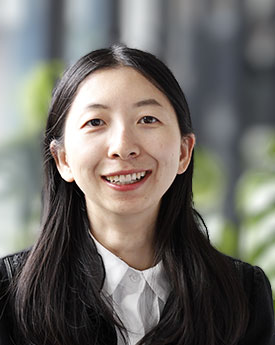
Baihui Duan serves as a Lecturer in Environmental History at Lancaster University's School of Global Affairs. Her academic work bridges historical analysis with environmental studies to explore the complex relationships between nature, disease, and human societies in early modern East Asia. Dr. Duan specializes in environmental history of early modern East Asia, with particular focus on the Korean peninsula following the Imjin War (1592-1598). Her research examines how nature and infectious diseases shaped migration, disaster relief, medical care, and governance in early modern Korea. She investigates the interconnected histories of epidemics and environmental crises across East Asia, exploring how disease outbreaks influenced military strategy, commerce, diplomacy, and the circulation of medical knowledge. Through comparative analysis with European public health history, her work contributes to understanding epidemic management in early modern East Asia and questions of power in global health discourses. Her recent publications demonstrate how environmental factors and health crises shaped historical events and governance structures across the region, with particular attention to human-animal relations, military welfare during conflicts, and the long-term societal impacts of epidemics. Her research combines historical and geospatial analysis methods to reveal patterns in disease transmission and state responses. Her notable achievement includes: Winner of the William Bynum Prize 2023 Dr. Duan is currently completing her book project, "Relieving the People: Epidemic Management and Confucian Statecraft in Post-Imjin Korea," which examines how Confucian principles influenced epidemic response and disaster management in Korea following the devastating Imjin War. Her research has been presented at various academic conferences including talks on "Seas, Borders, and Interactions in East Asia," "Abdominal Illness of Riverine Fish: Fishing on the Seventeenth-century Southern Coastline Amidst Climatic Variability," and "Smallpox Panic: Managing Diseases and Sino-Chosŏn Relations." She maintains regular office hours at Bowland Main, Room B13, on Mondays and Tuesdays from 4-5 pm.
Niki J.P. Alsford serves as Professor of Anthropology and Human Geography at the University of Central Lancashire, where he also directs the Institutes for the Study of the Asia Pacific (ISAP) and the Institute for Area and Migration Studies (AMIS). He maintains significant external affiliations as a Research Associate at the Centre of Taiwan Studies at SOAS, University of London, and as an Associate Member of the Faculty of Asian and Middle Eastern Studies at the University of Oxford. His research spans Taiwan Studies, Korean Studies, and broader Asia Pacific Studies with particular focus on historical transitions, colonial influences, and contemporary political dynamics. Alsford's work challenges conventional historical narratives, notably in his book 'Transitions to Modernity in Taiwan' which examines the 1895 petition where Taiwanese 'notables' appealed to the British government to incorporate Taiwan as a protectorate, revealing a more complex historical trajectory than the standard narrative of Japanese colonial modernization. His publication record shows consistent interdisciplinary scholarship bridging anthropology, history, and political science. Recent works (2021-2022) address topics including Tzu-Chi and the 'Moonies,' population movements among Taiwan's indigenous peoples, and historical diplomatic missions between Britain and China. His analysis of North Korean politics, particularly regarding the Trump-Kim summit and Olympic diplomacy, demonstrates engagement with contemporary geopolitical issues. As Director of the Northern Institute of Taiwan Studies (NorITS) launched in 2018, Alsford has expanded the boundaries of Taiwan Studies as an academic discipline. His work frequently employs transnational historical methods, examining how local developments in Taiwan and Korea connect with broader regional and global processes, particularly through his research on British treaty-port communities and early Western interactions with East Asia.
Dr Owen Stampton is a Research Associate at the Centre for Korean Studies within the School of Languages, Arts and Societies at the University of Sheffield, specializing in Korean literary history. His work examines Korea's transitional period during the late nineteenth to early twentieth century, analyzing the interplay between tradition/modernity, imperialism/nationalism, and enlightenment/civilisation through poetry and drama. His educational background includes a BA from the University of Sheffield, an MA from the Academy of Korean Studies (AKS), and a PhD from SOAS, University of London. Prior academic appointments include teaching positions at the University of British Columbia (Vancouver) and SOAS London. Owen's research centers on Korean literature's evolution during colonial and post-colonial periods, with particular focus on symbolic landscapes, national consciousness, and theatrical modernization. His methodology combines close textual analysis with historical contextualization, revealing how literary forms responded to geopolitical upheavals and cultural transformations in Korea's journey toward modernity. His recent publications (2018-2024) demonstrate consistent thematic focus on early modern Korean literary pioneers like Ch'oe Nam-son and Yi Kwang-su. The corpus reveals evolving scholarly attention from sacred landscapes and national identity (2024) to theatrical communication (2024), foundational play translation (2022), and wartime rural narratives (2018), collectively mapping Korea's cultural negotiation of modernity through literary forms. As an active member of the Centre for Korean Studies, Owen coordinates cultural events and community outreach initiatives to promote Korean studies within Sheffield, while advancing his first monograph on transitional-era Korean literature.
Jérôme Brillaud is a Senior Lecturer in French Studies at the University of Manchester, specializing in early modern gardens, French theatre, and philosophies of simple living. He holds a Ph.D. from Harvard University and has taught at Indiana University and Vanderbilt. His research includes the forthcoming Dynamic Spaces in French Fruit and Vegetable Gardens and translations of A Philosophy of Simple Living into Turkish, Romanian, and Korean. Brillaud investigates horticultural exchanges between 17th-18th century France and England, and Rousseau's engagement with gardening.
Sayana Namsaraeva is a Senior Research Associate at the Mongolia & Inner Asia Studies Unit (MIASU) within the University of Cambridge, specializing in cross-disciplinary research that bridges History and Social Anthropology . Her work focuses on the Inner Asian borderlands , particularly examining the interplay of Continental Colonialism , Border Studies , and Natural Resource Management in regions like Mongolia, Buryatia, and China. She teaches the course Borders and Borderlands in North Asia for the Department of Social Anthropology at Cambridge. Her academic journey includes a PhD in Political and Cultural History of Pre-modern China from the Institute of Oriental Studies (Moscow, RAS), an MA in Comparative Ethnography from National Chengchi University (Taipei), and a BA in China Studies from the University of Saint Petersburg. Her current research projects include the ESRC-funded Resource Frontiers: Managing Water on a Trans-Border Asian River , where she explores transnational water governance , and historical analyses of Siberian medicinal plant usage during global health crises. She is fluent in English, Chinese, Buryat Mongolian, and German, with reading proficiency in Classical Chinese and Mongol bichig.
John S. Lee is an Assistant Professor of East Asian History in the Department of History at the University of Durham, where he has served since 2019. He is also affiliated with the Institute of Medieval and Early Modern Studies. His academic trajectory includes a Ph.D. in History and East Asian Languages from Harvard University (2017), preceded by roles as a Presidential Fellow in Environmental History at the University of Manchester and a postdoctoral fellowship in Agrarian Studies at Yale University. Lee's research bridges Korean history and environmental studies, focusing on: Pre-industrial forestry systems in East Asia The Chosŏn dynasty's conservation policies Long-term ecological impacts of the Mongol Empire State-society interactions in environmental management Landscape formation in early modern Korea His publications consistently explore the intersection of state power, environmental systems, and historical change in Korea, with recurring themes of forest governance, infrastructural limitations, and imperial legacies. Methodologically, his work combines archival analysis with comparative environmental history.