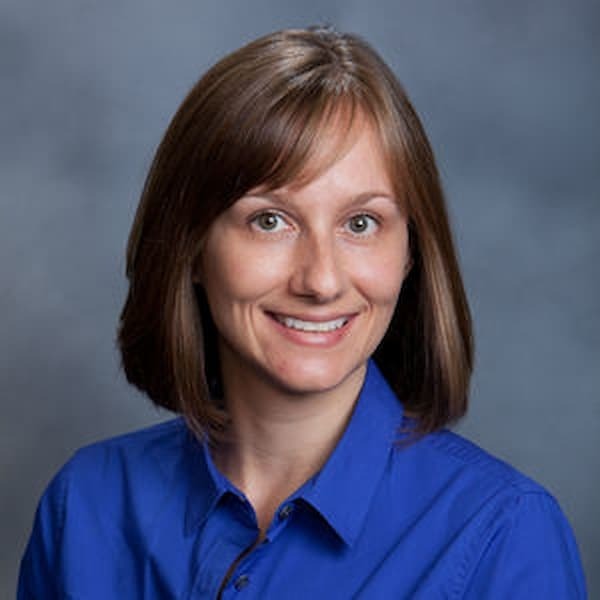
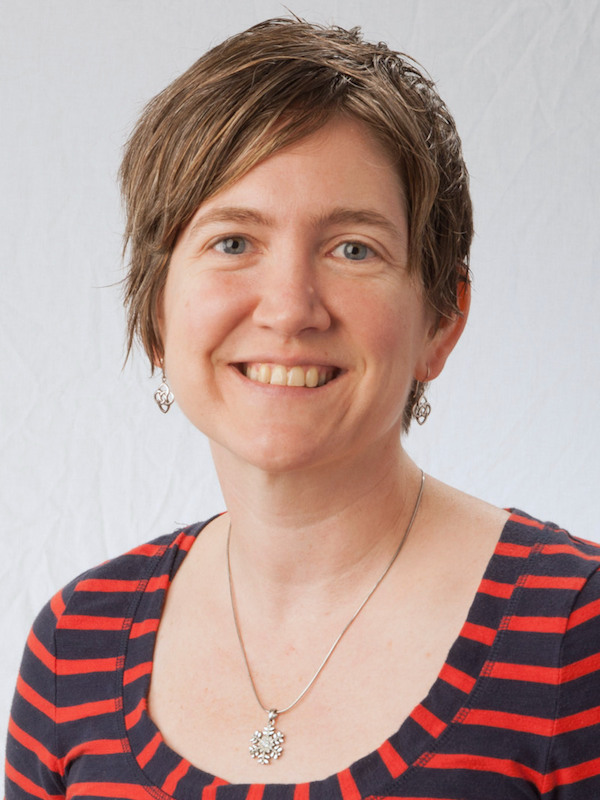
Dr. Teruni Lamberg is a Professor of Elementary Mathematics Education and Program Coordinator for multiple graduate programs at the University of Nevada, Reno 's College of Education and Human Development. With over 20 years of experience, she specializes in mathematics education reform, focusing on classroom practices, teacher development, and systemic change. Education : Ph.D. and M.A. in Mathematics Education from Arizona State University, B.A. in Elementary Education from University of Texas at Austin, and postdoctoral training at Vanderbilt University. Research Focus : Dr. Lamberg’s work examines mathematics teaching practices, formative assessment implementation, and leadership frameworks to sustain educational innovation. Her research spans K-12 settings, emphasizing equity, cognitive development, and interdisciplinary STEM integration. Publication Trends : Recent articles address equitable teaching strategies, teacher self-reflection frameworks, mathematical reasoning, and STEM implementation. Her work combines design research methodologies with practical classroom applications. Scientific Leadership Chair of Psychology of Mathematics Education (PME) National Council Chair of AERA’s Research in Mathematics Education SIG Board member of Nevada and California Mathematics Councils Grants & Initiatives : Principal Investigator for the Nevada Mathematics Project, Northeastern Nevada Math Project, and Lemelson STEM Cohort – all aiming to enhance mathematics instruction quality and student achievement through teacher professional development.
Justin R. Caram is an Associate Professor in the Department of Chemistry and Biochemistry at the University of California, Los Angeles (UCLA), where he was promoted from Assistant Professor in 2023. He serves as Vice Chair of Space Allocation and leads the Caram Group, which develops and studies novel photophysical materials using photon-resolved spectroscopic methods. Dr. Caram received his A.B. in Chemistry from Harvard University and his Ph.D. in Chemistry from the University of Chicago, followed by a postdoctoral fellowship at MIT through the MIT-Harvard Center for Excitonics. Dr. Caram's research leverages the detection, sorting, and timing of individual photons to unravel heterogeneity, complex chemical processes, and energy flow in nanomaterial and biological systems. His work combines time correlated single photon counting (TCSPC) and path length interferometry to develop new spectroscopies that probe chemical systems across the visible and shortwave infrared. His research spans the influence of energetic disorder on optoelectronic materials, the complex chemistry of oxidative stress, and quantum functional groups with applications from efficient light harvesting materials to understanding disease mechanisms. His experimental approach integrates advanced spectroscopic techniques with theoretical modeling to address fundamental questions in photophysics and materials science. Analysis of Dr. Caram's recent publications reveals a strong focus on shortwave infrared materials, quantum sensing platforms, and molecular design principles that push the boundaries of optical properties. His work bridges fundamental quantum phenomena with practical applications in imaging, sensing, and energy conversion. The research demonstrates increasing sophistication in manipulating light-matter interactions at the molecular level, with particular emphasis on ytterbium complexes for quantum applications, HgTe quantum dots with exceptional photoluminescent properties, and novel molecular designs for enhanced emission in the shortwave infrared region. Dr. Caram's scientific achievements have been recognized with numerous prestigious awards including the Richard P. Van Duyne Early Career Award for Experimental Physical Chemistry (2024), Sloan Research Fellowship (2023), Camille Dreyfus Teacher-Scholar Award (2022), Cottrell Scholar (2021), and the NSF Career Award (2020). His contributions to diversity in science were acknowledged through the Center for Diversity Leadership in Science Inaugural Faculty Fellowship (2018-2019). As a principal investigator, Dr. Caram has secured substantial funding from the Sloan Foundation, National Science Foundation (including multiple grants as PI and co-PI), Department of Energy, and the Dreyfus Foundation. His research program encompasses fundamental investigations of excitonic phenomena, development of novel spectroscopic techniques, and applications in quantum information science and biomedical imaging. Dr. Caram is actively involved in mentoring students and postdoctoral researchers in his laboratory, fostering a collaborative research environment that bridges chemistry, physics, and materials science. The Caram Group maintains a strong collaborative network with researchers across multiple institutions, particularly in the areas of quantum information science, molecular spectroscopy, and nanomaterials. The group's work has evolved from fundamental studies of quantum coherence in photosynthetic systems to the design and characterization of novel materials with tailored photophysical properties for advanced technological applications.
Jody Guarino is a Lecturer at the University of California, Irvine School of Education, with a focus on mathematics education and teacher professional development. She holds an Ed.D. in Educational Leadership from Azusa Pacific University, an M.S. in Education from California State University at Fullerton, and a B.A. in Communications and Sociology from the University of Southern California. Her research emphasizes equity in education, mathematical argumentation in elementary classrooms, and the purposeful use of instructional routines. She has collaborated with national organizations like Illustrative Mathematics and Smarter Balanced Assessment Consortium, contributing to curriculum design and assessment practices that prioritize student sense-making and identity. Guarino has published extensively on topics including rehumanizing assessment, co-teaching models, and leveraging video for preservice teacher learning. Her recent work (2024) explores argumentation as a tool for collaborative learning, while earlier publications (2023-2011) address curriculum adoption, fraction understanding, and teacher voice in systemic change. Key affiliations include the Association of Math Teacher Educators, National Council of Teachers of Mathematics, and California Mathematics Council. She has presented at numerous conferences, including NCTM and Learning Forward, on themes like discourse in primary classrooms, equitable pedagogy, and curriculum coherence.
Marjorie Horne is a researcher with extensive contributions to mathematics education, cognitive development, and educational policy. Her work spans topics such as fraction understanding, teacher training, and school climate assessment. She has collaborated internationally, contributing to studies on pharmacological adherence in osteoporosis treatment and neuroscience investigations into Parkinson’s disease. Her research emphasizes practical applications of educational theory in classroom settings and addresses challenges in low-socioeconomic regions like Kenya. Her publications highlight expertise in child cognitive development, gender studies, and innovative teaching methodologies. Education & Academic Background: No formal educational qualifications are explicitly stated in the provided text, but her sustained research output since the early 2000s suggests a doctoral-level qualification in mathematics education or a related field. Research Interests: Early mathematical concept development (fractions, place value, spatial reasoning) Teacher professional development and career transitions School-family partnerships in faith-based education systems Gender dynamics in mathematics education Neuroscience collaborations exploring dopamine pathways in Parkinsonian dyskinesia Publications Trends: Her articles primarily focus on mathematics pedagogy, cognitive development, and educational equity. Notable themes include fraction comprehension challenges, assessment of school environments in disadvantaged regions, and the application of research findings to classroom practice. The 2008 neuroscience paper represents a cross-disciplinary collaboration outside her core educational research. Grants & Awards: None explicitly cited in the text. Advising & Leadership: No student advisees listed, but her collaborative publications suggest involvement in research teams. She has contributed to international organizations like the Mathematics Education Research Group of Australasia (MERGA) and the International Group for the Psychology of Mathematics Education (PME). Labs & Teams: While no specific lab affiliations are noted, her work indicates participation in multidisciplinary research networks focusing on mathematics education and neuroscience.
Dr Mujeeb Ur Rehman is a Senior Lecturer in Computer Science at the School of Computer Science and Informatics, De Montfort University, UK. He has over 10 years of academic experience, having taught and researched at institutions including the University of Glasgow and York St John University. His work bridges artificial intelligence, cybersecurity, and digital healthcare, with a focus on secure and intelligent systems. PhD in Applied AI and Cyber Security MS in Engineering (Gold Medalist) BS in Engineering (Distinction) His research interests include Artificial Intelligence, Cyber Security, Quantum Cryptography, AI for Healthcare, Homomorphic Encryption, Zero-Knowledge Proof, Internet of Medical Things (IoMT), and Data Science. He applies machine learning and chaos theory to develop secure systems for healthcare, IoT, and post-quantum environments. The recent publications show a strong trend in hybrid security systems combining AI, chaos, quantum operations, and DNA encoding for medical data, IoT, and image encryption. His work emphasizes privacy-preserving models, lightweight cryptography, and robustness against noise and attacks. Best Paper Award, ICOTEN 2021 Best Paper Award, ICACIN 2021 Global Talent in AI and Cyber Security, Royal Academy of Engineering (UK), 2022 Distinction in BS Engineering Gold Medal in MS Engineering PhD Studentship Award Dr Rehman has successfully secured multiple research grants as Principal Investigator from Innovate UK, King Khalid University, and internal DMU funding. He has supervised numerous PhD, MSc, and undergraduate students. His consultancy includes projects with Abu Dhabi University and King Khalid University on UAV security and medical image encryption. He is actively involved in research groups including the Digital Research Communications and Responsible Innovations, Cyber Technology Institute (CTI), and Institute of Artificial Intelligence (IAI) at DMU.
Mario Stipčević is a senior scientist at the Ruđer Bošković Institute (RBI) in Zagreb, Croatia, where he heads the Photonics and Quantum Optics Laboratory within the Division of Experimental Physics. Holding the Croatian rank of scientific advisor in permanent position —equivalent to full professor—he has led national and international research efforts spanning quantum optics, quantum-information science, and high-energy neutrino physics. Education 2011–2012: Visiting Specialization in Experimental Quantum Information, University of California, Santa Barbara, USA 2010–2011: Fulbright Scholar, Experimental Quantum Information, University of California, Santa Barbara, USA 1994: PhD in Particle Physics, Université de Savoie, Chambéry, France 1991: BSc in Theoretical Nuclear Physics, Faculty of Science, University of Zagreb Research Interests His work focuses on quantum communication , quantum randomness , single-photon detection , quantum key distribution , and quantum holography . Early in his career he contributed to neutrino oscillation experiments (NOMAD, OPERA) and calorimetry R&D for the LHC. Scientific Awards Fulbright Scholarship (2010–2011) Golden Medal ARCA 2005, Zagreb International Autumn Fair Golden Medal, Salon International de Inventions, Geneva 2005 Young Investigator Award, Ministry of Science and Technology, Croatia (1998) Projects & Leadership Since 2014 he has been Head of the Photonics and Quantum Optics Research Unit at the RBI Centre of Excellence for Advanced Materials and Sensing Devices. Earlier projects include the Croatian Ministry of Science grant Experiments in Quantum Communication and Quantum Information (2007–2014) and World-Bank-funded development of a Quantum Random Bit Generator (2004–2005). Laboratory & Teams At RBI he directs the Photonics and Quantum Optics Laboratory , a multi-disciplinary group developing photon-counting detectors, entangled-photon sources, and quantum-network testbeds. The lab participates in European initiatives such as the European Quantum Internet Alliance and the ESSnuSB neutrino super-beam design study .
Valentina Volodymyrivna Dvorak serves as an Assistant Professor in the Department of Computer Science at Chernivtsi National University. Her professional activities span across computer vision, deep learning, IT project management, and business analysis, with significant contributions to both academic research and practical applications in these fields. Dr. Dvorak holds a Candidate of Technical Sciences degree with specialization in Pressure Processing Processes and Machines. Her educational background includes a Master's in Metallurgical Equipment (2004) and a degree in Organizational Management (2010) from Donbass State Machine-Building Academy. This unique combination of metallurgical engineering and computer science expertise informs her interdisciplinary research approach. Her research interests prominently feature Computer Vision and Deep Learning applications across diverse domains including medical diagnostics, satellite imagery analysis, and industrial process optimization. Dr. Dvorak has made significant contributions to convolutional neural network implementations, automated recognition systems, and polarization-correlation microscopy techniques for biomedical applications. Her work bridges theoretical computer science with practical implementations in healthcare, manufacturing, and environmental monitoring. Analyzing her publication record reveals a strong focus on practical applications of deep learning, with particular emphasis on computer vision systems for medical diagnostics, industrial quality control, and environmental monitoring. Her research demonstrates consistent progression from fundamental metallurgical process optimization to advanced AI applications. Certificate of acknowledgment as scientific supervisor for BLACK SEA SCIENCE 2022 Educational Grant from SoftServe for developing training course (2021) Dr. Dvorak actively contributes to IT education through multiple textbooks including 'Deep Learning for Computer Vision,' 'IT Project Management,' and 'Intelligent Data Analysis.' Her professional development includes numerous certifications from Sigma Software University and SoftServe, reflecting her commitment to staying current with industry practices. She serves as a member of the Bukovina Information Technology Cluster and provides scientific consulting for SKB 'Electronmash KM.'
Evangelos Bartzos is a researcher affiliated with the ΕρΓΑ Lab , a collaborative unit under the AROMATH team (joint with INRIA Sophia-Antipolis ) and the ATHENA Research Center . He earned his PhD in Telecommunications and Informatics from the National and Kapodistrian University of Athens under Prof. Ioannis Z. Emiris, as part of the ARCADES Marie Skłodowska-Curie Innovative Training Network . Education: PhD in Telecommunications and Informatics (University of Athens) His research focuses on algebraic modeling , graph rigidity theory , and distance geometry . His work investigates the maximal number of graph embeddings under length constraints in Euclidean spaces and spheres, leveraging real and complex algebraic geometry to bridge theoretical bounds and practical applications in computational mathematics. The 13 publications in his profile span 2015–2023 and reveal a trajectory from early computational biology modeling to advanced rigidity theory research. Key trends include the use of multi-homogeneous Bézout bounds, hypergraph orientations, and algebraic systems to analyze minimally rigid graphs and their realizations across dimensions. Evangelos has participated in numerous conferences and workshops including ISSAC , CASC , and the French Computational Geometry Days , presenting results on rigidity bounds and geometric constraint systems. His collaborations extend to institutions in France (ENS Lyon, Université Lyon 1), Austria, and Russia, particularly through the HEVEA project’s isometric reduction research.
Dr. Bernhard Schuch serves as a Lecturer in Mathematics Education at the University of Regensburg's Faculty of Mathematics, a position he has held since 2001. Concurrently, he retired in 2019 from his distinguished 38-year career in Bavarian primary and secondary school education where he attained Senior Teacher status. His institutional roles include Regional Coordinator for SINUS mathematics programs in Upper Palatinate (2011-2019) and Government Training Officer for Primary School Mathematics (1992-2009). His academic credentials feature a Doctorate in Mathematics Education (1989), Second State Examination for Primary/Secondary Teaching (1981), and foundational studies in pedagogy and psychology at the University of Regensburg (1974-1978). 1974-1978: Primary/Secondary Teaching Studies with Pedagogy & Psychology 1978: First State Examination 1981: Second State Examination 1986-1990: Academic Councillor at Mathematics Education Chair 1989: Doctorate in Mathematics Education Dr. Schuch's research pioneers practical solutions for primary mathematics instruction, focusing on conceptual development in arithmetic and geometry. His work addresses persistent challenges like fraction comprehension errors, operational geometry teaching, and performance differentiation strategies. He investigates the critical balance between conceptual understanding and computational fluency through classroom field studies, emphasizing how young learners develop number sense and mathematical reasoning. His publication timeline (1983-1992) reveals evolving expertise from foundational didactics theory to targeted empirical studies on arithmetic errors and geometry instruction. Key thematic threads include cognitive development in number concept formation, practical applications of social support theory in teacher training, and evidence-based frameworks for differentiated mathematics instruction in heterogeneous classrooms. As an educator, Dr. Schuch mentors admissions theses for teaching candidates and conducts professional development workshops including "Good Tasks in Mathematics Lessons" and "Patterns and Structures" for primary educators. His institutional contributions extend to examination seminars for primary mathematics teachers and SINUS program leadership coordinating mathematics education improvements across Upper Palatinate schools. He maintains active engagement through continuing education courses for teachers and ongoing supervision of graduate theses, bridging academic research with classroom practice in primary mathematics education.
Dr. Tony Harries is an Honorary Research Fellow in the School of Education at Durham University. He holds a PhD in Mathematics Education from Bristol University and has extensive experience in primary and secondary education, both in the UK and internationally. His academic roles include divisional director for Initial Teacher Training, teaching mathematics education at undergraduate and postgraduate levels, and supervising doctoral and master’s dissertations. Dr. Harries’ research focuses on mathematics education, particularly the use of information technology in learning, mathematical representations for young children, problem-solving in word problems, and school-university partnerships. His work has been funded by organizations such as DfES, QCA, and TTA. He emphasizes both quantitative and qualitative methodologies, with a strong interest in involving teachers in research. His publications explore themes like mathematical representations, teacher training, creativity in mathematics, and curriculum design. He collaborates with the primary maths team to develop educational resources, including the Danimaths website. Dr. Harries has received grants including a DfES award for exploring links between English and Mathematics teaching in primary schools, and TTA awards for producing videos and e-books on trainee assessment. He has presented at international conferences and serves on the editorial board of Research in Mathematics Education .
Dr. Myoungwhon Jung is an Associate Professor in the Department of Special and Early Education at Northern Illinois University (NIU), affiliated with the College of Education. He holds a Ph.D. in Curriculum Studies from Indiana University (2006), an M.S. in Early Childhood Education (Indiana University), and a B.S. in Mathematics (Chung Ang University). His research focuses on mathematics education for young children, teacher professional development, and integrating technology into early childhood settings. Dr. Jung has collaborated with Chicago-area preschool programs to design professional development workshops and conduct math intervention research. He teaches courses such as Teaching Science and Mathematics to Children Ages 5-8 and Student Teaching , emphasizing hands-on learning and inclusive practices. His work includes developing multimedia teacher education materials through projects like the Indiana University-NAEP initiative. His recent publications explore topics such as geometry instruction, technology integration, and preparing teachers for diverse classrooms. Despite no explicitly listed awards, his contributions to early childhood education and teacher training are notable. Dr. Jung advises students in NIU’s M.S.Ed. and Ph.D. programs and maintains an active role in curriculum development and educational outreach.
Heinz Steinbring is a Professor at the University of Duisburg-Essen, where he leads the Steinbring working group within the Research Group EInmaL. His academic career centers on mathematics education with a distinct epistemological perspective, focusing on primary school learning environments and teacher development. Research Focus: Steinbring investigates how visual materials, manipulatives, and mathematical signs function as epistemological tools in knowledge construction. His work emphasizes the interplay between social interaction and cognitive constraints in mathematical learning, particularly examining how students interpret visual representations and how teachers facilitate meaning-making through discourse. Key themes include the role of semiotic systems in transitioning from concrete to abstract thinking and the epistemological foundations of classroom communication. Publication Trends: Analysis of his 15 most recent publications (2011-2020) reveals consistent exploration of visual-semiotic dimensions in mathematics education. His research demonstrates evolving sophistication in analyzing classroom interactions, with increasing emphasis on stochastic concepts, frame-based interpretation models, and epistemological barriers in primary mathematics. The corpus shows strong continuity in theoretical frameworks while expanding empirical applications across diverse mathematical topics. Academic Leadership: As working group leader, Steinbring supervises doctoral fellow Katharina Mros and maintains active research collaboration within the EInmaL group. His email contact (heinz.steinbring@uni-due.de) and office location (WSC-O-2.43) indicate ongoing institutional engagement at the University of Duisburg-Essen.
Nicole McNeil is a Professor at the ACE College of the University of Notre Dame, affiliated with the Institute for Educational Initiatives. She holds a B.S. from Carnegie Mellon University, a Ph.D. from the University of Wisconsin-Madison, and completed a postdoc at Yale University. Her primary research focuses on cognitive development, particularly how children learn, communicate, and solve problems in mathematics. Key interests include numerical representation, symbolic reasoning, and the impact of instructional practices on mathematical understanding. Her work is supported by grants from the U.S. Department of Education’s IES and the NSF. McNeil’s research bridges theoretical questions about knowledge organization and practical challenges in education, emphasizing interventions to improve mathematical equivalence understanding and number sense. Publications highlight themes like the role of counting books in early numeracy, efficacy of equivalence interventions, and predictors of mathematical achievement. She leads the Cognition, Learning, and Development (CLAD) Lab, exploring topics such as arithmetic fluency, distributive property challenges, and tactile learning effects on numerical skills.
Sarah Brooks is a Professor at Texas A&M University and Director of the Center for Atmospheric Chemistry and the Environment. She holds an office in Eller O&M 1105A, with a phone number (979) 845-5632 and email sbrooks@tamu.edu. Her research focuses on aerosol-cloud interactions, ice nucleation, and their impacts on climate and air quality. She employs field studies, laboratory experiments, and novel analytical techniques to investigate aerosol properties and their role in cloud formation. Education: Ph.D. in Analytical Chemistry, University of Colorado, 2002 S.B. in Chemistry, Massachusetts Institute of Technology, 1995 Postdoctoral Research in Atmospheric Science, Colorado State University, 2002–2004 Research Interests: Investigation of aerosol composition and chemical reactions affecting ice nucleation. Impact of anthropogenic and natural aerosols on regional air quality and global climate. Development of advanced instrumentation for aerosol and cloud measurements. Her studies combine field campaigns, laboratory experiments, and theoretical modeling to address knowledge gaps in aerosol-cloud interactions. Awards: Texas A&M Impact Fellowship (2017) Presidential Early Career Award in Science and Engineering (PECASE, 2007) National Science Foundation CAREER Award (2006) Advising & Grants: Mentored numerous graduate students in aerosol chemistry and atmospheric science. Principal investigator on grants focusing on ice nucleation, aerosol optics, and climate modeling. Labs/Teams: Director of the Center for Atmospheric Chemistry and the Environment. Collaborator in global campaigns like NAAMES and ISDAC.
Bert Reynvoet serves as a full professor at KU Leuven's Faculty of Psychology and Educational Sciences, based at Campus Kulak Kortrijk. He holds dual institutional affiliations as a member of the KU Leuven Brain Institute (LBI) and the KU Leuven Institute for Educational Research (LIVO), where he bridges cognitive neuroscience with educational practice through interdisciplinary collaboration. His research focuses on numerical cognition, examining neurocognitive mechanisms of number processing, developmental trajectories in mathematical abilities, and statistical learning's role in mathematics education. Key investigations include fraction processing, numerosity perception, and adaptive learning environments that leverage learning analytics to personalize educational experiences. This work integrates cognitive psychology, neuroscience, and educational technology to address foundational challenges in mathematical learning. Analysis of his 2025 publications reveals a strong emphasis on applied educational technology, particularly teacher data literacy and adaptive systems. Research spans cognitive neuroscience (e.g., developmental trends in numerosity perception) and practical implementations (e.g., digital games for fraction learning), demonstrating a consistent pattern of translating theoretical insights into classroom tools while exploring individual differences in mathematical cognition. Reynvoet actively leads multiple research grants as promotor, including neurocognitive studies on numerical notations (2025-2028) and statistical learning in math development (2024-2028). His projects frequently address adaptive testing methodologies and personalized learning systems, with co-promoted work on educational dashboards and game-based fraction instruction. Institutional involvement includes membership on the PPW Faculty Council and program councils for Educational Sciences and Psychology degrees.