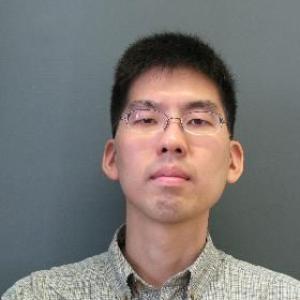
Dr. Michael D Shin is a Research Fellow at the University of Cambridge, specializing in early modern Korean history. His work explores the connections between social structures, cultural practices, and intellectual developments during this period. Education: BA in English and American Literature, Harvard University MA in Asian Studies, University of California, Berkeley Ph.D. in History, University of Chicago Dr. Shin’s research focuses on interdisciplinary approaches to early modern Korea, synthesizing social, cultural, and intellectual history. His current affiliation with the University of Cambridge supports his academic investigations. He has not received any additional scientific awards beyond his fellowship status, and no publications or student advisees are mentioned in the available text.
Sho Konishi serves as Director of the Nissan Institute of Japanese Studies and Associate Professor in Modern Japanese History at the University of Oxford, holding dual appointments in the Faculty of History and the Oxford School of Global and Area Studies. His interdisciplinary work bridges Japanese studies with transnational intellectual history, focusing on non-imperial connections between Japan, Russia, and global networks. Undergraduate studies completed as a U.S. military school cadet after extensive coursework in Russia Georgetown University: Philosophy and International Affairs University of Chicago: Ph.D. in History (Theology and History) Postdoctoral fellowship at Harvard University Konishi's research centers on intellectual and cultural history with emphases on transnational encounters, anarchist thought, and the history of science. He investigates non-imperial knowledge production across 19th-20th century Japan, Russia, and Eastern Europe, with particular focus on symbiosis theory, linguistic democracy, and the role of nonverbal communication in epistemology. His work challenges Western-centric modernity narratives through examinations of anarchist natural science and transnational emotional histories. His publications reveal consistent engagement with alternative epistemologies and cross-cultural exchanges, spanning transnational history, the history of science, and cultural studies. Key themes include Japan-Russia intellectual networks, anarchist cooperative movements, and non-imperial frameworks that reposition Japan within global knowledge systems rather than colonial paradigms. ICAS Book Prize 2023 – Humanities for Japan’s Russia: Challenging the East-West Paradigm Konishi contributes to international academic governance as Advisory Board Member for the Esperantic Studies Foundation, External Faculty at the University of Chicago Stevanovich Institute on the Formation of Knowledge, and International Advisory Board Member for Manchester University Press's Anarchist Studies Series. His cultural impact extends to architectural projects like the Venice Biennale's Philippine Pavilion through 'Symbiogenesis: The Art of Bayanihan Architecture'.
Duncan Kelly is Professor of Politics at the University of Cambridge, affiliated with the Department of Politics and International Studies (POLIS). He is also a Fellow and Director of Studies in Human, Social, and Political Sciences (Part IIB and Harvard) at Jesus College, currently on leave for 2024-2025 academic year. Education: BA Hons, Glasgow Caledonian University MA, University of York PhD, University of Sheffield His research focuses on intellectual history and political theory, particularly examining the evolution of political and economic ideas from the mid-19th century to the early 20th century. Current projects include studies on the intellectual history of the First World War, global histories of political thought since 1848, and the intersection of political judgment, theory, and the Anthropocene. Professor Kelly has taught at Cambridge since 2007, where he was promoted to full professorship in 2018. He combines his academic role with broader interests in book collecting, music, art, squash, languages, and travel.
Rachel Leow is an Associate Professor in Modern East Asian History and Fellow of Murray Edwards College at the University of Cambridge. She holds a PhD and MPhil from St Catharine’s College, Cambridge, and a BA from Warwick University. Her research critiques rigid nationalisms in East Asia, focusing on transregional cultural and intellectual histories. Her book Taming Babel: Language in the Making of Malaysia (2016) won the 2018 Harry J. Benda Prize for Southeast Asian studies. Current projects include an anti-diasporic history of Chinese migration and early 20th-century Asian thought-worlds. Leow emphasizes public engagement, contributing to blogs, literary reviews, and collaborative manifestos. She teaches World History courses, including Part IA’s Outline 11 and specialized modules on East/Southeast Asia. She supervises postgraduate students exploring transnational East Asian history from 1850 to the present. Professional affiliations include the Royal Historical Society, Center for History and Economics, and editorial roles at The Historical Journal and Global Intellectual History . Awards include the Harry J. Benda Prize and RHS Fellowship. Her digital work includes a visualization of Afro-Asian Cold War networks and a short film on diasporic identity.
Dr Theodor Dunkelgrün is a Senior Postdoctoral Researcher at Trinity College, University of Cambridge , and Academic Co-Ordinator of the Andrew W. Mellon Foundation-funded project Religious Diversity and the Secular University (2017–2022) at CRASSH. He was previously a postdoctoral fellow at St John’s College (2013–2018) and has taught across History, Divinity, and Classics at Cambridge, Bryn Mawr, UPenn, and the University of Antwerp. Education : Christelijk Gymnasium Sorghvliet (The Hague), Leiden University, University of Chicago (PhD, 2012). Visiting graduate work at Princeton (2005–06) and Oxford (2008). Research Focus : Intersections of biblical scholarship, history of the book, and interfaith intellectual exchange (1450–1900), particularly in the Low Countries and Mediterranean World. Examines how Jewish, Christian, and Muslim scholars engaged with the Hebrew Bible through technological shifts (print to photography) and institutional contexts. Publications include edited volumes like The Jewish Bookshop of the World (2020) and Bastards and Believers (2020), alongside articles on topics ranging from the Antwerp Polyglot Bible to Jewish converts in early modern Europe. Collaborations span institutions in Taiwan, Oxford, and Leiden, with ongoing work on global philological practices and the Hebrew Bible’s material history. Professional Engagement : Co-founded the Cambridge Seminar in Early Modern Scholarship and Religion (2017), and actively promotes academic freedom through refugee scholar initiatives. Affiliated with the Cambridge Forum for Jewish Studies, Centre for Material Texts, and international networks like EMoDiR and Ideas in Motion.
Professor Steven J Reid is a leading scholar in Early Modern Scottish History and Culture at the University of Glasgow , where he has held a professorship since at least 2023. His work bridges intellectual, political, and religious history from c.1450 to c.1650, with a focus on James VI and Mary Queen of Scots . A prolific editor and author, he contributes to major academic series and institutions like the Hunterian Art Gallery. Research Interests Intellectual, political, and religious history of Scotland Jacobean Scotland and Renaissance/Reformation dynamics Latin literature and its cultural role Andrew Melville's educational reforms Key Publications The Early Life of James VI (2023) on royal minority Co-edited volume on The Afterlife of Mary Queen of Scots (2024) Studies in Neo-Latin poetry and educational history Contributions to Oxford Handbook of Calvin and Calvinism (2021) Projects & Grants Co-investigator on RSE-funded Mary Queen of Scots memorialization project AHRC support for Bridging the Continental Divide (2012-2015) Leverhulme Trust international network participant Fulbright Scholars Award at Yale Divinity School (2012) Teaching History 1A: Scotland’s Millennium Special Subject: The Reign of James VI (1578-1603) Module: The Life and Afterlife of Mary, Queen of Scots
Lucia Dolce serves as the Numata Professor of Japanese Buddhism within the Department of Religions and Philosophies at SOAS University of London, part of the School of History, Religions and Philosophies. Her academic base is room 342 in the Russell Square: College Buildings campus. Her educational background includes: Laurea MA (University of Venice) PhD (Leiden University) Professor Dolce's research centers on two interconnected projects: first, the discourse on the body in medieval Japanese Buddhist rituals and its connections to continental Tantric practices, emphasizing ritual fluidity and performative theory applications; second, contemporary Buddhism-Shinto syncretism with focus on revival of premodern practices in Kyoto shrines. She also examines Tokyo's urban pilgrimage routes like the Seven Gods of Fortune, analyzing institutional negotiations and religious marketing dynamics. Her journal articles (1992-2023) consistently explore ritual knowledge transfer in Japanese Buddhism, with recent works on scriptural repurposing and tantric exegesis highlighting material culture and practice-centered approaches. Earlier publications establish foundational studies on Nichiren Buddhism's esoteric dimensions, astrological cults, and celestial body worship, revealing enduring thematic threads across three decades of scholarship. Scientific awards: No awards listed in provided text Advising and grants: She currently supervises four PhD candidates: Rachel Williams (Japanese Secularity), Haruka Saito (Repentance Rituals), Sooyeun Yang (Korean Astrological Buddhism), and Yeonju Lee (Korean Nationalism). Previous supervisees include twelve PhD graduates such as Emanuela Sala (2022, Sannō Shintō), Ronit Wang (2022, Thai Hell Parks), and multiple 2011 completions. Dolce led the Newton Fellowship-associated project 'The Lucky Gods of Tokyo' (2014-2016), investigating spatial politics in Buddhist-Shinto pilgrimage networks.
Professor Helena Sanson is a Full Professor of Italian, History of Linguistics, and Women's Studies at the University of Cambridge , where she is also a Fellow of Clare College and serves as Postgraduate Teaching and Examining Officer for the Italian Section. She joined Cambridge in 2005 after teaching at University College London (1998-2003) following her British Academy Postdoctoral Fellowship. PhD from University of Reading (2002) Her interdisciplinary research focuses on the intersection of Italian linguistic history , literary culture , and gender studies from the Renaissance to post-Unification period. Particular emphasis includes women's contributions to linguistic thought , conduct literature analysis , and female roles in translation networks . Her work examines how women navigated language standardization, educational access, and literary production across social strata. Recent projects include Leverhulme-funded research on women's linguistic experiences in 18th-19th century Italy and co-edited volumes on transnational travelers' accounts and early modern female education . She founded the Women and Gender in Italy (1500-1900) book series and the journal Women Language Literature in Italy . Scientific awards include: British Academy Postdoctoral Fellowship Leverhulme Research Fellowship Philip Leverhulme Prize CRASSH Early Career Fellowship Isaac Newton Trust grant Senior Visiting Fellowship at University of Bologna She supervises graduate research in topics spanning women's writing , linguistic thought , translation history , and cultural marginalization in 16th-20th century Italy. Her work bridges philology, literary criticism, and social history through rigorous textual analysis.
Professor Alberto Rigolio is a scholar of Classics and Ancient History at Durham University, specializing in the Eastern Mediterranean during the Roman and Late Antique periods. He focuses on Syriac literature, Greco-Roman intellectual traditions, and the reception of classical texts in early Christian and Islamic contexts. Rigolio holds a D.Phil. from Oxford University and has held prestigious fellowships at Harvard, Princeton, and All Souls College, Oxford. He serves as Chair of the Board of Examiners at Durham and is a Fellow of the Higher Education Academy. His research explores the transformation of classical dialogue forms in late antiquity, the transmission of Greek texts into Syriac and Arabic, and the cultural intersections between Greco-Roman, Christian, and Islamic traditions. Key works include Christians in Conversation (Oxford UP, 2019), which examines late antique dialogue literature, and a forthcoming book on the emergence of Syriac literature supported by British Academy and Princeton IAS fellowships. Education: BA/Milan, D.Phil./Oxford, Postdoctoral Fellowships at Harvard and Princeton Affiliations: Institute of Medieval and Early Modern Studies, Durham Rigolio's articles analyze Syriac translations of Aristotelian works, Plutarch, and Themistius, revealing how Greco-Roman thought was adapted to meet religious and cultural needs. His projects include studies on Syriac rhetoric, the Roman household in late antique conflicts, and para-biblical narratives. He supervises postdoctoral researchers and PhD students on topics ranging from Syriac literary culture to late antique religious identity. Awards: British Academy Mid-Career Fellowship (2024), All Souls College Visiting Fellowship (2024) Grants: Leverhulme Trust, British Academy, American Philosophical Society He directs research labs examining Syriac intellectual culture and co-ordinates interdisciplinary projects on late antique translation movements. Rigolio is actively involved in public outreach, offering talks on Roman religion, Palmyrene military identity, and the Graeco-Syro-Arabic textual tradition.
David Leopold is an Associate Professor of Political Theory at the Department of Politics and International Relations (DPIR), University of Oxford, and a Fellow of Mansfield College. He specializes in the political philosophy of G.W.F. Hegel, Karl Marx, and theoretical connections between them. His research also explores utopianism, methodological questions in political theory, and the history of socialist thought. Leopold holds an MA from Sussex University and a DPhil from the University of Oxford. His teaching includes undergraduate and graduate courses on political theory, research methods in the history of political thought, and the theories of Hegel and Marx. He advises doctoral students on Marx, Hegel, and related topics. Research interests span Marx's views on human flourishing (linked to capabilities approaches), Analytical Marxism, William Morris's utopianism, and the role of ideal theory in political philosophy. He critiques dismissals of utopian thinkers like Morris and engages with Engels's early communitarian socialism. Leopold is affiliated with the Political Theory Network and the Centre for Socio-Spatial Justice (CSSJ). His work bridges historical and contemporary political thought, emphasizing critical engagement with classical texts and their relevance to modern debates.
Hatoon Alfassi is an Honorary Research Fellow in Arabic and Middle Eastern Studies at the University of Manchester. A Saudi historian specialized in pre-Islamic Arabian history and women's studies, she previously held positions at King Saud University and Qatar University. Alfassi earned her PhD from the University of Manchester focusing on women and power in ancient Nabataea. Her research examines women's historical agency in ancient Arabian societies, Islamic feminism, and contemporary gender rights in Saudi Arabia. She pioneered studies of Nabataean women through epigraphic analysis and comparative methodology. Current work analyzes intersections between religious interpretation, legal frameworks, and women's citizenship rights in Gulf societies. Alfassi received the MESA Academic Freedom Award (2018) and French National Order of Merit (2012). Her publications in Arabic and English include five books and numerous articles analyzing gender dynamics from antiquity to modern reforms. She maintains an active public intellectual presence through decades of newspaper columns addressing women's rights.
Afifi al-Akiti serves as University Research Lecturer in Islamic Studies at the University of Oxford's Faculty of Theology and Worcester College, holding additionally the KFAS Fellowship in Islamic Studies at the Oxford Centre for Islamic Studies. His academic profile centers on medieval Islamic intellectual traditions with institutional ties spanning Oxford's theological faculty, constituent college, and specialized research centers. His research investigates Islamic theology (kalam), philosophy (falsafa), and science through analysis of al-Ghazali's engagement with Greek philosophy—particularly Avicenna—and explores science-religion dynamics in Islamic civilization. Specialized interests include medieval Arabic manuscripts, Moroccan religious lithographs (Hajariyyat), Islamic astronomy (ilm al-falak), and Shafi'i jurisprudence. Current editorial projects focus on al-Ghazali's Madnun corpus and a 9th-century astronomical manuscript by Nastulus concerning Byzantine lunar-solar gearing mechanisms. Publication trends reveal consistent scholarly engagement with medieval Islamic philosophy's contemporary relevance, particularly through al-Ghazali's works addressing modernity, ethics of war, and prophethood concepts. His output bridges historical textual analysis with current debates in Islamic thought, demonstrating methodological rigor in manuscript studies while maintaining applied relevance to modern theological discourse. Key recognition includes: KFAS Fellowship in Islamic Studies Al-Akiti actively shapes academic discourse through convening the 'Islam and Science' seminar series (2009) and the Islamic Studies panel for the International Society for Religion, Literature and Culture conference (2010). His public engagement includes BBC documentaries on 'Science and Islam' and 'The Muslim Tommies' (2009), preparation of the 'Sciences and Arts in Early Islam' exhibition at Oxford's Museum of the History of Science (2010-11), and participation in the Oxford Scriptural Reasoning Group—demonstrating commitment to interdisciplinary knowledge translation beyond traditional academic boundaries.
Prof Andrew Pettegree is the Bishop Wardlaw Professor at the School of History, University of St Andrews. His research focuses on the European Reformation, history of communication, and the history of the book. He leads a research group that completed the Universal Short Title Catalogue, analyzing books published before 1650. Key publications include The Book in the Renaissance and The Invention of News . He has held roles such as Vice-President of the Royal Historical Society and founded monograph series like St Andrews Studies in Reformation History . Education: BA, DPhil, and MA from the University of Oxford. Research interests span Reformation media strategies, Dutch Republic book culture, and early modern print networks. Awards include the Goldsmith Prize and fellowships. He supervises PhD students in Reformation and Book History. Key projects include studies on Luther’s media tactics and the Dutch Golden Age book trade. Grants supported work on medical publishing and the Universal Short Title Catalogue. He leads the St Andrews Reformation Studies Institute and collaborates on global book history initiatives. His work bridges academic research with public engagement, emphasizing the role of print in shaping modern society.
Dr. Philippa Carter is University Assistant Professor in the History of Medicine and Health before 1800 at the University of Cambridge's Department of History and Philosophy of Science. She serves as an Affiliated Lecturer in the Faculty of History and is a Fellow and Director of Studies at Sidney Sussex College. Additionally, she manages the MPhil in Health, Medicine and Society program. Her educational background focuses on early modern European history with specialization in medical and intellectual history. Her research spans a wide range of interests including: Early understandings of mental and physical illness Bodies and embodiment in historical contexts Mind/body relations in premodern thought Disability and visible difference Disease categorization and diagnosis across historical periods Boundaries between natural philosophy, magic, and religion Sciences of the psyche Dr. Carter's scholarly work examines premodern Aristotelian understandings of 'nature,' particularly in the processes of 'generation' and 'corruption.' Her research bridges cultural history, medical history, gender studies, and the history of science, with particular attention to how historical societies conceptualized bodily experience and mental states. She has published significant work on childbirth and madness, gender and witchcraft, and is currently completing a monograph on madness, brain disease, and the soul in early modern England. Her recent publications demonstrate a consistent focus on the intersection of gender, medicine, and social history in early modern contexts. The articles reveal trends toward examining marginalized historical experiences, particularly women's health and mental states, while connecting historical medical concepts to contemporary understandings. Among her notable scholarly contributions: 'Childbirth, "Madness", and Bodies in History' (History Workshop Journal, 2021) 'Work, Gender and Witchcraft in Early Modern England' (Gender & History, 2023) "Madness Embodied" (forthcoming in The Bloomsbury Cultural History of Madness) Dr. Carter teaches on Early Science and Medicine at the Department of HPS, Part I History Tripos Outline Paper 4 ('Early Modern Britain'), and Part II, Paper 11 ('Early Medicine'). She serves as Associate Editor for the digital humanities project 'Reading Early Medicine' and is actively involved with Cambridge Reproduction research initiatives. Her work contributes significantly to interdisciplinary approaches to historical medical understanding, connecting past and present perspectives on reproductive health, mental illness, and bodily experience.
Dr Rachel Foxley is an Associate Professor in the Department of History at the University of Reading, serving as Director of Postgraduate Studies in History. Her research focuses on early modern British political thought, particularly the English Revolution, Leveller movement, and classical influences on modern politics. She has authored books like The Levellers: Radical Political Thought in the English Revolution (2016) and co-edited Brill's Companion to the Legacy of Greek Political Thought (2024). Her work explores themes such as republicanism, citizenship, and the intersection of classical antiquity with early modern political developments. Her research has addressed figures like John Milton, James Harrington, and John Lilburne, analyzing their contributions to democratic and republican ideals. Notable projects include the Astor100 initiative, celebrating Nancy Astor’s legacy in women’s politics. She frequently publishes in journals such as Classical Receptions Journal and History of Political Thought , contributing to debates on sovereignty, rhetoric in revolutionary pamphlets, and the historical context of Magna Carta. Dr. Foxley’s scholarship bridges intellectual history with political theory, emphasizing how classical models (e.g., Sparta, Rome) shaped English republican thought. Her work highlights the innovative yet rooted nature of 17th-century political ideas, challenging traditional narratives of revolutionary thought.