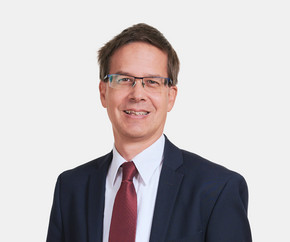
Minas SamatasView profile
Professor
Minas Samatas serves as Professor of Political Sociology of the Modern Greek State within the Department of Sociology at the University of Crete's School of Social Sciences, where his office is located at Gallos Campus in Rethymno, Greece. His academic career spans several decades with continuous contributions to Greek sociological discourse. He completed his educational foundation with a Diploma from Aristotle University of Salonica's Economic & Political Science Department, followed by advanced degrees in Sociology from New York City's New School for Social Research (MA and PhD, 1986). His doctoral research examined "Greek Bureaucratism: A system of sociopolitical control," establishing his focus on state-society interactions. Professor Samatas' research program centers on Political Sociology with specialized expertise in Greek State & Society dynamics, Information Society evolution, Cyber Sociology, and Surveillance Societies across historical periods. His scholarly trajectory reveals a consistent investigation of surveillance mechanisms—from Cold War anticommunist systems through Olympic mega-event security (particularly Athens 2004) to austerity-era monitoring (2010-2014) and contemporary AI-driven surveillance. This work positions Greece as a critical case study for understanding surveillance transitions in post-authoritarian Southern European contexts. His publication trends over the past decade demonstrate increasing focus on comparative Olympic surveillance (Athens 2004 vs Beijing 2008), the political economy of surveillance industries, and resistance to austerity-era monitoring practices. Recent work (2024) extends this trajectory to examine artificial intelligence integration in Olympic security infrastructure. No scientific awards were documented in the available materials. Regarding academic mentorship, while his research interests include "Graduate Sociology Students," specific advisee names and grant funding details remain unreported in the source texts. Similarly, information about research laboratories or dedicated teams was not provided.