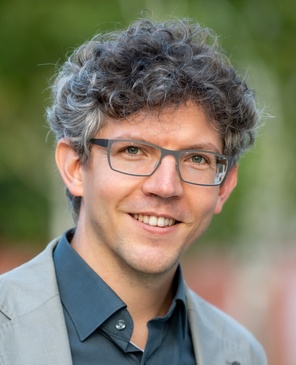
Prof. Kirstin Drenkhahn is a Professor of Criminal Law and Criminology at the Free University of Berlin's Faculty of Law. Her research focuses on prison climate (MQPL+ project), rural criminology (Farm Crime study), restorative justice, juvenile justice, and judicial practices. She leads international collaborations, including projects on prison social climate in Germany and Switzerland, and rural crime against farmers. Her teaching includes courses on criminal law, criminology, and juvenile justice. She advises PhD students and organizes academic events like the North Crimea Conference and Criminology Network meetings. Her work emphasizes resocialization, legal education reform, and policy-driven research. Research Highlights: MQPL+ Project: Investigates prison climate's impact on resocialization, supported by DFG/SNSF. Rural Criminology: Examines agricultural crime and farmer victimization through international surveys. Judicial Practices: Analyzes decision-making in penal enforcement chambers and law student well-being. Teaching & Outreach: Offers courses in criminal law, criminology, and juvenile justice. Organizes the 'University in Prison' initiative for student-inmate academic exchanges. Grants & Collaborations: DFG/SNSF-funded MQPL+ project. Swiss Federal Office of Justice-funded pilot on prison climate. International partnerships with Bern, Cologne, and Cambridge universities.
Dr. Nicolette Busuttil is a Lecturer in Law and Law Undergraduate Admissions Tutor at the School of Law, Gender and Media, SOAS. Her research focuses on international and EU law frameworks governing refugee and migrant rights, particularly for persons with disabilities. She specializes in disability human rights evolution, non-refoulement obligations, and the impact of the UN Convention on the Rights of Persons with Disabilities (UNCRPD) in EU migration policies. Her academic roles include convening modules on International Refugee Law and Criminal Law (2023/24). She is affiliated with the (B)OrderS Centre at Queen Mary University of London, Refugee Law Initiative (University of London), and the Immigration Law Practitioners Association (ILPA). Previously, she worked with refugees and immigration detainees in Malta, shaping her advocacy on EU southern border policies and migrant disability rights. Her research spans UN Global Compacts implementation, EU-UN legal frameworks coherence, and interstate cooperation in migration governance. Recent work includes contributions to the Horizon 2020 PROTECT project analyzing pandemic-era migration policies and legal mechanisms for border violence monitoring. Education: Doctoral research on disability rights and migrant expulsion (university unspecified) Grants/Projects: Horizon 2020 PROTECT Project (2021-2022) Professional Memberships: ILPA Member, Refugee Law Initiative Research Affiliate Her publications bridge legal theory and practice, addressing gaps in migrant disability protections, Frontex accountability, and EU asylum system reforms. She actively contributes to practitioner-oriented legal guidance on migration frameworks.
Professor Yasmin Ibrahim is a faculty member at Queen Mary University of London, holding dual roles as Professor of Digital Economy and Culture and Deputy Dean of the School of Business and Management. She specializes in interdisciplinary research at the intersection of digital technologies, culture, and society, with a focus on migration, media ethics, and posthumanism. Her contributions include over 100 peer-reviewed articles and multiple authored/edited books on topics like digital economies, migration, and media activism. She is the convenor of the Borderlines research cluster, exploring creative and cultural economies, and actively contributes to equality and inclusion initiatives. Her teaching includes undergraduate modules on social media and postgraduate courses on brand management, emphasizing digital technologies' societal impacts. She has reviewed for EU funding bodies and the Qatar National Research Fund, while serving on editorial boards such as Sociology . Her research explores critical perspectives on Islam, race, and visual culture, with recent work addressing pandemic ethics, posthuman capitalism, and digital iconography. Advising and grants: Supervises multiple doctoral students exploring topics like skin-lightening advertisements and migrant narratives. Her work bridges academia and public engagement through research clusters and editorial roles. Notably, she co-authored Posthuman Capitalism (2021) and Digital Icons (2020), advancing critiques of digital economy ethics and visual culture. Labs/Teams: Leads the Borderlines interdisciplinary research group, fostering collaborations on creative and cultural economies. She also chairs UNPRME initiatives and participates in the School’s Senior Management Team.
Prof. dr. J.H. (Harry) Garretsen is a Professor of International Economics & Business and Director of the 'In the LEAD' center at the University of Groningen's Faculty of Economics and Business. His academic roles include leadership in research and education, with expertise spanning international economics, spatial economics, and leadership studies. He has held prior positions such as Dean of the Faculty of Economics and Business (2011–2016) and Professorships at Utrecht University and Radboud University Nijmegen. Education: BA, MSc, and PhD in Economics from the University of Groningen (1984–1991). His PhD thesis explored Keynesian coordination problems. Research: Focuses on geographical economics, leadership in turbulent contexts, and international business. Key areas include spatial economics, Brexit impacts, and pandemic leadership behavior. He has authored/co-authored textbooks like International Economics and Business and edited journals such as the Journal of Economic Geography . Affiliations: Member of the Bank Council of De Nederlandsche Bank, Domain Board of NWO, and Senior Visiting Fellow at the University of Cambridge. He advises on policy matters including the Dutch Social Economic Council. Teaching: Offers courses in international economics, macroeconomics, and leadership across undergraduate, graduate, and PhD levels. His pedagogical reach extends to interdisciplinary audiences in political science, geography, and law. Grants & Contracts: Involved in projects for the World Bank, Centraal Planbureau, and EU DG-Regio. His work bridges academic research with policy applications in regional development and trade. Labs/Teams: Leads the In the LEAD center focusing on leadership and economic dynamics. Active in international collaborations like the CESifo Research Network and the Cambridge Land Economy Department.
Lara J. Nettelfield is a Clinical Professor in the Program in International Relations at New York University. Her research focuses on human rights, forced migration, transitional justice, technology's societal impact, and social movements. She co-authored Srebrenica in the Aftermath of Genocide (2015), which examines post-genocide social repair mechanisms in Bosnia and Herzegovina, and authored Courting Democracy in Bosnia and Herzegovina (2010), analyzing the impact of the ICTY on democratization. Both books received significant academic recognition, including the Marshall Shulman Prize (2011). Nettelfield holds a PhD in Political Science from Columbia University, with additional training at the Harriman Institute. Her career includes work with the International Commission on Missing Persons (ICMP), OSCE, and NATO Parliamentary Assembly, alongside NGO advisory roles. She serves on editorial boards for journals like East European Politics and Review of International Studies , and frequently contributes to media outlets such as the New York Times , Foreign Policy , and BBC . Her recent projects include an oral history initiative on Europe's refugee crisis and analyses of technology's role in humanitarian efforts. Awards include the HEA Fellowship (UK) and multiple research grants on Balkan conflict studies. Nettelfield's work bridges academic rigor with practical policy engagement, emphasizing accountability mechanisms and civil society roles in post-conflict reconstruction. Her publications span scholarly articles on missing persons, asylum system critiques, and lessons from European migration policies. She remains actively engaged in debates about racial equality in US asylum systems and the ethical dimensions of quantitative data in conflict analysis.
Dr Noemi Magugliani is a Lecturer in Law at the University of Kent's Kent Law School. Their work focuses on critical migration and border studies, queer theory applications to legal frameworks, and vulnerability constructs within anti-trafficking systems. Current research examines gendered protection barriers faced by trafficked adult men and challenges in international refugee law. Professional roles include Senior Legal Adviser to the UN Special Rapporteur on Trafficking and co-founder of de:border // migration justice collective addressing Mediterranean border externalization. Previously taught at University of Galway (International Migration Law/EU Law) Consultant with British Institute of International and Comparative Law Contributed UN reports on non-punishment principles and forced labor trafficking Research integrates interdisciplinary approaches to border policing regimes and movement control, emphasizing critical legal theory and socio-legal methodologies. Teaching includes undergraduate courses on Public Law, Immigration Law and foundational legal principles. Professionally affiliated with key organizations: British Institute for International and Comparative Law (Research Fellow), UN Special Procedures mechanisms, and migration justice collectives. Current strategic litigation focuses on exposing violence in externalized border controls.
Katja Tikka is a Researcher in Legal History at the Faculty of Law, University of Helsinki, with a focus on migration, minority histories (particularly Karelians), and early modern legal-commercial systems. She holds a Doctor of Law (2020) and Master's in Nordic History (2014). Her work spans genealogy research, organizational histories, and popular non-fiction, editing two peer-reviewed genealogy journals. Key research areas include Karelian identity, post-WWII land disputes, and early modern European mobility/empires. Active in 5 research projects (e.g., COST Action EU-PoTaRCh as coordinator), she has over 70 publications across legal history, migration studies, and environmental history. Awards include Academy of Finland grants. Teaching emphasizes student-centered methods at multiple Finnish universities. Editorial roles and board memberships include Geneettisen sukututkimuksen seura. Recent activities include keynote presentations at Nordiska rättshistorikermöte (2024) and theology conferences.
Roland Köck is a Professor at the Institut für Waldbau , Department für Agrarwissenschaften, University of Natural Resources and Life Sciences Vienna. His work focuses on adaptive forest management under climate change, water resource protection , and forest ecosystem dynamics . Key Projects: Dynamic forest site classification, PROLINE-CE/CAMARO-D initiatives, and karst hydrology studies. Research Trends: Analysis of 15 recent publications highlights expertise in silvicultural resilience , GIS-based hydrotope modeling , tree species adaptation , and groundwater protection . Scientific Engagement: Over 37 lectures across 8 countries, including keynote addresses at international conferences like IUFRO and EGU. Policy Contributions: Authored best practice manuals for EU-funded projects (PROLINE-CE, CAMARO-D) and national stakeholders.
Matthias Kalkuhl is a Professor of Climate & Growth at the University of Potsdam and Head of the Climate Economics and Policy Department at the Potsdam Institute for Climate Impact Research (PIK) . He specializes in carbon pricing mechanisms , climate policy design , and financing global public goods like climate protection and biodiversity. His work bridges theoretical economic modeling with practical policy solutions for distributional equity in decarbonization. University of Potsdam Faculty of Economics and Social Sciences PIK (Potsdam Institute for Climate Impact Research) Mercator Research Institute on Global Commons and Climate Change (MCC Berlin) [2015-2023] Research Themes : Kalkuhl focuses on CO2 pricing with compensation mechanisms (e.g., Gebäudeklimageld), geopolitical externalities of fossil fuel consumption, and carbon dioxide removal (CDR) governance. His work includes modeling clean-up certificates for EU ETS and quantifying the security dividend of climate policy. Scientific Recognition : Featured in Capital 's "Top 40 under 40" list twice, with policy briefs influencing EU climate debates. His 2024 paper on oil consumption's military costs gained significant policy attention. Key Contributions : • Quantified 37€ security savings per euro of EU oil reduction • Designed weak Pareto-improving climate mechanisms • Advocated for green-golden debt rules linking fiscal policy to emissions • Created DOSE subnational economic output database
Soufiane Kherrazi is a Researcher-Lecturer at CESI (CESI LINEACT research group), based in Rouen, France. He holds a French qualification as Maître de Conférences (Associate Professor) from the National Council of Universities (CNU06, 2021) and a PhD in Management Science from Paris-Saclay University (2020). His academic background includes advanced studies in Business Intelligence (University of Angers, 2016) and Business Management (Kénitra, Morocco, 2015). His research focuses on Innovation , Digital Transformation , and Change Management . He leads projects like the ID4C initiative (exploring individual drivers for change) and contributed to the A3L program on Augmented Law. He actively participates in EURAM , AoM , and AIMS conferences, serving on scientific committees and as a reviewer for journals like Innovations and Management Decision . Recent work emphasizes governance challenges in EU-sponsored R&D consortia and strategic alignment in legal functions. His 2023 publications analyze perceptual drivers of change readiness and R&D governance structures, while 2025 preprints explore digital transformation frameworks and open social innovation. As a former research director at EDHEC’s Augmented Law Institute, he bridges academic research with professional practice, contributing to Harvard Business Review France and Corporate Lawyer Magazine . He oversees student internships in innovation, intellectual property, and organizational sociology.
Mathias Czaika is a University Professor in Migration and Integration and Head of the Department for Migration and Globalisation at the University for Continuing Education Krems, Austria. He coordinates the PhD Programme in Migration Studies and has previously directed the International Migration Institute at Oxford University. His research focuses on international migration drivers, policy impacts, globalization, and development implications. Education: Master’s in Economics from the University of Konstanz, PhD in Political Economy from the University of Freiburg. He has advised national and international bodies like the EU, DfID, and the Swedish Migration Agency. Research interests include migration policy formulation, asylum systems, skilled migration, and involuntary immobility’s development impacts. Key projects include 'Valuing Open Source Intelligence' (ÖAW-funded) and 'Development implications of involuntary immobility in Africa' (FWF-funded). He leads initiatives on migration scenarios, diaspora engagement, and integration policies. Grants and funding include EU Horizon 2020, FWF, and national grants. Notable publications address migration governance, diaspora organizations, and climate change effects on mobility. His work bridges academic research with policy through dialogues between science, politics, and practice.
Dr. Evelien de Olde is an Assistant Professor at the Animal Production Systems group of Wageningen University & Research. Her research focuses on sustainability assessment of livestock farming systems, governance of food systems, and certification systems in agriculture. She holds a double PhD in Sustainable Development of Agriculture (Aarhus University and Wageningen University) and MSc degrees in Landscape Architecture and Animal Science. Her work emphasizes circular agriculture, policy coherence, and equity in food system transitions. Education: PhD: Sustainable Development of Agriculture (2017, Aarhus University, Denmark & Wageningen University, Netherlands) MSc: Landscape Architecture and Spatial Planning (Wageningen University) MSc: Animal Science (Wageningen University) Research Interests: Sustainability certification and governance in livestock systems Circular agriculture and bioeconomy transitions Equity and justice in food system transformations Policy analysis for biodiversity conservation Recent Work Trends: Her recent publications address sustainability standards, circular agriculture implementation barriers, and the role of young farmers in transitioning to sustainable practices. She collaborates on projects such as CAN-DO-IT and Connected Circularity, focusing on Dutch regional initiatives. Advising & Grants: Supervises PhD students including Mariana Debernardini (Circular Agriculture in North-Netherlands) and Jelle Silvius (Circular Agriculture Governance). Engaged in EU-funded projects like MAGIC and ANIMALFUTURE. Labs/Teams: Lead researcher in the Animal Production Systems group, contributing to interdisciplinary teams exploring sustainable livestock systems and policy frameworks.
Kathryn Cassidy is a Professor in the Department of Geography and Environmental Sciences at Northumbria University. Her research focuses on political geography, bordering processes, and everyday geopolitics. She holds a PhD in Social Anthropology from the University of Birmingham, with research on Ukrainian-Romanian borderland communities. She has held academic positions at Queen Mary, University of London, and the University of Babes-Bolyai, Romania. Her current work includes a Senior Fellowship with the ESRC's UK in a Changing Europe initiative (2022-2025), analyzing responses to the Ukrainian refugee crisis in Poland, Romania, and the UK. Previous projects include Leverhulme Trust-funded research on dis/order in critical border studies, examining bordering practices in UK healthcare, higher education, and social security. Key research interests include abolitionism, institutional geographies, and the socio-political impacts of bordering. She has contributed to UN Sustainable Development Goals through her work on migration, healthcare, and social inclusion. Awards include the 2019 SAGE Prize for Innovation in Sociology. Her projects and publications explore themes like carceral geographies, refugee policies, and everyday bordering in public institutions. She supervises PhD students in political geography and collaborates internationally on migration and border studies.
Paolo Mazzotti is a Research Fellow and Ph.D. candidate at the Max Planck Institute for Comparative Public Law and International Law (MPIL) in Heidelberg, Germany, under the supervision of Armin von Bogdandy. His academic profile demonstrates significant engagement with international legal frameworks through positions at the UN International Law Commission, United Nations Environment Programme, Banca d'Italia (Italian Central Bank), and multiple academic institutions across Europe. Mazzotti earned his LL.M. in International Law from the Graduate Institute of International and Development Studies in Geneva (summa cum laude, 2022) and a Master's Degree in Law from the University of Trento, Italy (110/110 summa cum laude, 2020). His educational journey included exchanges at Maastricht University and the Graduate Institute in Geneva, along with specialized training at the Europa-Institut and the Academy of European Law. His research centers on the critical intersection of international economic law, environmental governance, and EU constitutional frameworks. Mazzotti examines how legal systems can reconcile economic globalization with climate imperatives, particularly focusing on investment law's relationship with climate policy, enforcement mechanisms for sustainable development in trade agreements, and transnational judicial review in administrative contexts. His work consistently addresses contemporary governance challenges through interdisciplinary lenses that bridge legal doctrine with political and environmental considerations. Analysis of his publication record reveals a sophisticated scholarly trajectory addressing pressing global issues: climate litigation strategies, digital regulation frameworks, sustainability implementation in economic agreements, and constitutional dimensions of transnational governance. His recent work shows increasing focus on the practical implementation of legal frameworks rather than theoretical constructs alone. European Law Institute's Young Lawyers Award (2021) Ph.D. scholarship from Studienstiftung des deutschen Volkes (2022/2023, 2025-2026) 'Donato Menichella' Ph.D. scholarship from Banca d'Italia (2023/2024, 2024/2025) Diploma in EU Law from the Academy of European Law (2023) INPS Scholarship (2015-2020) Affiliation with Collegio Clesio Honours College (2015-2020) At MPIL, Mazzotti actively contributes to institutional life as co-coordinator of Dialoghi italiani and Forum Francophone initiatives, and as a committee member for the Max Planck Law Initiative on Law, Climate Change, and the Environment. He has supervised interns through the Institute's program and served as Internal Ph.D. representative. His teaching activities span multiple institutions including Heidelberg University, Goethe-University Frankfurt, and University of Rome 'Tor Vergata', where he addresses advanced topics in EU law, investment law, and climate governance.
Minas Samatas serves as Professor of Political Sociology of the Modern Greek State within the Department of Sociology at the University of Crete's School of Social Sciences, where his office is located at Gallos Campus in Rethymno, Greece. His academic career spans several decades with continuous contributions to Greek sociological discourse. He completed his educational foundation with a Diploma from Aristotle University of Salonica's Economic & Political Science Department, followed by advanced degrees in Sociology from New York City's New School for Social Research (MA and PhD, 1986). His doctoral research examined "Greek Bureaucratism: A system of sociopolitical control," establishing his focus on state-society interactions. Professor Samatas' research program centers on Political Sociology with specialized expertise in Greek State & Society dynamics, Information Society evolution, Cyber Sociology, and Surveillance Societies across historical periods. His scholarly trajectory reveals a consistent investigation of surveillance mechanisms—from Cold War anticommunist systems through Olympic mega-event security (particularly Athens 2004) to austerity-era monitoring (2010-2014) and contemporary AI-driven surveillance. This work positions Greece as a critical case study for understanding surveillance transitions in post-authoritarian Southern European contexts. His publication trends over the past decade demonstrate increasing focus on comparative Olympic surveillance (Athens 2004 vs Beijing 2008), the political economy of surveillance industries, and resistance to austerity-era monitoring practices. Recent work (2024) extends this trajectory to examine artificial intelligence integration in Olympic security infrastructure. No scientific awards were documented in the available materials. Regarding academic mentorship, while his research interests include "Graduate Sociology Students," specific advisee names and grant funding details remain unreported in the source texts. Similarly, information about research laboratories or dedicated teams was not provided.