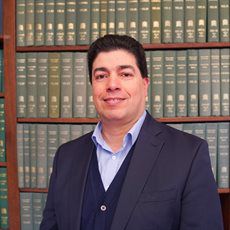
Gilbert Fridgen is Full Professor in Digital Financial Services and holder of the PayPal-FNR PEARL Chair at the University of Luxembourg's Interdisciplinary Centre for Security, Reliability and Trust (SnT). He leads the FINATRAX research group focusing on blockchain, digital identity, and sustainable digital solutions. His research explores decentralized technologies in finance, energy systems, and public administration. Current projects investigate blockchain applications in industrial demand response, NFT markets, EU digital identity wallets, and DeFi institutional adoption. Prof. Fridgen examines the intersection of technology with regulatory frameworks and user behavior in energy and financial systems. He collaborates extensively with industry partners including PayPal and Spuerkeess. Prof. Fridgen actively contributes to EU digital policy discussions, particularly regarding the European Digital Identity Wallet framework and decentralized finance governance.
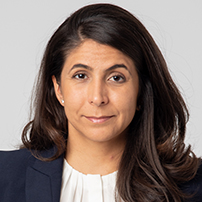
Ana Marques is a Visiting Professor at Norwich Business School (University of East Anglia), specializing in accounting and quantitative methods. She previously served as head of research at the Nova School of Business and Economics in Lisbon and held visiting roles at the Indian Institute of Management Bangalore. Her academic background includes a PhD in Accounting from the University of Texas at Austin, a Master's in Management from Instituto Superior de Gestão (Portugal), and a 5-year Licenciatura in Management from the same institution. Her research focuses on non-GAAP earnings disclosures, corporate governance, ESG/CSR, and voluntary disclosures. Key funding includes a €80,000 Marie Curie grant and over €120,000 from Portugal's Foundation for Science and Technology. She has published in top journals like Review of Accounting Studies and European Accounting Review . Marques holds editorial roles at European Accounting Review and Accounting in Europe , and serves as Editor-in-Chief of the EAA's Accounting Research Center. She has organized major conferences like JIAR 2023 and the Lisbon Accounting Conference, and contributes to professional bodies such as the American Accounting Association (AAA) and European Accounting Association (EAA). Her work addresses disclosure strategies, sustainability assurance, and regulatory impacts, with recent focus on gender diversity policies and ESG-investment linkages. Research outputs emphasize global accounting practices and regulatory effectiveness across diverse sectors.
Prof. Dr. Mareike Kühne is a full-time Professor of Business Administration at the Department of Business and Management, Brandenburg University of Technology. With a unique interdisciplinary background spanning economics, business administration, philosophy, and neuroscience, she bridges affective dimensions with economic rationality to develop holistic decision-making frameworks. Doctorate in Economics, Otto von Guericke University Magdeburg (1992-1997) Fulbright Scholar, San Diego State University (1997-1998) Studies in Philosophy, Humboldt University (2007-2011) Doctoral and Master’s in Neuroscience, Berlin School of Mind and Brain (2011-2013) Her research integrates insights from psychology and neuroscience into capital market-oriented corporate reporting, corporate governance, and normative rationality frameworks. She critiques current economic models for neglecting the embodied nature of cognition, advocating for a more nuanced understanding of rationality that incorporates lived experience. Her 15 most recent works span sustainability reporting (2025), neuroeconomics (2021), M&A disputes (2017), and IFRS standard evolution (2005-2012). These publications highlight her focus on reconciling traditional accounting principles with interdisciplinary approaches to decision-making. Fulbright Scholar (1997-1998) Prof. Kühne has taught at Humboldt University, HHL Leipzig, and the Berlin School of Mind and Brain. She actively participates in professional organizations including the German Society for Philosophy, European Accounting Association, and European Financial Reporting Advisory Group. Her work emphasizes the practical impact of neuroscientific findings on economic policy and standard-setting.
Professor Hisham Farag is a distinguished academic at the University of Birmingham , where he serves as Professor of Finance and Director of Research at the Birmingham Business School . He is also the Founding Director of the Sustainable Financial Innovation Research Centre (SFIC) , underscoring his leadership in advancing research in sustainable finance and financial innovation. His work is deeply embedded in the Department of Finance , where he contributes to both research and academic leadership. His primary research interests span a wide and impactful range of topics in modern finance, including FinTech , corporate governance , board structure and diversity , corporate social responsibility (CSR) , behavioural finance , sustainable finance , ESG , and green finance . His research investigates how governance mechanisms, board composition, and financial innovations influence firm performance, risk, and ethical outcomes, particularly in both developed and emerging markets. His recent publications reveal a strong focus on global corporate governance, alternative finance, and the social dimensions of finance. Key themes include the role of board diversity in bank stability, the impact of FinTech on entrepreneurship, and the integration of CSR in Islamic and Chinese financial institutions. His work frequently appears in top-tier journals such as the Journal of Corporate Finance , British Journal of Management , and European Journal of Finance . Professor Farag has received significant research funding from notable institutions including the Bank of England , Innovate UK (Energy Systems Catapult) , and the Institute of Chartered Accountants of Scotland (ICAS) . His research projects have addressed critical issues such as board effectiveness, risk in financial institutions, and investment decisions in hedge funds. He is actively involved in the academic community, serving as Associate Editor for several prestigious journals: European Journal of Finance , Research in International Business and Finance , Business Ethics European Review , and African Accounting and Finance Association . He has also co-authored a research monograph titled Balancing the Board: Directors’ Skills and Diversity , funded by ICAS. Among his accolades, he received the Best Paper Award at the Global Finance Conference in California, USA. His scholarly output includes numerous peer-reviewed articles, book chapters, and professional reports, reflecting a sustained and influential contribution to the field of finance.
Mary Mitsi is a Senior Lecturer (Associate Professor) in Commercial Law and International Arbitration at Queen Mary University of London's School of Law. As Director for Executive Education at CCLS, she designs training programs for legal practitioners and government officials. Her expertise spans international commercial arbitration, investment treaty arbitration, and conflict of laws. Her research examines arbitral decision-making processes, legal reasoning in awards, treaty interpretation, precedent application, and judicial dialogue in investment law. Her monograph analyzes how arbitrators interpret international laws and apply customary principles in investor-state disputes. Publications address contemporary challenges in international dispute resolution, including ISDS criticisms and the evolution of arbitration frameworks. Her work emphasizes consistency in arbitral jurisprudence and the development of legal principles in investment arbitration. Engagement includes training judges and practitioners globally, contributing to European Bank for Reconstruction and Development projects, and participating in international arbitration conferences on corruption, ESG disputes, and energy sector arbitration.
Univ.-Prof. Dr. Claus Staringer is Professor of Tax Law with a special focus on Corporate Tax at the Vienna University of Economics and Business Administration (WU Wien). He has served as Head of the Corporate Tax Group and Deputy Chairman of the Department of Austrian and International Tax Law since 2003, and as Director for legal Doctoral Studies since 2005. Additionally, he has been a Principal Consultant at Freshfields Bruckhaus Deringer since 2001, maintaining a strong connection between academic research and professional practice in international tax law. Staringer earned his Mag.iur. in Economics and Law from the Vienna University of Economics and Business Administration and University of Vienna, followed by a Dr. iur. with excellence (thesis: "Einlagen und Umgründungen") and habilitation in Tax Law (thesis: "Besteuerung doppelt ansässiger Kapitalgesellschaften"). His academic journey includes assistant positions at both WU Wien and the University of Vienna, blending academic rigor with practical insights from his work at Deloitte and Freshfields. His research focuses on international tax law, particularly corporate taxation, double taxation agreements, and European tax coordination. Staringer has made significant contributions to understanding dual resident corporations, cross-border reorganizations, and the interaction between EU law and tax treaties. His work bridges theoretical frameworks with practical applications in multinational tax planning and compliance. Staringer's publication record shows consistent scholarly output with emphasis on European tax developments, treaty interpretation, and corporate restructuring. His recent work addresses emerging challenges including digital economy taxation, minimum global taxation, and sustainability reporting implications for tax systems. The publications demonstrate methodological rigor with thorough analysis of case law from the European Court of Justice and international tax tribunals. Rudolf Sallinger Award (1994) for Doctoral Thesis Mitchell B. Carroll Prize of the International Fiscal Association (1999) Albert Hensel Prize of Deutsche Steuerjuristische Gesellschaft (1999) Gerhard Thoma Prize of German Institute of Tax Consultants (1999) Award for academic achievements from IFA National Committee (2000) Award for "Innovative Teaching" at WU Wien (2006) Staringer has been instrumental in developing the European Tax Moot Court program and has supervised numerous doctoral candidates through his role as Director of legal Doctoral Studies. His professional engagements include significant contributions to EU tax policy discussions, particularly regarding the Common Consolidated Corporate Tax Base (CCCTB) and the implementation of the OECD's BEPS recommendations in European jurisdictions. He leads the Corporate Tax Group at WU Wien, which has established itself as a leading research center for Austrian and international tax law. The group regularly organizes the Vienna Symposium on International Tax Law and contributes to major research projects on international tax coordination, including EU-funded initiatives examining cross-border tax challenges in the single market.
Stéphanie GIAMPORCARO is a Professor of Sustainable Finance at KEDGE Business School, specializing in the sociology of financial markets, organizational theories, and democratic deliberation. Her research focuses on sustainable finance and financial innovations to understand their functioning and societal impacts. Her research interests include: Sustainable finance (SRI, ESG) Impact investing Responsible fintech Sustainable corporate governance/CSR Social construction of markets Democratic deliberation in finance Financial market sociology Professor GIAMPORCARO has published extensively in leading academic journals including Business Ethics Quarterly, Human Relations, Organization Studies, and Strategic Entrepreneurship Journal. Her recent work explores blockchain applications for sustainable investment, complementary currencies in informal economies, CEO compensation structures, environmental disclosure practices, and ESG materiality across global markets. Her publications demonstrate consistent focus on sustainable finance mechanisms and their societal implications, with particular attention to emerging economies and innovative financial instruments. Her scientific contributions include serving as principal investigator for the Reynolds and Gifford Research Fellowship of the Principles for Responsible Investment Association with the project "Re-imaginining Responsible Investment Futures: Deliberative pathways towards collective action." She is also an associate section editor for the Journal of Business Ethics and serves on the editorial boards of Human Relations and Organization Studies. Professor GIAMPORCARO has supervised over 50 theses for Masters, MBAs and PhD students across diverse sustainable finance topics. She actively disseminates her research through platforms like The Conversation, bridging academic insights with public discourse on finance and sustainability.
Robert Kosowski is Professor of Finance and Head of the Department of Finance at Imperial College Business School, Imperial College London. He holds a Ph.D. from London School of Economics, M.Sc. in Economics from London School of Economics, and B.A./M.A. in Economics from Trinity College, Cambridge University. His research examines asset management, risk management, machine learning applications in finance, hedge funds, and performance measurement. He has published in top finance journals including Journal of Finance, Journal of Financial Economics, and Review of Financial Studies. Awards include European Finance Association Best Paper Award (2007), four INQUIRE best paper awards, and British Academy Mid-Career Fellowship (2011-2012). Recent publications focus on machine learning in finance, regulatory impacts on funds, and innovative risk management approaches. Articles demonstrate consistent methodological rigor across quantitative finance topics with practical applications for investment management. Professor Kosowski is co-author of 'Principles of Financial Engineering' and directs executive education programs in Risk Management. He has industry experience as Head of Quantitative Research at Unigestion and previously worked at Goldman Sachs and Deutsche Bank.
Andrea Pawliczek serves as an Assistant Professor of Accounting at the Leeds School of Business, University of Colorado Boulder. She holds the KPMG Faculty Fellowship position and maintains her office in Koelbel 402F. Her academic work focuses on the critical intersection of financial reporting, corporate governance, and executive compensation practices within the modern regulatory environment. Professor Pawliczek's research interests center on executive compensation structures, corporate governance mechanisms, financial reporting quality, and the growing importance of ESG (Environmental, Social, and Governance) factors in corporate decision-making. Her work examines how regulatory frameworks like the SEC's clawback provisions impact corporate behavior, how shareholder voting influences executive pay practices, and how voluntary disclosure affects market competition and corporate transparency. She has made significant contributions to understanding the relationship between common ownership structures and corporate disclosure practices, as well as the evolving role of institutional investors in shaping corporate governance. Her publication record demonstrates a consistent focus on the evolving landscape of corporate reporting and governance. Recent research analyzes the SEC's clawback mandate, ESG integration in compensation practices, and the influence of major institutional investors like BlackRock. Her work shows a clear trajectory toward examining how regulatory changes and market pressures shape corporate disclosure practices and executive compensation decisions, with increasing attention to ESG considerations in recent years. Professor Pawliczek actively contributes to the academic community through her research and teaching at the Leeds School of Business. Her work bridges theoretical accounting research with practical implications for corporate executives, board members, and regulatory bodies seeking to understand the complex relationships between compensation structures, governance practices, and corporate performance.
Professor Yusuf Karbhari is a Professor of Accounting at Cardiff Business School, Cardiff University. With a distinguished career spanning several decades, he has established himself as an expert in accounting, particularly in the areas of public sector accounting, Islamic finance, and corporate governance in emerging economies. His work bridges theoretical frameworks with practical applications across diverse economic contexts, from the UK public sector to Middle Eastern and Southeast Asian financial systems. Professor Karbhari holds a PhD and MBA from institutions in Wales, along with a BA (Hons) degree. His educational background has provided the foundation for his extensive research career focused on accounting practices in both developed and emerging economies. Professor Karbhari's research interests encompass a wide range of topics including Accounting and Accountability in government sectors across the Middle East and Malaysia, Accounting practices of UK Executive Agencies, International Government Accounting, Communicative Effectiveness of International Auditor's Reports, Financial Reporting and Performance Measurement in UK Central Government, and Managerial and Accounting Reforms in the Public Sector. His work particularly emphasizes the intersection of traditional accounting principles with cultural and religious contexts, especially in Islamic finance systems. His extensive publication record demonstrates a consistent focus on accounting practices in emerging economies, with particular attention to Islamic banking and finance, corporate governance structures, and public sector accounting. Over the past decade, his research has increasingly examined the role of Sharia boards in Islamic financial institutions, environmental disclosure practices, and the relationship between governance mechanisms and financial performance in diverse economic contexts. Professor Karbhari is available for postgraduate supervision and has research interests that align with his expertise in Accounting and Auditing in Emerging Economies, International Public Sector Accounting, Corporate Governance in emerging economies, and Islamic Banking and Finance. He teaches undergraduate courses in Accounting for Decision Making and Control (Year 2) and Public Sector Accounting (Year 3).
Dr. Nafis Alam is a Professor and Head of the School of Business at Monash University Malaysia. With over 20 years in higher education, he has held leadership roles at institutions including the Henley Business School Malaysia, University of Reading Malaysia, and Asia Pacific University. His expertise spans FinTech, financial regulation, and Islamic finance, with over 50 peer-reviewed publications and nine co-authored books. He actively engages with global industry and policy, contributing to reports by the Cambridge Centre for Alternative Finance (CCAF). Awards include the Global Islamic Finance Award's 'Upcoming Personality' (2016) and Monash University's Vice-Chancellor Medal (2016). Education: PhD in Banking and Finance (Monash University), MBA (Multimedia University), and Economics (Patna University). He holds a Postgraduate Certificate in Higher Education (PGCHE) from the University of Nottingham and is a Senior Fellow of the Higher Education Academy (SFHEA). Research focuses on FinTech regulation, digital currencies, AI ethics, and Islamic finance innovation. Recent projects include Malaysia's consumer credit framework and blockchain in energy legal systems. Media contributions include commentaries on cryptocurrency, fiscal reforms, and ESG evaluations. Key Supervision Areas: FinTech, Financial Regulation, Technology Adoption Grants/Projects: Active roles in 2023-2026 projects on legal frameworks for blockchain and consumer credit Labs/Teams: Collaborations with global institutions like CCAF and industry partners in Southeast Asia. Advocates for market-driven education programs and adult learning strategies.
Yanglan Zu serves as a Lecturer in Accounting within the College of Business, Government and Law at Flinders University, bringing expertise from her PhD studies at the University of Technology Sydney. Her academic profile is anchored in interdisciplinary research bridging accounting principles with contemporary business challenges. Her educational foundation includes: PhD in Accounting, University of Technology Sydney Undergraduate Honours degree (institution unspecified) Research interests center on corporate sustainability and innovation , with growing emphasis on data analytics applications in accounting. Her work demonstrates consistent alignment with UN Sustainable Development Goals, particularly through investigations into climate change impacts on corporate behavior and FinTech's labor market effects. Current projects explore the intersection of environmental pressures, digital transformation, and governance structures. Recent publications reveal strong thematic cohesion around sustainable business practices, with notable emphasis on climate-related corporate responses and digital finance implications. The 2024-2025 research grant from AFAANZ supports ongoing work in these priority areas. Award highlights: 2024 EFMA Corporate Finance Best Paper Award for governance research 2024 UTS Vice-Chancellor's Learning and Teaching Citation 2024-2025 AFAANZ Research Grant funding As an educator, she coordinates advanced FinTech courses (BUSN8010 and BUSN1023) with a student-centered philosophy emphasizing analytical thinking and practical technology applications. Her teaching methodology actively incorporates digital tools to foster inclusive learning environments, reflecting her research interests in technological disruption.
Lucila de Almeida is an Associate Professor at NOVA School of Law, Universidade NOVA de Lisboa, holding the prestigious Abreu Chair in ESG Impact, Climate and Energy Law. She concurrently serves as coordinator of the NOVA Green Lab and the Master's in International and European Law, while maintaining a part-time Full Professor position at the European University Institute's Florence School of Regulation. Her academic leadership spans energy regulation, climate policy, and European legal frameworks. Her educational foundation includes: PhD in European Law from the European University Institute LL.M. in Comparative, European and International Law from the European University Institute Master's in Law and Development from FGV São Paulo Law Degree from the Federal University of Rio Grande do Norte Professor de Almeida's research confronts urgent energy-climate intersections through critical analysis of regulatory frameworks. She pioneers studies on peer-to-peer energy trading, consumer protection in digitalized markets, and the legal architecture of sustainable consumption. Her work dissects the European Green Deal's implementation challenges, examining how securitization narratives impact energy, food, and climate policies while advocating for equitable regulatory solutions in energy democratization. Her publication trajectory reveals deepening engagement with energy market transformation, shifting from foundational contract law analyses toward systemic examinations of digitalization, community energy models, and Green Deal stress-testing. Recent works increasingly integrate consumer protection with energy democratization frameworks, highlighting regulatory gaps in peer-to-peer platforms and sustainability reporting. Her scholarly recognition includes: Abreu Chair in ESG Impact, Climate and Energy Law Edmond J. Safra Research Fellowship at Tel Aviv University Finnish Distinguished Professorship by the Academy of Finland As principal investigator for major EU-funded initiatives including Horizon Europe's U2Demo project and International Energy Agency's UserTCP Observatory, she directs cutting-edge research on P2P energy sharing and consumer rights. Her editorial leadership spans Competition and Regulation in Network Industries (Sage) and Energy Research & Social Science (Elsevier), shaping discourse on regulatory innovation. Through the NOVA Green Lab, she cultivates interdisciplinary collaboration on climate law implementation and energy justice, developing practical ESG training frameworks for Portuguese SMEs while advancing theoretical foundations of regulatory private law.
Caroline Flammer is a Professor of International and Public Affairs and of Climate at Columbia University, holding joint appointments at the School of International and Public Affairs (SIPA) and the Climate School. She is a Research Associate at the National Bureau of Economic Research (NBER) and an expert in sustainable finance and corporate sustainability. At Columbia, she teaches graduate courses including "Social Impact: Business, Society, and the Natural Environment" and "Sustainable Finance II: System-level Investing", and serves as Director of SIPA’s Sustainable Investing Research Initiative (SIRI). Her research investigates how sustainable finance and impact investing can contribute to a more sustainable world, focusing on the integration of environmental, social, and governance (ESG) factors into corporate strategy to address climate change, inequality, and global health challenges. She examines the conditions under which firms can enhance competitiveness while strengthening societal and environmental systems. Dr. Flammer has been honored as a Highly Cited Researcher by Web of Science, ranking among the top-100 in economics and business for research impact over the past decade. Highly Cited Researcher (Web of Science) She serves as President of the Alliance for Research on Corporate Sustainability (ARCS) and Chair of the Academic Advisory Committee for the United Nations-supported Principles for Responsible Investment (PRI). Additionally, she is an Associate Editor for Management Science and the Strategic Management Journal. Information regarding Dr. Flammer's student advising and grant funding was not provided in the source text. Dr. Flammer leads several initiatives including the Sustainable Investing Research Initiative (SIRI) at SIPA, the Alliance for Research on Corporate Sustainability (ARCS), and the Academic Advisory Committee of the Principles for Responsible Investment (PRI), fostering global research and dialogue on corporate sustainability and responsible investment.
Marie Josee Lamothe is a **Professor of Practice** at McGill University within the **Desautels Faculty of Management** and **Bensadoun School of Retail Management**, and serves as **Academic & Executive Director** of the **McGill Dobson Centre for Entrepreneurship**. With over 25 years in digital and consumer products leadership roles at Google, L’Oréal, and Procter & Gamble, she specializes in Digital Transformation, Global Branding, and Retail Innovation. She holds board positions at Alimentation Couche-Tard, RioCan REIT, and Group Dynamite, and advises startups through Tandem International. **Education**: B.Sc. (Mathematics & Economics, Honors), University of Montreal; Executive Management Program (INSEAD); Certifications: MIT Sloan (AI Strategy), Oxford (Cybersecurity), NASBA (Cybersecurity Risks), and the GCB.D (ESG) designation. **Research & Teaching**: Focuses on sustainable retail practices, ESG principles in entrepreneurship, and leveraging technology for operational efficiency. Courses include *Foundations of Retailing*, *Environmental Social Governance & Entrepreneurship*, and *Sustainable Retail and Entrepreneurship*. **Awards**: Recognized as a global leader with distinctions such as the Triple E Award, Desautels Achievement Award, and inclusion in *Canada’s 40 Global Leaders*. Her leadership extends to government advisory roles, including the Quebec Advisory Council on Economy & Innovation and the Canada 150 Research Chairs Review Panel. **Advisory & Impact**: Oversees the Dobson Centre’s mission to transform university innovation into startups. Engages with public sector audits (e.g., Employment and Social Development Canada) and chairs the McGill Healthy Brain Healthy Life Foundation Board.