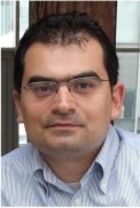
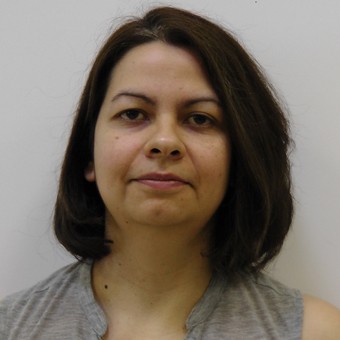
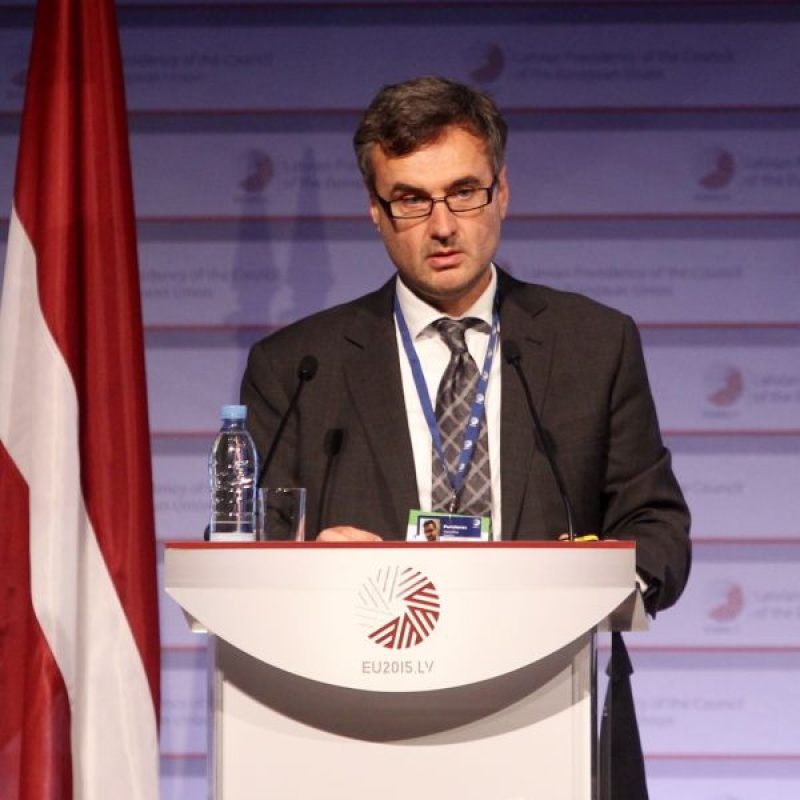
Charalambos Proestos is a Professor of Food Chemistry at the National and Kapodistrian University of Athens , affiliated with the Department of Chemistry. His research bridges biochemical mechanisms in food science with clinical cardiovascular outcomes. Specializes in lipid metabolism, cardiovascular risk biomarkers Active in translational research through the HELLAS-FH and CALLINICUS-Hellas registries Key focus on familial hypercholesterolemia, arterial stiffness, and air pollution effects Recent publications in Cardiology and Clinical Biochemistry journals highlight his interdisciplinary approach. His work explores: Lipoprotein (a) as a predictive biomarker Interactions between environmental stressors (air pollution) and genetic factors (telomere length) Novel methodologies in CT angiography and AI-driven diagnostic tools Metaclinical applications of artificial intelligence in scientific publishing He contributes to refining cardiovascular risk assessment frameworks and advancing precision medicine through: Development of diagnostic algorithms for amyloidosis Validation of quantitative flow ratio in coronary interventions Comparative analysis of lipid-lowering therapies Investigation of digital health literacy gaps
Apostolos Burnetas is a Professor of Stochastic Operations Research in the Department of Mathematics at the National and Kapodistrian University of Athens (UOA). He holds a Diploma in Electrical Engineering from the National Technical University of Athens (1986), an MBA (1992), and a Ph.D. in Operations Research (1993) from Rutgers University’s Graduate School of Management. Prior to his current position, he served as an Assistant and Associate Professor at Case Western Reserve University (1994–2004). At UOA, he has held roles as Associate Professor (2003–2012) and full Professor (2012–present). He has also served as Vice-Director and Director of the UOA-Ioannina University joint Biostatistics graduate program (2008–2014). His research focuses on Operations Research, Adaptive Optimization, Stochastic Modeling, and their applications in production/service systems. Notable areas include strategic customer behavior in queueing systems, dynamic pricing, inventory management, and supply chain coordination. He has authored over 60 peer-reviewed articles in journals like Management Science and Operations Research , and organized international conferences in stochastic modeling. His teaching spans Operations Research, Probability, and Stochastic Processes, with graduate courses in Linear Models and Queueing Theory. Burnetas has supervised over 30 master’s theses at UOA and 9 doctoral theses (7 at Case Western Reserve, 2 at UOA). His work emphasizes practical applications, such as optimizing service systems and addressing information asymmetries in supply chains.
Evangelos Spiliotis is an Assistant Professor at the National Technical University of Athens (NTUA) , affiliated with the School of Electrical and Computer Engineering and the Division of Industrial Electric Devices and Decision Systems . He serves as the Coordinator of the Forecasting & Strategy Unit at the Decision Support Systems Laboratory. Dr. Spiliotis earned both his Diploma–MSc (2013) and PhD (2017) from NTUA, specializing in Forecasting Systems. His research centers on forecasting methodologies , decision support systems , and energy optimization , with applied work in smart grids, retail, and sustainable infrastructure. Key interests include: Machine learning for time-series forecasting Energy management in buildings and microgrids Optimization of electric vehicle infrastructure Statistical and computational trade-offs in model design He has contributed to 80+ publications (cited 7,000+ times) and leads international forecasting competitions (M4, M5, M6). Editorial responsibilities include roles at the International Journal of Forecasting and Foresight: The International Journal of Applied Forecasting . Dr. Spiliotis teaches undergraduate courses: Decision Support Systems Forecasting Techniques Energy Management and Environmental Policy Management Game He has participated in multiple European/national R&D projects as a researcher and technical manager.
Georgios Amanatidis is an Assistant Professor at the Department of Informatics of Athens University of Economics and Business (AUEB) since December 2024. He is also a Lead Researcher at the Archimedes Unit of the Athena Research Center (since February 2023). Previously, he held roles including Senior Lecturer (2023-2024) and Lecturer (2020-2023) at the University of Essex, UK; Research Associate (2020-2021) at the University of Amsterdam; Senior Postdoctoral Researcher (2019-2020) at Sapienza University of Rome; and Postdoctoral Researcher (2017-2019) at CWI, Netherlands. Education: PhD in Computer Science (2017), AUEB: Thesis titled "Algorithmic and mechanism design aspects of problems with limited—or no—payments" . MSc in Mathematics, Georgia Institute of Technology, USA. Diploma in Applied Mathematics, National Technical University of Athens. His research focuses on algorithmic intersections of Discrete Mathematics, Computer Science, and Economics, emphasizing fair division, mechanism design, and graph sampling. Despite no listed publications here, his work bridges theoretical computer science with economic applications. He has no recorded scientific awards but maintains an active academic trajectory through multiple postdoctoral and teaching roles. Advising and grants details are not specified in the provided text. His current affiliation with AUEB and Athena Research Center suggests involvement in collaborative research projects, though specifics are absent.
Konstantinos D. Blekas is a Professor at the Department of Computer Science & Engineering , Polytechnic School, University of Ioannina. His career spans over 25 years with research focusing on Machine Learning , Autonomous Agents , Computer Vision , and Bioengineering . Education: Diploma in Electrical Engineering (1993) and PhD in Electrical & Computer Engineering (1997) from NTUA. Teaching: Offers courses like Probabilities & Statistics (MY304), Machine Learning (MYE002), Data Mining, and Bioinformatics. Research Interests include advanced machine learning techniques, reinforcement learning applications in traffic and robotics, image segmentation, and bioinformatics for medical data analysis. His work bridges theoretical innovation with practical implementations in autonomous systems and biomedical research. Recent Publications highlight trends in multiagent reinforcement learning , neural network optimization , and fMRI data modeling , with applications in robotics, air traffic management, and biomedical imaging. Collaborative projects often integrate spatial constraints and generative models. Scientific Awards Best Paper Award, DASC 2018 Best Student Paper Award, SETN 2018 2nd Winner, AIBIRDS 2014 Competition Professional Impact includes mentoring students, developing educational curricula, and cross-disciplinary research in medical AI. His work is widely cited (>1000 citations) with contributions to journals like Neural Networks , Medical Imaging , and AI Magazine .
Georgia Koloniari is an Associate Professor at the Department of Applied Informatics, School of Information Sciences, University of Macedonia. She holds a PhD in Computer Science from the University of Ioannina (2009), along with an MSc (2003) and BSc (2001) in Computer Science from the same institution. Her research focuses on distributed systems, graph databases, and peer-to-peer (P2P) systems, with notable contributions to social network analysis, XML data management, and privacy-preserving techniques. She has led or participated in multiple funded research projects, including the Cloud9 project (2011–2014) and the Self-Peer initiative (2005–2008). Her teaching roles include instructing courses such as Distributed Systems , Data Structures , and Advanced Information Systems at the undergraduate level, and IT Infrastructure and Databases at the graduate level. She has also contributed to online educational initiatives, including the development of the Data Structures course in the Open Digital Courses project. Dr. Koloniari’s research interests span social network evolution, graph database management, and distributed data processing. She has published extensively on topics like clustered overlay networks, privacy-preserving record linkage, and temporal query processing. Her work integrates game-theoretic approaches and algorithmic solutions to address challenges in P2P systems and cloud computing. Her recent publications highlight advancements in privacy-preserving techniques (e.g., PRIVATEER toolkit) and time-aware social search systems. She remains active in academic service, serving on program committees for conferences like WWW and EDBT, and reviewing for journals such as IEEE Transactions on Parallel and Distributed Systems. Labs/Teams: Her involvement with the DMOD Lab (Digital Media, Data Management, and Distributed Systems Lab) reflects her focus on interdisciplinary research in data management and distributed computing.
Professor Dimitrios Savvas is the Director of the Laboratory of Vegetable Crops at the Agricultural University of Athens , Department of Plant Production Science. He holds a PhD in Vegetable Crops and Hydroponics from the University of Bonn (1992) and has served at the university since 2006, progressing from Assistant to Full Professor. His research focuses on soilless culture technologies , salinity stress management , nutrient solution optimization , and biostimulant applications in greenhouse vegetable production. PhD in Vegetable Crops & Hydroponics, University of Bonn (1992) Professor at Agricultural University of Athens since 2015 Director of the Laboratory of Vegetable Crops since 2016 His work spans hydroponics , greenhouse microclimate control , and resource-efficient crop systems , with over 75 peer-reviewed publications. Recent Google Scholar articles highlight advancements in ion-selective electrode integration , biostimulant-driven stress tolerance , and vertical farming nutrition for crops like spiny chicory and golden thistle. He has coordinated major EU projects including TRUE (H2020, 2017-2020), TOMRES (H2020, 2017-2020), and EUROLEGUME (FP7, 2014-2017). Current projects address climate change adaptation in Mediterranean vegetable crops via the PRIMA initiative VEGADAPT (2019-2022).
Dr. George A. Gravvanis is a Professor of Applied Mathematics and Numerical Computations at the Department of Physics and Applied Mathematics, Democritus University of Thrace. He also serves as Coordinator and SEP Member for Thematic Units at the Hellenic Open University. B.Sc. (1982) in Science (Joint Honours), University of Salford B.A. (1986), Mathematics, National and Kapodistrian University of Athens M.Sc. (1984), Numerical Analysis, Brunel University PhD (1992), Computer Science, Athens University of Economics and Business His research focuses on computational and numerical methods, including Mathematical Modeling , Parallel Algorithmic Design , Numerical Algorithms , Sparse Matrix Techniques , and PDE Solvers . He integrates these into Mathematical Software and Computer Science Mathematics . Recent article trends highlight his work in Sparse Regression for data imputation, Hybrid Multi-Projection Methods for distributed systems, and Unified Transform Techniques for PDEs. Subfields span High-dimensional Data , GPU Clusters , and Self-Organizing Clouds . He has taught undergraduate courses in Mathematical Software , Applied Numerical Analysis , and Scientific Calculations . He has coordinated research projects such as the CloudLightning initiative under Horizon 2020. His editorial contributions include roles on international journal boards and special edition editing. Dr. Gravvanis has reviewed for major academic organizations and journals, including ACM Computing Reviews and Mathematical Reviews (AMS) . His career spans academic roles and technical positions in national and EU social security informatics.
Pavlos Efraimidis is a Professor at the Department of Electrical and Computer Engineering, Democritus University of Thrace, leading the Algorithms and Privacy Research Team within the Programming and Information Processing Laboratory. His academic journey includes a PhD in Informatics (2000) and diploma in Computer Engineering (1995) from the University of Patras. He was elected Associate Professor in 2014 and promoted to Professor in 2023. His research focuses on algorithms with emphasis on algorithmic game theory and privacy aspects . Key areas include social network influence dynamics , blockchain applications , and data protection . His work has been funded through projects like ATLAS, SPHINX, and HellasHPC. Notable scientific achievements include a Best Paper Award at SEST 2022 IEEE Larry K. Wilson Award 2020 Best paper at MEDPOWER 2020 NASA Letter of Appreciation He has supervised 3 PhD graduates and over 10 MSc students, with current supervision of 4 PhD candidates, 2 MSc theses, and 10 diploma theses. His industrial experience spans high-performance computing (Parsytec GmbH) and financial sector systems (ASYK).
Dionysios Pneumatikatos is a Professor at the School of Electrical and Computer Engineering of the National Technical University of Athens (NTUA) since September 2019. Previously, he served as a Professor and Chair of the Department of Electronic and Computing Engineering at the Technical University of Crete (2000–2019) and is an Associate Researcher at the Foundation for Research and Technology (FORTH) since 1997. His primary affiliations include the Computing Systems Laboratory (CSLab) at NTUA and the Computer Architecture and VLSI Systems (CARV) Laboratory at FORTH. Education: B.Sc. in Computer Science, University of Crete (1989) M.Sc. and Ph.D. in Computer Science, University of Wisconsin–Madison (1991, 1995) Research Interests: Computer Architecture Reconfigurable Computing Hardware Acceleration (e.g., FPGA, RISC-V) Energy-Efficient Systems Reliable System Design Application-Specific Architectures His work focuses on heterogeneous parallel systems , bioinformatics accelerators , and virtualization frameworks for reconfigurable platforms . Recent Projects & Contributions: Coordinator of the FASTER (FP7) project Principal Investigator in EDRA (H2020), EXTRA , and dReDBox Key roles in AXIOM , DeSyRe , and VPLANET These projects explore FPGA-based HPC systems , RISC-V ecosystems , and disaggregated data center architectures . Teaching & Mentorship: Teaches courses on Computer Architecture , Parallel Processing , and Logic Design at NTUA and TU Crete Supervised multiple national/EU projects, fostering interdisciplinary research in embedded and high-performance systems Labs & Networks: Active member of the HiPEAC European Network Program Committee roles at ISCA , FPL , and DATE Led the 21st International Conference on Field-Programmable Logic and Applications (FPL)
Vassilios Peristeras is an Associate Professor at the International Hellenic University (School for Science and Technology) and Associate Research Fellow at KU Leuven (Public Governance Institute). His work bridges business, technology, and public administration through research in Digital Transformation , eGovernment , and Semantic Web Technologies . Focus areas: Public Sector Innovation, Interoperability, Open Data Key projects: JustReDi, GR digiGOV-innoHUB Recent publications: Data-centric governance, AI ethics, and talent matching His research explores knowledge graphs , government big data ecosystems , and responsible AI adoption. Articles emphasize semantic technologies for policy documentation, cybersecurity cooperation , and digital transformation barriers in education and public sectors. Contact: dorg@ihu.edu.gr
Dr. Evangelia Kopanaki is an Associate Professor at the Department of Business Organization and Administration , University of Piraeus . She holds a PhD in Information Systems from the London School of Economics and Political Science, along with an MSc in Informatics and BA in Mathematics from the National and Kapodistrian University of Athens. Her academic career includes research roles at the National and Kapodistrian University of Athens and teaching at institutions in Greece and Singapore. Research Interests focus on Digital transformation in business environments Inter-organizational systems and supply chain agility Sustainability integration with technology Blockchain applications in logistics Smart tourism frameworks Regulatory technology compliance Article Trends reveal expertise in combining digital transformation with sustainable practices across sectors like retail, banking, and tourism. Her work emphasizes blockchain solutions for supply chain transparency, regulatory compliance mechanisms, and AI-driven logistics optimization. Notable article themes include eFTI regulation implementation, green IT assessment , and smart tourism systems. Teaching Portfolio spans Operations Research, Management Information Systems, E-Commerce, and E-Commerce Programming & Design at the University of Piraeus.
George Manis is an Associate Professor in the Department of Computer Science and Engineering at the School of Engineering, University of Ioannina, Greece. He is a member of the IPAN lab and serves as a Guest Editor for a special issue on 'Entropy in Biomedical Engineering' in the journal Entropy . His research bridges biomedical engineering and computational systems, with a strong focus on entropy-based methods and machine learning for physiological signal analysis. PhD in Computer Science, National Technical University of Athens (1993–1997) MSc in Advanced Methods in Computer Science, Queen Mary, University of London (1992–1993) Diploma in Electrical and Computer Engineering, National Technical University of Athens (1987–1992) His primary research interests include Biomedical Engineering , Entropy Analysis (especially Bubble Entropy), Fast Computation Algorithms , Biomedical Data Classification , Heart Rate Analysis , and Computing Systems with emphasis on parallelization. He teaches postgraduate courses in data analysis and biomedical data processing, and undergraduate courses in compilers. The analysis of his recent publications reveals a consistent trend in developing computationally efficient and robust methods for entropy estimation and classification in biomedical contexts. His work on Bubble Entropy eliminates the need for scale parameters and enhances stability, while his improvements to Random Forests and Support Vector Machines target enhanced diagnostic accuracy in diseases like Alzheimer’s and heart conditions. In computing systems, he has pioneered compiler technologies for parallelizing recursive functions and optimizing runtime scheduling. No scientific awards are explicitly mentioned in the provided text. George Manis has advised or collaborated with several researchers, including Evanthia Tripoliti, Dimitrios Fotiadis, Petros Arsenos, Argyro Kampouraki, and others, indicating active supervision and research leadership. He is currently involved in funded projects such as Palimpsest , an interactive museum system, and Homore , a smart monitoring system for elderly individuals. These projects reflect his interest in applying advanced computing to real-world biomedical and societal challenges. He is affiliated with the IPAN lab and contributes to the development of innovative algorithms for entropy computation and parallel processing. His work on the C2μTC/SL compiler and Ariadne system demonstrates deep expertise in compiler design for specialized architectures like the SVP processor.
Raptopoulos Christoforos is an Assistant Professor at the Department of Mathematics of the University of Patras , Greece. His academic qualifications include a Ph.D. (2009), M.Sc. (2005), and B.Sc. (2002) in Computer Engineering & Informatics from the same university. His research focuses on Random Graphs , Design of Algorithms , and Evolutionary Dynamics on Networks , with applications spanning computer science, probability theory, and computational biology. Key contributions include work on temporal graph algorithms, network majority determination, and evolutionary processes on graphs. His teaching portfolio covers Discrete Mathematics , Numerical Solutions of Ordinary Differential Equations , and Data Structures at the undergraduate level, alongside Algorithm Analysis and Data Structures for the MSc in Computational and Analytical Statistics in Data Science. While no specific scientific awards are listed, his 35+ publications since 2004 in journals like Theoretical Computer Science and Journal of Computer and System Sciences highlight his prolific output. He has collaborated extensively with Paul Spirakis, Sotiris Nikoletseas, and George Mertzios.
Professor Yiannis Saridakis serves as a Professor in the Department of Sciences at the Technical University of Crete, leading the Applied Mathematics and Computers Laboratory. He holds a Mathematics degree from the University of Crete (1981) and M.Sc./Ph.D. in Applied Mathematics & Computer Science from Clarkson University (1983/1985). His research focuses on numerical methods, parallel algorithms, stochastic optimization, cellular automata, and AI applications. He has coordinated projects like the TU Crete Library portal and digitization initiatives. His work bridges computational mathematics with environmental, biomedical, and engineering challenges. Education B.Sc. Mathematics, University of Crete (1981) M.Sc. Applied Mathematics & Computer Science, Clarkson University (1983) Ph.D. Applied Mathematics & Computer Science, Clarkson University (1985) Research Interests His research spans Recursive Linear Systems Solving , Numerical Methods for PDEs , Parallel Computing Architectures , Stochastic Optimization (e.g., adaptive optics, aquifer management), Cellular Automata , and Artificial Intelligence applications like agent-based systems and ambient intelligence. Key Contributions Prof. Saridakis pioneered GPU-accelerated Hermite collocation methods, Fokas transform applications in tumor modeling, and ALOPEX stochastic optimization for water resource management. He has published >50 papers in top journals and conference proceedings. Labs & Leadership Director of the Applied Mathematics and Computers Laboratory . Former Department Chair (1997–1999) and Vice-Rector (1999–2005) at TU Crete.