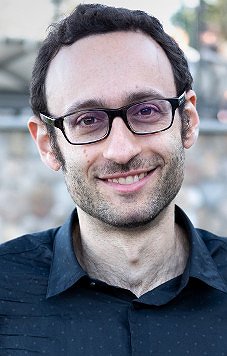
Assistant Professor at the Department of Agricultural Economics and Rural Development, Agricultural University of Athens. Holds a PhD, MSc, and BSc in Computer Engineering and Informatics from the University of Patras. Research focuses on dynamic graph problems, query optimization, and theoretical data structures with sublinear space. Teaches courses like Business Intelligence Systems and Informatics , emphasizing computer systems, databases, and data processing. His work bridges computer science theory with agricultural informatics applications. Educated at the University of Patras, he transitioned from the Department of Science (2004-2013) to his current role. Course content highlights his expertise in ETL processes, operating systems, and collaborative learning technologies.
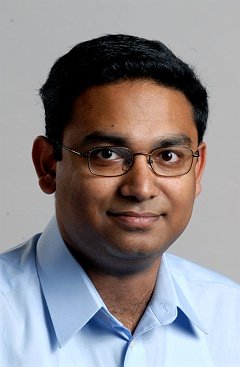
Dimitrios Dechouniotis is an Assistant Professor at the Department of Electrical and Computer Engineering within the School of Electrical and Computer Engineering at the University of Patras . His career spans roles in academia, research institutions, and public administration. 2004: Diploma in Electrical Engineering (University of Patras) 2006: MSc in Automation Systems (NTUA) 2014: PhD in Electrical and Computer Engineering (University of Patras) His research focuses on Systems & Control Theory , Cyber-Physical Systems , Robotics , Cloud Computing , and 5G Communications . Recent publications highlight work in edge computing , network slicing , and resource orchestration for IoT and robotics applications. He has participated in over 10 national and European research projects related to telecommunications and Industry 4.0. His technical contributions include frameworks for edge-cloud continuum orchestration , blockchain-based slice orchestration , and energy-aware resource allocation , with a strong emphasis on system modeling and control-theoretic approaches. Contact: dechouniotis@uop.gr | Office: Building Z, 2nd Floor
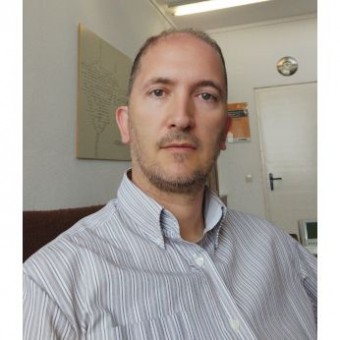
Charalambos (Haris) Angyropoulos is an Assistant Professor in the Department of Economics at the University of Piraeus, Greece, where he joined in 2024. His academic career is complemented by significant private sector experience, bringing practical insights to his teaching and research in quantitative economic methods. Assistant Professor, Department of Economics, University of Piraeus (2024-present) Postdoctoral Researcher, Department of International & European Studies, University of Piraeus Research Fellow, Gnosis Research Center, Illinois Institute of Technology (USA) Dr. Angyropoulos holds a PhD in Economics (2018) and a Master's degree in Applied Statistics (2007), both from the University of Piraeus, as well as a Bachelor's degree in Mathematics (2002) from the National and Kapodistrian University of Athens. His academic training provides a strong foundation for his work in quantitative economic analysis. His research focuses on applied econometrics, computational finance, labor economics, and environmental economics . Specifically, he investigates the impact of the shadow economy on regional competitiveness within the EU and applies machine learning techniques to financial time series analysis. His methodological approach combines traditional econometric methods with innovative computational techniques to address complex economic questions. His recent publications demonstrate a consistent focus on quantitative economic analysis, with particular emphasis on EU economic dynamics, financial markets, and computational methods. The research shows a progression toward increasingly sophisticated analytical techniques, incorporating machine learning approaches alongside traditional econometric methods. His work appears in respected journals including International Journal of Finance and Economics , Applied Economics Letters , and International Advances in Economic Research . Dr. Angyropoulos teaches undergraduate courses including Statistical I, Statistical II, Business Analytics, and International Business and Investments. His private sector experience as CEO of TMEDE Microfinance Solutions and Head of Risk and Investments for the Public Works Engineers and Contractors Fund informs his practical teaching approach, connecting theoretical concepts with real-world applications.
Charalambos Konstantopoulos is an Associate Professor at the Department of Informatics , University of Piraeus, with a focus on Algorithms and Complexity . His research spans parallel/distributed algorithms, mobile computing, and sensor network optimization. Education: BSc/MSc in Computer Engineering (1993), PhD in Informatics (2000), both from University of Patras Affiliation: Experienced Collaborating Researcher at "Diofantos" Institute of Computer Technology He has authored over 90 publications in journals/conferences (IEEE, Springer, Elsevier, ACM) and served as: Editorial Board Member Technical Program Committee Member Guest Editor for 4 journal issues Editor of a Springer collective volume
Adam Chlipala is a Professor at the Massachusetts Institute of Technology working at the intersection of programming languages, formal methods, and computer systems. His research focuses on building practical verified systems with end-to-end machine-checked proofs, particularly using the Coq proof assistant. His educational background includes a Computer Science undergraduate degree from Carnegie Mellon University (2003) and a PhD in Computer Science from the University of California, Berkeley (2007). Following a postdoctoral position at Harvard University through 2011, he joined MIT as faculty. Chlipala's research spans multiple domains with strong emphasis on dependent types , verified compilation , and hardware-software co-verification . His work consistently bridges theoretical foundations with practical implementation, as evidenced by his development of the Ur/Web programming language and his focus on creating clean-slate hardware-software stacks with formal guarantees. Key research thrusts include cryptographic constant-time verification, side-channel security, and verified tensor compilation. His recent publications (2020-2025) reveal a clear trajectory toward increasingly complex verified systems, with growing emphasis on hardware-software integration, cryptographic implementations, and performance-critical applications. The work consistently leverages Coq for machine-checked proofs while addressing real-world constraints like timing channels and hardware interfaces. Chlipala is the author of the influential textbook Certified Programming with Dependent Types , which serves as a primary educational resource for Coq at numerous institutions worldwide. His professional activities include significant service to the PL community through program committees for major conferences including PLDI, POPL, ICFP, and CPP. He leads research initiatives connecting hardware and software verification, most notably through the DeepSpec project which aims to build fully verified computing stacks. His current work focuses on practical applications of dependent types for business applications through Ur/Web and verified cryptographic implementations.
Koushik Sen is a Professor in the Department of Electrical Engineering and Computer Sciences at the University of California, Berkeley. His academic career spans major contributions to software engineering and programming languages research through active participation in premier conferences including PLDI, ICSE, and ISSTA. His research focuses on Software Engineering , Programming Languages , and Formal Methods , with particular emphasis on developing software tools that enhance programmer productivity and software quality. Key research thrusts include automated test generation , symbolic execution , fuzzing techniques , and program synthesis . His work bridges theoretical foundations with practical tool development for real-world software verification challenges. Analysis of his publication record reveals consistent contributions to automated testing methodologies, with recent work integrating machine learning (particularly large language models) into traditional program analysis techniques. His research shows strong continuity in improving software reliability through innovative input generation and vulnerability detection approaches. As an active academic leader, he has served as General Chair for MAPL (2020), Program Chair for ISSTA (2017), and committee member for numerous top-tier conferences including PLDI, ICSE, and SPLASH across multiple years. His academic advising manifests through collaborative publications with students on topics like test corpus expansion (Bonsai Fuzzing), visualization synthesis (VizSmith), and smart contract auditing (ItyFuzz), though specific student names aren't listed in the source material. His research has been supported through conference participations and likely associated grants given his extensive publication record.
Angelo Sifaleras is a Full Professor at the Department of Applied Informatics, School of Information Sciences, University of Macedonia (Thessaloniki, Greece). He also serves as an Adjunct Professor of Quantitative Methods at the Hellenic Open University. His academic credentials include a Ph.D. in Applied Informatics (University of Macedonia, 2007) and a B.Sc. in Mathematics (Aristotle University of Thessaloniki, 1999). Research Focus: Professor Sifaleras specializes in Mathematical Programming , Network Optimization , and Heuristic Methods . His work integrates computational optimization with real-world logistics, supply chains, and sustainable systems. Key research themes include metaheuristic algorithms for vehicle routing, pollution-aware logistics, and parallel computing solutions for network analysis. Publication Trends: His 15 most recent articles emphasize hybrid metaheuristics (e.g., combining reinforcement learning with Variable Neighborhood Search), sustainable supply chain modeling, and high-performance computing applications. Dominant domains include operations research, environmental optimization, and educational algorithm visualization. Teaching & Service: He instructs courses in Combinatorial Optimization, Linear Algebra, and Heuristic Methods, employing tools like CPLEX, Gurobi, and SageMath. As an editor for Operations Research Forum and the Yugoslav Journal of Operations Research , he supports academic discourse in optimization. A Senior ACM member, he contributes to conferences like ICVNS and ITS.