Ruediger Kuehr is an Adjunct Professor at the University of Limerick, affiliated with the Faculty of Science and Engineering and the Department of Electronic and Computer Engineering. His research interests align with the department's focus areas, including electronics, computer engineering, and sustainable technology. Contact can be made via email at Ruediger.KUEHR@unitar.org.
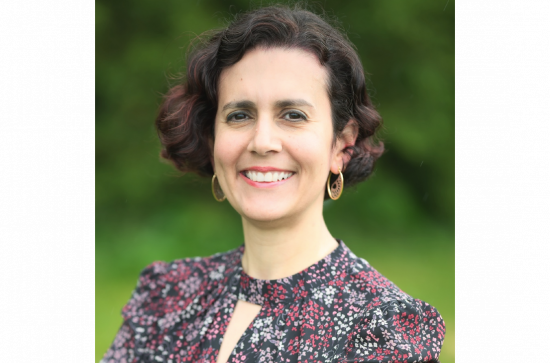
Dr. Nada Elnahla is an Assistant Professor/Lecturer at Maynooth University's School of Business, joining in 2022 after roles as an Instructor of Marketing at Carleton University (Canada) and Assistant Professor of English Literature at Alexandria University (Egypt). She holds dual PhDs in Management/Marketing (Carleton, 2021) and Comparative Literature (Cairo, 2012), alongside MA (Comparative Literature, Alexandria, 2008) and BA (English Literature, Alexandria, 2004) degrees. Her research bridges retail surveillance ethics, consumer behavior, and literary analysis, focusing on topics like smart surveillance in retail, loyalty programs, and the intersection of literature and marketing. Education: PhD in Management/Marketing, Carleton University (2021) PhD in Comparative Literature, Cairo University (2012) MA in Comparative Literature, Alexandria University (2008) BA in English Literature, Alexandria University (2004) Research Interests: Dr. Elnahla explores surveillance technologies in retail, consumer ethics, narrative theory, and marketing history. Her work often critiques how retail spaces monitor customers and employs literary frameworks to analyze consumer psychology and corporate practices. Awards & Grants: MUSSI Research Grants Scheme (2024) Maynooth University School of Business Seed Funding (2023) Paul R. Lawrence Fellowship (2017) Donald F. Dixon Scholarship (2019) Labs & Collaborations: She contributes to the Innovation Value Institute’s (IVI) Digital Retail Cluster and is a member of LERO, Ireland’s Science Foundation research center for software engineering. Her work integrates industry partnerships to study evolving retail technologies and consumer dynamics.
Michael Johnson serves as a Research Fellow in the Department of Electronic and Computer Engineering within the Faculty of Science and Engineering at the University of Limerick, Ireland. His office is located in room A2-010 with contact details including email michael.johnson@ul.ie and phone +353-(0)61-202460. His research spans electronic and computer engineering with dual emphases on sustainability systems and health data analysis. Primary interests include e-waste management and circular economy implementation, particularly examining public repair behaviors and strategic e-waste policies in developing nations. Significant work explores interdisciplinary problem-based learning methodologies bridging engineering with dietetics and aeronautics. Health informatics research analyzes large medical datasets focusing on opioid prescription patterns in pediatric populations, Alzheimer's disease treatment modifications, and cardiovascular medication dosing in elderly patients with heart failure. Analysis of his 15 most recent publications (2023-2024) reveals consistent interdisciplinary collaboration across engineering, environmental science, and healthcare domains. Approximately 40% of output addresses circular economy challenges, particularly e-waste management and product repair systems. Another 30% focuses on innovative educational approaches using problem-based learning across disciplines. Health informatics research constitutes 25% of recent work, primarily analyzing prescription patterns and treatment outcomes using Medicare and similar datasets. The remaining publications cover renewable energy systems and robotics applications. Scientific Awards No awards or fellowships were documented in the provided materials Advising and Grants No student advisees or doctoral supervision activities were mentioned No research grants, funding sources, or project leadership roles were specified Labs and Teams No dedicated laboratory facilities were described Collaborative work appears primarily through institutional partnerships within University of Limerick Interdisciplinary projects suggest connections with dietetics and medical research units
Professor Maria de Sousa Gallagher is a Senior Lecturer in Process & Chemical Engineering at University College Cork (UCC) and Principal Investigator (PI) in the Environmental Research Institute (ERI), Food Institute, and Tyndall National Institute. With over 25 years of experience, her expertise spans Manufacturing Competitiveness, Circular Economy, sustainable engineering systems, and novel materials. She has led 27 research grants internationally, focusing on recycling innovations like the patented Pack-in-MAP® software and the RecEOL project, which demonstrated viable recycling of electronic waste. Her work integrates industry collaboration, academic leadership, and sustainable technologies. Education: Holds a BE, MSc, and PhD in relevant disciplines. Her academic roles include Director of the Masters in Pharmaceutical & Biopharmaceutical Engineering (2016-21) and current Co-Director of SUSFERM, a center for fermentation bioprocessing systems. Research Interests: Circular Economy, recycling of composite materials (tyres, PCBs), sustainable packaging, and bioprocess modeling. Key projects include chemical recycling of plastics, eco-innovative seafood processes (SEAFOOD-AGE), and valorization of cassava waste. Publications & Impact: Over 250 peer-reviewed articles, 5,953 citations, and an h-index of 37. Her research emphasizes practical solutions for sustainability, such as edible coatings and molten metal pyrolysis. Advising & Grants: Supervised 88 postgraduate students (13 PhD and 75 MEngSc) and coordinated numerous minor research theses and industry partnerships. Her grants span EU, national, and industry-funded initiatives totaling millions in funding. Labs & Collaborations: Active in UCC’s Process & Chemical Engineering department, ERI, and Tyndall National Institute. Engaged in interdisciplinary teams addressing global challenges like aging populations and waste reduction.
Dr. Joseph Sweeney is an Assistant Professor and Ad Astra Fellow at the School of Biosystems and Food Engineering, University College Dublin (UCD). He holds a multidisciplinary background with degrees in Industrial Microbiology (BSc), Computer Science (MSc), and Biosystems Engineering (PhD), all from UCD. His research focuses on integrating biotechnology, digital agriculture, and sustainable biorefinery systems to address environmental challenges in agriculture. Sweeney is the Co-PI of the first Irish-led Climate Action Life Programme project (LIFE farm4more), which develops green biorefinery technologies to mitigate climate change in agriculture. His work emphasizes applied, market-oriented research, including the development of E. coli-based biosensor platforms for bioprocess monitoring, for which he won the NovaUCD Invention of the Year Award 2023. Education BSc Industrial Microbiology, University College Dublin MSc Computer Science, University College Dublin PhD Biosystems Engineering, University College Dublin Research Interests Dr. Sweeney’s research spans digital agriculture, agritech innovation, green chemicals/energy production, and biosensor technologies. He leads projects on biorefinery optimization, microbial engineering for bioseparations, and sustainable feedstock utilization. His biosensor platforms enable real-time monitoring of anaerobic digestion and bioprocess parameters, enhancing industrial bioprocessing efficiency. Grants & Awards Recipient of NovaUCD Invention of the Year Award 2023 Principal Investigator for Horizon 2020-funded AgRefine project Co-PI of LIFE farm4more (Climate Action Life Programme) Teaching & Supervision Coordinates modules in AgTech programming, biosystems engineering, and renewable energy systems. Supervises multiple PhD students in biorefinery systems, microbial engineering, and sustainable agriculture. Labs & Collaborations Active in UCD’s Agri-Food and Biosystems Engineering research groups. Collaborates with industry partners on biorefinery pilot projects and biosensor commercialization.
Dr. David O'Connell is an Associate Professor at the School of Biomolecular and Biomedical Science, University College Dublin . As a Science Foundation Ireland (SFI) funded investigator with the Bioeconomy Research Centre (BEACON), he leads internationally recognized research in protein engineering , biophysics , and biotechnology , with patented technologies for protein purification. He directs the MSc in Biotherapeutics and MSc in Biotherapeutics and Business programs in collaboration with the Michael Smurfit Business School. Research Focus : Protein:protein interactions in calcium signaling, GPCR biology, and biophysical characterization via techniques like surface plasmon resonance (SPR) , isothermal titration calorimetry (ITC) , and microscale thermophoresis (MST) . Applied work includes biotherapeutic development , cancer immunotherapy , and circular bioeconomy innovations . Grants & Collaborations : Funded by Science Foundation Ireland , Enterprise Ireland , and industrial partners (Novartis AG, AstraZeneca). Collaborates with institutions in Europe and the United States. Facilities : Manages a core molecular biophysics facility with BiaCore T200 and Monolith MST instruments for interaction analysis. Scientific Awards : Campus Company Development Award (2005) for custom antibody development Teaching : Coordinates modules like Biotherapeutic Pipeline , Project in Biotherapeutics Development , and Systems Biology in Drug Development since 2015.
Dr. Tony Woodcock is a Lecturer in the Department of Land Sciences at South-East Technological University (SETU), affiliated with the Eco Innovation Research Centre. He holds a PhD in Chemometric Analysis of NIR spectral data for geographical origin of olive oil and honey products from University College Dublin. He is accepting PhD students and has an h-index of 15 with 5 citations. His research focuses on applied agricultural sustainability, including crop rotation optimization, soil biology, and fostering community engagement between farming and non-farming populations through art-based initiatives. Education: PhD, Chemometric Analysis of NIR spectral data (University College Dublin) Research Interests: Sustainable agricultural practices, soil microbiology, biofertiliser applications, and promoting interdisciplinary engagement in rural development. His work aligns with UN Sustainable Development Goals related to sustainable agriculture and environmental protection. Research Contributions: His studies examine the environmental and agronomic impacts of anaerobic digestates, microbial dynamics in fertilisers, and soil health under different management practices. Recent work highlights findings on ryegrass productivity and pathogen mitigation in biofertilisers. Awards & Grants: No specific awards listed, though his research has been cited widely in policy and academic contexts. Collaborations: Active collaborations include projects with researchers such as Coelho, Hennessy, and Kennedy, focusing on sustainable agricultural technologies. Labs/Teams: Part of the Eco Innovation Research Centre, contributing to applied sustainability research.
Professor Fiona Walsh is a leading researcher in antimicrobial resistance (AMR) at Maynooth University’s Faculty of Science & Engineering, within the Biology department and Human Health Institute. She holds a BSc from NUI Galway (1998) and a PhD in Medical Microbiology from the University of Edinburgh (2003). Her postdoctoral career includes roles at the University of Edinburgh, Trinity College Dublin, and the Swiss Federal Department of Agriculture Research Station. As founder and director of Maynooth’s Antimicrobial Resistance Research Centre, she leads transdisciplinary collaborations across microbiology, chemistry, and law. Her research focuses on AMR’s mobility across human, animal, and environmental biomes, with emphasis on plasmid-mediated resistance. Notable contributions include influencing EU water policy and advancing understanding of AMR in wastewater, soil, and agricultural systems. Key achievements include over €4 million in grants, leadership in EU projects like StARE and INART, and prestigious awards such as Clarivate’s top 2% global ranking. Publications highlight microbiome-resistome interactions, antibiotic resistance in wastewater, and environmental surveillance. She advises students across PhD and master’s programs and serves on committees including the FAO Expert Group on AMR in Horticulture and the Microbiology Society’s Irish division.
Colin Fitzpatrick is a Professor and Head of the Department of Electronic and Computer Engineering at the University of Limerick, Ireland. His research focuses on sustainable lifecycle engineering, circular economy frameworks for electrical/electronic equipment, and automation for recycling. He leads projects on WEEE management, electricity demand management, and conflict minerals. He is a member of the Centre for Battery and Energy Materials Research and the Centre for Sustainable Digital (Re)Manufacturing, contributing to UN Sustainable Development Goals related to responsible consumption and climate action. His teaching emphasizes sustainable development, energy management, and professional engineering ethics through innovative pedagogies like Problem-Based Learning. Recent research highlights include studies on e-waste recycling, EV battery lifecycle analysis, and behavioral interventions for circular economy adoption. Over 271 research outputs span peer-reviewed articles, conferences, and reviews. Collaborations include global experts in industrial ecology and remanufacturing. Key contributions include analyzing WEEE flows in Ireland, evaluating second-life battery applications, and promoting repair culture through community workshops. His work bridges technical innovation with policy advocacy for systemic sustainability transitions.