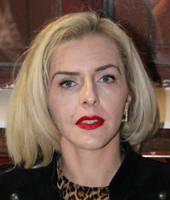
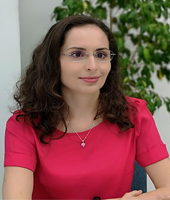
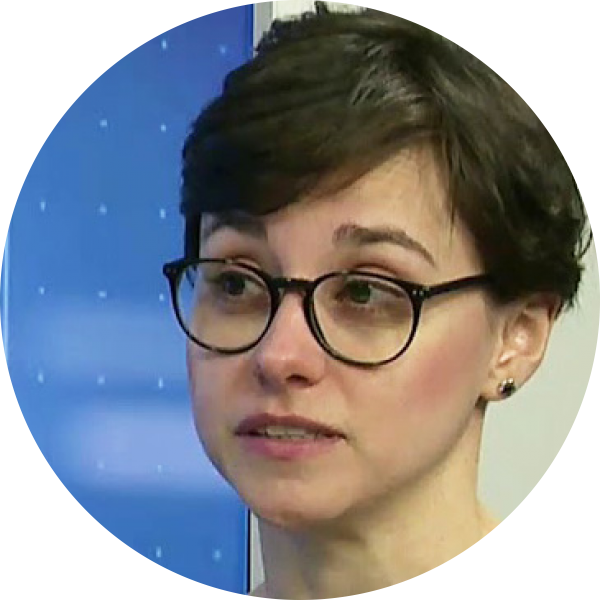
Răzvan Sandu ENOIU is a Professor at the Department of Motor Performance, Faculty of Physical Education and Mountain Sports, Transilvania University of Brașov. His work focuses on sport training methodologies, physical education innovation, and the integration of technology in athletic performance analysis. He is affiliated with the university’s research initiatives and has contributed to interdisciplinary studies bridging sports science with educational technology. Research Interests: Sport training programming and periodization Applications of wearable sensors and modern technology in sports Optimization of athletic performance through data-driven approaches Impact of extracurricular activities on motor skills development His publications explore topics such as Alpine skiing performance analysis, vital sign monitoring in athletics, and the sociological effects of technology during the pandemic. Recent work includes advancements in javelin throwing biomechanics and balance training methodologies using Bosu balls. Professor ENOIU collaborates with international journals and contributes to conferences on sports science and child development.
Gheorghe Asachi Technical University of IasiRomania
Elena Niculina Dragoi is a Lecturer at the Faculty of Chemical Engineering and Environmental Protection 'Cristofor Simionescu' at Gheorghe Asachi Technical University in Iasi, Romania. Her academic work integrates Artificial Intelligence and Machine Learning tools for solving complex problems in Chemical Engineering and Environmental Protection . With over 30 published papers and six active research projects, her contributions span process optimization, nanomaterials, and sustainable technologies. Teaches Applied Informatics (Years 1 & 4) and Artificial Intelligence at the Faculty of Chemical Engineering Contributes to Programming Engineering at the Faculty of Computer Science, University 'Alexandru Ioan Cuza' Engaged in interdisciplinary courses at the Faculty of Automatic Control and Computer Engineering Research Interests : Elena's work focuses on modelling and optimization (90% emphasis) of chemical processes using AI methodologies, with cross-disciplinary applications in environmental engineering (70%) and chemical engineering (95%). Her recent publications highlight innovations in: 3D-printed nanocomposite adsorbents for pollutant removal Metaheuristic optimization algorithms for industrial processes Hydrogen generation via nanocatalysts Electrochemical biosensors for environmental and health monitoring AI-driven wastewater treatment systems Green chemistry applications in pharmaceutical and dye removal
Prof. Ovidiu Cârjă is a Professor of Mathematical Analysis at the Faculty of Mathematics, University of Iasi, Romania. He holds a PhD from the same university (1984) and has held academic positions since 1981, progressing from Assistant Professor (1984) to his current role. His research focuses on controllability, viability theory, and Hamilton-Jacobi-Bellman equations, with significant contributions to differential inclusions and nonlinear analysis. Education: B.Sc. Mathematics, University of Iasi (1976) M.Phil. Mathematics, University of Iasi (1977) Ph.D. Mathematics, University of Iasi (1984) Research Interests: Optimal control and time-optimal control problems Viability and invariance for differential inclusions Hamilton-Jacobi-Bellman equations Nonlinear functional analysis and semilinear systems Awards and Fellowships: Romanian Academy 'Simion Stoilow' Award (1991) Fulbright Award (UCLA, 1993–1994) NATO Fellowship (CMAF Lisbon, 1998–2002) Invited Professorships at University of Perpignan and Tor Vergata Rome Professional Activities: Editor of the Applied Analysis and Differential Equations (World Scientific, 2007) Co-author of influential books on nonlinear analysis and viability theory
Associate Professor Dr. Maria Violeta GUIMAN is affiliated with the Department of Mechanical Engineering at the Transilvania University of Brașov. Her research focuses on biomechanics, technical acoustics, composite materials, and material resistance. Key interests include acoustic properties of materials, noise insulation, and structural dynamics. She has authored works such as Acustică Tehnică: Îndrumar de Laborator (2017) and contributed to studies on violin acoustics, wood properties, and sports biomechanics. Her publications emphasize innovative applications of composite materials and coatings in acoustics and environmental contexts. Recent work explores tuning acoustic properties via coating systems, porous composites for noise reduction, and cellulose-based materials. She has also investigated biomechanical aspects of sports movements, such as long jump kinematics, and structural responses under dynamic loads. No specific awards or student advisees are listed. Her academic contributions include experimental and theoretical studies on vibration analysis and material characterization, as well as collaborations on biomechanical motion capture technologies.
University of Medicine and Pharmacy of CraiovaRomania
Juhyun Bae is an Assistant Professor in the Department of Political Science at the University of Texas - Rio Grande Valley (UTRGV). She earned her Ph.D. in Public Affairs from the Truman School of Government and Public Affairs at the University of Missouri, following a Master's and Bachelor's in Public Administration from Yonsei University (South Korea). Prior to academia, she worked as a project researcher at the Korean Women’s Development Institute (KWDI). Her research focuses on welfare states, social welfare policy, and public opinion, particularly addressing labor market inequality and policy solutions for precarious non-standard workers like app-based gig workers. She emphasizes redesigning social security systems to enhance job security for these vulnerable groups. Teaching experience spans undergraduate and graduate courses at UTRGV and the University of Missouri, including Public Policy Analysis, Research Methods, and Public Administration. She has received strong student feedback for her ability to clarify complex concepts and provide constructive feedback. Her publications explore topics such as basic income policy diffusion, pandemic unemployment assistance impacts, and gig economy labor market dynamics. She holds an Online Teaching Certificate from the University of Missouri and has presented methodological workshops on econometric techniques like TWFE Staggered DID.
Praveen Agarwal is a Professor of Mathematics at the Department of Mathematics, International College of Engineering, located near Kanota, Agra Road, Jaipur-303012, Rajasthan, India. He also maintains a significant affiliation with the Lepage Research Institute in Slovakia. His academic profile demonstrates a strong international presence with collaborations spanning multiple continents. Dr. Agarwal's research expertise centers on Special functions , Fractional calculus , and Mathematical Physics . His work in fractional calculus represents cutting-edge contributions to this specialized mathematical field, developing theoretical frameworks with applications across diverse scientific disciplines. His research in special functions has led to numerous extensions and generalizations of classical mathematical constructs, creating innovative tools for solving complex differential equations. In mathematical physics, he applies rigorous analytical techniques to model physical phenomena, particularly those involving wave propagation, diffusion processes, and energy systems. Analysis of Dr. Agarwal's extensive publication record reveals a sophisticated approach to fractional-order differential equations with applications spanning viscoelastic wave behavior, neural networks, energy storage systems, and biomedical engineering. He frequently develops novel mathematical methods, including specialized integral transforms and polynomial-based solution techniques, to address complex nonlinear systems. His research consistently bridges pure mathematical theory with practical engineering applications, particularly in areas requiring precise modeling of memory effects and non-local phenomena. The interdisciplinary nature of his work is evident in publications addressing both theoretical mathematics and practical engineering challenges. Dr. Agarwal maintains active research collaborations with prestigious institutions worldwide, including The Union of Czech Mathematicians and Physicists, University of Prešov in Prešov, Eötvös Loránd University, Italian Society for General Relativity and Gravitation, Transilvania University of Brasov, VŠB-TU Ostrava, and Lodz University of Technology. These international partnerships reflect the global recognition of his contributions to mathematical sciences and demonstrate his ability to work across disciplinary boundaries to solve complex problems.
Andang Sunarto is an Associate Professor affiliated with the State Islamic Institute (IAIN) Bengkulu, Indonesia and the Lepage Research Institute, Slovakia . His work bridges Numerical Analysis , Computational Mathematics , and Algorithm Design with applications in Robotics , Image Processing , and Sharia-Compliant Systems . Research Focus: Fractional Calculus, Nonlinear PDEs, GPU-Accelerated Algorithms Collaborations: International institutions including Union of Czech Mathematicians and Physicists and University of Prešov His recent publications (2021–2025) emphasize Iterative Methods for solving Time-Fractional Diffusion Equations and Porous Medium Models . He also explores Digital Islamic Education and Halal Tourism Development . Despite no listed awards, his work spans diverse domains like Mobile Banking Evaluation , Environmental Pollution Analysis , and Ethnobotanical Applications . Andang actively designs EdTech tools (e.g., Wordwall-based modules) and contributes to computational methods in Climate Modeling and Nonlinear Diffusion .
Vlad Pojoga is Deputy Dean of the Faculty of Letters and Arts at Lucian Blaga University of Sibiu, holding a Lecturer position in the Department of Romance Studies. His research focuses on Romanian literature, digital humanities, and literary analysis, with particular emphasis on quantitative methods and spatial narratives. He leads projects like the Digital Museum of the Romanian Novel, exploring 19th-20th century literary trends through digital curation and geocritical approaches. His academic background includes advanced studies in literary theory and digital methodologies. Research interests span translation studies, postmodernism, and the intersection of narrative forms with cultural geography. Recent work analyzes character networks in classical novels and metaphor systems in contemporary poetry. Pojoga frequently collaborates on international literary projects, contributing to FORTHEM Alliance initiatives and organizing events like the International Week at ULBS. His publications bridge traditional literary criticism with computational methods, offering innovative frameworks for understanding Romanian literary history.
Camelia-Mihaela Cmeciu is a full-time Professor at the Department of Journalism, Faculty of Journalism and Communication Studies, University of Bucharest. She holds a doctoral degree and has contributed extensively to research in organizational communication, public relations, and European communication. Her work spans both theoretical and applied domains, with a focus on risk communication, media framing, and political discourse. Email: camelia.cmeciu@fjsc.ro Consultation hours: Thursdays 16:00-18:00, Room 410 (by prior email appointment) Project Director: PN-II-RU-TE-2014-4-0599 – 'European citizens – (De)legitimators of a networking Europe' (e-Eurociti) Editor-in-chief: Styles of Communication journal Her research explores organizational communication , digital public relations , and European communication frameworks , with recent publications analyzing COVID-19 pandemic discourse , vaccination narratives , and media framing of crises . She has contributed to understanding visual representation of women in politics and semiotic dimensions of cultural institutions . Scientific Trends : Her work demonstrates consistent focus on crisis communication , media analysis , and public relations dynamics , often employing multimodal analysis and case study methodology across diverse contexts from healthcare to political campaigns. Advising & Leadership : As Editor-in-chief of Styles of Communication and Director of the e-Eurociti project, she provides strategic mentorship in academic research and publication processes.
Professor Ana-Maria CAZAN serves in the Department of Psychology and Education Sciences at the Faculty of Psychology and Education Sciences, Transilvania University of Brașov, Romania. Her office is located at Nicolae Bălcescu 56, Building K, Brașov, with contact via phone/fax (+40 268 416184) and email (ana.cazan@unitbv.ro). Her research program centers on educational psychology with critical focus areas including: Self-regulated learning and cognitive development in academic settings Academic adjustment mechanisms for university students Positive psychology applications in educational contexts e-Learning efficacy and technostress mitigation Career decision-making frameworks for adolescents Pandemic-induced disruptions in educational systems Recent publications (2023-2025) reveal strong methodological diversity through longitudinal studies, cross-cultural comparisons, and instrument validation research. Her work consistently addresses Romanian educational contexts while contributing to global discourse on digital learning challenges, academic resilience, and psychometric assessment tools. Key thematic trends include pandemic recovery strategies, technostress interventions for educators, and culturally adapted measurement instruments for student well-being.
National School of Political Studies and Public AdministrationRomania
Diana Margarit is an Associate Professor at the Department of Political Science, International Relations and European Studies, Alexandru Ioan Cuza University of Iași, Romania. She teaches courses on international organizations and global governance. She earned her PhD in 2011 with a thesis on democracy’s conceptual evolution between nation-state and supranational frameworks. Her research focuses on international organizations, global governance, and 21st-century social movements. Her publications include co-authored books such as *International Organizations* (2011, in Romanian and English), *On the Edges of Democracy* (2013), and co-edited volumes like *The Bestiary of Power* (2014). These works explore themes ranging from supranational political dynamics to democracy’s conceptual boundaries and power structures. No scientific awards or grants are listed. She has no recorded advisees or lab affiliations. Courses taught include 'International Organizations,' 'Theories, Institutions and Policy,' and 'Political Ideologies.'
Prof. Cosmin Goian is a Full Professor at the Department of Social Assistance, Faculty of Sociology and Psychology, West University of Timișoara (UVT). He has been a faculty member since 1999 and currently serves as Director of the Department of Social Assistance and Director of the master's program in Management and Supervision in Child and Family Welfare. He earned his PhD in Sociology (2007) from Alexandru Ioan Cuza University, Iași, with a focus on communication in social work. He became a PhD supervisor in Sociology in 2014. His research focuses on communication dynamics in social work, deontology, and conflict resolution. Notable areas include the role of media in shaping societal perceptions, gerontological care, and crisis management during the pandemic. He has authored/co-authored over 50 publications, including books like Practical Training in Social Work and Semantic Analysis of Social Work Language in Romania . His recent work addresses pandemic impacts on vulnerable groups (e.g., elderly in institutions, children with special needs), nonverbal communication with refugees, and fake news effects during the Ukraine war. He leads projects funded by UEFISCDI grants (2018). His teaching and administrative roles emphasize practical training, interprofessional collaboration, and evidence-based practice in social work education. Education: PhD in Sociology (2007), UVT Social Assistance studies Key Roles: Department Director, Master's Program Director, PhD Supervisor Research Themes: Social Work Communication, Gerontology, Crisis Intervention, Media Sociology Awards: Multiple UEFISCDI grants (2018), recognition for contributions to social work pedagogy
Lect. dr. Alina Cristiana Gavriluţ is a faculty member at the Faculty of Mathematics, Al. I. Cuza University of Iaşi, Romania. Her research focuses on advanced topics in mathematical analysis, including set multifunctions, non-additive measures, fuzzy integrals, and their applications in physics and complex systems. She has authored/co-authored multiple books and over 30 peer-reviewed papers in journals like Fuzzy Sets and Systems , Entropy , and Reports on Mathematical Physics . Her work explores regularity properties of set multifunctions, integrability in non-additive settings, and interdisciplinary applications in areas like fractal information, quantum mechanics, and neurosciences. She has also contributed to theoretical frameworks connecting mathematical physics with complex systems, including studies on non-differentiable entropy and spacetime manifolds. Dr. Gavriluţ collaborates extensively with researchers in mathematics and physics, notably Maricel Agop and Anca Croitoru. Her research has implications for diverse fields, from image processing to neuronal network modeling. She actively participates in international conferences, presenting findings on set-valued integration, fractal systems, and transdisciplinary approaches to complex phenomena. Education: PhD in Mathematics from Al. I. Cuza University (year not specified). Key Areas: Mathematical analysis, measure theory, fuzzy set theory, complex systems, non-differentiable dynamics. Grants/Awards: Not explicitly listed in the provided texts, but her prolific publication record indicates sustained academic engagement. Labs/Teams: Affiliated with the Mathematics department at Al. I. Cuza University, contributing to research groups in functional analysis and mathematical physics.
Ciprian Bogdan Chirila is a Senior Lecturer at the University Politehnica of Timisoara (Faculty of Automation and Computer Science, Computing and Information Technology Department) and also teaches at Ioan Slavici University . His career spans over two decades, with roles in teaching, research, and software development. Education : PhD in Computer Science (2010, University Politehnica Timisoara & University Nice-Sophia Antipolis) Master's in Computer Science & Software Engineering (2002) Engineer Diploma in Automation & Computer Science (2001) Analyst-Programmer Diploma (1996) Research Interests : His work focuses on reverse inheritance for software reusability, generative learning objects for education, and software quality assessment using code metrics. He explores interdisciplinary applications in healthcare, mathematics education, and industrial IT services. Article Trends : Recent publications emphasize adaptive e-learning frameworks , gamification in education , and model-driven development . Key themes include automated assessment , dynamic content generation , and integration of standards like SCORM and xAPI . Scientific Awards : Microsoft Award, Student Scientific Communications Session (2001) Award, Student Scientific Communications Session (2002) Third Place, Mechanics and Robotics Contest (1998) Fourth Place, Traian Lalescu Mathematics Contest (1998) Teaching & Development : He has led laboratory sessions and lectures in Data Structures , Compiler Design , Operating Systems , and Heuristic Methods . He organizes programming contests and develops centralized materials management software as a volunteer engineer.
Professor Andriy Volodymyrovych Karpenko is a Doctor of Economic Sciences and Professor at the Department of Economics and Customs within the Faculty of Business Technologies and Economics at National University 'Zaporizhzhia Polytechnic'. With over 14 years of academic experience since 2010, he has established himself as a prominent scholar in innovation economics, human capital development, and customs policy. Faculty of Business Technologies and Economics, National University 'Zaporizhzhia Polytechnic' Department of Economics and Customs Director of the Public Organization 'Zaporizhzhia Cluster Engineering - Automation - Mechanical Engineering' since 2020 Deputy Editor-in-Chief of the electronic periodical 'Management and Business' Member of multiple editorial boards of economic journals Professor Karpenko's research interests span innovations and innovation ecosystems, national and regional economy, economics and enterprise management, human capital and human development, and customs affairs. His work demonstrates a consistent focus on Ukraine's economic development through innovation, human capital investment, and cluster-based economic strategies, with particular emphasis on the impact of digital transformation and global challenges on Ukraine's economic landscape. His extensive publication record includes 354 scientific works, with 30 published internationally (7 in Scopus and Web of Science-indexed journals), 94 in Ukrainian professional periodicals, 27 in monographs (including one sole-authored monograph), and 203 conference theses. Recent publications (2020-2024) reveal a strong focus on Ukraine's economic resilience during wartime, cluster development strategies, human capital measurement, and innovation ecosystem management. Letter of thanks from Zaporizhzhia Regional State Administration (2012) Honorary certificates from Zaporizhzhia National Technical University (2013, 2015, 2018) Letter of thanks from Ministry of Education and Science of Ukraine (2020) Letters of thanks and Certificate of Honor from Zaporizhzhia Regional authorities and Ministry of Education (2023) Professor Karpenko actively participates in advising and grant activities, having led multiple research projects since 2014. He currently serves as the responsible executor of research topics at the Department of Economics and Customs at National University 'Zaporizhzhia Polytechnic', focusing on sustainable development of business ecosystems. His work with the Zaporizhzhia Cluster 'IAM' demonstrates strong engagement with practical applications of his research in regional economic development. His academic leadership extends to various councils and government structures, including the Coordination Council for SME Development of Zaporizhzhia City Council and the Council of Entrepreneurs of Zaporizhzhia Region, where he contributes expertise on economic policy and business development strategies.