Dr. Alexandre Mermillod-Blondin is a Principal Investigator heading a DFG-funded project on 'Micromachining with few-cycle pulses' at the Max Born Institute. His research focuses on fundamental laser-matter interactions and direct laser writing of 3D micro-optical systems in transparent materials. Key investigations include plasma formation mechanisms in dielectrics, relaxation dynamics, and applications in photonic device fabrication. His group utilizes phase-contrast microscopy and time-resolved techniques to characterize ultrafast processes.
Professor Rodrigo Freitas holds the TDK Professorship in Materials Science and Engineering at MIT. His research focuses on computational materials design, bridging atomistic simulations with mesoscale microstructural analysis. He leads the Freitas Research Group, specializing in machine learning-driven modeling of materials kinetics and solidification processes. Education: B.S. and M.S. in Physics, University of Campinas, Brazil M.S. and Ph.D. in Materials Science & Engineering, UC Berkeley Research Interests: Professor Freitas investigates microstructural evolution in metals and alloys using advanced computational methods. Key areas include solidification mechanisms, interstitial atom behavior in superalloys, and machine learning applications for materials discovery. His work emphasizes bridging atomistic and mesoscale phenomena to guide industrial applications like semiconductor manufacturing and battery design. Publications Trend: Recent work emphasizes machine learning potentials for alloy modeling, short-range order analysis in high-entropy alloys, and kinetic modeling of complex chemical systems. Themes include alloy phase stability, defect dynamics, and data-driven materials discovery. Labs/Teams: Leads the Freitas Research Group at MIT, which develops novel computational tools for materials engineering.
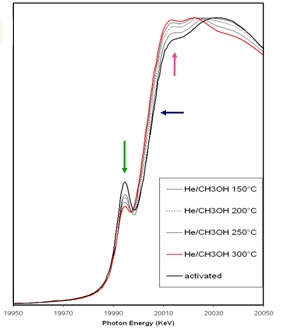
Sylvain Cristol is a Professor at the University of Lille within the Heterogeneous Catalysis department and the Modeling and Spectroscopy (MODSPEC) group. He teaches quantum chemistry, chemical bonding, statistical physics , and X-ray absorption spectroscopy at the university’s European Master’s program. PhD in Molecular and Organic Chemistry (1997-2000, Université de Provence) Postdoctoral work at Davy-Faraday Research Lab, Royal Institution of Great Britain (2000-2002) His research focuses on modeling hydrodesulfurization and hydrodeoxygenation catalysts for biomass valorization, supported by ANR-PNRB project ECOHDOC (with Caen, Poitiers, and TOTAL). He pioneered operando X-ray absorption spectroscopy for characterizing supported oxides (Mo/Re on alumina/anatase) via the ANR SAXO project (Paris VI, Grenoble, SOLEIL). Collaborative work with Francesco Mauri (Paris VI) advanced NMR parameter modeling in solids. Publications span DFT studies , XANES spectroscopy , and solid-state NMR applied to catalysis. Scientific awards include the UCCS Thesis Prize (highest honors) for his work on dibenzothiophene reactivity on molybdenum sulfide.
Jesse Liu is an Assistant Professor of Physics at the New York University College of Arts & Science , joining in Spring 2025. He collaborates with the ATLAS Experiment at CERN and leads the NYU Experimental Particle Physics group. Research Interests: Liu's work bridges fundamental particle physics and detector innovation. He investigates Tau-lepton electromagnetic dipoles via photon collisions at the LHC High-luminosity LHC silicon tracker upgrades Dark matter searches through collider experiments and the BREAD axion detection project Cosmic ray physics using ATLAS data Recent Publications focus on tau magnetic moment measurements, detector thermal stress mitigation, and cosmic ray signature analysis. His work has been featured in Phys. Rev. D , Phys. Rev. Lett. , and JINST . Outreach & Mentorship: Liu actively engages in public science communication through Pint of Science talks The Conversation articles School visits to CERN First-gen student mentorship at NYU CU*iP Contact: Office at 726 Broadway, Room 852, New York City. Email: jesse.liu2@nyu.edu
Joel Rosenthal is Professor and Chair of the Department of Chemistry and Biochemistry at the University of Delaware, where he also serves as Associate Dean for Research and Graduate Affairs in the College of Arts and Sciences. His group integrates inorganic synthesis, electrochemistry, and photochemistry to create functional materials and catalysts for energy, environmental, and biomedical challenges. Education & Training B.S. with Honors, New York University (2001) Ph.D., Massachusetts Institute of Technology (2007) NIH Postdoctoral Fellow, MIT (2007-2010) Research Directions The Rosenthal Research Lab pursues four intertwined themes: Environmental & energy sustainability via CO₂ reduction and solar-to-fuel conversion. Design of catalytic platforms for small-molecule up-conversion. Light-activated therapeutics targeting cancer and other diseases. Electrosynthetic routes to advanced inorganic materials and coordination complexes. To tackle these goals, the group synthesizes non-traditional tetrapyrroles, porous inorganic frameworks, and metal alloys, then interrogates them with electrochemical, spectroscopic, and ultrafast methods in collaboration with colleagues across UD, other universities, and National Laboratories. Recent Publication Trends Between 2021-2025 the group has published extensively on (i) selective electrochemical CO₂ reduction using bismuth, tin, and alloy catalysts, (ii) structure–function relationships in palladium and ruthenium tetrapyrrole complexes for singlet-oxygen generation, and (iii) new metal–organic framework (MOF) electrosyntheses. The work bridges fundamental mechanistic insights with practical device demonstrations, including 3-D-printed flow cells and solar-powered reactors. Scientific Awards & Honors While specific awards are not enumerated in the provided text, Prof. Rosenthal has garnered recognition through sustained federal funding, invited colloquia, and extensive peer-reviewed publication records. Students, Collaborators & Infrastructure The group actively recruits graduate students, post-docs, and undergraduates interested in interdisciplinary research. Trainees gain expertise spanning chemical synthesis, electrochemical cell design, ultrafast spectroscopy, computational modeling, and biological assays through partnerships both on campus and at national user facilities. The lab maintains state-of-the-art instrumentation for electrochemistry, photochemistry, and materials characterization, and communicates its latest findings via Twitter @rosenthal_lab .
Prof. Sofía Calero is a Full Professor at the Eindhoven University of Technology (TU/e) and Vice Dean of the Department of Applied Physics & Eindhoven School of Education. She leads the Materials Simulation & Modelling group, focusing on computational methods for renewable energy and nanostructured materials. MSc (1995) and PhD (2000), University Complutense of Madrid Marie Curie Fellow (2001–2003), University of Amsterdam Ramón y Cajal Fellow (2004) and Full Professor (2017) at University Pablo de Olavide (Spain) Her research bridges computational physics-chemistry and industrial applications, developing force fields, algorithms, and simulation methods to reverse-engineer material properties. She specializes in adsorption , metal-organic frameworks , zeolites , and molecular simulation , contributing to SDGs like climate action and clean energy. Recent publications focus on halide perovskites , carbon dioxide capture , and nanostructured materials , with software tools like RASPA and iRASPA as key outputs. Articles span Nano Letters , Chem , and Journal of Physical Chemistry C . ERC Proof of Concept Grant (2018) Marie Curie Excellence Award (2005) Fellow of the Royal Society of Chemistry (2024) She has supervised 36 research works and taught courses like Advanced Materials Modelling and Mechanics . Her work involves collaborations with industries and institutions across Europe.
Muharrem Bayraktar is an Assistant Professor at the MESA+ Institute for Nanotechnology at the University of Twente, specializing in XUV Optics. His research focuses on extreme ultraviolet (EUV) optics, plasma spectroscopy, and adaptive optical systems. He leads projects involving EUV source metrology, piezoelectric thin film actuators, and laser-driven plasma diagnostics. Research Interests: Bayraktar’s work centers on developing advanced EUV light sources for nanolithography applications. He investigates plasma physics in tin-based EUV emitters, optimizing thin film materials for adaptive optics, and improving spectral characterization techniques. His group explores piezoelectric thin films for precision wafer tables and multilayer mirror systems to enhance EUV beam control. Awards: 3rd Place in Simon Stevin Fellow Contest (2016) Best poster award (2018) Best poster award (2019) Advising & Activities: Supervises research on EUV source development and piezoelectric actuators. Engages in international collaborations on plasma diagnostics and adaptive optics. Active in presenting at conferences on topics like ‘EUV Source Metrology’ and ‘Nanolithography Systems’. Labs/Teams: Leads the XUV Optics team within MESA+, collaborating with industry partners on EUV lithography systems and advanced optical components.
Prof. Jochen Guck is a Director at the Max Planck Institute for the Science of Light and holds the Chair of Biological Optomechanics at Friedrich-Alexander Universität Erlangen-Nürnberg. His research focuses on the physical properties of cells and tissues, combining photonics and biophysical tools to bridge gaps between cellular mechanics and medical applications. Education: PhD in Physics from the University of Texas at Austin (2001), followed by roles at Leipzig University, Cambridge University, and TU Dresden before his current positions. He leads the Biological Optomechanics Division, developing techniques like Deformability Cytometry (DC), Optical Diffraction Tomography (ODT), and Brillouin Microscopy to study cell mechanics and density distributions. Research emphasizes translating physical measurements into clinical diagnostics (e.g., cancer, spinal cord regeneration) and has produced over 145 publications and 6 patents. Awards include the Cozzarelli Award (2008), Paterson Medal (2011), and Humboldt Professorship (2012). Collaborations span medical and engineering fields, with projects like the Max-Planck-Zentrum für Physik und Medizin. His lab investigates cell density heterogeneity, spinal cord regeneration in zebrafish, and biomechanical markers for diseases like Covid-19 and depression. Key methods include ODT for 3D mass density mapping and RT-DC for high-throughput cell analysis.
Ditte Hededam Welner is a Senior Researcher & Group Leader at the Novo Nordisk Foundation Center for Biosustainability, Technical University of Denmark. Her research focuses on Enzyme Engineering and Structural Biology, particularly the development of enzyme biocatalysts for sustainable industrial production of natural products like aromas, dyes, and pharmaceuticals. She leads efforts to replace petroleum-based chemical synthesis with eco-friendly bio-based processes, emphasizing glycosyltransferase (GT) engineering to enhance substrate specificity, efficiency, and stability. Education: Biochemistry, University of Copenhagen (2000–2011). Research Interests: Glycosylation mechanisms, high-throughput enzyme discovery/evolution, structural biology techniques (X-ray crystallography, NMR), and biocatalysis applications in sustainable chemistry. Her work contributes to UN SDG 9 (Industry, Innovation, and Infrastructure) and SDG 12 (Responsible Consumption and Production). Recent publications highlight advancements in alginate degradation mechanisms, sucrose synthase engineering, and glycosyltransferase applications in biocatalytic routes for indigo/indican production. She supervises multiple PhD projects on enzyme optimization, machine learning for enzyme engineering, and sustainable bioprocessing. Professional Activities: Peer review for journals like Nature Catalysis and Metabolic Engineering , conference organization, and editorial contributions. Active in promoting open-access science and sustainable biotechnology. Labs/Teams: Leads the Enzyme Engineering and Structural Biology group at DTU, collaborating with industry and academic partners globally to advance biocatalytic solutions for environmental challenges.
Grethe Winther is a Professor and Head of Section in the Department of Civil and Mechanical Engineering at the Technical University of Denmark (DTU), specializing in Materials and Surface Engineering. Her research is centered on the analysis and modeling of microstructure and mechanical properties of metals, with a strong emphasis on dislocation structures, deformation textures, and recrystallization processes. Her research interests include: Dislocation structures and boundary analysis in deformed metals Crystal plasticity modeling using synchrotron data (3DXRD) Orientation relationships in recrystallization Prediction of mechanical properties in industrial metal forming Multiscale modeling of plastic deformation and surface roughening The recent articles (2025) highlight a consistent focus on advanced characterization techniques like dark-field X-ray microscopy and discrete dislocation dynamics simulations. These works explore the formation of geometrically necessary boundaries, dislocation cell evolution, and multiscale surface deformation, reflecting a strong integration of experimental and computational methods in materials science. Key themes include plastic deformation mechanisms, microstructure evolution, and predictive modeling in metallic systems. Grethe Winther actively supervises multiple PhD projects, including those on dislocation dynamics, X-ray microscopy, and ductile failure simulations. She collaborates extensively with researchers such as H.F. Poulsen and C.V. Nielsen. Her work is supported by ongoing research projects at DTU, focusing on fundamental and applied aspects of metal deformation and microstructure. She is affiliated with the Materials and Surface Engineering section at DTU, where she leads research efforts combining advanced experimental techniques with theoretical modeling to understand and predict metal behavior under deformation.
Peter A. Dowben is a Professor in the Department of Physics and Astronomy at the University of Nebraska–Lincoln , with a research focus spanning Condensed Matter Physics , Materials Science , and Spintronics . His work emphasizes surface physics , electronic structure , and magnetoelectric coupling , particularly in transition metal compounds , ferroelectric polymers , and graphene-based systems . Key research trends in his recent publications include voltage-controlled spin states for memory applications, magnetoelectric transistors , and interfacial effects in nanoscale materials . His collaborations extend across institutions like the Air Force Institute of Technology and the Institute of Physical Optics, with experimental techniques such as X-ray absorption spectroscopy and photoemission . While no specific awards are documented in the provided texts, his extensive publication record and interdisciplinary work on molecular spintronics , surface segregation , and band structure engineering highlight his contributions to fundamental material science and applied physics . He has advised teams in studies involving spin crossover complexes , self-assembled monolayers , and magnetoelectric heterostructures .
Ying Wu is a Professor of Physics at Duke University within the Trinity College of Arts & Sciences . His research focuses on the nonlinear dynamics of charged particle beams , coherent radiation sources , and the development of novel accelerators and light sources using advanced mathematical frameworks like Lie Algebra, Differential Algebra, and Frequency Analysis. His work has significantly enhanced understanding of nonlinear phenomena in light source storage rings and collider rings, with applications in Gamma-ray source development Free-electron laser (FEL) technology Beam stability and diagnostics VUV mirror protection systems Polarization-controlled radiation sources High-reflectivity cavity design Recent publications highlight experimental and theoretical advances in Orbital angular momentum beam generation Photonuclear cross-section measurements Storage ring lattice optimization Multi-color FEL operation Longitudinal beam instability control Differential algebra for particle dynamics Current research programs include collaborations with the High Intensity Gamma-ray Source (HIγS) facility and the Triangle Universities Nuclear Laboratory , with active grants from the Department of Energy (1997–2027), National Institutes of Health (2024–2026), and Ian's Friends Foundation (2024–2025). Ying Wu's laboratory specializes in Free-electron laser cavity design Gamma-ray beam characterization Storage ring diagnostics systems High-current electron beam control Polarization-sensitive detection Next-generation light source development
Antonio Alguacil Cabrerizo is an Assistant Professor (starting 2025) at Université de Sherbrooke, where he currently serves as a Postdoctoral Fellow (2023-2025). His academic trajectory includes dual doctoral degrees in Mechanical Engineering from Université de Sherbrooke and École Nationale Supérieure d'Aéronautique et de l'Espace, complemented by aerospace engineering degrees from ENSEEIHT and Universidad Politécnica de Madrid. His research integrates computational fluid dynamics with machine learning, focusing on: Aeroacoustic prediction and noise source identification Deep learning surrogates for fluid and acoustic systems Turbomachinery and airfoil aerodynamics Data-driven modeling of spatiotemporal physical systems This work advances computational efficiency in simulating complex wave propagation, turbulence effects, and fluid-structure interactions. Publication analysis reveals consistent focus on developing neural network-based computational methods for aeroacoustics and fluid dynamics. His 15 most recent works demonstrate progressive refinement in applying convolutional architectures to predict acoustic scattering, refraction phenomena, and turbomachinery noise with increasing physical accuracy and computational efficiency. Awards and recognition include: Top 5 in AIAA Best Student Paper in Aeroacoustics (2024) Graduate Scholarship Award from CFD Society of Canada (2022) Eureka Scholarship from Université de Sherbrooke (2021) Best Poster Prize at CRASH Day (2021) He secured a $70,000 CAD startup grant (2025-2028) from Université de Sherbrooke for establishing his research program. No student advising relationships or laboratory affiliations are currently documented.
Prof. Dr. Michael Horn-von Hoegen is a full professor in the Faculty of Physics at the University of Duisburg-Essen , Germany. His research focuses on ultrafast structural dynamics , surface physics , and 2D materials , particularly using electron diffraction and plasmonic imaging techniques. He leads the Horn-von Hoegen Group , which plays a central role in the Collaborative Research Center CRC 1242 Non-Equilibrium Dynamics of Condensed Matter in the Time Domain , where his team investigates driven phase transitions and phonon systems with sub-femtosecond temporal resolution. Location: Office Window MF260, Faculty of Physics, Lotharstr. 1-21, 47057 Duisburg Contact: Tel. +49 (203) 379 1439 | Fax +49 (203) 379 1555 His research spans ultrafast electron diffraction of photo-induced phase transitions in atomic wires and topological materials , with recent breakthroughs on Kibble-Zurek dynamics in the Si(001) surface and chiral plasmon polaritons . The group’s 15 most recent publications (2025-2022) address phenomena such as negative thermal expansion in 2D materials , electron-phonon coupling in Pb/Si heterostructures , and quantum pathway analysis in Bismuth films . These works are categorized under disciplines like Condensed Matter Physics , Nanooptics , and Ultrafast Dynamics , with subfields including Ising Model Transitions , Plasmon Focusing , and Time-Resolved Diffraction . Prof. Horn-von Hoegen serves as DFG Liaison Officer for the University of Duisburg-Essen, providing guidance on Deutsche Forschungsgemeinschaft (DFG) proposals . His group has mentored notable researchers including Dr. Simon Sindermann (postdoc at IBM), Dr. Anja Hanisch-Blicharski (Leopoldina Fellow), Dr. Hichem Hattab (Leopoldina Fellowship), and Dr. Marin Petrovic (Humboldt Fellow). The group’s laboratory facilities include advanced ultrafast electron diffraction and photoemission microscopy systems, enabling studies of atomic-scale processes such as molecular dynamics simulations of laser-excited surfaces and domain wall motion in Si(553)-Au systems .
Jerome Hastings is a Research Professor at the Photon Science Directorate , Stanford University, and a Principal Investigator at the Stanford PULSE Institute. He is affiliated with the SLAC National Accelerator Laboratory and holds the academic rank of Research Professor (A.R.). His research focuses on advanced X-ray scattering techniques, femtosecond laser interactions, and high-energy-density material physics. Currently on leave from June 15, 2025, to September 15, 2025, Hastings has taught courses such as Advanced Topics in X-ray Scattering (APPPHYS 322) and Principles of X-ray Scattering (APPPHYS 222, PHOTON 222). Teaching : 2025-26: Advanced Topics in X-ray Scattering (Spr), Principles of X-ray Scattering (Win), Directed Studies (Aut/Wi/Spr), Research (Aut/Wi/Spr) Prior courses (2024-25, 2023-24) include similar offerings. Research Interests : His work explores the intersection of photon science and material dynamics, utilizing free-electron lasers to probe ultrafast structural changes, phonon hardening, and electronic responses in materials under extreme conditions. Key areas include X-ray diffraction , time-resolved spectroscopy , and high-intensity X-ray interactions . Publications : Hastings has contributed to 47 publications, with recent studies (2024) on supercooled liquid hydrogen crystallization and phonon hardening in laser-excited gold. Earlier works (2019-2016) address X-ray split-delay systems, photodissociation dynamics, and anomalous Compton scattering. Scientific Contributions : Notable projects include the development of compact X-ray diagnostics and phase-contrast imaging instruments at LCLS, enabling nanoscale temporal and spatial resolution for high-energy-density experiments. Students : He has advised doctoral candidates Arijit Majumdar, Chance Ornelas-Skarin, Madison Singleton, and Catherine Weibel. Contact : Academic email jerome.hastings@stanford.edu