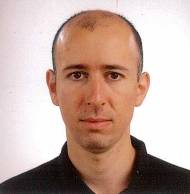
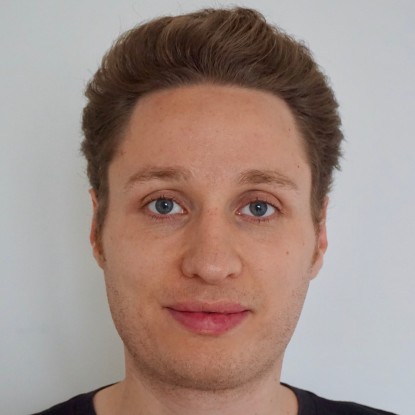
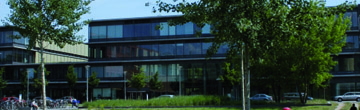
Prof. Dr. Axel-Cyrille Ngonga Ngomo is a Professor at the University of Paderborn , affiliated with the Faculty of Electrical Engineering, Computer Science and Mathematics and the Institute of Computer Science . He leads the Data Science group at the Heinz Nixdorf Institute and is a member of the Sonderforschungsbereich Transregio 318 (Constructing Explainability). His roles include heading the Informatik Rechnerbetrieb (IRB) team. Research Focus : Knowledge graphs, semantic web technologies, explainable AI, and distributed systems. Selected Projects : SAIL (Sustainable Life Cycle of Intelligent Sociotechnical Systems), TRR 318 (Constructing Explainability), Colide (Co-training for Industrial Data), 3DFed (Dynamic Data Distribution), and SFB 901 (On-The-Fly Computing). Contact : Email axel.ngonga@uni-paderborn.de , Office F1.225 (Fürstenallee 11) and TP6.3.106 (Technologiepark 6), Paderborn. Teaching : Courses include Seminar on Recent Advances in Knowledge Graphs, Project Groups on SPARQL Query Processing, Large Language Model Training, Retrieval Augmented Generation, and Foundations of Knowledge Graphs.
Ling Zhao is a distinguished Professor at the School of Management, Huazhong University of Science and Technology, China, with extensive research contributions spanning artificial intelligence, machine learning, information systems, and biomedical applications. With over 150 publications since 2008, Dr. Zhao has established herself as a leading researcher in multiple interdisciplinary domains, particularly in applying computational methods to solve complex real-world problems. Dr. Zhao's research interests encompass a broad spectrum of cutting-edge topics including artificial intelligence, machine learning, data mining, control systems, and information systems. Her work demonstrates exceptional versatility, bridging theoretical computer science with practical applications in healthcare, transportation, cybersecurity, and business management. Notably, she has made significant contributions to sentiment analysis, medical image processing, algorithmic management, and privacy-preserving data analysis. Her research methodology often combines deep learning approaches with domain-specific knowledge to develop innovative solutions. Analysis of Dr. Zhao's recent publications (2023-2025) reveals a strong focus on interdisciplinary applications of AI, with particular emphasis on healthcare informatics (medical image analysis, disease diagnosis), human-computer interaction (algorithmic management effects), and advanced machine learning techniques (graph neural networks, multimodal learning). Her work shows a consistent trend toward increasingly complex and integrated systems that address real-world challenges across multiple domains. Dr. Zhao has made substantial contributions to academic advising and research mentorship, though specific student names aren't detailed in the available publications. Her research has been supported by various grants enabling work in AI applications, biomedical engineering, and information systems. Dr. Zhao maintains active collaborations with researchers across China and internationally, as evidenced by her co-authorship patterns. While specific laboratory information isn't explicitly mentioned in the publication records, Dr. Zhao appears to lead or be significantly involved in research groups focusing on AI applications in management and healthcare. Her work on medical imaging, sentiment analysis, and control systems suggests involvement in multiple specialized research teams addressing different application domains through computational approaches.
Prof. Dr.-Ing. Richard Membarth is a Research Professor for System-on-a-Chip and AI at the Edge Computing at Technische Hochschule Ingolstadt (THI). He is affiliated with the Hardware-Software Co-Design group and holds a secondary position at the German Research Center for Artificial Intelligence (DFKI) Saarbrücken. Co-creator of DSL frameworks like AnyDSL and Hipacc Key contributor to MetaDL (AI metaprogramming) and PRIME (predictive rendering) His research bridges GPU computing , domain-specific languages , and compiler technology , with recent work on Vulkan SPIR-V compilation and device-driven SpMV algorithms . Notable awards include the HiPEAC Paper Award (2018) and multiple Best Paper Awards for his compiler frameworks.
Johanna Sommer is a researcher at the Technical University of Munich , affiliated with the Department of Informatics under the TUM School of Computation, Information and Technology. She contributes to research and teaching in advanced machine learning domains. Education : M.Sc. Computer Science (TUM, passed with distinction), B.Sc. Applied Computer Science (Baden-Württemberg Cooperative State University). Research Interests : Her work spans Robust Machine Learning , machine learning for graphs and sequential data, Bayesian learning with uncertainty quantification, and efficiency improvements in training algorithms. She applies these to tasks like molecular generation and continuous-time modeling. Teaching : Johanna leads seminars and courses on topics including Advanced Machine Learning: Deep Generative Models , Machine Learning for Graphs and Sequential Data , and Large-Scale Machine Learning , often in collaboration with industry partners. Publications highlight her contributions to robustness analysis of combinatorial solvers, molecule generation from 3D shapes, and efficient alternatives to neural ODEs. These works appear at top venues like ICLR and NeurIPS .
Prof. Dr. Jochen Garcke is a faculty member at the Institute for Numerical Simulation, University of Bonn, with a dual affiliation at Fraunhofer SCAI's Department of Numerical Data-Based Prediction. His work bridges numerical simulation and machine learning, focusing on high-dimensional problems, sparse grids, and optimal control. Key research themes: Sparse grids, machine learning for simulations, reinforcement learning, uncertainty quantification Teaching includes courses on Numerical Methods in Science and Technology and Scientific Computing , emphasizing practical machine learning applications. Recent publications explore hybrid models combining data-driven and physics-based approaches in automotive engineering, wind turbines, and geoscientific modeling. His group employs adaptive sparse grids, graph algorithms, and spectral methods to tackle challenges in crash simulations, fluctuating renewable energy systems, and turbulent flow analysis. Collaborations span Fraunhofer SCAI and industry 4.0 initiatives.
Yannis Kevrekidis is a Professor at Princeton University with a distinguished career in computational mathematics and chemical engineering. He is currently a Hans Fischer Senior Fellow at the Technical University of Munich (TUM-IAS) and has held visiting positions at institutions like the Zuse Institute Berlin and Caltech. Education : National Technical University of Athens (Chemical Engineering) University of Minnesota (PhD in dynamical systems) Research Interests : Equation-Free and Variable-Free Modeling Complex Systems Dynamics Multiscale Computation Integration of Machine Learning with Scientific Computing Pattern Formation & Instability Analysis Key Article Trends : Advanced data-driven modeling of dynamical systems Manifold learning for reaction coordinates Projective integration methods Coarse-grained modeling across disciplines Applications in epidemiology, neuroscience, and fluid dynamics Scientific Awards : Guggenheim Fellowship Humboldt Research Award Computing in Chemical Engineering Award (AIChE) Bodossaki Academic Award Allan P. Colburn Award Collaborations : Extensive international collaborations with institutions in Germany, Austria, and the UK Key role in the Complex Systems Modeling and Computation focus group at TUM-IAS
László Kozma is an Assistant Professor at the Theoretical Computer Science group of the Institute of Computer Science (Freie Universität Berlin). He obtained his PhD from Saarland University under Raimund Seidel, followed by postdoctoral positions at Tel Aviv University and TU Eindhoven. His research focuses on self-adjusting data structures , adaptive algorithms , and combinatorial optimization with applications to problems like the Traveling Salesman Problem, binary search trees, and geometric data structures. Academic Affiliation: Freie Universität Berlin (since 2018) Education: PhD in Computer Science (Saarland University, 2016); postdoc at Tel Aviv University and TU Eindhoven. His work explores the intersection of data structures, combinatorial algorithms, and geometric methods. He has made significant contributions to problems involving pattern-avoidance in inputs, saddlepoint detection , and self-adjusting heaps . Key areas include: Adaptive algorithms for pattern-avoiding inputs Optimal tree and heap structures Geometric and stochastic approaches to optimization Complexity analysis of classical algorithms Recent publications highlight efficient solutions for exponential cut problems (ESA 2025), balanced TSP partitioning (EuroCG 2025), and randomized saddlepoint algorithms (ESA 2024). His research often bridges theory and practice, exemplified by the smooth heap implementation and fun projects like Recursi and Cuckoo Hashing visualization.
Professor Yann Disser is a faculty member in the Department of Mathematics at TU Darmstadt since 2021. He previously held an Assistant Professor (tenure-track) position at TU Darmstadt (2016-2021), a PostDoc position at TU Berlin (2012-2016), and a Visiting Professor role at Augsburg University (2015). His research spans Combinatorial Optimization , Online Algorithms , Graph Exploration , Computational Complexity , and Robust Optimization . Current position: Professor (W2), TU Darmstadt Previous: Assistant Professor (2016-2021), TU Darmstadt PostDoc & Habilitation: TU Berlin (2012-2016) His research focuses on algorithmic approaches to optimization problems, including: Combinatorial Optimization for problems like Steiner trees and knapsack variants Online Algorithms with applications to scheduling and transportation Graph Exploration by mobile agents and complexity bounds Computational Complexity of linear programming pivot rules Network Flows and geometric reconstruction Recent publications analyze incremental maximization with greedy methods, lower bounds for active-set methods , and universal circuit designs . His work appears in top venues like IPCO , ESA , and SODA . He advises a team of researchers including David Weckbecker, Farehe Soheil, and Alexander Birx. Current and past advisees often focus on algorithmic theory, with placements at institutions like HPI Potsdam and Merck.
Oleg Lashinin is an active researcher in the field of Recommender Systems , with a focus on Machine Learning , Temporal Modeling , and User Behavior Analysis . He has contributed to 15 recent publications spanning 2021–2025, including conference papers at ECIR, SIGIR, RecSys, and workshops like KaRS@RecSys and ORSUM@RecSys. His work explores advanced techniques such as Self-Attention Models , Time-Aware Item Weighting , and Cost-Constrained Recommendations . Key research trends in his publications include Deep Learning for sequential recommendation tasks, Crowdsourcing for explanation evaluation, and Temporal Dynamics in user behavior. Notable projects include the GPT3RecBot Telegram chatbot and the RecBaselines2023 dataset for benchmarking recommender systems.
Christoph T. Koch is a Professor of Physics at Humboldt-Universität zu Berlin, where he has held the W3 Chair since 2015. Previously, he held a similar position at Ulm University (2011–2015), supported by the Carl Zeiss Foundation. His research focuses on advanced electron microscopy techniques, including quantitative transmission electron microscopy (TEM), electron holography, and strain mapping. He leads the AG Strukturforschung/Elektronenmikroskopie group, advancing materials science through innovations in imaging and spectroscopy. Education: B.Sc./M.Sc. in Physics at Heidelberg University (1996–1998), followed by an exchange at Arizona State University (1997–1998). PhD in Physics from Arizona State University (2002, advisor: Prof. John C.H. Spence). Postdoctoral research at the Max Planck Institute for Metals Research, Stuttgart (2002–2011). Research interests include: Electron diffraction and phase retrieval Nanometer-scale strain and defect analysis Electron energy-loss spectroscopy (EELS) for plasmonics and bandgap mapping Development of FAIR data infrastructure for materials science Leadership: Managed the Department of Physics at Humboldt University (2020–2024). Collaborates widely, with key co-authors including P.A. van Aken, W. Sigle, and C. Felser. His work bridges experimental microscopy and computational modeling, addressing challenges in semiconductors, ceramics, and 2D materials. Notable contributions include pioneering methods for 3D reconstruction via electron ptychography, dynamic electron diffraction analysis, and strain mapping in advanced CMOS technologies. Current efforts emphasize real-time imaging and AI-driven data analysis in materials research.
Raimund Seidel is a Professor in the Department of Computer Science at Universität des Saarlandes, leading the Chair of Theoretical Computer Science. He is actively involved in research and teaching, focusing on foundational aspects of algorithms and data structures, particularly in computational geometry. His primary research interests include theoretical computer science , design and analysis of efficient algorithms , geometric data structures , randomized algorithms , and combinatorial geometry . His work addresses fundamental problems such as planar point location, convex hull computation, and efficient encoding of triangulations. He also investigates geometric algorithms under the transdichotomous model, leveraging word-level parallelism. The selected publications reflect a long-standing contribution to computational geometry and data structure theory , with a focus on randomized methods and exact complexity analysis. His research combines theoretical rigor with practical implications for algorithm design. Award or honor not found in the provided text. Prof. Seidel has advised several students, including Alexander Malkis , Ralf Osbild , Udo Adamy , Christian Sohler , and others, many of whom have gone on to academic and research careers. No explicit information about grants or funding is available in the text. He leads a research group within the Department of Computer Science at Universität des Saarlandes, mentoring current staff such as László Kozma , Giorgi Nadiradze , and Lavinia Dinu . The group maintains active research in theoretical computer science and computational geometry.
Tanja Blascheck is a PostDoc Researcher and Margarete von Wrangell Fellow at the Institute for Visualization and Interactive Systems (VIS) at the University of Stuttgart. Her work focuses on visual analytics , eye tracking , and microvisualizations for smartwatches and other wearable devices.
Jilles Vreeken is a Professor of Computer Science at Saarland University and tenured faculty at the CISPA Helmholtz Center for Information Security, where he leads the Exploratory Data Analysis research group. He is also an ELLIS Fellow and Faculty of the Saarbrücken Unit on AI and ML. His work bridges theoretical foundations with practical applications in causal inference, unsupervised learning, and exploratory data analysis. Dr. Vreeken's research focuses on developing theory and algorithms for answering fundamentally exploratory questions about data: "what is going on in my data?", "what causes what and how?", and "what can we learn from this model?" without making unnecessary or unjustified assumptions. He takes a principled approach based on information theory to identify what is worth knowing, then develops efficient algorithms for extracting useful interpretable results. His work spans causal inference under realistic conditions (including hidden confounding, selection bias, and non-i.i.d. data), summarizing complex data and models in understandable terms, and combining these threads to create more robust and useful models across diverse data types. His recent publications demonstrate a strong trend toward causal discovery in increasingly realistic settings, including non-stationary time series, event sequences, and scenarios with hidden confounders. He has made significant contributions to federated learning, interpretable machine learning, and pattern mining. His work consistently applies information-theoretic principles to develop methods that are both theoretically sound and practically useful for extracting insights from complex data. Dr. Vreeken has received numerous prestigious awards including: IEEE ICDM'18 Tao Li Award for Excellence in Research IEEE ICDM'18 Best Paper Award UdS-CS'15 Busy Beaver Teaching Award ACM SIGKDD'11 Best Student Paper Award ACM SIGKDD'10 Doctoral Dissertation Runner-Up Award ECML PKDD'09 Best Student Paper Award As an advisor, Dr. Vreeken has mentored numerous doctoral researchers to completion, including Dr. Osman Ali Mian, Dr. David Kaltenpoth, Dr. Boris Wiegand, Dr. Sebastian Dalleiger, Dr. Janis Kalofolias, Dr. Jonas Fischer, Dr. Alexander Marx, Dr. Panagiotis Mandros, Dr. Kailash Budhathoki, Dr. Roel Bertens, Dr. Koen Smets, and Dr. Michael Mampaey. He has secured significant research funding as PI for multiple projects including "AI for Prediction and Therapy Guidance in Acute Stroke" (HAICU, 2025-2028), "Neuro-Explicit Models of Language, Vision and Action" (RTG, DFG, 2023-2028), and "Crushing Antimicrobial Resistance using Explainable AI" (HAICU, 2021-2024). Dr. Vreeken leads the Exploratory Data Analysis (EDA) research group at CISPA, which focuses on developing theory and algorithms for discovering novel insights from data, learning inherently interpretable models, and drawing reliable causal conclusions. The group has produced numerous influential algorithms and frameworks in causal inference, pattern mining, and exploratory data analysis, with applications spanning healthcare, materials science, and cybersecurity.
Ulrich Meyer is a Professor at the Institute for Computer Science at Goethe University Frankfurt. He serves as a prominent researcher in algorithms for big data, with extensive contributions to parallel and external-memory graph algorithms. His work spans theoretical foundations and practical implementations for processing large-scale data sets. Spokesperson of the DFG priority program (SPP 1736) on Algorithms for Big Data in Germany SEA23 Symposium on Experimental Algorithms, Steering Committee Chair ALENEX23 Algorithm Engineering and Experiments, Program Committee Member Professor Meyer's research interests focus on the theoretical and experimental aspects of processing large data sets on advanced computational models. His work particularly emphasizes parallel and external-memory graph algorithms, with recent focus on efficient large-scale network generation according to various stochastic models. His research has produced significant contributions including the parallel Delta-Stepping algorithm (which received the ESA Test of Time Award in 2019) and the first BFS approach with sublinear I/O. He has also explored more specialized topics like energy-efficient sorting (with records in the JouleSort competition 2009/10 and the Germany Land of Ideas Award) and fragile computing (which earned him a best-paper award at ESA 2019). His recent publications demonstrate a strong focus on graph algorithms, network generation, and parallel computing techniques. The research trends show consistent advancement in scalable algorithms for massive graphs, with particular emphasis on efficient sampling methods, shortcutting techniques, and communication-free distributed approaches. His work bridges theoretical computer science with practical engineering considerations for real-world big data applications. ESA Test of Time Award 2019 for Parallel Delta-Stepping algorithm Records in the JouleSort competition 2009/10 Germany Land of Ideas Award Best-paper award at ESA 2019 for fragile computing research Professor Meyer has made substantial contributions to the academic community through his leadership in the DFG priority program on Algorithms for Big Data, which has fostered significant research collaborations across Germany. His extensive publication record in top venues demonstrates sustained research productivity and impact in the algorithms community. While specific grant details aren't provided in the text, his role as spokesperson for a major DFG priority program indicates substantial research funding and leadership responsibilities. His work appears to be conducted within collaborative research environments focused on algorithm engineering and experimental evaluation. His research appears to be conducted within the Institute for Computer Science at Goethe University Frankfurt, likely involving collaborations with other researchers in the Algorithms for Big Data priority program. The extensive list of co-authored publications suggests active participation in research teams focused on parallel algorithms, graph processing, and network generation.
Britta Peis is a Professor of Management Science at RWTH Aachen University since September 2013. She studied Mathematics and Sports Sciences at the University of Cologne and German Sport University Cologne, respectively. Her academic journey includes positions at TU Dortmund (2006-2007), TU Berlin (2007-2010), and a visiting professorship at Otto-von-Guericke University Magdeburg (2010-2011). Her research focuses on Combinatorial Optimization , Algorithmic Discrete Mathematics , Routing and Scheduling , Robust Optimization , and Algorithmic Game Theory . Her work spans theoretical and applied domains, including network flow analysis, auction algorithms, and strategic decision-making in complex systems. Recent publications (2025-2024) highlight advancements in dynamic auction mechanisms, Stackelberg game formulations, and train routing algorithms. Earlier works (2022-2018) explore matroid theory, packet routing with priority lists, and sensitivity analysis in polymatroid optimization. Key trends include algorithmic design for competitive networks and robustness in time-dependent flows. She is affiliated with the Graduiertenkolleg UnRAVeL (Aachen Institute for Discrete Mathematics and Logic) and contributes to the Chair of Management Science's research agenda in combinatorial optimization and algorithmic game theory.