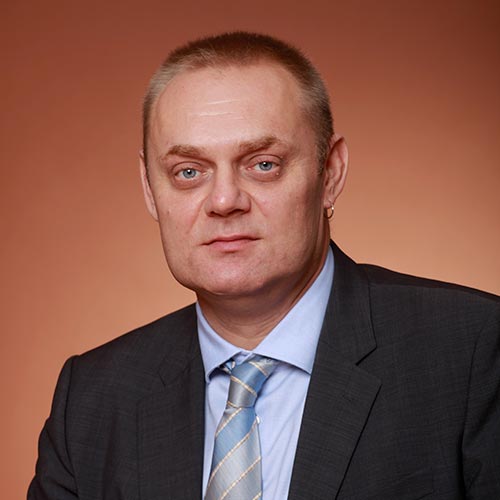
Tomislav Poršinsky is a Distinguished Professor at the University of Zagreb's Faculty of Forestry and Wood Technology, Department of Wood Technology. He has been affiliated with the institution since 1995, contributing to academic leadership, teaching, and research in forest engineering and sustainability. His roles include instructing courses like Timber Harvesting and advising on operational forestry strategies. His research focuses on enhancing wood harvesting systems, environmental impact mitigation, and optimizing forest accessibility. Key areas include mechanized thinning, soil conservation during operations, and sustainable machinery design. He has pioneered studies on forwarder efficiency, rut depth measurement, and UAV-based log volume estimation, integrating technology with ecological stewardship. Publications highlight innovations in forest infrastructure planning, machinery performance analysis, and international comparisons of harvesting practices. His work emphasizes practical solutions for ecological and economic challenges in forestry. Awards include the prestigious Distinguished Professor title (2017), recognizing his contributions to academic innovation and industry collaboration. Tomislav’s expertise spans over three decades, with a focus on bridging theoretical research and operational forestry challenges. His research and advisory roles have influenced policies and practices in Croatia and beyond, addressing global forestry sustainability goals.
Assoc Prof Kok Choon Tan is an Associate Professor in the Department of Analytics and Operations at the NUS Business School. He holds a Deputy Director role at the Centre for Maritime Studies (CMS), Singapore. His research focuses on container terminal operations optimization, maritime logistics, and simulation-based decision-making. He has been with NUS since 1984, starting as a Senior Tutor in Mathematics, and later earning a Post-Graduate Diploma in Teaching in Higher Education (PG DipTHE) to enhance his pedagogical skills. Research Interests: Transportation and logistics optimization, applied mathematics, operations research modeling, and maritime systems. He leads the Port Operations Modelling & Analysis track at CMS, focusing on container terminal efficiency through mathematical optimization and simulation. Teaching Philosophy: Emphasizes student-centered learning, active learning strategies (e.g., collaborative learning, case studies), and bridging theory to real-world applications. His teaching integrates problem-solving, critical thinking, and presentation skills development through group projects and industrial case studies. Recent Research Trends: His articles address AGV scheduling, container relocation under uncertainty, and multi-modal port operations. These contributions highlight innovations in automated systems, data-driven decision-making, and sustainability in port logistics. Labs/Teams: Active in the NUS Centre for Maritime Studies and collaborates with departments in Industrial Systems Engineering and Civil & Environmental Engineering. His work supports Singapore’s maritime and logistics industry through applied research and strategic planning.
Kelin Luo is an Assistant Professor of Teaching in the Department of Computer Science and Engineering at the University at Buffalo, part of the School of Engineering and Applied Sciences. His research focuses on theoretical computer science and operational research, particularly discrete optimization problems and online algorithms. He holds a PhD in Management Science and Engineering from Xi'an Jiaotong University (2019) and a BS in Financial Engineering from Northwest University (2014). His work addresses challenges in collaborative delivery systems, vehicle routing, scheduling, and real-time decision-making under uncertainty. Dr. Luo's research interests include developing efficient algorithms for logistics and transportation systems, such as drone delivery optimization, food delivery routing, and dynamic vehicle scheduling. His contributions span theoretical advancements and practical applications in areas like car-sharing systems, online bipartite matching, and hierarchical grouping algorithms for multi-vehicle dial-a-ride problems. Recent papers highlight innovations in minimizing flow time, handling stochastic requests, and leveraging historical data for improved decision-making. His articles frequently explore optimization under constraints, such as restricted movement areas for drones or variable booking times in car-sharing. Notable themes include approximation algorithms for combinatorial problems, online algorithms for dynamic environments, and the integration of historical data into scheduling systems. Despite his prolific output, no scientific awards are explicitly listed in his profile. While no specific grants or advising details are provided, his academic role emphasizes teaching alongside research. His work contributes to foundational and applied aspects of computer science and operations research, with implications for modern logistics and transportation networks.
Raf Jans is a Professor in the Department of Logistics and Operations Management at HEC Montréal. He holds the Chair in Supply Chain Operations Planning and serves as the Academic Supervisor for the Ph.D. in Logistics and Operations Management. His research focuses on Operations Management, Production Planning, and Applications of Operations Research, with expertise in Integer Programming and Combinatorial Optimization. Education: B.Sc. and M.Sc. in Business Engineering, Katholieke Universiteit Leuven (KU Leuven); Ph.D. in Applied Economics and Operations Research, KU Leuven. Research Interests: His work addresses supply chain optimization, stochastic lot-sizing, vehicle routing, inventory management, and decomposition methods. He collaborates with CIRRELT and GERAD research centers, contributing to large-scale operational problems in logistics and production systems. Publications (2020–2025): Focus on integrated production-transportation systems, stochastic optimization, and heuristic algorithms for complex supply chain challenges. Recent topics include line balancing, lot-sizing with storage allocation, and emission-constrained routing. Advising: Supervised 4 Ph.D., 5 M.Sc., and 24 project students on topics ranging from supply chain transformation to production scheduling and inventory segmentation. Collaborates with industry partners like Bombardier and Pratt & Whitney Canada. Labs/Teams: Active member of CIRRELT (Interuniversity Research Centre on Enterprise Networks) and GERAD (Group for Research in Decision Analysis).
LAU Hoong Chuin is a Full-time Faculty Professor of Computer Science at the School of Computing and Information Systems (SCIS), Singapore Management University (SMU). His research focuses on optimization techniques, artificial intelligence, and their applications in urban logistics, healthcare systems, maritime operations, and emergency response. He actively explores quantum computing methods for solving complex combinatorial optimization problems and develops machine learning frameworks for dynamic decision-making systems. Professor Lau’s work spans multiple domains: Quantum Optimization: Applying quantum algorithms to solve knapsack, vehicle routing, and scheduling problems Urban Logistics: Designing collaborative delivery networks and optimizing last-mile services Public Safety: Creating intelligent systems for police patrol scheduling and maritime traffic management Healthcare Operations: Developing nurse staffing models and emergency response frameworks His recent articles emphasize cross-disciplinary applications, combining quantum computing with traditional optimization methods to address real-world challenges such as supply chain disruptions, energy-efficient routing, and dynamic resource allocation. He has advised students on topics ranging from quantum algorithm design to maritime logistics optimization. His research integrates machine learning with large-scale optimization, evident in frameworks like OFFICERS for crime response scheduling and Grand-vision for law enforcement deployment. Current projects explore adaptive algorithms for stochastic systems and AI-driven policy-making in urban environments.
Tommy Cheung is a Senior Lecturer and Department Chair in the Department of Aviation, School of Engineering at Swinburne University of Technology, Australia. His research focuses on aviation network development, global airport connectivity, blockchain applications in air travel, and data-driven route planning. He holds a PhD in Computer Engineering from the University of New South Wales, Sydney, and has prior academic experience at Hang Seng University of Hong Kong and the Hong Kong University of Science and Technology. PhD in Computer Engineering, University of New South Wales, Sydney, Australia Former Assistant Professor, Hang Seng University of Hong Kong (2014–2018) Former academic, HKUST, Department of Electrical and Electronic Engineering 12+ years in advanced manufacturing and supply chain management in Hong Kong and Shenzhen Dr. Cheung's research interests span aviation network resilience, airport connectivity indices, smart technologies in air travel, and sustainable aviation. He investigates how global disruptions like pandemics and geopolitical conflicts affect air transport systems. His work integrates machine learning, Bayesian modeling, and spatial econometrics to analyze aviation networks and optimize operations. His recent publications reveal a strong trend in applying data analytics and AI to aviation policy, route planning, and service quality. Topics include flight delay forecasting, blockchain integration, self-connection optimization, and pilot remuneration. His work often involves large-scale datasets and interdisciplinary methods, contributing significantly to air transport policy and network modeling. Dr. Cheung has secured industry research funding, including a major grant from Textron Systems Australia for the Regional AAM Surrogate Trial. He actively supervises PhD and Master’s students on topics such as hydrogen in aviation, pilot fatigue monitoring, and advanced air mobility. His leadership extends to curriculum and departmental strategy as Chair of Aviation. He is involved in several research teams and collaborations, particularly in intelligent transportation systems and aviation innovation. His lab and project work integrate UAVs, IoT, and AI for infrastructure-less environments, contributing to next-generation mobility solutions.
Marwan Krunz is a Regents Professor in the Department of Electrical and Computer Engineering and holds a joint appointment in the Department of Computer Science at the University of Arizona, where he also serves as Site Director and Deputy Center Director for the NSF WISPER Center. He was the founding Director of the NSF Broadband Wireless Access and Applications Center (BWAC), which concluded in December 2024, and previously served as UA site director for Connection One, another NSF I/UCRC. He is an affiliated member of the UA Cancer Center and a member of the Graduate Faculty. PhD in Electrical Engineering, Michigan State University (1995) MS in Electrical Engineering, Michigan State University (1992) BS in Electrical Engineering, University of Jordan (1990) Dr. Krunz's research spans wireless networking, communications, and security, with a strong emphasis on AI and machine learning for resource management, dynamic spectrum access, MIMO systems, and physical-layer security in 5G and NextG networks. His work addresses critical challenges in network slicing, ultra-low-latency mobile edge computing, full-duplex transmissions, and IoT energy management. He integrates techniques from stochastic optimization, game theory, and deep learning to design intelligent and resilient wireless systems. The 15 most recent publications reflect a deep engagement with NextG wireless systems, focusing on AI-driven optimization, physical-layer vulnerabilities, spectrum sharing, and low-latency computing. These works span disciplines including computer science, electrical engineering, and cybersecurity, with sub-fields ranging from reinforcement learning for network control to mmWave security and V2X edge computing. The consistent theme is intelligent, adaptive, and secure wireless infrastructures for future applications. IEEE Fellow (2010) NSF CAREER Award (1998) IEEE Communications Society Distinguished Lecturer (2013–2014) Arizona Engineering Faculty Fellow (2011–2014) IEEE TCCC Outstanding Service Award (2012) Chair of Excellence, University of Carlos III de Madrid (2011) Fulbright Senior Specialist (2011) Distinguished Alumni Award, MSU (2020) Dr. Krunz has advised numerous graduate students and mentored research teams in wireless systems. His research has been funded by the National Science Foundation, U.S. Department of Defense, NASA, Qatar Foundation, and industry partners, with total funding exceeding $20 million. He has served as Editor-in-Chief of IEEE Transactions on Mobile Computing (2017–2020) and on editorial boards of multiple top-tier journals. He has chaired major conferences including WiOpt 2023 and WiSec’12, and served as TPC chair for INFOCOM’04 and WCNC’16. He has also acted as chief scientist and technologist for two wireless-focused startups. Dr. Krunz leads research teams within the NSF WISPER Center and previously directed the BWAC center, which included multiple universities and industry affiliates. His labs focus on experimental and theoretical aspects of wireless systems, including testbeds for 5G/NextG, AI-driven spectrum management, and secure communications. His teams collaborate across disciplines, including computer science, engineering, and cancer research through the UA Cancer Center affiliation.
Kaiwen Zhang is a prolific researcher affiliated with institutions including École de Technologie Supérieure (Montréal, Canada), Technical University of Munich, and McGill University. His work spans blockchain technologies, distributed systems, federated learning, and privacy-preserving protocols, with a focus on applications in electric vehicle infrastructure, smart grids, and online gaming. Research Interests: He specializes in blockchain-based solutions for supply chain traceability, IoT security, and federated learning monetization. His studies often integrate decentralized architectures, cryptographic protocols, and event-driven systems, addressing challenges in scalability, privacy, and resource allocation. Publication Trends: Over 17 years (2008–2025), Zhang’s 39 publications (323 citations) emphasize blockchain’s intersection with cybersecurity, transportation, and distributed computing. Key subtopics include smart contracts, privacy-preserving EV charging, and federated learning frameworks. Collaborations: He frequently collaborates with colleagues like Hans-Arno Jacobsen, Mohammad Sadoghi, and Syed Muhammad Danish, contributing to conferences such as Middleware, DEBS, and ACM/SIGAPP Symposium on Applied Computing.
Saber Elsayed is an Associate Professor at the School of Engineering and Information Technology (SEIT), University of New South Wales (UNSW) Canberra, Australia. He earned his PhD in Computer Science from UNSW Canberra in 2012 and has established himself as a leading researcher in computational intelligence and swarm guidance with significant contributions to defense, logistics, engineering, and business applications. Dr. Elsayed's primary research focuses on computational intelligence and swarm guidance, with specialization in evolutionary algorithms, differential evolution, and optimization techniques for constrained and dynamic environments. His work addresses complex problems in project portfolio selection and scheduling, resource-constrained project management, electric vehicle-drone routing systems, and swarm shepherding applications. His research demonstrates a strong emphasis on translating theoretical advances into practical solutions for real-world challenges, particularly in defense contexts. His recent publications reveal a clear trajectory toward addressing increasingly complex large-scale optimization problems, with growing integration of swarm intelligence methods in practical applications. There's a notable emphasis on military and defense applications, particularly in sensor placement, battlefield surveillance, and autonomous systems. His work increasingly bridges theoretical optimization with practical implementation in electric vehicle-drone logistics and swarm control systems operating in complex environments. Winner of the IEEE WCCI/CEC 2022 Competition Multiple competition wins at top conferences in computational intelligence and optimization fields Dr. Elsayed has secured substantial research funding from diverse sources including the Australian Research Council (ARC), Defence Science and Technology Group (DSTG), Office of Naval Research Global, and industry partners. His current portfolio includes the ARC DP grant 'Evolutionary Framework for Electric Vehicles and Drones Logistics Systems' (2025-2027, $547K), multiple DSTG projects on sensor placement and portfolio optimization, and collaborative defense-related research totaling over $2 million in active funding. He actively collaborates with researchers across Australia and internationally, particularly in the areas of swarm intelligence and defense applications.
Ambros Gleixner is a Professor at HTW Berlin since 2020 and an affiliated researcher at the Zuse Institute Berlin (ZIB) since 2008. His research focuses on computational aspects of mixed-integer linear and nonlinear programming, with emphasis on exact rational arithmetic and algorithm verification. PhD in Mathematics (2015), Technische Universität Berlin Diplom (MSc) in Mathematics (2008), Technische Universität Berlin Vordiplom (BSc) in Mathematics (2004), Universität Bayreuth His work spans mathematical optimization, operations research, and computational mathematics. At ZIB, he leads projects like developing the MINLP solver SCIP , the LP solver SoPlex , and verifying integer programming results through VIPR . Recent publications highlight advancements in exact rational MIP, GPU-parallel algorithms, and energy system optimization. Scientific Awards : MERIT Visiting Scholar at University of Melbourne (2013) Teaching : Offers bachelor's theses in optimization and computational mathematics. Requires students to have attended relevant seminars and possess programming skills. Office hours by email appointment through Ambros.Gleixner@HTW-Berlin.de . Labs & Teams : Principal investigator at ZIB's Mathematical Algorithmic Intelligence division, Research Campus MODAL , and Linear, Integer, and Constraint Programming project.
Stefano Primatesta is a Fixed-term tenure-track Assistant Professor at the Department of Mechanical and Aerospace Engineering (DIMEAS) at Politecnico di Torino. He is also a member of the Interdepartmental Center PIC4SeR - PoliTO Interdepartmental Center for Service Robotics. His academic work focuses on flight mechanics and control systems within the broader field of Industrial and Information Engineering. His research interests span multiple domains related to autonomous systems: Autonomous Robotics Unmanned Aircraft Systems (UAS) Flight Mechanics Control Engineering Robotics Simulation Engineering and Modelling Professor Primatesta's recent publications demonstrate a strong focus on UAV control systems, path planning in complex environments, and practical applications of drone technology in agriculture and urban logistics. His work combines theoretical control approaches with practical implementation, often addressing real-world challenges such as payload uncertainty, urban navigation constraints, and mission safety. His notable scientific contributions include: Development of robust control systems for quadrotor UAVs Research on noise-aware path planning using reinforcement learning Work on multi-UAV formation flight and target estimation Innovations in precision agriculture applications for drones Advancements in safe mission planning for urban environments Professor Primatesta actively supervises multiple PhD students working on cutting-edge UAV research topics, including robust control under uncertain conditions and urban air mobility applications. He serves as Scientific Director for the 4IPLAY research project focused on improving intelligent infrastructure inspection through advanced UAV autonomy. His teaching portfolio includes advanced courses in flight dynamics, modeling and simulation, and helicopter flight mechanics at both undergraduate and graduate levels. He contributes to multiple degree programs as an invited member of academic colleges.
Professor Jonathan Thompson serves as Head of School in the School of Mathematics at Cardiff University. He holds multiple administrative roles including Year Three Director of Studies, Chair of School Board, and has significant teaching responsibilities for both undergraduate and postgraduate students. His academic career spans over two decades with previous positions at Edinburgh University (Lecturer in Statistics and Operational Research, 1996-97) and Swansea University (Research Assistant, 1994-96). Dr. Thompson's research focuses on operational research with particular expertise in graph theoretic modelling, meta-heuristics (especially ant systems, genetic algorithms and simulated annealing), and various scheduling problems including examination scheduling, sports fixture scheduling, and manpower planning. His work bridges theoretical computer science with practical applications in healthcare, transportation, and logistics. He has established strong industry connections, having completed projects with WH Smiths, John Menzies, and the International Rugby Board. His research demonstrates consistent evolution from foundational work in graph coloring and ant colony optimization toward increasingly complex real-world applications in dynamic environments. Operational Research group member External funding from Office of National Statistics (2005-2006) Editorial Board member of International Journal of Operational Research Programme Committee member for major conferences (GECCO, PPSN, PATAT) Professor Thompson has successfully supervised numerous PhD students since 2000, with completed theses covering examination timetabling, nurse scheduling, vehicle routing, and other operational research problems. His supervision portfolio reflects the breadth of his research interests, from theoretical graph theory to practical healthcare and transportation applications. He has secured external funding for research projects and maintains active collaborations with both academic and industry partners.
Dr. Adeel Rafiq is a Lecturer at the School of Engineering, Computing and Mathematical Sciences, University of Wolverhampton. With a PhD in Computer Engineering from Jeju National University (South Korea) and over a decade of combined academic and industrial experience, he specializes in AI-driven network management, 5G/6G networking, and software-defined infrastructure. Education : PhD (2018-2021), MSc (2012-2014), BSc (2007-2011) Professional Affiliations : Member of Institution of Engineering and Technology (MIET), HEC Pakistan-approved PhD Supervisor, Registered Engineer (Pakistan Engineering Council) His research focuses on cutting-edge advancements in network systems, including Intent-Based Networking , Network Function Virtualization , and Machine Learning for Network Optimization . His work bridges theoretical innovation with practical implementation in 5G/6G, IoT, and cloud environments. Dr. Rafiq's publication record spans high-impact journals like IEEE TNSM and Cluster Computing, as well as key conferences including IEEE BigComp and APNOMS. His contributions include patents in intent-based resource management and network optimization. Scientific Awards : 4 patents (2 granted, 2 under review) focused on SDN/NFV innovations In industry, he has led AI-powered network monitoring systems through Knowledge Transfer Partnerships and contributed to telecom solutions at AdvOSS and Gazuntite Pvt. Ltd. He holds certifications in SAFe Product Management, Docker, Agile, and Machine Learning.
Sarah H.Q. Li is an Assistant Professor in the Daniel Guggenheim School of Aerospace Engineering and a member of the Institute for Robotics and Intelligent Machines (IRIM) at the Georgia Institute of Technology. Prior to this, she was a postdoctoral scholar at ETH Zurich’s Autonomous Control Lab and earned her Ph.D. in Aeronautics and Astronautics from the University of Washington (advised by Behçet Açıkmeşe and Pierre-Loïc Garoche) and a B.A.Sc. in Engineering Physics from the University of British Columbia. Ph.D., Aeronautics and Astronautics, University of Washington B.A.Sc., Engineering Physics, University of British Columbia Postdoctoral Scholar, Autonomous Control Lab, ETH Zurich Her research focuses on multi-agent models and algorithms for future air/space mobility systems, combining game theory, stochastic control, and optimization. Key applications include urban transportation, advanced air mobility, and space collision avoidance. She has contributed to congestion-aware path coordination, Markovian network equilibrium, and safety-critical operations under uncertainty. Recent scientific awards include the 2020 Zonta International Amelia Earhart Fellow and the 2022 University of Washington Condit Graduate Fellow. She has presented invited seminars at institutions like UT Austin, University of Michigan, and ETH Zurich. Her lab (IRIM) explores large-scale autonomy, with software tools such as a Python package for ride-hail driver competition models. She actively seeks graduate students interested in advanced air mobility, supply chains, and space traffic.
Professor Alexandra Brintrup is a faculty member at the Department of Engineering, University of Cambridge, specializing in Digital Manufacturing. She contributes to advancing supply chain management through cutting-edge artificial intelligence and data-driven methodologies. Her research spans multiple domains, including federated learning, graph neural networks, causal inference, and autonomous systems. She focuses on enhancing supply chain visibility, optimizing logistics through reinforcement learning, and developing trustworthy AI frameworks for industrial applications. The analysis of her recent publications (2022-2026) reveals expertise in privacy-preserved machine learning, synthetic data generation, neurosymbolic reasoning, and digital twin implementations. Her work addresses critical challenges in supply chain risk prediction, collaborative vehicle routing, and network resilience.