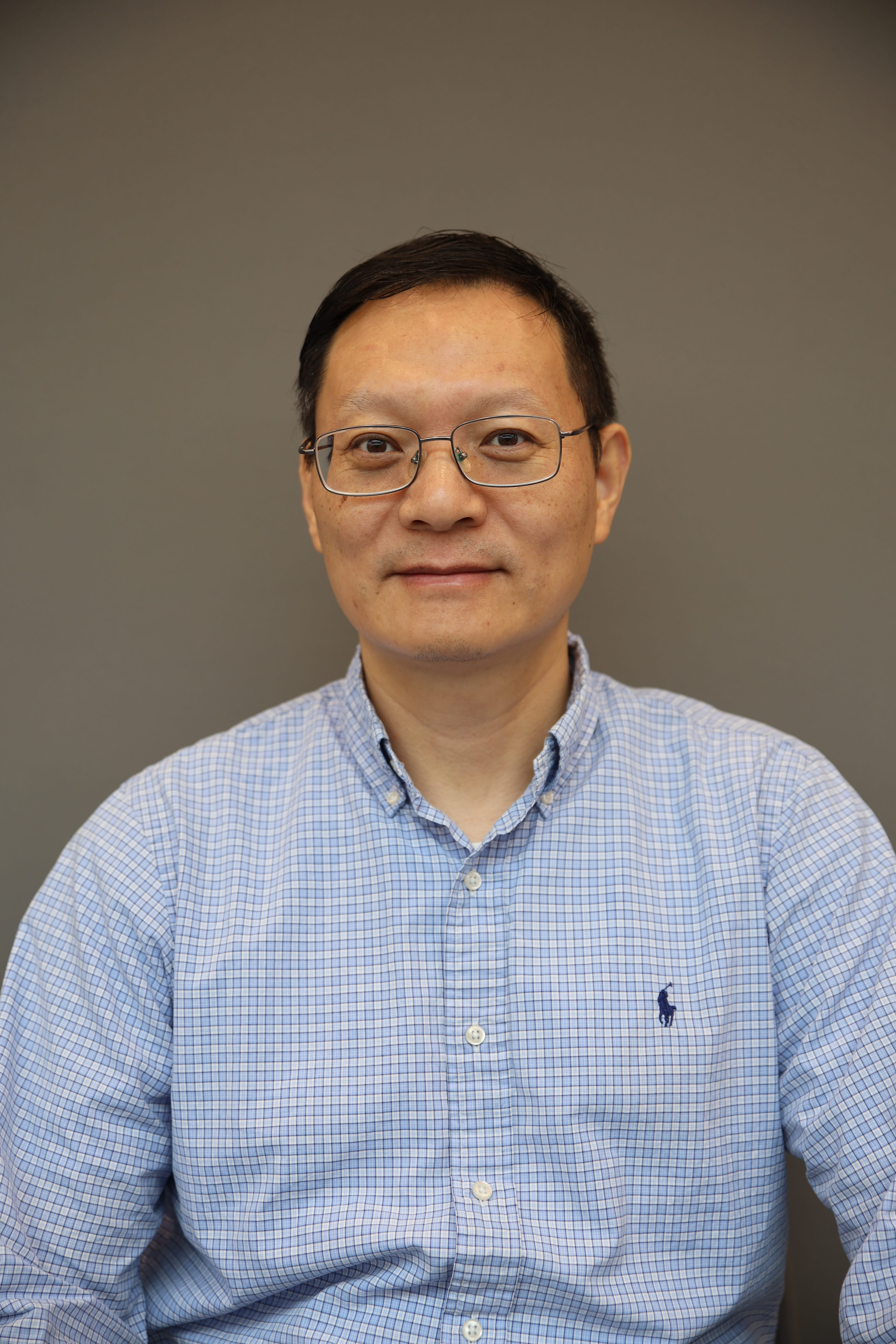
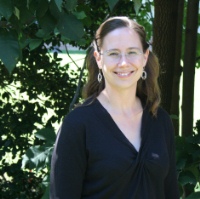
Hongbo Su is an Associate Professor at the College of Engineering and Computer Science , Florida Atlantic University , specializing in Civil, Environmental and Geomatics Engineering . With a Ph.D. from Princeton University, he leads the Laboratory for Remote Sensing and Hydrometeorology , focusing on land surface-atmospheric interactions and water-energy cycle dynamics. Research Interests : Land Surface-Atmospheric Interactions Hydrology and Climate Science Quantitative Remote Sensing Geographic Information Systems (GIS) Scientific Focus : His work spans flood risk modeling, urban heat island analysis, evapotranspiration estimation, and coastal resilience. Recent studies integrate machine learning with remote sensing for aquaculture mapping, vegetation dynamics, and seawall detection. Publications emphasize spatiotemporal modeling, data fusion techniques, and climate adaptation strategies.
Remi Chassagne is a Research Fellow at Grenoble Alpes University, affiliated with the Laboratory of Geophysical and Industrial Flows (LEGI), a joint research unit of CNRS, Grenoble INP, and Grenoble Alpes University, where he contributes to the MEIGE team. His research focuses on: Sediment Transport mechanics using mechanistic and granular approaches Vertical grain size segregation and diffusion remixing in sediment beds Eulerian-Eulerian two-phase flow modeling (SedFoam) Bridging particle-scale phenomena to continuum models Interactions between sediment particles of different sizes Chassagne's work integrates discrete element modeling (DEM) for particle-scale dynamics with continuum modeling to address sediment transport in geophysical contexts. His research emphasizes vertical grain size segregation, infiltration dynamics of small grains in coarse beds, and the development of numerical frameworks like SedFoam for multiphase flow simulation. This mechanistic approach connects micro-scale particle interactions to macro-scale sediment transport predictions. Analysis of his publication record (2016-2024) reveals consistent focus on sediment transport mechanics, with dominant themes in granular flow behavior, size segregation processes, and computational modeling advancements. Key contributions include frictional-collisional bedload models, sediment-vegetation interactions, and bi-disperse mixture mobility. His work demonstrates strong integration of computational methods with experimental validation through LEGI's hydrodynamic facilities. As part of LEGI's MEIGE team, Chassagne utilizes the laboratory's advanced infrastructure including hydrodynamic tunnels, wave channels, and rotating platforms to investigate geophysical flows relevant to river, coastal, and industrial applications.
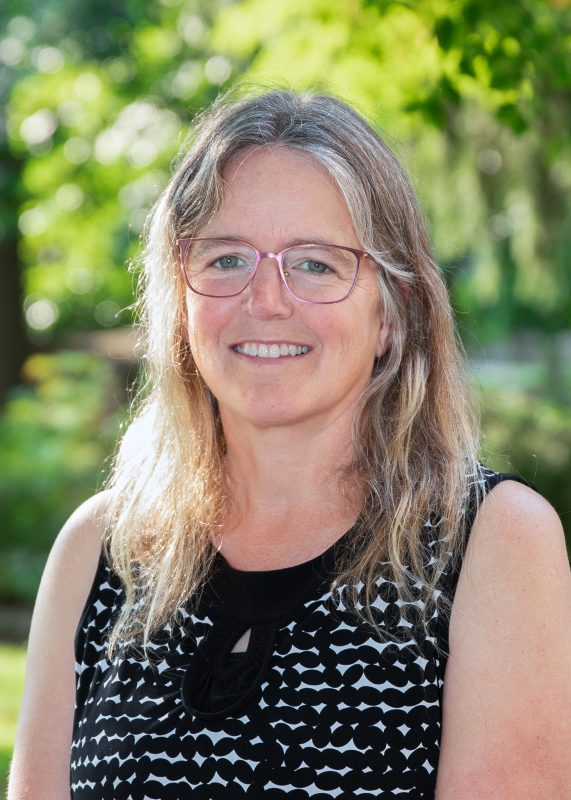
Valerie Thomas, Ph.D., is a Professor in the Department of Forest Resources and Environmental Conservation at Virginia Tech. She holds a B.S. from the University of Guelph (1996), M.S. and Ph.D. from Queen’s University, Canada (2001, 2006). Her research focuses on remote sensing technologies (lidar, hyperspectral sensors) to study forest structure, function, and global monitoring, emphasizing big data integration and environmental challenges. She teaches courses including FREC 1004 (Digital Planet), FREC 2124 (Forests, Society & Climate), and FREC 5154 (Hyperspectral Remote Sensing). She leads the Environmental Informatics undergraduate program and advises the Interdisciplinary Remote Sensing PhD Program. Her work includes advancing computational methods for large-scale remote sensing datasets and addressing ecosystem responses to climate change. She collaborates with the Center for Environmental Applications in Remote Sensing (CEARS) and contributes to projects on nitrogen retention, forest productivity, and lidar-based canopy analysis. Research Interests: Remote sensing of forest ecosystems Lidar and hyperspectral data integration Big data analytics for environmental science Forest carbon dynamics Landsat time-series analysis Teaching & Academic Leadership: Developed the Environmental Informatics major Advises interdisciplinary remote sensing programs Innovates geospatial education at Virginia Tech Labs & Teams: Active in the Center for Environmental Applications in Remote Sensing (CEARS), contributing to projects on forest monitoring and geospatial technologies.
Prof. Wu, Wei is a Professor and Director at Institute of Geotechnical Engineering , Department of Structural Engineering and Natural Hazards, BOKU University, Vienna, Austria. With over two decades of academic and industry experience, his work bridges geotechnical research and engineering practice. Education: Dr.-Ing. in Geotechnical Engineering (Karlsruhe University, Germany, 1986–1993), MSc in Geotechnical Engineering (Xian University of Technology, China, 1982–1985), Bachelor in Civil Engineering (Wuhan University, China, 1978–1982). Research Interests span geomechanics, granular materials, and computational geotechnical engineering. His expertise includes: Constitutive modeling of soils and granular media Numerical simulation of landslides and debris flows Soil bioengineering and root reinforcement Geo-energy systems and energy storage Advanced computational methods (SPH, DEM, FE) Selected Google Scholar Articles (2025–2024) highlight innovations in hypoplastic models for climate-affected soils, machine learning applications for slope stability, and multiscale simulations of geohazards. His work emphasizes both theoretical advancements (e.g., phase-field fracture models) and practical solutions (e.g., centrifuge testing for tunnel design). Scientific Awards include: Advanced Grant, European Research Council (2024) Gold Medal, Technical University of Brno (2024) Teaching & Supervision covers soil mechanics, tunneling, and advanced geotechnical courses. He has supervised over 30 PhD and 100 MSc theses, mentoring future engineers in numerical methods and geohazard mitigation. Leadership Roles : Editor-in-Chief of Acta Geotechnica , founder of Springer Series in Geomechanics, and Chairman of the Otto Pregl Foundation (€3M endowment). He organized key conferences like the China-Europe Conference on Geotechnical Engineering (2018) and International Symposium on Particle-Based Continuum Methods (2019).
Rafael O. Tinoco is an Associate Professor in the Department of Civil and Environmental Engineering at the University of Illinois at Urbana-Champaign. He holds a B.S. from Universidad Nacional Autónoma de México (2005), and M.S. and Ph.D. in Civil and Environmental Engineering from Cornell University (2008, 2011). His research focuses on ecohydraulics, environmental fluid mechanics, and sediment transport dynamics, with applications in rivers, estuaries, and coastal systems. He leads the Ecohydraulics and Ecomorphodynamics Laboratory, studying biophysical interactions in aquatic environments. Dr. Tinoco's work integrates experimental, numerical, and field approaches to address challenges like invasive species control, coastal protection, and climate change impacts. He has authored over 70 peer-reviewed articles and edited conference volumes. Notable awards include the NSF CAREER Award (2018) and the 2023 Campus Distinguished Promotion Award. His teaching excellence has been recognized through multiple student rankings as 'Excellent.' His research group investigates turbulence-driven processes affecting sediment transport, gas exchange across water-sediment interfaces, and the role of vegetation in modifying flow dynamics. Recent studies include porous obstacle hydrodynamics, bubble curtain technology for invasive species management, and the morphological evolution of wave-generated ripples.
Linda Harris is a Professor and Chair in the Department of Food Science and Technology at the University of California, Davis, and serves as a Cooperative Extension Specialist in Microbial Food Safety. Her research focuses on microbial safety of fresh produce and nutmeats, including pathogen behavior, sanitation methods, and process validation in low-moisture foods. She has pioneered standard inoculation and recovery methods for pathogens on produce and nuts. Key research areas include survival of Salmonella , E. coli , and Listeria on fruits, vegetables, and nut surfaces, as well as the efficacy of sanitizers and thermal treatments. Her work addresses contamination risks during postharvest handling, irrigation practices, and storage conditions. She also evaluates consumer food preparation practices, such as soaking nuts, to mitigate foodborne illness risks. Notable contributions include modeling pathogen transfer during food handling, assessing risks in low-moisture foods like almonds and pistachios, and developing guidelines for safe food processing. She received the 2022 Black Pearl Award for Corporate Excellence in Food Safety and Quality. Her research spans multiple commodities, including citrus fruits, onions, walnuts, and cashews, with a focus on practical applications for industry and regulatory agencies. Collaborations with the almond and pistachio industries have informed risk management strategies and validation protocols for pathogen reduction processes.
Prof. Dim Coumou is a Full Professor at the Faculty of Science, Vrije Universiteit Amsterdam (VU), and holds a second position at the Royal Netherlands Meteorological Institute (KNMI). He leads the Climate Data Science research group coordinating efforts between IVM and KNMI. His work focuses on extreme weather events linked to climate change, employing advanced statistical methods, climate models, and machine learning. He has authored over 60 peer-reviewed papers, contributed to IPCC reports, and is a Web of Science Highly Cited Scientist. Education: PhD in Natural Sciences (ETH Zurich, 2003-2008) MSc in Geophysics (University of Utrecht, 1995-2001) Research Interests: Coumou’s research emphasizes how global warming intensifies extreme weather events like heatwaves, heavy rainfall, and droughts. He investigates atmospheric dynamics, circulation patterns, and their societal impacts. His work bridges climate science with stakeholders like the World Bank to prioritize high-risk extremes. Grants & Projects: Coordinator of XAIDA (Horizon-2020, €700k) Co-PI in TiPES (Horizon-2020, €300k) and RECEIPT (Horizon-2020, €300k) NWO VIDI Award (€800k) for Persistent Summer Extremes research Teaching: Leads BSc Honours 'Climate Change' and MSc 'Climate Hydrological Processes' courses. Outreach & Awards: Recipient of the Web of Science Highly Cited Scientist distinction. Active in science communication through projects like 'Aufgeheizt' and 'Extreme Dialogues', fostering dialogue between scientists and the public.
Tan (Tanya) Lippmann is a Researcher at the Faculty of Science, Earth and Climate at Vrije Universiteit Amsterdam . Her work focuses on climate science, particularly methane emissions, peatland dynamics, and the impact of extreme weather events on wetland ecosystems. PhD in Wetland Methane Cycling from Vrije Universiteit Amsterdam. Research Interests include: Greenhouse gas fluxes in wetlands Compound extreme events (heatwaves, droughts) and their climate impacts Peatland vegetation modeling and carbon cycling Global climate extremes indices and data analysis Recent Publications highlight trends in: Methane emission responses to simultaneous hot/dry extremes Biogeochemical modeling of peatland ecosystems Observed changes in sector-relevant climate extremes Increased consecutive extreme precipitation in warming climates Collaborations span institutions like World Meteorological Organization and international climate research networks. She contributes to datasets hosted on Zenodo and has peer-reviewed outputs in journals such as Global Biogeochemical Cycles and Geoscientific Model Development .
Sajjad Ahmad is a Professor in the Department of Civil and Environmental Engineering and Construction at the University of Nevada, Las Vegas. His expertise spans water resources planning, surface water hydrology, climate change impacts, flood forecasting, and remote sensing applications for water management. He actively contributes to interdisciplinary research addressing sustainable water and energy use, urban microclimate effects, and environmental policy. His research focuses on integrating machine learning, remote sensing, and GIS technologies to tackle challenges in water quality monitoring, flood susceptibility modeling, and climate resilience. Notable projects include developing a climate resilience toolkit for Pakistan and analyzing the impacts of urbanization on water demand and runoff dynamics. Dr. Ahmad’s work emphasizes practical applications in arid regions and transboundary water management. His publications reflect a strong emphasis on data-driven solutions for environmental challenges, including studies on Lake Mead’s water quality, wildfire modeling in Northern California, and the effects of land cover changes on hydrological systems. Collaborations with international researchers highlight his commitment to global environmental issues.
Monica L. Smith is a Professor of Anthropology and holds the Navin and Pratima Doshi Chair in Indian Studies at the University of California, Los Angeles (UCLA). She is affiliated with the Department of Anthropology and the Institute of the Environment and Sustainability. Her research integrates archaeology with environmental studies, focusing on long-term human-environment interactions, urban development, and material culture. She currently serves as an Academic Trustee of the Archaeological Institute of America and a member of the National Geographic Society’s Committee for Research and Exploration. Her work emphasizes urban infrastructure, sustainability concepts in early cities, and the role of non-human agents in shaping ancient societies. Key research regions include the Indian subcontinent, particularly the Early Historic city of Sisupalgarh, as well as Roman sites across Europe and Asia. She collaborates with UCLA’s Center for India and South Asia and the Program on Central Asia, applying interdisciplinary methods like GIS, predictive modeling, and citizen science in her studies. Smith’s recent articles explore agency dynamics involving pathogens, animals, natural forces, and infrastructure in urban contexts. She critiques traditional notions of urbanization by highlighting incremental environmental changes and the interplay between human and non-human actors. No scientific awards are explicitly listed in the provided texts, though her academic chair reflects recognition of her expertise. Her advising and grants narrative centers on fieldwork and institutional collaborations rather than listed students or grants. She has conducted excavations in India, Bangladesh, and the UK, and leverages tools like Google Earth for archaeological analysis. Her research also addresses modern parallels, such as pandemic-era cultural politics and statecraft in prehistoric societies.
Dr William Woodgate is a Lecturer in the School of the Environment at The University of Queensland and holds dual appointments as an Amplify Research Fellow and Principal Investigator at the CSIRO/TERN-OzFlux Tumbarumba tall forest research site. His research focuses on scaling remote sensing technologies to monitor vegetation productivity and health, particularly using sun-induced chlorophyll fluorescence (SIF) and integrating LiDAR, optical, and thermal imagery. He has been an ARC DECRA Fellow and leads the Tumbarumba flux tower site, one of Australia’s longest-running and globally significant environmental monitoring sites. His research interests span remote sensing applications in climate science, ecosystem monitoring, and environmental satellite product validation. Recent work emphasizes bridging leaf-to-canopy-scale observations and advancing models for evapotranspiration, carbon fluxes, and vegetation structure analysis. Key achievements include contributions to FLUXCOM-X scaling frameworks, development of thermal and hyperspectral proximal sensing systems (THEMS), and validation of satellite products using ground-based measurements. Awards include the ARC DECRA Fellowship (2019) and UQ Amplify Research Fellowship. Collaborations span institutions globally, including CSIRO, TERN, and international research networks like OzFlux. His work addresses critical challenges in climate resilience, water resource management, and ecosystem health through innovative sensing technologies.
Joshua Leffler is an **Associate Professor** and **Assistant Department Head** in the Department of Natural Resource Management at South Dakota State University. He holds a B.S. in Biology from the University of Utah (1994) and a Ph.D. in Biology from the University of New Mexico (1999). His research focuses on plant physiological ecology and ecosystem ecology, particularly in arid lands, grasslands, and Arctic systems. He investigates climate change impacts on plant communities, greenhouse gas emissions, and grazing management effects. Leffler serves on editorial boards for *Plant Ecology* and *Bioscience*, and is active in organizations like the Ecological Society of America and Society for Range Management. Research Interests: His work addresses climate change drivers (e.g., warming, precipitation shifts), grazing technology impacts on carbon/N cycling, and Arctic coastal wetland dynamics. He explores how phenological mismatches and herbivore timing affect Arctic plant traits and ecosystem processes. Professional Contributions: Leffler has authored/co-authored over 50 peer-reviewed articles, focusing on plant-soil interactions, greenhouse gas fluxes, and restoration ecology. His studies often integrate field experiments, remote sensing, and climate modeling to address ecological challenges in rangelands and Arctic ecosystems. Affiliations: Based in the McFadden Biostress Laboratory (Room 141C), he advises students on courses like *Ecosystem Ecology* (NRM464/564) and collaborates on grants exploring Arctic vegetation responses to climate change. His work emphasizes practical solutions for sustainable land management and ecological resilience.
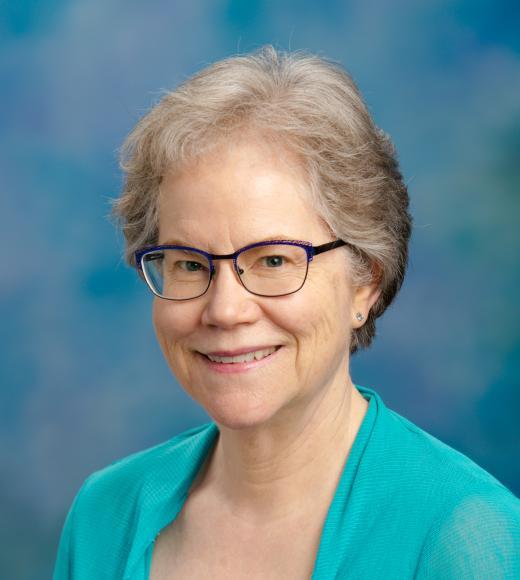
Nancy Glenn is Professor in the Department of Geosciences at Boise State University and directs the Boise Center Aerospace Laboratory (BCAL). Her research specializes in remote sensing applications for environmental monitoring, particularly in dryland ecosystems and geological engineering contexts. Her research advances remote sensing methodologies including lidar, hyperspectral imaging, and UAV-based platforms for characterizing vegetation dynamics, snow properties, and land surface changes. Current projects focus on: quantifying rangeland fractional cover in sagebrush ecosystems, improving snow property retrievals through topographic modeling, and developing machine learning approaches for spoil pile characterization in mining environments. Professor Glenn maintains active research programs across diverse environments including peatlands, dryland shrub-steppe ecosystems, mountainous terrain, and post-mining landscapes. Her work integrates field measurements with advanced remote sensing techniques to address environmental challenges.
Harmony Dalgleish is an Associate Professor at the College of William and Mary, serving as Director of the William & Mary-St Andrews University Joint Degree Programme. Her academic career includes roles such as Fulbright Research Fellow at the Czech Academy of Sciences (2019-2021) and Visiting Research Assistant Professor at William & Mary (2018-2019). She holds a B.A. in Biology from Grinnell College (2000) and a Ph.D. in Biology from Kansas State University (2007). Her research focuses on plant demography, bud bank ecology, and plant-animal interactions, with a current emphasis on American chestnut reintroduction and its ecological impacts. Key projects include investigating chestnut’s role in forest carbon dynamics and monarch butterfly-milkweed population dynamics over millennia. Dr. Dalgleish’s work integrates field studies, mathematical modeling, and citizen science. Her 15 most recent articles (2020-2025) explore clonal plant reproduction, herbivory effects, climate-driven ecological changes, and seed dispersal dynamics. Notable contributions include demonstrating monarch-milkweed coexistence over 25,000 years and clarifying chestnut reintroduction’s carbon sequestration potential. Scientific recognition includes the Fulbright Fellowship and HHMI Science Education Fellowship. She actively engages in restoration ecology and biodiversity conservation, bridging theoretical models with applied ecological solutions.
Rafael Bohn Reckziegel is a Research Fellow at the Faculty of Science and Technology , focusing on remote sensing of riparian vegetation and environmental research. His work integrates terrestrial LiDAR and UAV-LS technologies to analyze woody vegetation structure and ecosystem services. Education : PhD in Structural and Functional Analysis of Trees (University of Freiburg, 2023), Master in European Forestry (University of Eastern Finland, 2018), Bachelor in Forest Engineering (Universidade Federal de Santa Maria, 2015). Research Interests include: Non-destructive biomass assessment Carbon stock quantification Agroforestry windbreak systems 3D vegetation phenotyping Hydrological and pedological interactions UN Sustainable Development Goals (SDG 13, 15, 2) Publication Trends show a focus on agroforestry applications in Southern Africa and Brazil, LiDAR-based structural analysis of woody plants, and carbon/water dynamics in integrated systems. Notable collaborations include J. P. Sheppard , S. Hassler , and E. Rochelmeyer . Labs & Teams involve international agroforestry research networks and remote sensing technology development groups. His work aligns with climate resilience studies and sustainable land-use practices.