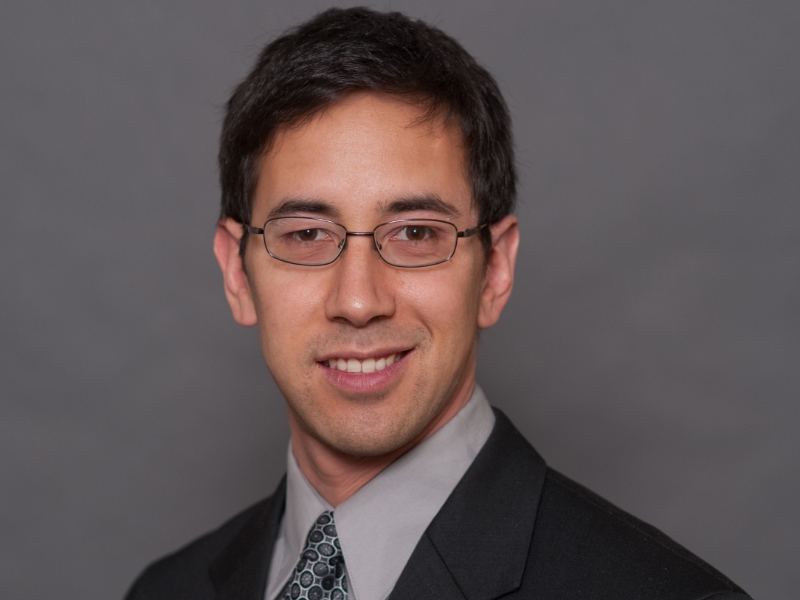
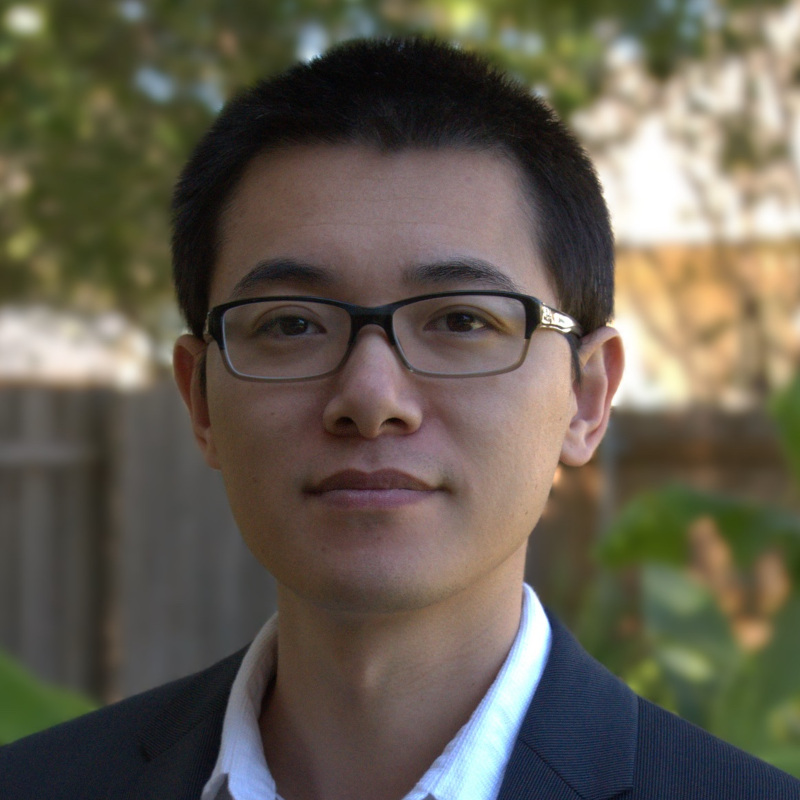
Dr. Ali Zockaie is an Associate Professor in the Department of Civil and Environmental Engineering at Michigan State University (MSU), part of the College of Engineering. His research focuses on transportation systems analysis, urban planning, and network modeling, with notable contributions to electric vehicle (EV) infrastructure optimization, winter maintenance safety, and dynamic traffic assignment. He has led projects funded by agencies like MDOT and received awards including the Withrow Teaching Excellence Award (2021) and AASHTO Recognition (2021). Education: Ph.D. in Civil and Environmental Engineering (Transportation Systems Analysis and Planning), Northwestern University (2015) M.S. in Civil Engineering (Transportation Engineering and Planning), Sharif University of Technology (2009) B.S. in Civil Engineering, Sharif University of Technology (2007) Research Interests: Network modeling and urban transportation infrastructure Electric vehicle charging infrastructure planning Winter maintenance vehicle safety and technology Dynamic traffic assignment and simulation tools Machine learning applications in traffic flow theory Articles Trends: Recent work emphasizes EV infrastructure optimization across urban and intercity networks, pandemic-driven travel behavior shifts, and governance strategies for sustainable transportation systems. Key themes include sustainability, policy impact, and technological integration. Awards: Recipient of 2021 Withrow Teaching Excellence Award 2021 AASHTO High Value Research Project Recognition (MDOT-funded green strobes study) NUTC Dissertation Year Fellowship (2014) Advising and Grants: As Principal Investigator (PI) for MDOT-funded projects, he explores winter maintenance safety and EV infrastructure. His work bridges academic research with practical applications in policy and infrastructure planning. Labs/Teams: Collaborates with interdisciplinary teams on projects involving transportation sustainability, simulation tools, and policy analysis.
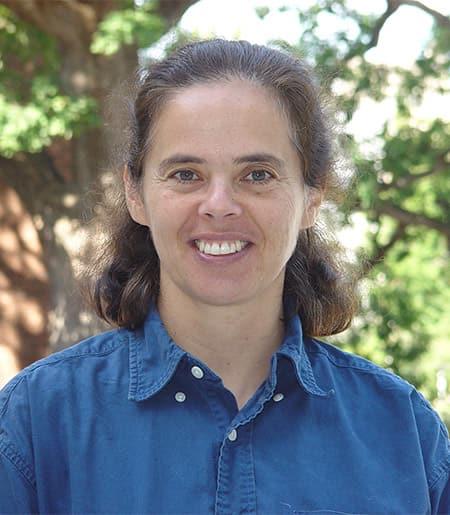
Stephen Boyles holds the Clyde E. Lee Endowed Professorship in Transportation Engineering at UT Austin. His research develops network models for transportation systems including traffic assignment, parking, electric vehicles, and evacuation planning. Authored the open-access textbook 'Transportation Network Analysis' covering static and dynamic traffic assignment. Research group develops computational tools including tap-b solver for large-scale networks. Teaches graduate courses on optimization, network analysis, and dynamic systems. Awards include endowed professorship and NSF funding. Current projects examine hurricane evacuation modeling, electric vehicle grid integration, and network partitioning methods.
Éva Tardos is the Jacob Gould Schurman Professor at Cornell University, affiliated with the Department of Mathematics and multiple colleges including the Cornell Ann S. Bowers College of Computing and Information Science, College of Arts and Sciences, and College of Engineering. Her research focuses on algorithm design, particularly in algorithmic game theory, networks, and combinatorial optimization. She explores mechanisms for selfish users, network efficiency, and distributed systems. Her work bridges theoretical computer science and economics, addressing challenges like congestion games, mechanism design, and social network influence. Key contributions include analyzing selfish routing's inefficiency, bounding equilibrium inefficiencies, and designing approximation algorithms for facility location and network design problems. Tardos collaborates extensively with top researchers in computer science and mathematics, contributing foundational insights into modern algorithmic theory. Research interests include algorithmic game theory , network optimization , mechanism design , and approximation algorithms . Recent publications emphasize social network dynamics, collusion effects in congestion games, and fair resource allocation strategies. Her work has practical applications in traffic routing, telecommunications, and distributed computing systems. While no specific awards are listed, her sustained contributions to theoretical computer science have established her as a leading figure in the field. Advising and mentoring are integral to her role, though specific advisee names are not documented here. She is actively involved in Cornell’s academic and research initiatives across multiple interdisciplinary domains.
Michael Ostrovsky is the Fred H. Merrill Professor of Economics at Stanford Graduate School of Business. He holds a PhD in Business Economics and AM in Economics from Harvard University, and a BAS in Mathematics and Economics from Stanford University. His research focuses on game theory, market design, industrial organization, and finance, with recent work on carpooling economics, internet advertising auctions, and financial market information aggregation. Research Interests: Game theory, market design, industrial organization, finance, auction theory, information economics, transportation networks, and matching markets. His publications primarily explore market mechanisms in digital platforms, transportation systems, and financial markets. Key themes include auction design efficiency, stability in trading networks, and strategic information disclosure. Recent work shows growing emphasis on technology-driven markets like autonomous vehicles and internet advertising. Awards and Honors: Spence Faculty Fellow (2021–22) Alfred P. Sloan Research Fellowship (2011–15) National Science Foundation Research Grant (2011–15) Professional Service: Co-Director, Working Group on Market Design, NBER Co-editor, American Economic Journal: Microeconomics Associate Editor, Econometrica Leads Stanford's Corporate Governance Research Center and advises on market design implementations globally.
Daniela Saban is an Associate Professor of Operations, Information, and Technology at Stanford Graduate School of Business (GSB). She holds the Botha-Chan Faculty Scholar title for 2024–25 and has been recognized with multiple awards, including the MSOM Young Scholar Prize and the 2024 Revenue Management and Pricing Practice Award. Her research focuses on market design, procurement mechanisms, and online marketplace operations, with industry collaborations in government procurement and volunteer-matching platforms. Saban teaches core MBA courses like Optimization and Simulation Modeling and advanced PhD courses such as Engineering Online Markets . She is an associate editor for Management Science , Operations Research , and other top journals. Education: PhD in Operations Management (Columbia University, 2015); M.Sc. and B.Sc. in Computer Science (University of Buenos Aires, 2009 and 2006). Research Interests: Procurement mechanisms, supply chain management, market design, matching markets, auctions, game theory, and combinatorial optimization. Her work bridges operations research, economics, and computer science, with applications in government procurement, dating apps, and volunteer platforms. Awards: Winner of the 2024 Revenue Management & Pricing Practice Award, 2022 INFORMS Revenue Management Prize, and finalist for Stanford GSB’s Distinguished Teaching Award (2020–2022). Recognized for contributions to algorithmic fairness and operational efficiency in marketplaces. Professional Service: Program co-chair of EC ’24; reviewer for journals including Mathematics of Operations Research and Games and Economic Behavior . Prior experience includes a visiting scholar role at UC Berkeley’s Simons Institute.
Daniela Rus is the Andrew and Erna Viterbi Professor of Electrical Engineering and Computer Science at MIT and Director of the Computer Science and Artificial Intelligence Laboratory (CSAIL). She leads research in robotics, AI/ML, and autonomous systems, emphasizing soft robotics, mobile computing, and data-driven solutions. Her work spans theoretical and applied domains, including self-reconfiguring robots, AI for healthcare, and transportation optimization. Education: Earned her PhD in Computer Science from Cornell University. Recognized as a 2002 MacArthur Fellow, ACM Fellow, IEEE Fellow, and member of the National Academy of Engineering and American Academy of Arts and Sciences. Research focuses on robotics (soft robots, modular systems), AI applications (neural networks, generative models), and societal impacts (autonomous vehicles, data privacy). Projects include the Robot Garden educational platform, M-block modular robots, and AI-driven traffic optimization systems. Her lab, CSAIL, fosters interdisciplinary innovation across computer science, engineering, and biology. Publications highlight breakthroughs in robot design, algorithmic efficiency, and human-robot interaction. Current efforts explore AI for environmental monitoring, surgical robotics, and ethical autonomous systems. CSAIL hosts 100+ research groups, including the Distributed Robotics Lab and Embodied Intelligence Community.
Sean Nicholson-Crotty serves as O'Neill Professor and Director of the Graduate Mentoring Center at Indiana University's Paul H. O'Neill School of Public and Environmental Affairs, with an adjunct appointment in Political Science (College of Arts and Sciences). His leadership spans public administration education and faculty development. His educational credentials include: Ph.D. in Political Science, Texas A&M University (2003) M.A., Colorado State University (1999) B.A., Western State College (1993) Nicholson-Crotty's research examines public management through federalism and intergovernmental relations lenses, with emphasis on policy diffusion among subnational governments. His work bridges governance theory and practical applications in education policy, fiscal federalism, and bureaucratic representation, frequently analyzing how state/local institutions implement federal mandates while navigating political constraints. Current projects explore equity in public service delivery and organizational performance under varying governance structures. His publication portfolio demonstrates consistent focus on subnational policy dynamics, with recurring themes in education reform (No Child Left Behind impacts), fiscal federalism (grant acceptance/refusal patterns), and representative bureaucracy. Methodologically, he combines large-N statistical analysis with case studies, often leveraging administrative data from school systems and state agencies to examine policy implementation. Award highlights: Provost's Outstanding Junior Faculty Research Award (University of Missouri, 2008) Distinguished Graduate Student Award (Texas A&M, 2004) Brian Jones Graduate Research Paper Award (Texas A&M, 2003) As Director of the Graduate Mentoring Center, he oversees faculty-student mentorship programs while maintaining active NSF-funded research. His pre-IU career included research appointments at Texas A&M's Public Policy Research Institute and National Latino Project, establishing his expertise in state-level policy analysis before transitioning to faculty roles.
Roles & Affiliations Associate Professor at HEC Montréal (Department of Decision Sciences) with adjunct ties in Computer Science. Holder of a Canada CIFAR AI Chair. Member of MILA, the Chair Data Science for Real-Time Decision Making, and the Centre de recherche en mathématiques. Education Ph.D. in Computer Science (University of Toronto), MMath (Computer Science, University of Waterloo). Research Interests Focuses on machine learning applications in decision-making, including reinforcement learning for traffic control, energy systems, and recommender systems. Specializes in topics like continual learning, graph-based methods, and operations research integration. Develops foundational models such as collaborative topic Poisson factorization and neural combinatorial optimization approaches. Publications Overview Recent work includes reinforcement learning for sustainable energy use (2025), traffic signal control innovations (2024-2022), and foundational contributions like CTPF (2014). His research bridges theory and application, emphasizing scalable solutions for complex systems. Awards & Recognition Canada CIFAR AI Chair in Artificial Intelligence Advising & Grants Supervised over 30 students across PhD and Master's programs, with notable projects in traffic optimization, electricity pricing, and toxic content analysis. Active in grant-funded research through collaborations with industry partners like Beneva and academic networks like MILA. Labs & Collaborations Core member of MILA and affiliated with HEC's decision science research groups. Leads projects in real-time decision-making and data science applications across domains.
Dr. Haoning Xi is a Lecturer in Business Analytics at the Newcastle Business School, University of Newcastle (UON), Australia. She previously served as a Research Fellow at the Institute of Transport and Logistics Studies (ITLS), The University of Sydney Business School. Dr. Xi received her Ph.D. in Transportation & Operations Research from the University of New South Wales (UNSW) Sydney, where she was also a co-cultured Ph.D. student at CSIRO Data 61. She holds a Master's degree from Tsinghua University and a Bachelor's from Central South University, China, and has research experience at the University of California, Berkeley and Hong Kong University of Science and Technology. Ph.D. in Transportation & Operations Research, University of New South Wales Master of Engineering, Tsinghua University, China Bachelor of Engineering, Central South University, China Research Assistant, University of California, Berkeley Visiting Researcher, Hong Kong University of Science and Technology Dr. Xi's research focuses on applying business analytics, machine learning, and operations research to mobility services and transportation systems. Her work centers on Mobility-as-a-Service (MaaS), travel behavior analysis, data-driven optimization, and sustainable transportation. She investigates how to leverage millions of smart card data from various transport modes to uncover user travel patterns and preferences, enabling intelligent decision-making for transport authorities. Her research also explores predictive analysis using AI and ML algorithms to forecast travel patterns, service disruptions, and resource allocation strategies. A significant portion of her work examines personalized mobility services and how to integrate transportation with non-mobility offerings to create comprehensive subscription models. Dr. Xi has published over 23 SCI/SSCI indexed papers, including 9 ABDC A* journal articles (8 as first/corresponding author) in top journals like European Journal of Operational Research and Transportation Research series. Her publications reveal a strong emphasis on mathematical modeling of transportation systems, with increasing focus on AI/ML applications in recent years. The articles demonstrate progression from traditional transportation modeling toward more sophisticated data-driven approaches integrating machine learning with operational research techniques, particularly in the context of Mobility-as-a-Service ecosystems and pandemic-related travel behavior changes. Rising Stars Women in Engineering, Asian Deans' Forum (2024) Best Research Silver Award, International Symposium on Sustainable Development of Urban Transport Systems (2024) Best Paper Award, International Workshop on Computational Transportation Science (2024) Global Talent Independent Scheme, Australian Government (2021) University Postgraduate Award, UNSW (2021) CSIRO Data 61 Top-up Ph.D. Scholarship (2020) Dr. Xi currently supervises 5 PhD students across various topics including digital transformation's impact on ESG, digital sustainability measurement, data analytics for hospitality management, social media sentiment analysis, and organizational capabilities in regulated environments. She has secured over $463,500 in research funding from multiple sources including National Natural Science Foundation of China ($80,000), iMOVE Australia Limited ($300,000), and various internal university grants. Her current projects focus on AI-driven bus network optimization, parking management models, and enhancing user mobility experience through business analytics. Dr. Xi serves as CHSF College Research Committee Member and NBS Equity Diversity and Inclusion (EDI) Committee Member at the University of Newcastle. She is Co-chair of the Multimodal Urban Transportation Systems Analysis Committee in the World Transport Congress (2024-2026) and serves on editorial boards for International Journal of Transportation Science & Technology and Transportation Safety and Environment. She also acts as a peer reviewer for top transportation journals including Transportation Science and Transportation Research series.
Dr. Jinli Cao is a full-time Associate Professor in the Department of Computer Science and Information Technology at La Trobe University. She holds a BSc from Hebei University, China, and a PhD from the University of Southern Queensland, Australia (1997). Her research focuses on evolutionary computing, data privacy, deep learning for vulnerability assessment, and decision support systems. She has published over 150 papers in top venues such as VLDB and IEEE Transactions series. Dr. Cao leads an ARC-funded project on software vulnerability risk discovery and has secured three ARC grants. She has supervised 11 PhD, 2 Master’s, and 57 Honours students, many of whom work in academia and industries like Oracle and Commonwealth Bank. Teaching contributions include developing courses in databases, data warehouses, and artificial intelligence. Research Interests: Privacy-preserving data publishing and optimization Evolutionary algorithms for dynamic data partitioning Deep learning applications in cybersecurity and healthcare Graph-based machine learning for access control and anomaly detection Decision support systems and top-k query processing Her recent articles explore cutting-edge topics like privacy-preserving spatial crowdsourcing tasks, graph neural networks for traffic prediction, and cybersecurity frameworks for vulnerability prioritization. Awards include competitive ARC grants totaling $450,000 (2023-2025). She actively serves as an Associate Editor for Health Information Science and Systems and has examined over 100 PhD theses across Australian universities. Teaching highlights: Developed 20+ courses including Database Management Systems, Data Warehousing, and Artificial Intelligence. Coordinates units like Decision Support Systems and Intermediate Programming in Java.
Michał Pióro is a Professor at the Institute of Telecommunications and Cybersecurity within the Faculty of Electronics and Information Technology at the Warsaw University of Technology. His research focuses on telecommunications, networking optimization, and resilient network design with a particular emphasis on SDN security, wireless sensor networks, and adverse weather resilience. He has published extensively in top journals and conferences including Networks and IEEE Transactions . Key research areas include: Optimization of network controller placements against targeted attacks Resilience strategies for SDN architectures MIMO-based industrial network scheduling Free-space optics (FSO) network reliability in adverse conditions Game-theoretic approaches to network security Recent work highlights joint optimization of primary/backup controllers for SDN resilience and novel scheduling techniques for industrial control traffic using Massive MIMO systems. His research frequently intersects with practical applications in critical infrastructure and 5G deployments. He has collaborated extensively with researchers from institutions like INRIA (France), Telecom ParisTech, and multiple industry partners. His work has been supported by grants focusing on resilient communication networks and cybersecurity innovations.
Halit Özen is a Professor in the Department of Civil Engineering at Istanbul Technical University, with a focus on Transportation Engineering and Intelligent Transportation Systems. He holds a Doctorate in Transportation from Yildiz Technical University and has served as a faculty member at both Yildiz Technical University (1995–2024) and Florida International University (FIU, 2008–2013) as a visiting scholar. His expertise spans transportation planning, traffic control systems, and infrastructure materials research. Education: PhD in Transportation Engineering, Yildiz Technical University (1993–1999) MSc in Transportation Engineering, Yildiz Technical University (1990–1993) BSc in Civil Engineering, Yildiz University (1986–1990) Post-Doctoral Research, Florida International University (2006–2010) Research Interests: Dr. Özen’s work focuses on optimizing transportation networks, intelligent transportation systems (ITS), pavement materials, and traffic simulation. He has pioneered studies on charging station infrastructure, asphalt mixture performance, and incident management systems. His research emphasizes sustainability, safety, and data-driven decision-making in urban mobility. Grants & Leadership: He has led numerous projects on transportation modeling, including roles as Director of Research and Application Center (2003–2006) and Member of the Faculty Board of Directors at Yildiz Technical University. His contributions include developing tools for dynamic traffic assignment and evaluating the socioeconomic impacts of smart transportation systems. Labs & Teams: His research group collaborates on infrastructure resilience, ITS integration, and sustainable materials. Key collaborations include work on roadside safety systems and pavement durability at Istanbul Technical University’s Civil Engineering facilities.
Tianxin Li, Ph.D., is an Assistant Research Professor at the Connecticut Transportation Safety Research Center (CTSRC) at the University of Connecticut since September 2023. His work focuses on software development, research, and proposal writing in transportation safety and emerging technologies. Dr. Li holds a Master’s and Ph.D. in Civil Engineering with a concentration in Transportation Engineering from the University of Texas at Austin. Education: Ph.D. in Civil Engineering (Transportation Engineering), University of Texas at Austin Master of Science in Civil Engineering (Transportation Engineering), University of Texas at Austin Research Interests: Dr. Li specializes in traffic safety analysis, traffic demand modeling, traffic signal control systems, and the integration of connected/autonomous vehicles with reinforcement learning. He also explores precision agriculture through terrain analytics and sensor fusion. His work bridges theoretical models with practical applications, such as simulating traffic incidents using SUMO extensions and optimizing urban traffic policies. Publications & Trends: His recent studies highlight data-driven methods for traffic volume calibration, incident management, and policy evaluation. Earlier work includes foundational research on autonomous vehicles’ safety implications and their societal benefits. His articles span traffic simulation tools, emergency response systems, and interdisciplinary applications in agriculture. Grants & Advising: While no student advisees are listed, his research at CTSRC actively contributes to grant-funded projects on transportation safety and smart infrastructure. Grants and collaborations are central to his work but not explicitly detailed here. Labs & Teams: Dr. Li is affiliated with the Connecticut Transportation Safety Research Center (CTSRC), a hub for interdisciplinary transportation research at UConn.
Mario Marinelli is an Associate Professor at the University of Sannio , affiliated with the Department of Transport under the School of Engineering . His research focuses on sustainable mobility, freight transport optimization, hydrogen vehicle applications, and emission reduction strategies. Academic Rank: Associate Professor University: University of Sannio School: School of Engineering Department: Department of Transport Research Interests: Marinelli's work spans transportation systems, with emphasis on low-emission vehicles, fuel cell electric freight transport, and algorithmic approaches to traffic assignment. He has contributed to hydrogen infrastructure modeling, waste management optimization, and demand-responsive urban mobility solutions. His studies frequently involve simulation models and policy impact assessments. Publication Trends: Recent articles address eco-ADAS systems, freight network design, and hydrogen traction. Subfields include emission reduction at signalized intersections, multi-objective transport optimization, and berth allocation using bio-inspired algorithms. Keywords span sustainability, freight logistics, and computational methods.
Jonathan Bard is a Professor of Operations Research & Industrial Engineering at the University of Texas at Austin, holding the Industrial Properties Corporation Endowed Faculty Fellowship in Engineering. He serves as Associate Director of the Center for the Management of Operations Logistics and Assistant Graduate Advisor for the Manufacturing Systems Engineering Program. His academic journey includes a D.Sc. in Operations Research from George Washington University, an M.S. in Aeronautics & Astronautics from Stanford University, and a B.S. in Aeronautical Engineering from Rensselaer Polytechnic Institute. Dr. Bard's research focuses on algorithm development for airline operations, vehicle routing, machine scheduling, and large-scale optimization. He is internationally recognized for expertise in bilevel programming and postal operations. His work integrates decomposition techniques for hierarchical planning and multicriteria decision-making in socio-economic systems. Bard advises government agencies and corporations, and contributes to editorial boards of journals like International Journal of Production Research and IEEE Transactions on Engineering Management . His recent articles address challenges in freight rail scheduling, kidney exchange systems, waste management optimization, and healthcare logistics. Awards include Fellowships from INFORMS and IIE, and Senior Membership in IEEE. Bard’s consulting spans industries, emphasizing real-world applications of operations research principles.