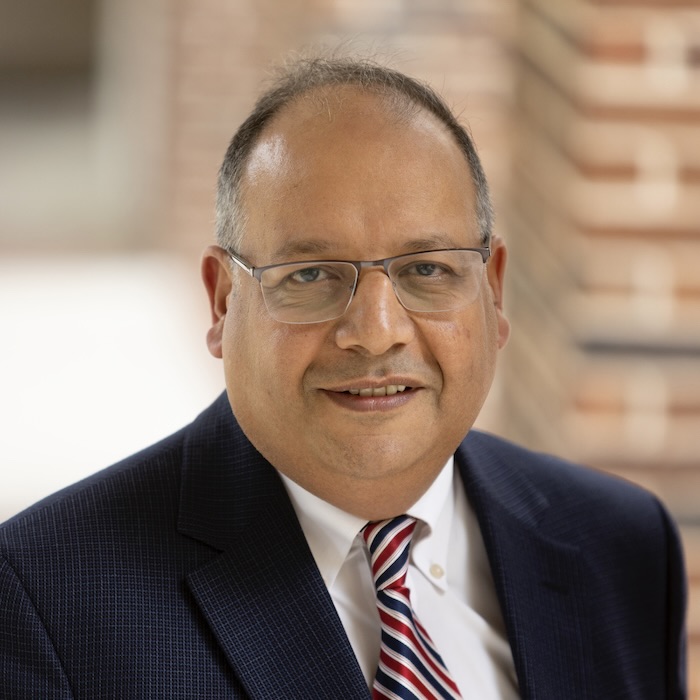
Prof. Walid Ben-Ameur is a Professor at Telecom SudParis, affiliated with the SAMOVAR laboratory. His research focuses on Operations Research, Network Optimization, and Algorithmic Game Theory. He has contributed significantly to areas such as combinatorial optimization, robust network design, and mathematical programming. His work includes advancements in polyhedral combinatorics, stochastic games, and distributed computing frameworks. Recent studies explore strategic investments in social networks, robust routing algorithms, and the theoretical foundations of optimization under uncertainty. While no scientific awards are explicitly mentioned, his prolific publication record highlights impactful contributions to the field. His research often bridges theoretical insights with practical applications in telecommunications and distributed systems. Key research interests include the design of efficient algorithms for network infrastructure, optimization under uncertainty, and game-theoretic models for distributed systems. His articles frequently address challenges in robust network design, opinion dynamics in social networks, and the computational aspects of combinatorial problems. Prof. Ben-Ameur collaborates extensively, with notable contributions to journals like Operations Research Letters, SIAM Journal on Optimization, and Networks. His work often intersects with telecommunications, as evidenced by studies on fiber cable network design and traffic engineering. He has also explored advanced topics such as multipolar robust optimization and the application of game theory to distributed computing environments.
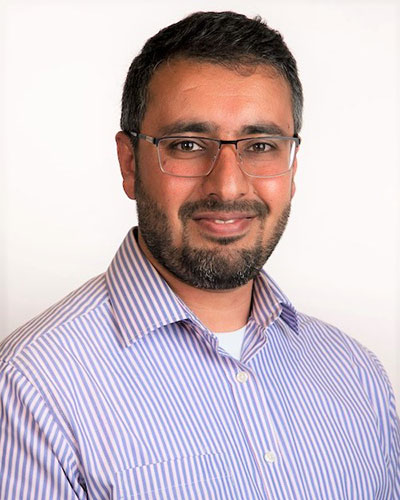
Yu Jiang is an Associate Professor in the Department of Transportation Systems Modelling at the Technical University of Denmark (DTU), within the Department of Technology, Management and Economics. He is actively engaged in research and supervision, with a strong focus on transportation science and systems optimization. He is accepting PhD students and maintains an active research profile with numerous ongoing projects and publications. Education: PhD, The University of Hong Kong (2010–2014) His research interests include static and dynamic transit/traffic assignment, network design, infrastructure resilience and vulnerability, multi-objective optimization, and metaheuristics. These areas are central to improving urban mobility, public transport efficiency, and sustainable transportation systems. His work contributes to UN Sustainable Development Goals related to sustainable cities and responsible consumption. Recent publications (2025) reflect a strong trend in applying advanced optimization and machine learning techniques to urban transportation challenges, including traffic signal control, last-mile delivery, intermodal travel behaviour, and demand prediction across shared mobility systems. The research spans both theoretical modelling and practical case studies. Scientific Awards: No scientific awards listed in the provided text. Advising and Grants: Yu Jiang is the main supervisor for several PhD projects, including 'Development of an integrated optimisation model for operating urban transit system (SmoothTrip)', 'Crowdsourced Delivery as an Activity for Sustainable Cities', and 'Network Optimisation for Connected, Cooperative and Automated Mobility'. He is also a co-investigator in the NEMESYS project funded by the European Commission, focusing on dynamic pricing and tradable credits for emissions management. His academic activities include organizing conferences, presenting at international events, serving as a journal editor, and conducting peer reviews. Labs and Research Teams: He is part of the research network at DTU's Department of Technology, Management and Economics, collaborating on projects related to urban transit optimization, shared mobility, and sustainable freight. His work involves close collaboration with researchers from institutions such as Oxford University, NUS, and HKU, as well as international partners in ongoing research initiatives.
Dr. Khaled Abdelghany is a Professor in the Department of Civil and Environmental Engineering at Southern Methodist University (SMU) and a Fellow at the Stephanie and Hunter Hunt Institute for Engineering and Humanity. He holds a Ph.D. from the University of Texas at Austin (2001) and has been at SMU since 2004, serving in various roles including Interim Chair (2022) and Chair (2011–2016). Affiliation: SMU Bobby B. Lyle School of Engineering Education: Ph.D. (UT Austin), M.S. & B.S. (Cairo University) His research spans transportation system modeling, smart city applications, emerging mobility systems, city logistics, and crowd dynamics. He has pioneered work in airline operations, real-time traffic management, and transportation electrification. Recent publications focus on airline capacity allocation, emergency response optimization, and machine-learning applications in transportation. His work has been cited for integrating deep learning and network competition analysis. Scientific Awards: IEEE Outstanding Service Award, SEAS Outstanding Teaching Award, and multiple honor societies Professional Roles: Associate Editor (IEEE Transactions on Transportation Electrification), Co-Chair (TRB Subcommittee on Ethics and Equity in AI)
Dritan Nace is a Professor in the School of Engineering at the University of Evry , specializing in network optimization , robust resource allocation , and communication systems . His work bridges computer science , operations research , and telecommunications , focusing on max-min fairness , elastic routing , and survivable network design . Recent research includes: Probabilistic controller placement for 5G networks (2025) Robust VNF reconfiguration models (2024) Weather-resilient FSO network optimization (2021) His scientific contributions span: Network Fairness : Foundational work on max-min fairness and flow thinning 5G Optimization : Innovation in virtual network function placement Air Traffic Systems : Chance-constrained flight level assignment models Nace's collaborative work with researchers like Michal Pióro and Jacques Carlier has shaped telecom infrastructure design and resource-constrained scheduling methodologies.
Mattia Laurini is a Fixed-term Researcher at the Department of Engineering and Architecture , University of Parma. His academic work focuses on control engineering, biomedical applications, and optimization algorithms, with teaching assignments in Computer Engineering for Master's Degree programs since 2023. Research Interests: Control systems for anesthesia Pharmacokinetics/Pharmacodynamics (PK/PD) modeling Traffic flow estimation Dynamic programming applications Vehicle motion optimization Medical device automation Research Trends: Recent publications (2025) demonstrate interdisciplinary work merging control theory with biomedical applications, particularly in automating anesthesia delivery. Key methodologies include Branch and Bound optimization, dynamic programming for traffic systems, and hybrid control paradigms combining MPC with PID strategies. Research spans both theoretical advances (e.g., acceleration-constrained shortest path algorithms) and clinical applications (e.g., propofol/remifentanil co-administration optimization). Teaching: Laboratory of Control Engineering (2023-2025) Multivariable Systems (2023-2025) Reference teacher for Computer Engineering program Contact: mattia.laurini@unipr.it | Office: Building 1, Parco Area delle Scienze, 181/A 43124 Parma | Phone: 906183
Omar Abbaas is an Assistant Professor in the Department of Mechanical Engineering at The University of Texas at San Antonio (UTSA) within the Klesse College of Engineering and Integrated Design. His academic background includes a dual-title Ph.D. in Industrial Engineering and Operations Research, an M.S. in Industrial Engineering, and a B.S. in Industrial Engineering from Jordan University of Science and Technology. Ph.D., The Pennsylvania State University (Industrial Engineering & Operations Research) M.S., The Pennsylvania State University (Industrial Engineering) M.S., SUNY Binghamton (Industrial & Systems Engineering) B.S., Jordan University of Science and Technology (Industrial Engineering) Dr. Abbaas specializes in smart manufacturing, cyber-physical systems, and supply chain optimization. His research integrates agent-based modeling, network optimization, and combinatorial auction techniques to address complex logistical and operational challenges in modern industrial systems. The recent publications highlight his work in electric vehicle charging infrastructure, supplier selection, and multi-agent scheduling systems. These articles reflect a consistent focus on optimization algorithms, auction mechanisms, and smart logistics solutions across transportation, supply chain, and manufacturing domains. His industry experience includes roles as a Black Belt process improvement leader in logistics, business analyst at an engineering consulting firm, and sheet metal design engineer in manufacturing. These practical engagements inform his academic research in network optimization, alternative fuel distribution, and quality assurance frameworks.
Mehmet Yildirimoglu is a Senior Lecturer in Transport Engineering at the School of Civil Engineering, University of Queensland, where he has worked since 2016. He completed his PhD at École Polytechnique Fédérale de Lausanne (EPFL) in 2015, following earlier degrees at Middle East Technical University (BSc) and Rutgers University (MSc). His research focuses on large-scale traffic modeling , dynamic traffic assignment , data mining techniques , and real-time traffic management . He employs advanced computational methods to address urban mobility challenges, including congestion mitigation, route guidance systems, and traffic flow optimization. Recent publications analyze congestion pricing , cooperative platooning , and spatio-temporal deep learning for traffic patterns. His work integrates Kalman filtering , MFD (Macroscopic Fundamental Diagram) approaches, and reinforcement learning to improve urban transportation systems. Dr. Yildirimoglu has secured multiple competitive grants including the ARC Discovery Early Career Researcher Award for next-generation city-scale traffic modeling and collaborative projects with iMove CRC and ARC Linkage Programs . He supervises PhD candidates in traffic modeling frameworks, autonomous vehicle safety, and real-time analytics.
Murat Bayrak is a Postdoctoral Researcher at Aalto University's School of Built Environment, specializing in transportation engineering and urban mobility optimization. He is affiliated with the Planning and Transportation research group. Research Interests: His work focuses on optimizing transportation networks through heuristic methods and machine learning algorithms. Key areas include dedicated bus lane placement, left-turn restriction strategies, transit signal priority, and queue spillback mitigation in urban grid networks. Article Trends: His publications (2018–2023) highlight advancements in intelligent transportation systems, with a consistent emphasis on network-level optimization techniques like population-based learning and heuristic algorithms. Topics span from bus lane connectivity to dynamic traffic management solutions. Research Groups: Planning and Transportation
Srinivas Peeta serves as an Adjunct Professor of Civil Engineering in the Transportation and Infrastructure Systems group at Purdue University's College of Engineering. He holds significant leadership roles including Director of the NEXTRANS Center (USDOT Region 5 University Transportation Center) and Associate Director of the USDOT Center for Connected and Automated Transportation (CCAT). His work spans multiple interdisciplinary domains within transportation engineering and systems analysis. Dr. Peeta's research interests are extensive and multidisciplinary, focusing on transportation systems modeling, infrastructure interdependencies, real-time information systems, human behavior modeling, and the integration of transportation with energy and environmental systems. His work particularly emphasizes connected and autonomous vehicle technologies, complex adaptive systems, and policy modeling for transportation system evolution. His research bridges theoretical foundations with practical applications, addressing both strategic planning and real-time operational challenges. His publication record includes over 320 technical publications in journals, conference proceedings, books, and technical reports. His work demonstrates consistent focus on transportation network dynamics, traveler behavior, and integrated systems approaches. The research trends show increasing emphasis on connected and autonomous transportation systems, sustainability considerations, and the human factors aspects of emerging transportation technologies. IEEE ITSC 2015 Third Best Paper Award TRB AT045 Intermodal Freight Award (2015) Pikarsky Award (multiple years) Eric Pas Award (2002) TRB AHB25 Exceptional Paper Award AATT Best Paper Award (2009) Dr. Peeta has advised numerous graduate students (over 35 PhD and MS students) whose work has received multiple prestigious awards. His research has been supported by significant grants including the USDOT Region 5 University Transportation Center (NEXTRANS), the USDOT Center for Connected and Automated Transportation (CCAT), and the DOE ARPA-E NEXTCAR project with $5 million funding. He has established the NEXTRANS Center as a major collaborative effort involving multiple universities across the Midwest. Dr. Peeta leads the NEXTRANS Center, a major USDOT-funded research consortium, and co-directs the Center for Connected and Automated Transportation. He has also developed a specialized driving simulator laboratory for research at the interface of driver behavior, psychology, and human factors. His work with international partners includes the Joint Indo-US Center on Intelligent Transportation Systems Technologies and collaborations with institutions in China and India.
Jacob Kohlhepp serves as Assistant Professor of Economics and John Stewart Fellow at the University of North Carolina at Chapel Hill's Department of Economics within the College of Arts and Sciences. His academic foundation includes a PhD (2023), MA (2020), and BA (2016) in Economics and Political Science from UCLA. PhD in Economics, 2023 - UCLA MA in Economics, 2020 - UCLA BA in Economics & Political Science, 2016 - UCLA His research program centers on labor economics and microeconomic theory , specifically examining how internal human resource decisions shape market dynamics. Kohlhepp's work bridges theoretical frameworks with empirical analysis, particularly in organizational contexts where he investigates task assignment systems, productivity dispersion, and incentive structures. His approach emphasizes identifying 'magic and truth' in economic phenomena through both theoretical modeling and data-driven investigation. Analysis of Kohlhepp's publication trajectory reveals consistent focus on organizational design and labor market interactions , with recent work expanding into public sector labor issues and consumer review systems. His methodological approach combines large-scale administrative data analysis with structural modeling, particularly evident in his salon industry research using millions of task assignments. John Stewart Fellow Kohlhepp teaches advanced courses including ECON 490: Compensation in Organizations at UNC and previously served as instructor and teaching assistant for multiple economics courses at UCLA. His professional experience includes roles as Economic Consultant at Boulevard and Associate Economist at Welch Consulting, where he conducted damage calculations and pay equity analyses. Kohlhepp also organizes the UNC Economics Department's applied micro seminar series and develops educational resources including microeconomic theory notes on monotone comparative statics and moral hazard. His current research leverages novel datasets from salon management systems, government payroll records, and consumer review platforms to investigate organizational behavior within firms and their market implications.
Kshitij Jerath serves as Associate Professor in the Department of Mechanical and Industrial Engineering, Robotics at the Francis College of Engineering, University of Massachusetts Lowell. His research focuses on self-organized dynamics in complex systems, multi-agent control, and robotic swarms, with significant contributions to traffic flow theory and sensor characterization. He directs the Emergent Dynamics, Control and Analytics Labs (EXALABS), advancing bottom-up control algorithms for minimal-intervention system guidance. Dr. Jerath's academic background includes: Ph.D. in Mechanical Engineering from Pennsylvania State University (2014), dissertation: 'Influential subspaces in self-organizing multi-agent systems' M.S. in Electrical Engineering from Pennsylvania State University (2011), thesis: 'Sensor noise modeling, characterization and simulation: An Allan variance tutorial' M.S. in Mechanical Engineering from Pennsylvania State University (2010), thesis: 'Impact of adaptive cruise control on the formation of self-organized traffic jams on highways' Bachelor's equivalent in Mechanical and Automation Engineering from Amity School of Engineering and Technology, India His research spans self-organized dynamics , multi-agent systems , and robotic swarm control , applying statistical mechanics principles to model emergent behavior in transportation networks and complex systems. Current work focuses on influencing macro-scale dynamics through minimal intervention by small agent subsets, with extensions to social ensembles and neural systems. His methodologies integrate control theory, network science, and machine learning for real-world applications in autonomous vehicles and system reliability. Recent publications (2023-2025) reveal strong trends in relational network applications for multi-agent learning, adaptive data granulation techniques, and human-swarm interaction frameworks. Key developments include database-inspired algorithms for sensor characterization, renormalization group approaches to traffic modeling, and fault-tolerant recovery mechanisms for robotic teams. These works demonstrate increasing convergence of control theory, database systems, and reinforcement learning in addressing complex system challenges. Dr. Jerath has received notable recognition including: Two Best Presentation awards at American Control Conference (2014, 2012) Kulakowski Travel Award from Penn State (2014) National Merit-cum-Means Scholarship from Indian Government (2013) 2nd place in ITS America Student Essay Competition (2012) His research is supported by grants including the CPS: Medium project 'Automated Discovery of Data Validity for Safety-Critical Feedback Control in Connected Vehicles' (2019) and a Graduate Teaching Fellowship from Penn State (2013). EXALABS maintains active collaborations with transportation agencies and robotics researchers to translate theoretical advances into practical applications. The Emergent Dynamics, Control and Analytics Labs (EXALABS) develops frameworks for modeling, quantifying, and influencing collective behavior across scales. Current projects include human-guided swarm control in virtual reality, traffic flow optimization using connected vehicle networks, and adaptive granulation techniques for large-scale sensor data. The lab employs interdisciplinary approaches combining control theory, statistical mechanics, and machine learning to solve problems in robotics, transportation, and system reliability.
Dr. Florian Rösel is a researcher affiliated with the Department of Data Science at Friedrich-Alexander-Universität Erlangen-Nürnberg (FAU). He works under the Professorship of Optimization under Uncertainty & Data Analysis led by Prof. Dr. Frauke Liers, focusing on data-driven optimization techniques and their applications in aviation logistics and complex system modeling.
Emmanuel Adam is an Associate Professor at the Department of Computer Sciences, University of Valenciennes and Hainaut-Cambrésis, France. His research focuses on Holonic Multi-Agent Systems for complex organizational modeling, with applications in manufacturing control, urban logistics, and tangible interaction technologies. Key research areas: Self-adaptation, cooperative systems, Bayesian networks, and distributed cognition Co-designer of TangiSense interactive table with RFID technology Developed holonic architectures for SACR-FRM wheelchair selection system and LUMD urban logistics optimization Scientific Leadership Organized multiple PAAMS and JFSMA conferences Co-supervised 4 PhD students in agent-based manufacturing and logistics Recipient of Best Paper Award at Ambient Systems 2013 Academic Contributions Developed multilevel MAS architectures for vehicle communication Created DEV-TangiSense development toolkit for tangible interaction Published extensively on resource mutualization and self-organizing systems
Dr. Chandra Balijepalli is an Associate Professor in Transport Studies at the Institute for Transport Studies , part of the Faculty of Environment at the University of Leeds. With over 30 years of experience across India, Indonesia, and the UK, his research focuses on transport modelling, network resilience, and sustainable mobility solutions for the Global South. Education: PhD in Transport Modelling (2006), University of Leeds MSc in Transport Planning & Engineering (2000), University of Leeds MSc in Transportation Engineering (1989), National Institute of Technology, Warangal BSc in Civil Engineering (1987), Nagarjuna University His research spans strategic transport modelling, day-to-day traffic dynamics, and resilient network design. Current projects include the U-PASS initiative on urban mobility innovation and post-disaster transport recovery in Indonesia. He developed the MARS model for Jakarta's infrastructure planning and contributed to evacuation strategies for Mount Merapi. Recent publications focus on seaport recovery algorithms, electric motorcycle adoption in Bandung, and pavement maintenance optimisation. These works highlight his expertise in disaster resilience, network interdependencies, and sustainable urban transport policy. Scientific recognitions include: Fellow of the Higher Education Academy Fellow of the Chartered Institution of Highways & Transportation Editorial Board Member, Transportation Research Record He supervises 11 PhD students (5 completed, 6 ongoing) and teaches modules on transport engineering, traffic network modelling, and pavement maintenance. As Director of International Activities (2021–present), he leads global collaborations with institutions in Indonesia, including Bandung Institute of Technology and University of Gadjah Mada.
Peter Willis is a Visiting Lecturer in the School of Information at the Golisano College of Computing and Information Sciences, Rochester Institute of Technology. He teaches courses such as Principles of Computing (ISCH-110), Computer Systems Concepts (NSSA-102), Introduction to Routing and Switching (NSSA-241), and Networking Essentials for Developers (NSSA-290). His teaching focuses on foundational computing concepts, networking technologies, and developer-oriented network principles. His research interests revolve around computer networking , with a particular emphasis on data center network protocols , resilient network design , and routing algorithm optimization . He explores topics like meshed tree protocols for loop avoidance, folded-Clos topology routing, and failover mechanisms in switched networks. Recent publications (2018–2024) highlight trends in evaluating meshed tree protocols for resilience, analyzing network performance in data centers, and optimizing routing strategies. His work often combines theoretical protocol design with practical implementation testing on platforms like the GENI testbed. Willis has not been listed as having formal advisees or receiving scientific awards in the provided materials. His academic contributions are primarily through teaching and protocol-focused research in networking domains.