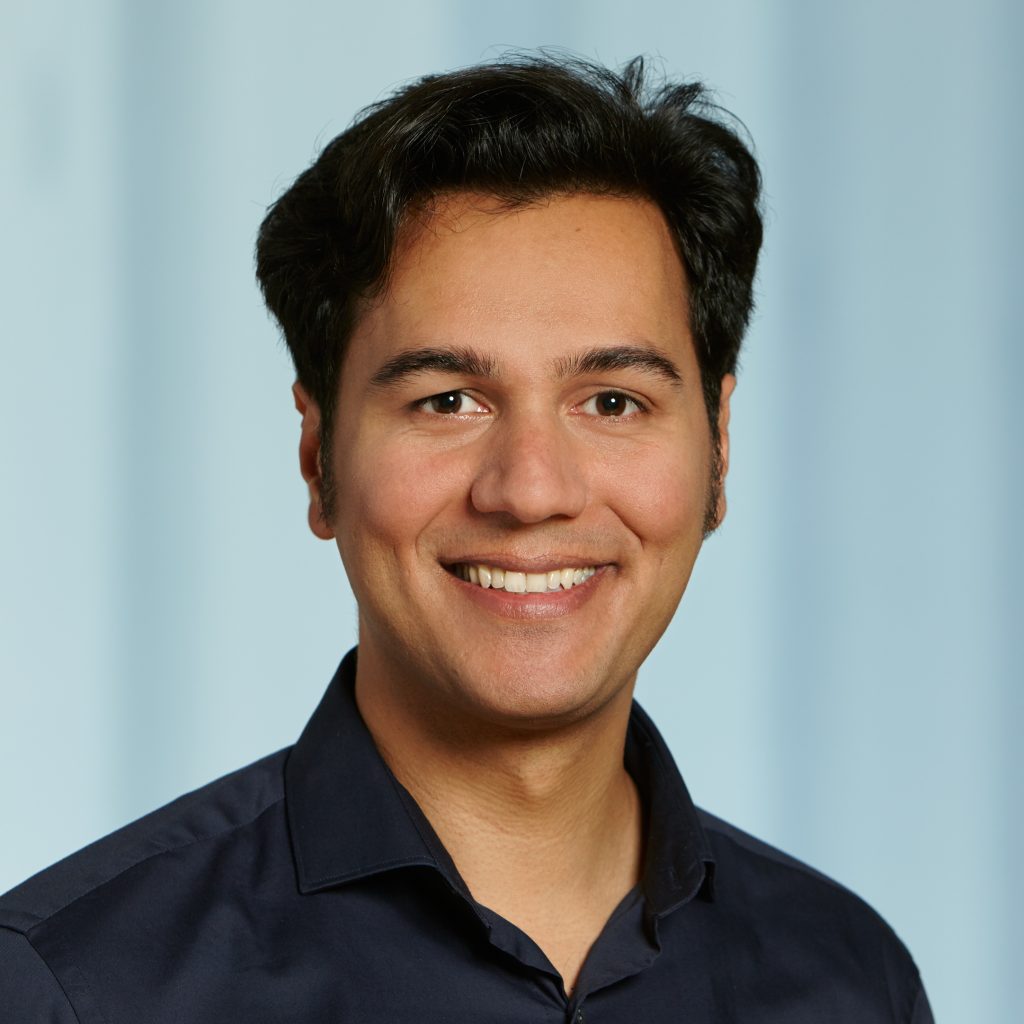
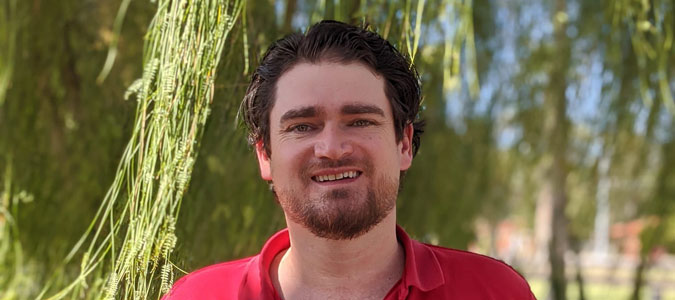
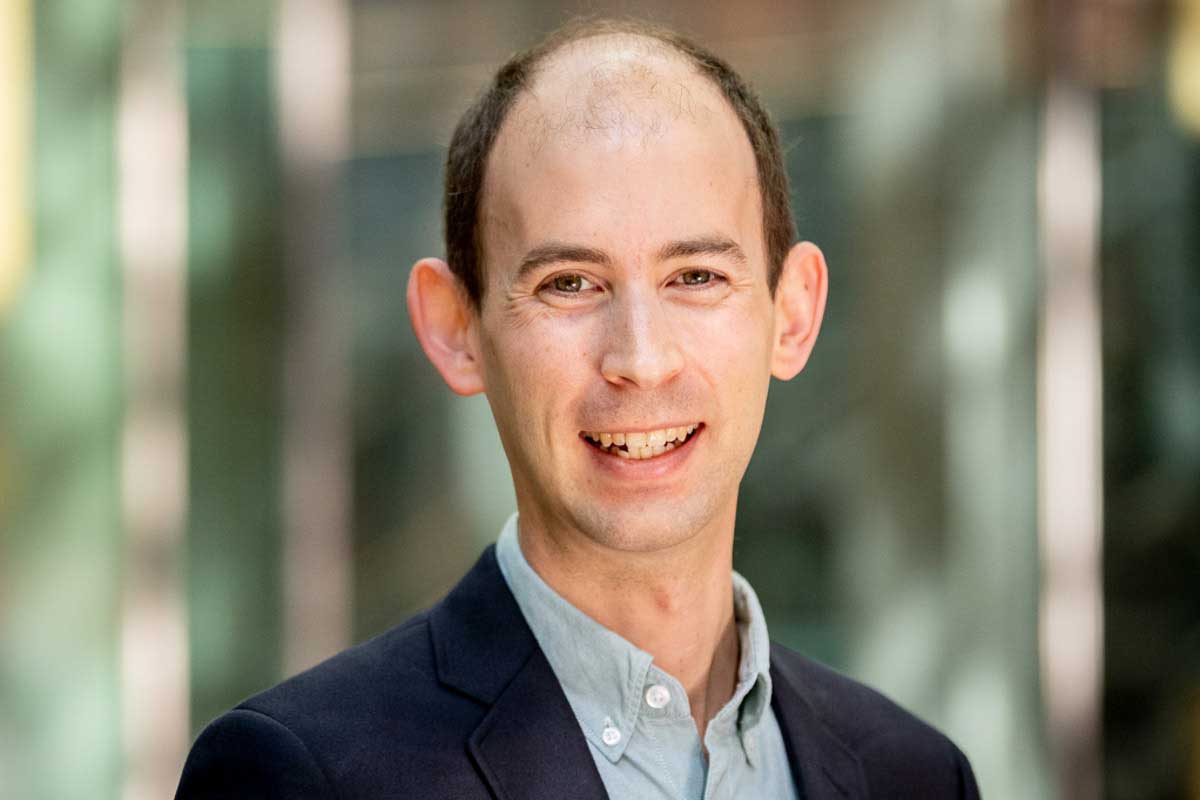
Kaveh Razavi is an Assistant Professor at ETH Zurich in the Department of Information Technology and Electrical Engineering, supervising the Computer Security Group. He is also affiliated with the Department of Computer Science. Research focuses on commodity hardware and operating systems security Teaching: Computer Engineering (BSc 2022–2025), Hardware Security (MSc 2016–2025), Advanced Operating Systems (MSc 2016–2019) Research Interests: Razavi's work bridges computer systems and security, emphasizing microarchitectural vulnerabilities, hardware exploitation, and security verification. His group develops tools for analyzing hardware-software interactions and mitigating memory attacks like Rowhammer. Scientific Awards: Distinguished/Best Paper Awards at IEEE S&P, USENIX Security, MICRO Five Pwnies Awards for innovative research Dutch Veni Grant, ERC Starting Grant Jochen Liedtke Young Researcher Award Golden Owl Teaching Award (2022) ETH Medal, Intel Bounty Reward, BlackHat USA Recognition
Jedidiah Crandall is an Associate Professor at Arizona State University's School of Computing and Augmented Intelligence, with an affiliation to the Biodesign Center for Biocomputing, Security and Society. His research focuses on Internet censorship, network security, and privacy-preserving technologies. Crandall collaborates with journalists and activists to expose surveillance mechanisms, particularly in politically sensitive regions like Russia and China. His work includes analyzing VPN vulnerabilities , decentralized censorship systems , and cross-border data flows . He teaches advanced courses in computer network security and advises graduate students on thesis/dissertation research. Research trends in his publications emphasize measuring state-level information control , attack vectors in modern networks , and secure communication technologies . Notable work includes TSPU: Russia's censorship infrastructure and Hidden Links: Analyzing Secret Families of VPN Apps . Crandall's teaching spans courses like Advanced Computer Network Security and Applied Cryptography , reflecting his commitment to preparing the next generation of security professionals. His Censored Planet project tracks global Internet censorship patterns through large-scale measurements.
Aravind Machiry is an Assistant Professor at Purdue University's Electrical and Computer Engineering Department and a founding member of the Purdue Systems and Software Security (PurS3) Lab . His research focuses on system security, particularly vulnerability detection, prevention, and secure system development using static/dynamic program analysis, fuzzing, type systems, and machine learning. Designing practical solutions for software and embedded system security Recipient of NSF CAREER and Amazon Research awards Active participant in SPLASH 2025 as OOPSLA Review Committee member His recent work includes automated vulnerability detection in embedded software, spatial memory safety enhancements, and security analysis of GitHub workflows. He has received recognition for his research through multiple distinguished paper awards and industry funding. Selected scientific awards include NSF CAREER Award (2024) Amazon Research Award (2022) Test of Time Award at FSE 2023 for DynoDroid Distinguished Paper Award at OOPSLA 2022 for 3c Qualcomm Innovation Fellowship (2025) His research team has developed frameworks like ARGUS for taint analysis of CI/CD workflows and FuzzUEr for UEFI interface fuzzing, discovering hundreds of critical vulnerabilities in open-source projects and thousands of command injection flaws in GitHub repositories.
Jonathan Bell is an Associate Professor at Northeastern University in the Khoury College of Computer Sciences , with prior appointments at George Mason University. His research spans Software Engineering , Program Analysis , and Ethics of Artificial Intelligence . PhD in Computer Science from Columbia University (2011) Recipient of the 2020 Dahl-Nygaard Junior Researcher Prize and NSF CAREER award His research focuses on: Resolving flaky tests in Continuous Integration systems Advancing dynamic taint tracking (e.g., Phosphor ) Formalizing software supply chain vulnerabilities Addressing ethical dimensions in automated decision-making Recent publications span flaky test prediction, semantic versioning analysis, and ethics of opaque AI systems. He co-founded the Clowdr open source project and a related startup. Awards include: 2020 Dahl-Nygaard Junior Researcher Prize 2025 NSF CAREER award 2019 GMU Teacher of Distinction award He advises PhD students like Liam DeVoe and Katherine Hough, and serves on committees for conferences such as ICSE , PLDI , and ASE . Contact: j.bell@northeastern.edu | jon@jonbell.net
James Clause is an Associate Professor and Graduate Program Chair in the Department of Computer and Information Sciences at the University of Delaware. His research focuses on advancing software engineering practices through innovative work in testing, program analysis, and energy-efficient software development. His educational background includes: PhD in Computer Science from Georgia Institute of Technology (2011) MS in Computer Science from University of Pittsburgh (2005) BS in Computer Science from Allegheny College (2003) Clause specializes in improving software quality and developer productivity. His research investigates dynamic analysis techniques for bug detection, memory leak identification, and security vulnerability analysis. He pioneers energy-aware software engineering, developing methods to optimize application energy consumption and test suite efficiency. His work on privacy-preserving field data usage enables safer handling of sensitive user information while maintaining software quality. Current projects focus on energy-efficient application development, durable test creation, and privacy-conscious software improvement. His publication trajectory reveals a clear evolution from foundational security and memory analysis toward energy-conscious software engineering. Early work established critical dynamic taint analysis frameworks (e.g., Dytan), while recent research addresses energy consumption in web applications and test optimization. This shift demonstrates growing industry relevance of sustainable computing practices within software engineering. His scientific contributions are recognized through prestigious awards: ISSTA 2017 Impact Paper Award for seminal work on dynamic taint analysis ICSME 2016 Distinguished Reviewer Award for exceptional peer review contributions Clause actively mentors graduate students including Tedis Agoli, Emily Evans, Daniel Gaston, and Benwen Zhang. His research is supported by grants focused on energy-efficient development, high-quality testing methodologies, and privacy-preserving data usage. He serves the academic community through program committee roles for ICST 2018 and ICSE 2018, demonstrating leadership in software testing and engineering conferences. His research group operates within the University of Delaware's Department of Computer and Information Sciences, contributing to the institution's reputation in software engineering innovation through continuous exploration of energy-aware development and advanced debugging techniques.
Dongdong She is an Assistant Professor in the Department of Computer Science and Engineering at The Hong Kong University of Science and Technology (HKUST). His research focuses on the intersection of security and machine learning, applying data-driven approaches to solve security problems. He has established himself as a prominent researcher in software security and fuzzing techniques with publications in top conferences including IEEE S&P, CCS, and USENIX Security. Dr. She received his Ph.D. from Columbia University's Department of Computer Science, where he worked with Professors Suman Jana and Baishakhi Ray. Prior to Columbia, he conducted research with Zhiyun Qian on Android Security at the University of California, Riverside. He completed his undergraduate studies at Huazhong University of Science and Technology. His research spans two main areas: LLM Security, which investigates the security of large language models and LLM-powered systems, and LLM for Traditional Security, which leverages LLMs to solve traditional security problems such as program analysis and vulnerability discovery. His work often combines machine learning techniques with traditional security approaches to develop innovative solutions for software security challenges. Dr. She's publication record shows a consistent evolution from foundational work in neural network-assisted fuzzing (NEUZZ) toward more advanced applications in LLM security and program analysis, demonstrating both theoretical rigor and practical impact with techniques adopted by the security community. Among his notable achievements: Distinguished Paper Award at ISSTA 2025 Distinguished Paper Award at IEEE S&P 2025 Best Paper Award Runner-Up at CCS 2022 Second Place in SBFT 2024 Fuzzing Competition Finalist in 2019 NYU CSAW Applied Research Competition Dr. She currently advises several Ph.D. students including Yuchong Xie, Shuangjie Yao, and Qiao Zhang, who began their studies in Fall 2024. He serves on program committees for major conferences including ASE 2025, where he is a PC Member for the Research Papers track. His research is supported by grants enabling his team to pursue innovative approaches at the intersection of machine learning and security. His research group maintains active collaborations with institutions worldwide and contributes to open-source security tools that are widely used in both academia and industry, with a particular focus on developing advanced techniques for software security analysis through the application of machine learning.
Cole Cerrato is an Assistant Professor in the Department of Food Science and Technology at Oregon State University, where he leads the Smoke, Wine, and Grapes Analytical Chemistry Lab. His research focuses on wildfire smoke effects on wine grapes and viticulture, utilizing advanced analytical techniques like NMR and MRI to address chemical challenges in the wine industry. Education B.A. in Chemistry (2012) from the University of South Florida Ph.D. in Chemistry (2019) from the University of South Florida Research Interests Dr. Cerrato specializes in wildfire smoke chemical characterization, particularly using 13C-labeled smoke to track volatile phenol interactions in wine grapes. His work addresses smoke taint mitigation through functional spray coatings and environmental chemistry impacts on viticulture. Earlier research explored peptide folding, polyimide materials, and Alzheimer's disease intervention strategies. The lab at Oregon State University, funded by a $2.7 million state grant after the 2020 wildfires, aims to protect Oregon's wine industry from climate-related smoke exposure. His publications span analytical chemistry, agricultural science, and molecular biology, with recent studies focusing on chemical adsorption in grapes and collaborative enology research. Advising and Collaborations Dr. Cerrato accepts graduate students for the Food Science and Technology Department and serves on graduate committees. He collaborates with enologists like Elizabeth Tomasino and chemists like Ming Lab on interdisciplinary projects. Labs and Media The Smoke, Wine, and Grapes Analytical Chemistry Lab at Oregon State University is a state-funded initiative addressing wildfire impacts on wine quality. His work has been featured in national media outlets discussing solutions to smoke taint in wines.
Quentin Stiévenart is a researcher at Université du Québec à Montréal, focusing on abstract interpretation, concurrency, and static analysis. His work spans programming language design, software verification, and tool development for WebAssembly and functional languages like Racket and Scheme. Active in organizing and reviewing for conferences including SPLASH, ICFP, ECOOP, and SAS Developed tools such as Wassail for WebAssembly static analysis and RacketLogger for educational purposes Contributions include theoretical work on effect-driven flow analysis and practical advancements in concolic execution abstraction His research addresses challenges in concurrency verification, cyclic reinforcement in incremental analysis, and security-focused taint tracking across multiple language paradigms.
Musard Balliu is an Associate Professor at the School of Electrical Engineering and Computer Science at KTH Royal Institute of Technology in Stockholm, Sweden. He works in the Division of Theoretical Computer Science and leads the LangSec (Language-Based Security) research group. His research interests span multiple aspects of computer security, including: Information flow control Web and mobile application security IoT security Low-level security Program analysis and verification Logics in security contexts His recent publications focus on cutting-edge security challenges, with particular emphasis on JavaScript security (prototype pollution vulnerabilities), IoT platform security, database security, and formal methods for security verification. His work often bridges theoretical foundations with practical security solutions, addressing real-world security concerns in emerging technologies like IoT and modern web applications. His notable awards include: Best Reviewer Award at CCS 2022 Google Research Scholar Award in 2022 Facebook Award in Privacy-Enhancing Technologies in 2021 Dr. Balliu actively mentors students in the LangSec group, supervising both current students and recently graduated PhD candidates. He serves as Principal or Co-Principal Investigator on multiple research projects funded by prestigious organizations including Digital Futures, WASP, VR, and SSF, with a focus on next-generation security solutions for IoT, software supply chains, and cloud computing. He is also involved in various cybersecurity initiatives including the Swedish National Hacking Team (as co-founder and SC representative for Sweden), CDIS Cybercampus Sverige, and Digital Futures, demonstrating his commitment to advancing cybersecurity education and practice beyond academic research.
Jonathan Bell is an Associate Professor in Software Engineering and Software Systems at Northeastern University's Khoury College of Computer Sciences. Previously, he was faculty at George Mason University where he received a university-wide Teacher of Distinction award. Bell directs research that makes it easier for developers to create reliable and secure software by improving software testing and program analysis. His research spans several key areas in software engineering: flaky tests, fuzzing, software supply chain analysis, and continuous integration. Bell's work on accelerating software testing earned an ACM SIGSOFT Distinguished Paper Award (ICSE '14), and his contributions to the object-oriented programming community were recognized with the 2020 Dahl-Nygaard Junior Researcher Prize. His program analysis research has resulted in widely adopted runtime systems including the Phosphor taint tracking system and CROCHET checkpoint/rollback tool. His recent publications reveal a consistent focus on practical software engineering problems with empirical validation. His work increasingly addresses the challenges of modern software supply chains and dependency management, building on his earlier foundational work in testing and program analysis. The trend shows progression from specific testing problems to broader software ecosystem challenges. ACM SIGSOFT Distinguished Paper Award (ICSE '14 - Unit Test Virtualization with VMVM) Dahl-Nygaard Junior Researcher Prize (2020) NSF CAREER award recipient Teacher of Distinction award from George Mason University Bell actively serves the software engineering community through program committee work for major conferences (ICSE, ASE, FSE, ISSTA), co-organizing mentoring workshops, and contributing to open source projects. He co-founded the Clowdr open source project during the pandemic to support virtual academic conferences and subsequently co-founded a startup around it. His research has been funded by the NSA and NSF, and he serves on the Computing Research Association's Education Board.
David Klein is a PhD Candidate at the Institute for Application Security , part of the Carl Friedrich Gauss Faculty at TU Braunschweig . His work focuses on web security and privacy , with specific expertise in static and dynamic analysis of vulnerabilities, program transformations, and GDPR compliance frameworks. David's research spans multiple subfields, including browser fingerprinting, cross-site scripting (XSS), and memory corruption in WebAssembly. His 15 most recent publications (2013–2025) investigate topics like HTML sanitizer bypasses , privacy-enforcement frameworks , and developer behavior in privacy implementation . His work has been presented at top venues like USENIX Security , IEEE S&P , and PETS . 2024: Distinguished Paper Award Winner at 33rd USENIX Security Symposium David actively participates in program committees for conferences such as ACM CCS , USENIX Security , and IEEE Euro S&P , contributing to the peer-review process in cybersecurity and privacy research.
Chengnian Sun is an Associate Professor at the Cheriton School of Computer Science , University of Waterloo, Canada. His research focuses on software engineering and programming languages with an emphasis on software reliability and programming productivity. Education : Ph.D. in Computer Science from National University of Singapore (2013) His work spans compiler testing (EMI, Dfusor, Kitten), program reduction (Perses, Vulcan, PPR), Android testing, and DNN testing. He has received multiple grants including Google Research Scholar Program (2025) and NSERC Discovery Grants (2024-2029). His recent publications focus on LLM-based compiler testing, weighted delta debugging, and ransomware resilience. Scientific Awards : Most Influential Paper Award at SANER (2022) NUS Research Scholarship (2008-2012) ACM SIGSOFT Distinguished Paper Award at ASE (2012) IBM Cup Campus Innovation Contest First Prize (2005) He advises Ph.D. and MMath students in software engineering, compiler testing, and program analysis, including several who have contributed to top-tier conferences like ICSE, ISSTA, and ASPLOS. His service includes program committee roles in ICSE, OOPSLA, and ISSTA.
Sepehr Amir-Mohammadian is an Associate Professor in the Department of Computer Science at the University of the Pacific, part of the School of Engineering and Computer Science. His research focuses on cybersecurity, programming languages, and formal software security assurance, particularly applying linguistic approaches to ensure properties in security-critical applications. He earned his PhD in Computer Science from the University of Vermont (2017), focusing on in-depth security policy enforcement, following an MS in Information Security Engineering (Amirkabir University of Technology, 2011) and a BS in Information Technology Engineering (Amirkabir University of Technology, 2009). Teaching interests include computer networking, reliable software design, programming languages, and theoretical computer science. He has held leadership roles such as Engineering & Computer Science Council Chair (2020-2021) and currently represents his school in the Technology in Education Committee. His research bridges theory and practice, with contributions to audit logging correctness, quantitative information flow analysis, and cybersecurity in cyber-physical systems. Recent work emphasizes concurrent audit logging in distributed systems, timing attack analysis in cyber-physical systems, and leveraging digital twins for security quantification. Notable collaborations include the OpenMRS medical records system and PRISM-Leak tool development for probabilistic program analysis. His publications span conferences like ACM CPSS, IEEE COMPSAC, and IEEE ICNC, addressing challenges in microservices, concurrency, and formal methods. While no specific awards are noted, his contributions to security frameworks and practical implementations reflect significant scholarly impact. Research groups and projects include work on hybrid-dynamic systems, concurrent logging, and network protocol testing with large language models.
Dr. Henry Hong-Ning Dai is an Associate Professor in the Department of Computer Science at the Faculty of Science, Hong Kong Baptist University (HKBU). He previously held academic positions at Lingnan University and Macau University of Science and Technology, where he advanced from Assistant to Associate Professor. He holds a Ph.D. from the Chinese University of Hong Kong and a D.Eng. from Shanghai Jiao Tong University. Education: Ph.D. in Computer Science and Engineering, Chinese University of Hong Kong (2008) D.Eng. in Computer Technology Application, Shanghai Jiao Tong University (2012) M.Eng. in Computer Science and Engineering, South China University of Technology (2003) B.Eng. in Computer Science and Engineering, South China University of Technology (2000) Dr. Dai's research focuses on security and reliability of VR/AR systems , Internet of Things , blockchain and distributed systems , federated learning , and cyber-physical systems . His work integrates AI, networking, and software engineering to address real-world security and performance challenges in emerging technologies. He has published over 300 papers in top journals and conferences such as IEEE JSAC, TMC, ICSE, INFOCOM, and AAAI, accumulating more than 24,000 citations. The 15 most recent publications (2023–2025) highlight his leadership in VR/AR security (e.g., AcouListener, Meta VR study), blockchain scalability and fairness (e.g., Porygon, Auncel, Justitia), federated and robust learning (e.g., EBS-CFL, FedDP), and edge-AI and wireless security (e.g., HARBOR, Smart Shield). His recent work also explores AI-generated art evaluation and LLM-driven manufacturing systems , showcasing interdisciplinary innovation. Scientific Awards and Recognition: Holder of 1 U.S. patent and 1 Australia innovation patent Winner of more than 17 awards Senior Member of ACM, IEEE, and EAI Dr. Dai has been Principal or Co-Investigator on over 12 research projects totaling HK$16 million, funded by UGC, NSFC, FDCT, and HKBU. He serves as an Associate Editor for IEEE Communications Surveys & Tutorials , IEEE Transactions on Intelligent Transportation Systems , and several other IEEE journals. He has chaired program committees and served on the PC of top conferences including ICSE, KDD, and INFOCOM. He is actively recruiting Ph.D. students and RAs in security, blockchain, and AI. Laboratories and Research Teams: While not explicitly named, Dr. Dai leads a research group focused on secure and intelligent distributed systems, with active projects in blockchain, VR security, and edge AI. His team has developed open-source tools such as VR-SP Detector , PrettySmart , and RLF for smart contract analysis and security assessment.
Qingzhao Zhang is an incoming Assistant Professor in the Department of Electrical and Computer Engineering at the University of Arizona, starting in Fall 2025. Previously, he completed his Ph.D. at the University of Michigan under the supervision of Professor Z. Morley Mao. His academic journey bridges computer science, electrical engineering, and cybersecurity disciplines with a focus on practical security applications. Dr. Zhang's research spans computer security at the intersection of system security, artificial intelligence, and cyber-physical systems. His work addresses critical security challenges in safety-critical applications, particularly connected and autonomous vehicles. His research methodology combines formal verification, system building, and security analysis to develop practical solutions for real-world security problems. His expertise extends to blockchain security, industrial control systems, and AI security, demonstrating a broad yet cohesive research vision. Analysis of Zhang's recent publications reveals a consistent focus on security challenges in emerging technologies, with a particular emphasis on autonomous systems. His work demonstrates strong technical depth across multiple domains, from low-level network protocols to high-level AI systems. The trajectory of his research shows increasing sophistication in addressing complex security problems in cyber-physical systems, with recent work expanding into large language model security. Reviewer for ICLR 2025, ICRA 2025, ACM Multimedia 2024 Artifact Evaluation Reviewer for Usenix Security 2022 Pre-Review Task Force for NSDI 2025 Teaching experience in Multidisciplinary Design Program at University of Michigan (2022-2023) Dr. Zhang is actively recruiting PhD students for Fall 2026 and research interns. His research group focuses on developing security solutions for next-generation AI and cyber-physical systems, with particular emphasis on autonomous vehicles and critical infrastructure security. He maintains strong industry connections through his applied research in automotive security and blockchain technologies.