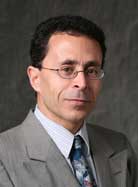
Dr. Mourad Zeghal is a Professor in the Department of Civil and Environmental Engineering at Rensselaer Polytechnic Institute (RPI). His research focuses on computational geomechanics, seismic response monitoring, and geotechnical system identification. He leads projects addressing liquefaction mitigation, multiscale modeling of geosystems, and development of advanced computational tools for geotechnical analysis. Dr. Zeghal collaborates with RPI's Center for Network for Earthquake Engineering Simulation (CEES), Scientific Computation Research Center (SCOREC), and Inverse Problems Center (IPRPI). His work emphasizes reducing risks from natural hazards through improved design tools and model validation. Key projects include the Liquefaction Experiments and Analysis Projects (LEAP), which use centrifuge testing and machine learning to analyze soil behavior under seismic loads. Dr. Zeghal's research integrates experimental data with numerical simulations to enhance understanding of soil-structure interaction and lateral spreading during earthquakes. Research Interests: Soil liquefaction, multiscale modeling, inverse problem methods, computational geomechanics Key Collaborations: CEES, SCOREC, IPRPI, and global research networks Focus Areas: Centrifuge testing, model validation, seismic hazard mitigation His recent publications (2023–2025) highlight advancements in quantifying uncertainty in soil response, analyzing LEAP centrifuge experiments, and developing machine learning approaches for model calibration. Dr. Zeghal actively engages with industry and government labs to translate research into practical engineering solutions.
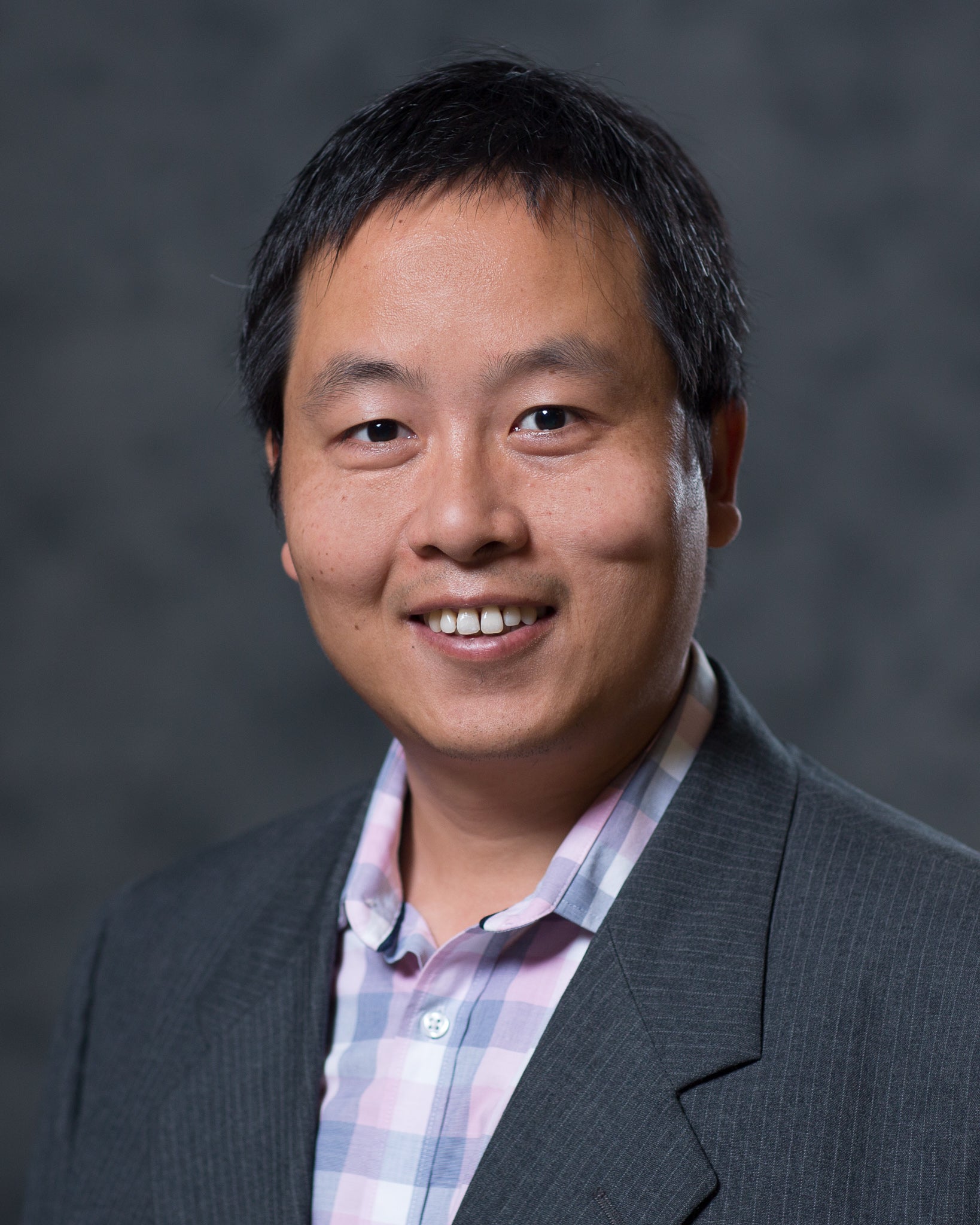
Jianxi Gao is an Associate Professor in the Department of Computer Science at Rensselaer Polytechnic Institute (RPI). His research focuses on network science, particularly network resilience, robustness, and control, integrating network theory, control theory, statistical physics, and operations research. He also explores the intersection of network science and AI, including applications of AI to network analysis and vice versa. His work aims to understand, predict, and control the resilience of complex systems against cascading failures. Key research areas include network resilience in transportation systems, quantum networks, and biological systems, with applications to pandemic response and infrastructure optimization. Gao's contributions span theoretical frameworks and computational tools, such as the NuRsE MATLAB package for network resilience analysis. His GitHub repositories (e.g., NuRsE and NON) showcase his open-source contributions to network science and computational methods. His recent publications address topics like AI-driven network analysis, quantum network percolation, and pandemic-induced healthcare system stress. He actively collaborates on interdisciplinary projects, emphasizing real-world applications of network science principles.
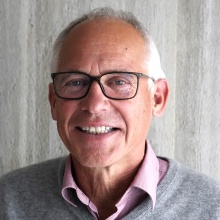
Udo Seifert is a Professor in the II. Institute for Theoretical Physics at the University of Stuttgart, part of Faculty 08. His research focuses on stochastic thermodynamics, non-equilibrium statistical mechanics, and entropy production in complex systems. He has contributed significantly to understanding Markov networks, thermodynamic inference, and the interplay between fluctuations and irreversibility. His work bridges theoretical frameworks with experimental techniques, such as single-molecule experiments and motor-bead assays. Key areas of interest include entropy estimation in partially accessible systems, localization of entropy production, and the development of model-free entropy estimators. His recent studies explore the thermodynamic uncertainty relation, active matter systems, and the dynamics of biochemical oscillators. He has published extensively on topics like nonequilibrium fluctuations in chemical reaction networks, driven systems, and the application of stochastic processes to biophysical systems. Seifert's research also extends to membrane mechanics, with studies on fluid vesicle shapes and membrane-mediated interactions. His work emphasizes the integration of theoretical models with experimental data, aiming to uncover fundamental principles governing non-equilibrium phenomena. Despite the absence of listed awards or students in the provided text, his prolific publication record underscores his influential role in advancing stochastic thermodynamics and related fields.
Dr. Jiaojiao Jiang is a Senior Lecturer in the School of Computer Science and Engineering at the University of New South Wales (UNSW). She holds a Ph.D. from Deakin University (Melbourne, Australia) and has published over 45 articles with 1,100+ citations. Her research focuses on AI-driven cybersecurity solutions, particularly misinformation detection and modeling information propagation dynamics. She is affiliated with UNSW's Sydney campus and can be contacted at jiaojiao.jiang@unsw.edu.au . Education: Ph.D., Deakin University, 2010s Research Interests: Artificial Intelligence applications in cybersecurity Misinformation detection and network analysis Machine learning for network security Data privacy in IoT systems Publications span topics like fake news detection via graph neural networks, multiplex network robustness, and cyber threat intelligence frameworks. Her work bridges theoretical network science with practical cybersecurity challenges.
Matthew R. Ryan is an Associate Professor in the School of Integrative Plant Science (Soil and Crop Sciences Section) at Cornell University. His research focuses on sustainable cropping systems, agroecology, and cover crop management with an emphasis on ecological weed suppression and organic production. Ryan leads the Sustainable Cropping Systems Lab and co-directs the Organic @ Cornell initiative. Education: PhD in Agronomy (2010), MS in Agronomy (2007) from The Pennsylvania State University; BS in Biology (2001) from Kutztown University. Research Interests: Development of diversified cropping systems that integrate perennial grains like Kernza Evaluation of cover crop genetics and management strategies Optimization of no-till systems for organic crop production Assessment of agronomic practices' environmental impact Recent Work Trends: Over 15 publications (2023–2025) emphasize cover crop genetics, no-till weed management, and perennial grain development. Collaborative projects across 16 U.S. states highlight regional adaptation strategies. Awards: No formal awards listed, though his work has been featured in news articles about cover crop adoption and perennial grain development. Teaching & Mentorship: Teaches PLSCI 1900 and 3800 courses. Advises graduate students in Soil and Crop Sciences. Coordinates multi-university courses like the Cover Crop Challenge. Labs/Teams: Leads Sustainable Cropping Systems Lab and collaborates with Cornell's Agricultural Experiment Station. Active in regional farmer-extension partnerships.
Professor Ruth Zadoks is a faculty member at the Sydney School of Veterinary Science, University of Sydney. She holds academic positions in the Sydney Institute of Agriculture and Sydney Southeast Asia Centre, and is involved with the Sydney Infectious Diseases Institute. Her research focuses on antimicrobial resistance, zoonotic diseases, bovine health, and One Health principles. Notable projects include investigations into Japanese encephalitis transmission dynamics, antibiotic use in East African livestock, and molecular epidemiology of Group B Streptococcus. Recent grants include studies on microbial spillover in aquaculture and precision feeding in broiler chickens. Her work integrates veterinary and public health perspectives, addressing issues like anthrax impacts in rural Africa, tilapia-borne zoonoses, and diagnostic innovations for bovine mastitis. Over 118 peer-reviewed publications highlight her contributions to aquatic pathogen genomics, food safety, and livestock disease ecology. Recent grants (2024): - Revealing microbial spillover drivers in aquaculture (SSEAC Incubator) - Sustainable Precision Feeding in Broiler Chickens (AgriFutures) - ASEAN Antimicrobial Resistance Network (DFAT-funded) Labs/Teams: Affiliated with Sydney Infectious Diseases Institute and collaborates across interdisciplinary One Health networks.
Naratip Santitissadeekorn is a Senior Lecturer in Data Assimilation at the School of Mathematics and Physics, University of Surrey, where he is affiliated with the Mathematics at the Interface Group. His work bridges mathematics, data science, and real-world applications in urban planning, crime analysis, and geophysical fluid dynamics. Dr. Santitissadeekorn received his PhD from Clarkson University in 2008, with a dissertation titled "Transport Analysis and Motion Estimation of Dynamical Systems of Time-Series data." His doctoral research was supervised by Professor Erik Bollt. Following his PhD, he completed two significant postdoctoral positions: from 2008-2011 at the University of New South Wales, Sydney, Australia, working with Professor Gary Froyland on numerical techniques for finite-time Lagrangian coherent set identification, with applications to delimiting the polar vortex and Agulhas rings; and from 2011-2014 at the University of North Carolina-Chapel Hill, working with Professor Chris Jones on data assimilation projects. Dr. Santitissadeekorn's research focuses on inverse problems and data assimilation in geophysical fluid dynamics, the applications of Lagrangian Coherent Structures (LCS), and computational ergodic theory. His work combines theoretical mathematics with practical applications, particularly in urban growth modeling and crime analysis. He has developed innovative methods for identifying coherent structures in fluid flows, estimating transition probabilities from spatiotemporal data, and creating data-driven frameworks for urban expansion scenarios. His research demonstrates how mathematical techniques can be applied to solve real-world problems in environmental science, urban planning, and public safety. An analysis of Dr. Santitissadeekorn's recent publications (2020-2023) reveals a strong focus on urban expansion modeling and network analysis. His work on urban growth has evolved from basic cellular automata models to sophisticated frameworks that manage uncertainty through parameter clustering and growth mode identification. His research on Hawkes processes has advanced ensemble-based filtering techniques for analyzing count data in large networks. These publications demonstrate a consistent pattern of applying mathematical rigor to complex spatiotemporal phenomena, with increasing emphasis on data-driven approaches and practical applications. Dr. Santitissadeekorn has made significant contributions to data assimilation methods, particularly through the development of the extended Poisson-Kalman filter (ExPKF) for urban crime modeling. His teaching includes courses in Algebra and Bayesian Statistics, reflecting his expertise in both theoretical and applied mathematics. While specific awards are not mentioned in the available information, his extensive publication record in high-impact journals demonstrates recognition within his field. Dr. Santitissadeekorn's research has practical implications for urban planning and law enforcement. His work on urban expansion models helps planners understand different growth trajectories, while his crime modeling research contributes to improved police patrolling strategies. His interdisciplinary approach, combining mathematics, computer science, and domain-specific knowledge, positions him at the forefront of applying data science to societal challenges.
Soojung Claire Hur is an Assistant Professor in the Department of Mechanical Engineering at Johns Hopkins University (JHU), with a secondary appointment in the Department of Oncology at the JHU School of Medicine. She is affiliated with the Hopkins Extreme Materials Institute and the Johns Hopkins Institute for NanoBioTechnology. Her research focuses on developing microfluidic platforms to study complex fluid dynamics and translate these insights into clinical applications, particularly in oncology and regenerative medicine. Education: Hur earned her B.S., M.S., and Ph.D. in Mechanical Engineering from UCLA (2005, 2007, 2011). She was a Rowland Fellow at Harvard University (2011–2016) and conducted clinical studies at Vortex Biosciences, Inc. before joining JHU's Whiting School of Engineering faculty in 2015. Research Interests: Her work spans inertial microfluidics, nonlinear fluid dynamics, cellular biophysics, and personalized medicine. She pioneers techniques like vortex-assisted electroporation and inertial focusing for high-throughput cell analysis, separation, and drug delivery. These methods aim to improve cancer diagnosis, immunotherapy, and gene therapy. Awards: Notable honors include the 2024 Johns Hopkins Discovery Awards, the 2023 Susan G. Komen Career Catalyst Award, and the 2018 Johnson & Johnson WiSTEM2D Scholars Award. Her research is funded by the Susan G. Komen Foundation, the Hartwell Foundation, and others. Advising & Grants: While no students are listed, her grants support projects like drug resistance monitoring and rare cell analysis. She holds three U.S. and two international patents for microfluidic technologies. Labs & Roles: The Hur Lab on Micro-Fluidic Biophysics develops clinical tools for cell mechanics analysis. Hur serves as an editor for Nature Scientific Reports , SLAS Technology , and Biomicrofluidics , and reviews for major journals and agencies like the NSF and NASA.
Russell Spears is a Full Professor in Social Psychology at the University of Groningen, Netherlands. His primary affiliation is the Department of Social Psychology within the Faculty of Behavioural and Social Sciences. He holds an Endowed Chair position and has held professorial roles at Cardiff University, the University of Amsterdam, and other institutions. His research focuses on social identity processes, intergroup relations, and system justification theory. Education: BSc (Hons) from the University of Bristol (1978-1981), PhD from the University of Exeter (1981-1985). Professional experience includes roles as an ESRC Professorial Research Fellow (2009-2012), and professorships at the University of Cardiff (2003-2011) and the University of Amsterdam (1995-2008). Research Interests: Social identity theory, intergroup discrimination, system justification, collective action, and the psychological dynamics of social inequality. Notable contributions include studies on group-based resistance, prejudice, and the role of education in social stratification. Key Awards: Fellow of the Society for Personality and Social Psychology (2006), Fellow of the Association for Psychological Science (2010), and the Kurt Lewin Mid-Career Award (EASP, 2011). Publications span over 300 articles, with recent work examining misalignment in higher education, post-conflict radicalization, and gender-based resistance strategies. He has collaborated on projects addressing systemic inequality and political alienation linked to educational categorization.
Jonas Strandberg is an Associate Professor at KTH Royal Institute of Technology's Department of Physics, part of the School of Engineering Sciences. His research focuses on particle physics, particularly within the ATLAS Collaboration at the Large Hadron Collider (LHC). He contributed to the Higgs boson discovery and currently studies its properties. Strandberg has been involved in detector development, including the HGTD timing detector for the LHC upgrade. He holds a PhD from Stockholm University (2006) and worked as a postdoc at the University of Michigan (2006-2011) before joining KTH. His teaching responsibilities include courses on experimental particle physics, statistical methods, and engineering skills. Research interests span high-energy physics, collider technology, and detector systems. Research Highlights: Member of the ATLAS Collaboration since 2011 Key contributor to Higgs boson measurements Developed timing detector systems for LHC upgrades Published extensively on particle physics and accelerator technology Teaching & Supervision: Course responsible for Experimental Particle Physics (SH2203) Teaching roles in Applied Modern Physics (SH1015), Embedded Systems Design (IL2232), and more Professional Activities: ATLAS Data Preparation Coordinator (2015-2017) Member of the Particle and Astroparticle Physics Group at AlbaNova University Centre
Dr. Jia Wu is an Associate Professor and Research Director of the Centre for Applied Artificial Intelligence at Macquarie University. He holds a PhD in Computer Science from the University of Technology Sydney (2009) and is an IEEE Senior Member. His research focuses on artificial intelligence, data mining, graph neural networks, and anomaly detection, with over 200 publications in top-tier journals/conferences like IEEE TPAMI, TKDE, and conferences like KDD, IJCAI, and NeurIPS. He has received awards including the Heidelberg Laureate Forum Fellowship (2019) and multiple best paper awards. Education: PhD in Computer Science (UTS, 2009). Current roles include Director of HDR (Higher Degree Research) and Associate Editor for IEEE TNNLS and ACM TKDD. He leads projects in AI-driven cybersecurity, personalized banking solutions, and disaster response systems. Research interests emphasize graph-based learning, fake news detection, and deep learning applications. His recent work explores hypergraph neural networks for fraud detection and brain graph analysis for neurological disorders. He has pioneered scalable semi-supervised clustering techniques and transformer-based hypergraph models for anomaly detection. Awards include CIKM'22 Best Paper Runner-Up, ICDM'21 Best Student Paper, and the 2023 Faculty of Science and Engineering Collaboration Award. His work spans 13 active research projects, including mitigating AI deepfakes in identity systems and enhancing disaster response networks through graph-based simulations. Labs/Teams: Leads teams in the Data Horizons Research Centre, Future Communications Research Centre, and Hearing Research Centre. Collaborates internationally in AI, data mining, and social network analysis.
Surl-Hee Ahn is an Assistant Professor in the Department of Chemical Engineering at the University of California, Davis. Her research focuses on using molecular dynamics (MD) simulations and enhanced sampling methods like the weighted ensemble (WE) to study biological systems, including proteins, nanocrystals, and drug discovery for tuberculosis and other diseases. She leads the Ahn Lab, which develops cutting-edge computational tools, such as ParGaMD and DeepWEST, to advance kinetic and thermodynamic sampling in simulations. Education: Ph.D. in Chemistry (Chemical Physics), Stanford University M.S. in Chemistry, University of Pennsylvania M.A. in Mathematics, University of Pennsylvania B.A. in Biochemistry and Mathematics, University of Pennsylvania (Magna Cum Laude, Vagelos Scholar) Research Interests: Molecular dynamics simulations, enhanced sampling methods, computational drug discovery, vaccine design, protein interactions, and nanomaterial dynamics. Her work bridges computational biology, materials science, and pharmacology, with applications to infectious diseases and neurodegenerative disorders. Awards and Recognition: 2020 ACM Gordon Bell Prize Winner (SC20) for SARS-CoV-2 spike dynamics simulations 2021 Chancellor’s Outstanding Postdoctoral Scholar Award Finalist MIT Rising Stars in Mechanical Engineering (2018) ACS PHYS Division Young Investigator Award (2021) Grants & Collaborations: Her research is supported by grants from SC20/SC21 and leverages high-performance computing for multiscale modeling. She collaborates on projects like #COVIDisAirborne, combining AI with computational microscopy. Labs & Teams: The Ahn Lab at UC Davis emphasizes interdisciplinary training in computational methods and their application to real-world biomedical challenges.
Dr. Joshua T. Vogelstein is an Associate Professor in the Department of Biomedical Engineering at Johns Hopkins University, holding joint appointments in Biostatistics, Applied Mathematics & Statistics, Neuroscience, and Computer Science. He leads the NeuroData lab, focusing on big data science, machine learning, and connectomics. Education: PhD and MSE in Neuroscience and Applied Mathematics from Johns Hopkins (2009), BS in Biomedical Engineering from Washington University (2002). Notable achievements include co-founding the Open Connectome Project (acquired by APL) and Gigantum (acquired by NVIDIA). Recognized with the NSF CAREER Award (2020), F1000 Prime (2014), and multiple Johns Hopkins Discovery Awards. Research emphasizes statistical connectomics, network science, and applying AI to biomedical challenges. Key contributions include mapping the first insect brain connectome (Science 2023) and developing open-source tools like CloudReg and BrainLine. Collaborates with Microsoft Research and industry partners, co-founding ventures like Global Domain Partners and Mind-X. Advised over 60 trainees, teaches machine learning and data science. Promotes open science through NeuroData's ecosystem of tools and data. Current work explores organoid intelligence, prospective learning, and neural network dynamics.
Professor Linda Newnes is a faculty member in the Department of Mechanical Engineering at the University of Bath, leading the Made Smarter Innovation: Centre for People-Led Digitalisation (£5M) and the TRansdisciplinary ENgineering Design (TREND) research group (£1.8M). Her work focuses on transdisciplinary engineering, whole life value analysis, and sustainable manufacturing. She directs The Foundry: Centre for Digital, Manufacturing & Design, emphasizing people-centric digitalization and cross-sector collaboration. Her research integrates natural/social sciences and industry stakeholders to address challenges in aerospace, defense, and energy sectors. Notable projects include models for whole life value (cradle-to-cradle) and tools for transdisciplinary working. She actively promotes Equality, Diversity & Inclusion (ED&I), leading the University’s Aurora programme and Athena SWAN submissions. Recent publications explore digital skill premiums, transdisciplinary frameworks, and AR deployment challenges. She advocates Industry 5.0 principles, emphasizing human-centric innovation and resilience in socio-technical systems. Current grants focus on net-zero transitions and cellular agriculture manufacturing. Her advising spans doctoral students in transdisciplinary engineering, Industry 5.0, and future manufacturing. She collaborates with industry partners like Airbus and Innovate UK to advance cost estimation, decision support tools, and lifecycle analysis.
Paul Carini is an Associate Professor in the Department of Environmental Science at the University of Arizona. His research focuses on microbial genomics, environmental microbiology, and microbial diversity in extreme environments. He is affiliated with the School of Animal and Comparative Biomedical Sciences through a joint Micro Graduate Program. His work emphasizes genomic sequencing of understudied microbes, particularly those from arid soils and subseafloor sediments. He explores microbial adaptation strategies to nutrient-poor and extreme conditions, including anaerobic respiration and toxic gas utilization. Recent studies highlight culturomics advancements, such as high-throughput cultivation and predictive modeling of microbial growth. Key contributions include genome-based taxonomic frameworks for uncultivated archaea and bacteria, and insights into microbial roles in climate change mitigation. His research bridges traditional cultivation methods with modern genomic tools, addressing challenges in capturing Earth's microbial biodiversity.