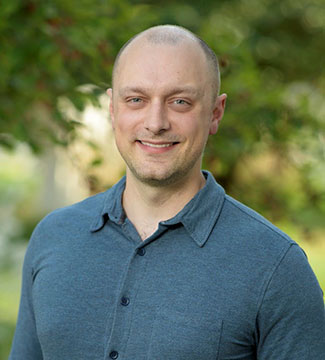
Gábor Veres is an Assistant Professor at the Institute of Ethnography and Folklore , affiliated with the Faculty of Arts at Eötvös Loránd University. His research spans high-energy physics, focusing on particle interactions at the Large Hadron Collider (LHC) and the CMS experiment. His work includes probing quantum chromodynamics (QCD) through jet production, investigating Higgs boson properties , and exploring exotic phenomena such as long-lived particles, leptoquarks, and dark matter candidates. The 15 most recent publications highlight his contributions to nuclear modification effects , detector simulations , and beyond-Standard Model searches in proton-proton and heavy-ion collisions, with particular emphasis on machine learning techniques for event reweighting and precision measurements like the W boson mass.
Dr. Alfredo Fantetti is a Research Fellow at Imperial College London's Tribology Group , Department of Mechanical Engineering, Faculty of Engineering. He is actively building a research team focused on frictional contacts, nonlinear dynamics, and wave propagation in jointed structures. His work includes solitary waves in metamaterials and friction monitoring for vibration applications. PhD in Mechanical Engineering (Imperial College London, 2017-2021) Marie-Curie Postdoctoral Fellowship (2021-2023) Rolls-Royce-funded postdoctoral research (2020-2023) His research combines experimental and computational approaches to advance understanding of frictional contacts in assembled structures under vibration, critical for stress and fatigue analysis. Recent work utilizes solitary waves in granular crystals for novel contact monitoring techniques. Key publications focus on turbine blade dynamics, nonlinear contact mechanics, and metamaterial-based friction diagnostics. Awards include the IOP Innovation in Tribology Award and Young Stress Analyst recognition. Seal of Excellence (2024) Machines 2022 PhD Thesis Award (2023) D. J. DeMichele Scholarship (2018) He also co-founded an AI-driven fantasy sports startup ( fantaculo.it ) and is pursuing a Weekend MBA at Imperial Business School.
Konrad Tywoniuk is Professor and Group Leader of the Theoretical Physics Group at the University of Bergen's Department of Physics and Technology. His research bridges high-energy nuclear physics and particle physics, focusing on quantum chromodynamics (QCD) jet interactions in quark-gluon plasma, non-equilibrium dynamics of strongly coupled systems, and machine learning applications in physics. He leads the 'Thermalizing jets' project funded by the Trond Mohn Foundation and contributes to the ALICE collaboration at CERN. His research explores: Jet quenching mechanisms in heavy-ion collisions Medium-induced parton energy loss QCD matter under extreme conditions Deep learning approaches for jet tomography Non-equilibrium properties of quantum systems Recent publications demonstrate a strong focus on jet-medium interactions, with 2023-2025 work advancing theoretical frameworks for medium-induced radiation and applying machine learning to collision data. His 15 most recent articles show consistent investigation into jet suppression, azimuthal anisotropy, and precision QCD calculations. Honors include the 2018 TMS Starting Grant that established his research group. His lab leads theoretical investigations into QCD dynamics while collaborating with experimental groups at RHIC and LHC facilities. Teaching responsibilities encompass statistical physics, general relativity, and relativistic heavy-ion physics courses. He maintains active international collaborations through the ALICE experiment and joint theoretical initiatives.
Dr. Yujie Qi is a Senior Lecturer at the University of Technology Sydney (UTS), specifically within the School of Civil and Environmental Engineering. She serves as Program Co-leader of the UTS Transport Research Center (TRC) within the Faculty of Engineering and Information Technology. Her academic journey began with Bachelor's and Master's degrees in (Civil/Geotechnical) Engineering at Zhengzhou University, China, followed by a PhD from the University of Wollongong (UOW), Australia, which she completed in 2018 with an 'Industry Engagement Award' and 'Special Commendation' for outstanding doctoral research. Dr. Qi's educational background includes: PhD in Geotechnical Engineering from University of Wollongong (2014-2018) Master's degree in Geotechnical Engineering from Zhengzhou University (2011-2014) Bachelor's degree in Engineering from Zhengzhou University (2007-2011) Bachelor of Art from Zhengzhou University (2009-2011) Dr. Qi's primary research focuses on soil dynamics, granular mechanics, geo-mathematical modeling, and large-scale dynamic testing , with particular emphasis on the innovative use of waste and marginal materials in transport infrastructure . Her pioneering work on energy-absorbing materials has revolutionized approaches to railway track design, specifically through the utilization of waste rubber to enhance rail substructure performance. She has conducted extensive investigations on three key waste materials: discarded coal wash from Australian coal mines, steel furnace slag from steel manufacturing plants, and rubber crumbs derived from off-the-road vehicle tires. For the first time, she identified optimal ratios of these waste materials to enhance railway longevity and developed energy-absorbing concepts to analyze and interpret track substructure deformation mechanisms. Dr. Qi has been instrumental in introducing energy-absorbing materials to enhance rail substructure performance, and her research has been recognized by national and international firms including Bridgestone and Sydney Trains. The recent publications by Dr. Qi demonstrate a strong focus on sustainable transportation infrastructure using recycled materials, particularly rubber-based solutions for railway engineering. Her work spans from fundamental material characterization to large-scale field testing, with particular emphasis on energy absorption properties, track performance improvement, and circular economy applications. The research consistently bridges theoretical modeling with practical engineering applications, showing how waste materials can be effectively repurposed to solve infrastructure challenges while reducing environmental impact. A notable trend in her recent work is the integration of machine learning methodologies with traditional geotechnical approaches to predict material behavior and optimize infrastructure design, as evidenced by her publications on hybrid ML methodologies for predicting rail ballast breakage. Dr. Qi's exceptional contributions have been recognized with numerous prestigious awards: John Carter Young Professional Award (2024) Sir M. Visvesvaraya Award from ICE (UK) (2023) Bright Spark Lecture Award from ISSMGE (2018) Best Paper Award at the 9th Asian Young Geotechnical Engineers Conference (2019) Award for Industry Engagement Impact from University of Wollongong (2017) Examiners' Commendation for Outstanding Thesis (2018) Dr. Qi has successfully secured significant research funding, including ARC Discovery Projects (DP220102862) titled 'The Role of Energy Absorbing Rubber Grid on Ballast Track Performance' (2022-2025) and ARC Linkage Projects (LP200200915) titled 'Field Data based Predictive Maintenance and Enhanced Track Design Procedure' (2021-2025). She actively supervises research students across multiple projects focused on energy-absorbing materials, track performance, and waste material applications in transportation infrastructure. Her teaching portfolio includes subjects such as Problematic Soils and Ground Improvement Techniques, Road Engineering Practice, Mechanics of Solids, and Soil Behaviour, where she has served as coordinator, teacher, and tutor. As Program Co-leader of the UTS Transport Research Center, Dr. Qi collaborates with a multidisciplinary team of researchers focused on innovative transportation solutions. Her laboratory work involves advanced testing facilities including large-scale process simulation testing apparatus (PSTA) and prototype cubic triaxial facilities for evaluating material behavior under cyclic loading conditions. The research group has conducted significant field trials, including a fully instrumented track section at Chullora, New South Wales, to validate laboratory findings in real-world conditions. Dr. Qi's team maintains strong industry connections with organizations such as Sydney Trains and Bridgestone, ensuring practical relevance and implementation potential for their research outcomes, while promoting sustainable and cost-effective practices in transportation infrastructure.
Christopher Plumberg is an Assistant Professor of Physics in the Natural Science Division at Pepperdine University's Seaver College. He holds a PhD from The Ohio State University (2016) and completed postdoctoral research at the University of Minnesota, Lund University (Sweden), and the University of Illinois at Urbana-Champaign. His research specializes in theoretical high-energy nuclear physics , utilizing relativistic fluid dynamics and high-performance computing to model nuclear collisions. Key interests include: Quark-gluon plasma formation Causality violations in collision simulations Critical points in nuclear matter Charge diffusion processes His recent publications (2020–2025) focus on heavy-ion collisions, hydrodynamic simulations, and signatures of quantum chromodynamics phase transitions, with frequent collaborations at facilities like RHIC and LHC. He teaches undergraduate courses including Physics I/II, Modern Physics, and Research Methods. Outside research, he examines science-philosophy intersections, particularly Christian apologetics.
Dr. hab. Janusz Kaczmarek serves as an Associate Professor in the Department of Logic and Methodology of Sciences within the Faculty of Philosophy and History at the University of Lodz. His academic work spans ontology, logic, and philosophical anthropology, where he contributes to both theoretical frameworks and practical applications in these interconnected fields. His research focuses on formal ontology (particularly topological ontology), examining Wittgensteinian ontology of logical atomism, various forms of atomism and substantialism, category theories, and property theories. In logic , he explores theories of judgment in the logical sense, modal and temporal logics in ontological versions. His work in philosophical anthropology centers on essential and existential views of the human being, the problem of will, cognition structures, ethical problems, and ontic foundations of philosophical anthropology. His 15 most recent publications reveal a consistent focus on topological structures in formal ontology, Wittgensteinian frameworks, modal logic applications, and anthropological foundations. The research demonstrates interdisciplinary connections between mathematical logic, metaphysical structures, and humanistic inquiry, with particular emphasis on how formal systems can illuminate philosophical questions about being, knowledge, and human existence. Dr. Kaczmarek actively contributes to academic life through teaching ontology, philosophy (for PhD students), cognitive science, analytical philosophy, philosophical anthropology, and logic to students across all degree levels including ERASMUS participants. He co-organizes significant academic events including the Non-Classical Logics conferences, World Logic Day celebrations, and Ontological Workshops. Currently, he leads two major research initiatives: 'Atom. Substance. System. Research in topological ontology' funded by the National Science Center (NCN), and 'Non-Classical Logics. Theory and Applications' within the ministerial 'Excellent Science' program. His office is located in room 304 at William H. Lindleya 3 in Łódź, with regular office hours on Wednesdays.
Dr. Anita Milewska is a Professor at the Department of Transportation Engineering, Faculty of Civil and Environmental Engineering, Gdańsk University of Technology. She maintains an active research profile with numerous publications spanning from 2002 to the present, with recent works published as late as 2025. Her office is located in Building A of the Faculty of Civil and Environmental Engineering, room 226, and she can be contacted at animilew@pg.edu.pl or anita.milewska@wilis.pg.gda.pl. Dr. Milewska's research interests span a wide range of transportation engineering topics with a particular focus on railway infrastructure, geotechnical aspects of transportation systems, and safety analysis. Her work demonstrates expertise in: Railway engineering and safety analysis, particularly at level crossings Geosynthetics applications in transportation infrastructure Subsoil/subgrade analysis and improvement techniques Transport of dangerous goods and associated risks Application of non-classical operational calculus to transportation problems Runway construction and soil improvement techniques Her recent publications (2019-2025) demonstrate a consistent research trajectory focused on improving transportation infrastructure safety and reliability. She has developed innovative methods for soil improvement using explosive techniques (microblasting), analyzed geosynthetics behavior in railway structures, and studied the impact of dangerous goods transport on railway infrastructure. Her work frequently employs advanced mathematical modeling techniques including fuzzy logic, non-classical operational calculus, and metric spaces to solve complex transportation engineering problems. Dr. Milewska often collaborates with researchers like E. Mieloszyk, M. Wyroślak, and S. Grulkowski on interdisciplinary transportation research projects. Dr. Milewska is actively involved in research projects including the InfraNoise project, which focuses on "precise monitoring of the impact of railway traffic on the environment." She has taught 86 courses, demonstrating significant commitment to academic instruction alongside her research activities. While specific details about her students are not provided in the available information, her extensive publication record suggests she likely mentors graduate students in transportation engineering research.
Charles Kuehn serves as Associate Professor and Chair of the Physics & Astronomy department within the College of Natural and Health Sciences at the University of Northern Colorado. He has held this position since 2015, following postdoctoral appointments at the University of Sydney and Michigan State University. His academic credentials include: PhD in Astronomy and Astrophysics from Michigan State University (2011) MS in Astronomy and Astrophysics from Michigan State University (2008) BS in Astronomy from The Ohio State University (2005) Professor Kuehn's research spans observational astronomy with dual focus on variable stars (particularly RR Lyrae) and Milky Way formation . He investigates stellar populations in globular clusters and dwarf galaxies to reconstruct galactic assembly history. His complementary work in astronomy education research addresses pedagogical innovation in astronomy instruction, creating a unique bridge between astrophysical discovery and teaching methodology. Analysis of his 2006-2016 publications reveals consistent output in top astronomy journals, with concentration on variable star studies in the Large Magellanic Cloud and Milky Way halo. His work demonstrates increasing leadership in collaborative projects, with recent papers featuring international co-authors from Australia, Europe, and South America. As Department Chair and active researcher, Professor Kuehn oversees academic operations while maintaining research productivity. His role suggests supervision of graduate students and involvement in securing departmental funding, though specific grant details aren't provided. The absence of a named laboratory indicates research conducted through collaborative networks rather than a dedicated facility, providing students with opportunities in data analysis and international astronomical projects.
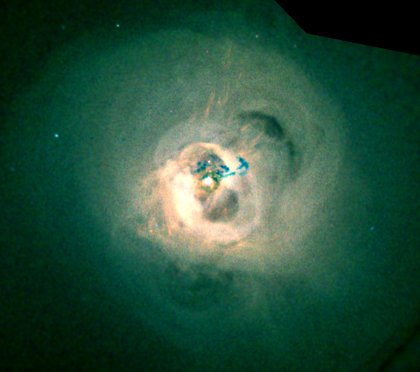
Dr. Jeremy Sanders is a Researcher at the Max Planck Institute for Extraterrestrial Physics (MPE) in Garching, Germany, working within the High Energy Astrophysics Group. His research focuses on high-energy astrophysics, particularly the study of galaxy clusters and their X-ray emissions. Prior to his position at MPE, he was a postdoctoral researcher at the Institute of Astronomy, University of Cambridge. Dr. Sanders' primary research interests include the dynamics of the intracluster medium (ICM), AGN feedback mechanisms, and the thermal properties of galaxy clusters. His work involves analyzing data from X-ray observatories such as Chandra and XMM-Newton to understand complex physical processes in galaxy clusters, with particular focus on how supermassive black holes interact with their surrounding environments in cluster cores. He has made significant contributions to our understanding of sound waves in galaxy clusters, the behavior of cool gas in cluster cores, and the role of AGN in regulating cluster evolution. His publications demonstrate consistent expertise in high-energy astrophysics phenomena, with recent work examining turbulent energy propagation, cold fronts in the Perseus cluster, and molecular gas dynamics in cluster environments. Dr. Sanders has developed several software tools for X-ray data analysis, including Veusz (a scientific plotting package), contour binning algorithms, and adaptive binning algorithms, which have been widely adopted by the X-ray astronomy community. His research on the Perseus cluster has revealed ripple-like structures corresponding to density variations in the hot gas, believed to be very low-frequency sound waves generated by the central black hole. He has also extensively studied radio bubbles emitted by black holes that create cavities in the X-ray emitting gas, providing crucial insights into the energy transfer mechanisms between AGN and the intracluster medium.