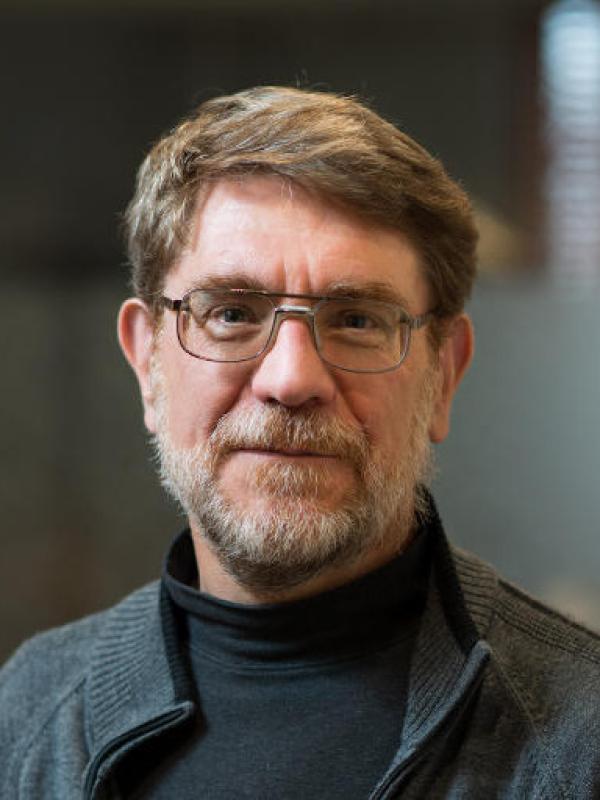
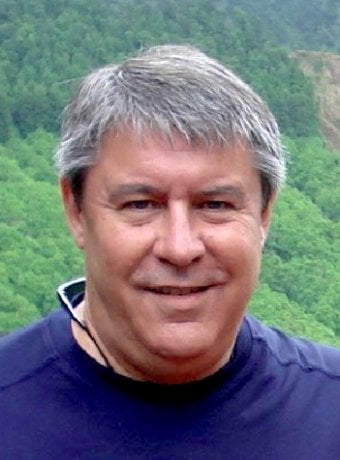
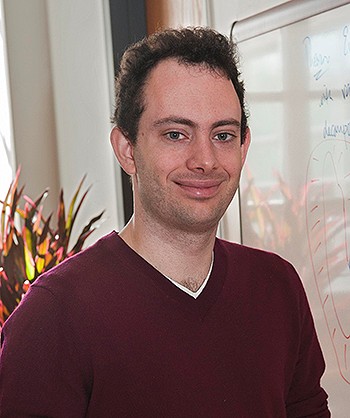
Christopher Kochanek is a Professor and Ohio Eminent Scholar in the Department of Astronomy at The Ohio State University, affiliated with the College of Arts and Sciences. His expertise lies in cosmology, gravitational lensing, and supernovae. He earned his Ph.D. from the California Institute of Technology (1989) and a B.A. from Cornell University (1985). His research focuses on using gravitational lensing to study dark energy, dark matter substructures, and quasar accretion disks. He pioneered time-domain astronomy, exploring variability in massive stars and quasars, and co-led the ASAS-SN project for all-sky supernova detection. Key achievements include the Dannie Heineman Prize for Astrophysics (2020) and the AAS Beatrice M. Tinsley Prize (shared 2020). His work spans binary neutron star mergers, Milky Way mass estimation, and dust-obscured stellar explosions. Recent studies analyze supernova progenitors and long-term variability trends in transient events. Awards: Heineman Prize (2020), Tinsley Prize (2020) Grants & Projects: ASAS-SN collaboration with Prof. Stanek, dark energy constraints via lensing, and Milky Way dynamics. Labs/Teams: Active in the Ohio State Astronomy Instrumentation Group and ASAS-SN observatory network.
Elizabeth Blanton is a Professor of Astronomy at Boston University's College of Arts & Sciences, where she serves as Director of Undergraduate Studies. Her research primarily focuses on high-energy astrophysics and observational astronomy, with emphasis on galaxy clusters, radio galaxies, and AGN feedback mechanisms. She utilizes multi-wavelength approaches including X-ray, optical, infrared, and radio observations. Education: Ph.D., Columbia University M.Phil., Columbia University M.A., Columbia University A.B., Vassar College Professor Blanton's research centers on clusters of galaxies, particularly studying the X-ray emission from the intracluster medium using the Chandra X-ray Observatory. She investigates how central radio sources powered by supermassive black holes interact with and heat the surrounding gas, which has important implications for galaxy formation and evolution. Her work also explores using radio sources as tracers for high-redshift galaxy clusters for cosmological studies. Her publication record shows consistent research on galaxy cluster dynamics, particularly focusing on phenomena like gas sloshing, shock waves, and cavities created by AGN feedback. The research spans multiple wavelengths with heavy emphasis on X-ray observations from the Chandra Observatory, complemented by optical, infrared, and radio data. Her work has significantly contributed to understanding how energy from supermassive black holes affects the evolution of galaxy clusters. Notable Press Coverage: "Abell 2052: A Galaxy Cluster Gets Sloshed" featured in BU Research Magazine 2012, Chandra press release, NASA press release, and National Geographic image of the week "NGC 5813: An Intergalactic Weather Map" covered in Chandra and NASA press releases "Cosmic Battle Creates Milky-Way Sized Tunnel" featured in Naval Research Lab press release "NGC 1553: Black Holes in Distant Galaxy Points to Wild Youth" covered in Chandra press release Professor Blanton teaches a range of astronomy courses from introductory to graduate level, including Principles of Astronomy II, Stellar and Galactic Astrophysics, Introduction to Astrophysics, and Observational Techniques. Her Observational Techniques course provides hands-on experience with telescopes at Boston University and Lowell Observatory in Arizona. She leads research within the Interdisciplinary Cosmology Group at Boston University, which includes members from the Departments of Astronomy, Physics, and Data Sciences. Her work on galaxy clusters and AGN feedback continues to advance our understanding of the formation and evolution of large-scale structures in the universe.
Peter Avitabile is a Research Professor in the Mechanical and Aerospace Engineering Department at Michigan Technological University and a Professor Emeritus at the University of Massachusetts Lowell. With nearly five decades of experience, his expertise spans structural dynamics, vibrations, and modal analysis. He has contributed over 350 technical papers and authored Modal Testing: A Practitioner’s Guide . Dr. Avitabile holds a DEng from UMass Lowell and has led the Structural Dynamics and Acoustic Systems Laboratory. He is a Fellow of the Society for Experimental Mechanics (SEM) and served as its President in 2016. Education: DEng, Mechanical Engineering, University of Massachusetts Lowell (1998) MS, Mechanical Engineering, University of Rhode Island (1982) BS, Mechanical Engineering, Manhattan College (1974) Research Interests: Structural dynamic modeling techniques, experimental modal analysis, system modeling, reduced order modeling, and model correlation. Awards: SEM DeMichele Award (2004) Fellow, Society for Experimental Mechanics (2022) UMASS Lowell Pillars of Excellence Award (2016) Grants & Funding: Over $9.3 million in research funding since 2000, alongside substantial hardware/software donations. His work has been supported by industries and government agencies including NASA, the Department of Energy, and the Navy. Teaching & Mentorship: Taught over 30 semesters of graduate courses in structural dynamics and modal analysis at UMass Lowell. Advised 18 PhD and 19 MS students. Conducted international seminars on structural dynamics for companies like NASA, General Motors, and Siemens. Labs & Affiliations: Co-Director, Structural Dynamics and Acoustic Systems Lab (UMass Lowell) Director, Modal Analysis and Controls Lab (UMass Lowell)
Ian Biringer is a Professor in the Math Department at Boston College, where he specializes in hyperbolic geometry, low-dimensional topology, and geometric group theory. He holds a Ph.D. from the University of Chicago and actively contributes to academic leadership, including co-organizing the Geometry/Topology seminar. His educational materials include an online book, Geometry in Two Dimensions , and lecture notes on ergodic theory, mapping class groups, and proof-based mathematics. His research explores hyperbolic 3-manifolds, invariant random subgroups, unimodular measures, and geometric convergence, with applications to group theory and dynamical systems. Recent work focuses on curve graphs, surface covers, and L2-invariants, often employing combinatorial and measurable methods. Publications demonstrate a consistent emphasis on topological invariants, subgroup dynamics, and Riemannian structures. He has advised six PhD students, including four graduates (Nick Vlamis, Tommaso Cremaschi, Cristina Mullican, Sangsan Warakkagun) and two current advisees (Mujie Wang, Matthew Zevenbergen). No scientific awards are mentioned in the source text.
Professor Tommy Chan is Chair in Civil Engineering at Queensland University of Technology's School of Civil and Environmental Engineering. With over $10M in research funding, his work focuses on structural health monitoring of bridges and infrastructure systems. His research group develops cutting-edge methods for assessing structural integrity using vibration analysis, optical sensors, and machine learning. Professor Chan leads major projects including the ARC-funded 'Next Generation Bridge Monitoring' initiative developing real-time monitoring systems for prestressed concrete bridges. His team's innovations include GNSS-based settlement monitoring and synergic identification methods for prestress force evaluation. Current research explores vehicle-bridge interactions, damage detection algorithms, and novel materials for impact protection. He has received numerous honors including the Vice Chancellors' Leadership Award and Top Supervisor Award. Professor Chan founded the Australian Network of Structural Health Monitoring and serves on editorial boards for multiple journals in structural engineering.
Ulrich Meyer is a Professor at the Institute for Computer Science at Goethe University Frankfurt. He serves as a prominent researcher in algorithms for big data, with extensive contributions to parallel and external-memory graph algorithms. His work spans theoretical foundations and practical implementations for processing large-scale data sets. Spokesperson of the DFG priority program (SPP 1736) on Algorithms for Big Data in Germany SEA23 Symposium on Experimental Algorithms, Steering Committee Chair ALENEX23 Algorithm Engineering and Experiments, Program Committee Member Professor Meyer's research interests focus on the theoretical and experimental aspects of processing large data sets on advanced computational models. His work particularly emphasizes parallel and external-memory graph algorithms, with recent focus on efficient large-scale network generation according to various stochastic models. His research has produced significant contributions including the parallel Delta-Stepping algorithm (which received the ESA Test of Time Award in 2019) and the first BFS approach with sublinear I/O. He has also explored more specialized topics like energy-efficient sorting (with records in the JouleSort competition 2009/10 and the Germany Land of Ideas Award) and fragile computing (which earned him a best-paper award at ESA 2019). His recent publications demonstrate a strong focus on graph algorithms, network generation, and parallel computing techniques. The research trends show consistent advancement in scalable algorithms for massive graphs, with particular emphasis on efficient sampling methods, shortcutting techniques, and communication-free distributed approaches. His work bridges theoretical computer science with practical engineering considerations for real-world big data applications. ESA Test of Time Award 2019 for Parallel Delta-Stepping algorithm Records in the JouleSort competition 2009/10 Germany Land of Ideas Award Best-paper award at ESA 2019 for fragile computing research Professor Meyer has made substantial contributions to the academic community through his leadership in the DFG priority program on Algorithms for Big Data, which has fostered significant research collaborations across Germany. His extensive publication record in top venues demonstrates sustained research productivity and impact in the algorithms community. While specific grant details aren't provided in the text, his role as spokesperson for a major DFG priority program indicates substantial research funding and leadership responsibilities. His work appears to be conducted within collaborative research environments focused on algorithm engineering and experimental evaluation. His research appears to be conducted within the Institute for Computer Science at Goethe University Frankfurt, likely involving collaborations with other researchers in the Algorithms for Big Data priority program. The extensive list of co-authored publications suggests active participation in research teams focused on parallel algorithms, graph processing, and network generation.
Christian Fermüller is an Associate Professor in the Department of Theory and Logic at the Faculty of Informatics, Technische Universität Wien (TU Wien). His research focuses on theoretical computer science, artificial intelligence, automated deduction, and formal logic systems. He specializes in fuzzy logic, proof theory, and non-classical logics, with contributions to semantic games, dialogue systems, and computational models of reasoning under vagueness. **Research Interests:** Foundations of fuzzy logic and many-valued logics Proof theory and analytic calculi Game-based semantics for non-classical logics Formal models of judgment aggregation and argumentation theory Applications in automated reasoning and computational intelligence **Grants & Projects:** Austrian Science Fund (FWF) projects on graded deontic reasoning (2025–2027), semantic games and analytic calculi (2019–2023), and fuzzy logic foundations (2008–2013) Co-PI of the LogICCC initiative exploring contextualism and fuzzy logic **Teaching:** Courses include logical methods in computer science, quantum computing, and theoretical computer science. Supervised over 15 PhD and master’s theses on topics ranging from semantic games to argumentation frameworks. **Affiliations:** Active in the LogiCS research group and regularly organizes seminars on logic and computation.
Jian Tang is an Assistant Professor at HEC Montreal and the Montreal Institute for Learning Algorithms (MILA), as well as an Associate Professor at the Department of Computer Science and Operations Research (DIRO) at Université de Montréal. He is also affiliated with IVADO (Institut de valorisation des données) as a member. His research spans multiple institutions including collaborations with leading biology labs worldwide and access to extensive computational resources through industry partners. Ph.D. in Computer Science, Peking University (2009-2014) Visiting Ph.D. student, University of Michigan (2011.10-2013.8) B.S. in Mathematics, Beijing Normal University (2005-2009) Professor Tang's research focuses on the intersection of deep learning and graph theory, with particular emphasis on geometric deep learning, knowledge graph reasoning, and applications in drug discovery. His work bridges symbolic and neural approaches to create robust reasoning systems that can handle complex structured data. He has pioneered techniques in graph representation learning that have significantly advanced the field of molecular property prediction and protein design. His publication record shows a clear trajectory toward applying geometric deep learning to biological problems, with a growing emphasis on protein design, molecular conformation generation, and multi-omics analysis. Recent work demonstrates sophisticated integration of 3D geometry with deep learning architectures to model complex biomolecular interactions. Canada CIFAR Artificial Intelligence Chairs (CCAI Chair) Tencent AI Lab Rhino-Bird Gift Fund Amazon Faculty Research Award Microsoft-Mila collaboration grant National Research Council Canada (NRC) Collaborative Research and Development Grant Professor Tang actively mentors doctoral and master's students, with six recent graduates working on cutting-edge topics including graph neural networks for reasoning, protein design, and molecular representation learning. His research is supported by substantial funding from industry partners including Microsoft, Amazon, and Tencent, as well as government agencies like NRC. He collaborates extensively with biology labs worldwide, applying AI to solve real-world biomedical challenges. He leads a research group focused on geometric deep learning for drug discovery, with active projects in protein design using geometric-aware models and large language models for multi-omics analysis. The group has access to thousands of GPUs through industry collaborations, enabling large-scale experiments in molecular simulation and generative modeling.
Gianfranco Bertone is a Professor at the Faculty of Science, University of Amsterdam, specializing in astrophysics and theoretical physics with a focus on dark matter, black holes, and gravitational waves. His work bridges cosmology and particle physics through multi-messenger approaches. Research Interests: Dark matter detection via gravitational wave signatures Black hole binary dynamics in dark matter environments Relativistic simulations of extreme mass ratio inspirals Multi-messenger astronomy and fundamental physics Cosmological simulations for dark matter distribution Publication Trends: Recent works emphasize gravitational wave astronomy's role in dark matter studies, including waveform distortions from dark matter spikes, boson cloud effects in black hole binaries, and simulation-based inference for astrophysical observations. His research spans theoretical modeling, computational astrophysics, and observational constraints.
Dr. David Roke is an Associate Professor in the Department of Civil Engineering at the University of Akron's College of Engineering and Polymer Science. A member of the American Society of Civil Engineers (ASCE) and Chi Epsilon, Dr. Roke was honored with the 2019 Excellence in Teaching Award from The National Society of Leadership and Success (Sigma Alpha Pi). His research program focuses on earthquake engineering and structural resilience, with particular emphasis on developing advanced structural systems for seismic resistance. Key research areas include self-centering structural systems, buckling-restrained elements, soil-structure interaction effects, and life-cycle cost analysis of resilient infrastructure. His investigations employ experimental testing combined with computational methods including evolutionary algorithms, sensitivity analysis, and machine learning techniques. Dr. Roke's recent publications demonstrate significant contributions to economical seismic-resistant design, with innovative work on self-centering concentrically braced frames and rocking core systems. His research integrates structural performance assessment with economic feasibility studies to advance practical applications in earthquake engineering. His educational background includes a Ph.D. in Structural Engineering from Lehigh University, an M.S. in Civil Engineering from University of Pittsburgh, and a B.S. in Civil Engineering from University of Pittsburgh.
Prof. Gregorio Iglesias is a Professor of Marine Renewable Energy at University College Cork (UCC) and Honorary Professor of Coastal Engineering at the University of Plymouth. His expertise lies in Marine Renewable Energy and Coastal Engineering, with a focus on wave and tidal energy systems, offshore wind integration, and coastal protection strategies. He has secured over €12M in research funding as Principal Investigator and authored/edited key texts such as Wave and Tidal Energy (Wiley) and Ocean Energy and Coastal Protection (Springer). Education: BEng (Civil Engineering, 1992), MEng (Civil Engineering, 1993), PhD (Engineering, 2001). Research Interests: Advanced modeling of wave energy converters, floating offshore wind turbines, coastal erosion mitigation, and climate change impacts on marine energy resources. His work bridges theoretical advancements and practical applications, including coasts like the Port of Gijón (Spain) and the Shannon Estuary. Recent publications highlight climate-driven renewable energy transitions, multi-hazard coastal resilience frameworks, and techno-economic assessments of offshore systems. He chairs the IEC Standards panel for wave energy device testing and serves as Subject Editor for Energy (Elsevier) . Professional Activities: Lead of Marine Renewable Energy research at MaREI (Ireland), former Head of the COAST Engineering Group at Plymouth (2012–2018), and member of PIANC’s Universities Consortium. His work has generated 5,459 citations with an h-index of 41. Teaching: Delivers modules on Ocean Energy (NE4003/NE6005) and Hydraulics (CE3007).
Richard Brenner is a Professor and Head of Department at the Department of Physics and Astronomy , Uppsala University. He is a key member of the ATLAS detector team at the CERN Large Hadron Collider (LHC) , focusing on instrumentation development and real-time data processing for dark matter detection. His work bridges semiconductor detector signals with machine learning systems , emphasizing radiation resistance in high-energy environments. Role: Head of Department of Physics and Astronomy Affiliation: Uppsala University and CERN Research Focus: Dark Matter, Higgs Boson, Particle Physics His recent 15 publications (2025) span topics like dark matter searches , Higgs boson production , vector boson fusion , and machine learning applications in data analysis. Keywords include High Energy Physics , Experimental Physics , and Quantum Interactions , with subfields such as Collider Physics , Detector Engineering , and Theoretical Modeling
Christopher Blackwood is a Professor in the Department of Plant Biology at Michigan State University, with additional appointments in Plant Soil and Microbial Sciences and the Ecology, Evolution & Behavior Program. Based in the Plant Biology Lab (S124), his research examines soil-plant-microbe interactions and their critical roles in ecosystem processes and soil carbon dynamics. Education: Ph.D. from Michigan State University His research spans community ecology of plants and microorganisms, plant-fungal interactions, root traits, and soil biogeochemistry. Current projects investigate coexistence mechanisms of closely related plant species, cascading effects of tree root traits on pathogens and soil carbon, forest restoration dynamics, and urban green roof performance. His work integrates field studies with molecular approaches to understand belowground ecological processes. Analysis of recent publications (2021-2025) reveals consistent focus on plant-soil feedbacks, fungal community ecology, and soil carbon dynamics. Key themes include mycorrhizal influences on plant-fungal coevolution, root trait evolution across plant lineages, and applications to sustainable land management. His work bridges fundamental ecological theory with practical restoration ecology. Dr. Blackwood leads an active research laboratory funded by competitive grants, mentoring graduate students in plant and soil ecology. His team investigates soil biota across diverse ecosystems including temperate forests, agricultural landscapes, and urban green infrastructure. His laboratory conducts research on soil organism ecology, plant-microbe interactions, and ecosystem functioning, with ongoing projects in forest restoration, green roof optimization, and soil carbon dynamics across multiple spatial scales.
Wout Weijtjens is a Research Fellow at Vrije Universiteit Brussel, affiliated with the Acoustics & Vibration Research Group in Applied Mechanics. His research focuses on structural health monitoring (SHM) of offshore wind turbines, fatigue analysis, and vibration-based damage detection using advanced signal processing and machine learning techniques. Current projects include FIRMEST (fatigue assessment of offshore wind turbine substructures) and FOOS (Forced Oscillations in turbines). His research interests span: Operational modal analysis for offshore structures Machine learning applications in SHM Fatigue life prediction under environmental variability Sensor networks for infrastructure monitoring Wind turbine dynamics under harsh conditions Recent publications demonstrate a consistent focus on developing predictive maintenance frameworks through multivariate sensor data analysis, uncertainty quantification in SHM systems, and validation of computational models against full-scale field measurements. Article trends emphasize machine learning integration with physical models for improved fatigue life assessment. Awards and recognitions include: Best Paper Award (2nd place, 2022) Poster Award (2017) Solvay Award (2015) As principal investigator on multiple grants including VLADBC7 and VLADBC9 projects, he supervises PhD candidates in vibration-based SHM and leads experimental validation at OWI-Lab's Large Climate Chamber. His team develops IoT monitoring solutions for civil infrastructure through the SMART TOWERS initiative.
Dr. Ahmet Furkan Esen is an Assistant Professor at Heriot-Watt University's School of Energy, Geoscience, Infrastructure and Society and the Institute for Sustainable Built Environment. His expertise spans geotechnical and transportation engineering, focusing on railway infrastructure performance and sustainable materials. He holds a BSc from Yildiz Technical University, an MSc from the University of Nottingham, and a PhD from Heriot-Watt University, followed by postdoctoral research at the University of Leeds and Heriot-Watt University. His research integrates experimental and numerical methods, including finite element analysis, to address challenges in high-speed rail dynamics, soil-structure interaction, and sustainable infrastructure design. Key interests include advanced track materials, digital twins, and decarbonization strategies. He actively supervises PhD students and has received the PRIME AWARDS 2024. Education: BSc Civil & Structural Engineering, Yildiz Technical University MSc Civil Engineering: Highways and Transportation, University of Nottingham PhD Heriot-Watt University (Experimental & Numerical Analysis of High-Speed Railway Infrastructure) His work leverages geotechnical centrifuge testing and full-scale laboratory evaluations to assess railway track performance under dynamic loads. Notable contributions include studies on geosynthetic-reinforced substructures and machine learning applications in geotechnical analysis. He collaborates on projects related to resilient infrastructure design and traffic-induced ground vibrations. Awards: PRIME AWARDS 2024 Advising: Accepting PhD students with international scholarships in railway engineering and sustainable infrastructure.